
The Strombo Show welcomes Neil Peart, drummer and lyricist of RUSH, for a rare and intimate conversation from George’s home.

The Strombo Show welcomes Neil Peart, drummer and lyricist of RUSH, for a rare and intimate conversation from George’s home.
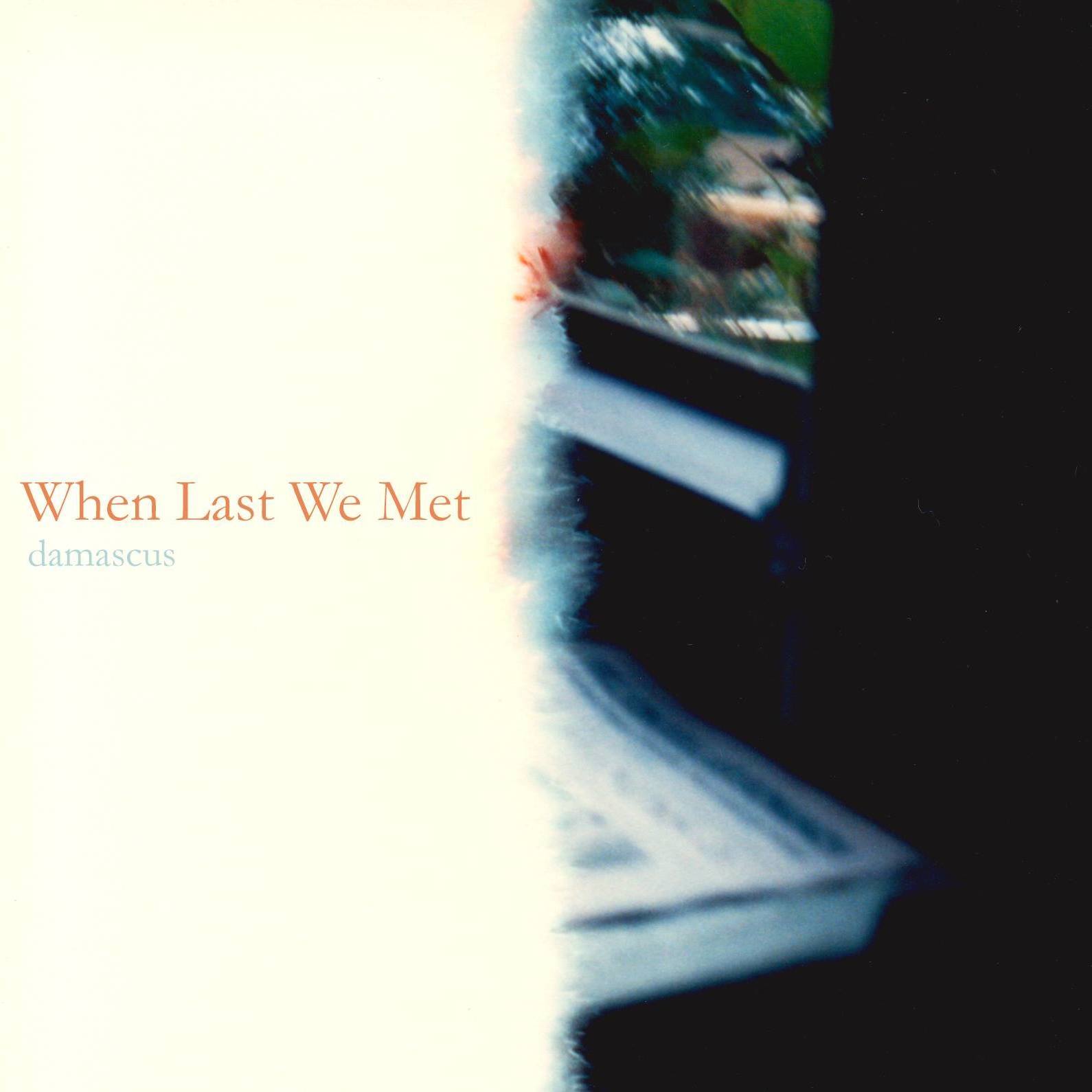
Following the critical success of their 2013 release Heights, New Jersey-based instrumental band damascus is back with a new full-length album, When Last We Met. Like its predecessor, the record was recorded and mixed by Frank Marra at Treehouse Sound in Jersey City.
On When Last We Met, the group continues to explore and experiment in the space where post-rock, progressive metal, and droning ambient collide. The record offers some of the band’s most dynamic music to date: from soaring riffs and crushing grooves to delicate harmonies and acoustic passages, the band has never woven together more diverse textures and styles, though it remains totally accessible and immediately enjoyable.
The band is joined for the first time by Craig Vandenberge, whose double bass adds yet another dimension of thoughtful lyricism to the album. With its longform arrangements, oddly familiar time signatures, and overwhelming catharsis, When Last We Met is music to fascinate and delight.
The record was mastered by Erik Kvortek at Trax East Recording Studio. It will be released for free stream and download at damascus’ bandcamp website on November 25th, 2014. A limited vinyl pressing by SlyVinyl Records is planned for early 2015. Visit http://damascusnj.bandcamp.com to stream the title track now!
damascus is: Brendan Bianowicz, drums; George Eppinger, guitar; Gil Morejón, guitar and keyboards; Edwin Rivera, bass
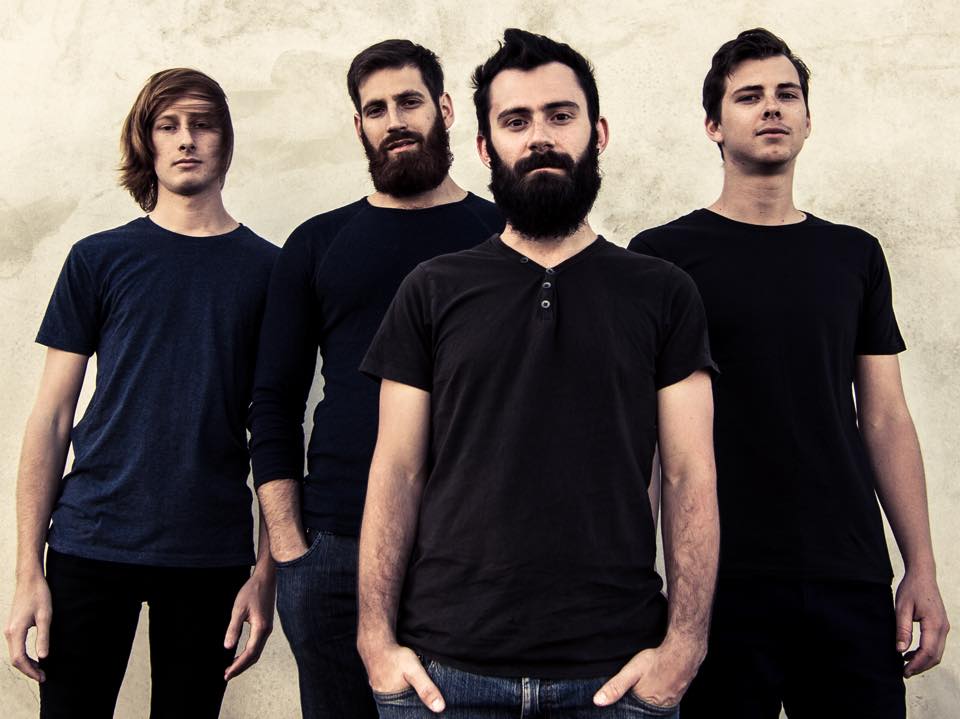
Australian alternative prog rockers, Opus of a Machine are set to release their debut album entitled “Simulacra” on November 16th. The band has crafted a release that has full potential to top many of the year’s top lists.
We talked with guitarist Zachary Greensill about the album, songwriting, inspiration, and even dogs.
First of all, what’s behind the name, “Opus of a Machine”? Is there an interesting story behind its choosing?
Depends on what you consider interesting! Funnily enough, the name comes from a Youtube comment I noticed about a particular well-known guitarist in the progressive scene that noted that the guys phrasing sounds like “the opus of a machine”. “Opus” is Latin for “work”, but most people know of it from the phrase “magnum opus”, which translate to “great work”. The name stuck out to me for a few reasons because of what it says about music and art. What would a machine with all the knowledge in the universe consider art? And more importantly, what gives us the ability to create art? Is it intuition? Or is just a series of electrical impulses, coupled with thousands of years of genetic and cultural programming? And if it’s the later, what makes us any less than any other machine?
What first attracted you to the sound and scope of progressive rock?
I think I enjoy the idea of creating progressive and unique themes not yet explored. The focus for me personally will always be “what makes the song as good as it can be?” as with any genre of music. However, I lean more towards progressive elements because it allows me to be more exploratory in my song writing. I love how bands like Radiohead, Devin Townsend or Pink Floyd weren’t only amazing songwriters but also had this element of experimentation to their music that set them apart from everyone else. Progressive ideologies allow us to be as unique and identifiable as we don’t have to subscribe to any given genre.
Your debut album, “Simulacra” is scheduled for a November 16th release. How long did it take you to complete work on it?
Depends of where you start! Some songs are around 3 or 4 years old and were written with little idea of where they would go in the long run. Recording began around two years ago and became a little stressful with the balance of touring with Caligula’s Horse (my other band) and working/studying. During that time, I was still fleshing out song ideas for the album, so it wasn’t as structured as most albums where you’d spend time writing, than pre-production, than recording, mixing etc. Overall, it took us a good 2 and a half years to fully complete the album.
 Tell me about the process that informed the album.
I wrote most of the album with a large chunk co-written by Mitchell (Legg, vocalist/guitarist) before the band was even formed. When the band formed we immediately jumped into recording, which was already a crazy experience considering how stressful trying to record an album can be on friendships, especially new ones, but we made it work.
What was the inspiration behind “Simulacra,” any stories behind the choice of name, writing songs, planning of the album, anything that might help shed some light on it?
The album itself is a loose concept album, with a vague about a protagonist’s life. However, the “protagonist” is really just an avatar for themes such as loss, abuse, love, religion and perspective. The whole album is tied together by the title track, which is about cycles of themes that manifest themselves in different ways.
Do you have a favorite tracks from the new album or any moments that you’re particularly proud of?
For me, I’m extremely proud of the last track, Tuatara. It’s a bit of a prog cliché to end an album with a long drawn out track, but the way that song came together was without any preconceptions of length or album sequencing. I love the flow and emotional heaviness throughout the track. Plus, it has some of the best moments to perform live. That song is a treat.
Which bands in particular inspired your work on “Simulacra”?
Devin Townsend was a huge influence in the production of the album for me. I love the dense, wall of sound production and the idea of creating space and mood with layering. But so many bands inspired different aspects of the album. Karnivool, Meshuggah, Tool, Opeth, A Perfect Circle, Oceansize, Radiohead and Devin Townsend were some of the bands that stand out as key influences for the album.
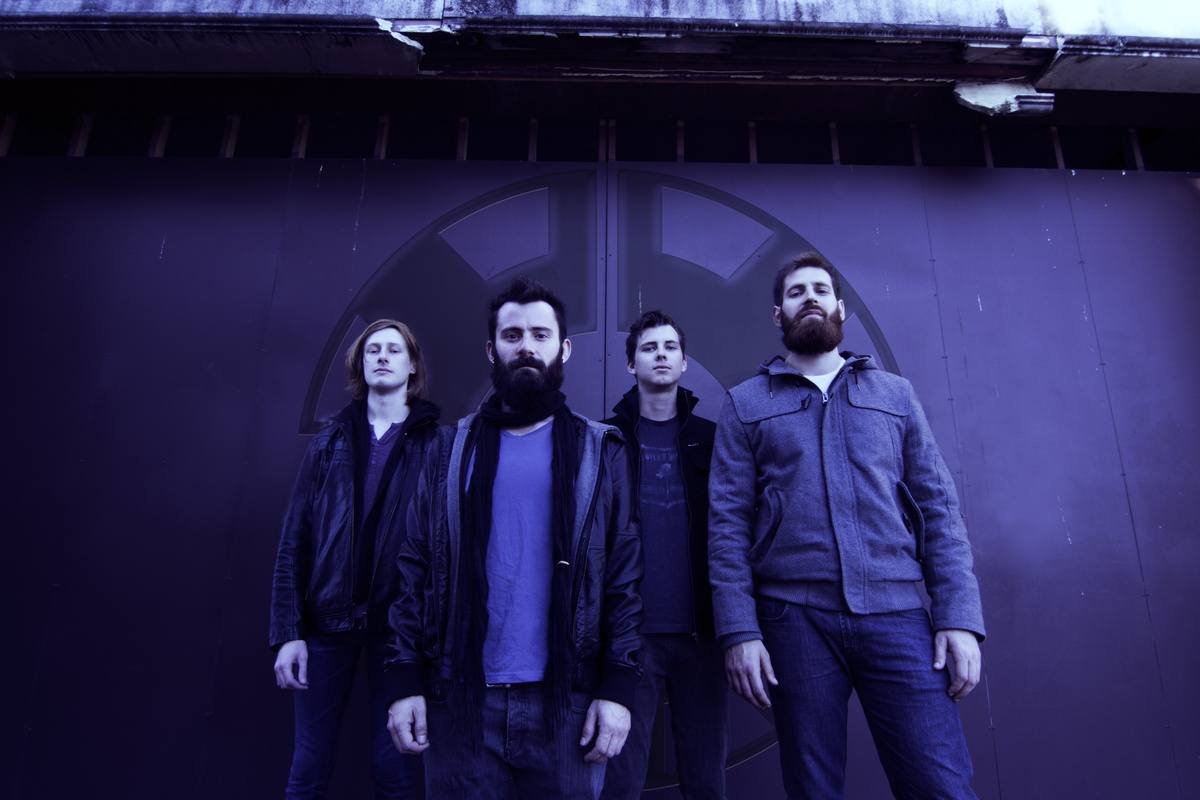
Do you plan to promote the album live?
Absolutely. We’ve got an album launch show planned in our hometown of Brisbane on the 22nd of November; a week after the album is released to celebrate the release. After a short break around December/January, we plan on getting out and playing a good amount of shows in support of the album. Nothing is set in stone yet, but we’ll hopefully get down to some of the major cities of Australia early to mid next year.
Are there any recent prog albums that you might recommend? This year’s been incredible for music so far. Australia, in particular, has produced some of the greatest records this year.
Prog albums? That’ll be a tough one as I don’t listen to too much prog myself, but album that has come out this year that have been highlights have been Slipknot’s “5: The Grey Chapter”, Closure in Moscow’s “Pink Lemonade”, Animals as Leaders’ “Joy of Motion” and Voyager’s “V”.
What does the future look like for Opus of a Machine?
Pretty great, I’m stoked to hear the reception of “Simulacra” considering it’s been so long. Whether it’s good or bad, it’s going to be interesting and I can’t wait.
Do the band members of Opus of a Machine have dogs? Do you like dogs?
Hahaha, we’re all living in tiny apartments, so we haven’t had a chance to get dogs, but my girlfriend is obsessed with dachshunds so maybe sometime in the future we’ll get a dog. I’m definitely a dog person. Cats are not my bag.
Opus of a Machine’s debut album “Simulacra” is out on November 16th. Pre-order it now from Bandcamp at a discounted price and free shipping.
Please send your love and support to Brad Birzer. He needs to devote Progarchy time to other projects, but we honor him for all the incredible passion he has poured into this most excellent site, and we pledge to keep the flame alive!
Review of Lunatic Soul, Walking on a Flashlight Beam (Kscope, 2014).
Birzer Rating: (6/10)
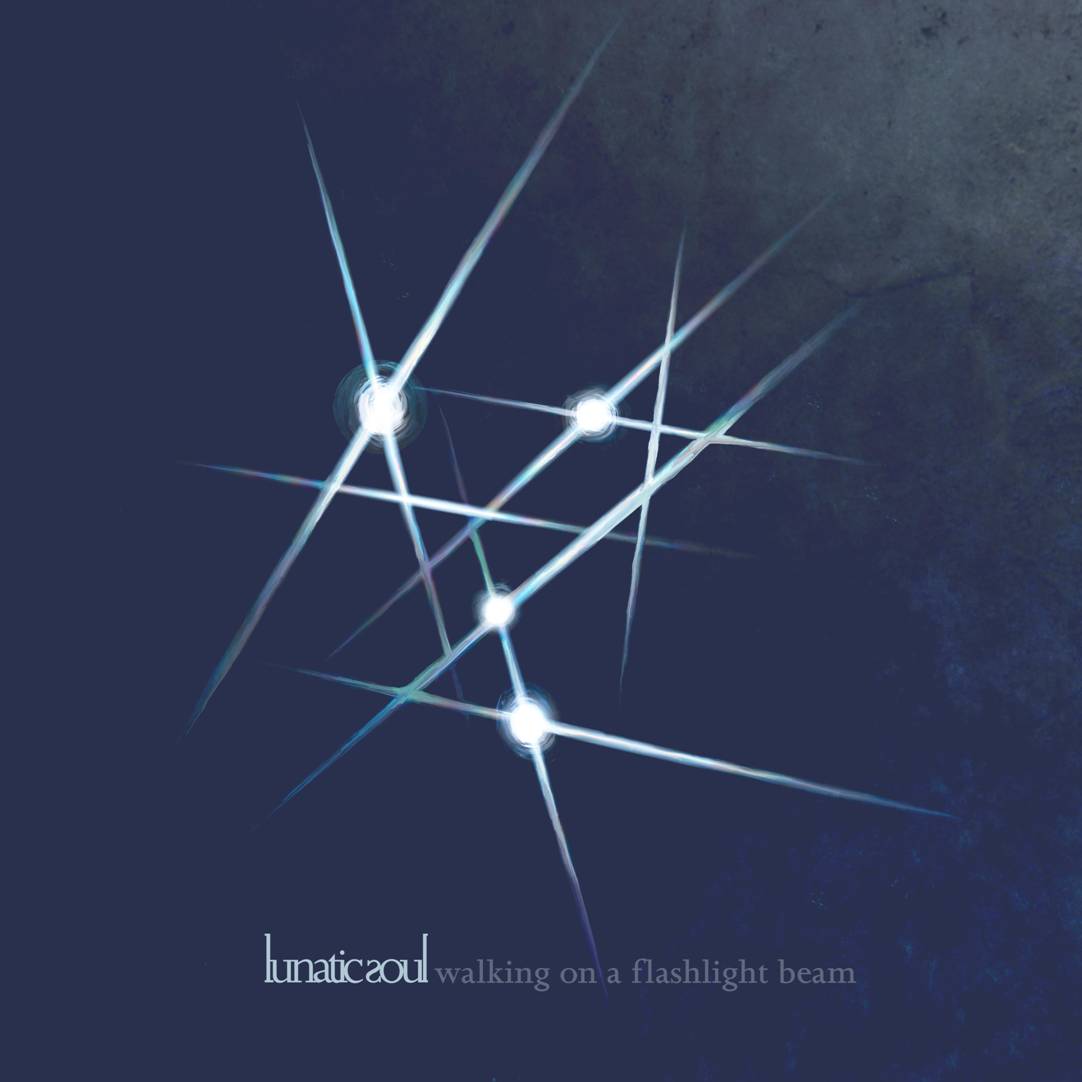 Let me begin by offering my Mariusz Dudas streetcred. I love Duda’s voice as well as his compositional skills. He possesses a profound sense of flow, allowing his music to move seamlessly from emotion to sentiment to feeling and back again. His voice is the kind that pulls one in, calling for full immersion. I’ve also always appreciated his lyricism, especially given that he’s not a native English speaker. He always seems to know the perfect lyric for the music and the perfect music for the lyric.
For a decade, I’ve been following his work. For a while, I thought I saw a continuity in all of his work: First Three Riverside Albums—Lunatic Soul—ADHD—Lunatic Soul. Lunatic Soul, beautiful and gorgeous in its own way, seemed the perfect interlude to accompany the drama of Riverside. For better or worse, this scheme has broken down almost completely now, especially after Shrine (Riverside) and Impressions (Lunatic Soul).
For any of you who have heard Riverside or Lunatic Soul (and I assume it’s all of you), you know have very captivating the music is. Walking on a Flashlight Beam is a reviewer’s purgatory. It’s quite good and well worth owning—a must for any fan of Riverside and Lunatic Soul—but it doesn’t captivate in the way that the first two Lunatic Soul albums did or the first four Riverside albums. Duda’s lyrics are as good as always—despite the weird pedestrian title of the album—as is his sense of flow. But, the flaw in this album is that it attempts to make the Lunatic Soul sound fresh by adding in a bizarre mixture of sound effects, many of which sound like old, recycled Depeche Mode noises from the early 80s. It’s not as extreme as, say, U2’s Pop, but it is leaning in that direction. So, a conundrum—all the things that make a Duda album here are great, but the attempt to experiment and innovate sounds false and clunky. Admittedly, Walking on a Flashlight Beam is sounding much less clunky after several listens.
Just to experiment, however, I played the first Lunatic Soul album immediately after listening to the new one. The first made my soul soar. This one made it want to soar, but it merely hovered.
Hiya
How is it November already? Here is the news:
This is a previously unreleased track from the Ghost album sessions. It’s called Blue Filter, I played it live a lot around the time when the album came out..
https://mattstevens.bandcamp.com/track/blue-filter-2
Available to download for the next week then it’ll be deleted 🙂 Buying music like this allows me to keep on making music.
New video – playing Big Sky for Auden Guitars
https://www.youtube.com/watch?v=7AVE0iSdM7w
I’m selling some of the my gear on Ebay. The Kaossilator I used on the song Lake Man on the Ghost album and delay pedal from the Stabbing A Dead Horse tour.
http://www.ebay.co.uk/usr/trinovantes1
Other than that it’s heads down writing and recording new material for new projects/Fierce And The Dead and the next solo record. One gig coming up in Milton Keynes in on the 31st January with Solstice.
Thanks for all your support.
Matt Stevens
Great news this morning from Steve Babb and co.

http://home.rosfest.com/glass-hammer-announced-as-the-third-band-on-sunday-enchant-to-headline/

Not Otherwise Specified started as a one-man project back in December 2008, led by multi-instrumentalist Craig Kerley. During the period of six years, Kerley released two studio albums: “Judgement” (2011) and “Projective Instruments” (2014). Not so long ago, Not Otherwise Specified switched to a full band, with tendency of performing live. About this and more than that, we talked with Kerley.
Do you have a specific approach when you work on a song?
I like to think of my approach to songwriting as a disorganized trial and error method. It’s kind of an out of body experience where I sort out ideas that suck from the ones that I like. I generally start out by jamming on one instrument or another and then taking pieces of that jam to create some structure. Basically, I just keep messing around with the songs until they come together into something I enjoy listening to. Once that happens, the song feels finished to me.
How did the writing process for your second album “Projective Instruments” go?
The writing process for this album was pretty laborious. It took me about two years to complete. Generally, I tend to create a skeleton of the song and then listen to it over and over again while taking notes on what needs to be changed, removed, or emphasized. I then go back into the studio to make these changes and listen again, following the same process. With “Projective Instruments” I went through this loop many times before I felt the songs were at a place I was comfortable with. There comes a time, when you realize you could keep editing and revising the song forever. In the end you just have to let go and believe what you created is good enough.
 What was the inspiration behind “Projective Instruments”? Are there any stories behind the choice of name?
The name of the album is based in both the process I use for creating it and my hopes for how it will be digested by those who listen to it. In the field of psychology, projection is the action of taking underlying traits, conflicts, and belief systems, which we are often unaware of on a conscious level, and placing them on an abstract stimulus, such as an inkblot. When this happens, we take these stimuli, which have no meaning in of themselves, and interpret them based on our own personal meanings. A projective instrument is at its most basic level an abstract stimulus, which allows us to project our own meaning onto it. That is my hope for this album. I would love for those who listen to it to find their own personal meanings to attribute to the songs.
Two songs on the album are over 10 minutes. What does writing a song with an extended structure allow in comparison to writing a song with standard length?
I believe that writing longer songs provides an opportunity to more fully develop lyrical and musical concepts and images. Standard length songs are great for conveying singular emotional messages of low complexity, like anger, happiness, fear, and sadness. Long songs, however, allow you to address more complex emotional concepts like ambivalence, uncertainty, nostalgia, and contentment. Additionally, longer songs allow you to convey the process of changing emotional reactions as a function of time and maturity. I feel strongly that there is a place for both formats in modern progressive rock.
“Projective Instruments” was mixed and mastered by Jerry Guidroz, who previously worked with the likes of Transatlantic, Neal Morse, and Flying Colors. In what measure did he contribute to the album’s final form?
Jerry was the first set of outside ears I had on the project. It was wonderful having such a talented individual giving me feedback on what he felt would work best in the sound.
Why did you choose to close the album with a cover of Peter Gabriel’s song “Signal to Noise”? Are there particular reasons behind the choice of this tune?
The primary reason for choosing it is that it has been one of my favorite Peter Gabriel songs for a long time. It has an incredibly understated power in its chord progressions and presentation. So I thought, “What would it sound like if the power wasn’t understated?”

Not Otherwise Specified fully transformed from being a one-man project to a band that’s supposed to hit the road. Have you already performed live? Who is in the band, and were any of the members previously involved in any other bands or projects?
Our first live performance is a band will be on Saturday, November 15 at Sweetwater Live in Duluth Georgia. We are very excited about this opportunity to play in front of a live audience, and look forward to many more opportunities in the future. The band itself is made up of six very talented musicians. Ben Daniels (guitar) and Keith Tuggle (bass) have worked together for several years writing very creative progressive rock. Jeff Wheeler (drums) is a big fan of progressive rock and has played in many original and cover bands in the Atlanta area. Brian Arnold (Guitar) is a student of 80s and 90s metal and rock’n roll, and has played in many bands over the years. Marty Gelhaar (keyboards) has had a long career of playing for and providing technical support to many of the top touring acts in the nation. He is a student of Prog and as had the opportunity to play keyboards live for bands such as Yes and Kansas.
You already started working on new songs with the new line-up. How did it go so far?
It’s great having other writers in the process. We are still at the ”rough draft” phase of writing the album, but have about an hour worth of material so far. I am getting many new perspectives from the band members. As a result, I believe this next album is likely to rise to a whole new level.
Do you have a clear vision with Not Otherwise Specified, in terms what do you want to achieve with the band?
More than anything else, I just want people to have the opportunity to hear our music. Our goal is to keep putting out the best progressive rock we can, and to have as many opportunities as possible to perform that music live for the people who appreciate it.
Check Not Otherwise Specified online at:
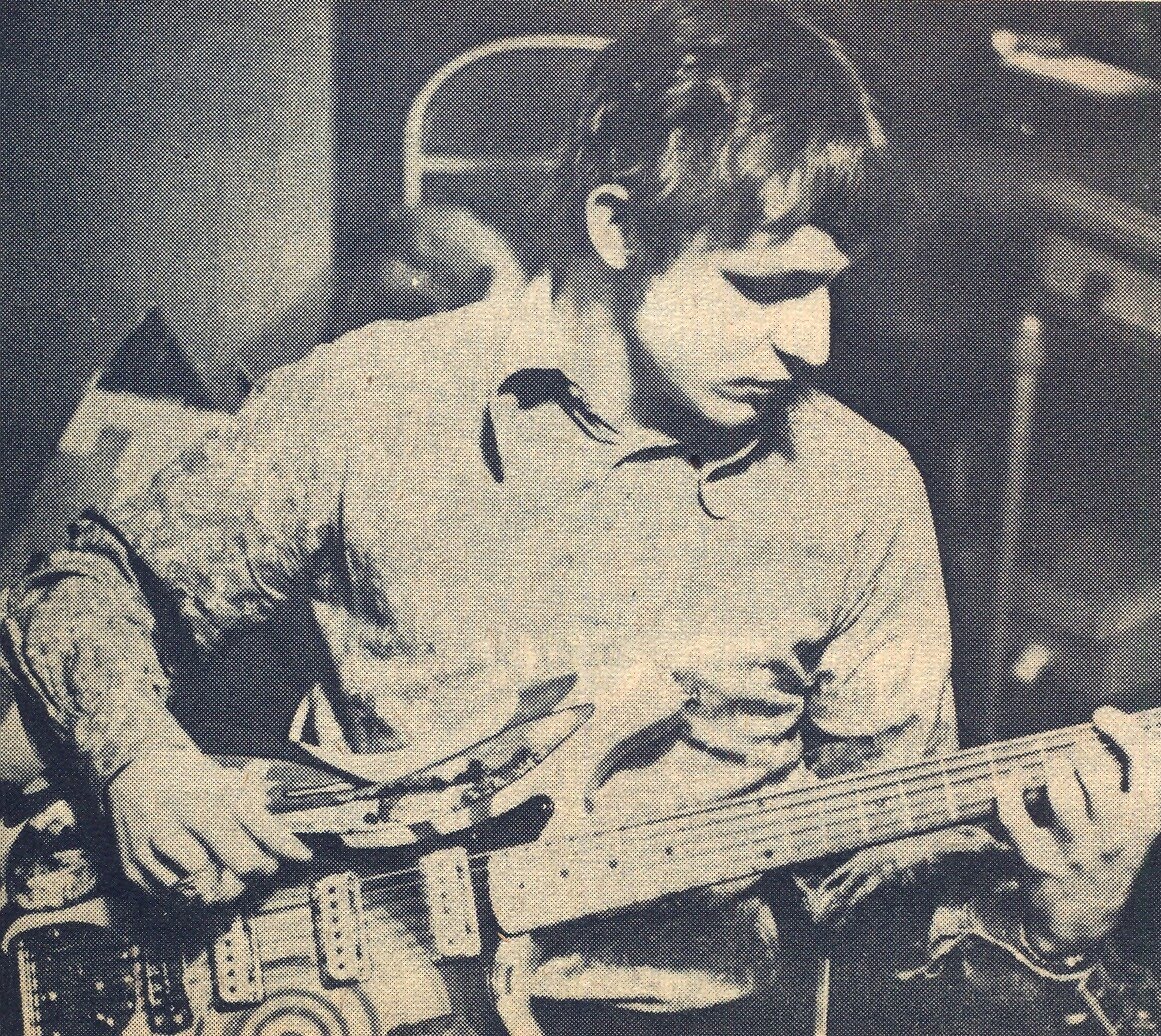 In 1968 Jimi Hendrix took the stage at the Winterland Ballroom in San Francisco, and as part of the set introduced a song that had worked its way into the repertoire: “Right now we’re gonna do a song by some real groovy cats, it’s too bad they are breaking up, it’s one of the heaviest groups in the world . . . it’s not sayin’ we can play the thing better than them, it’s just sayin’ we dig the cats and dig this song and we’d like to do it our own way, which will be an instrumental jam.” The song was Sunshine of Your Love, and the group Hendrix referenced was (The) Cream.
Hendrix’s powerful instrumental take on the song caps a double tribute: Cream wrote Sunshine of Your Love on the heels of seeing Jimi Hendrix perform in London, as a response to the jaw-dropping challenge he proposed as a performer and songwriter, and in its riff and melodies the song holds at once the past and future of rock and roll.
The song was penned by Jack Bruce, Cream’s bass player, chief vocalist, and lead songwriter. Bruce led the life of a musical prodigy, a force that pushed and pulled his similarly-gifted peers, to such an extent that Ginger Baker, arguably Britain’s most influential drummer and certainly one of Bruce’s few musical equals, left one band (Graham Bond Organisation) because of him and started another band (Cream) despite his presence. Guitarist Eric Clapton — another equal — insisted Bruce be a part of Cream, and Baker relented because, as he noted, both Clapton and Bruce had the same innate gift of “time.”
Since Jack Bruce died last week, I’ve thought a good deal about what Sunshine of Your Love, Cream, and this firebrand musician have meant to me through the years. Cream had hits, lots of hits, scattered across their three studio albums, but Sunshine of Your Love stands out among their work (“Crossroads,” rightfully still played on classic rock radio, being the highpoint of their live recordings). The riff is simple, as if, yes, they were taking cues from Hendrix, who disassembled the blues root of rock and roll, slowed the rhythms down, emphasized their laziness while adding blistering solos and an African funk. Separation of bass and drums and guitar became important, as if the transformation was about creating rather than filling space. In Sunshine of Your Love, Cream takes the Hendrix aesthetic and writes it large, in four minutes and ten seconds mapping Led Zeppelin, Black Sabbath, and most Heavy music for the next half century. It’s a blues made universal, and because of Hendrix’s own reaction one doesn’t get the idea that Cream was somehow playing Elvis to Hendrix’s Little Richard but, on the contrary, like Hendrix, actually embodied a much-needed cultural embrace. This wasn’t just heavy music for white boys.
Cream chugged hard and burned hot for two years before they couldn’t stand it or each other any more. Their recorded live work is mind-blowing but not for the faint of heart, and while Clapton became the superstar, with some justification, it was Bruce and Baker that ran the engine, driving each other mad while simply driving Clapton to greater heights. Sunshine of Your Love became ten then fifteen minutes long, the jams endless, the power draining as quickly as it had mounted. Clapton left for Blind Faith, not expecting Ginger Baker to follow even though he did, and Bruce was on his own. He released a fabulous solo record, Songs for a Tailor, with very non-Cream arrangements and approaches, and then from the perspective of a Cream fan like myself kind of drifted. He landed in projects like the one where he became the bassist for a power trio that Cream inspired, Mountain, hooked up with Robin Trower in yet another power trio, rid of Cream but not rid of Cream, and played various so-so groups with the jazz rock dudes of his era. He reunited with his Cream mates in 2005 for a set mostly plagued by the adult rock smoothness Clapton’s purveyed since 1972 (the stellar Pressed Rat and Warthog, a Baker chestnut that will never die because of sheer weirdness, notwithstanding). The grit, the volume, the burn were regrettably, inevitably, flattened. As with Clapton, as with Baker, Bruce’s best work was when he was a journeyman, with Cream.
It is a catalogue every bit as thrilling as it is brief. Those core Cream records remain embedded in the rock psyche, the elephant in any rock and roll room, their centerpiece Sunshine of Your Love.
Some Favorite Jack Bruce Moments
The Coffee Song
NSU
Sunshine of Your Love
Tales of Brave Ulysses
Deserted Cities of the Heart
Never Tell Your Mother She’s Out of Tune
Tickets to Waterfalls
Theme from an Imaginary Western
 Progarchy