Glass Hammer, Ode to Echo Preview

Nothing Glass Hammer does is unimportant.  Steve Babb posted a teaser preview of the new album this morning and the two words that spring to mind:  delicate and intricate.

Call me very excited about this.  20 years of Glass Hammer certainly leaves much to celebrate.

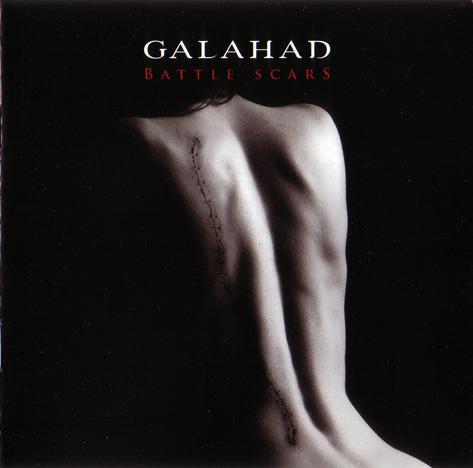
Seize the Day: Galahad, BATTLE SCARS

[N.B.  Due to weather, our internet is out, and I’ve typed this and posted it using our cell connection.  Spotty at best.  If there are errors and typos in the post, please don’t let it reflect on all of progarchy.  When I have a real connection, I’ll clean it up.  Promise!–Brad, ed.]

I hate to admit it, but I didn’t know the music of Galahad until about a year and a half ago.

Alison Henderson, first lady of prog and a fellow progarchist, introduced me to the music at the time that Battle Scars (April 2012) came out.  “Brad, you have to check out the new Galahad album.  It’s brilliant.”  Actually, I’m paraphrasing, not quoting.  But, I bet I’m really close when remembering her email that day.

I never fail to follow the advice of Lady Henderson, and I downloaded the music that day.

From the opening plaintive words to the direct pleading lines of “Battle Scars, Battle Scars,” I was rather taken.  I wrote back to her almost immediately, “This is what Ultravox should’ve been!”  She replied that she would have to take my word for it.

Granted, I really dislike it when reviewers compare Big Big Train to Genesis, as though Genesis needed completing or as though Big Big Train exists to fill the void left by 1977 Genesis.  So, please don’t take my comparison as anything more than a joyful comparison.  Stu Nicholson’s voice has, in the best sense, a Midge Ure quality—bringing just the perfect amount of emotion and emphasis to a song.  So, imagine if Ultravox had decided to explore the farthest reaches of its potential after releasing Rage in Eden (especially side 2 of that amazing work).  Imagining such a  beautiful thing, I can see—far into the distance—Battle Scars or Beyond the Realms of Euphoria.

After the brief discussion with Alison, being the obsessive prog fan that I’m sure many progarchists are, I looked up everything I could find regarding Galahad.  I’d heard the name, many times, of course, before April 2012, but always in the context of “neo-prog.”

Mask

Neo-Progressive Rock

As much as I pride myself (always dangerous) on my knowledge of prog, ca. 1971 to the present, I’m really weak on what’s called “neo prog” or “second-wave prog.”  At the time that second-wave prog emerged, my junior high, high school, and college years (Class of 1990), I was listening to so-called new wave such as Thomas Dolby, The Cure, and XTC, presuming them to be the rightful inheritors of Yes and Genesis.  For me, the ultimate prog album of the 1980s is Talk Talk’s Spirit of Eden.  Next to Talk Talk, Rush was my favorite band.  I didn’t even know about Marillion until a friend introduced me to them in 1993.  He handed me a copy of Misplaced Childhood, and I was stunned such a group had existed without my knowledge (there’s that pride again).  I very much liked what I heard, but this was just before Brave, The Light, and The Flower King appeared—which almost completely stole my attention.

Needless to write at this point, my knowledge of Pallas, IQ, and Galahad—all supposed neo-prog—was pretty poor.  About eight or nine years ago, I started collecting the back catalogues of Pallas and IQ, but Galahad still remained off my radar.  I’m pretty much a complete “newbie” when it comes to other neo-prog artists.

I’m not sure if neo-prog is a sub-genre of progressive rock or really the “second wave of prog.”  Whatever it is, I like what I’ve heard. . . .
1340553422_af1bcc51bdcf01bb7c014941a9f91c97

Battle Scars

. . . . especially when it comes to Galahad.  I like it very much.  Indeed, this is an understatement.  From the moment I first heard Battle Scars, I knew this was a band I would come to cherish.  And, I have.  Though I regret having missed out on so much since 1985 when it comes to this band, I’m also really happy to have it all to explore again.  As I love to tell my students, I’m jealous that so many of them get to read The Lord of the Rings for the first time.  I would give a lot for that “first time” again.  I feel I’ve been given a gift by coming to Galahad late in life.

I really have no idea if Battle Scars is a “proper” neo-progressive album or not.  I don’t have the tools to judge, and I’m more than content to know it’s brilliant music, whatever label might adhere to it.

In terms of tone, Battle Scars is the Grace Under Pressure of our present age  In 1984, Rush explored—in a rather dour, harried, poetic fashion—the final days of the Cold War, though most of us didn’t know the days of the Soviet empire were numbered.  Gulags, holocaust camps, the loss of a friend, fear, acid rain, and rabbits running under are squealing wheels all haunted Grace Under Pressure.  Listening to this album while devouring various dystopian novels fundamentally shaped my perceptions of what I saw in the news.

With Battle Scars, Nicholson has equalled Peart in quality and tone, asking what a post-9/11, a post-Bush, world might mean.  But, just as with Grace Under Pressure, the events of the world offer a symbol for the events of the soul.  Disorder in one is disorder in the other.

The album opens with haunting words—even in delivery—of St. Paul.  Do our actions reap corruption and death or life everlasting?

I’m not sure if Nicholson wants his listeners to take these words literally or not, but they fit ominously and perfectly, setting the stage for some of the most important and meaningful questions we can ever ask ourselves, Greek or Jew, male or female, bond or free.

How to you want to live in this world.  With integrity and purpose or without?  Do you want to achieve and strive or do you want to glide and get by?  Do you want the message on your tombstone to read “he lived” or to read “he lived well”?

Though only seven tracks at 44 minutes, Battle Scars packs a serious punch.  After the contemplative opening moments quoting St. Paul in hushed tones, Battle Scars becomes relentless.  Indeed, a wave of strings and respectful vocals become pounding bass and drums, crying against vanity.  “Hollow words count for nothing.”

An explosion or implosion ends the first track, and it glides into some nice reverb and more pounding bass, guitar, and drums in the shortest track of the album, “Reach for the Sun,” the lyrics reminding the listener that “battle scars are real.”

Track three, “Singularity,” begins with some appropriate spacey ethereal washes of keyboards, and the distant angular guitar is especially good.  It breaks into a full rock song a little over a minute into the track, and the listener is propelled forward again.  Having reached beyond the pain and suffering of this world, the protagonist of “Battle Scars” has transcended reality in his imagination and integrity.  “You can’t touch me now.” The track ends with some beautiful, romantic piano.

“Bitter and Twisted,” track four, brings the listener back to the world, with every instrument back in full, driving play.  It’s in this track that the band displays their full strength, as individual players and as an artistic whole.  This is one very tight band.  Lyrically, it’s difficult to know if Nicholson is identifying with the protagonist here, expressing shock at betrayal, or if we’re given the standpoint of an observer misperceiving and misunderstanding the protagonist.  “You’re just a little piece of nothing at all.”

With track five, “Suspended Animation,” the protagonist identifies the evil that is in himself and the world around him.  Here, we find a movement toward reconciling the order of the inward and outer person.  The protagonist must reconcile his own troubles and problems, seeking some kind of forgiveness and atonement.  Another driving rock song.  Nicholson’s vocals are particularly good, especially as he proclaims and enunciates the words, “suspended animation.”

My favorite song on the album is the sixth, “Beyond the Barbed Wire.”  As one would expect with such a title, the song is not a happy one, though it might be a resigned one.  One of the quieter songs on the album, at least for its first minute or so, it reminds the listener that though the Nazis and Soviets might be gone, other evils remain in the world.  At least, as I’m understanding the lyrics, this is what I’m hearing.  The holocausts and gulags have just taken on new shape and new form, but the essence of such evils remains.  “I’m just thinking, just thinking, beyond the barbed wire.”  The protagonist, however, finds great strength in those who came before him.

The spirits of the lost reinforce my will

Their souls reunite in pure defiance

We will not disappear in mournful smoke.

This is a stunningly beautiful lyric, and Nicholson delivers it not just ably, but expertly.  The voice reminds the listener of the opening lines of the album, the words from Paul.

The final song, “Seize the Day,” is the longest track and it successfully ties the whole work together, allowing all to end in real joy.  The track also prepares the listener for the second Galahad release of the 2012, Beyond the Realms of Euphoria.  Still very much a rock song, “Seize the Day,” also embraces, very well, forms of electronica.  “Seize the day/relish every moment.”

thumb.php

Thank you, Stu, Roy, Spencer, Dean, and Neil.  You have created a thing of beauty.  Long may the creativity and virtue of Galahad continue.

Big Big Train News: Excellence Prevails

I was very excited to get Greg Spawton’s post today. Wonderful news and well-deserved success. I’ll post more later, but, sadly, our internet connection is out. I’m posting this from the Verizon account. Hence, no frills.

Lots of thrills, though, with BBT. Enjoy: Big Big Train News

Cailyn Lloyd’s VOYAGER in Progress

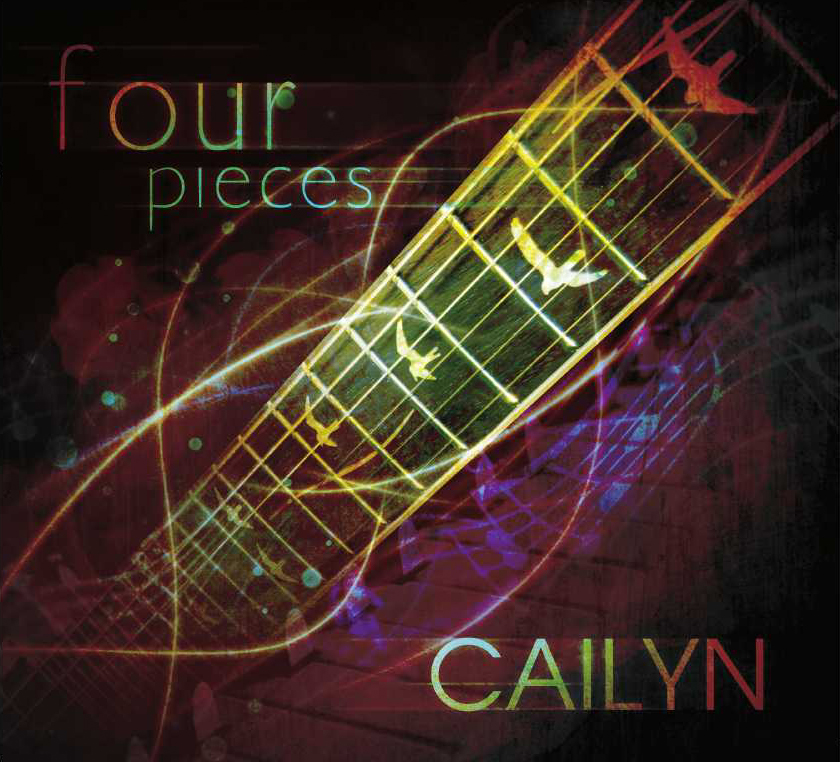
Our friend, Cailyn (she of Four Pieces fame), just released information today about her fourth album, VOYAGER.  Here’s a bit of what she has to say:

4082394417-1-2

I am in the studio, working on a new project called Voyager.  This project arose from my interest in the Planets Suite by Gustav Holst. Problem was, the music as it stood did not easily lend itself to a rock interpretation and the opening movement, Mars, had already been explored extensively by better artists than I.  The idea gradually evolved from there to a musical interpretation of the Voyager Space Project.

Voyager will include excerpts from Jupiter, Saturn, Uranus, and Neptune from the Planets Suite as well as ten original pieces of music (see track listing below).  I have finished the composition for all of the tracks and I am now working on the instrumentation and programming.

While I originally imagined this as a progressive rock suite, it will be more eclectic, not adhering to any single genre.  Much of it is classically inflected symphonic prog, particularly the Planet Suite excerpts as well as Io, Titan, and Triton.  Europa and Pale Blue Dot are more New Age with blues inflections.  Enceladus is free form without time or key signature.  Ariel and Miranda are classic-progressive rock hybrids.

Voyager will primarily be an instrumental work though I have sketched wordless vocals for several of the tracks. Most of the drumming will be recorded on an acoustic set and I am now looking for the right a session drummer for this project. The bass guitar and keyboards will be more prominent, especially the keys as much of the original music is being written at the keyboard.

Run time: about 56 minutes.  Track listing with brief descriptions:

Voyager – A quiet symphonic introduction leads to a bluesy guitar progression followed by a powerful progression of chords that builds to a grand crescendo before a return to the opening theme complete with synths, voices, guitars, and drums.

To find out more (and you should!), including a full track description, click here.

575176_10151022165457603_490734598_n

New Background Image, January 2014

The background image, subject to change.  The picture behind the header and in the overall background is taken from Jim Trainer’s painting for the remixed Goodbye to the Age of Steam by Big Big Train.

progarchy bg 3 jan 2014.001

Four Years Ago Today: Recollections

More reflections from the past.  This one from four years ago today, January 1, 2010.  Still lots of love for Steven Wilson.

***

mobile_pic1A Steven Wilson solo albums can only come out every so often, sadly.  Technically, “Insurgentes” came out at the beginning of 2009.  But, for us Wilson nerds who follow his career way too closely, “Insurgentes” came out in 2008, even only in Wilson’s self-proclaimed hated MP3.  According to my iTunes stats, “Insurgentes” remains my most played cd of this past year.

It was closely followed, again according to my iTunes stats, by Guilt Machine, “On This Perfect Day,” Oceansize, “Frames,” and Riverside, “ADHD.”

Like the cat who adopted us in the summer of 2009 and with whom/which I fell in love, Guilt Machine has been a constant for me since its release in the summer.

There were however, two really, really disappointing CDs.  So disappointing in fact that I’m embarrassed I own them:

  • Dream Theater                      “Black Clouds and Silver Linings”
  • Pure Reason Revolution       “Love Conquers All”

Not sure what either group was thinking in the direction taken.

And, finally, a fun and novel album, but almost assuredly nothing that will stick with me for years to come:

  • Muse                           “The Resistance”

Lyrically, a great album, and moments of absolute musical genius can be found everywhere.  But, excess whimsy mars the album, and everytime I doubted how serious the musicians were about this, I doubted my interest in their project.


[Additional note found: “Thus far, 2009 has been bleak.  Dream Theater’s new album, “Black Clouds and Silver Linings,” serves as an incoherent exercise in notes chasing notes and embarrassingly written lyrics.  Pure Reason Revolution’s “Amor Vincit Omnia” offers nothing but miserable sexual decadence and ridiculous Euro dance-type music.  The title should’ve been Lust Conquers All, not Love Conquers All.  How this could be the same band that released the captivating “The Dark Third,” I have no idea.”]

Steven Wilson’s Insurgentes

As we close 2013, I thought it would be fun to go back to some earlier writings.  Here’s my take on Steven Wilson’s first solo effort, Insurgentes.  I wrote this December 31, 2008.  As is obvious, I was rather smitten.

***

insurgentesThe most prolific and interesting musician of 2008, however, has to be Steven Wilson of Porcupine Tree, Blackfield, and No-man.  A true audiophile, Wilson loves perfection and innovation as much as he loves beauty and tradition. Born November 3, 1967 (three days less than two months after I was born), Wilson is a masterful songwriter, singer, and lyricist.  This year, Porcupine Tree released the EP “Nils Recurring”—outtakes from the outstanding 2007 cd, “Fear of a Blank Planet.”  Like the members of Rush and of Riverside, Wilson takes his art very seriously.  Even the outtakes are brilliant.  I was especially struck by the third track, “”Normal,” an alternate take of “Fear of a Blank Planet”’s fifth track, “Sentimental.”  Frankly, as good as “Sentimental” is, “Normal” is a much better and more interesting song.  And, I’m sorry Wilson chose “Sentimental,” as “Normal” would’ve made “Fear of a Blank Planet” a nearly perfect album.  As it is, it’s a great album. `

But, what struck me most about “Normal” was how similar it is to Kevin McCormick’s “Soleares” from several years back.  Wilson claims to listen to nearly 10 new CDs a week, and he travels the world over playing and collecting music, so it’s possible he’s heard McCormick’s music.  The similarities between the two men and their music is startlingly enough, even without “Normal” sounding like “Soleares.  Only a week apart in age, they obviously listened to the same music growing up, and they each have an amazing ear for complicated, beautiful music.  I can only imagine what astounding works the two of them might create if they ever worked together.  They might very well re-make the music scene.

Wilson’s true genius, though, revealed itself in late November with the preliminary release of his solo album, “Insurgentes.”  From the beginning to the end, it move ebbs and flows, but it never fails to captivate the soul and the mind.  It is, to my mind, the best non-classical album of 2008, and it is the best thing Wilson has made.  This is in no way, shape, or form minor praise, as 2008 has been a great year for progressive music, and Wilson has made some truly outstanding albums.  The opening track, “Harmony Korine,” reminds me of what U2 might have done, had they ever embraced—fully—seriously complex and progressive music.  The third track, “Salvaging,” is a worthy successor to Talk Talks “The Rainbow.”  The fifth track, “No Twilight within the Courts of the Sun” has a Robert Fripp feel to it.  The vocals (Wilson and Irish singer, Clodagh Simonds) on track six, “Significant Other,” are simply heavenly.  Wilson’s guitar work on “Insurgentes” feels fresh, but it also reminds me of Robert Smith’s guitar work on The Cure’s 1993 live album, “Show”—but especially “From the Edge of the Deep Green Sea,” “Never Enough,” “Cut,” and “End,” some of the finest 30 minutes of live music I’ve ever heard.  The musicians on “Insurgentes” include bassist Tony Levin and keyboardist Jordan Rudess.  The entire album grabs a hold of the listener until the last note plays.  Even after, the music and the ideas linger.

The Humility of the Duke

Every once in a while, an album from my past jumps out at me.  How much thought, perspective, and perception went into it, I wonder?  What did these folks think as they were making it?   Did they think of it as a job?  Did they think of some abstraction such as Art, Beauty, Truth, Goodness, hoping against hope for the approval of the gods?  Did they make it to satisfy themselves or their friends or their families or their producers or their record label or their fans or some combination of all of these things?

Did they know it would still be touching the lives of others thirty-four years later?

Thank you so much, Phil, Tony, and Mike.  Whatever your intentions, Duke still speaks to me.  In volumes.  Yours, Brad

It is written in the book.

duke modern

Mr. Prog Meme

A gift from progarchist, Russell Clarke, this morning.

944839_636141709780782_1335142291_n

The piece in question: https://progarchy.com/2013/12/26/steven-wilson-a-minority-report/

David Longdon Reflects

The ever-wonderful David Longdon, lead singer of Big Big Train, looks back at his life, 2013.  A fine reflection.

Here we are at the end of another year and what a fantastic year it has been, not only for Big Big Train but also for Progressive Rock Music in general. There have been some tremendous releases in our genre this year.

This post is intended to be a brief overview of our year, from my ‘behind the mic’ viewpoint.

On the 2nd of January 2 2013, we found ourselves on location at theEastleigh Railway Works in Southampton. As you would expect, it was cold despite the addition of an industrial heater. The works were in use by the railway carriage engineers and we were in awe of the sheer scale of the work that these men carry out, as if it was nothing. It felt most strange performing along to our track in the midst of all this dramatic industrial scenery. Eventually though, after a few runs through, we began to get used to the absurdity of it and we adjusted to the weirdness of it. The video was made to give those who are interested in us, a glimpse of what it might be like, when we perform live. The video was directed by Peter Callow and upon it’s release in September this year, it has helped to opened up new possibilities for us.

To keep reading, go here: http://soundemporium.blogspot.com/?spref=fb