
I recently got to chat with my musical hero, Mariusz Duda.
http://theprogmind.com/2015/08/21/a-chat-with-mariusz-duda-of-riverside/
I recently got to chat with my musical hero, Mariusz Duda.
http://theprogmind.com/2015/08/21/a-chat-with-mariusz-duda-of-riverside/
Today (August 21, 2015) SPOCK’S BEARD’s brand new album, The Oblivion Particle, dropped. I went to my “brick and mortar” (Hastings) to see if they had it, as I was willing to pay full retail price rather than get it at Amazon.com. They did not have it…internet sales here we go again. A really nice review, […]
https://fatherwatson.wordpress.com/2015/08/22/my-favorite-song-of-2015/
The joy of Chris Isaak. That joy is found under smoky skies with an orange hued half-moon hovering overhead as the modern day 50s man worked through a 24 song set on Saturday night at the Oregon Zoo in front of a sold out crowd. The smoke laden air from the forest fires raging miles […]
https://drewsreview.wordpress.com/2015/08/23/concert-review-chris-isaak-oregon-zoo/

[Earlier this year, Professor Geoff Parks very kindly asked me to contribute to the BBT Concert Book, introducing and celebrating the band live for three dates this past weekend. As any progressive rock lover knows, this happened and, surprising to no one except the members of the band, BBT performed with absolute and utter brilliance. From my perspective, praise of BBT is praise of integrity itself. Below is what appeared in the concert program. I am deeply honored to have been a part of this event, even if armed only with a keyboard and separated by 3,500 miles–Brad]
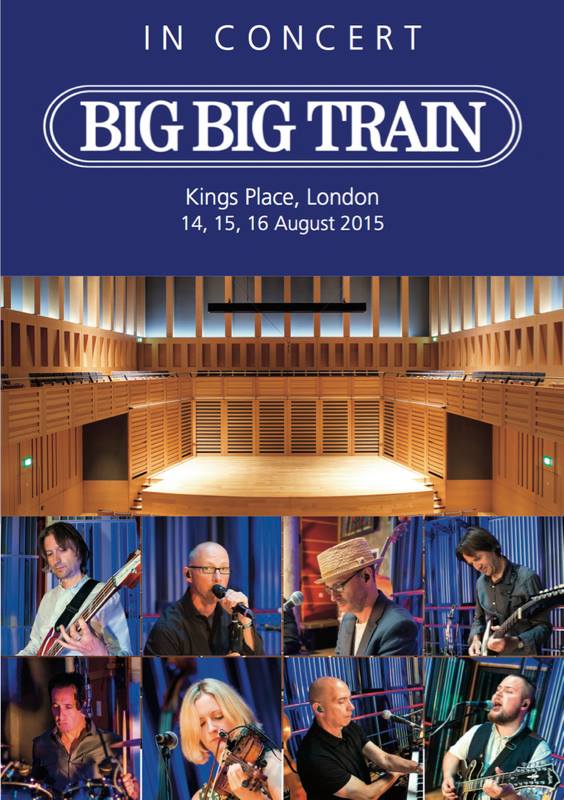
Over time, most bands fade, while some others merely linger. A few, however, grow, evolve, develop, broaden, deepen, and reach. Toward what? Toward excellence, toward true community, toward art, toward creativity, and toward beauty.
Big Big Train is such a band. More importantly, it is an artistic community, in and of itself.
Founded in the early 1990s when progressive rock had become not just “weird” but almost anathema for most folks, Big Big Train stood for something solid and good even when the footing was unsure. Writing dramatic and cinematic pieces—complete with false starts and re-dos and some clumsy grasps (one album from 2002 is even a four-letter word)—Greg Spawton and Andy Poole pursued their dreams of making their own music. Though they correctly offered pieties to the past of Genesis and Yes, they wanted to be their own touchstone.
Then, something happened. Gathering Speed. At once an homage to the brave who defended the motherland against the rapacious fascists of central Europe, Gathering Speed proved to offer a distinctive sound, a “Big Big Train” sound. Drama, time shifts, jarring passages becoming melodic and melodic becoming ethereal, and truly fine lyric writing made this album a gem.
Then, something happened. Again. The Difference Machine. Astonishingly, even better than Gathering Speed, The Difference Machine told the haunting story of the stars and the souls, and the souls and the stars. At what point do the two become one? Chaos, order, sacrifice, dreams, death, loss. Everything that matters in life (and death) is here, in every lyric and every note.
Then, something happened. Again. The Underfall Yard. Oh, the majesty of that new voice, that voice that so perfectly captures Spawton’s and Poole’s music. That voice doesn’t just define the sound that the two remaining founders of the band had so long pursued, it gives it harmony in a perfect, Platonic sense. The listener begins the album, lulled by that voice. Toward the middle, we don’t know if we’re in Hell, Purgatory, or Holy Mass. By the end of the album, we care desperately that an electrical storm has moved out to sea.
Then, something happened. Again and again and again. English Electric One, English Electric Two, English Electric Full Power. A two cd set with a glorious booklet. And, now, we see what Spawton and Poole had seen for twenty-three years: an idyllic English landscape, marred by human error and the will to destroy. But, also leavened with the will to love, to discover, and to create. English Electric, despite the power implied, is the delicate holding of a soul, a soul that can choose the good or the ill, the true or the terrifying, and the beautiful or the horrific.
And, now, a toast of Wassail to three live dates in London, 2015. There, in the heart of English liberty, the heart of English commerce, and the heart of English dignity. For there, behind wind-swept pioneers, Spitfires, divers and architects, station masters, fallen kings, intriguing uncles, decrepit athletes, shipping manifests, curators, and loyal dogs, lies . . . something.
There, just behind the hedgerow. If you look and listen with attention and care, you’ll find the keepers of all things good, true, and beautiful. They call themselves Big Big Train.
 Dear Progarchists,
This year, 2015, has absolutely blown me away in terms of quality in music. Since nearly a decade ago, I’ve been convinced that each year is the best prog year ever, only to find that the following year is even better.
Long may this trend continue.
As I’ve had the opportunity to explain before, the five main editors—Carl Olson (AOR), Chris Morrissey (Metal), Craig Breaden (Blues, rock, experimental), and Kevin McCormick (classical)—and I (prog) founded progarchy with the intent of offering writing equal to the music. That is, we felt it only just to write as well as our favorite musicians played. After all, who wants to read a sixth-grade level review of a Big Big Train album? Greg Spawton is extremely smart. Andy Tillison is extremely smart. Leah McHenry is extremely smart. Robin Armstrong is extremely smart. Well, you get the point.
What would be a site dedicated to the beauty of music be without writing and thinking to match the level of the art reviewed?
Have we always succeeded? I’m not sure. Have we always tried to succeed and match the quality of our thinking and writing with the quality of the music we hear? Absolutely. And, whatever the faults of progarchy, I can state with certainty that I believe this website to be one of the finest websites—in terms of writing—that exists on the internet.
Since the founding of progarchy nearly three years ago, our readership has grown and grown, while our base has remained steady. In addition to over 3,000 permanent email subscribers, we get an additional 400 to 8,000+ visits a day, depending on topic. In case you’re interested, our biggest draw is Neal Morse with Rush being a close second.
Yesterday, something somewhat surprising but very nice happened to us. A very, very high quality music label asked us if we’d be willing to advertise. When we started progarchy, we avoided this for two reasons. First, we were brand new and who would want to advertise with us? Second, we wanted to prove our “objectivity” first. Well, objectivity isn’t exactly the right word. Craft, honesty, art? Enthusiasm, certainly. Criticism, often. But, honesty—definitely.
After receiving the offer, I immediately emailed the other four editors. Unanimously, we agreed it was time to promote commercial interests and labels who fight not just for success but for excellence. So, beginning very soon (perhaps as early as tomorrow), you’ll see a brilliant banner and link across the top of progarchy.
I think we’ve proven ourselves over the last 2.9 years. And, just in case you’re worried the money we receive from advertising might just send us on round-the-world junkets, be not afraid. The first thing we’ll do is pay for our domain name for the next 12 months, spruce up the site a bit, and, especially, start indexing our reviews and interviews—making them far more accessible to our readership.
A huge thanks to the editors and authors of progarchy and to all of you reading this.
Yours, in appreciation and humility, Brad
[Please be warned: this is a serious essay with an advertisement at the end—so, don’t feel ripped off!–Brad]

A week ago, I tried to explain—in the first of a multipart series—why I decided to write a book about Neil Peart, lyricist and drummer for Rush. Biographies of rock musicians generally either become fanboy lovefests, People-magazine exposes, or clinical dissections.
I pray and assume I’m guiltless when it comes to the second and third reasons. I’m sure, however, that I will rightly be accused of the first.
The youngest of three boys, growing up in central and western Kansas, I happily had a mother who allowed us to listen to whatever we wanted and read whatever we wanted. Television was never huge in our house, and I’m still rather mystified when peers of my age group quote The Brady Bunch or The Partridge Family. If I had the choice between tv and listening to an album, the album won every time. I don’t remember a time in my life when music wasn’t playing somewhere in the house or in the car. And, it wasn’t just rock. We listened to classical and jazz. Never opera, and I despised musicals and county music. I did come to love opera, but only in my adult years. Almost every room, however, had some form of stereo system, album collection, and headphones. From the age of 10 or so, I could hook up a fairly complicated stereo system, splice speaker wires, etc.
Though my brothers have long given up their love of progressive rock music, they did love it immensely in the early 1970s. My oldest brother is 8 years older, and my older brother five years older. From around 1971 or 1972 (I was born in 1967), I remember Jethro Tull and Yes. Soon, it would be ELO, Kansas, and Genesis, too. Rush, though, I’d never heard—or, at the least, if I had heard them, the band did not make an impression on me until the spring of 1981.
For some reason that I have since long forgotten, I got in trouble in the spring of 1981 while at school Back then, when discipline was still a central part of junior high education, any one of us could get any trouble for almost anything. No one questioned it back then. If the teacher or an administrator decided you were in trouble, you were in trouble. I was a very good student when it came to academics, but I could care less about rules. In fact, I hated them. Regardless, in the spring of 1981, I earned a detention—which meant sitting in the school library around a wooden table with the other kids who had earned detention. That day, it was me, another kid named Brad, and Troy. I’d know each of these guys since first grade, and I’d always been friendly with them. We weren’t, however, close. Troy, if I remember correctly, was wearing a Duke (Genesis) pin on his jacket. Of course, I was immediately taken with it. You know Genesis? I know Genesis! Exactly moments for a 13-year old. It turned out that Brad and Troy knew as much as I did about prog, but they had definitely embraced harder prog, while I had always gone for more symphonic prog.
Have you heard the new Rush yet, one of them asked me? Rush? No, never heard of them. Oh, Brad, you have to listen to Rush. Moving Pictures might be the greatest album ever made.
I’d had a lawn mowing business for several years at that point, and I was rather frugal with my money—except for books, Dungeons and Dragons stuff, and albums. Of course, as soon as I left school that day, I purchased Moving Pictures. I can still remember staring at the album, taking off the cellophane, and removing the vinyl from its sleeve. There was something so utterly magical about dropping the needle on side one of a new album. Drop, crackle, hiss, pop, DUN, Dun, dun, dun “A Modern-day warrior, mean, mean stride”!!!!!! Where on God’s green earth had I ever heard anything so good? At that point in my life, nothing could rival Tom Sawyer. Then, Red Barchetta. Oh yeah, who wouldn’t want to get into a car and drive at outrageous speeds while escaping from authority? Even then, I was rather instinctively libertarian. YYZ reminded me of a lot of jazz my brothers had played me, and I thought every drum crash was the drummer (a guy named Neil Peart, I soon discovered) throwing glass bottles at a wall. Limelight seemed great. Camera Eye was utterly mysterious, especially for someone who had only known the big cities of Denver, Wichita, Dallas, and Kansas City. Witchhunt seemed appropriate, and I thought of the hypocrites I’d known who often acted with outrageous righteousness. Vital Signs seemed the perfect ending, catchy and a bit weird with words I’d never heard before, such as “evelate.”
I can still see my 13-year old self reading the lyrics of Moving Pictures. I read them again. And, I read them again. And, again. And, again.
And, the pictures of the three guys who made up the band? They looked so cool. They didn’t look hippiesh and all wizardy like the Yes guys on Yessongs. No, these three guys looked like they could’ve grown up around the corner from me.
So, there you have it. Neil Peart has been my hero since detention at Liberty Junior High School, Hutchinson, Kansas. He taught me not to be him, but to be myself. Thank you, Brad and Troy. Thank you long forgotten teacher who thought I was a trouble maker. You were probably right. Little did you know, however, that you were the catalyst that lead me to Rush and to Neil Peart. And, here I am, thirty-four years later, and I’ve just written a book on the guy.

[And, here’s the advertisement:]
On September 15, 2015, WordFire Press, founded, owned, and presided over by the incomparable Hugo-nominated science fiction author, Kevin J. Anderson, and his equally amazing wife and famed author, Rececca Moesta, will be publishing my biography, Neil Peart: Cultural (Re)Percussions.
It will be $14.99 for the paperback and $5.99 for the ebook (all formats).
For another 48-hours, however, you can order it as a part of the Humble Bundle Music Book Bundle. For $15, you can get an advanced review copy of NEIL PEART: CULTURAL (RE)PERCUSSIONS as well as a number of other fantastic books, including CLOCKWORK ANGELS: THE NOVEL. And, you even get a preview of the sequel, CLOCKWORK LIVES. It’s well worth it, especially for just $15.
Here’s the link: https://www.humblebundle.com/books
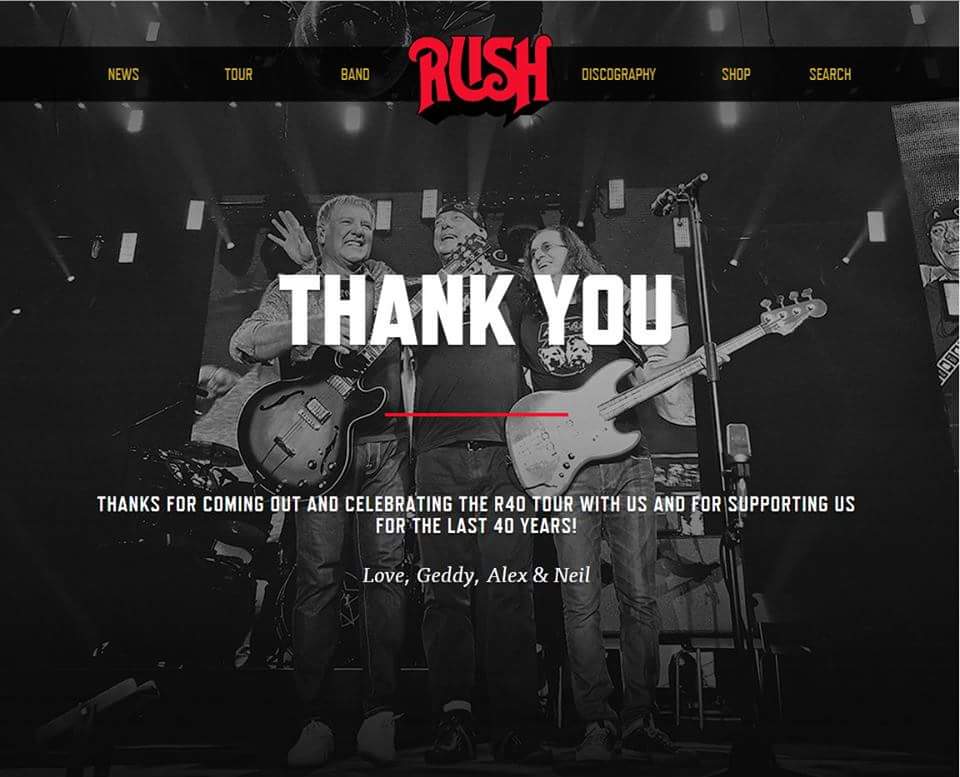
Ok, this really got to me. Love these guys, and I have since 1981. Thank you, Geddy, Alex, and Neil.
A huge thanks to Dan Bell for first posting this–it comes from the official Rush website.
****
Fragile is the fourth in a series of remixed & expanded Yes Classics. The album has been mixed for 5.1 Surround Sound from the original studio masters by Steven Wilson & is fully approved by Yes.
Release date: Oct 30th 2015
image: http://yesworld.com/wp-content/uploads/2015/07/Fragile-460.jpg

– Album mixed in 24-96 5.1 PCM Surround Sound & in DTS-HD MA 5.1 from original multi-track sources.
– New Album mix in High Resolution Stereo
– Original Album mix (flat transfer) in High Resolution Stereo
– Six additional tracks
– Original Roger Dean artwork expanded & restored with material from the Roger Dean archive & with full approval of the artist.
– Presented as a 2 x digi-pack format in a slipcase with new sleeve notes by writer Sid Smith along with rare photos & archive material.
– Full album instrumental mixes by Steven Wilson
– Two additional alternate takes
– A full album needle-drop of an original UK vinyl pressing
– US promo singles edits as needle-drops.
image: http://yesworld.com/wp-content/uploads/2015/07/Fragile-460.jpg
– Album mixed in 24-96 5.1 DTS vLossless Surround from original multi-track sources.
– New Album mix in High Resolution Stereo
– Original Album mix (flat transfer) in High Resolution Stereo
– Six additional tracks
– Original Roger Dean artwork expanded & restored with material from the Roger Dean archive & with full approval of the artist.
– Presented as a 2 x digi-pack format in a slipcase with new sleeve notes by writer Sid Smith along with rare photos & archive material.
01 Roundabout
02 Cans & Brahms
03 We Have Heaven
04 South Side of the Sky
05 Five Percent for Nothing
06 Long Distance Runaround
07 The Fish
08 Mood for a Day
09 Heart of The Sunrise
10 We Have Heaven (full mix)
11 South Side of the Sky (early version)
12 All Fighters Past (previously unheard)
13 We Have Heaven (acapella) mixed by Steven Wilson
14 Roundabout (rehearsal take/early mix)
15 Mood for Another Day (alternate take of Mood for a Day)
In addition to the main album, Steven unearthed a virtual treasure trove on the multi-track tapes, allowing him to mix full length & acapella versions of “We Have Heaven”, an earlier take of “South Side of the Sky” & – in perhaps the most exciting discovery of this series to date – a previously unheard segment of a piece now called “All Fighters Past” which incorporates ideas that would later form parts of “The Revealing Science of God” (Tales from Topographic Oceans) & “Siberian Khatru” (Close to The Edge) performed in the style of Roundabout! With a further two additional tracks – alternate takes of “Roundabout” & “Mood for a Day” & numerous exclusive to Blu-Ray edition features, including the complete album in instrumental form mixed by Steven Wilson, this is the definitive edition of Fragile.
Jon Anderson: Vocals
Bill Bruford: Percussion
Steve Howe: Guitars, Vocals
Chris Squire: Bass, Vocals
Rick Wakeman: Keyboards
“I wanted to hear something inspiring…”
– Jon Anderson
(from the sleeve-notes)With Fragile – the fourth album by Yes, Jon Anderson’s wish was fulfilled. Recorded in September 1971 following rehearsals a month earlier Yes was, by this point, on something of a roll. The Yes Album had been a chart success in the UK & had started to make inroads in the US album charts following a highly successful tour there. The challenge – to take the band to the next level of success – had to be met quickly to build on that momentum. The Yes Album was both the peak & natural end point of the first period of Yes album recordings.
It had marked the arrival of Steve Howe, the expansion into long-form material & with a final date at London’s Crystal Palace Bowl, the departure of keyboardist Tony Kaye. His replacement, ace session player & Strawbs member, Rick Wakeman, completed what came to be regarded as the first classic Yes line-up. Wakeman brought with him an expanded array of keyboards, including a Moog synth & Mellotron & proved every bit as strong a soloist & arranger as Steve Howe. With this line-up, Yes was ready for the big league.
Released in Late 1971 in the UK & at the beginning of 1972 in the USA, the album reached the Top 10 in both countries (7 UK, 4 USA). With additional impetus from the hit single “Roundabout” in the USA – a track which became a radio staple – the album quickly reached platinum status & went on to sell millions over the past 44 years. The album’s long form pieces were presented in a running order which allowed for the placement of solo led tracks by each of the five members, a novel way of presenting an album that merely enhanced the reputation of the band as a group where each member could be viewed as band member & star soloist in their own right.
Tracks such as “Roundabout” & “Heart of the Sunrise” have rarely been out of the live set-list & the album was performed in full by Yes in venues worldwide in recent years to unanimous standing ovations. Another key factor in Yes’ history was the fact that the album occasioned the arrival of sleeve artist extraordinaire, Roger Dean, a man who would go on to design logos for the band – including the famous ‘bubble logo’ – stage sets & numerous album sleeves & and artist who, despite having provided equally dramatic sleeves for numerous other bands, is always most readily associated with his work for Yes.
In keeping with earlier releases in this series, Steven Wilson’s approach to this album for new stereo & 5.1 mixes is to faithfully retain the spirit & sounds of the original album mix, while applying modern mix techniques to bring further clarity to the individual instrument, vocal & overdubs for each track. The songs, instantly familiar to a multitude of Yes fans, remain so, with the new mixes – especially in 5.1 form – providing a greater sense of space for each voice to be heard, Anderson’s voice seems to join the listener in the room, Howe & Wakeman’s solos glisten with clarity & Bruford/Squire remind all that they were unmatched as a rhythm section during that period.

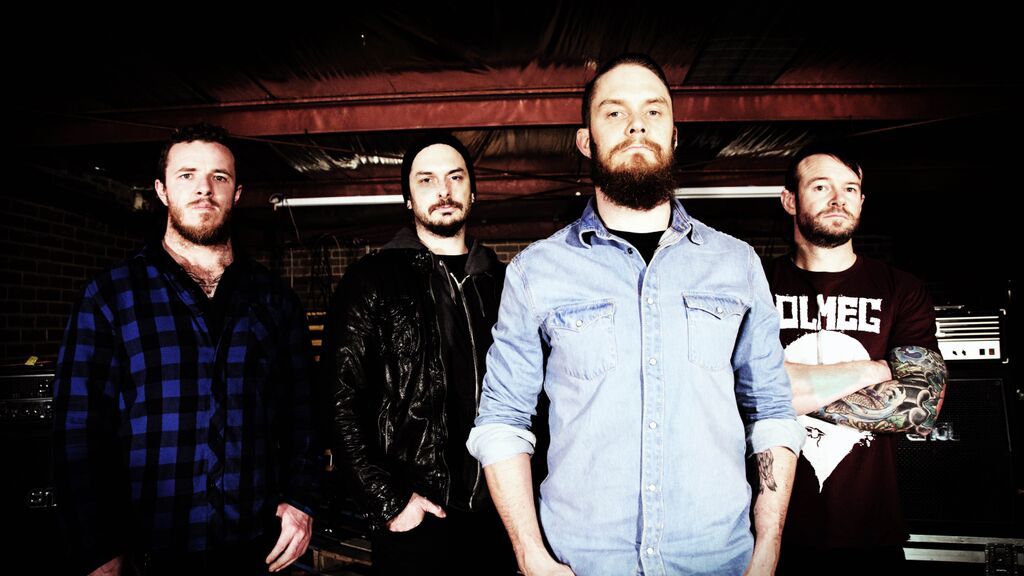
The single, ‘Acid in My Veins” – was released to a ravenous audience on July 17th and the new videoclip premiered yesterday on themusic.com.au.
The clip was shot on location in the forests and hills surrounding Melbourne and in a warehouse space featuring the band.
Drummer from the band, Ben Cuthbert is enthusiastic about the upcoming album. “This is just a first taste of this record. We wanted to give it all we have in this clip – Order of the Owl is our way of making a statement about the world and we want to connect with people through the clip and the album.”
The belting, rollicking single is all about the concept of Rebirth and will be a part of their forthcoming album, “The Order of the Owl.” The album’s release date is yet to be set and an east coast tour will follow.
“The Order of the Owl” as an album is a narrative created by The Charge and the artwork will centre around “Moloch” – an ancient god-like figure worshipped or feared – Moloch is described as a watcher, with an over-arching view of world events and has been used in literature as a person or thing demanding or requiring a very costly sacrifice.
Formed in 2008 around the talents of guitarist/vocalist Ashley Jones, drummer Ben Cuthbert, bassist Julian Crupi, and guitarist/vocalist Hamish Mills. One of the more notable New Wave of Australian Progressive Rock/Metal acts, a genre spawned in the mid-‘00s by bands like COG, The Butterfly Effect, Karnivool and Dead letter Circus, The Charge’s innovative, lyrically astute blend of 90’s grunge, hard rock, progressive rock and metal has helped position the band as one of the prominent hard rock acts on the Australian scene.
The Charge’s newfound popularity eventually landed them several high profile shows and tours, and saw them share the stage with several long time influences Bugdust, Dead Letter Circus, King Parrot, Floating Me, Over-Reactor and The Nerve, as well as three consecutive years in a row performing at Rock the Bay and Rock N Load as well as Brewtality Festival.
The single is available on iTunes and from thecharge.com.au and The Charge will be playing at The Evelyn in Melbourne on August 21.
THE CHARGE – LIVE DATES
Friday August 21 – Melbourne, VIC
The Evelyn Hotel
with Engine Three Seven, High Side Driver, Entropy and Hammers
$20 ENTRY – Tickets at evelynhotel.oztix.com.au


 Progarchy
