Daniel Lanois on the art of producing: “I … look for commitment and a lot of heart and soul…”

DanielLanois
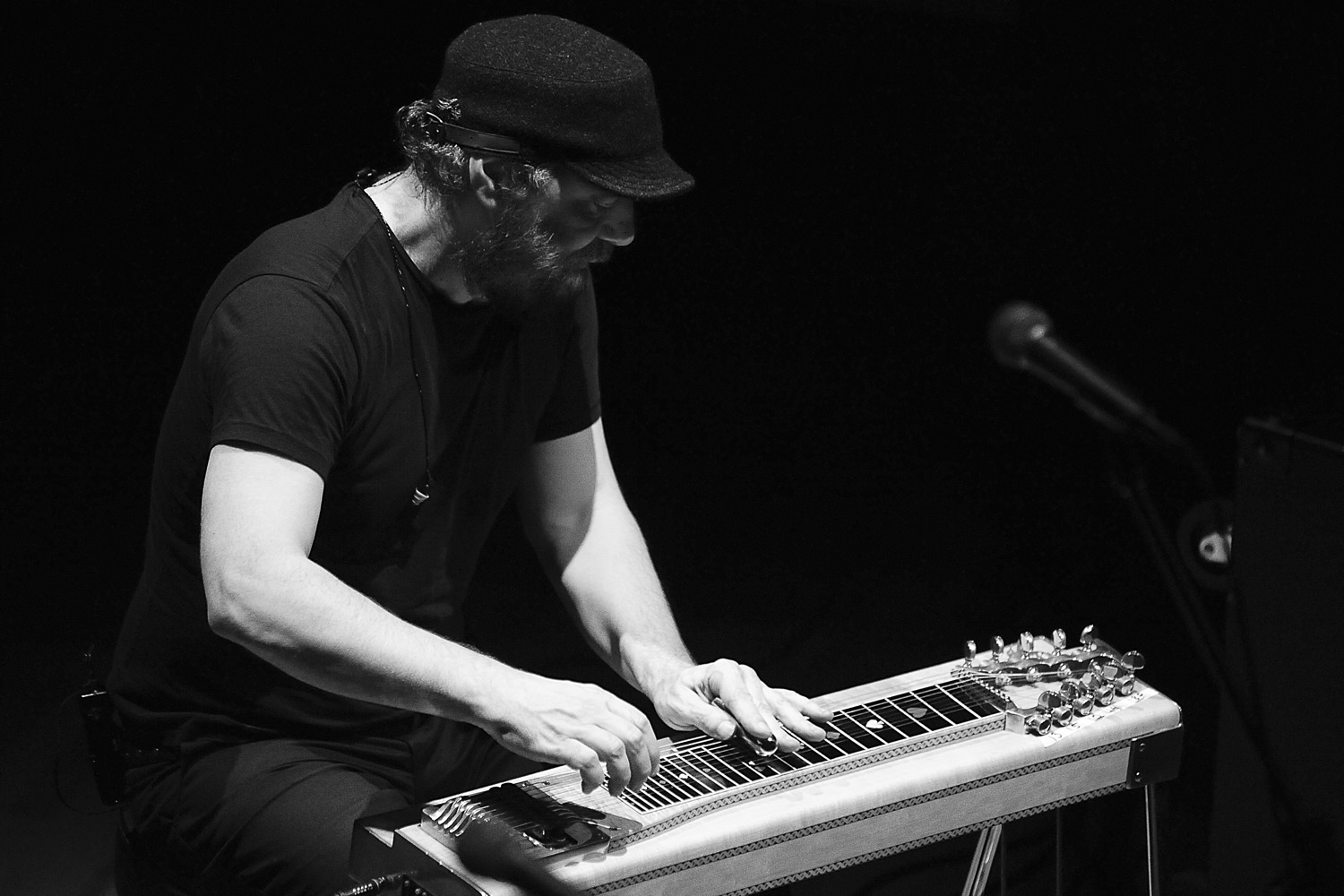
Daniel Lanois performing in 2008 (Wikipedia)

AllAboutJazz.com has a fascinating interview, conducted by Nenad Georgievski (writing from Macedonia, of all places), with legendary producer and musician Daniel Lanois. Here is an excerpt:

AAJ: When it comes to production, what are the things you look for in people’s music which will decide whether you produce them?

DL: I look for points of strength. It’s nice if there is a singer in the band and for the singer to have a big personality, something unique about their voice. I also look for commitment and a lot of heart and soul, because in the beginning what we do, which is representing the artist, plays a big part in the equation. Yes, you can apply a lot of muscle and you can pay your advertising after, but essentially it needs to have a lot of soul and it needs to be in existence for the right reasons. So, authenticity is the beginning, and then advertising comes later (laughs).

AAJ: Where is the meeting point between the artist’s ideas and the producer’s ideas about the outcome? Is your primary aim as a producer to help realize an artist’s vision, or to expand it?

DL: I think the producer’s job is to produce something magical within the offering of the artist. And I find that a vision comes together quite quickly when a magic moment appears. When that magic moment appears, a new vision comes into play and I don’t think people should assume that people are coming into studio with a small vision and that it’s all we operate by. I think people are hoping that they are going to bump into something fresh. When that happens then we get to be naive all over again in terms of freshness, and then a brand new vision comes into play for both parties.

AAJ: With some artists you’ve worked with over a series of albums (like U2, Gabriel, Dylan), does your function alter as you get more familiar with each other?

DL: There is no doubt that there is a relationship that develops and people’s roles change. When I first started working with U2 I was to be the engineer of the project, and then everybody in the camp realized that I was very musical. And I was able to make contributions with harmonies, understanding of rhythm and the arrangements -I was able to enter the world of music with them and not just sitting in the technician’s chair. Everybody in that camp is very smart, so they realized that my talent was such that I was able to be as much a musical producer for the record making process as Brian Eno is. So that became the strength of that relationship. Everyone knows how to work with equipment to a certain degree, but what is most important to that relationship is the evolution of our musical minds. That’s it; you are able to work with the strengths of the people in the room.

And:

AAJ: What is it that keeps people like U2, Dylan, Gabriel, Neil Young, hungry to keep doing it at this point in their careers?

DL: That is a very fundamental question and that question applies to the whole world and not just the artists that I work with. What keeps us interested in innovation? We are human beings, we evolve and we like new ideas. With my current work I want to invent sounds that take us to the future. If there is anything that I have learned from all of the artists that I’ve worked with, it’s that they have a similar appetite to know what lies ahead, around the bend, what’s over the mountain. It’s just the way it is. Even after 60 years of rock and roll we still have an appetite to know what might be the new thing, what expression still needs to be expressed, and so on. So, as we grow and as we grow through life we look things differently when we reflect on our work.

Lanois’ most recent album is “Flesh and Machine” (see www.fleshandmachine.com):

 Daniel Lanois: It’s a very technologically driven record and I use a lot of sampling and dubbing. But I sampled my own instruments and my own voice. Well, I sampled other people’s records as well (laughing). This allowed me to have a very unique personality and for the record to find its own direction. I have dreams to step into the future with my sonics, so I decided to go after symphonic or orchestral results but without the sound of familiar orchestral instruments. I wanted brand new ones that haven’t been heard before. So that was part of my driving force and criteria.

Here is a cut from that album:
Watch: Bruce Soord performs acoustic version of “Magnolia”…

… the title track from The Pineapple Thief’s excellent new album.

On the clip Bruce Soord comments “Here’s a stripped back acoustic version of Magnolia I performed in my studio recently. All the songs on Magnolia began their life this way, on acoustic guitar and vocal, so it was really nice to go back and play this song again, in the form as it was when it was born”

Much more about the band and the album on the KScope Music site.

Great pop & rock music is NOT dead

normanrockwell_musicman

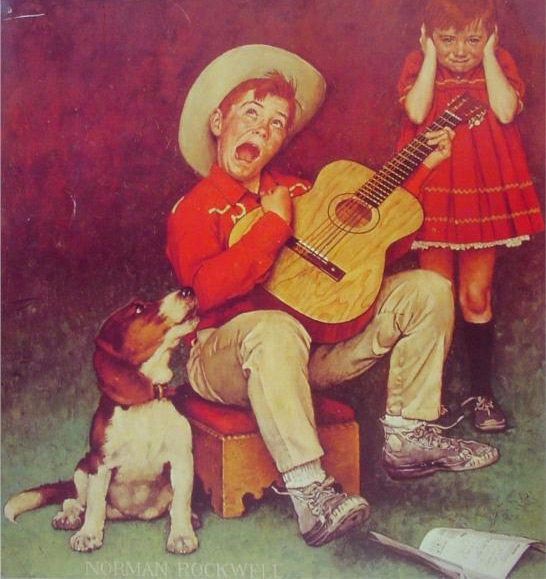
I thoroughly enjoyed Brad’s righteous, even rockin’, post earlier this week in response to the “Rock is dead!” crowd. Mankind, it seems, has an innate attraction to the apocalyptic, including in the realm of rock. It brought to mind a piece I wrote in November 2008 on the Insight Scoop blog regarding a number of silly stories about how the Pope (then Benedict XVI) was somehow and in some way embracing and celebrating the music of the Beatles on the 40th anniversary of the release of the “White Album”. That led to a little rant on my part about how stupid it is to say, as did L’Osservatore Romano, the semi-official newspaper of the Vatican, that the popular music of the late 1960s was far superior to that of the early 21st century. To that end, I made five points. Here is the post, below the fold (the pic above, by the way, is “The Music Man” painted by Norman Rockwell in 1966):

Continue reading “Great pop & rock music is NOT dead”

Who is actually paying for music these days?

Buzzfeed.com addresses the question in light of the fact that at the end of August, “Billboard reported that the United States had gone through the worst sales week for music since at least 1991, when Nielsen’s SoundScan first began tracking those figures. That week in August, during which Wiz Khalifa’s Blacc Hollywood topped the chart with a mere 90,000 copies sold, just 3.97 million albums were purchased in America, down 19% from the same period the year before. Last year, album sales also hit a historic low.”

There are the obvious factors: illegal downloading, streaming, and the growing notion that ownership of music is, like, soooo late twentieth century. But buying and owning isn’t quite dead:

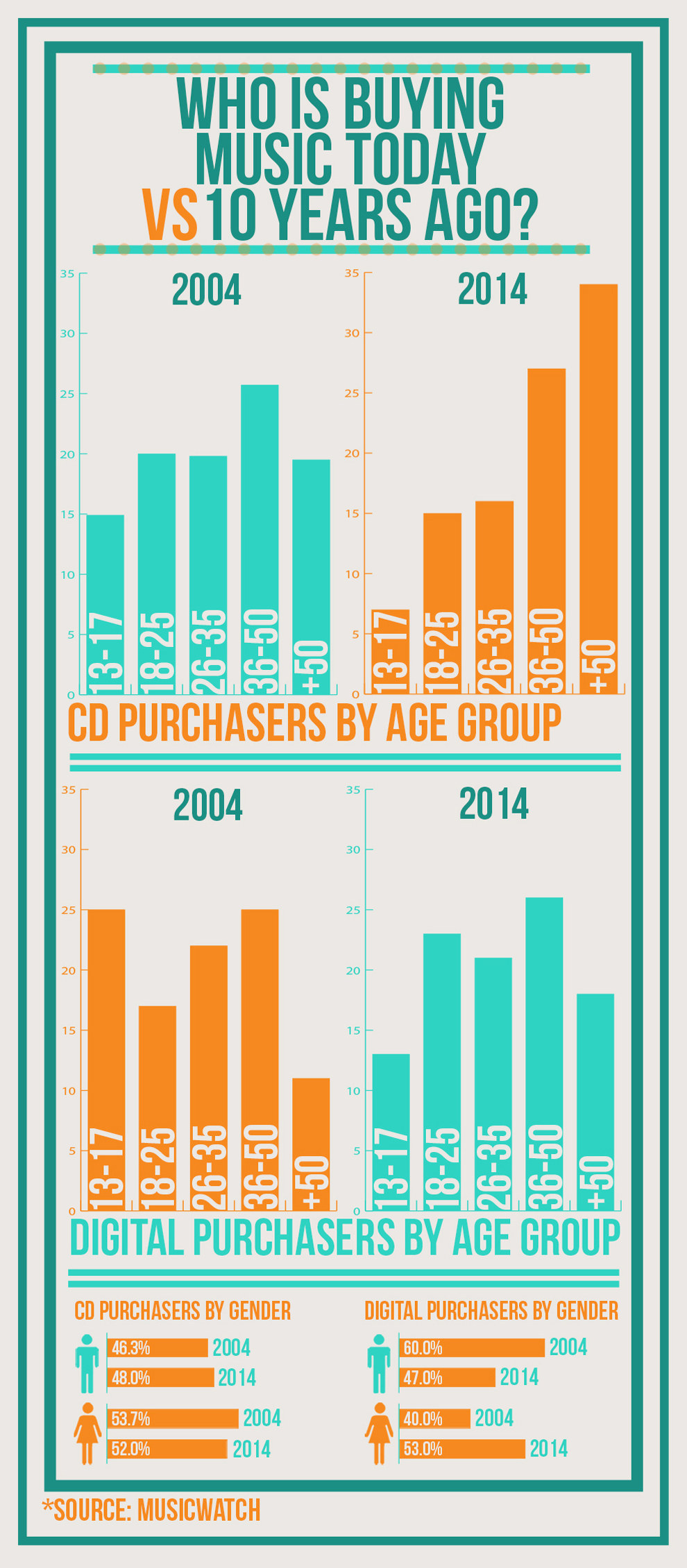
And yet, music sales haven’t hit zero. Somewhere shy of five million albums are still sold in America every week, despite what your Spotify- (or YouTube, or Soundcloud) obsessed friend may tell you — and that’s not to mention genuine blockbusters like Beyoncé and the Frozen soundtrack. To shed some light on who still shells out for music in 2014 and how the profile of music consumers has changed over the years, we partnered with the music data and analytics firm MusicWatch to compare music consumption patterns today with that of 10 years ago. MusicWatch conducted online surveys of over 5,000 music buyers ages 13 and older in both 2004 and 2014. These were our findings.

The key takeaway is that the the middle aged are the ones putting down their money for music:

Sixty-one percent of people who buy CDs are 36 and older, according to MusicWatch’s estimate. Ten years ago, that figure was just 36%. Back in 2004, people over 50 made up just 19% of the CD-buying population, but today they’re more than a third.

This could help explain the relatively high number of veteran artists who have notched their first career No. 1 albums in 2014, including Tom Petty and the Heartbreakers, The Black Keys, Sia, and Weird Al Yankovic.

Other finds: teens aren’t much for buying music. And, hey, when you listen to some of the music being produced with teens as a target audience, who can blame them? Also: “A majority of people who bought music digitally in 2014 were female (53%)…”

In graphic terms (via MusicWatch):

whoisbuyingmusic

Hiromi’s “Alive”: Jazz for Progarchists!

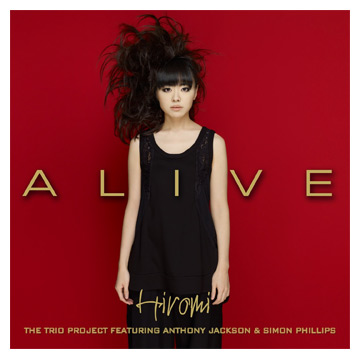
The petite, dynamic, big-haired bundle of mesmerizing musical energy named Hiromi Uehara (official website) recently released her ninth solo album in eleven years. Titled “Alive” (Concord Music Group, 2014), it is arguably her most overtly jazz album. Yet it also contains plenty of fusion, rock, and, yes, prog influences, as have her previous releases, which are marked by an instantly recognizable combination of breathtaking technique, astounding precision and speed, complex time changes, and boundless, mind-boggling virtuosity. I’ve been following her career since her debut album, “Another Mind” (2003), and have been both amazed and enriched by her music.hiromi_alive

However, one of the criticisms leveled against Hiromi, by some inside and outside the jazz world, is that her prodigious technical abilities tend to overshadow—or even overwhelm—other qualities, including nuance, emotion, and interpretive insight and dialogue. I think there is some merit to those criticisms, but I take them with a grain of salt. Frankly, the Argument From Lack of Emotion is, at best, quite subjective. Some people simply don’t like, or cannot handle, a cascade of notes (and last time I looked, Art Tatum and Oscar Peterson are both, rightly, hailed as jazz greats; and Hiromi loves Peterson’s music). Plus, I think many such critics miss the apparent fact that Hiromi, while clearly working within the broad realm of jazz, is also very much a prog-rocker in her heart of hearts—as well as a player of funk, soul, R&B, metal, electronica and, well, you get the idea. And all of us here at Progarchy.com know how often prog rock is criticized for having an abundance of technique but a lack of emotion resonance, a criticism that almost alway tells me much more about the critic than it does the music.

Hiromi’s acknowledged influences include the obvious—Ahmad Jamal (a mentor, and a jazz giant), Chick Corea (they recorded a duet album), Bach and Franz Liszt (the classical influences are often front and center)—and the not so obvious, at least to many listeners: Dream Theater, King Crimson, Frank Zappa, Jeff Beck, and Robert Fripp. The short bio on ProgArchives.com site states, “Her style brings a wholly new approach to jazz fusion, as her prog influence is derived primarily from such artists as King Crimson, Gentle Giant, and Frank Zappa rather than earlier jazz fusion artists. Her music is almost orchestral in scope, and each of the musicians she plays with has a virtuosic grasp of their instrument, allowing for each instrumentalist to have an approximately equal role in the direction of the music. Her music is more melodious than traditional jazz fusion but with an equally complex sense of rhythm. Time signature changes are not in short supply here.” It’s impossible for a prog rock lover to hear, say, “Return of the Kung-Fu Champion” (from her second album, “Brain”), and not hear a lot of prog influences in the mix:

Continue reading “Hiromi’s “Alive”: Jazz for Progarchists!”

Did Dave Grohl admit that Soundgarden was a far better band than Nirvana?

The former drummer of Nirvana (#3 on my personal list of Most Overrated Rock Bands of Alltime), recently spoke with Rolling Stone magazine about Soundgarden’s album, Superunknown, released twenty years ago. Superunknown, in my completely objective opinion (ha!), is the greatest album to come out of the Nineties grunge scene in Seattle. And, frankly, it sounds as if Grohl, now frontman for Foo Fighters—a group I far, far prefer to Nirvana—seems to agree:

Superunknown is, in my book, right up there with ’90s classics such as Radiohead’s OK Computer, Jeff Buckley’s Grace and U2’s Achtung Baby. I always found Nirvana to be rather boring, just as I found Pearl Jam to be rather boring and rather pretentious (I don’t usually care for bands who try to constantly make Big Statements); it doesn’t help that I cannot stand Eddie Vetter’s weird, warbling voice. But, hey, let’s focus on the good stuff. Soundgarden is coming out with various deluxe packages of the remastered Superunknown (my copy should arrive this week), and Chris Cornell—who was good friends with Buckley—spoke recently to Radio.com about the album’s anniversary:

Cornell, I should remind readers, once said, “I was a nerdy shut-in who listened to prog-rock.” And while Soundgarden is constantly compared to Led Zeppelin, the group was more influenced by Black Sabbath, the Beatles (Cornell’s favorite group), Kraut rock, the Stooges, the Clash and other punk-ish groups.

Speaking of the hit song, “Black Hole Sun,” Grohl remarks, “It was so much more melodically sophisticated than anything any of the other bands in Seattle were doing. It was a big deal.” The same could be said for the entire album, which is, musically and lyrically, one of most eclectic and sophisticated hard rock albums ever produced. Billboard.com has a really good piece about the album that gives a track-by-track tour of the entire 70 minutes. Apparently the making of Superunknown pushed the limits of the technology involved:

Michael Beinhorn, who produced the album with the band at Seattle’s Bad Animals studio in the summer of 1993, told Billboard in 1994 of how he’d overload “tape to the point of distortion, using massive EQ, massive compression. We experimented with chains of four equalizers and four compressors in one signal chain, on one instrument. The end result is a record that is both incredibly dense and overwhelmingly present. There is a tangible sense of air being moved.”

Another interesting note, new to me: the final song, “Like Suicide,” was inspired by a dead bird. Death and mortality, of course, figure heavily in the album; there is a sense of apocalyptic foreboding that is equally chilling and compelling, in large part because the songs are so, well, singable (beware, however, trying to match Cornell’s high notes). My favorite track, “Limo Wreck,” features all sorts of weird tunings and time signatures at the service of a haunting, dirge-ish cut that swells in intensity as Cornell wails: “Under the shelf/The shelf of the sky/Two eyes, two suns/Too heavenly blinds/Swallowing rivers/Belongs to the sea/When the whole thing washes away/Don’t run to me.”

Once I’ve had a chance to listen to the remastered album, I’ll share some more thoughts.

How Mike Portnoy helped revive Bigelf

Over on the LAWeekly blog, Jason Roche writes of how the former Dream Theater drummer—currently in about fifty-eight bands or so—helped inspire Damon Fox to revive Bigelf and finish the recently released Into The Maelstrom:

Bonkers and Retro
The newest release from Bigelf

When Los Angeles prog-rock group Bigelf released their 2008 album Cheat The Gallows, momentum seemed to be on their side. After 15 years of slogging it out in the local scene, the group was gaining support slots on arena-rock tours thanks to their brand of catchy pop-rock melodies filtered through ’70s psychedelia.

The truth? “The band was coming apart,” says Bigelf leader Damon Fox, in conversation at the Canyon Country Store.

The band were dealing with financial difficulties and offstage tension. Fox’s marriage was coming apart, and longtime guitarist Ace Mark left the group in 2010 after the death of his father and birth of his child.

With all of these outside factors coalescing, Fox disbanded Bigelf.

“When you get real low, real dark, and the mojo fades away, you’re not feeling your purpose in life,” Fox says. “The Bigelf purpose went away. At that time, I wasn’t interested in what Bigelf had to offer and there was conflict inside the band.”

Elsewhere, drummer Mike Portnoy was simultaneously going through band friction, a very public departure from Long Island prog-rock greats Dream Theater. Portnoy and Fox had bonded when the more well-known group took Bigelf on the road with them, and stayed in touch during the rough times.

A phone call between the two helped Fox revive Bigelf for Into The Maelstrom  – the group’s newest album, which came out yesterday.

Read the entire piece on LAWeekly.com. I’m not very familiar with Bigelf, but will be checking out the new album.

The beautiful, subtle flight of One Thousand Wings

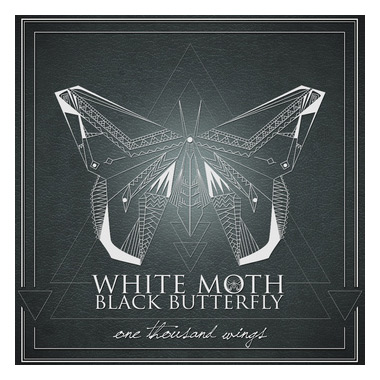
Making my way through the November 2013 issue of Prog (#40) a couple of weeks ago—it takes a while for it to swim across the Pond and trudge through the heartlands to the West Coast—I came upon a short review of the album, “White Moth Black Butterfly” (WMBB henceforth), from the group One Thousand Wings. I noted that the group was headed by ex-Tesseract vocalist Dan Tompkins, whose talents I discovered last year (Tesseract’s 2012 EP, “Perspective”), and then read that the reviewer believed WMBB to be “an absolutely essential work” and, in sum: “Experimental, accessible and quite brilliant, this ranks high among this year’s progressive releases.”onethousandwings_wmbb

Having now listened to WMBB a dozen times, I’d say the reviewer, if anything, undersells the brilliance of Tompkins’ album. And it is, really, Tompkin’s album, as he wrote nearly all the material, played most of the instruments, sang most of the vocals, and co-produced/mixed/edited as well. The One Thousand Wings Band Camp site tags WMBB with descriptives including ambient, cinematic, electronic, and experimental, and they indicate that while the album is “prog,” it is not guitar-driven, features nothing that resembles a solo, and is not really “rock” in any obvious way. While we tend to avoid needless labels here on Progarchy.com, I would suggest “ambient/folk electronica prog.” That aside, simply listen to the album on the Band Camp site.

Listening to WMBB, three other artists come to mind, the first two perhaps expected; the third likely not. Although Tompkins does not sound like Jeff Buckley, I would recommend to this album to Buckley fans, as Tompkins, first, has a tremendous and distinctive voice—clear, piercing, soothing, aching, lovely, strong, subtle, powerful—and, secondly, creates a distinct world, something Buckley did as well on “Grace” (one of my favorite albums, regardless of genre). I should note that the aforementioned  “Perspective” EP includes an impressive cover of Buckley’s “Dream Brother,” which can be viewed/heard on YouTube.

Secondly, there is a fleeting whisper of Radiohead’s Thom Yorke in the mix, specifically, his 2006 solo album, “The Eraser”. That album was far more abrupt and percussive and obviously electronica-ish than WmBB, but there are echoes (even if only in my head). But while “The Eraser” has a more overtly bristling and edgy quality, WMBB is guarded, like a candle fighting against an inevitable night. If Yorke is angry and sometimes snarling, Hopkins is wounded and searching; many of the songs might simply be described as “laments”. Finally—and this is strange—I’m reminded of George Michael. Much of that is due to vocals on songs such as “Equinox”, where Hopkins sounds just like Michael—at least a younger version (not the “Symphonica” version, from what I’ve heard). Take it for what it is!

Instrumentally, WMBB is a beautiful mixture of electronica and acoustic, with deep swells, rich textures, and subtle touches and details, usually in the form of tasteful acoustic guitar or ringing piano. As for lyrics, which is something I’m always interested in, it’s hard to tell as many of them are hard to make out. But the song titles—”Ties of Grace”, “Midnight Rivers”, “Certainty”, “Omen”, “Faith”, Paradise”—suggest some heavy duty rumination, perhaps just as much metaphysical as relational. Again, highly recommended!

Listen to Gazpacho’s “Demon”, streaming…

on the ProgRockMag.com site.

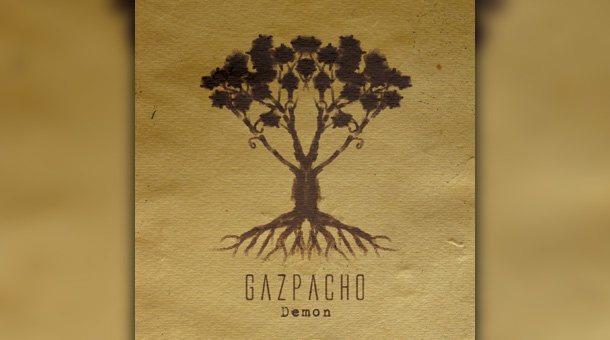
It states that it is available to UK readers only, but here I am, in Oregon, listening to it. It’s too early to make any judgments, but it is both distinctly Gazpacho and also a bit different. Very acoustic; lots of piano; some operatic female vocals; etc.

gazpacho_demon_2014

John Wetton: “It’s clearly elitist, this prog thing.”

The group Asia (website) has a new guitarist (20-something Sam Coulson) and a new album, “Gravitas,” which is due out on March 25th. The band talks about their new guitarist (their fifth? seventh? twelfth?) and the new album:

The more eye-brow-raising interview, however, appeared on the Huff-and-Puff Post earlier this week. A couple of interesting excerpts; first, from John Wetton about aging and songwriting:

Most of this band are in their sixties–we’ve got one exception who’s twenty-six, but most of us are getting to that respectable age now. We can’t come up with punk anthems, we never have done. What we do is we reflect the internal conflict that people get. Look at “The Heat Of The Moment.” It’s an apology. “Only Time Will Tell” is about a relationship falling apart because of infidelity. My complete change-around as far as lyric-writing came in 1971 when I had three records that I listened to all summer. One was Joni Mitchell’s Blue, the other one was What’s Going On by Marvin Gaye and the last one was Surf’s Up by The Beach Boys. The one that hit me the hardest, really, was Blue by Joni Mitchell because she wrote every song in the first person. It’s all like she’s reading straight out from her journal. For me, who had been brought up on art rock where you’re observing other people from a distance, it catapulted me into the world of, “Why don’t you write it from your own experience? To this day, if I hear someone bleating on about fame, I want to hear about their fame, not someone else’s. If it’s coming from the horse’s mouth, great. If it’s coming from the horse’s ass it’s no good at all.

And this, about prog and classic rock:

MR: I also have to ask you, you said “classic rock,” but Asia also falls under the category of progressive rock, which I think allows you the freedom you talked about before to do anything you want with your music.

JW: Yes. We have a foot in three trenches, really. We’re classic, we’re prog, and we verge on pop at times. We certainly can have singles that will appeal to people outside the prog fraternity, which they probably don’t even like. It’s clearly elitist, this prog thing. The bands that we came from, certainly all of them were prog. They died in the war of prog. But Asia, when it came out, reached far beyond the prog circles. To this day our audience is so varied, we get real kids at concerts, we get people our age and everyone in between. It’s great, I love it. And we still have a fairly broad spectrum as far as gender. Usually, we don’t have a room full of beards and sweaters, it’s usually a good mix of women and men. Very, very healthy audience. It’s great.

Wetton also states, a bit later: “My favorite male artist of all time is Don Henley because it’s like he’s reading poetry that comes straight from himself and it’s so gorgeous.” Huh. I cannot say I saw that one coming. Not that there’s anything wrong with Henley’s music; I enjoy some of his solo stuff and a fair amount of the Eagles’ music as well. But not expected.

Here is the video for the album’s first single, “Valkyrie”. The positives: Wetton sounds great; his vocals are impressively strong and clear at the age of 64. The song itself is quite decent, with the distinctive Asia “sound”: soaring keyboards, big chorus, and lyrics tinged with semi-mythical elements. The negatives: the video is rather (very!) low budget, the song sounds quite a bit like most Asia songs of the past couple of decades, and young Coulson seems underused. What strikes me odd, as I’ve read about this new album, is that while the band members talk about Coulson bringing a harder, even more metal-ish, sound with him, it doesn’t show up in the first single or in the clips of the other eight tunes. And, of course, none of them really sound prog-gy at all. Come to think of it, when did Asia last really incorporate anything obviously proggy in its albums? The mid-1980s? I’m not sure, because I stopped listening for about 20 years or so, and have only regained interest in the past couple of years.

Personally, I’ll always have a soft spot for the first three Asia albums. In part, because of my age; I was in junior high school when the self-titled debut album appeared in 1982 (32 years ago this month), and in high school when Alpha (1983) and Astra (1985) came along. I thoroughly enjoyed all three albums, and they were in my regular rotation, along with Kansas, Queen, Styx, and some groups I’m too embarrassed to mention here. Through Asia, I learned about ELP, but I didn’t discover King Crimson until many years later, and when I did, I thought, “Wow, that was John Wetton?!” Part of me wonders if the mega-success of the first Asia album didn’t create some problems, creatively, for Wetton and Geoff Downes; it certainly led to lots of conflicts, break-ups, and such over the years. Whatever the case, I am curious about this new album, but I’m trying to have modest expectations. I am thankful, however, that the group didn’t do a cover of Henley’s “Boys of Summer”.