Best Albums of 2023 — #8: Tanith, Voyage

Tanith delivers with sci-fi and fantasy lyrical themes galore on their epic retro-metal quest, Voyage. Vocalist and Bassist Cindy Maynard steals the show with her lead turn on “Mother of Exile,” but every track is a standout. If you aren’t pumping the air by “Falling Wizard,” there’s no hope for you.

Don’t overlook this album, because it’s a hidden gem from 2023. Russ Tippins supplies tandem vocals with Maynard that give this band a unique flavor. Together with Keith Robinson on drums, they invoke the greatest traditions of rock trios. Excelsior!

Best Albums of 2023 — #7: Mutoid Man, Mutants

This metal album will thrash you into a good mood if you can handle it. “Unborn” and “Siphon” are two particularly bone-crushing tracks that deliver supreme heaviosity that you can rarely get elsewhere.

But everything here is so much fun, and there’s something for everyone. You just have to like smart and wry heavy metal at its best.

Be sure to play “Memory Hole” as you fight back against the oligarchs’ attempts to erase history. The closing track, “Setting Sun,” is good, but not as show-stopping as “Bandages,” which closed 2017’s War Moans. Okay, so what; you’ll just have to go get that album too, and play them both back-to-back.

Best Albums of 2023 — #6: Neal Morse, The Dreamer — Joseph, Part One

Neal Morse does it again with his best release of 2023, the first installment of his Joseph epic based on the story in the book of Genesis. Potiphar’s wife steals the show, sung convincingly by Talon David. But everyone rocks out thoroughly, orchestrated by Morse to unbelievably even greater effect than usual. The jaw-dropping guitar solo at the end of “Wait on You” by Eric Gillette is worth the price of admission alone, but you’ll be glad you came for the whole show. Can I get an amen?

Best Albums of 2023 — #5: Joel Hoekstra’s 13, Crash of Life

Superstar guitarist Joel Hoekstra created a magnificent showcase this year for his skills on the solid rock album Crash of Life. With vocalist Girish Pradhan fronting the songs, it’s a remarkable display of virtuosity and supreme song-craft. The title track “Crash of Life” is particularly memorable. But the whole disc is superb from beginning to end.

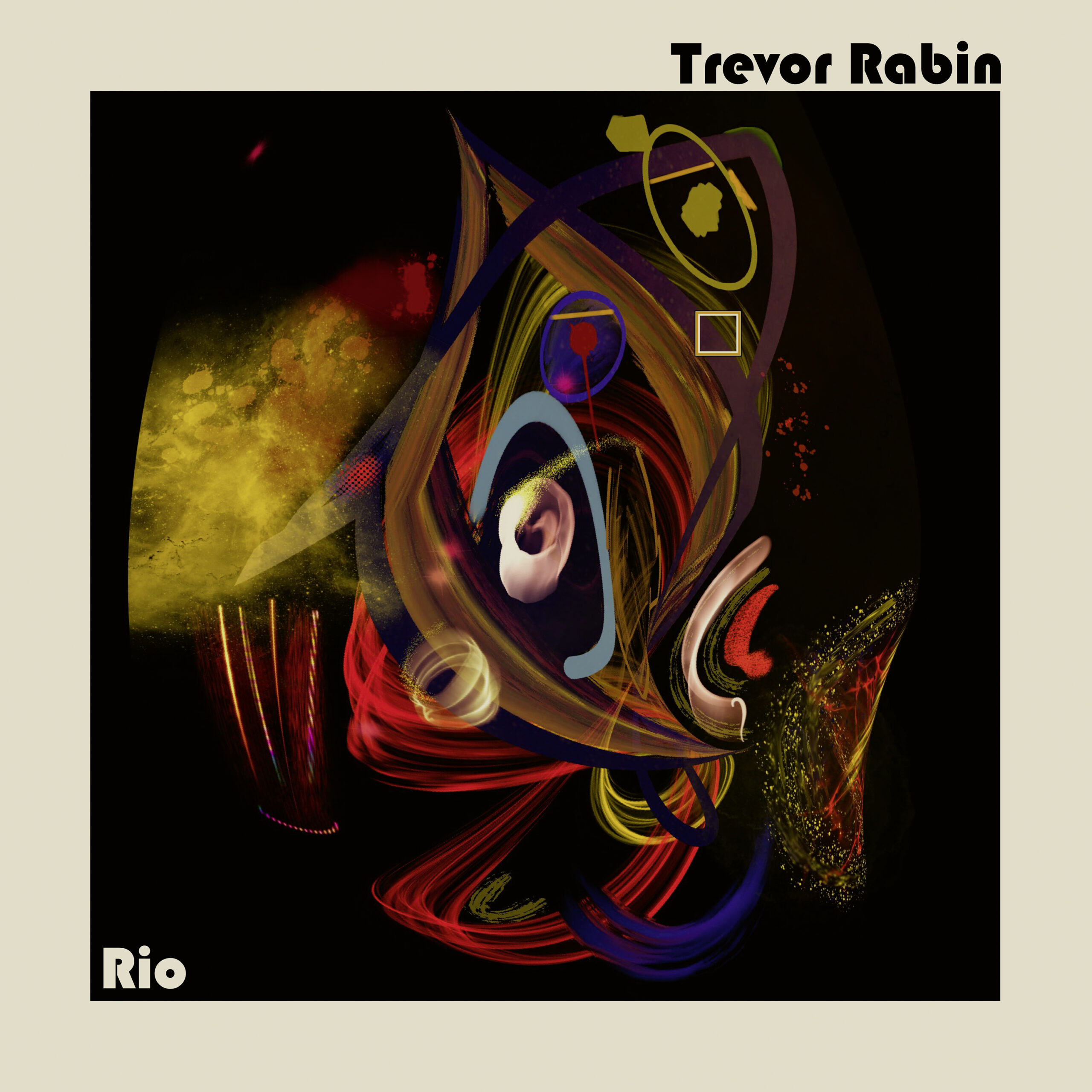
Best Albums of 2023 — #4: Trevor Rabin, Rio

At last, Trevor Rabin makes a long overdue solo album. The big revelation here is just how much Yes owed to Rabin for rejuvenating them back in the 80s. So much of that dynamic songwriting is echoed on Rio, along with a wealth of musical ideas that get stuffed into its ten songs.

There’s more going on here than a hundred songs on ten albums by ordinary artists. “Push,” “Paradise,” “Thandi,” and “Egoli” are particular favorites, but there is nothing second rate anywhere on this disc. It’s an abundant supply from a musical genius that repays repeated listens.

Best Albums of 2023 — #3 Daisy Jones & the Six, Aurora 

This one was a real surprise. A novelist tells the story of a fictional band from the 70s. Then it gets made into a documentary drama on Amazon Prime as a mini-series. But the actors performing as a band make a bunch of killer songs that become an irresistible album.

How unlikely is it that art imitating art takes on a life of its own? This “fake” album is better than most of the real albums released in 2023. It’s as if the pretense of fiction freed the actors and musicians and artists to dispense with all negativity, so that they could celebrate all that is good and glorious in rock music.

So many favorite tracks here, but would it kill you to try “Kill You to Try” from this album? You might never look back from looking back.

Best Albums of 2023 — #2: The Winery Dogs, III

They say the third time’s the charm. But the third album from The Winery Dogs is more than just charmed, because we have already heard undeniable magic on their first two albums. This time, however, we witness a truly jaw-dropping breakthrough.

What is worth noting here is that we have been given a solid album with ten songs that strongly lock together. They flow inexorably, as the coherent whole of what I believe will eventually be recognized as a classic album, one even better than the merely rave reviews it has already been getting. Its magnificence gets more and more impressive with each further listen.

On previous releases, I found myself picking out favorite songs. The range of the band’s material was stunning, and while all of it was impressive, there were still standout tracks that clearly rose above the rest. On the debut, for me those were: “Elevate,” “I’m No Angel,” “Not Hopeless,” and “Regret.” On Hot Streak, they were: “The Bridge,” “War Machine,” “Devil You Know,” and “The Lamb.”

But on this release, rather than pick favorite songs, I can only pick out favorite moments within the songs. Because every track is a standout, I love them all, and I cherish those detailed special moments that each one of them contain for the dedicated listener.

“Xanadu” and “Mad World” were the two pre-release singles, which led us to expect more of the same Winery Dogs virtuosity from their earlier albums. Their magical ability is to bring Richie Kotzen’s guitar and Billy Sheehan’s bass and Mike Portnoy’s drums together in astonishing acrobatic coordination, a higher realm of musical motion which only the true greats can access, like Alex and Geddy and Neil on “Free Will.”

Yet while we get more of such magic, we also get interesting new details on this album, like the startling jazz chords in “Mad World” or the unusually intriguing lyrics to “Xanadu” which shift and change even with the musical repetitions of the chorus. Kotzen’s impassioned vocals seem to be taking an accusation (living clueless in Xanadu/Malibu) and flipping the accusation around as a badge of honor to be worn, as Kotzen makes it clear he (and the band) doesn’t care what anyone else thinks.

With that declaration of independence, and with their secession from the world’s madness, The Winery Dogs then shift direction and reveal the first two tracks to have been something of a head fake. “Breakthrough” seems to me like the kind of killer radio-friendly track that a record company would demand as the first single. But, as track three, it comes as an unexpected twist after the clever “business as usual” first two tracks.

With this twist, the album launches into the upper echelons of the most classic of classic rock territory. The punchy power chords of the chorus invite air guitar participation. Both the riff and the vocal phrasings unexpectedly remind me of Saturation-era Urge Overkill, which I found to be a delightful and obscure surprise.

“Rise” astonishes with its complexity and soulfulness, as the band continues it third-album ascent, now conducting cakewalk “business as unusual.”

But it’s “Stars” that veers off into truly delightful prog territory. Sheehan supplies a steady bass pulse for Portnoy and Kotzen to go completely bonkers around. Kotzen demonstrates beyond all doubt that he is one of the greatest of all time on this track, because his guitar solo lasts for a minute and forty seconds of such insane, imaginative, and inventive sounds that it’s unbelievable. The song enfolds all this into such a satisfying and catchy groove, it marks an outstanding conclusion to a staggeringly impressive Side A.

But the album’s B-side is astonishingly equal in achievement to the A side. The kickoff, “The Vengeance,” has one of those cathartic Kotzen vocals (like “Regret” or “The Lamb”) whose emotions are equalled by the intelligence of the lyrics (which wisely affirm that it is the weak, not the strong, who need revenge).

This track illustrates well my thesis about each album track having additional small but memorable details: here, it is the helicopter-like synth-sounding pattern which leads into each chorus, and I call it “synth-sounding” because it somehow bleeds into what sounds like a guitar. It’s a truly magical transformation, and such a thrilling little detail, yet I have no idea how it is done, but it excites the listener to no end each time it is heard.

As if that were not enough, “The Vengeance” also has more Urge Overkill overtones, with those little “ooh ooh ooh” background vocals that remind me of the musical positivity of “Positive Bleeding.”

“Pharaoh” levels the listener with a heavy riff that knows just when to hold back and also just when to smash, all while Portnoy builds pyramids with massive slabs of pounding drums.

And then there’s no respite, as the following track, “Gaslight,” delivers a musical imitation of a gaslighting assault of craziness. Its boogie blitz comes charging out of the gate with more notes per second than the human mind can possibly count. All you can do is try and shake your tail feather to keep up.

Perfectly timed for breath-catching, “Lorelei” is a slow, bluesy 6/8 waltz. It’s the type of song that would function for a lesser band as a filler cool-down track at album’s end. But for The Winery Dogs, this become merely the penultimate track, and yet another one that they use to confound listener expectations.

Sometimes nothing is more boring than a blues guitar solo, but Kotzen convinces us that we have not heard it all before, as he plays his solo lines with such feeling that we find ourselves amazed. Not only that, when he sings on the chorus, he soulfully adopts such unusual phrasing that I am reminded of Steve Perry 80s Journey. The song unexpectedly wormholes me on a journey into a magic world of nostalgic teenage school dance waltzes.

The epic final track, “The Red Wine,” begins by seeming to deliver on the promise of the album opener’s Rush-word: “Xanadu.” For the first eighteen seconds, “The Red Wine” sounds like classic Rush. I did a double-take the first time I heard those bars, and had to look again at the song name, which for those moments I thought was actually: “The Red Star.”

But after those opening flourishes, “The Red Wine” makes an abrupt stage-left turn and turns into a funky and groovy dance-along track, replete with a sing-along “party time” chorus. We even get a verse imagining senior citizens playing air guitar with their canes, as the whole world falls under the spell of The Winery Dogs’ live music.

Happily, the track ends back in Rush mode, as the camera pans up (or so I imagine) from the outside dance party, up past the patio lanterns, and then ascends into the stars as the band turns again into the Rush of the opening half-minute. We get a mellow cosmic cool-down to end the album, as the band invokes the atmospherics, yes you guessed it, of Rush’s classic “Xanadu” mood. Billy’s bass is the last one sucked into the Cygnus X-1 black hole, but it beams back a cosmic echo, advising you to buy this album and find your way to the Dogs’ dance party.

Confounding the cynics, Kotzen and Sheehan and Portnoy are clearly not just a super-group of super noodlers. With this album, they demonstrate they are one of the greatest bands to have ever rocked the Earth. With III, they leave their paw print in the pavement, preserved for all time, in the pantheon of the Rock of Fame.

Best Albums of 2023 — #1: Crown Lands, Fearless

The Album of the Year for 2023 is, in my opinion, the masterpiece Fearless from the mighty Crown Lands: the incredible musicians Cody Bowles and Kevin Comeau.

No other album in my collection has received more repeated listens this year than this one. I alerted you to the lead track, “Starlifter,” back in February. Then, with the release of the whole album in March, it has been in heavy rotation in the succeeding months.

Despite the many top contenders for Prog Album of 2023 that have issued forth since then, the indisputable proof that Crown Lands must be awarded the top prize for 2023 is the Deluxe edition of Fearless that was made available in June.

Added to the nine tracks that comprise the Fearless album, the Deluxe edition adds eight instrumental versions. That means you can do Crown Lands karaoke, or practice playing the musical parts on your own instruments, etc. And the number of instrumental tracks added is eight, because the album track “Penny” is already a guitar instrumental in the tradition of prog palate cleansers like Steve Howe’s “Mood for a Day” or “The Clap.”

Not only that, the Deluxe edition adds seven live versions of tracks from the studio version of Fearless. And it’s seven, not nine, since the album tracks “Context” and “Right Way Back” date back to 2021, and we’ve already witnessed live audio and video versions of those songs in the intervening months.

The Deluxe edition live versions of the Fearless tracks are nothing short of amazing. Usually bands sound worse live than on record. But with Crown Lands, we get versions of the studio tracks that sound even heavier and even more energetic than the carefully produced prog perfection originals.

Somehow, Crown Lands manages to capture on the Deluxe edition live recordings a special energy that they obviously have when they play live. Kevin’s riffs are even darker and more menacing, and the synth sounds punch and crackle with tactile gusto. Cody’s singing is impassionate and immediate, hitting all the high notes and even adding extra sentiment in the heat of the moment. The drum fills are astonishing, as they fly from speaker to speaker and you feel like you are standing behind the kit next to Cody as he kicks out the songs with enhanced verve. Kevin’s guitar solos and bass lines induce ecstasy, which is symbolized by all those bonus fretboard dive-bombing finger slides and power chord zoom blasts.

Fearless (Deluxe): You have to hear it to believe it, and you won’t be able to pick a favorite version of the album—live or studio—since they each have their own special charms. Perhaps all that the listener can do after hearing Fearless (Deluxe) is to pronounce the winner of Album of the Year for 2023 in the same way that as I do. Unquestionably, the crown has to be awarded to the invincibly fearless and unstoppable Crown Lands.

Single Review: The Beatles, Now and Then

Are we mad? What is Progarchy doing? Who would foolishly dare to review a new single from the Beatles?

Thanks to the miracles of artificial intelligence, John’s vocal track was able to be isolated and separated from his piano accompaniment. Then Paul and Ringo were able to finish what they started with George back in 1995: a complete Beatles rendition of John’s song idea.

It’s wonderful stuff, and let the following observations suffice for our review. The Beatles have always been a prog band. They were the first rock and roll embodiment of the prog spirit, taking the genre to progress beyond rock’s apotheosis in Elvis and his predecessors. The progression of the Beatles is evident by contrasting the Red Album with the Blue Album: there are no limits to the rock genre beyond imagination.

Therefore the genre evolved beyond singles to albums. And it is the album that is the playground of prog music. Beyond a mere single, prog needs at least 30 to 40 minutes in order to embody its imaginative ideals. Thus, the Beatles perfected the rock album with progressive influences on Rubber Soul and Revolver, both replete with innovative strings and tech-savvy sound effects.

Finally, they invented the prog album with Sgt. Pepper’s, the White Album, and Abbey Road. Side two of Abbey Road became the mission statement for every prog rock artist ever after. And now the Beatles are first to deploy AI to consolidate their definitive prog rock immortality.

Hence we state quite clearly: now and then, it is prog that rules. Call it “progarchy,” if you will. But the Beatles, as ever, now and then, show us the way. Excelsior!

Album Review: Steven Wilson, The Harmony Codex

With the release of The Harmony Codex, it’s now official. Steven Wilson is a member of The Academy of the Overrated.

I’m not talking about him as technician. He is indisputably a technical wizard who can create amazing sonic experiences. Beyond his own work, he is well known as someone who remixes classic albums and creates the best audio soundscapes.

But as a musician and songwriter he is vastly overrated. Sure, he’s a great instrumentalist, just as he is a great technician and arranger. But after releasing two stinkers in a row—The Harmony Codex and The Future Bites—we must admit that his only two works of genius—The Raven That Refused to Sing and Hand Cannot Erase—are total outliers.

Everything else he has done, whether solo or in a group, has always struck me as abominably overrated. There’s something lacking in the vast majority of his work. Set aside his only two brilliant albums and his work as an audio consultant. Everything else is just pretty good, but yet consistently soulless and pretentious.

How then could he produce two brilliant albums? Well, a stopped clock can be correct twice a day. But a better analogy for Wilson would be a perpetual motion machine that finds a true groove only twice in its lifetime of operation.

His soullessness and pretentiousness is magnified to intolerable degrees on The Harmony Codex and The Future Bites. The latter album was pretty bad, but The Harmony Codex is even worse. Take the spoken word nonsense on the title track, which then reappears on “Staircase.” It’s devoid of any meaning except pretension. Hey Steven, actual brutal fact: you alone dreamt up this album, and really it’s boringly bad.

It’s hilarious to me how many people in their reviews give this new album the benefit of the doubt and profess faith in how much better it will sound after more listens. Hey people, that tactic didn’t pan out with The Future Bites, and it’s sure not gonna happen with this one.

There are no songs here. The only moments of promise are the “love it all” catharsis in “What Life Brings,” and the one minute of awesome bass playing around the half-way mark of “Staircase” (but that killer bass work only lasts for a single minute; instead of wisely building on it to an album crescendo, Wilson blows it and decides to end the disc with repetition of the sophomoric doggerel from “The Harmony Codex”).

The diminishing reappearance of Ninet Tayeb on this album also demonstrates that Wilson is secretly operating according to an invisible template. Despite his desire to be original, he just keeps on being an unoriginal version of Steven Wilson. (Even his trademark falsetto is getting old.)

But if he were to do another homage to classic prog, like Raven it would paradoxically become original (because paradoxically it takes real skill to pay truly noble tribute to one’s betters). Instead he gets stuck on dumb ideas for the sake of originality: “Guitars are boring. Let’s do everything with synths instead.”

The failed attempt here at a real prog instrumental (“Impossible Tightrope”) goes nowhere, despite Wilson’s attempt to walk the tightrope of pleasing his prog fans (but nonetheless finding that task impossible). This illustrates what is perhaps most galling: the fact that Wilson consistently self-sabotages his best self. Instead of working within a recognizable idiom, he tries too hard to be original. But face the music: Wilson hasn’t reinvented music; he has just ended up being soulless and pretentious again.

The actual brutal fact (I repeat the phrase, so that we now get to the plurality alluded to by the “Actual Brutal Facts” track) is this: The Harmony Codex is garbage that nobody will be listening to fifty years from now—unlike the masterpieces that Wilson regularly remixes, and that he has failed to learn from.

Sure, The Harmony Codex sounds really nice. And Wilson is a master of marketing and promotion. But there is no songwriting here, other than “What Life Brings,” which feels like Wilson included it for perverse reasons: i.e., to show he could write songs like he did on Hand Cannot Erase if he wanted to, but he has decided not to. But like the three pretentious periods gratuitously inserted into that album’s official title, Wilson sabotages his own creative potential.

The Harmony Codex is just an exemplary audio demo record: i.e., what the sales dude at the stereo store puts on to demonstrate how good this stereo and speakers sound. But don’t savvy shoppers bring their own disc to play anyway? Because the cool demo record is something completely different from your favorite album. The former demo makes a good audio impression, but the latter classic disc is what you are actually buying the stereo for: i.e., what achieves its true purpose, beyond the superficial wow-factor of novel synth sounds.

What if Wilson actually tried to make an album that sounded unmistakably inspired by Yes or King Crimson, but crafted and adorned with state-of-the-art 21st century audio tricks? It would be Nirvana.

Instead, we now have two shitty albums in a row. They do nothing but highlight the fact that alleged prog emperor Steven Wilson has nothing going on beneath all the vapid talk about how wonderful is his kingdom of sounds. What a waste.