The new digital teleology: The album promotes the tour, and not vice versa — @Wilco Star Wars

The WSJ on What Wilco’s Surprise Album Drop Says About the Music Business:

In a sign of how insignificant new albums have become in today’s music industry, rock band Wilco Thursday evening surprised fans by releasing their latest studio album without fanfare, even offering it for free on its website. …

The popularity of the surprise album release—and Wilco’s decision to offer theirs for free—shows how much less album releases matter to many major artists relative to touring and other revenue streams.

For decades, the album release was the industry’s marquee event. Record labels deployed massive resources to build up anticipation among fans. On September 17, 1991, throngs of fans lined up outside Tower Records stores in Los Angeles and New York at midnight, waiting to buy copies of Guns N’ Roses’ “Use Your Illusion” albums.

At the time, high-level artists toured the world to promote albums; making money from touring was a secondary consideration.

But the digital revolution hurt the album as a source of revenue for artists and the industry. File-sharing begat piracy. The advent of the single-track download, popularized by Apple Inc.’s iTunes store in 2003, effectively undermined albums: Casual music fans no longer needed to buy an entire album for $15.99 to get a song or two. Record sales plunged.

Today, live performances, not albums, are the industry’s lifeblood. The top 100 North American tours generated some $1.4 billion in gross ticketing revenue in the first half of 2015, up about $400 million from the same period last year, according to the trade publication Pollstar. Ticket prices have skyrocketed: the average ticket price has hit an all-time high of $76.20, up nearly 13% from the middle of 2014.

Steve Hackett’s Premonitions includes 67 previously-unreleased tracks

Steve Hackett’s 14-disc set Premonitions (out on Oct 16, 2015) covers 1975-1983 and features Steven Wilson remixes.

The set includes 10 CDs and four DVDs, and 67 previously-unreleased tracks among the total of 135 songs.

And just in case you haven’t heard it yet, you should also know that Steve’s newest album Wolflight is one of the best releases of 2015.

Steven Wilson is the Master

An interesting snippet from a March 2015 interview with Steven Wilson that started off with his affirmation that everyone should be recording (and listening) at the 96-kilohertz/24-bit standard and then segued into this key point:

I think it’s worth saying again that all of this high-resolution stuff is pointless if the mastering sucks. Bad mastering is more of a problem than things being released at CD resolution, or even MP3s. What’s nice about this move to 96/24 is the amount of things that are coming out in flat transfers — no compression, and no mastering engineers fucking up the sound. That is a very, very good development in the history of music.

I’ve spoken with many an artist who’s said, “I turned in my final approved master, and what I got back on the back end is not what I heard in studio at all.” You’ve taken control of the mastering stage yourself and you don’t have to give anyone instructions about what to do anymore, right?

The simple answer is I don’t have any of my work mastered. It goes straight from my mixes — flat transfers onto the disc. And that applies to the mixes I do for the Yes reissues, the XTC reissues, the Jethro Tull reissues, and of course my own work too. And it’s amazing how many of the musicians I speak to, when I say to them, “I don’t want this mastered” — they’re initially shocked. But then they understand. Why would you need this mastered? You’ve approved the masters and you think the mixes sound great, so why would you not just release them as they are?

Now, I’m not saying that’s right for everyone, because some people need or want that extra pair of ears to check what they’ve done. But I’m at the stage now where I’m 100 percent confident that what I produce out of my studio is exactly the way I want people to hear it. I actually bypass mastering completely now.

To borrow a song title from Hand. Cannot. Erase., some people think it is “Routine” to go to mastering, and that’s just the way they have to do it.

I think people have been brainwashed a lot over the years that mastering engineers do something magical, almost like a black hat, and I think, actually, mastering is not necessary.

A lot of albums are coming out with flat transfers, and the audiophiles seem to love the flat transfers. There’s no compression of the dynamics, there’s no sort of nastiness on the top end and bass. I think it’s beginning to become a little bit of a trend, which I think is a positive trend.

Steven Wilson – For the Love of Vinyl

Cool announcement at Burning Shed about the Steven Wilson vinyl anthology Transience:

Exclusive – 100 copies of the album will be signed by Steven Wilson. The signed copies will be sent randomly across all of the preorders.

Featuring songs recorded between 2003-2015, Transience is a personally curated introduction to the more accessible side of Steven Wilson’s monumental solo output.

A limited edition vinyl only issue scheduled to coincide with the second leg of the Hand. Cannot. Erase. tour, Transience contains a new recording of the Porcupine Tree classic Lazarus, which Steven has been performing on tour recently with his stellar live band. The new version is based on a live recording, subsequently overdubbed and edited in SW’s private studio in July 2015.

Transience contains 13 tracks and totals over 1 hour of music. Pressed as a 3 sided LP in a lavish gatefold sleeve with black and white portraits of SW by Joe Del Tufo and Susana Moyaho, the fourth vinyl side features an etching of the original handwritten lyric sketches for Happy Returns.

This is a strictly limited one off pressing. There will be no digital download card. Double heavyweight vinyl in gatefold cover with anti-static inner bags.

An essential introduction to an essential artist.

Pre-order for September 4th (UK) and October 2nd (ROW) releases.

Side 1:

1) Transience – single version (3.10)
2) Harmony Korine (5.07)
3) Postcard (4.27)
4) Significant Other (4.31)
5) Insurgentes (3.54)

Side 2:

1) The Pin Drop (5.01)
2) Happy Returns – edit (5.11)
3) Deform to Form a Star – edit (5.53)
4) Thank You (4.39)

Side 3:

1) Index (4.47)
2) Hand Cannot Erase (4.13)
3) Lazarus – 2015 recording (3.57)
4) Drive Home (7.33)

Side 4:

Etching

Lana Del Rey, “Honeymoon”

Lana Del Rey has released a new single, “Honeymoon,” from an LP forthcoming in September:

The song is the title track from her upcoming third album and is a departure from the psychedelic guitar numbers that lined 2014’s “Ultraviolence,” which was mostly produced by the Black Keys’ Dan Auerbach. The arrangement this time is noticeably jazzier, suggesting that her upcoming work could deviate from the ’60s pop sound she’s favored in the past.

You might say that Lana’s so prog she doesn’t do concept albums, she’s so meta she’s a concept artist — a continually self-manufactured ironic persona. What’s interesting is that with her the irony is never simply a one-dimensional surface-exploration trick. There’s always something more beneath the artfully constructed surface.

Perhaps her tragic diva persona works best with orchestra and strings, but then again “West Coast” from Ultraviolence was actually a top-notch mellow groove pop single.

Top 50 — Current Prog

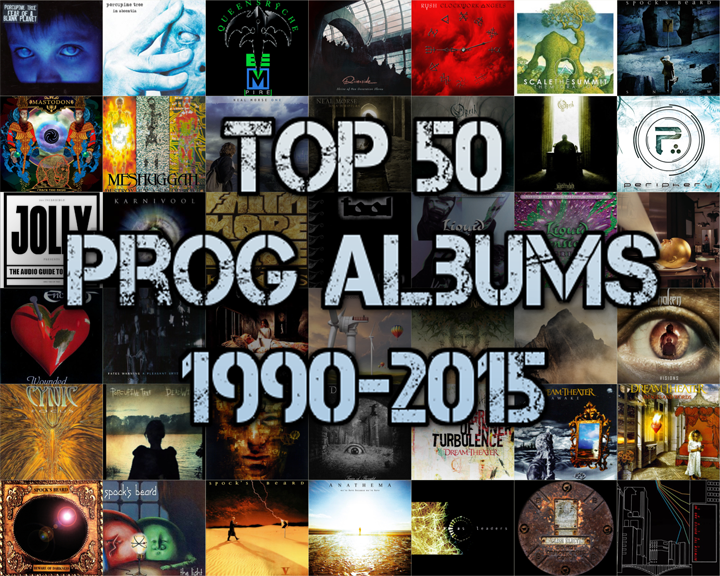
The Prog Report actually has a pretty great Top 50 list up for the 1990-2015 (Current Prog) Era.

I would have put Wilson, and not DT, in the #1 slot.

And, after seeing Mr. Prog on his current tour, I would put “Hand” (instead of “Raven”) in that prime position, keeping “Raven” at #2.

There are errors (e.g., Meshuggah) and omissions (e.g., BBT, Underfall Yard) but overall it is an impressive chronicle.

I would challenge fellow Progarchists to refine their own personal Top 50 lists for the Current Era.

I myself am going to start monkeying with a playlist that takes a representative track from each of my own 50 choices.

And what about the idea of dividing the history into Three Eras?

Should we speak of Three “Waves” of Prog as we chronicle its history?

First listen: Veruca Salt, Ghost Notes — @verucasalt

Veruca Salt is back!

The band’s original line-up was last together on 1997’s Eight Arms to Hold You, their sophomore album that had the super-fun track, “Volcano Girls,” which (in the memorable phrase of Estelle Tang) was “deployed … like a grenade filled with superglue and silly string.”

Tang has an excellent review of the new album at the link above which also includes a nice look back at the band’s history.

Wow, can you believe that “Seether” happened back in 1994?

So far, after my first listen to Ghost Notes, I am loving it.

Welcome back, gang!

Louise Post – guitar, vocals (1993–present)
Nina Gordon – guitar, vocals (1993–1998, 2013–present)
Jim Shapiro – drums (1993–1997, 2013–present)
Steve Lack – bass (1993–1998, 2013–present)

The Oblivion Particle — Spock’s Beard’s 12th studio album set for release August 21, 2015

Taken by surprise today with this happy news from Spock’s Beard:

The Oblivion Particle

Spock’s Beard’s 12th studio album set for release August 21, 2015 on InsideOut Music.

01. Tides of Time (7:45)
02. Minion (6:53)
03. Hell’s Not Enough (6:23)
04. Bennett Built a Time Machine (6:52)
05. Get Out While You Can (4:55)
06. A Better Way To Fly (8:57)
07. The Center Line (7:05)
08. To Be Free Again (10:24)
09. Disappear (6:36)

10. Iron Man (special edition bonus track)

From the InsideOut Music press release:

2015 finds Spock’s Beard returning with The Oblivion Particle, scheduled for release August 21st on InsideOut Music. The band’s twelfth studio album sees them drawing from their core essence while stretching out into some exciting new territory.

According to bassist Dave Meros, it’s not a matter of how much the album recalls past Spock’s material, but how much it differs. “I think the opening track ‘Tides of Time’ is classic Spock’s in terms of arrangement and style, but everything else is fairly different. That said, the whole album is still within the parameters of what people expect to hear from us.”

Among the nine new songs are “To Be Free Again,” a dramatic, cinematic epic; “Bennett Built a Time Machine,” a quirky adventure tale about time travel; “Hell’s Not Enough” with its fiery emotive plateaus and “Get Out While You Can,” a more straight ahead yet no less impactful powerhouse.

The Oblivion Particle finds the band answering the needs of their creations by utilizing the considerable versatility of each member. In addition to Ted Leonard’s soaring vocals and Dave Meros’ distinctive bass, Alan Morse adds autoharp, banjolele, electric sitar and mandolin to his array of instruments, drummer Jimmy Keegan takes over lead vocals on “Bennett Built a Time Machine” and Ryo expands his arsenal of keyboard sounds throughout the album. In addition, virtuoso Kansas violinist David Ragsdale lends his touch to the album’s majestic closer, “Disappear.”

As with the previous album Brief Nocturnes and Dreamless Sleep, The Oblivion Particle was recorded at The Mouse House and produced by Rich Mouser, Alan Morse and John Boegehold, a band collaborator of many years.

Ultimately, The Oblivion Particle has all the trademarks of a classic “grower,” with a considerable depth that continues to unfold after many listens. This proves Spock’s Beard to be an amazingly compelling band some 20+ years after their formation, and one that continues to be a leader in the prog rock field, just as they have always been…

Their previous album, Brief Nocturnes and Dreamless Sleep, was one of the best of 2013, and also one of Spock’s Beard’s best albums ever.

So, I am really looking forward to The Oblivion Particle!