Merely Instrumental? (2) – Poltergeist, Your Mind is a Box (Let Us Fill It With Wonder)

There are always confessions to be made at the outset.  Seldom are any of them actually made, and never are all of them made, but they are always “there.”  The one that I will make right away here is that I never developed any strong liking for Echo and the Bunnymen.  It’s not that I actively or particularly dislike them; it’s just that hearing their songs now and then during the 1980’s never really sparked my interest.  My consciousness of “popular” (as opposed to “classical”) music in general was very spotty during the 1980’s for various reasons, or you could say “selective” if you’re open to having it sound a bit less negative or indifferent.
2013Poltergeist_MindIsABox170613The confession is relevant because Poltergeist consists of original Bunnymen Will Sergeant (guitar) and Les Pattinson (bass), along with Nick Kilroe on drums.  Their 2013 release, Your Mind is a Box (Let Us Fill It With Wonder) is the second “instrumental prog” disc passed on to me by Brad “I-WAS-paying-attention-in-the-80’s” Birzer.  The confession is called for because I came to the disc with that perception:  “Oh, this is, like, Echo and the Bunnymen without Ian McCulloch.”  …  Aaaand get ready for ass-kick number two.

I found a helpful quote online from Sergeant.  (It appears several places, but I first found it in a blurb on amazon.com.)

We do not want to fence the project in… with vocal barbed-wire so to this end we are an instrumental band and are very happy about that.

Now, we could argue about whether or not this is too harsh.  The kind of containment suggested by the metaphor of barbed-wire could have all sorts of nasty connotations.  But let’s not get bogged down by considering them all.  There are times when you want fences that divide clearly, that enforce division and containment, right?  And there are times when, however right it may be other times, barbed-wire is the last thing you want.  To give up whatever it is you are seeing (at the moment) as barbed-wire is hardly to give up division and containment in general.

Following this lead, I’m asking myself:  What’s freed up when these guys decide to do without vocals, seen at least from here, now, as barbed-wire?  The answer is the kick:  On the one hand, a multitude of constraints remain in place; if you expect radical departure, something “free” in the sense of “free jazz,” that’s definitely not what happens.  On the other hand (and nonetheless, we might say), everything is freed up!  So much of the texture here remains nicely tethered to an “80’s” “poppish” feel.  To say that may seem like a put-down, but I think it turns out NOT to be.  It’s a revelation for me to hear this instrumental exploration of that feel, placing more emphasis than I’m used to on how broadly prog sensibilities have always been there in a lot of the supposedly “post-punk” or “new wave,” often electronics-laden music to which I paid less attention (but never no attention at all, I now see more clearly).  Everything is freed up here in the sense that I can hear the pleasing resonance of those sensibilities better without the “vocal barbed-wire.”

I’m very aware, as I write this, how it may come across as “damning with faint praise.” I doubt that I can wholly avoid that impression, but I hope you will see that it is not meant as such.  While it is true that Your Mind is a Box is less category-resistant than the other two instrumental albums I’m considering, it definitely hits my ear as indifference-resistant.  Because the members of Poltergeist allow themselves to stretch out in quite specific ways, experimenting without being “experimental” in an in-your-face fashion, I hear this disc as a warm invitation to reconsider that era during which I was spending a lot more time with Mahler, Reich, Penderecki, Glass, Schnittke, Boulez and Zappa.  Your Mind is a Box helps me to hear the elements of early prog, funneled through 7o’s Bowie, Fripp, and Eno, moderately seasoned by the legacy of Kraftwerk and Tangerine Dream, that kept me watching MTV a fair amount in the 80’s (back when they were a network that played music videos).  I would suggest that a major ingredient of the wonder with which Poltergeist wishes to fill our minds is the abiding presence of broadly prog influences in popular music since the 1970’s.

That Poltergeist comes across as this sort of invitation suggests two more  things to me:  The first thing is that referring to “vocal barbed-wire” in this context involves no particular negative reflection at all on McCulloch or any other prominent vocalists of that (or any other) era.  The semantic constraints introduced by vocals are often what allows music to be profoundly accessible to so many people.  But music is never only the words that are sung or the voice(s) of the singer(s); it’s much more than that even in a capella music!  What one can hear (in the sense of perceiving) more clearly by listening to a delightful romp like Your Mind is a Box is how there is a danger that vocals can be barbed-wire.  So the second thing is that this is another way in which the moniker “instrumental” fits this music.  It can serve that aesthetically valuable end.

French philosopher Maurice Merleau-Ponty suggested that we do not so much see a painting as we see according to it.  Poltergeist give us the wonderful (in line with the intention expressed in their title) gift of music according to which we can hear other music.

Merely Instrumental? (1) – Rafart, The Handbook of the Acid Rider

So, I was talking to Brad Birzer a little while back, and he said he wanted me to listen to some recent “instrumental prog,” and to write about it for Progarchy.  Well, sure!  Why not?

Of course, I knew what Brad meant, but I was still rather struck that particular day by the usage of that word, ‘instrumental.’  I teach social theory and philosophy, and in that context, I’m used to the word ‘instrumental’ meaning “serving as a means toward some end or goal.”  I’m also used to that meaning carrying a rather negative connotation at times, as in “merely instrumental,” meaning valuable only so far as it it a means to an end.  I guess it was that sort of connotation that especially hit me when Brad used it, even though he certainly did not mean it that way.  (I’m pretty sure his main agenda was to get me to listen to stuff that’s not from the 1960’s or 70’s.)

Thinking about that, the musical memories associated with the word ‘instrumental’ washed over me for the next few minutes, and I knew (even before I listened to the three CD’s Brad was sending my way) that a strange convergence of these two semantic streams was setting a particular context for my listening.  I knew that I could not avoid explicit awareness of “instrumental” as descriptor for what I was hearing.  So let me tell you about how that listening went in each case, and why you should listen to these discs too.  Oh, sure, you may just think of what I’m doing as reviewing the three discs, if you’re more comfortable with that.  But I do want you to know that I’m always hoping for something that spills out over the mundane edges of a “review.”

Rafart_frontI considered telling you about all three in a single post.  Then I wondered if that would be most friendly to the artists.  But then, when I actually listened, I realized more was at stake.  Because I was prepared by that funny adjective, ‘instrumental,’ what I really heard was everything that refused to be contained by it.  For the sake of simplicity, let’s say that the boundaries of instrumentality, however vaguely they may have been set, were blown down/past/apart in three different ways.  Hence, three parts.

I begin here in part 1 with Rafart’s The Handbook of the Acid Rider (2013).  Francisco Rafart is a Chilean composer and Chapman Stick performer.  I’ve heard music employing several incarnations of the Chapman Stick, and never quite known what I really thought of it.  All along, I’ve had the sense that the greatest strength of the Stick is also its greatest weakness.  (Duh.  As if this were not generally true of strengths and weaknesses.)  That strength/weakness, from what I can tell, is the precarious perch that it seems to occupy between “guitar-like” and “keyboard-like.”

I didn’t realize until I heard Rafart’s Handbook how ambivalent I must have been toward the Stick up to now.  I’ve generally liked what Tony Levin has done with it, and been favorably impressed by others at times.  But I guess I’ve not been excited about the instrument per se, and have not ever really purposely or systematically sought out exemplary recordings or videos.

Rafert brings my ambivalence into a harsh light, precisely by shoving it firmly but pleasantly aside!  It’s not only that Francisco Rafart’s playing is outstanding.  (Oh yes, it definitely is!)  It’s even more the deeply satisfying musical integration of his trio (with Fernando Daza on guitars and Pablo Martinez on drums).  I expected to be distracted by the effort to pick up on what comes from the Stick versus what comes from the guitar.  But what I heard on Handbook is an ensemble in the best sense.

This was where my associations with the word ‘instrumental’ got their first ass-kick.  I expected instruments, and I was thoroughly won over by an ensemble playing as a single joyous sound-source.  The depth and supple texture of the compositions would not allow me to dwell upon distinct instruments.  And this is also because I expected “songs,” or musical pieces (suggesting detachment), and I was thoroughly won over by compositions, in the fullest sense of that word.  I found myself attending less to the question of when I was hearing Stick and when I was hearing guitar, and more to the experience of a unified musical event.  Looking at videos after my first listen, I get a clear sense that Rafart is achieving a new level of success in making the Stick an integral part of a band.

RafartPlaying
Francisco Rafart

You know those memories that I mentioned before, that washed over me and caught me off-guard?  One of them is the memory of how I generally reacted as a young listener upon seeing a song referred to as an “instrumental.”  When the album cover included the lyrics to other songs, but when there were no lyrics, you’d still find the name of the song printed there, followed by that lonely word (seeming lonely in this case, anyway):  INSTRUMENTAL.  I expected an instrumental to provide a framework within which each of the members of a band may”solo” (read: show off).  Increasing exposure to a variety of jazz de-centered such expectations over time.  But even jazz can often allow itself to fit into that “showing off within a supporting framework” mold.  The supporting framework, in that case, would be…  Yeah, you guessed it.  Merely instrumental.

It is these memories and expectations that were blown away, for me, by the intricate beauty of Rafart’s music.

The Handbook of the Acid Rider bears some of the contours of several molds, but its tracks are clearly compositions.  This is music that has benefited every bit as much from the explorations of Steve Reich and other contemporary composers as from progressive rock or jazz.  (Also look for Francisco Rafart on YouTube for some of his “chamber music.”)  But if there are molds here, they are springboards rather than constraints or blinders.  When he first talked to me, Brad suggested a comparison with some of Pat Metheny’s work, and that does fit pretty well as a first approximation.  One can also hear the complex rhythmic sensibilities that trace back to early prog, and — if I’m not mistaken — a healthy dose of Zappa-esque compositional deftness.  But listen for how Rafart overflows these banks.  Yes, I will confirm our fearless leader’s characterization of this as great “instrumental prog,” but most emphatically not as a mere means to an end, or as a mere concatenation of singular instrumental voices.

You can see videos of Rafart in action, but I recommend listening and palpating the aural textures first, adding the visuals after at least one hearing without them.

Links:


20 Looks at The Lamb, 11: All We Like Sheep

What do you get for pretending the danger’s not real?
…the valley of steel
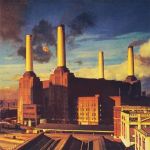
(Pink Floyd, “Sheep,” from Animals)

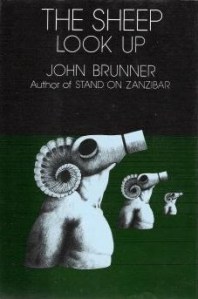
TheSheepLookUpYou pay attention to an instance of saying, or an instance of writing (or, by extension, an instance of singing).  The hardest thing to notice is quite often nothing that is there; it’s what is not there.  Oh yes, an absence can definitely be a presence, but I’m not just rehearsing on that saw again.  This time, I’m thinking of what’s just not there at all, and does not demand your attention by its absence.  Yet noticing its absence can change things.  Maybe a lot.
So, what Lamb?  What Lamb lies down?  Which Lamb is it?

An easy answer that I explored before:  The Lamb whose Supper was Ready in 1972.

But now let’s look at our text again.  If you have your liner notes, please turn with me to Isaiah chapter 53, verse 6.

What do we actually know about this Lamb?  It lies down on Broadway (Duh!!).

Meanwhile from out of the steam a lamb lies down. This lamb has nothing whatsoever to do with Rael, or any other lamb – it just lies down on Broadway.

Nothing to do with Rael, even though it’s our TITLE?  Nothing to do with any other lamb?  Would this include the Lamb for whom Supper’s Ready?  It’s really only one section of the title song that tells us much of anything more than this(and it isn’t that much):

The lamb seems right out of place,
yet the Broadway street scene
finds a focus in its face.
Somehow its lying there
brings a stillness to the air.
Though man-made light
at night is very bright,
there’s no whitewash victim,
as the neons dim, to the coat of white.

When Rael meets the Crawlers, he notes: “There is lambswool under my naked feet.”

It seems as though that’s all.  I can’t find any more right now.  Not explicitly there, at least.  In fact, there are no more lyrical references to The Lamb after the title track, except the wool.

This especially strikes me today.  The album does not provide an answer to my question:  What Lamb?

Push aside (though only for now; only for this look) the strong associations of ‘lamb’ with sacrifice.  It occurs to me that a lamb is a young sheep.  Notice the grammar here:  “It occurs to me.”  It is an event that happens to me.  I’m the fly again, and it’s a windshield that I didn’t see coming.  It’s not that I didn’t know it, in some broad and technical sense of ‘know.’  Sure, I knew it.  But it just occurred to me.  And when that word, ‘sheep,’ came as part of the occurrence, a whistle blew and I heard a voice shout, “ALL CHANGE!”

cat
[If going to Wikipedia is too much effort, here’s a picture of a cat.]

Take a look at the opening section of the article on ‘sheep’ on Wikipedia.  It’s right here if you click.  I’ll wait….

Back?  Good.

A sheep is a ruminant mammal.  Rumination.  “The process typically requires regurgitation of fermented ingesta (known as cud), and chewing it again.” (Wikipedia again).  As my students like to say nowadays, “I just threw up in my mouth a little,” and I need to chew some more.

So let’s ruminate a bit on sheep.  This is my suggested background for our next listen.  (You are listening again each time, right?  No, there will not be an exam.  Not besides the exam that you administer yourself.)

The title betrays my first association.  “All We Like Sheep Have Gone Astray” (You thought of Handel or Bach — or both — just as quickly as the Bible, or perhaps even more quickly, right? A body which was baroquen for you?  Oops, we put aside the sacrifice thing, didn’t we?)  Second association in the opening epigraph:  Pink Floyd’s “Sheep.”  Third association:  John Brunner’s 1972 novel, The Sheep Look Up (its title a reference to Milton).  More upbeat, following on the reference to Bach: “Sheep May Safely Graze.”

Pink_Floyd-Animals-FrontalBut here’s where the wool begins to rub.  Sheep suggest peace, and the protection of a shepherd.  I was a lost sheep, but the shepherd found me, and it’s so good to be back with the fold again.  But sheep follow.  Sheep go with the herd (not unlike cattle).
Meek and obedient you follow the leader
Down well trodden corridors into the valley of steel

Sheep-Image11Sheep’ is plural, so there’s no ‘s’ to remove in order to make it singular.  Does it ever really become singular?  We think of sheep as followers in a very negative sense.  They are also boring in just the right way to put us to sleep if we count them.  It may be only the clothing that is sheepish, the wearer being a wolf.  If the sheep is black, we don’t want it in our family (which suggests racism, as well as having three bags full of wool).  If the sheep are lost, leave them alone and they’ll come home.

Ewe rock!

Ram on!

Where in the flock is this associative chain headed?

My experiment this time is with taking the detour via the word ‘sheep,’ but then coming back to the Lamb.

lamblyingIf it is a Sheep that Lies Down On Broadway, what did that shout (“ALL CHANGE!”) portend?  When we know that we don’t know more than this about The Lamb, how does this change how we hear The Lamb?  If the lamb that lies down is not actually singular, even though it supposedly has nothing to do with Rael or with any other lamb (the latter being singular, perhaps?), what then?

Let us listen again and see.  Yes, I will be doing it with you.  There will be a number of us, over the next couple of days, on at least two continents (if Progarchy stats are believable), but who’s counting?  Perhaps we should also try to be aware of each other, in some way.

Don’t think of it as following.  Think of it as an individual choice to explore “following.”

And don’t fall asleep.  If you do, it means that you were counting rather than listening.

<—- Previous Look     Prologue     Next Look —->

The Masterpiece Before Breakfast: Supertramp’s Crime of the Century (1974)

Hurtling along the Ohio Turnpike earlier this week (a day before the nasty nasty weather hit again), I was listening to some old friends.  One of them, in particular, exploded into my car with an unexpected revelatory force.

Supertramp+-+Crime+Of+The+Century+-+SHM+CD-464717Crime of the Century is an album that I procured when it was newly released, when “Bloody Well Right” was reverberating across the airwaves in the U.S.  I liked it, and listened to it a lot.  It always struck me as enigmatically light-hearted, though I did  get it, even then, that it was very dark.  (Liking light-hearted darkness was probably a prerequisite for being a prog fan.)  All along, I think I’ve classified it as “a great album,” but probably would not have placed it in my top five, or (a bit less sure on this part) even my top ten.  Until now.
Supertramp went on to become huge, especially with Breakfast in America.  Their output from that point on always struck me as mixed, and this was partly a function of many of the songs being over-played.  I’ve always been aware that Crime is considered by many (including members of the band) as the peak of their career in terms of creativity and quality.

But I just was not prepared for the near-shock of listening through the entire album on Tuesday.  During the opening lines of “School,” it suddenly occurred to me:  This album was released half a decade before Pink Floyd released The Wall!  That thought set the tone for my experience of the album that day.  I was an enthusiastic admirer of The Wall when  it came out, but I have since generally thought even more highly of Wish You Were Here and Animals as albums.  But it had never hit me so hard before how much more of a borderline-psychotic edge there is to the dark alienation of Crime.  Perhaps I was in just the right mood.  The experience reminded me a bit of the first time I ever heard Keith Jarrett’s Köln Concert.  That was in a college radio station in about 1978, over nice JBL studio monitors, and I was basically blown to emotional bits that splattered across the opposite wall of the studio.  Hearing Supertramp’s magnum opus again was measurable on that same scale, though perhaps with not quite as high a reading, intensity-wise.

I hope that my attention was still sufficiently on my driving, but I couldn’t tell you for sure.

Ken Scott’s amazing production is a key player here, of course.  I was very aware of producers, and knew this even back in the 7o’s.  But I think some kind of blockage was jarred loose as I drove and let this latest listening wash over me.  It had to do with my ambivalence about the band’s subsequent output, but I suspect there may have been even more to it than this.  It was as if the blockage had an indeterminate number of tendrils, reaching out into my soul and anchoring the blockage at various angles, making it not only difficult to dislodge, but so much a part of my listening apparatus that it had never even presented itself as a blockage.  Apparently, enough of those tendrils had been broken or loosened, and the blast had enough force that day, that the blockage just snapped away.  It was as if I was really listening to the album for the first time on the one hand, though I already knew every sound, every aural nook and cranny of what I was hearing on the other hand.  Everything old was new again.

Despite some of the edges actually being sharper (to my ear, anyway) than those we find in The Wall, they are deployed with an amazing subtlety and restraint, especially lyrically.  “School” does in one song what The Wall takes most of its first side (of four) to accomplish.  And it does it with a more deeply disturbing Hitchcock-like minimalism.  When heard in its proper context, between “School” and “Hide in Your Shell,” one can hear the peppiness of “Bloody Well Right” with a more clear awareness of the droplets of darkness that fall from its edges.  And then “Hide in Your Shell,” which otherwise might strike n0n-proggers as typically bombastic, is at just the right intensity.  “Hide” has always been my favorite track.  But perhaps you know that feeling of discovering even more depth and richness in a favorite.

“Asylum” comes across best in context, as does “Bloody Well Right.”  Again, the Floyd comparison intrudes.  Its positioning between “Hide in Your Shell” and “Dreamer” allowed me to notice, as I had not before, how similar is its austere power to the title track of Wish You Were Here.

Another aspect of the revelation came when I realized with some dismay that my interest on prior listens had always tapered off, at least a bit, after “Dreamer.”  This is not too unusual in my experience of entire albums.  I could name a bunch of them for which my interest begins to lag on the final side (whether a single or a double album).  This is even true of my listenings to The Lamb Lies Down on Broadway.  I’ve already noted elsewhere that the final track is my least favorite on the latter, and my recent efforts at listening with disciplined differences each time have not yet brought significant change there.

But this time, with Crime, it was different.  “Dreamer,” more than on any previous listen, truly announced the opening of the second act.  The familiarity was still there for the final three tracks, but it was a familiarity brought before judgment.  It was a familiarity challenged, asked to show its papers, please.  And its papers were not fully in order.  It was as if both Roger Hodgson and Rick Davies knew that I had always shirked in my listening on these tunes; I could hear it in their voices.  I still had demons in my closet, and these guys had the number of those demons.

If I’m going to make further progress in coming out of my shell, in overcoming the tendency to hide, if I’m to discern how well I’m doing at not being complicit in the crime, then more listening (and more work, more soul-work) is required.  That’s what I heard them saying to me this week.

They’re bloody well right, you know.  And I will listen more (as opposed to simply listening again).

.

Matt Stevens Gets Lucid

It is with unbridled delight that I report:  The wondrous alchemy of The Fierce and the Dead is apparently fully compatible with ongoing servings of scrumptious solo work from guitarist Matt Stevens.

What occurs to me most immediately and forcefully is the word ‘LOOSED,’ though pronounced “loo-sid.”  Mere Matt Stevens is loosed upon the world, and one cares little as he begins to play whether there is a center that holds, or if it’s some kind of periphery without center along which we are careering.  To get loosed (loo-sid) is to be released.  The loosed and lucid journey is one on which I am willing to go, for I’ve come to know that I’m in good hands when he is at the helm.  (This is, at least in part, because he seems to know when NOT to steer.)

cover

Lucidity is a kind of clearness.  It’s a kind of consciousness for which the object of consciousness is accessible, near rather than far (even when it’s neither here nor there).  Matt’s version of being lucid is not some algorithmic calculation that would still the rush of experience into a finalized stasis.  We begin with an ecstatic embrace of tension that is built into the very saying of it (“Oxymoron”), and many of the tracks keep the motifs of motion and journey in the foreground (“Flow,” “Unsettled”, “The Other Side,” “The Ascent,” “The Bridge).

But soon we find some kind of mystery in “Coulrophobia” (fear of clowns).  How strange, as I had not yet seen or heard this new disc when I wrote my last Look at The Lamb, where fearing clowns did come up, and where there was (among other things) some sort of plea that we NOT always insist on lucidity, at least in certain ways and in certain settings.  I get no sense here exactly what it is about clowns that one might fear, but I do get the sense that this (i.e., not having that sense) is exactly the locus of its power.

“The Bridge,” by being the longest of the tracks, presents itself as a kind of exclamation, asking to be heard “over and above” the other tracks, in some sense.  I hear it asking to be the key, as in a key to a map.  Hearing the whole disc through “The Bridge” is encountering an unabashed, loving commitment to composition, with few points for comparison in broadly “prog” music aside from Frank Zappa and Robert Fripp.  Like both, Matt will reliably entertain and amaze, but never at the cost of acting as midwife to the particular musical shape that is emerging in the clay on his wheel.  My second listen to the disc was sideways, first “The Bridge,” and then back out into the aural archipelago that surrounds it, as if they were destinations reached by crossing that Bridge.

(“KEA” and “The Boy” especially remind us what a cornucopia the acoustic guitar remains, despite its being so ubiquitous for decades in popular music.)

If we stay with that “sideways” direction of listening, then consider the title track as the final one.  Remember that we might use the word “lucid” not only to describe a way of being conscious from within, but also to mark the way in which the Other’s consciousness is there, is present, is detectable.  If a healthcare professional pronounces someone “lucid,” it is based on output, on performance.  Heard against the background of the entire disc, and as the answer to those exploratory questions, Matt’s answer is forthright and clear.  Though I’m no professional in these matters, I’m willing to make the pronouncement nonetheless:  Few guitarists, and indeed few musicians, are as completely and wonderfully musically lucid as Matt Stevens.

Get Lucid!

.

The Lamb in The New Yorker

Check out Jon Michaud’s look back at The Lamb Lies Down on Broadway:

http://www.newyorker.com/online/blogs/culture/2014/03/the-ulysses-of-concept-albums.html

.

20 Looks at The Lamb, 10: Genre Friction

“My argument was that there aren’t many novels which are written by a committee.”

–Peter Gabriel (from Hugh Fielder’s The Book of Genesis, quoted by The Annotated Lamb Lies Down on Broadway)

GenesisAtlanticbw6

Novel?  Suggesting the new?  Suggesting a sort of SERIOUS STORY (the unavoidable uppercase insinuating itself into any thought of that suggestion)?  Sure, it’s like a novel.  We’re used to calling it a “concept album” too, as if most albums are somehow without (bereft of) a concept.  Both novels and concept albums had significant histories behind them in 1974, when The Lamb was loosed.  One might say that they were “old hat,” though there are always folks around interested in wearing old hats, tilting them at what they take to be new angles, or perhaps sticking new feathers in them and calling them “Mac” or “Tony.”

It’s like a novel, like a concept album, like a sharp bend between genres.  Taken to the stage on its infamous tour, it’s like a multimedia circus (remembering that some adore a circus, others think a circus puerile, and still others are just deathly afraid of the clowns).  It’s like a Gesamtkunstwerk, in a Wagnerian idiom of “express to excess.”

So just what the hell is it?  Or give that question a nastier edge with the “F-WORD,” implying a deep skepticism regarding whether it is, in any sense, FORWARD.

esmusssein

But does it have to be?  Must it be?  Muss es sein?

These gestures of “criticism,” this architectural dance — whether printed or blogged or just traded with intense sincerity on the floor of one’s room, between the speakers — has so often turned into a flippant flame, fueled by the expectation that whatever it is, it must be something novel.

NATHAN FILLION, STANA KATICI’ve recently been watching the TV-series, Castle, the one about the rich crime writer who teams up with the hot detective, and much murder and dark hilarity ensue.  Novels are the business of the title character, but they are clearly the kind of novels that are not really meant to be particularly novel, at least not in the sense that they might eventually be discussed with great solemnity in future seminar courses in departments of English Literature.  (Yet who can predict?)  I love the program, not because it brings me something new, but because it does something that is NOT new, that is familiar, friendly, and it does it (in my estimation, at least, and perhaps sometimes more than others) exceptionally well.  It constantly and deliberately teeters on the edge of the cheesy, embracing formulaic characters and dialogue with breathtaking abandon, concentrating not on breaking any molds but on filling and caressing every part of the mold, lovingly filling the mold and affirming its shape and texture.  (And the frequent humorous references to Nathan Fillion’s earlier role in Firefly are a lot of fun.)

I don’t watch Castle with the same expectations that I bring to the BBC’s more edgy and exploratory Sherlock.  Hopefully you get the picture.

So what does this have to do with The Lamb Lies Down on Broadway?  No, no, don’t hurry me.  The answer is not necessarily “everything.”  It should be clear, however, that the answer is also a significant distance away from “nothing.”

Todd+Rundgren+-+Faithful+-+CD+ALBUM-415481It dawns upon me slowly, as I am writing this, that my impetus here is a polarity, a bidirectional field of force between a pole that is supposed to be new, innovative, groundbreaking, trendsetting, cutting edge, so-cool-only-hipsters-know-about-it on the one hand, and a pole that is content with breathing as much life as it can into something old, something “stock,” something cliché.

Having followed associations along an idiosyncratic path in the manner of the Freudian dream analyst, I arrive at the final word of the last paragraph, ‘cliché,’ and finally lay a hesitant hold on what I’d like to offer you in this Look at The Lamb.  I’m reminded of Todd Rundgren’s song, “Cliché” (from the album, Faithful [1976]).  It exudes Rundgren’s trademark pop relational agonizing, and captures a certain heartfelt gesture of negation at the banality of the familiar, of the expected.  “Who makes up the rules for the world?”  “I vivisect and then pretend to know.”

So here’s my recommendation this time:  Listen to that Rundgren song, and feel the painful, frustrated resignation in Todd’s inimitable voice.

lamb_header

Done that?  OK, now go back to The Lamb.  Listen and resign.

What the hell is it?

It is the jigsaw. it is purple haze.
It never stays in one place, but it’s not a passing phase,
It is in the singles bar, in the distance of the face
It is in between the cages, it is always in a space
It is here. it is now…

It is real.  It is Rael.

Resign and allow it to be between the cages, always in space, not fixed at a pole but perpetually spinning between.

If it seems like a cliché, let it be so and listen for the loving caress.  If it seems novel, let it be so and watch for “the big reveal.”  But most of all, if it seems to be neither, please please just let it be so.

<—- Previous Look     Prologue     Next Look —->

20 Looks at The Lamb, 9: Getting In and Getting Out

One of the best-known songs on The Lamb Lies Down on Broadway seems to have more than one name.  I’ve always thought of it as “The Carpet Crawlers,” but it has, on various packaging, been identified as “Carpet Crawlers” (no “The”), “The Carpet Crawl,” and “Carpet Crawl” (again, no “The”).  Sometimes the referent is the crawlers, sometimes the crawl itself.  And what happens when there is crawl or crawler, but no definite article?

The crawlers sing, “We’ve got to get in to get out.”  That chamber at the top of the stairs (Is Doktor Freud still in the house? He considers in his writings how often stairs are associated with intercourse) is the “in” from which there is surely a way out.  Up the stairs, into the chamber, and OUT.  Near the end of Stephen King’s Dark Tower books, Roland ascends the stairs, gets in, and gets out.  Semi-spoiler alert!  But it’s profoundly important that I’ve not said to what, or to where, or to when.  It spoils nothing, for it reveals not the spoils.

Why crawling?  A sexual posture?  Having just Counted Out Time, cuddling the porcupine, the sad ending of the previous tune makes it a bit surprising that we are still headed along a carpet into a red ochre corridor.  But Rael is not a crawler.  Perhaps he could not have seen and understood the crawlers as he did, had he been one of them himself.

There’s something about the very notions, the very words, ‘in’ and ‘out.’  Something about the way in which they are places, but they are places neither “in particular,” nor “in general.”  They require each other so that the “in,” no matter where it actually is, must be the “in” of its own “out.”  That’s what makes the crawlers’ logic seem unassailable.  Given that this IS an “in,” there must be an “out,” AND there must be a way.  Corridors and staircases are ways.

But here is the rub (mankind handkinds):  All of this is unassailable only if this IS an “in.”

Is it?

IN the cage.  Back IN New York City.  “…[A]s the notes and coins are taken out, I’m taken IN…”  “You’re IN the Colony of Slippermen.”  And like a woof to the warp of “in” are the “outs.”  There are many (look for yourself).  But does it somehow hinge on this strange locus called “in”?

It’s never clear, at any point in our story, that Rael moves — unambiguously passes — from an “in” to an “out.”  Always the suggestion of a way out (“to get out if you’ve got the gripe…”), but never is there an “out” that shows its whole face, thus proving the existence of “in.”

Out!  Out, damned “In”!

There must be some kinda way out of here, if here is an “in.”

But I’m thinking about that Tat Tvam Asi sort of ending, and wondering if we’re supposed to wonder, to wonder as we wander:  Is there really any “in” in here?

Perhaps we’ve gotta get in to get out.  Perhaps “in” is something that we don’t usually get, and The Lamb is trying to point this…

…uh…

out

Babies-crawling-007

<—- Previous Look     Prologue     Next Look —->

Old-Timer’s Corner: 2013 Minus 40

Since being invited onboard as a progarchist, I’ve come more fully to terms with my clear status as an old-timer.  I’m especially aware of this at year-end, when everyone feels the impulse to produce a “best of the year” list of some kind.  When it comes to music, I’ve never been a good multi-tasker; when I listen to music, I’d rather not be doing anything else at the same time.  That puts some pretty serious constraint upon the time I can devote to listening, unlike a number of my prolific friends.  Then there’s the fact that “prog,” as much as I adore its early history and gladly greet its ongoing vivacity, is far from the only genre vying for my ear-time.  Even the wide-net application of “prog” applied by our great Proghalla leader, Oleg Birzer, doesn’t help me very much.

pink floyd Dark Side of the Moon_dark_side

Don’t miss Big Big Train’s English Electric discs, The Fierce and the Dead’s Spooky Action, and Spock’s Beard’s Brief Nocturnes and Dreamless Sleep.  Beyond that, if you need guidance on 2013, pay attention to the other distinguished progarchists.  I’ll be the one still mostly stuck in the 1970’s.

So, to continue the tradition that I inaugurated last year, I’ve done a thorough and grueling ten minutes’ worth of review via Wikipedia (they could use a donation if you use them and can spare anything, by the way). I give you this brief reminder of what was going on in the general vicinity of what was defined as “progressive” four decades ago.

1973:  London faces bombings by the IRA, along with the first death attributed to arsonist Peter Dinsdale.  In the United States, Richard Nixon begins his second term, the televised Watergate hearings begin, and U.S. involvement in Vietnam officially ends.  The Supreme Court decides on Roe vs. Wade, and the World Trade Center (New York) and Sears Tower (Chicago) both open.  George Foreman defeats Joe Frazier, and Billie Jean King defeats Bobby Riggs.

In music, The King Biscuit Flower Hour, The Midnight Special, and Don Krishner’s Rock Concert all begin airing.  The stature of the Beatles is manifest in Capitol’s release of the Red and Blue compilation albums.  Bruce Springsteen begins making his mark with not one, but two albums.  Paul Simon continues to enjoy solo success with There Goes Rhymin’ Simon.  Led Zeppelin breaks the Beatles’ previous record for concert attendance in Tampa, also recording/filming their Madison Square Garden shows, which will be released in 1976 as The Song Remains the Same.   Elvis Presley’s concert in Hawaii is the first worldwide entertainment telecast to be viewed by more people than had seen the moon landings.  Late in the year, vinyl shortages due to the oil crisis lead to delays of and limits on new album releases.  My selection of highlights here is subject to all sorts of personal bias, of course, but you can search online yourself for more complete lists of events, people, and other memories if you’d like.

Of greatest interest to our readers, presumably, will be the following list (not necessarily complete!) of prog and “prog-related” (by my arbitrary definition) albums released in 1973.  The first five are MY top five favorites from that year (as of today; such things may vary).  After that, they are listed in no particular order.

  1. Larks-Tongues-in-AspicKing Crimson, Larks’ Tongues in Aspic
  2. Emerson, Lake & Palmer, Brain Salad Surgery
  3. Todd Rundgren, A Wizard, A True Star
  4. Rick Wakeman, The Six Wives of Henry VIII
  5. Mike Oldfield, Tubular Bells
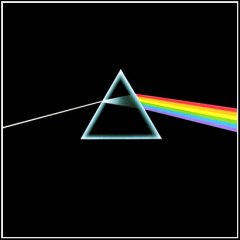
  • Pink Floyd, Dark Side of the Moon (one of the best-selling and most widely recognized albums in popular music, remaining on the charts from 1973 until 1988! )
  • Camel, Camel
  • Electric Light Orchestra, ELO 2 AND On the Third Day
  • Roxy Music, For Your Pleasure AND Stranded
  • Hawkwind, Space Ritual
  • Yes, Yessongs AND Tales from Topographic Oceans
  • Gong, Flying Teapot
  • Jethro Tull, A Passion Play
  • Genesis, Genesis Live AND Selling England by the Pound
  • Flash, Out of Our Hands
  • Can, Future Days
  • Gentle Giant, In a Glass House
  • Renaissance, Ashes are Burning
  • Robert Fripp & Brian Eno, (No Pussyfooting)
  • Mahavishnu Orchestra, Birds of Fire AND Between Nothingness and Eternity
  • Carlos Santana & John McLaughlin, Love Devotion Surrender

My recommendation for today’s nostalgia hit:  Listen again to Larks’ Tongues in Aspic, and keep reminding yourself what year it was released.

.

20 Looks at The Lamb, 8: Gesture and Context

If I could only point at something immovable,
Point or gesture, with complete accuracy
Accuracy dependent on no general context
Dependent on no central metaphors
Like Lamb or Broadway or Knock and Know-All

It shouldn’t even be “I” who points, but only
A pointing, only a line of force gone out
From no particular finger, to a meaning that
Hangs there nowhere, above nothing, nothing
Providing anchor or hook for hanging, as if
Hanging were no death sentence at all, but
A gesture that no one could misinterpret

Or no one even there to interpret, why not
The thing itself, ripped from Wallace Stevens’ verse
Presented without these images caked with mud
With blood, with sinews of significance that hang
Together so stubbornly, despite my rage for clear
And distinct seeing that is not seeing by any eye

If meaning could hang in midair, simply meaning
(without division like that, as noun and verb)
Then Rael would never have had to die, the lamb
Would never have had to lie, the meaning
(Whatever that “thing” might be) would freely float
The pointing only being at itself, and to itself

The interruptions are what I notice today, the songs
That elsewhere sing, but jut out into the Lamb’s domain
With lights that are always bright, or clouds that
Wander lonely as a single word, or the man
Who can’t be a man if he doesn’t smoke Winstons
Knocking and knowing as if it were rocking and rolling
Referrals that leap across chasms of signifying space
With nothing on Evel Knieval aside from invisible
Rocket-powered turbo-booster fuel-injected nothings
Pushing meanings that need no push, that cannot move
At all, because context isn’t needed after all

Pointing, meaning, indicating, showing, having in mind
They all require difference, don’t they? Distinction or
Maybe “long division,” that phrase that scared us silly
As schoolkids, when we first were learning that truth
Instead of sitting nowhere, somehow requires our work
Requires a toil, a test, an effort extended into a quest
A narrative form with suffering and death and noise
And uncomfortable silence too at times. Difference.

John and Rael are like that, have you noticed?
Difference, sameness, difference, oscillation of identity
Seeming in the seventies nearly trite or formulaic
With all that Eastern stuff, that Cozmik Debris said Frank
Dessert must be Eastern though Supper was Christian
The difference like John vs. Rael is the gesture
The pointing that signifies only from symbolic friction
From images bumping and grinding and sparking
Only with violence meaning what they mean

Ravine and rapids, a rip in the world as text, as story
Cage and cave, an eddy in a semiotic flux and flow
Windshield on freeway, an apocalyptic anticlimax
Freudian Slippers slimy with ambiguous tension
Can’t the said here simply be said, a saying
Accomplished, enthroned, entombed, embalmed
And mounted on an appropriate plaque to hang
(Again with the hanging?) upon a museum wall
But no, there’d still be seers, trooping by on tours
Not the fixed, denoted gesture minus pesky context

lamb_cover1

If Rael is a gesture, if Rael’s story is a gesture
If every word about Rael is a gesture the whole
Damned thing is a gesture and nods the direction
It wants understanding to go from its context
Not from a hardbound volume or notarized script
If The Lamb Lies Down on Broadway’s a text
It only succeeds as a text within a larger text
The texts get larger, but never cease being texts
Rael dies, and loves, and suffers, and cries for
The brother that all of us long to find the same
But is stubbornly endlessly infinitely Other

Listen to the otherness there in The Lamb that is
Really no otherness at all but the same cursed
Otherness always required for anything anywhere
Anytime at all to have a meaning.  For whom?
For anyone other than The Lamb who would listen
Though listening makes the difference dissolve
And mean, and point, and gesture at something
That we wouldn’t have without Rael and John
And have it we can, though the having is never
A having and holding for death does its part

Listen in context, be taken from context, and shown
Within context that context is always required
And we never break out from context to meaning
But never is context all there is.  Never.

<—- Previous Look     Prologue     Next Look —->