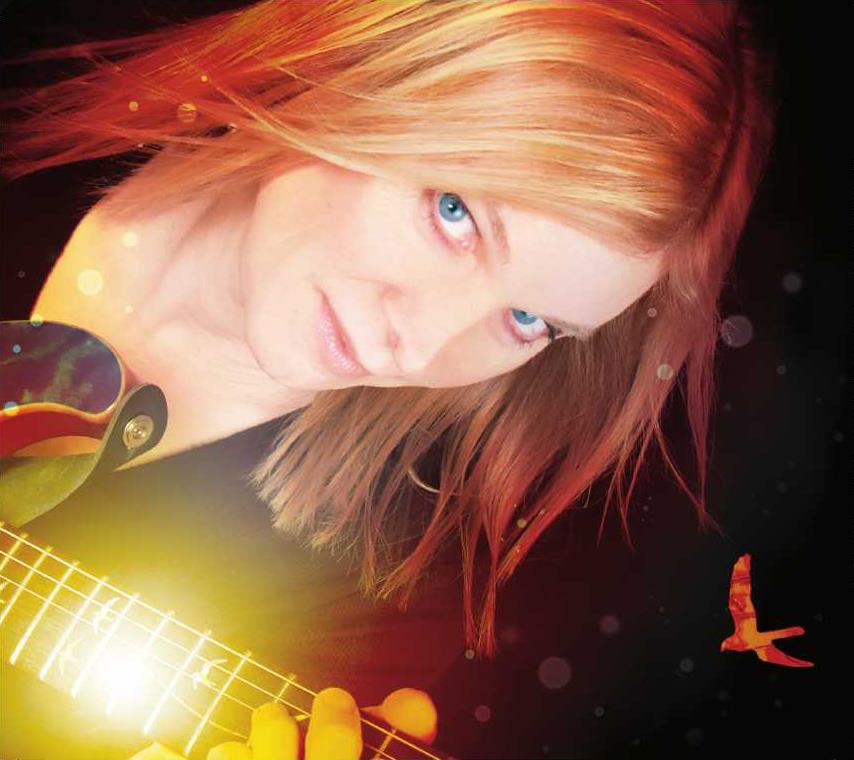
Andy John Bradford’s Oceans 5 “Return to Mingulay”

s_8a

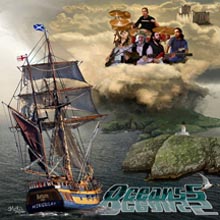
Yes, the title is a mouthful, but Andy John Bradford and his band Oceans 5 are awesome. In fact, I think Return to Mingulay is my favorite album of 2013. Their sound hearkens back to the British rock of the 1970s, with a calmer, thoughtful progressive feel to it. The band is made up of Andy John Bradford, a British folk singer/songwriter/solo artist, on vocals and 12 string guitar, Colin Tench on lead guitars, Stef Flaming on bass guitar, Marco Chiappini on keyboards, and Victor Tassone on drums. Originally, these guys got together to just make one song, “The Mingulay Boat song.” This song is a 200 year old song that Andy John Bradford wanted to perform in a new and unprecedented way, and he certainly accomplished that. In doing so, they discovered that as a group, they really clicked. And so, Oceans 5 and Return to Mingulay were born. Their website describes the process of creating Oceans 5:

When you think of Progressive music, you are unlikely to imagine a 200 year old tune with sea shanty lyrics. However this is what Folk Singer/Songwriter Andy John Bradford had in mind when he approached Progressive musician Colin Tench from Bunchakeze and Corvus Stone with the idea. The band actually formed around this one song. Despite the fact that they were all busy with their own bands already, more ideas kept flying backwards and forwards. Andy has a great feel for songwriting and Oceans 5 have proved to be rather good at twisting those songs into a whole new form. From bouncy and silly to epic rock. The 9 songs add up to one hell of an album that even the band members never imagined at the start of this.

 The album flows out of “The Mingulay Boat Song,” with many images and themes from the sea evoked. The ocean themes are fitting, as Mingulay is an island off the coast of Scotland. Originally an island inhabited by fisherman, Mingulay was abandoned in 1912; thus the title, Return to Mingulay. Their sound recalls the sounds of the sea, and it also recalls the sounds of Pink Floyd, The Strawbs, David Gilmour, and even Big Big Train. There are many Gilmouresque guitar riffs and solos throughout the album. The biggest connection to Pink Floyd, however, is the appearance of Lorelei McBroom on arguably the album’s best song, “6000 Friends.” (Lorelei McBroom is known for touring with Pink Floyd, and is most recognizable on the Dark Side of the Moon’s “The Great Gig in the Sky.”) The song addresses the issue of technology and online “friends” versus reality and real friendships. While the song may feel out of place amongst the rest of the album, it fits by creating a juxtaposition of the older, sea shanty type songs with the problems of the new technological era. Overall, the music relaxes the listener, much like The Dark Side of the Moon or Wish You Were Here. The music probably fits best into the genre of Progressive Folk Rock, mainly because of its overall theme of the sea. Throughout the album, it feels like this music could not have been produced in 2013. Return to Mingulay honestly sounds and feels like something produced in the 1970s in what many consider to be the golden age of prog. It would not be out of the ordinary to hear Genesis, Pink Floyd, or even Jethro Tull play some of these songs. Andy John Bradford and Oceans 5 have created an excellent masterpiece that should be considered one of the best albums of 2013. I look forward to seeing more from them. 

portfolio2

portfolio1

BillyNews: Transatlantic

Transatlantic To Release New Studio Album Kaleidoscope on Jan 28, 2014
Announces World Tour Jan 31 – Mar 15, 2014
 
Cross Plains, TN – Good things come to those who wait. Transatlantic fans are accustomed to playing the waiting game, and their patience has been rewarded with the band’s fourth official studio album, Kaleidoscope. Steeped in vibrant prog rock organics, it’s a triumphant return to the band’s original creative style.
 
The beloved prog rock project featuring Neal Morse (ex-Spock’s Beard), Mike Portnoy (The Winery Dogs, ex-Dream Theater), Roine Stolt (The Flower Kings) and Pete Trewavas (Marillion), Transatlantic’s foundation was built in 1999 with the release of their debut album, SMPT:e, in 2000. A second studio album, Bridge Across Forever, solidified their position as prog’s definitive supergroup. It would be nine years before Transatlantic’s fans were rewarded with a new studio album: 2009’s The Whirlwind, the band’s most popular release to date. Following the subsequent tour, spawning two live DVDs, the band decided to record a new studio album as soon as they could.
 
“There was talk about a year ago about doing an album before we actually did it,” reveals Morse. “I was feeling it for a while. Some of the music that ended up on my Momentum album (2012) seemed like good material for Transatlantic. Roine and my schedules have a little more space in them, and Pete and Mike’s schedules finally aligned, so we were able to put this together. I’m just glad we got to do it again and I’m really happy with the way the album came out.”
 
Morse, Portnoy, Stolt and Trewavas shared equally in the songwriting, with Portnoy ultimately sifting through the material and picking out what he felt was best. For the most part, the music that fans hear on Kaleidoscope (and all of their previous albums) was created for Transatlantic. There are, of course, exceptions. “I wrote the second song on Kaleidoscope, “Shine,” before my Momentum album came out,” says Morse. “I thought about recording it for myself, but it just smelled of Transatlantic. I presented it with two other acoustic songs, and that’s the one the other guys chose, as well.”
 
The band convened at Neal’s studio in Tennessee; writing, arranging, and laying down the final drums and bass. Morse offers, “At this stage, we sketch out the house and build the foundation. Then Roine and I go off to our respective studios and do what we need to. We send those parts, including vocals, back and forth via the internet; but the writing is done together in Tennessee. We just go from the gut, and I think it’s an amazing process of trusting each other. There’s no shortage of ideas; it’s more like which ideas do we want to use?”
 
As the fans have come to expect, Kaleidoscope is also available as a Special Edition featuring eight uniquely Transatlantic cover songs. “I don’t know how it started,” Morse says of the cover song tradition. “But we’ve done it for every album. It’s a lot of fun because most of the time it’s simpler music than what we’re mainly involved with.”
 
There are points during the journey through Kaleidoscope where the listener will be reminded of artists like Yes, early Genesis, and even Styx. But in the end, the album is distinctly Transatlantic before it can be compared to anyone else.
 
“I think that comes from the different ingredients,” says Morse. “It’s the four of us from all over the world—with our different backgrounds, cultures and musical history—that makes this band totally unique.”
 
The band will embark on a six-week world tour January 31 – March 15, with an additional performance at the Sweden Rock festival June 4-7. They will be joined by Pain of Salvation’s Daniel Gildenlöw as a 5th touring member. The tour will include headlining the Progressive Nation At Sea 2014 Cruise,February 18-22, alongside 22 other leading prog acts including Adrian Belew Power Trio, Devin Townsend Project, King’s X, Anathema and Spock’s Beard. The event will also feature a special performance of Yes material by Transatlantic with legendary singer Jon Anderson on vocals.
 
Transatlantic – Kaleidoscope (75:50)
 
1. Into The Blue (25:13)
I. Overture (Instrumental) 
II. The Dreamer And The Healer 
III. A New Beginning 
IV. Written In Your Heart 
V. The Dreamer And The Healer (Reprise)
2. Shine (07:28)
3. Black As The Sky (06:45) 
4. Beyond The Sun (04:31) 
5. Kaleidoscope (31:53) 
I. Overture (Instrumental) 
II. Ride The Lightning
III. Black Gold
IV. Walking The Road 
V. Desolation Days 
VI. Lemon Looking Glass (Instrumental) VII. Feel The Lightning (Reprise) 
 
Bonus CD: 
 
1. And You And I (Yes) 
2. Can’t Get It Out Of My Head (ELO) 
3. Conquistador (ProcolHarum)
4. Goodbye Yellow Brick Road (Elton John)
5. Tin Soldier (Small Faces)
6. Sylvia (Focus)
7. Indiscipline (King Crimson)
8. Nights In White Satin (The Moody Blues)
 
Line-Up:
Roine Stolt – Electric guitars, vocals
Pete Trewavas – Bass, Vocals
Neal Morse – Keys, Guitars, Vocals
Mike Portnoy – Drums,Vocals
 
An Evening With Transatlantic 2014 World Tour
 
Jan 31st – Los Angeles, CA – El Segundo Performing Arts Center
Feb 1st – San Francisco, CA
Feb 2nd – Seattle, WA
Feb 4th – Chicago, IL – The Arcada Theater
Feb 5th – Quebec City, Canada – Theatre Du Capitole
Feb 6th – Montreal, Canada – L’Olympia
Feb 7th – Boston, MA
Feb 8th – Philadelphia, PA – Keswick Theater
Feb 9th – New York City, NY – Highline Ballroom
Feb 11th – Mexico City, Mexico – Teatro Metropolitan
Feb 13th – São Paulo, Brazil
Feb 14th – Buenos Aires, Argentina
Feb 15th – Santiago, Chile
Feb 18th to 22nd – Progressive Nation At Sea
Feb 27th – Madrid, Spain – La Rivera
Feb 28th – Barcelona, Spain – Razzmatazz 2
March 2nd – Milan, Italy – Alcatraz
March 3rd – Rome, Italy – Orion
March 5th – Pratteln, Switzerland – Z7
March 6th – Karlsruhe, Germany – Substage
March 7th – Munich, Germany – Muffathalle
March 8th – Berlin, Germany – Astra
March 9th – Cologne, Germany – E Werk
March 11th – Antwerp, Belgium – Trix
March 12th – London, England – The Forum
March 13th – Tilburg, Holland – 013
March 14th – Tilburg, Holland – 013
March 15th – Paris, France – Le Bataclan
June 4th-7th – Sweden Rock Festival
 
Studio Album Discography
SMPT:e (2000)
Bridge Across Forever (2001)
The Whirlwind (2009)
Kaleidoscope (2014)
 
Press Contact
Glass Onyon PR
 
Transatlantic Online:
 
Progressive Nation Cruise
 
Radiant Records


Glass Hammer, Ode to Echo Preview

Nothing Glass Hammer does is unimportant.  Steve Babb posted a teaser preview of the new album this morning and the two words that spring to mind:  delicate and intricate.

Call me very excited about this.  20 years of Glass Hammer certainly leaves much to celebrate.

Seize the Day: Galahad, BATTLE SCARS

[N.B.  Due to weather, our internet is out, and I’ve typed this and posted it using our cell connection.  Spotty at best.  If there are errors and typos in the post, please don’t let it reflect on all of progarchy.  When I have a real connection, I’ll clean it up.  Promise!–Brad, ed.]

I hate to admit it, but I didn’t know the music of Galahad until about a year and a half ago.

Alison Henderson, first lady of prog and a fellow progarchist, introduced me to the music at the time that Battle Scars (April 2012) came out.  “Brad, you have to check out the new Galahad album.  It’s brilliant.”  Actually, I’m paraphrasing, not quoting.  But, I bet I’m really close when remembering her email that day.

I never fail to follow the advice of Lady Henderson, and I downloaded the music that day.

From the opening plaintive words to the direct pleading lines of “Battle Scars, Battle Scars,” I was rather taken.  I wrote back to her almost immediately, “This is what Ultravox should’ve been!”  She replied that she would have to take my word for it.

Granted, I really dislike it when reviewers compare Big Big Train to Genesis, as though Genesis needed completing or as though Big Big Train exists to fill the void left by 1977 Genesis.  So, please don’t take my comparison as anything more than a joyful comparison.  Stu Nicholson’s voice has, in the best sense, a Midge Ure quality—bringing just the perfect amount of emotion and emphasis to a song.  So, imagine if Ultravox had decided to explore the farthest reaches of its potential after releasing Rage in Eden (especially side 2 of that amazing work).  Imagining such a  beautiful thing, I can see—far into the distance—Battle Scars or Beyond the Realms of Euphoria.

After the brief discussion with Alison, being the obsessive prog fan that I’m sure many progarchists are, I looked up everything I could find regarding Galahad.  I’d heard the name, many times, of course, before April 2012, but always in the context of “neo-prog.”

Mask

Neo-Progressive Rock

As much as I pride myself (always dangerous) on my knowledge of prog, ca. 1971 to the present, I’m really weak on what’s called “neo prog” or “second-wave prog.”  At the time that second-wave prog emerged, my junior high, high school, and college years (Class of 1990), I was listening to so-called new wave such as Thomas Dolby, The Cure, and XTC, presuming them to be the rightful inheritors of Yes and Genesis.  For me, the ultimate prog album of the 1980s is Talk Talk’s Spirit of Eden.  Next to Talk Talk, Rush was my favorite band.  I didn’t even know about Marillion until a friend introduced me to them in 1993.  He handed me a copy of Misplaced Childhood, and I was stunned such a group had existed without my knowledge (there’s that pride again).  I very much liked what I heard, but this was just before Brave, The Light, and The Flower King appeared—which almost completely stole my attention.

Needless to write at this point, my knowledge of Pallas, IQ, and Galahad—all supposed neo-prog—was pretty poor.  About eight or nine years ago, I started collecting the back catalogues of Pallas and IQ, but Galahad still remained off my radar.  I’m pretty much a complete “newbie” when it comes to other neo-prog artists.

I’m not sure if neo-prog is a sub-genre of progressive rock or really the “second wave of prog.”  Whatever it is, I like what I’ve heard. . . .
1340553422_af1bcc51bdcf01bb7c014941a9f91c97

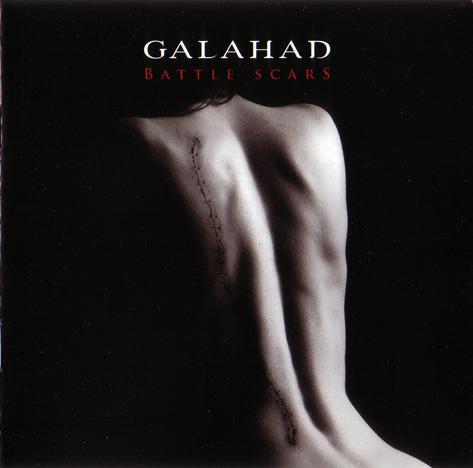
Battle Scars

. . . . especially when it comes to Galahad.  I like it very much.  Indeed, this is an understatement.  From the moment I first heard Battle Scars, I knew this was a band I would come to cherish.  And, I have.  Though I regret having missed out on so much since 1985 when it comes to this band, I’m also really happy to have it all to explore again.  As I love to tell my students, I’m jealous that so many of them get to read The Lord of the Rings for the first time.  I would give a lot for that “first time” again.  I feel I’ve been given a gift by coming to Galahad late in life.

I really have no idea if Battle Scars is a “proper” neo-progressive album or not.  I don’t have the tools to judge, and I’m more than content to know it’s brilliant music, whatever label might adhere to it.

In terms of tone, Battle Scars is the Grace Under Pressure of our present age  In 1984, Rush explored—in a rather dour, harried, poetic fashion—the final days of the Cold War, though most of us didn’t know the days of the Soviet empire were numbered.  Gulags, holocaust camps, the loss of a friend, fear, acid rain, and rabbits running under are squealing wheels all haunted Grace Under Pressure.  Listening to this album while devouring various dystopian novels fundamentally shaped my perceptions of what I saw in the news.

With Battle Scars, Nicholson has equalled Peart in quality and tone, asking what a post-9/11, a post-Bush, world might mean.  But, just as with Grace Under Pressure, the events of the world offer a symbol for the events of the soul.  Disorder in one is disorder in the other.

The album opens with haunting words—even in delivery—of St. Paul.  Do our actions reap corruption and death or life everlasting?

I’m not sure if Nicholson wants his listeners to take these words literally or not, but they fit ominously and perfectly, setting the stage for some of the most important and meaningful questions we can ever ask ourselves, Greek or Jew, male or female, bond or free.

How to you want to live in this world.  With integrity and purpose or without?  Do you want to achieve and strive or do you want to glide and get by?  Do you want the message on your tombstone to read “he lived” or to read “he lived well”?

Though only seven tracks at 44 minutes, Battle Scars packs a serious punch.  After the contemplative opening moments quoting St. Paul in hushed tones, Battle Scars becomes relentless.  Indeed, a wave of strings and respectful vocals become pounding bass and drums, crying against vanity.  “Hollow words count for nothing.”

An explosion or implosion ends the first track, and it glides into some nice reverb and more pounding bass, guitar, and drums in the shortest track of the album, “Reach for the Sun,” the lyrics reminding the listener that “battle scars are real.”

Track three, “Singularity,” begins with some appropriate spacey ethereal washes of keyboards, and the distant angular guitar is especially good.  It breaks into a full rock song a little over a minute into the track, and the listener is propelled forward again.  Having reached beyond the pain and suffering of this world, the protagonist of “Battle Scars” has transcended reality in his imagination and integrity.  “You can’t touch me now.” The track ends with some beautiful, romantic piano.

“Bitter and Twisted,” track four, brings the listener back to the world, with every instrument back in full, driving play.  It’s in this track that the band displays their full strength, as individual players and as an artistic whole.  This is one very tight band.  Lyrically, it’s difficult to know if Nicholson is identifying with the protagonist here, expressing shock at betrayal, or if we’re given the standpoint of an observer misperceiving and misunderstanding the protagonist.  “You’re just a little piece of nothing at all.”

With track five, “Suspended Animation,” the protagonist identifies the evil that is in himself and the world around him.  Here, we find a movement toward reconciling the order of the inward and outer person.  The protagonist must reconcile his own troubles and problems, seeking some kind of forgiveness and atonement.  Another driving rock song.  Nicholson’s vocals are particularly good, especially as he proclaims and enunciates the words, “suspended animation.”

My favorite song on the album is the sixth, “Beyond the Barbed Wire.”  As one would expect with such a title, the song is not a happy one, though it might be a resigned one.  One of the quieter songs on the album, at least for its first minute or so, it reminds the listener that though the Nazis and Soviets might be gone, other evils remain in the world.  At least, as I’m understanding the lyrics, this is what I’m hearing.  The holocausts and gulags have just taken on new shape and new form, but the essence of such evils remains.  “I’m just thinking, just thinking, beyond the barbed wire.”  The protagonist, however, finds great strength in those who came before him.

The spirits of the lost reinforce my will

Their souls reunite in pure defiance

We will not disappear in mournful smoke.

This is a stunningly beautiful lyric, and Nicholson delivers it not just ably, but expertly.  The voice reminds the listener of the opening lines of the album, the words from Paul.

The final song, “Seize the Day,” is the longest track and it successfully ties the whole work together, allowing all to end in real joy.  The track also prepares the listener for the second Galahad release of the 2012, Beyond the Realms of Euphoria.  Still very much a rock song, “Seize the Day,” also embraces, very well, forms of electronica.  “Seize the day/relish every moment.”
thumb.php

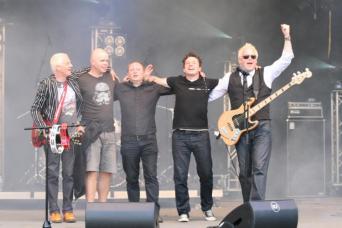
Thank you, Stu, Roy, Spencer, Dean, and Neil.  You have created a thing of beauty.  Long may the creativity and virtue of Galahad continue.

A double bill to die for!!

Well, the new year is barely a week old and almost immediately, the Dream Team double bill is announced for a mini-tour of England and Wales in November.

There cannot be two more exciting and contrasting bands that Lazuli and Moon Safari who are confirmed for five dates in November with possibly extra dates to follow.

http://www.progrockmag.com/news/lazuli-and-moon-safari-announce-joint-uk-tour/

Well, that’s the annual holiday sorted!

The Best Prog Bands You’ve Never Heard Of (Part Six): Lift

lift

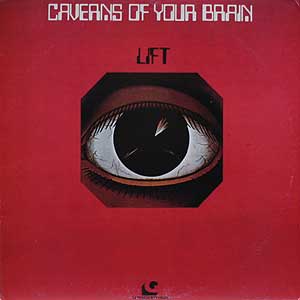
I bring to you yet another fine American band that  would have been sadly forgotten if not for the saving graces of the Internet.  Hailing from New Orleans, Lift released one album in 1974, the curiously titled Caverns of Your Brain.  It is probably the best obscure prog album I’ve ever listened to.  All five band members are more than capable when it comes to handling the complex rhythms and lengthy compositions that distinguishes progressive rock from other musical genres.  Fans of Yes, ELP, Hawkwind, and even Premiata Forneria Marconi will enjoy this album.  Lead singer and flautist Courtenay Hilton-Green sounds similar to Jon Anderson (sans Lancashire accent) and Franz di Cioccio (of PFM fame).  Cody Kelleher’s bass guitar sounds similar to Greg Lake and, at times, Chris Squire (from his pre-Fragile days).  The standout on the album, however, is keyboardist Chip Gremillion.  His work on all four songs is comparable to that of Tony Kaye, and he does a superb job on each piece.  Guitarist J. Richard Huxen and drummer Chip Grevemberg are excellent on their respective instruments as well.  Now to the songs:

Simplicity – excellent opening song; similar in sound to Yes’s debut album; catchy bass and keyboard intro

Caverns – more tranquil and “spacy” song, similar in vein to Hawkwind and Gabriel-era Genesis; piano solo reminiscent of Tony Banks’s finest work; and a superb acid guitar solo (reminds me of Gilmour)

Buttercup Boogie – more frenetic than the others; exceptional keyboard work yet again; fine drum and bass anchor the piece

Trippin’ Over the Rainbow – another great keyboard and bass intro (bass sounds similar to Greg Lake’s best work); excellent synthesizer work gives song a space/acid rock feel; part of the bass line includes the Peter Gunn theme (famously played by ELP in concert)

These are four well executed songs.  For those of you who enjoy the symphonic side of prog, this is an album for you.

Hope everyone had an enjoyable beginning to the New Year.  Let’s hope it’s a good year for freedom!

Here is the full album: 

Big Big Train News: Excellence Prevails

I was very excited to get Greg Spawton’s post today. Wonderful news and well-deserved success. I’ll post more later, but, sadly, our internet connection is out. I’m posting this from the Verizon account. Hence, no frills.

Lots of thrills, though, with BBT. Enjoy: Big Big Train News

Tori Amos – 20yrs of Under the Pink

Happy 2014 everyone, I thought I’d write about something different this time, have a look at someone who changed the way I viewed music and how I appreciate it, and approach it.
Back in 1994, not quite 17, I was discovering and developing my own musical tastes, stepping away from Radio 1 and the bland dirge it was playing in the mid 90’s, I have never returned there.
Instead I was delving through my parents shelving, borrowing LP’s and listening avidly, bands like The Strawbs, ELO, Sky and Mike Oldfield, all artists who’ve accompanied me on my musical journey, with my developing love of all things Prog, Pink Floyd, Yes, Led Zeppelin, Black Sabbath, it’s fair to say that my musical tastes were all male orientated, and mostly guitar led, if there wasn’t a killer riff buried in there I wasn’t interested.
I was slowly moving away from the diet of Dire Straits or Chris Rea that I had been listening to throughout 1992, Britpop didn’t interest me at the time, retrospectively the only band of any note in my opinion to come from Britpop was Pulp, and they were making weird and wonderful music long before Phoney Tony and ‘Cool Britannia’ came along!
Post Radio 1 and before I graduated to Radio 2 there was, in the early 90’s a national pretender to the throne, Virgin 1215, a radio station playing more rock than pop, and one which I gravitated to like a moth to a flame, where else could I hear Yes? Black Sabbath? Zeppelin? My beloved Beatles? And then one day, out of the ether, I heard her.
Myra Ellen Amos to use her Sunday name, Tori Amos to you and I, born 22nd August 1963 (we share the same birthday, but not the same year)
The song in question still nestles comfortably in my top ten singles, and is the brilliant Cornflake Girl, with its nursery rhyme esque lyrics, its driving piano, and catchy as hell tune, kicked open a door I’d never opened before, and within weeks its parent album, Tori’s 2nd solo long player, Under the Pink was mine.
The first album I’d ever bought by a female musician, and blimey, what an album, more assured, more experimental, stronger and more confident than her debut (Little Earthquakes 1992) from the hauntingly beautiful opening Pretty Good Year, Tori’s delicate piano playing, her intimate, breathy vocals and amazing vocal range, then, the strings sneak it subtly, and then building with Tori’s vocals and lyrics, nothing random or abstract here, just her and a piano, and it draws you in to the album, slowly building to the middle where the crescendo increases and a burst of guitar and bass, suggests more than sugary ballads are the order of the day.
God then takes any notion you may have been harbouring that Tori was a pretty girl with a piano, and throws them out of the window, the grinding funk, the backward distorted guitars and the lyrics suggesting God would be better with female company, and that voice, that beautiful voice of an angel singing the words of a cheeky devil, what a dichotomy.
The album is nicely paced between the softer tracks like Bells for Her and Baker, Baker, with the gritty, haunting and funky Past The Mission, with its story telling and backing vocals from Nine Inch Nails Trent Reznor, harmonising beautifully with Ms Amos.
The wonderfully quirky The Wrong Band, feels like a lot of the songs on the album, that we’re getting lyrical snapshots or vignettes of bigger pictures, like looking through someone’s photo album without knowing who the people are, or the context in which they were taken, and its this lyrical brevity and beauty that is part of the magic.
No song is too long, nowhere outstays its welcome, and we know all we need to know about the characters in these songs.
Then we get to the second part of the album, the wonderfully vitriolic The Waitress (but I believe in Peace, Bitch) with its snarled lyrics and angry fuzzy guitar, with the restrained drums that are threatening to explode at any moment, then the single, the fantastic, wonderful, sublime Cornflake Girl, I still don’t know what its about, and frankly I don’t care, its music, its chorus, its lyrics, the closing piano and guitar duel, Tori’s double and tripled tracked vocals harmonising, all come together to create a fantastic record that possesses the power of time travel, no matter where I hear it, it transports me back to 1994 and what I was doing then.
Cornflake Girl, Icicle, Cloud on My Tongue, Space Dog and the epic Yes, Anastasia is one of the strongest closing sequences on any album out there.
This, of course was recorded, programmed and designed in the days before MP3, and downloading, so, as with every great album from that era its designed to be listened to as an overall experience, not to be dipped into, as you lose the magic of the album, and the way the moods ebb and flow leading into each other.
From the mania of Cornflake Girl, to the reflective, introspective Tori and piano elegy that is Icicle, with her piano playing out of this world, intuitive, talented, classical, and with the pause between the notes as important as the notes, we’re nearly 2 minutes in before she even starts singing, and when she does, the voice melts your heart like the Icicle in the song title, the following Cloud on My Tongue, with its lush strings and its direct lyrics is a wonderful love song, and keeps the calmer mood started with Icicle.
The mood picks up again, with Space Dog, the beat and piano driving the song along, with the song being superficially about the animals sent in to space, never to return, but, as with all of Tori’s lyrics there’s always something much more going on in the undertow, and this hints at betrayal and back stabbing, sometimes you can decipher the hidden meanings, sometimes the meanings are ambiguous, which is one of the joys of her lyrics and performances.
The closing finale, the epic, 9 minutes plus of Yes, Anastasia, with its lyrics about the Grand Duchess Anastasia Romanov, mixed in with references to Amos herself refusing to be a victim and fighting through her own personal trauma from having suffered a serious sexual assault (see the harrowing Me and a Gun, from her 1992 debut Little Earthquakes), a theme that runs through the whole album on tracks like Past the Mission and Baker, Baker, whilst the instrumentation is amazing, the orchestra soars, the piano sings and Tori’s voice is like an instrument throughout, pulling the strands together and tying them up.
With its closing refrain ‘We’ll see how brave you are’ and the sheer musical talent on display here, this is a mighty piece of work by anyone’s standards.
To someone like me raised on a musical diet of rock and guitars, hearing the piano freed from the traditional group format and on its own as the principle instrument on the album, was like seeing the difference between seeing a caged animal, and seeing the animal in the flesh.
This blew my mind when I first heard it, nearly 20 years ago, and opened me up to a new kind of music, a new way of listening, and as an album has been with me every step of the way from 1994 to today, and whilst Tori Amos continues to make fantastic music, and has produced a fine body of work over the last 20 years, it is this, Under the Pink, to which I return first, time and time again, and is one of those albums that have made me the person I am today.
If any album out there needs a deluxe edition, then this is it, how about it Warners? A nice 20th Anniversary edition, with all the b-sides and live tracks as well?

Cailyn Lloyd’s VOYAGER in Progress

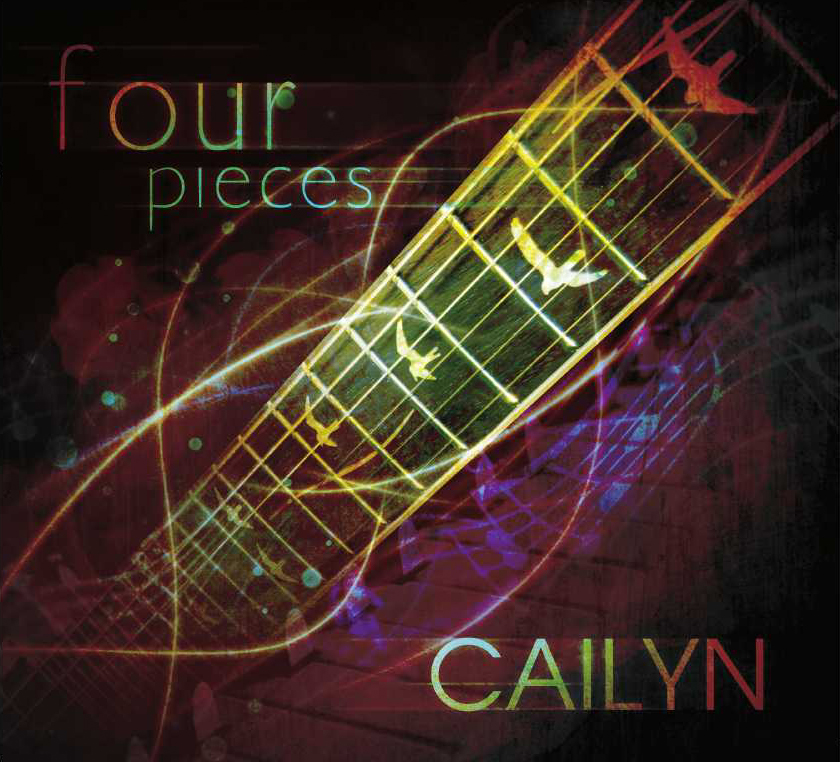
Our friend, Cailyn (she of Four Pieces fame), just released information today about her fourth album, VOYAGER.  Here’s a bit of what she has to say:

4082394417-1-2

I am in the studio, working on a new project called Voyager.  This project arose from my interest in the Planets Suite by Gustav Holst. Problem was, the music as it stood did not easily lend itself to a rock interpretation and the opening movement, Mars, had already been explored extensively by better artists than I.  The idea gradually evolved from there to a musical interpretation of the Voyager Space Project.

Voyager will include excerpts from Jupiter, Saturn, Uranus, and Neptune from the Planets Suite as well as ten original pieces of music (see track listing below).  I have finished the composition for all of the tracks and I am now working on the instrumentation and programming.

While I originally imagined this as a progressive rock suite, it will be more eclectic, not adhering to any single genre.  Much of it is classically inflected symphonic prog, particularly the Planet Suite excerpts as well as Io, Titan, and Triton.  Europa and Pale Blue Dot are more New Age with blues inflections.  Enceladus is free form without time or key signature.  Ariel and Miranda are classic-progressive rock hybrids.

Voyager will primarily be an instrumental work though I have sketched wordless vocals for several of the tracks. Most of the drumming will be recorded on an acoustic set and I am now looking for the right a session drummer for this project. The bass guitar and keyboards will be more prominent, especially the keys as much of the original music is being written at the keyboard.

Run time: about 56 minutes.  Track listing with brief descriptions:

Voyager – A quiet symphonic introduction leads to a bluesy guitar progression followed by a powerful progression of chords that builds to a grand crescendo before a return to the opening theme complete with synths, voices, guitars, and drums.

To find out more (and you should!), including a full track description, click here.

575176_10151022165457603_490734598_n

DPRP Yes Special Pt 2

So we come to Pt 2 of DPRP’s overview of Yes’s works up until Keys to Ascension which features guest contributors Theo Travis, Adam Holzman, Rob Reed and Luca Scherani.

http://www.dprp.net/reviews/201380.php