
The background image, subject to change. The picture behind the header and in the overall background is taken from Jim Trainer’s painting for the remixed Goodbye to the Age of Steam by Big Big Train.
The background image, subject to change. The picture behind the header and in the overall background is taken from Jim Trainer’s painting for the remixed Goodbye to the Age of Steam by Big Big Train.
More reflections from the past. This one from four years ago today, January 1, 2010. Still lots of love for Steven Wilson.
***
 A Steven Wilson solo albums can only come out every so often, sadly. Technically, “Insurgentes” came out at the beginning of 2009. But, for us Wilson nerds who follow his career way too closely, “Insurgentes” came out in 2008, even only in Wilson’s self-proclaimed hated MP3. According to my iTunes stats, “Insurgentes” remains my most played cd of this past year.
It was closely followed, again according to my iTunes stats, by Guilt Machine, “On This Perfect Day,” Oceansize, “Frames,” and Riverside, “ADHD.”
Like the cat who adopted us in the summer of 2009 and with whom/which I fell in love, Guilt Machine has been a constant for me since its release in the summer.
There were however, two really, really disappointing CDs. So disappointing in fact that I’m embarrassed I own them:
Not sure what either group was thinking in the direction taken.
And, finally, a fun and novel album, but almost assuredly nothing that will stick with me for years to come:
Lyrically, a great album, and moments of absolute musical genius can be found everywhere. But, excess whimsy mars the album, and everytime I doubted how serious the musicians were about this, I doubted my interest in their project.
[Additional note found: “Thus far, 2009 has been bleak. Dream Theater’s new album, “Black Clouds and Silver Linings,” serves as an incoherent exercise in notes chasing notes and embarrassingly written lyrics. Pure Reason Revolution’s “Amor Vincit Omnia” offers nothing but miserable sexual decadence and ridiculous Euro dance-type music. The title should’ve been Lust Conquers All, not Love Conquers All. How this could be the same band that released the captivating “The Dark Third,” I have no idea.”]
As we close 2013, I thought it would be fun to go back to some earlier writings. Here’s my take on Steven Wilson’s first solo effort, Insurgentes. I wrote this December 31, 2008. As is obvious, I was rather smitten.
***
 The most prolific and interesting musician of 2008, however, has to be Steven Wilson of Porcupine Tree, Blackfield, and No-man. A true audiophile, Wilson loves perfection and innovation as much as he loves beauty and tradition. Born November 3, 1967 (three days less than two months after I was born), Wilson is a masterful songwriter, singer, and lyricist. This year, Porcupine Tree released the EP “Nils Recurring”—outtakes from the outstanding 2007 cd, “Fear of a Blank Planet.” Like the members of Rush and of Riverside, Wilson takes his art very seriously. Even the outtakes are brilliant. I was especially struck by the third track, “”Normal,” an alternate take of “Fear of a Blank Planet”’s fifth track, “Sentimental.” Frankly, as good as “Sentimental” is, “Normal” is a much better and more interesting song. And, I’m sorry Wilson chose “Sentimental,” as “Normal” would’ve made “Fear of a Blank Planet” a nearly perfect album. As it is, it’s a great album. `
But, what struck me most about “Normal” was how similar it is to Kevin McCormick’s “Soleares” from several years back. Wilson claims to listen to nearly 10 new CDs a week, and he travels the world over playing and collecting music, so it’s possible he’s heard McCormick’s music. The similarities between the two men and their music is startlingly enough, even without “Normal” sounding like “Soleares. Only a week apart in age, they obviously listened to the same music growing up, and they each have an amazing ear for complicated, beautiful music. I can only imagine what astounding works the two of them might create if they ever worked together. They might very well re-make the music scene.
Wilson’s true genius, though, revealed itself in late November with the preliminary release of his solo album, “Insurgentes.” From the beginning to the end, it move ebbs and flows, but it never fails to captivate the soul and the mind. It is, to my mind, the best non-classical album of 2008, and it is the best thing Wilson has made. This is in no way, shape, or form minor praise, as 2008 has been a great year for progressive music, and Wilson has made some truly outstanding albums. The opening track, “Harmony Korine,” reminds me of what U2 might have done, had they ever embraced—fully—seriously complex and progressive music. The third track, “Salvaging,” is a worthy successor to Talk Talks “The Rainbow.” The fifth track, “No Twilight within the Courts of the Sun” has a Robert Fripp feel to it. The vocals (Wilson and Irish singer, Clodagh Simonds) on track six, “Significant Other,” are simply heavenly. Wilson’s guitar work on “Insurgentes” feels fresh, but it also reminds me of Robert Smith’s guitar work on The Cure’s 1993 live album, “Show”—but especially “From the Edge of the Deep Green Sea,” “Never Enough,” “Cut,” and “End,” some of the finest 30 minutes of live music I’ve ever heard. The musicians on “Insurgentes” include bassist Tony Levin and keyboardist Jordan Rudess. The entire album grabs a hold of the listener until the last note plays. Even after, the music and the ideas linger.
Following on from Part 1 and Part 2, here is the third and final part of my ‘Best of 2013’ list: positions 5 to 1 in my Top Ten.
(By the way, if you are wondering at the absence of Big Big Train’s magnificent English Electric: Full Power, remember that I am excluding rereleases of older material; without that restriction, it would most certainly be up near the top of my list!)
The debut release from the formerly-dubbed Concrete Lake, featuring two alumni of The Tangent: guitarist Luke Machin and bassist Dan Mash. Be prepared for a rollercoaster ride through a dizzying array of different musical styles as this album jumps effortlessly from prog metal shredding to jazz to salsa (yes, really!) and back again. It’s bonkers, but I love it to bits.
A minor change in direction for Poland’s premier prog rockers finds them flirting with more straightforward hard rock, blues and even jazz influences in places, to great effect. The resulting album is more cohesive conceptually than any of their previous work and touches on similar issues to those explored by The Tangent’s latest opus. Disc 2 of the special edition features over 22 minutes of instrumental music quite different in tone from the main album but highly enjoyable nonetheless.
An accomplished follow-up to 2010’s Diving Bell from Joff Winks, Matt Baber & Co. Sanguine Hum’s sound calls to mind Turin Brakes, Pierre Moerlen’s Gong, the layered electronica of North Atlantic Oscillation and even Porcupine Tree in their more reflective moments. It’s captivating, however you describe it, and the songs on this album are beautifully constructed. Apparently, the band have two album’s worth of new material already written, which bodes well for the future.
The best release yet from the ‘Steely Dan of prog’, offering a more coherent vision than their earlier high points Not As Good As The Book and A Place In The Queue. With music loosely inspired by Stravinsky’s Rite Of Spring and a thought-provoking, opinion-polarising message regarding the mundanity of the daily grind and our role as wage slaves, this is a progressive tour de force as far as I’m concerned.
Quite simply, Steven Wilson’s finest work to date. Opting for a live recording approach over meticulous overdubs has paid off handsomely and the music frequently builds to a thrilling intensity as this masterful band of players feed off each others’ energy. It is difficult to pick out highlights from something so consistently brilliant, but Guthrie Govan’s guitar solo in Drive Home really does take the breath away, leaving us wondering how in the name of prog Wilson is going to better this.
Following hot on the heels of Part 1, here is the second part of my ‘Best of 2013’ list: positions 10 to 6 in my Top Ten.
This liturgically-themed piece, recorded with the Tromsø Chamber Orchestra, was my introduction to Ulver. It had a powerful effect on me when first I heard it and I shall certainly be exploring their back-catalogue in future. Messe is solemn, haunting and mysterious – best heard on headphones late at night with the lights turned off.
A richly atmospheric, superbly recorded album, evoking the grandeur of Pink Floyd in places and with liquid guitar solos that Dave Gilmour would be proud to call his own. Rain‘s story is set during World War I and is based on the experiences of band member Pete Riley’s grandfather. It’s a powerful and moving piece of work that assumes particular relevance with the imminent centenary of that awful conflict.
A welcome return by Tim Bowness & colleagues, a mere twelve years after their debut release. The title is a neat little joke, given that this is an entirely instrumental album, Tim electing to merely play guitar rather than treat us to his wonderful and distinctive voice. What you get for your money here are four tracks of proggy, jazzy, semi-improvisational brilliance.
This collaboration between The Pineapple Thief’s frontman and Katatonia’s vocalist is a revelation. The album consists of nine simple, elegant songs written by Soord with Renkse in mind, and the clean, minimalist production gives that spellbinding voice the space to work its magic. A modern masterpiece.
Haken are arguably progressive metal’s leading proponents in the UK. Each album has improved upon its predecessor and The Mountain is their best yet. These guys have the musical chops of Dream Theater but are considerably more adventurous. They also don’t take themselves too seriously, as this brilliant video for The Cockroach King shows.
See Part 3 for my five favourite albums of 2013…
Since being invited onboard as a progarchist, I’ve come more fully to terms with my clear status as an old-timer. I’m especially aware of this at year-end, when everyone feels the impulse to produce a “best of the year” list of some kind. When it comes to music, I’ve never been a good multi-tasker; when I listen to music, I’d rather not be doing anything else at the same time. That puts some pretty serious constraint upon the time I can devote to listening, unlike a number of my prolific friends. Then there’s the fact that “prog,” as much as I adore its early history and gladly greet its ongoing vivacity, is far from the only genre vying for my ear-time. Even the wide-net application of “prog” applied by our great Proghalla leader, Oleg Birzer, doesn’t help me very much.
Don’t miss Big Big Train’s English Electric discs, The Fierce and the Dead’s Spooky Action, and Spock’s Beard’s Brief Nocturnes and Dreamless Sleep. Beyond that, if you need guidance on 2013, pay attention to the other distinguished progarchists. I’ll be the one still mostly stuck in the 1970’s.
So, to continue the tradition that I inaugurated last year, I’ve done a thorough and grueling ten minutes’ worth of review via Wikipedia (they could use a donation if you use them and can spare anything, by the way). I give you this brief reminder of what was going on in the general vicinity of what was defined as “progressive” four decades ago.
1973: London faces bombings by the IRA, along with the first death attributed to arsonist Peter Dinsdale. In the United States, Richard Nixon begins his second term, the televised Watergate hearings begin, and U.S. involvement in Vietnam officially ends. The Supreme Court decides on Roe vs. Wade, and the World Trade Center (New York) and Sears Tower (Chicago) both open. George Foreman defeats Joe Frazier, and Billie Jean King defeats Bobby Riggs.
In music, The King Biscuit Flower Hour, The Midnight Special, and Don Krishner’s Rock Concert all begin airing. The stature of the Beatles is manifest in Capitol’s release of the Red and Blue compilation albums. Bruce Springsteen begins making his mark with not one, but two albums. Paul Simon continues to enjoy solo success with There Goes Rhymin’ Simon. Led Zeppelin breaks the Beatles’ previous record for concert attendance in Tampa, also recording/filming their Madison Square Garden shows, which will be released in 1976 as The Song Remains the Same. Elvis Presley’s concert in Hawaii is the first worldwide entertainment telecast to be viewed by more people than had seen the moon landings. Late in the year, vinyl shortages due to the oil crisis lead to delays of and limits on new album releases. My selection of highlights here is subject to all sorts of personal bias, of course, but you can search online yourself for more complete lists of events, people, and other memories if you’d like.
Of greatest interest to our readers, presumably, will be the following list (not necessarily complete!) of prog and “prog-related” (by my arbitrary definition) albums released in 1973. The first five are MY top five favorites from that year (as of today; such things may vary). After that, they are listed in no particular order.
 King Crimson, Larks’ Tongues in Aspic
My recommendation for today’s nostalgia hit: Listen again to Larks’ Tongues in Aspic, and keep reminding yourself what year it was released.
.
Andy Tillison, songwriter, multi-instrumentalist and driving force behind the Tangent, who had at the time I conducted this interview, released this two albums Le Sacre Du Travail (The ritual of work) and a companion piece L’Etagere Du Travail (the shelf of work), and had been hailed as the bands finest work to date. So I caught up with Andy to talk all things Tangent and Travail.
Excerpts from this interview were published on Albion Online, and are included here with their kind permission, whereas this is the full, unedited interview, remastered with bonus tracks if you like!
The new albums being well received Andy,
‘What I’ve read is encouraging, we’ve had mainly good reviews across the board, a couple just decided to break the mould, people do like to diss things from time to time. Some comments are lazy, that’s the problem online, everyone’s an expert, a couple of months ago a friend of mine accidentally put diesel in a petrol car, so he went online for advice, 50% of the people told him don’t turn your engine on, whilst the other 50% said turn it on, it’ll be fine, at which point the internet has lost its value, its gone because you get two opposite stories, its all matter of opinion rather than fact, and the editorial control online isn’t strong enough.
I’ve got no sales figures for the new album yet, as the record label we’re on (Inside Out) is no longer a cottage industry, its now part of Universal so we have to go through the accounts department, I do know that we’ve been shifting more from the house than we have for any previous release’.
Now Le Sacre de Travail, the album itself,
‘It’s a modernity thing, I’m an older guy, I love technology but every change brings something with it, Lord Reith of the BBC said TV wouldn’t take off, people said what an idiot, but he didn’t see people wanting to sit down in one place, and this changes the way we live, electronics, MP3, Spotify, means people are more inclined to listen to a track rather than an album.
Also people don’t tend to listen to the whole thing, I decided to do an album like that and let the music lead the technology, most people will want to enjoy it in one sitting, it’s a sit down album.
I have my ways of writing, which came through the years, I had concepts, a couple of things that had been around for a while, I wrote a lot of music in the 80’s which has never been published, although most is current, from the now.
I wanted to do the work thing, it would have been difficult to achieve had I not been back at work myself, I spent 10 years as a fully professional musician, and I recently changed to working in lecturing, which was meant to be one afternoon a week and has now become 4 days a week.
It put me back on the bus, back on the commute, back into a world I could comment on. If I’d not been on that bus it would have felt supercilious, elitist ‘What does Andy know about commuting, he doesn’t do it’ so I am doing it.
‘I write from experience, its very important, people I know write about things that they don’t know about, all he does is sit on his settee and yet he writes excellent music and lyrics. For me I’ve got to have lived it, if I’m spending time commenting on the futilities, the humdrum it would have presumptuous had I sat there at home.
When it comes to concepts like Roger Waters and the Wall, I don’t like it, its about the problems of being unbelievably rich, with that money you can do anything you want, so don’t complain about it, it left me cold and was far removed from the world that we live in, and I wanted to write about the world that we live in.
Sat on a bus, lots of songs out there aren’t for people on the bus, it was time for the people on the bus to have a song for them.
‘How did you find the time to complete the album whilst working full time?
‘I had to juggle time, use weekends and evenings, now its finished I’ve got to adjust to having this spare time, I’ve written some new tunes and rebuilt my motorcycle, and the timing of the release was critical as well, the album came out over Summer, so I could do interviews and promote it whilst I’m off college.
What about L’Etagere the companion piece?
‘It didn’t take shape til we’d experienced how the main album was sounding, essentially I had enough for a double album, (Le Sacre) needed to stand alone. The only reason there’s bonus tracks (on Le Sacre) is because it’s in my contract, I wish they weren’t there but that’s how it is.
The material (on L’Etagere) is the same stuff, part of the same writing sessions, it had to be separate because its not as finished, and it doesn’t include the same musicians, and it’s basically a set of high quality demos.
I’d rather release it as is than have it as the next album, we need to have a stream of income, to release an album to pay for the album we’ve made, the budget we work on is much smaller.
There may be some live shows planned for the next year for the album.
There’s lots of talented collaborators on this album, how did that come about?
‘I gave up the ghost of keeping a permanent band together because of the fact that as we were a band, we had to have meetings and the logistics of distance, I needed the freedom to get on and work. I got a phone call from Jakko (Jakszyk) offering to help out, and he said lets get Gavin (Harrison) in, as a session drummer, he’s a world famous drummer, with a high price tag, he’s not a permanent member of the Tangent, after Porcupine Tree and Level 42, I doubt he’d relish a gig at Rotherham.
We have to accept who we are, we haven’t done the Porcupine Tree thing, we’ve never attempted to become a commercial band, this is all about the music, if I were doing this for the money you wouldn’t have heard of me, there are people out there who do that, but not me.
I do love playing live, when you look at what Steven Wilsons done, that guys been on the road for 20 years, after two weeks I want to go home, the hotels, the breakdowns, not for me, he’s given his life to that but its not me, I appreciate his success.
So is there a definite work life balance for you?
‘I enjoy my work as a teacher, and having been a professional musician for 10 years is a big thing, living on the proceeds of your music, particularly in prog, but I reached the age of 53, I thought I’m suffering a lot for this, and I’d like to make it a bit easier, to have a few more things that I’d like.
My motorcycle is the only vehicle I own, I rent the house I live in, it’s a frugal existence,
So you were the man on the bus..
At 53 I decided I could do with more than just surviving, you can feel like that, when I’m at work, I know there’s more to my life than that, I know there are people for whom there is nothing else, where I’ve always got this aim, this reason.’
Listening to the album there’s more influences than just prog
‘I’m a huge prog fan, my embrace was a lot wider, certain acts like Yes/ELP/Genesis but didn’t go far enough out, from the lighter end of Renaissance to VDGG, Henry Cow, I like the whole lot. My preference lay at the heavier end like Yes Relayer or Tales from Topographic oceans, I went for those the most, but drew the line at Sky. From 4-12 my Mum played a lot of classical music, all the time, I worked my way through Stravinsky, Beethoven, Bach, then Glen Miller jazz etc the music that was around when I was 10, the Beatles etc wasn’t switching me on, I made my own stories up to the music, a lot of it to do with Thunderbirds, then I saw 2001 A Space Odyssey in 1968 and was bamboozled by it, I begged my parents to let me see it, they were baffled, but the music was amazing, Beethoven’s pastoral symphony, or the blue Danube waltz to me all about the Thunderbirds, then there’s this big spaceship to the blue Danube, after which point ‘She Loves You’ wasn’t having that effect.
I learnt about Legatti, amazing music, Stravinsky and then I heard Yes when I was 12, and thought ‘This is it’ this is someone making the music I want to hear.
Music and stories, it gets me onto one of my beefs, the concept that we view history in a funny way, when we think of movies, we think of blockbusters, black and white films, then silent movies, and before that no movies. Instead before they invented movies there were movies without pictures, Mussorgsky’s programmes of music, stories all there without a picture.
The movie industry began with pictureless movies and I still think I’ve had more pleasure out of pictureless movies, folk songs, the Beatles were folk songs, Stravinsky, Yes, all movies without pictures.’
And the album artwork ties in with these themes,
‘Anybody who grew up with prog had the vinyl experience, the experience of asserting your individuality, buying the album, reading the artwork, knowing the lyrics, taking the whole thing, I consider that important.
When we made our album Comm 2 years ago into a vinyl there were more people saying they’d buy it, than actually bought it. Inside Out were assuming that we were going to do a vinyl this time round, but I said no. Le Sacre was written for CD, I chose something bold, that looked good for its size.
If I had a 12” piece to work with I’d do more, so I do what I can with the 5”.
You make it work, and you do come up against some people who say vinyl sounded better, there’s a lot of nostalgia knocking around prog, which is difficult to overcome.
An element of the audience and artist have problems with moving prog out of the 1970’s, with people not happy to embrace the new.
Lots of people judge by records heard in the 1970’s.
There’s a young prog fan I know whose obsessed with it, he collects and knows all about it, he looks on Yes as the great gods of before and raves about the obscure, yet he see’s all of us, Magenta etc as reproduction furniture, manufactured and not the genuine thing, we get a lot of these people, the ones who’ve lived through it all and who don’t move on, they’re the ones who’ll buy all the old stuff but not ours.
The re-releases are killing it, how many times has Close to the Edge been remastered? And there’s another one out!
Another friend has every edition of Close to the Edge, every single remaster, it will all be on his shelf, and he’ll buy the new one, but he’ll not want to buy the new Magenta, he’ll just download it.
It’s a nostalgia trip, they’ll part with money for the old stuff but not buy the new, or fans who’d rather see a tribute band.
Roger Waters played a German town at the same time as the Australian Pink Floyd, and they got the larger crowd.
To my mind, if you’ve already bought the album and they remaster it you should be able to upgrade, but no-ones come up with that scheme.
A few years ago Genesis did a huge gig and made a DVD, they’d not played for over 10 years and we did some rough calculations that on the night they played, more money was made for them than has been made by all new prog bands combined since 1994.
I think we were being conservative in our estimates.
They hadn’t released any new music, in fact US promoters prefer to book you if you’ve not got a new album out. I saw Kula Shaker in the T&C in Leeds and the Filmore in San Francisco, in Leeds they played the whole new album, in the states they played no new stuff and just the hits, because in the states all the promoters want is you to play the old stuff.
When Genesis toured they sold at every gig a CD of that nights performance, and fans bought every CD from the tour.
I saw what they were doing and took the Tangent off the road for the year, no one would be coming to our gigs.
Most Genesis fans did at least 2 gigs, they’d spend £500 plus on just doing the gig, the DVD and the CD’s, they really milked the market for the year.
The continued rise of old bands has created a bit of a problem for the bands who re-opened the door and all the mags who came into being on the rebirth of prog.
These guys cast a big shadow over everything, I feel it quite hard. Sometimes I feel bitter about it really, I’ve been here for 10 years with the Tangent, 12 years with parallel or 90 degress, over 20 years in the industry, I’ve won an award for a lifelong contribution to prog, had great reviews, played Europe/Russia etc and in all that not one person from the 70’s crew has commented on my music. Its like I don’t exist.
My band split up with Luke(Machin) and Dan (Mash) formed Mashine, the guys are 24 years old and its really important new music that’s about to happen, and my first thought was I need to support this. None of them were introduced via the old guard, the only one most open to it is Steve Hackett whose used a few performers on his own work.
In 2005 The Tangent headlined Rosfest (a big American prog festival) that was the last time a 3rd gen band headlined, it was the best gig we ever did, and yet since then they’ve always pulled someone out of the 70’s, Nearfest had the New Trolls headlining, who weren’t even minor league in the 1970’s.
People get obsessed with its history, and the argument goes round. Progressive never did mean a manifesto, it changed, it did progress, and then we had punk back to the three and half minute songs, then evolution like Blondie, Television, Japan, change is the nature of all music.
You take your influences and make what you want, its not the musicians, it’s the music, music that develops, not verse chorus, verse.
Its music that does something, it moves from point A to point B. Like Radioheads 2+2=5 or Paranoid Android, true progressive music takes you from one point to another.
This is documented in things in the past and I was once asked who is the most important person in prog rock?
Its Neil Armstrong, up til that point the only music about Space was Telstar, landing on the moon in 1969 needed better music, King Crimson Court of the Crimson King, Bowie Space Oddity, Concorde, Woodstock, all this amazing stuff during the age of prog rock, the zeitgeist creates all art, it was such an amazing period that the music had to be special.
We’re living through another revolution now but the internets not as good as that.
Watching man land on the Moon, I’ll never see that again, jealous people who believe the moon landing was all a hoax, they just want to be the first man on the moon.
One of the other things that annoys me, and it’ll probably be written on my tombstone is that they made a film about Apollo XIII but no-one made one about Apollo XI, no-one thought it important enough to bother.’
And would you make a piece about the moon landings?
‘It may well happen….’
Thanks to Andy Tillison for his time. More information can be found at www.thetangent.org
In this, the first part of my round-up of 2013’s best releases, I highlight eleven superb albums that all made it onto my shortlist and managed to remain there – no mean feat given the incredible quality of the new music that appeared this year. Each of these has made a huge impression on me and yet, amazingly, none of them feature in my Top Ten. (We’d best not dwell on the excellent releases from Days Between Stations, Lifesigns, Spock’s Beard and others that eventually got pushed off the bottom of this shortlist, but what can you do when progressive music is enjoying a fecundity not seen since the early 70s?)
I won’t even attempt to rank this selection, but will instead list the albums by artist, alphabetically. Think of them all as being in a notional 11th place in my Best of 2013 list!
A word on criteria: I have considered only studio albums and I have ignored remasters, remixes and rereleases (whole or partial) of pre-2013 material. (In one case, this has had a significant impact on my choices.)
Ready? Off we go…
 Amplifier – Echo Street
The masters of the heavy groove take a step back from the sprawling madness of 2011’s splendid The Octopus. The result is more reflective and refined but no less compelling. Echo Street is subtle rather than subdued, rich in atmosphere (‘matmosphere’?) and dreamy soundscapes but still with enough big riffs to get the blood pumping. The highlight is probably Where The River Goes, an epic that starts in delicate fashion with 12-string acoustic guitar before building to a thunderous conclusion.
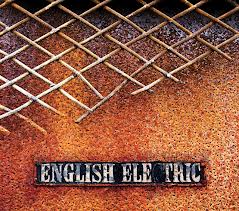 Big Big Train – English Electric, Part 2
Part 1 was my Album of 2012, but don’t be fooled by the follow-up’s apparent lowly position this year, as the difference in quality really isn’t that huge. Like its predecessor, Part 2 is a paean to the landscapes, history and fading industrial heritage of England. There are excellent songs to be found here – Worked Out, The Permanent Way and Keeper Of Abbeys are probably the highlights for me – but the album doesn’t flow as smoothly as Part 1 (a minor defect that combined album English Electric: Full Power has since rectified though a reordering of tracks and the introduction of new material).
 Glide – Assemblage One & Two
Who knew that Echo & The Bunnymen guitarist Will Sergeant was such a fan of 70s electronica pioneers like Kraftwerk and Tangerine Dream? Or that he could pay homage in such a respectful and skillful manner? Assemblage is wonderfully evocative of that classic era of electronic music without being derivative. Strongly recommended if you are a fan of TD or other artists of that ilk. Its hypnotic rhythms will transport you to other realms…
 Guapo – History Of The Visitation
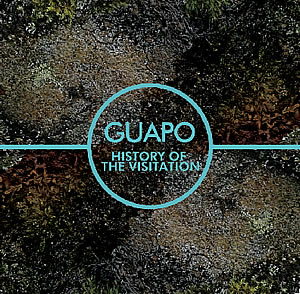
‘Guapo’ means ‘handsome’ in Spanish, but I’m not sure that’s an entirely appropriate term for the music that Dave Smith, Kavus Torabi, James Sedwards & Emmett Elvin have produced here. Visitation, Guapo’s first recorded output for five years, is a satisfyingly dense and complex slab of instrumental art rock, full of dark tones and edgy riffs. Intense 26-minute opener The Pilman Radiant dominates, providing all the shifting moods and time signatures that a prog fan craves, while Complex #7 provides a richly atmospheric interlude in which to catch the breath before the mayhem resumes with up-tempo closing number Tremors From The Future. Highly recommended.
 Luna Rossa – Sleeping Pills & Lullabies
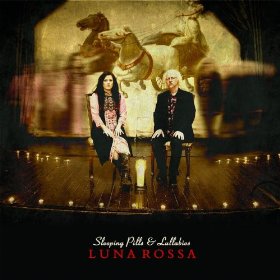
The glorious voice of Anne-Marie Helder continues to delight, this time in partnership with fellow Panic Room member Jonathan Edwards. Panic Room’s Skin was one of last year’s surprise hits for me, a powerful demonstration of the growing sophistication and maturity of their sound. Much of that improvement carries over to the efforts of this acoustic double-act (unsurprisingly, given they are the principal songwriters for the band). Sleeping Pills is a delicate and beautiful album, beguiling in its simplicity.
 Midlake – Antiphon
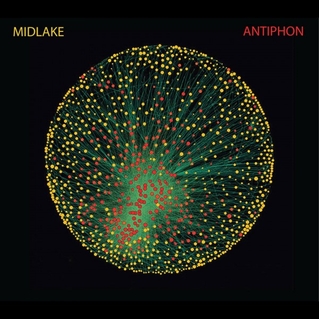
Imagine what it must feel like to be stalled in the midst of a lengthy and difficult recording process for your fourth album, when suddenly you lose your vocalist and principal songwriter! Midlake certainly demonstrated the ‘courage of others’ in scrapping two years of work and starting again from scratch. Given these circumstances, new album Antiphon, written and recorded in only six months, is a triumph. Stand-out tracks from these champions of American prog folk are probably The Old And The Young and Ages, although the whole piece is immensely enjoyable, albeit without quite the same degree of melancholic elegance as its predecessor.
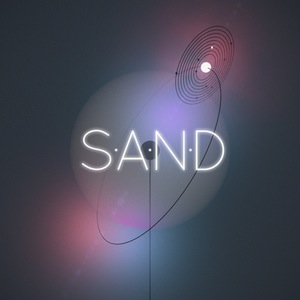 Sand – Sand
A magnificent solo effort from North Atlantic Oscillation’s Sam Healy. Sam has suggested that Sand serves as a ‘musical palette cleanser’ before work begins on new NAO material, and he has spoken of this album’s different feel – but in truth, Sand could easily be mistaken for a new NAO album. The characteristic NAO ingredients are all here – drum machines, samples, layered electronics and dreamy vocal harmonies – but Sand manages to eclipse 2012’s Fog Electric, feeling somewhat gentler and more refined. Stand-out tracks for me are Clay, Destroyer and Astray.
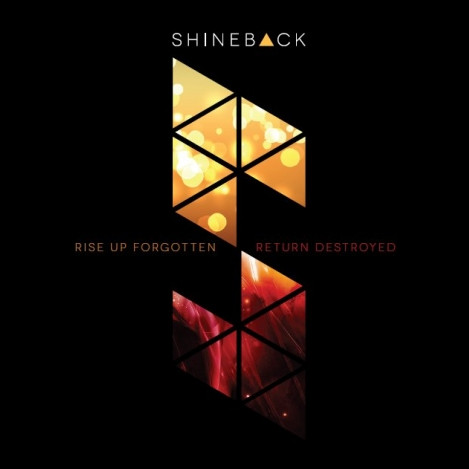 Shineback – Rise Up Forgotten, Return Destroyed
A bold statement from Tinyfish frontman Simon Godfrey, ably assisted by lyricist Rob Ramsay. With its strong pop, dance music and electronica influences it certainly won’t be to every proghead’s taste, but adventurousness such as this is surely necessary to evolve and reinvigorate the genre. Highlights are probably Passengers, the languid Faultlines – the “A paper doll in Scissorland” lyric is particularly memorable – and the ten-minute title track. The vocals are at times a little too thin and tend to get overwhelmed by the more forceful passages of music, else this might have made my Top Ten.
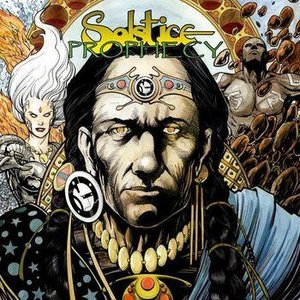 Solstice – Prophecy
I’ve always had a soft spot for Solstice. I saw them live many times during the mid 80s and the feel-good hippy vibe of their performances never failed to put a smile on the face. It was gratifying to see them return in 2010 with Spirit and even more gratifying to see them take further strides forward this year with Prophecy. The focal point, as ever, is the superb guitar playing of Andy Glass, but everyone plays their part and Jenny Newman’s violin playing contributes greatly to the overall feel of the album. Forget the new age lyrics if that kind of thing bothers you and just revel in the gloriously uplifting sounds that this band can produce. A most welcome bonus is a trio of Steven Wilson remixes of tracks from the band’s 1984 debut Silent Dance that greatly improve on the originals.
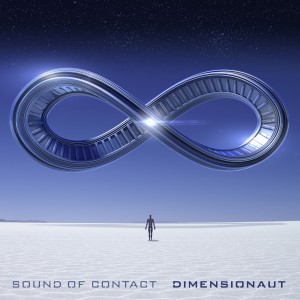 Sound Of Contact – Dimensionaut
The debut release from the new project of Simon Collins and Dave Kerzner is another of 2013’s unexpected pleasures. The underlying concept doesn’t really fire the imagination, to be honest, but the music most certainly does! Ironically, the album’s prog epic – the 19-minute Möbius Slip – is probably the weakest track, but that’s mainly because the rest of it is so melodic and catchy as hell. It is difficult to pick out highlights, but the five-track sequence from Pale Blue Dot through to Beyond Illumination is near-perfect. Simon Collins is excellent on vocals, with just the slightest hint of father Phil prompting a shiver of recognition here and there.
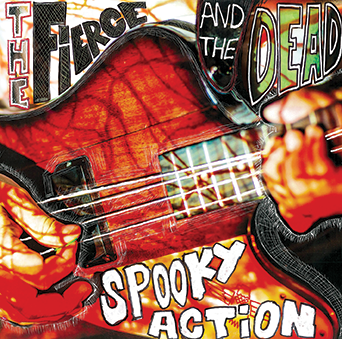 The Fierce & The Dead – Spooky Action
Matt Stevens & Co move from strength to strength with this, their second album. As before, it’s an unfailingly energetic and heady mix of King Crimson, math rock, punk and other influences – difficult to categorise adequately, but that is surely part of the attraction. This is the sound of a band charting new ground and growing in confidence as they do so. I can’t wait to hear what they come up with next.
Every once in a while, an album from my past jumps out at me. How much thought, perspective, and perception went into it, I wonder? What did these folks think as they were making it? Did they think of it as a job? Did they think of some abstraction such as Art, Beauty, Truth, Goodness, hoping against hope for the approval of the gods? Did they make it to satisfy themselves or their friends or their families or their producers or their record label or their fans or some combination of all of these things?
Did they know it would still be touching the lives of others thirty-four years later?
Thank you so much, Phil, Tony, and Mike. Whatever your intentions, Duke still speaks to me. In volumes. Yours, Brad
It is written in the book.
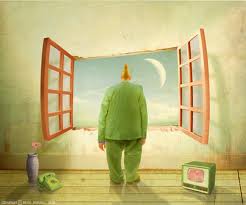
A gift from progarchist, Russell Clarke, this morning.

The piece in question: https://progarchy.com/2013/12/26/steven-wilson-a-minority-report/
 Progarchy