Talk Talk Meets New Model Army: Ordinary Psycho: Vol. II

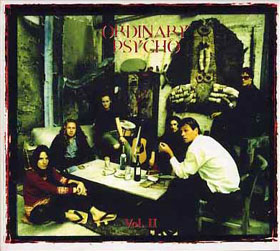
Not long ago on progarchy, I wrote about a demo ep sent to me, way back in the late 1990s.  The lead singer of the band, Ordinary Psycho, David Gulvin, offered a copy to any of the main participants of Within Without, a Danish-run site dedicated to the music of Mark Hollis.

2221669In response to my recent post, fondly remembering how much pleasure that small cd has given me over a decade and a half, the guitarist, Tony Gulvin, sent progarchy a copy of the band’s second lp, Vol. II.

Holy Schnikees.  Yes, let me quote the late Chris Farley one more time: Holy Schnikees.

This is a masterpiece, a gorgeously textured and nuanced cd that should be very well known by all readers of progarchy.  Holy Schnikees.  Yes, I had to state this for a third time.  In sum (and I’ll write more later), this CD helps explain much of the leap from the late 1980s and early 1990s contemplative goth and post-rock to the full-blown explosion of third-wave prog around 2000.  Imagine New Model Army asking Roger Waters and Mark Hollis to join a common band.  You’d be very, very close to what is produced with Vol. II.  And, just in case you doubt the prog credentials, Emerald Part I is 9:02 long, and Emerald Part II is a little over 4:38 long, followed by 21 minutes of silence!  Move aside, Porcupine Tree.  This is the real deal.  Drums, guitar, bass, and anguished voices mix profoundly with woodwinds, piano, and strings.

I’m eager to give this CD a full review.  How did I ever miss this?  Thank God, I have it now.  Well, at least, thank Tony Gulvin!

Feeling The Noise: Homage to Lou Reed

At the Théâtre des Champs-Élysées in Paris, on the 28th of May in 1913, there was what many have characterized as a near-riot. The hostile and even violent reactions from the audience in the theater were in response to the premier of what was presented as a piece of music, but was perceived by quite a few in attendance as noise.  That it was presented as music was, in the estimation of a significant number of witnesses at the time, a joke at best, and completely tasteless and deeply offensive at worst.

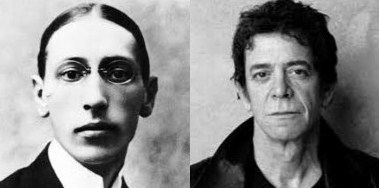
Stravinsky (1882-1971) & Reed (1942-2013)

The alleged music was Stravinsky’s The Rite of Spring.

The level to which the unrest of the crowd grew at the time was surely due, in part, to the fact that some members of the audience greeted the premier of the piece with great enthusiasm, responding with delight at its transgression of conventional musical standards of the time.  A joke is one thing, but the possibility of an obscene offense both intended seriously and taken as such by apparently demented listeners is quite another thing.

I’ve often played the first parts of the ballet’s music for students, asking those who don’t already know what it is whether they think there’s anything particularly strange or disturbing about it.  Nowadays, they find it beautiful at best, or simply boring at worst.

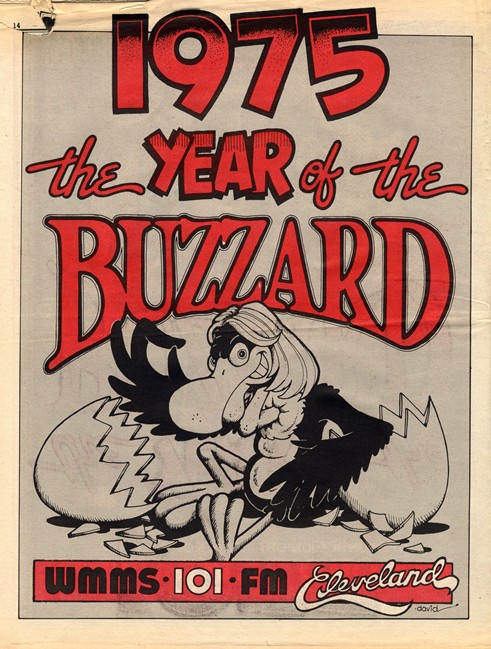
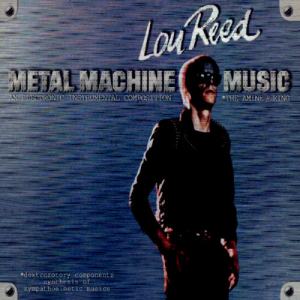
1975_Year_of_the_Buzzard_-_WMMS_print_adIn 1975, I was 16 years old, and not yet familiar with the story of the premier of The Rite of Spring.  I was generally aware of the work’s existence, and had at least heard it once, mostly because I had heard that Stravinsky was an important influence on some prog artists (at the time, especially on Yes).  But by that year, I was listening to WMMS out of Cleveland, Ohio (when we could pull it in; I was far enough away that reception varied a lot).  I remember one of the DJ’s announcing that the station had just received Lou Reed’s latest album, Metal Machine Music.  (The DJ may have been Denny Sanders, but I’m not sure; it could have been Kid Leo. I’d bet there’s someone else out there who heard it who remembers.)

The DJ, obviously deeply excited by what he was sharing, was lionizing Reed as a rock hero for having released MMM on the heels of a series of albums that had been (albeit to somewhat varying degrees) commercially successful.  He then played an excerpt from the album.  I don’t remember how long he let it play, but I don’t think it could have been more than about a minute.  Fading out the brief sampling, he returned to explain, with near-adoration, that this was a DOUBLE ALBUM and that it was ALL LIKE THIS!!

I knew who Lou Reed was, and had heard some of his music, including especially the Transformer and Rock ‘n’ Roll Animal albums.  Though I had not actually listened to any of the original Velvet Underground recordings yet, I was aware that they had, by the mid 70’s, already attained a sort of mythic status.

Metal_machine_music

It was clear to me at the time that the primary reason why the WMMS DJ was so deeply enthused was because he understood Reed’s new album to be a gigantic “F$@# YOU” gesture at his own commercial success, and an indication that he was not interested in “selling out.”  What I also remember from that first exposure to MMM is how much I liked — actually really LIKED — what the DJ had played.  I liked it AS MUSIC, while also fully realizing that what most delighted the DJ was the fact that most people would NOT recognize it as music at all (to say nothing of recognizing it as good music).

I didn’t buy the album at first (due more to priority-setting than anything else), but I don’t think that year was gone before I borrowed it from someone.  Now, here I will make a claim that some may doubt.  My memory can be wildly inaccurate at times.  But I do remember listening through the entire album, which is a little more than an hour in length.  Even if this memory is inaccurate, there have been at least two occasions since 1975 when I know for sure that I sat down and deliberately listened to the entire album. (To my own copy, by then.)

By the time of my second complete listen (or if you’re skeptical, my first remembered-with-certainty complete listen), Which I believe may have been in about 1979 (it seems to me that it was earlier in the same year as Pink Floyd’s The Wall), I had become familiar with the events of 1913, associated with the premier of The Rite of Spring.  Ever since the first moment I knew of the latter story, it has been connected in my musical psyche with Metal Machine Music.

Lou Reed, who left us just a few days ago, was a shadowy and uneven presence during my teen years.  It was not until I was well into my 40’s that I actually became interested enough in Reed generally to go back and listen carefully to his entire catalog, including all of the available VU recordings.  My appreciation for him became profound and deep relatively late.  It is sufficiently profound and deep that I cannot forgo an opportunity to pay him tribute.  But as I’ve thought in the last few days about how to do so, what I am most clearly drawn back to is the effervescence that washed over me when I first heard Metal Machine Music. The music that I most favored in those days was prog, though I was also enjoying a fair amount of what I was hearing from the Home of the Buzzard.  I knew that there were at least some indirect connections between Reed and prog, especially by way of Bowie and “glam.”  (Did you know that Steve Howe and Rick Wakeman are both credited on Reed’s first solo album?)

I now see that there is something very significant about this prog connection, in relation to how I experienced MMM.  The element of boundary-transgression, the “go to hell” attitude toward attempts to place it outside the boundaries of music (political, like so many contested boundaries), the positive reactions rooted in bohemian delight of transgression more than real appreciation for artistic value.  These elements have found numerous routes, more or less paved by now, into what gets called “prog.”  But what I come back to here more than anything else is the fact that I really LIKE this album, as transgression, yes, but also AS MUSIC.  It prepared me to take seriously some of the more extreme offerings by John Cage, the early minimalists (remember Steve Reich’s early tape-loop works?), and Alvin Lucier.  It stood side-by-side with work by Frank Zappa in opening my ears to a cornucopia of musical expression, all of it following Charles Ives’ advice not to expect sounds that are “pretty.”  (Reed’s well-known antipathy toward Zappa, by the way, is one of the things about him that I find difficult to forgive.)

For pushing me along toward this opening, I owe thanks to Lou Reed that could never be contained in a blog post.  I owe it to him to keep telling people how much I like MMM, as well as how much I came to appreciate and admire ALL of his output in recent years.  I owe it to him to recommend to you that you listen to Metal Machine Music, all the way through.  You may not be able to do it.  You may continue to think that both it and my recommendation remain no more than a joke.  Whatever.

But you may be surprised.  And if a few of you are, THAT is much closer to the homage that I want to offer to Lou Reed.

.

On the Northern Edge of Prog: Leah’s OTHERWORLD

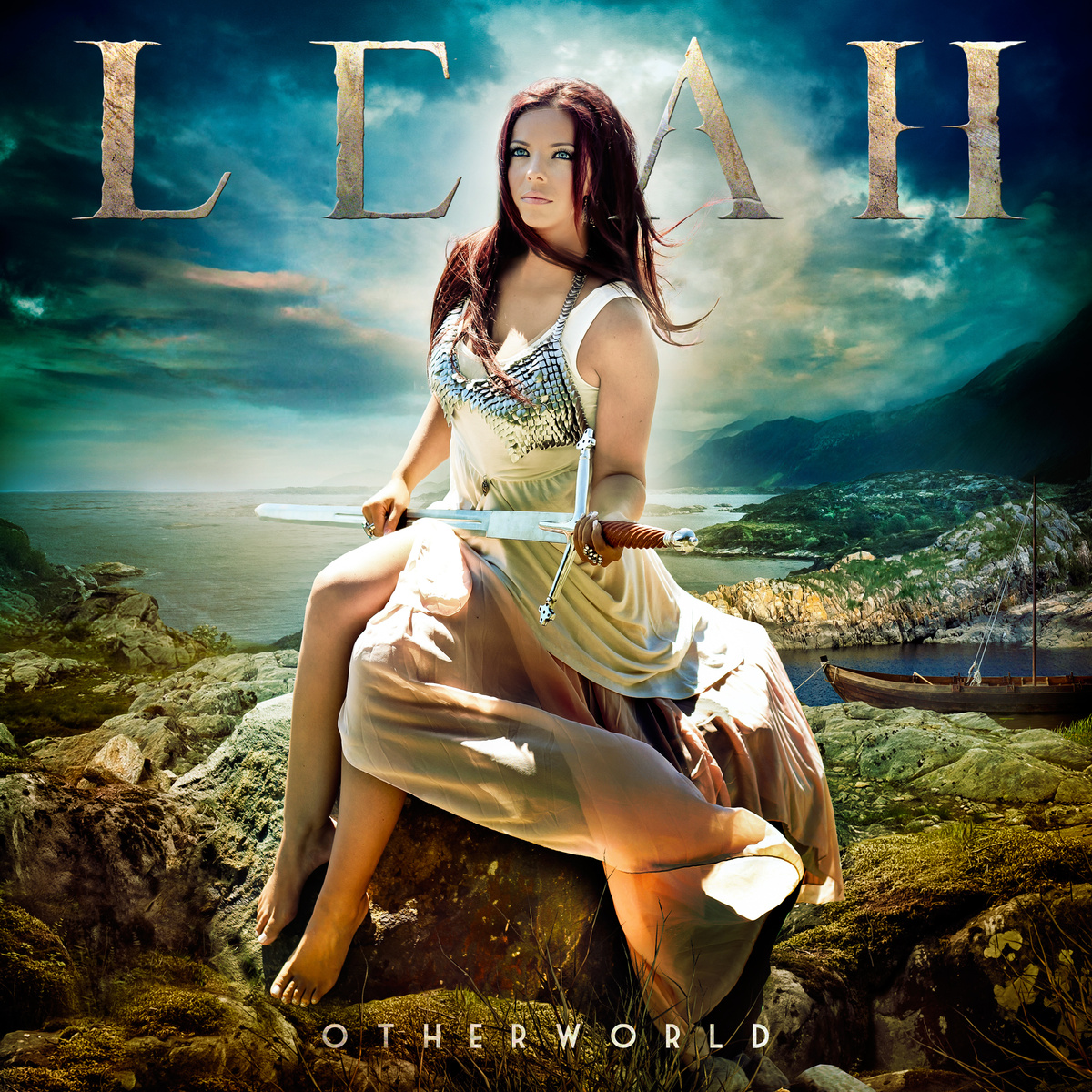
leah otherworldOtherworld EP

On this All Hallow’s Eve, the beautifully talented and talentedly beautiful Leah McHenry released her new EP, Otherworld.  She categorizes it as Celtic Metal, and I’m not one to judge such labels.  Of all of the progarchists, I’m probably the least qualified to comment on anything metal.  Growing up with prog, Rush was the limit of what “metal” I encountered, and Rush doesn’t qualify.  Over the last twenty years, I’ve come to love what progressive metal I’ve heard (such as Guilt Machine and anything related to Aryeon).  But, groups such as Dream Theater and Opeth have never grabbed my attention, even after brief flirtations with the former.

Regardless, I hold a very fond affection for Leah, whatever label we might give her.  To me, her music is just. . . well. . . really, really gorgeous.  Lush, mythic, lulling into punctuated, from dreamy to driven, but always full of purpose and depth.

If someone pushed me to describe her music in terms relative to what we’ve reviewed at progarchy, I’d say it’s as if Sarah McLachlan and Arjen Lucassen got together to make an album.  And, to be even more blunt, Leah and Arjen, I hope you two meet at some point.  I can’t imagine anything but greatness coming out of such a Canadian-Dutch alliance!


Otherworld

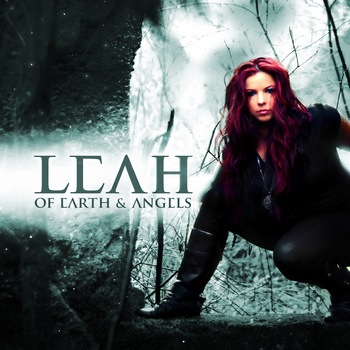
Leah+McHenry+Leahphotoshopfun_1264116476Otherworld, not surprisingly, is lush and nuanced.  The songs are a bit longer than the ones she released on her first album, Of Earth and Angels, but they’re much more connected by style and theme.  The first three songs (five total)—Shores of Your Lies, Northern Edge, and Surround—have a welcoming but perilous (as in Tolkien’s realm) tension.  Listening to Otherworld is as much about  immersion as it is enjoyment.  With the opening notes, storming atmospherics, and Leah’s voice, the listener enters into this elven world.  Things of beauty pierce “as sharp as swords” in Leah’s world.

The fourth track, “Do Not Stand at My Grave and Weep,” is as Celtic as it gets.  This could come from Enya in her darker moments or U2 on the second side of October.  Still, it’s pure Leah.

The final track, “Dreamland,” is, I assume, the most traditional “metal” song on the EP.  A duet, Leah’s voice and character serves as a counter and foil to the diabolic, growling voice of Eric Peterson.  A beauty and the beast moment.

I’ve only known Leah for about a year.  Just after we started this website, Canadian philosopher and progarchy co-founder, Chris Morrissey told me about her.  He also reviewed her first album as well as offering us one of the most extensive concert reviews I’ve ever seen.

haunting LeahGenerally (well, ok, always), I follow Chris’s advice.  So very glad that I do.  Much to my surprise, Leah replied to my first emails graciously, and we’ve developed a good friendship via correspondence.

Indeed, I respect her immensely.  She lives what she believes: she’s a wife and a mother of four; she home schools her kids; she’s active in community life; and she’s serious about her religious and political beliefs.  Really, what’s not to love about her?  Add all of this to the fact that she’s insanely talented as a singer, a musician, and lyricist.  Well, it just doesn’t get much better.  Well, except for the additional fact that she’s also as beautiful as one might expect from someone possessing that voice.  I’m sure she could model professionally, if she wanted.  Oh, and she also makes her own costumes and is proficient with a bow.  So, again, what’s not to love?  Talent, kindness, and integrity, all rolled into one west-coast Canadian!

Only in her twenties, Leah is the future of rock.

leah of earth

Happy Birthday, Yessongs. Unprofessional Video Review 4

Yessongs, taken from the Close to the Edge tour, arrived in the world in 1973.  Happy Birthday, Yessongs, my first prog love.  And, what’s not to love?  My two reasons why.  Enjoy.

TFATD, Spooky Action–Streaming Live and Legally

Enjoy Matt, Kev, and all of TFATD.

http://www.musicradar.com/news/guitars/exclusive-album-stream-the-fierce-the-dead-spooky-action-587116

And, from Matt and the guys today via email:


***

Listen to the whole album streaming at Total Guitar now!!

The new album ‘Spooky Action‘ is almost here, out on November 4th. However, we know you are an impatient bunch so you can now stream the whole album exclusively over at the Total Guitar Magazine website for the next 48 hours!

CLICK HERE TO LISTEN TO SPOOKY ACTION NOW!!

And you still have a little bit of time to pre-order the new album before it’s release date on November 4th and bag yourself a bonus live track, or a discounted CD/T-shirt bundle.

Digital pre-orders here:
http://music.badelephant.co.uk/album/spooky-action

CD and T-Shirt pre-orders here:
http://themerchdesk.com/shop/index.php?route=product/category&path=136_163

And another heads up – we will be appearing on Steve ‘Snooker’ Davis’ Interesting Alternative Show on Phoenix FM next monday. We’ll be celebrating ‘Spooky Action’ release day by picking our favourite music and chatting to Steve and Kavus. Will be much fun.

Get involved!


Kev, Matt, Stuart & Steve.

info@fierceandthedead.com
fierceandthedead.com
Spooky Action Pre-orders
fierceandthedead.bandcamp.com
twitter.com/tfatd
facebook.com/fierceandthedead
youtube.com/user/TFATD

Nine Lives by the Von Hertzen Brothers (released March 2013)

Hailing from Finland The Von Hertzen Brothers is another band from the exceedingly long production line of Scandinavian Prog (in all its various sub-genres). ‘Nine Lives’ is their fifth album. Very popular in their home country, their last album, the critically acclaimed ‘Stars Aligned’, was released in 2011 and provided them with far more European, if not International, exposure.

Von_Hertzen_Brothers_Nine_Lives_cover[1]

My familiarity with the band before reviewing ‘Nine Lives’ was restricted to listening once to ‘Stars Aligned’. I remember being slightly ‘underwhelmed’ and placed it in my increasingly large ‘pile’ of CDs to be dug out and re-evaluated at a later date. And, of course I never got around to it.

Following favourable reports of their live act at HRH Prog earlier this year and the release of Nine Lives leading to two nominations in this year’s (UK) Prog Awards, one as ‘Breakthrough Artist’ and the other for their ‘single’ ‘Flowers and Rust’, which won the ‘Anthem of the Year’, I took a chance and purchased the ‘deluxe’ CD (with three extra bonus tracks). I also purchased a ticket to see them headline at the Garage in London in late October.

I decided not to re-listen to ‘Stars Aligned’ beforehand as I always prefer to judge music on its own merits and, as we all know, this can be difficult when confronted with knowledge of a band’s back-catalogue. So I felt I had few, if any, pre-conceived ideas about the band and considered my objectivity level high!

The band consists of the three Von Hertzen brothers, front-man Mikko on vocals and guitars, Kie on guitars and backing vocals and Jonne on bass and backing vocals. They are supported by Juha Kuoppala on (various) keyboards and Mikko Kaakkuriniemi on drums.

Before delving more deeply into the album tracks its worth pointing out that this is an unusual album. On Nine Lives VHB are following a tradition that appears particularly popular in Scandinavia amongst bands such as Motorpsycho and Beardfish. These bands are not afraid to experiment and mix different styles and genres. Nine Lives is certainly not a pure ‘Prog’ album in the classic sense of the word. Two of the first three tracks on the album (and one of the bonus tracks) could easily sit in any indie rock album AND a very good one at that. The rest of the album is far more Prog in terms of song structure, lyrical content, melodies etc.

However, the contrast between, let’s call them Parts 1 and 2, is huge, so much so that Part 1 may knock some self-respecting Prog fan sideways or send them screaming from the room.

It will be pretty apparent from my comments above that those listeners who like continuity and coherence within one album will struggle with this. But my first piece of advice is to persevere. Do not give up half way through the third track and new single ‘Coming Home’ and disregard the rest, thinking that this album is veering towards a Franz Ferdinand or Kaiser Chiefs indie rock-fest because you will miss out on some beautiful moments.

What makes the album stand out for me is the vocal delivery which adds an incredible amount of depth to the music. Mikko has a great vocal range, a powerful and clear singing voice and shows great versatility in delivering both the out and out, hard-edged, aggressive indie rock songs as well as powerfully conveying the emotional intensity of the more reflective and introspective progressive lyrics.  The accompanying backing vocals and harmonies are equally as impressive. Vocal delivery seems to be ‘in vogue’ at the moment as I have noticed some stunning vocals on a number of albums this year, particularly on ‘Himlabacken vol 1’ by Moon Safari and ‘The Mountain’ by Haken.

So to the album itself. The first three tracks are delivered at a fast tempo with heavy bass lines. Both ‘Insomniac’ (track 1) and ‘Coming Home’ (track 3) are typical indie rock songs executed with aplomb. ‘Coming Home’ opens with a heavy drum beat and continues with Billy Idol type vocals (think White Wedding!) and morphs into a Franz Ferdinand/Kaiser Chiefs staccato riff and vocal delivery. It’s a classic, catchy as hell with an ‘ear-worm’ chorus. It could have been a Top 20 hit in the good ole’ days when there were music charts worth attention. ‘Flowers and Rust’ (track 2) is less indie and more pop-prog to my ears and it is indeed a fine sing-a-long anthemic track deservedly achieving recognition.

The abrupt change in tempo and mood that follows is arresting. ‘Lost In Time’ is the heaviest track on the album and switches between a heavy, grinding, almost demonic guitar sound and quieter, contemplative passages building up to symphonic keyboard atmospherics.

‘Separate Forevers’ is a slow, ethereal and haunting track with an exquisite mandolin sounding guitar a highlight. My favourite on the album, it’s a stunning piece. The emotionally powerful, ill-fated lyrics tinged with helplessness and yearning tug at the heart-strings and are of a rare poetic beauty, with Mikko’s vocals capturing the mood perfectly:

I thought we had a way out

I fought to rearrange

The pieces of my heart

And stay

The more we gathered angels

The more you got estranged

Years tearing us apart

This way

Who am I to hold ?

Who am I to love now ?

Here

For our better or worse

In our separate forevers

My love

‘One May Never Know’ follows and contains a beautiful melody with the piano acting as a perfect counterpoint to the rolling guitar. More outstanding multi-part vocals.

‘World Without’ opens with a delightful a cappella harmony followed by delicate piano lines and guitar melodies. The song is sung completely in harmony. The introduction of a knifonium produces an absorbing complementary sound. The track builds up gradually to a big vocal harmony finish. With the following thought-provoking lyrics:

‘Cause a world without your heart

Is a world without your love

And a world without your love

Is a world without a soul

And a world without your soul

Is a world without a home

And a world without a home

Is a world without hope

We shift again with ‘Black Hearts Cry’, an up tempo folky track, almost shanty-like at times. To me it’s slightly out of place with the mood of the tracks that surround it but it’s nonetheless a pleasant diversion.

‘Prospect for Escape’ finishes the album where we return, once again, to a slower tempo resplendent with swathes of mellow, echo-laden guitar and vocals. The vocal harmonies are marvellous and the guitar melody delightful. An uplifting song with a soaring guitar solo, the vocal intensity to finish the track is striking. A perfect finish to the album.

So let me be clear. The album begins with 14 minutes of strong indie rock and pop-prog and this is followed by 33 minutes of what some may describe as ‘crossover-prog’. Certainly the album eschews extended compositions and unrestrained complexity. Overall it’s an ambitious mix.

A quick note on the bonus tracks. ‘Do What You Want With Me’ is a return to indie rock but the standout is the last track ‘Between The Lines’ with a slightly Eastern vibe and soft vocals. It could easily have closed the album or, in my view, replaced ‘Black Hearts Cry’.

Oh and before I forget, although work prevented me from seeing them live last week, I have it on good authority that they are superb live, showing fantastic energy and enthusiasm and great musical skill.

So what’s my overall conclusion ?

In my opinion bands are more successful when they introduce different genres/styles into their music between albums not within them. Take Motorpsycho as a classic example. The stark contrast between the beginning and the rest of the album will, I think, make it difficult for many to connect with this offering. Perhaps VHB felt like testing their audience to get a reaction or just had an explosion of good ideas that they just wanted to get down musically in one place and at one time. A statement so to speak.  What VHB have proven to me is that they are an extremely accomplished band with the ability to write excellent indie rock songs as well as deliver high-quality, lyrically rich, thoughtful crossover-prog. I’m really looking forward to seeing them live and await their next album with anticipation. Please spare some time and give the album a few spins.

A Progtastic Halloween

Goblin-Suspiria

A happy Halloween to all!  Considering this is the time to celebrate thrills and chills, I decided to compose a list of some of the creepiest prog rock songs and albums ever created.  As an avid fan of the horror genre, I have always enjoyed reading the novels of Stephen King and watching the movies of John Carpenter, but I had never thought about what could be classified as “horror prog.”  Here’s my list (albums first, in no particular order):

Premiata Forneria Marconi- Dracula Opera Rock (Italy’s greatest prog band released this creepy gem back in 2005)

Alan Parsons Project- Tales of Mystery and Imagination (Any album based upon the works of Edgar Allan Poe deserves a spot on this list)

Pink Floyd- The Wall (Think this isn’t scary? Check out the movie)

Aphrodite’s Child- 666 (It’s a concept album based upon the Book of Revelation; listen to The Four Horsemen and you’ll get the idea)

Mike Oldfield- Tubular Bells (It was used as the theme for The Exorcist. Enough said)

Goblin- Suspiria (The scariest prog album of all time. Sighs may be the creepiest song ever composed: just listen to it with headphones on before you go to bed)

Now the songs (in no particular order):

Jethro Tull- Sweet Dream (The music video features Ian Anderson dressed as a vampire.  If that’s not scary, then I don’t know what is)

Blue Oyster Cult- Don’t Fear the Reaper (A Halloween staple, but the song could use more cowbell)

Peter Gabriel- Intruder (Check out the Youtube video someone made to this song featuring Jason Voorhees of Friday the 13th fame)

Van der Graaf Generator- Darkness (An eerie song by an eerie band; whispered vocals add to the overall creepiness)

Atomic Rooster- Death Walks Behind You (A dark opening to an album featuring a crazed Nebuchadnezzar on the cover)

King Crimson- The Devil’s Triangle (Not only should the band’s name inspire some feeling of fear, but this song reminds me of a march into a deadly battle)

Talking Heads- Psycho Killer (This may not be prog, but Adrian Belew did play with them for a time; David Byrne sounds as paranoid as ever on this piece)

John Carpenter- Halloween Theme (Most recognizable horror theme of all time? Check. 5/4 time signature? Check.  How could I leave this off the list?)

Well there’s my list.  It is by no means exhaustive.  If you feel I am missing some songs, feel free to yell at me in the comment section.  I only had so much time to compile all of these songs; most of them just popped into my head yesterday.  If you haven’t listened to all of them, then today is the perfect day to spend some time with this list.  Have a terrifying (but fun) Halloween! (And to our Protestant friends, a happy Reformation Day!)

Totally Unprofessional Video #3: Arjen Anthony Lucassen

Yesterday, Arjen released a new Ayreon album, The Theory of Everything.  I’ve not received my physical copy yet, but I was able to download the mp3s from amazon.

Stunning, stunning, stunning.

Here’s my quick and dirty video assessment.  See above inserted video.

Ave, Arjen!

TheoryOfEverything

Video: Andy Tillison Downloads

Available at thetangent.org.

Scaling The Heights Of Heavy Prog – Persona Grata’s “Reaching Places High Above”

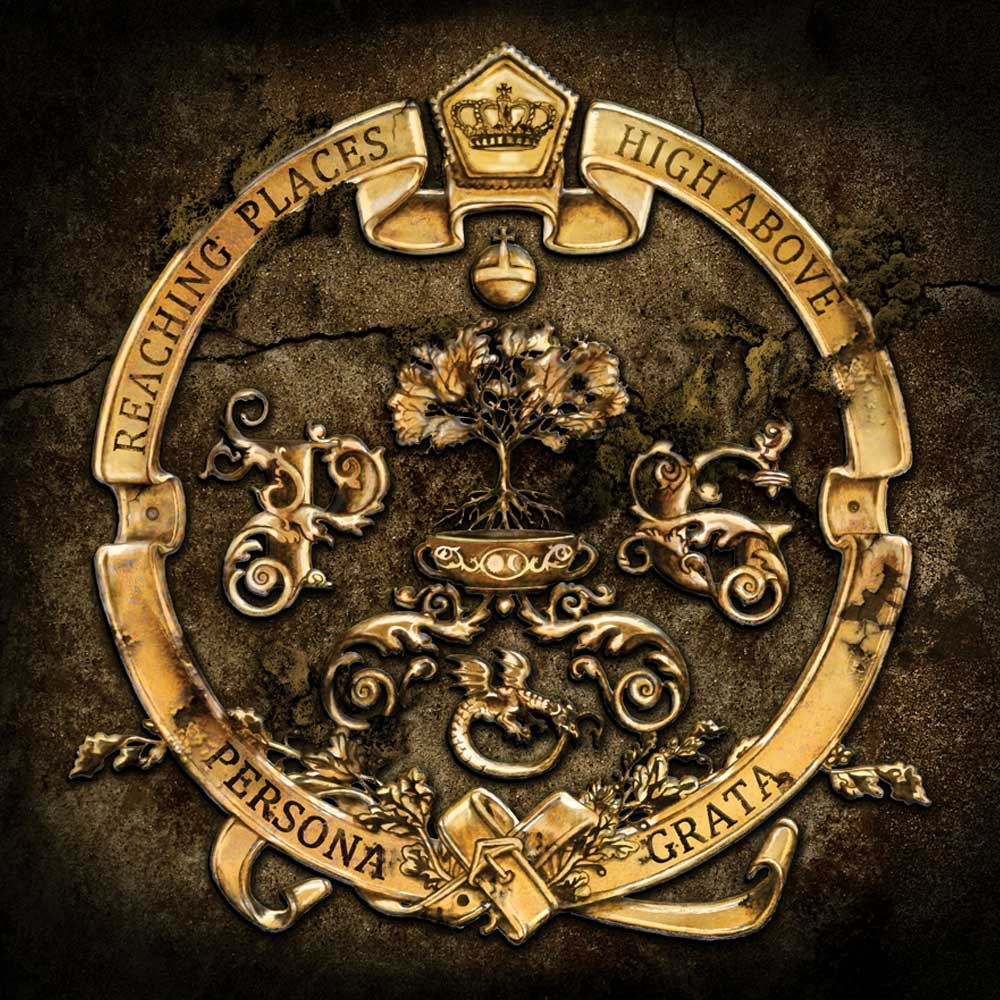
Reaching Places High Above

It’s probably a blessing and a curse that I tend to compartmentalize progressive rock into sub-genres in order to sort out what I’m hearing.  It’s likely a blessing in terms of having “signposts” of historical reference when trying to determine where a band’s music fits within the prog category, but perhaps a curse that I feel the need to shoehorn the band and music into a sub-genre in the first place, for we all know that progressive music rarely fits neatly into one “slot.”

No matter the reasoning, let’s just say that the Slovak proggers Persona Grata surprised the heck out of me with their new release, “Reaching Places High Above,” which for this prog fan fits nicely into the sub-genre where Dream Theater camps out – one that I’ll call “heavy prog” – and made this album an absolute pleasure to listen to.

“Reaching Places High Above” is at times aggressive, intricate, mellow, adventurous, and dynamic, but always progressive in scope, and a delight to listen to. Sound a bit like Dream Theater there?

It should. Listeners will be treated to a group that, like DT, fires on all cylinders with tight songwriting and arrangements, along with the technical prowess that easily puts them in a league with top-tier prog bands.  It’s worth mentioning in advance that the album is produced and mixed wonderfully, which can’t always be said for up-and-coming groups. It’s a big plus.

“Ace” preps us for the places we’ll go with some airline samples and radio dial tuning, eventually morphing into the track’s intro.  Those who may not be a fan of the two vocal wails at the beginning, fear not – it’s not indicative of what’s exclusively in store from the vocals department; singer/guitarist Martin Stavrovsky has plenty of range and, unlike some capable of wailing in prog, he doesn’t loiter in the high register all that much. The band moves from section to section in rapid pace with plenty of playing that’ll impress anyone who fancies quite a bit of playing in their prog.  However, they steer clear of what sometimes turns people off about virtuosic prog – shredding for shredding’s sake. The band does a fine job of keeping the song in check thematically and the song seems over before it starts.

“Edge Of Insanity” brings things down a notch with an intro electric guitar and flute (man, the flute sure is back in prog, innit?), moving to a first verse that features a lovely male/female harmony verse. The band then crescendoes with layers of aggressiveness for the next set of verses before heading back to the harmony vocals of the first verse. However, dust never settles on Persona Grata, for the prog returns almost as quickly, building to a heavy section of soloing.  Halfway though the track, the band pulls back to a section of acoustic guitar, flute and synth that brings us back to the feel of a couple of the early verses. They build back up to full-tilt, heavy prog, but seeing the bigger picture of arrangement, they bring it back down to reprise the intro.  Fab track.

The band then takes us on a three-instrumental, cross continental-themed musical journey starting with the brief “Istanbul,” which calls to mind elements of DT’s “Home” with sitar/guitar playing over a Tool-esque drum pattern. We’re then taken aboard the “Orient Express,” full of twists and turns in the vein of “The Dance Of Eternity” at nearly 10 minutes in length, then the band brings things to a close with the concluding “Venice” piece, done on harpsichord.

The album’s epic ender, “I Am You,” has an ambient start, then sees the band floating over an intricate, 5/4 piano part, then moving to a heavy yet cinematic feel that’s all ear candy.  Again, the band has a great ear for arrangements, never bleeding a riff to death and flowing from one section to another naturally. The song’s halfway point sees the band put the brakes on the heaviness a la Frost*, giving way to plucked strings that build into a full instrumental section. The harpsichord from “Venice” is back for part of the section and after one more “drop out” to a quiet section, the band cranks up to a fever pitch, followed by the obligatory anthemic finish, fading out to the ambient keyboards we heard at the beginning.

It seems like every year brings a surprise for me amidst the mass of prog releases; last year it was Big Big Train – truly a once-every-decade find for me – and this year has brought Persona Grata to the forefront of my new music listening.  Those bands certainly occupy two different sub-genres of prog, but neither lack in creativity. With “Reaching Places High Above,” Persona Grata have put themselves near the summit of the the heavy prog-rock peak.

More information: http://personagrataofficial.tumblr.com