

The Dutch Progressive Rock Page has released the results of the 2014 reader poll. Unfortunately, DPRP saw a decline in the number of voters over previous years, especially in the younger demographics. But, Mike Portnoy won best drummer by a wide margin. Is anybody really surprised about that, though? Congratulations Mike, and to all of the fantastic prog artists of 2014!
Category: progressive rock music
February First Impressions…
As Winter gives way to another Spring, new album releases are finding their way onto my radar in ever increasing numbers. Three new CDs dropped onto my doormat in rapid succession a couple of days ago and each, in its own way, is making a big first impression.

First up, we have Please Come Home, by Lonely Robot, John Mitchell’s new solo project. This is a disc that grabs you immediately – melodic and catchy as hell, with superb guitar playing throughout. If you enjoyed Sound Of Contact’s debut, or the recent release from former SoC member Dave Kerzner, there’s a strong possibility that you will fall in love with this. A proper review will follow soon…
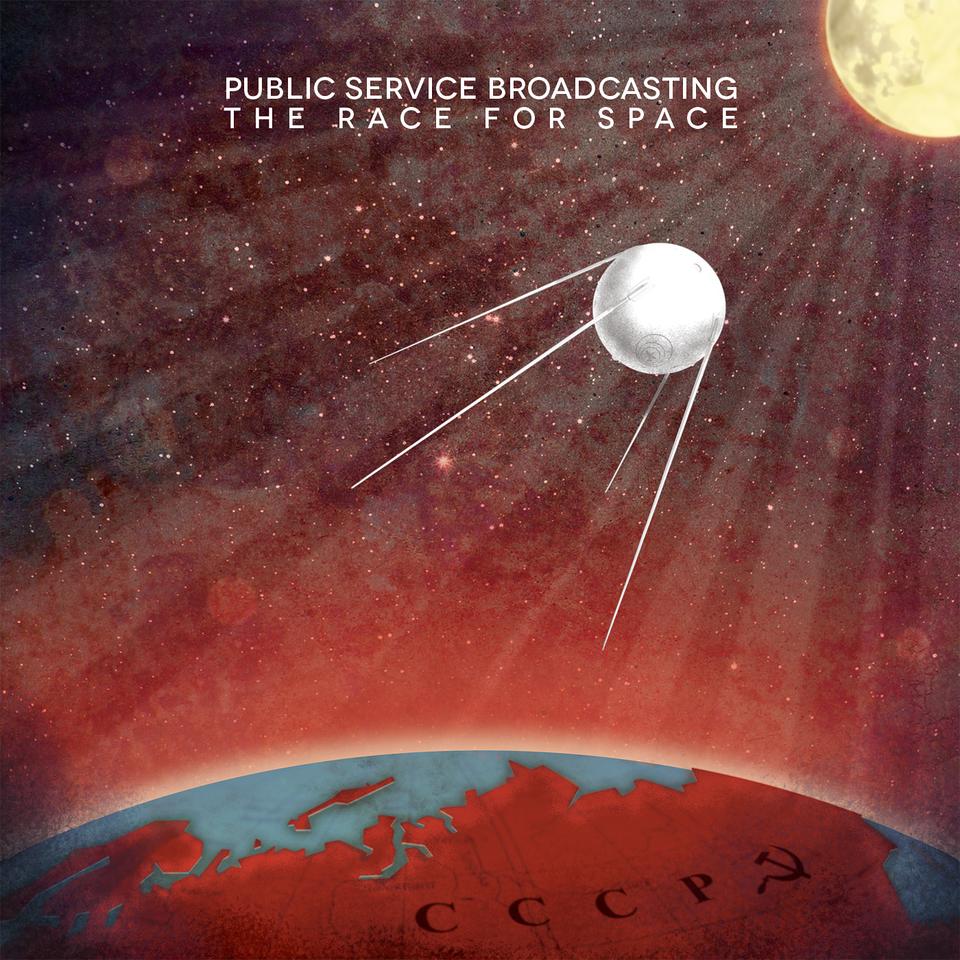
Next is Public Service Broadcasting‘s second full album release, The Race For Space. If you’ve not heard this band, you really should give them a listen. They expertly blend sampled clips from various audiovisual archives with a unique musical style that is very difficult to pin down, leaping between pop, dance, ambient & electronic. Imagine if Kraftwerk played conventional instruments as well as synths… and were English… and wore tweed. It isn’t prog but it is innovative and highly entertaining. This album scores bonus points with an unashamed space geek like me simply because of its subject matter: the ‘golden era’ of space exploration, from Sputnik through to Apollo 17.
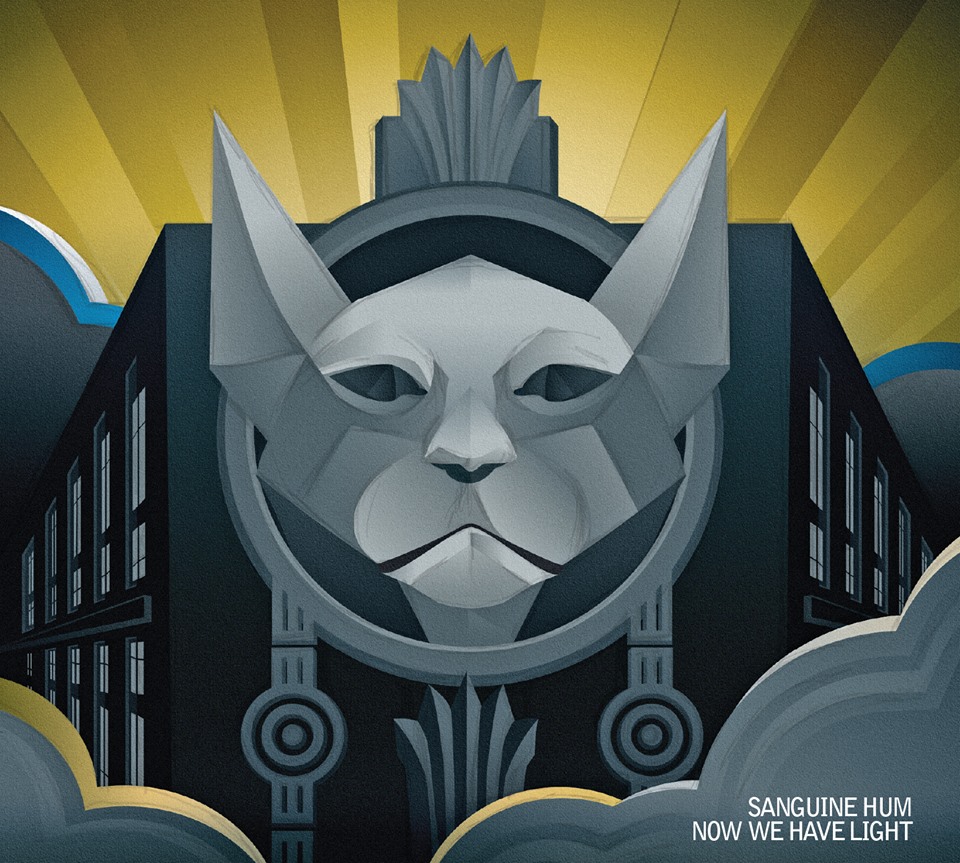
Finally, we have Sanguine Hum’s double-CD magnum opus, Now We Have Light. Confronted with this sprawling, ambitious epic, I can imagine just how a Genesis fan must have felt back in 1974, expecting another Selling England but faced with the intense, bewildering genius of The Lamb. On the strength of just two listens, it’s already clear that this is an altogether darker, more mature and more subtle offering than its excellent predecessor, The Weight Of The World. Dare I say an early candidate for Album Of The Year? Time will tell. It’s going to take me a while to untangle the complex musical threads of this album and make sense of it all, but it’s an adventure I look forward to with relish…
Glass Hammer and Progarchy: A Mutual Admiration Society
Thank you, Glass Hammer. So very honored!!!

Rounding ‘80: The Reinvention of Three Bands
As the 1970s turned into the 1980s, hard rock and progressive bands were taking serious stock, re-inventing sounds that had sustained them and, for fans, defined an era. The list of bands who turned the corner of the 1980s influenced by punk and disco and new wave is long, and includes many touchstone bands of prog and heavy rock: Yes, Genesis, Led Zeppelin, ZZ Top, The Rolling Stones, REO Speedwagon, Supertramp, Moody Blues, Chicago, Judas Priest. Songs became shorter, tighter, glossed in reverb and electronics. In an odd way the 1960s really ended around 1979-80. It was a death knell for bands unable to adapt to the FM version of the pop single.
Maybe it’s nostalgia, maybe it’s hindsight, but looking back at those handful of years I find it fascinating that three of rock’s great survivors — AC/DC, Black Sabbath, Rush — issued essential work in this time of transition. You won’t find three bands on the harder side of the rock spectrum to be more different, but the creative spark feeding each of them isn’t dissimilar. Aussie rockers AC/DC, considered up to this time mostly a snotty and raucous punk band (believe it or not), issued their landmark Highway to Hell in August 1979, redefining the sound of hard rock. Lead singer Bon Scott promptly made good on his self-destructive promise in February 1980, and the band turned on a dime, hiring Brian Johnson and releasing their best record, Back in Black, that July. Black Sabbath had jettisoned Ozzie Osbourne in 1979, and taken on Rainbow singer Ronnie James Dio, releasing the pop metal beauty Heaven and Hell in April 1980 and its equally excellent follow up, Mob Rules, in November 1981. Rush, on the heels of its long-form prog titan Hemispheres, cut song length, distilled their pop hooks, and issued Permanent Waves in January 1980, to be followed by their widely acknowledged masterpiece, Moving Pictures, in February 1981. That each of these bands continued producing consistently good and sometimes great work, and toured, well into the 2000-teens, comes down to the dynamic that kept them artistically and commercially viable in 1979-1981.
AC/DC’s output in the 1970s was unique, an amplified, dirty, dangerous version of Chuck Berry roots rock as set in a Down Under pub. Bon Scott considered his group a punk band, with good reason. Their sound, stripped and lean, had little to do with the increasingly orchestral tendency of European prog or the overt commercial leanings of softening American rock. Brothers Malcolm and Angus Young’s wiry electric playing punctuated Scott’s leering Puckish howl, and had way more in common with the Stooges or the New York Dolls than the Stones or Zep. Songs like “TNT,” “Dirty Deeds (Done Dirt Cheap),” and “It’s a Long Way to the Top (If You Want to Rock’n’Roll),” say it all. 1979’s Highway To Hell was a massive leap, bolstering the sonics and tightening the pop songcraft, always in their songs while losing none of the visceral dirty-ness, lyrically and musically. AC/DC’s stock-in-trade innuendo was always meant to make you blush, make you laugh, and make you mad (objectification of women in rock is, no doubt, a double-pronged devil), all trumped by making you rock. Scott’s ode to miscreantism, the title track brims with cocksure attitude, and was echoed 11 months later on Back in Black’s “Hell’s Bells.”
“Hells Bells”and “Back in Black” were both tributes to Scott and a declaration of a new direction. Where Highway to Hell and its predecessors were all punk-ish attitude and like Scott teetered on a precarious edge, Back in Black had a metal edge, was decidedly mid-tempo, ready for the sports bar and dance floor. Producer Mutt Lange, who had also shepherded Highway to Hell, mined gold. Back in Black was the second best-selling record of the 1980s, and for certain, it contains some of the best straight-ahead riff rockers you can imagine, facing its detractors without blinking.
Black Sabbath’s first six albums are legendary things indeed. In recent years they’ve come to signify the creation myth of heavy metal, and continue to be the genre’s gold standard. Sabbath’s last two records of the ‘70s with Ozzy Osbourne, though, were a mixed bag — tired, coked up, a bit lost (nothing against them: let’s recall this was still the era where, if you weren’t the Eagles, you took two weeks a year to make an album then toured the other 50). So while Ozzy regrouped with Randy Rhoads, Iommi, Butler, and Ward brought in Deep Purple producer Martin Birch and vocalist Ronnie James Dio, who had worked together in Rainbow. One of the most interesting singers in rock history, Dio was already 37 years old, had fronted the band Elf across several very decent rock records then, along with Ritchie Blackmore, helped reinvent the Deep Purple sound in Rainbow, bringing full-on fantasy-inspired lyric writing to heavy rock. This approach was a knife’s edge, and for the rest of his career Dio, a consummate singer and a terrific performer, didn’t always succeed in steering the fantasy metaphors toward the sublime. The two records he made with the newly Ozzy-less, and rudderless, Black Sabbath, however, showcase his strengths as a singer, songwriter, and a bandleader: pop vocal melodies soar over the metal undertow that could be conjured only by Tony Iommi and Geezer Butler.
This iteration of Sabbath was short-lived, as Dio went on to huge success as a solo act in the 80s, but it would be hard to overestimate the inspiration he brought to the band when it was seriously on the ropes in the late ‘70s. They’d make two more studio records together, the less-than-stellar Dehumanizer in the early ‘90s, and then the true return to form in the 2000s, under the name Heaven and Hell (naturally), with a tremendous live album and then an equally great studio effort, The Devil You Know. Their 2007 tour leaned heavily on that 1980 album that gave them their name, and it’s clear the energy Dio could still bring:
For Rush fans of my vintage, who were teenagers in 1980, Permanent Waves and Moving Pictures were the gateway drugs to the Rush back catalogue. Turns out those two records are the two-way mirror of the rest of Rush’s records, encapsulating the best of its past and future. Rush fans know these records intimately; I would guess since I was fourteen I’ve listened to them both several hundred times, and I revisit the pair of them every few months. For me they are inseparable, the first really heavy and difficult records I enjoyed as a kid, difficult because they were so different from anything else out there. Listening as an adult, and having experienced lots of other kinds of music since that time, I’ve been struck by several things, the first being, they are still in their way difficult, but just more familiar. Alex Lifeson’s solos, always unique in their sound, really pop with an almost avant garde tone and approach. The intro to “The Spirit of Radio” almost doesn’t make sense (almost), the solo of “Freewill” is like free jazz, and their biggest hit, “Tom Sawyer,” bristles with an angular, angry middle passage that spikes and careens over Geddy Lee’s crazy, funky bass. It restores some of my faith in humanity that these songs still get regular rotation on radio, and that Lifeson was given a gift he shared with the rest of us. The tendency on these albums — produced by Terry Brown, as were the previous Peart-era Rush records — towards shorter pieces shows growth in the sense that making a brief statement is often a greater achievement than going long. And yet the lengthier songs are among Rush’s best, “Jacob’s Ladder” containing a powerful lyric by Neil Peart, whose simpler meditations I’ve always found more compelling. “The Camera Eye,” Moving Pictures’ epic, at turns breezy and moodily dark, breathtakingly blends new wave and progressive rock.
Rush’s journey from Hemispheres to Moving Pictures is well-documented, and I think they acted as a bellwether for other bands making similar leaps, particularly Yes. Like AC/DC and Black Sabbath, Rush adapted, progressed, for quantifiable reasons (for instance, commercial survival, enlarging their market) and certainly for ones more fuzzily defined, to push boundaries that limit artistry, to feed inner fires. And in the end that’s why these bands are where they are today.
Celtic Convictions: The Lovely Metal of Leah McHenry
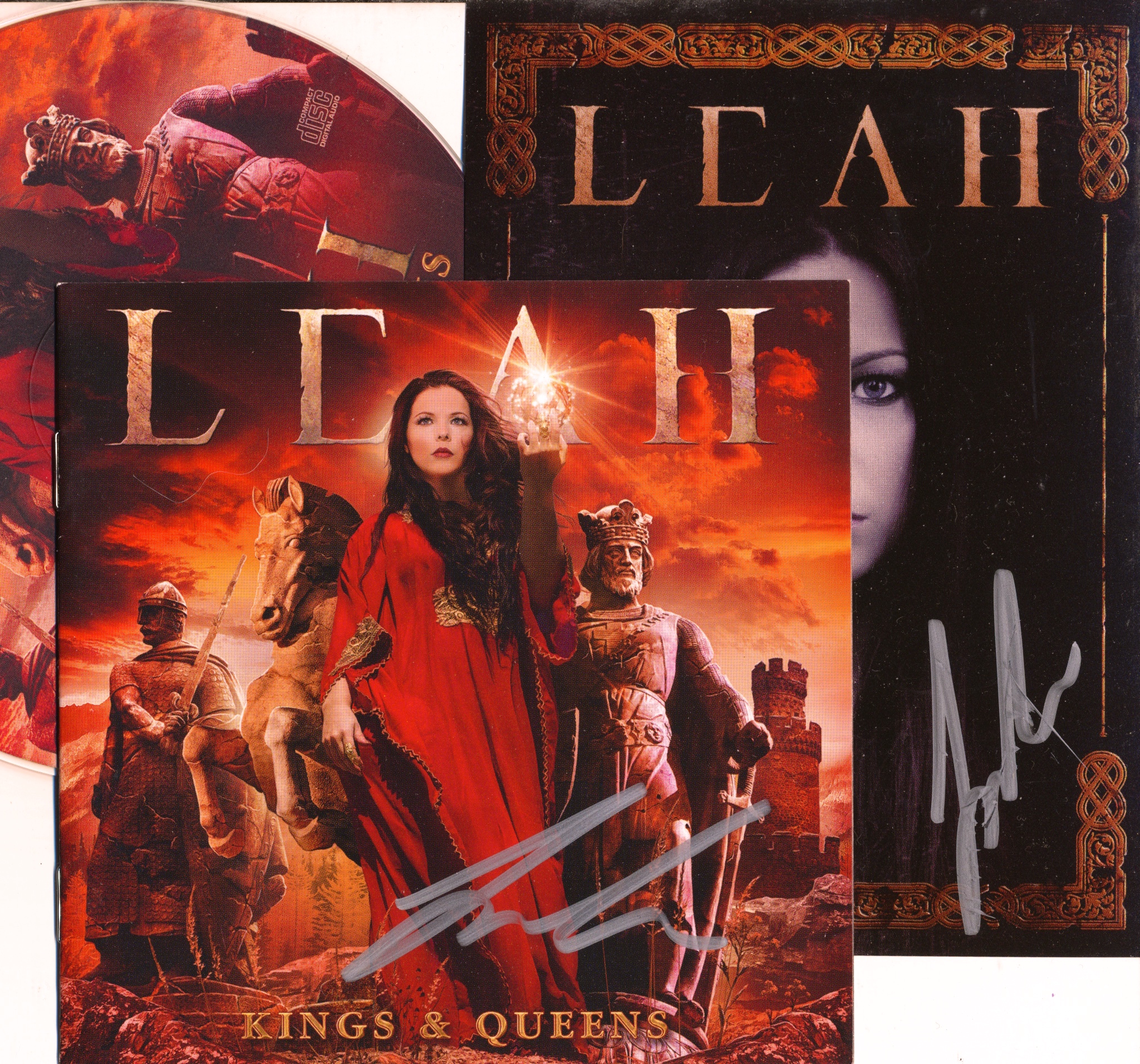
Leah, KINGS AND QUEENS (Innerwound Recordings, 2015).
Track listing: Arcadia; Save the World; Angel Fell; Enter the Highlands; In the Palm of Your Hand; Alpha et Omega; Heart of Poison; Hourglass; Palace of Dreams; This Present Darkness; The Crown; Remnant; There is No Farewell; Siuil a Run
Birzer rating: 9.55/10
***
Leah McHenry is a diamond, but not in the rough. Indeed, her talents are perfectly shaped and polished, ready to appear alone or in a company of other gems. Whatever the setting, though, Leah will be the brightest in the room.
I’m not sure I could honestly call this piece a review in any journalistic or Brian Watson-sense of the term “review.” I count Leah among my friends, however much distances across North America might separate us, and I’m proud to include anything she does as progarchist. At a personal level, she and I share the same views on political, religious, cultural, and familial matters, and I’m deeply honored to know her.
That admitted, I think I can also state with some objectivity (as much as beauty allows an objective statement to be made about it) that Leah possesses one of the three best voices in modern music. Only David Longdon of Big Big Train and Susie Bogdanowicz rival her for a top position among the best three. This is not to state I don’t have a fond affection for other singers. After all, I love Geddy Lee’s voice, but I would never claim—even under the pretense of objectivity or perhaps even under torture—that he wields a “pretty” voice. Leah, David (well, handsome), and Susie do.
After justly-famed progarchist and classical philosopher, Time Lord, introduced me to the music of Leah in 2012, I quickly fell under the pull of her siren song (though, quite holy and post-Homeric pagan). Her first album, OF EARTH AND ANGELS, really introduced me to metal. I’d heard some prog metal, but Rush was generally as heavy as my musical tastes had developed. Admittedly, I’m still trying to figure metal out, but I loved what Leah was doing with the genre in 2012. There was simply so much life in every note and every lyric. So much life. Life teeming with life. Life everywhere. And, on that first album, she revealed a real knowledge of Celtic and Scandinavian folk tunes and medieval wisdom. Her opening song, “Prisoner,” though lyrically about something altogether different than my interpretation here, sounded like she could be a true warrior princess leading her troops into a battle for all that is good and sacred.
Shortly after hearing her first album, I came across her Christmas EP, LET ALL MORTAL FLESH KEEP SILENCE. While there’s a long tradition of great artists dipping into this holiday genre, it always remains a risky venture. When taken seriously, Christmas songs live up to the immense gravitas of the birth of what Christians consider the messiah. Writing about the Word made Flesh is no easy task, and it should never be done for light or transient (or commercial) reasons. Mediocre Christmas songs just sound ridiculous. Leah’s metal take on the birth of Jesus has all the drama necessary to honor Mary’s son. Thus, though I have no divine authority, I assume that Leah will not be spending eternity with the unbelievably tacky Dan Schutte or Marty Haugen.
It was Leah’s second EP, OTHERWORLD, that convinced me of her nearly divine status as an artist. Imagine if her fellow Canadian Sarah McLachlan hadn’t gone full-blown pop and more than a bit wacky after her brilliant first three albums. If you can imagine this, the path not taken by McLachlan, you have Leah and OTHERWORLD. As with everything Leah does, she sings and plays every single note with absolute attention to detail and, most importantly, with humbling conviction.
I’m still trying to understand the entire genre of metal (hence, the 9.55/10 rating), and Leah’s KINGS AND QUEENS is about as metal as I’ve ever heard. It’s far harder and more driving than anything she’s previously done. Much of it comes out of the huge sum of money she deservedly raised in a campaign leading up to the making of this second full-length album.
One could never accuse of Leah of lacking confidence, but KINGS AND QUEENS possesses even more confidence than the first several releases. She’s also fully embraced all things medieval, Celtic, and Scandinavian in this album. Indeed, KINGS AND QUEENS might very well serve as the soundtrack to the Viking invasion of Ireland. When Leah sings, the listener stands with Bran the Blessed, Arthur, and Leif Erikson. The listener also stands with Leah at the heart of a storm, though as an observer, not as a participant or victim. Indeed, the power of Leah’s voice and song writing is akin to some kind of classical force of nature, perhaps transcending all but the Fates.
As the title KINGS AND QUEENS suggests, Leah has entered fully upon a world of the past with her beautifully produced, dense, and textured music. The artist herself claims not to be a progger (not out of distaste, but, instead, as a patriot of pure, raw metal), but the album is very progressive. There’s a coherent, if not single, story going on throughout the album, and the themes of loyalty, betrayal, and duty leap out of every song.
I’ve listened to the entire thing through several times now. Each time I listen to it, I hear something new, and I think “I like this song best,” but it’s never the same track when I listen to the album the next time. Admittedly, if Leah sang the entirety of page 452 of the Oxford English Dictionary, I’d buy the cd and love it. Yes, she has that kind of voice.
And, as I’ve written before, and I’ll write again: given her tenacity, her talent, her voice, and her age, Leah McHenry is the future of rock. That she’s as beautiful and kind as she is talented doesn’t hurt, either.
Future Times
I remember as a boy that my most prized possessions were a ‘Sharp’ double tape ghetto blaster and a record/tape player. The former I used to lug around in an American Army backpack that I had bought from an army surplus store. The latter I recorded the tapes on, and played records way too loudly.
Buying an LP was an incredibly visceral experience, even when they skipped, jumped or just refused to play anything. Such were the perils of buying cheap vinyl from the market. There was none of this 180g nonsense back then. No, records were so flimsy you could read a comic through them. I didn’t know back then, growing up in the late 70s and early 80s, but I should have blamed OPEC, apparently.
Getting a newly purchased LP home was a religious moment – and yes I admit to that thrill you can only get from smelling it. The artwork, the lyric sheet. The first crackles as the needle sought out the beginning of the first track. Many of the LPs I first listened to in this manner are still very good friends. Even though my top 15 is now littered with newer third-wave bands such as echolyn, Discipline, Izz and Glass Hammer.
Skip forward 35 years or so and I’m now listening to an album stored on a device the size of a box of Swan matches, albeit a lot slimmer. It is playing, via Bluetooth, over a 9.1 surround system. I bought the album a few minutes ago and I haven’t yet physically held it or pored over the artwork. The CD itself is in a van somewhere bound for York. Even then, a CD unboxing is nowhere near as exciting as the LP equivalent. Yet the music was beamed across the ether and is now belting out of the speakers.
So, I hear you ask. What album is it? Well, I guess it’s by a band that continues to straddle all four waves of progressive rock music. Given my love of American Prog (radio show of the same name appearing soon on Progzilla.com: shameless plug I know) it is apt that the singer just happens to now be in one of my aforementioned top 15 bands. But the one I’m listening to is not American. Even though he is.
I read interminable rants about this album when it first came out and I admit to hearing a very brief snippet and I wasn’t overly impressed to say the least. Anyone with opposable thumbs and a keyboard of some description connected to the interwebs let loose with their tuppence ha’penny. To my eternal shame I believe I said that the snippet I heard ‘sucked balls’. Now I don’t know what that means but I think it’s pretty negative.
Whilst all of this was, my comment included, mere subjective opinion some of what was written masqueraded as a ‘review’. As though using this word alone can lend objective credibility to what is, in effect, a simple statement of whether you happen to like a record or not. Now don’t get me wrong, some professional (and a few amateur) writers are incredibly adept at distilling the essence of a work into a few hundred incredibly well-crafted words. But the vast majority of stuff I read about this album didn’t fall into this category. People got into full blown arguments about it. They fell out. Friendships ended, or at best were severely tested.
Never has so much been written by so many, in fact. But to my eternal shame I never actually listened to the thing myself. Never formed my own opinion.
So now I am. And I have.
What a Rush! My Beginnings with Prog
 I’ve been thinking a lot lately about the amount of new music I’ve listened to since joining Progarchy, and I’ve been wondering how I managed to get along without much of the music I listen to on an almost daily basis now! I’ve also been thinking about my first exposure to what I now understand to be progressive rock. At the time, I would have just called it classic rock.
I was a little kid. Maybe 6th grade, but for some reason I think it was a few years earlier. Let’s go with 2004 or 2005. I remember sitting in my brother’s bedroom as my Dad plugged his 40 gig iPod classic (remember those, black and white screen, weighed a couple pounds) into my brother’s stereo to relive the glory days with his college roommate who was in town and over for dinner. My first experience hearing Rush was the high pitched Geddy Lee saying, “We’d like to play for you side one from our latest album. This is called 2112.” Those last few words stuck in my mind for years as being so incredibly cool. And I felt cool for listening to it. Even though I didn’t remember the music at all for the next few years after that, I did remember, “This is called 2112,” and those words seemed to constantly run through my head.
Fast forward a couple of years. I’m sitting in the car with my Dad (in a church parking lot, of all places), and my Dad says, “Here’s a song I think you’ll like.” He must have known even back then that I would come to have a profound love of history. He played “Bastille Day” from All the World’s a Stage. He played a few other songs from that album, but I can’t remember which. All I remember is not being able to understand Geddy Lee’s vocals, and my Dad saying that maybe that was a good thing. A few days later, I remember bragging to my friend’s Dad that I had listened to classic rock. I felt so cool. (I probably sounded like a little loser, but hey, I felt cool.)
Fast forward again (maybe seventh grade?). I’m in my brother’s room again helping him move furniture or something. He blasts “Tom Sawyer” over his stereo. I feel cool yet again, something I didn’t often get to feel being bullied at school as a kid. Such is life. Soon after that, I got a copy of The Spirit of Radio: Greatest Hits 1974-1987 from the local library and put it on my computer and iPod. Admittedly, I only listened to about half that album, the 70s stuff through “Tom Sawyer,” but I loved it. I would blast that stuff whenever I could.
Backtrack back to 6th grade, when my brother downloads some Muse albums onto my iPod during a family vacation. I started listening to that on a regular basis as well. Fast forward again to sometime in high school, when I get to see both Dennis Deyoung and Kansas live at our town’s annual 4th of July festival. Needless to say, I quickly acquired some of their music as well.
Fast forward again to the first week of my freshman year of college (September, 2012). I’ve since acquired several more Rush albums, my favorite being A Farewell to Kings. I’m sitting in my dorm room listening to Rush on my speakers, and Connor Mullin, my dorm room neighbor, asks from the hall, “Is that Rush?” That began a series of conversations over the ensuing weeks about “progressive rock,” a term I had never heard before. I had always thought of it as classic rock. Connor and I spent hours over the next few months watching different live videos of classic prog bands from the 70s, and, in the beginning of November, the two of us drove to Detroit to see Ian Anderson perform Thick as a Brick and Thick as a Brick 2.
I was sold on Prog. The next fall, two tools (Connor and I) walk up to Dr. Birzer’s office to talk to him about our shared enjoyment of prog. Despite this being the first time we had ever met him, he, out of the graciousness of his heart, invited both of us to join Progarchy! And the rest is rock n’ roll history.
And it all began with my Dad, Rush, and “2112.” I think I’ll go give that another listen.
[PS: I just talked to my Dad after he read this article, and he told me that a friend of his introduced him to “2112” when he was in fourth or fifth grade. It seems we all discover it around the same age. May Rush long live on in our hearts and stereos.]

you need to be reading PROGARCHY: POINTING TOWARD PROGHALLA

One thing this blog is NOT, is a news source for progressive music, bands, upcoming releases, and conert tours. There are some pretty decent internet sources for that kind of material–this isn’t one of them.
The one absolutely indispensable cyber-source that you must follow is PROGARCHY: POINTING TOWARD PROGHALLA. This serious, literate, and multi-authored blog is found at: https://progarchy.com/ While all of the reviewers are top-notch, anything written by blog co-founder Dr. Brad Birzer is worth reading, learning, and inwardly digesting.
Thanks to many excellent essays and reviews, as well as the various “best of 2014” lists that PROGARCHY provided last year, I was introduced to Robin Armstrong (Cosmograf), John Bassett, Salander, Fractal Mirror, Cailyn, Abel Ganz, and Dave Kerzner, to name just a few. There’s not a week that goes by that my daily dose (sometime there is no daily…
View original post 69 more words
Lovely Leah, Again
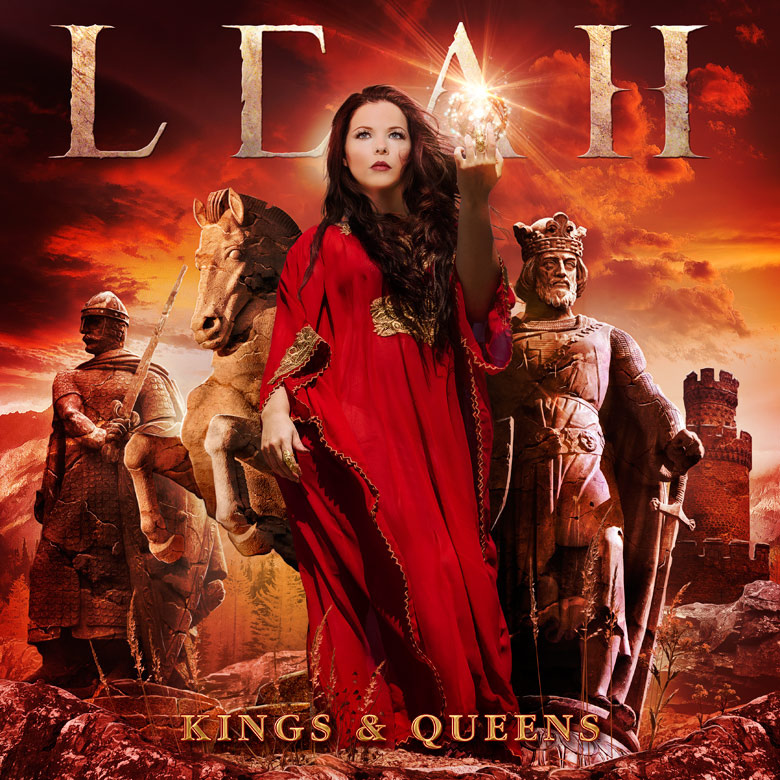
I finally received my copy of Leah’s extraordinary new album, KINGS AND QUEENS, along with a very nice t-shirt this past week. It has taken me several listens to get what Leah is trying accomplish, and I’ll post a long and serious review sometime in the next week or two. Her previous EP had simply punched right into the best of my soul, and I still listen to it weekly or so. My entire family loves it. It was a delicate and bardic affair. KINGS AND QUEENS is something altogether different. It’s much more metal, and no one would dare call it delicate. As always, the three trademarks you’d expect from Leah are there: her outstanding voice (rivaled in the rock world only by David Longdon and Susie Bogdanowicz); her compositional confidence; and her sibylline lyrics. It’s a Leah album, and, yet, it’s something quite special as well.
But, for now, I need to get ready for St. Augustine in one class and John Dickinson in another.
To order or visit Leah, go here.
The Neal Morse Band – Alive Again and On Tour

Last Night in Nashville, TN, The Neal Morse Band kicked off their tour in support of their new album, The Grand Experiment. Performing in the intimate confines of Rocketown to a very enthusiastic audience, Neal and his cohorts tore through an energetic set that lasted more than 2 hours and included some surprises in the set list.
They got things started with the a cappella opening to “The Call”, with every band member nailing his vocal part perfectly. Eric Gillette, a veteran from the Momentum tour, is on lead guitar, while Bill Hubauer (another Momentum vet) plays keyboards, clarinet, and sax. Of course, no Morse band would be complete without longtime collaborators Randy George on bass and Mike Portnoy on drums. I brought a friend with me to the show, and he was blown away by Mike’s performance, saying, “I haven’t seen anyone play drums like that since Keith Moon!” Eric was incredible throughout the show, singing occasional lead vocals and playing some absolutely shredding guitar. Bill’s instrumental and vocal versatility give the band almost two musicians in one person, and Randy George holds it all together with his fluid bass runs. As Neal proclaimed at one point, “Randy with the bass pedal solo – how prog is that!”
The band played every song from The Grand Experiment except (surprisingly) “Agenda”. Highlights included Neal playing a beautiful instrumental on acoustic guitar that led into “Waterfall”, as well as the Kings-X-sounding title track. They also played “Into the Fire” from ?, “The Creation” from One, and they got a roar of approval when the intro to “In Harm’s Way” (from Neal’s Spock’s Beard days!) boomed out.
This being the first gig of the tour, there were some inevitable glitches, but Neal took them in stride – even stopping “The Grand Experiment” to restart a tricky vocal section. The audience loved it, and once they were back on track, they never looked back.
There are few performers who can connect with their audience the way Neal does – conducting them during singalongs, raising his arms in appreciation, and even jumping off the stage to sing and play among them. He and the entire band gave all they had, every minute. As my friend exclaimed to me in the middle of a song, “It sure is nice to see a band just having a great time playing together!”
Neal asked if we could handle “one more epic” (of course we could), and then launched into “Alive Again”. Neal has written many, many epics, and this one is near the top. It rocks, it soars, it ebbs, and just when you think it’s over, it comes roaring back for an incredible finale.
As far as the encores, I won’t be a spoiler. Suffice it to say that there are some really fun surprises, both in terms of performance and song selection!
It’s been said (I have no idea if it’s true) that Keith Richards was once asked what it was like to be the world’s greatest rock and roll band. He replied that on any given night, there was a band playing in a club, somewhere, and for that night they were the world’s greatest rock and roll band. Last night, Rocketown hosted the world’s greatest.
You can get details of the rest of the Alive Again Tour at Radiant Records. Don’t miss this one.
Update: I mentioned above that “Alive Again” is one of Neal’s best epics. Actually, all of the songs on The Grand Experiment are a group effort, and Neal, Mike, Randy, Eric, and Bill all deserve credit for them.
 Progarchy