Feast of St. Cecilia, Patroness of Music

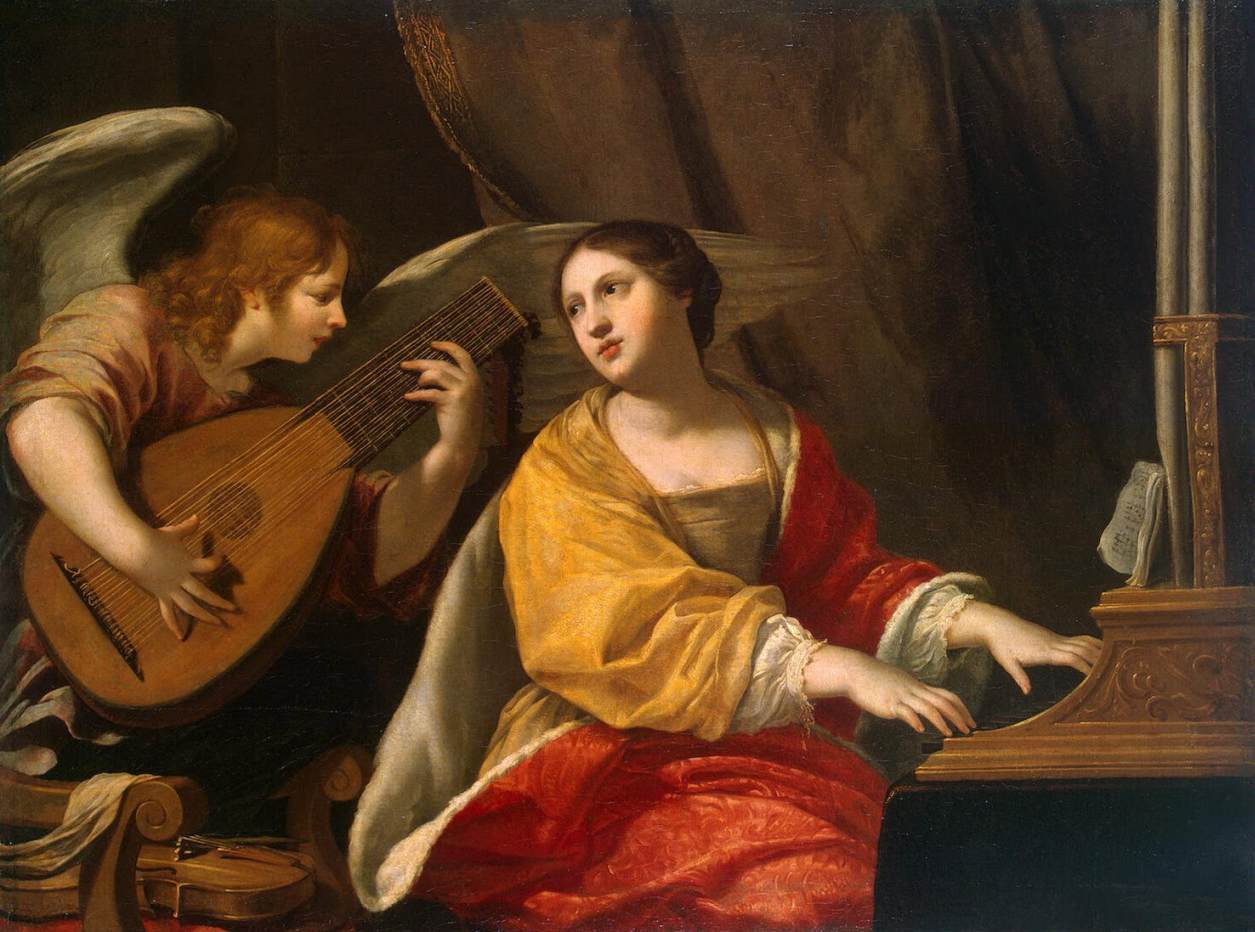
Blanchard,_Jacques_-_Saint_Cecilia_-_17th_cExcuse the overt religiosity of this post, but I just can’t let the Feast of St. Cecilia, patroness of music, pass without acknowledgement.

My maternal grandmother kept a picture of St. Cecilia above her bed, and my wife and I were blessed to inherit this image.

I have a great aunt, Cecelia, who passed away at the age of 21 (from tetanus) and a daughter, Cecilia Rose, who died on the day of her birth, August 8, 2007.  May all Cecilias dance together in eternity.

Daniel Lanois on the art of producing: “I … look for commitment and a lot of heart and soul…”

DanielLanois
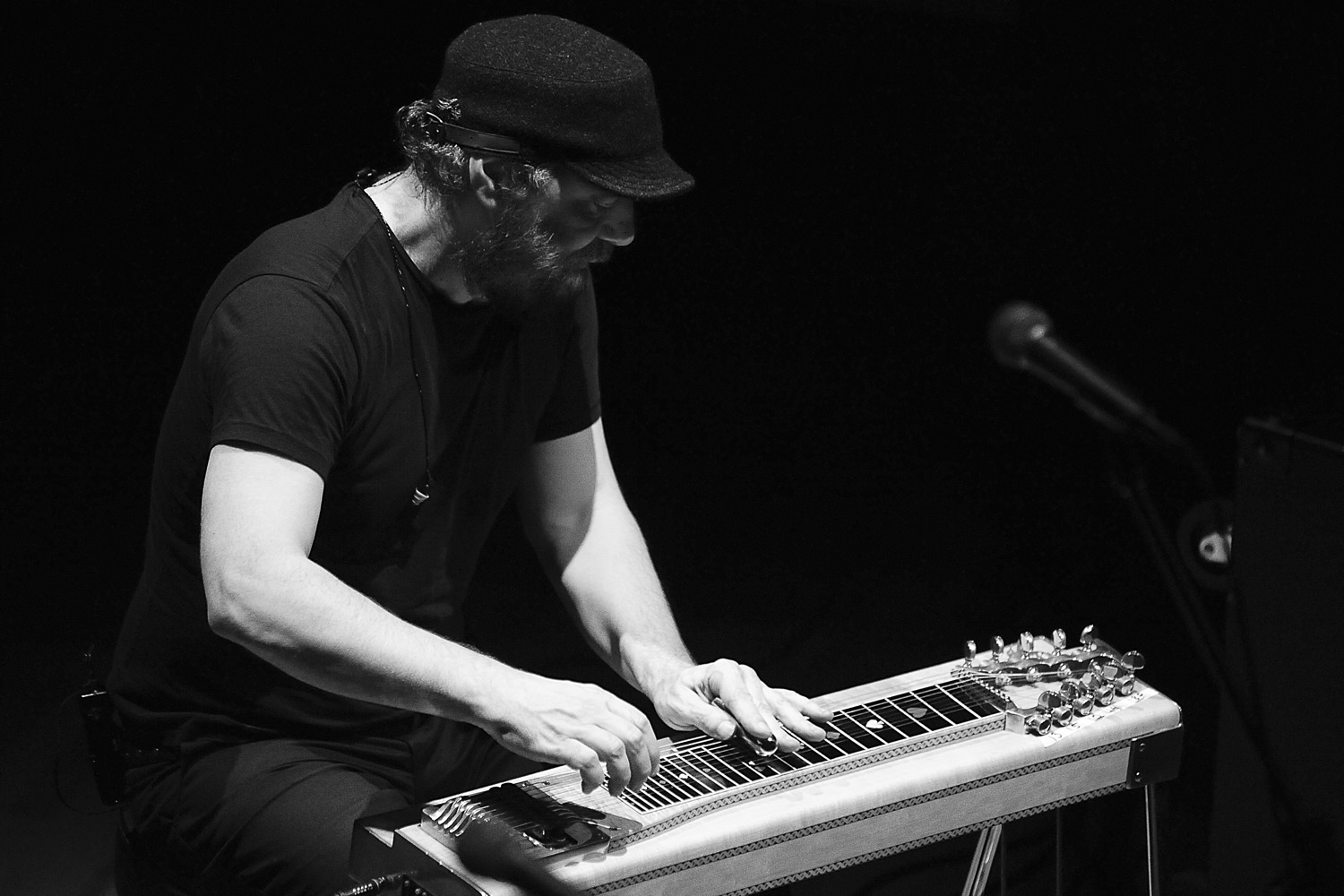
Daniel Lanois performing in 2008 (Wikipedia)

AllAboutJazz.com has a fascinating interview, conducted by Nenad Georgievski (writing from Macedonia, of all places), with legendary producer and musician Daniel Lanois. Here is an excerpt:

AAJ: When it comes to production, what are the things you look for in people’s music which will decide whether you produce them?

DL: I look for points of strength. It’s nice if there is a singer in the band and for the singer to have a big personality, something unique about their voice. I also look for commitment and a lot of heart and soul, because in the beginning what we do, which is representing the artist, plays a big part in the equation. Yes, you can apply a lot of muscle and you can pay your advertising after, but essentially it needs to have a lot of soul and it needs to be in existence for the right reasons. So, authenticity is the beginning, and then advertising comes later (laughs).

AAJ: Where is the meeting point between the artist’s ideas and the producer’s ideas about the outcome? Is your primary aim as a producer to help realize an artist’s vision, or to expand it?

DL: I think the producer’s job is to produce something magical within the offering of the artist. And I find that a vision comes together quite quickly when a magic moment appears. When that magic moment appears, a new vision comes into play and I don’t think people should assume that people are coming into studio with a small vision and that it’s all we operate by. I think people are hoping that they are going to bump into something fresh. When that happens then we get to be naive all over again in terms of freshness, and then a brand new vision comes into play for both parties.

AAJ: With some artists you’ve worked with over a series of albums (like U2, Gabriel, Dylan), does your function alter as you get more familiar with each other?

DL: There is no doubt that there is a relationship that develops and people’s roles change. When I first started working with U2 I was to be the engineer of the project, and then everybody in the camp realized that I was very musical. And I was able to make contributions with harmonies, understanding of rhythm and the arrangements -I was able to enter the world of music with them and not just sitting in the technician’s chair. Everybody in that camp is very smart, so they realized that my talent was such that I was able to be as much a musical producer for the record making process as Brian Eno is. So that became the strength of that relationship. Everyone knows how to work with equipment to a certain degree, but what is most important to that relationship is the evolution of our musical minds. That’s it; you are able to work with the strengths of the people in the room.

And:

AAJ: What is it that keeps people like U2, Dylan, Gabriel, Neil Young, hungry to keep doing it at this point in their careers?

DL: That is a very fundamental question and that question applies to the whole world and not just the artists that I work with. What keeps us interested in innovation? We are human beings, we evolve and we like new ideas. With my current work I want to invent sounds that take us to the future. If there is anything that I have learned from all of the artists that I’ve worked with, it’s that they have a similar appetite to know what lies ahead, around the bend, what’s over the mountain. It’s just the way it is. Even after 60 years of rock and roll we still have an appetite to know what might be the new thing, what expression still needs to be expressed, and so on. So, as we grow and as we grow through life we look things differently when we reflect on our work.

Lanois’ most recent album is “Flesh and Machine” (see www.fleshandmachine.com):

 Daniel Lanois: It’s a very technologically driven record and I use a lot of sampling and dubbing. But I sampled my own instruments and my own voice. Well, I sampled other people’s records as well (laughing). This allowed me to have a very unique personality and for the record to find its own direction. I have dreams to step into the future with my sonics, so I decided to go after symphonic or orchestral results but without the sound of familiar orchestral instruments. I wanted brand new ones that haven’t been heard before. So that was part of my driving force and criteria.

Here is a cut from that album:

Montage — “Strawberry Skies”

Montage’s eponymous 2014 debut album has a nifty song on it that is quite epic: “Strawberry Skies”

You can take a listen to it above. But I would recommend grabbing it for 99 cents and dropping it into your playlist. It has many very nice elements.

Clearly this band from Finland is a prog force to be reckoned with. They do hard rock but with all kinds of other aspects thrown in: folk, early prog rock, and psychedelia. You will hear influences from The Doors, Rush, Caravan, Mastodon, and Black Mountain.

Montage is:

Mikko Heino – vocals
Roni Seppänen – guitars
Jukka Virtanen – keyboards
Taneli Tulkki – bass
Kim Etelävuori – drums

Hello, Patricia Tallman!

One of the many exciting things about writing for an active website is finding out who is following you. Every week, progarchy.com receives new followers at its own website (through wordpress—we’ve over 2,400 subscribers as I type this), through twitter, and on Facebook. We have some accounts on some other social media, but I’ve (–Brad) have never quite figured out to use them.

Maybe Chris or Carl can.

More often than not, understandably, the follows come from musicians, agents, and music fans. Makes sense. But, every once in a while, one comes out of left field.

This week, I was thrilled to see that Patricia Tallman is following us on twitter.

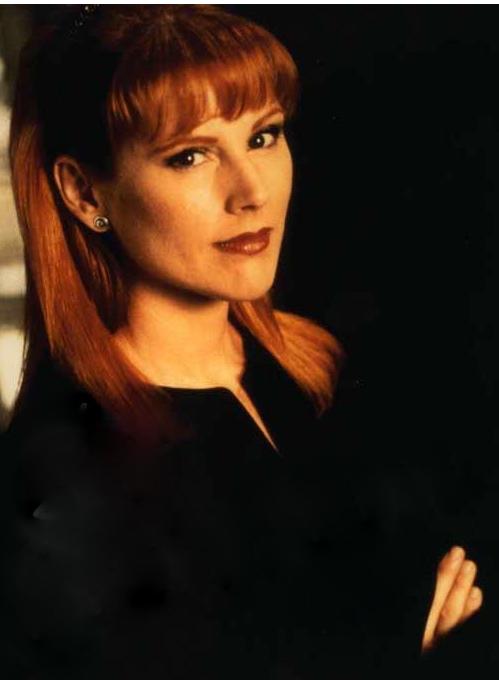
Patricia-TallmanCurrently the CEO of Studio JMS, Tallman will be familiar to most of you as the face of Lyta Alexander, the most powerful telepath in the Babylon 5 universe. By season of that greatest of all TV shows (EVER!), she is the post-Vorlon weapon of mass destruction. And, what a character and what an actress. I become rather taken with her from the first moment she flashed those intense eyes, red hair, and brilliant intellect on screen.

She also has appeared as an actress and stunt person in numerous TV shows and movies, including various incarnations of Star Trek, Army of Darkness, and Austin Powers.

And, back to B5 for a moment. As most of you probably know, Christopher Franke, German krautprog demigod composed all of the music for the series. Naturally, it’s rather good though now currently difficult to find.

Pat Tallman, whether you’re joining us because you’re a music fan or simply because you know we’re YOUR fans, welcome. Glad to have you aboard.

Neither Bending Nor Conforming: Fractal Mirror Comes of Age

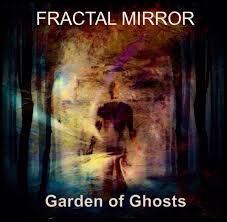
Review of Fractal Mirror, “Garden of Ghosts” (privately released, 2014). The Band: Leo Koperdraat; Ed van Haagen; and Frank Urbaniak. Art by Brian Watson and layout by Frank Urbaniak. Additional personnel: Brent Kull (mixer); Larry Fast; Don Fast; and Andre de Boer.

Songs: House of Wishes; The Phoenix; Lost in Clouds; Solar Flare; The Hive; Solar Flare Reprise; The Garden; Orbital View; Event Horizon; Legacy; and Stars.

Birzer rating: 9.5/10.

GOG

Take a Dutch singer/keyboardist and a Dutch bassist, an American drummer, and an English artist. Add a little Kashmir-Zeppelin and a lot of Bauhaus, some Cure from the Faith period, and a touch of Gilmour-era Pink Floyd. Mix in some master jazz and prog stars to produce, contribute, and engineer. Throw in a dash of social media to connect it all. Finally, glue it all together with lyrics that might make Neil Peart blush at the timidity of his own Canuck individualism. Even with such diverse and various ingredients, you’d probably still not arrive at the genius that is Fractal Mirror.

“I will not bend or conform; this is how I’m meant to be.”

Indeed, it is. The first Fractal Mirror album proved a spectacular success. This second release, even more so. By infinite degrees. This sophomore release offers a full-bodied constitution and a virtuous soul to the emerging voice that was the new-born first album.

Fractal Mirror has come of age.

In a very definite sense, the title of this release “Garden of Ghost,” tells the listener almost all of what he or she needs to know about the whole. From the opening lyrics, Leo Koperdraat’s haunting, quavering voice shakes the listener to his deepest longings and desires as well as to his greatest fears and anxieties. This is not an album for the weak of soul, the narrow of mind, or faint of heart. This album is full-bodied, and it demands immersion, not just polite appreciation. While the ghosts fits the tone of the album completely, a “maze” might have worked as well as “garden.” The garden, if it exists, is the garden one finds in a nineteenth-century cemetery. It is certainly not the English garden of even the most psychedelic of Beatle songs. Here, if it exists, the garden collects stones, obelisks, mutated lambs and gargoyles, crumbling and cracked names, and pieces of rod iron and greened bronze and copper. A fog hovers over it all, and the damp penetrates all who enter it.

Fractal Mirror’s Garden of Ghosts is fully prog, though not the prog of our fathers. If Andy Tillson and Brian Watson (who also happens to be the main artist of FM) are correct that we have been living in the third wave of prog since about 1994—and I think they are right—2014 might very well reveal a transition to a new wave. As I look back over my posts for the past five years, I realize that every single year I write something akin to “201X, the greatest year in prog yet.” Yes, I’m prone to hyperbole, but I did mean this every time I wrote it. For the first time in a half-decade, I’m not sure this year, 2014 by Christian accounting, is the best year in prog. There have been some truly brilliant releases this year, indeed, some of the best prog I’ve ever heard. I think it is quite possible, however, that Big Big Train, The Tangent, and Glass Hammer took us to an unsurpassable level last year, perhaps the very culmination of third-wave prog.

The best releases of this year, such as those by Cosmograf, John Bassett, Salander, and Fractal Mirror, offer a progressively retro look, in theme and in musical styles. That is, many of the best releases this year have been scavenger hunts of the years 1979-1984 while cleaning those remaining and latent treasures and reimaging them.

What we have this year, 2014, is prog, to be certain, but it comes very close to post-post modern prog. Atmospheres, tones, and lingerings have replaced force, rhythm, and drive. “Ocean Rain” might serve as the touchstone rather than “Close to the Edge.”

To put it another way, the music of 2014 seems as intense as anything before it, but it also seems content to be contemplative and deeply intellectual, an autumnal repose of the mind and soul, an in-taking of breath, anticipating exhalation.

“This winter feels like forever, a garden of regret.”

FM has created a thing of real genius with Garden of Ghosts. I apologize that this review is so introspective and reflective, so utterly subjective. But, the 2014 prog scene has brought out the most existential questions in me. As I listen and listen and listen to Fractal Mirror, I can’t help but feel a most fundamental soul searching.

For what it’s worth, I’ve been listening to this album for roughly a month now, and I’ve found it one of the most difficult things I’ve ever reviewed. Not because it’s bad, but for exactly the opposite reason. It’s so interesting and complex, so very good, that I wanted to give my own thought processes time to catch up with it. I’m certain that as I continue to listen, I will discover even more depths as well as breadths.

I must also note: it’s well worth getting the physical CD. Brian Watson has presented us with some of his best artwork, and Frank Urbaniak’s layout sets what should be the standard for all cd layouts. The lyrics are well worth reading over and pondering, again and again. The band even included a brief description of the intent and meaning of each song. I resisted reading these until just right now, as I come to a close with this review. As it turns out, my interpretation of the themes of the album—loss, age, regret, concern, and hope—mesh with what the band has explained here. Again, a masterwork of autumnal existentialism.

For more information, see www.fractalmirror.net.

20 Looks at The Lamb, 13.5: Interlude

A knock at the door.

Aren’t there too many stories that begin with a knock at the door?

I open it, and see exactly what I expect to see:  Me.

Now, it won’t do at all to have you confused all the way through, so let’s say that the “me” at the door is played by Gary Oldman.  No, I don’t have a particular reason for that.  I just like Gary Oldman.  Think of him as he appeared in The Book of Eli, but wearing jeans and a t-shirt.  The shirt is emblazoned with a reproduction of the front cover of The Lamb.

I (at least I’m pretty sure that I am “I” rather than “me,” but don’t think too hard about that) can be played by anyone you fancy.  Whatever you do, however, please don’t envision me as Rael from that album cover.

Me (Oldman) has been looking at me blankly.  I see that he’s holding five playing cards in his hand, arranged as a hand, as if he’s playing a card game.  I look back, just as blankly.

Finally, he speaks.  “So…  What’s up?”

I know what he means, but play dumb.  “Not much.  What’s up with you?”

“Where the hell have you been?”

“Here.”

Pause.

“It’s November.”

I can’t think of a good response, so I just continue looking at him.

“You haven’t posted since July.”

This time a response seems appropriate.  “Yeah.”  I didn’t promise it would be a good one.

He holds the cards up, and extends them slightly toward me.  “You dealt, but you never finished the hand.”

“You know why.”

“Well, yeah, at first.  You got all busy and distracted.  But FOUR MONTHS?”

“Four months is not a long time.”

A slight smile.  “We’re talking web-time here.  You know damned well that you get impatient after ten minutes if no one has ‘liked’ your latest Facebook post.”

“I’ve been thinking about another post.  I’ll do it soon.”

“But YOU know that isn’t all.  Everyone is talking about The Lamb again!  The fortieth anniversary, it’s on everyone’s radar again, and nothing from you!”

I’m back to having no response.

He sighs.  “May I come in, please?”

“Sure.”  I move aside to let him in, and shut the door.  He drops the playing cards on the coffee table and sits heavily on the end of the sofa.  I sit in a nearby overstuffed chair that does not match the sofa, and wait for him to continue.  The cards are face-up, and my peripheral vision catches three Jacks.

“That’s the thing, isn’t it?  If everyone else is talking about it, you lose interest.”

I shrug, and remain silent for the moment.

His tone begins to lean toward mocking.  “You’re still that freaking seventies prog-hipster teen, who needs his music to be not-too-popular.”

My turn to sigh.  “Yeah, probably.  I’ve always had trouble with hype, even when something is very very good.”  I shift a bit, and try to look subtly defiant, probably failing at it.  “But that’s not all.”

He crosses his arms and tilts his head.  “What else, then?”

I close my eyes.  After about 15 seconds, I open them again.  “All of us talk about it, or we try to.  Does it amount to anything more than trying to find all sorts of fancy ways to say that we love it?”

He looks puzzled.  “Of course we love it.  Why not find as many ways as we can to say that?”

“But is it anything MORE than saying that in various ways?”

A pause.

“Are you asking whether the things we say — the things that you write — actually mean anything more than that?”

I nod.

Another pause.  Much longer this time.

“If they didn’t mean more than that, why would anyone keep reading them?”

I open my mouth to respond, and begin making a sound, but then I stop, and close my mouth again.  What was I going to say?  That readers are dull and sheep-like, reading when there’s no substance?  That readers think they find substance when there’s actually none?  I eventually find my voice again.  “I was thinking about my writing, as opposed to the readers’ reception of it.”  That’s lame, I think.

“That was lame.”  He smirks, knowing that he has voiced my thought.  “Do you also suspect that The Lamb itself might have no substance?”

A feeling just a half a notch below horror.  “Of course not!  The problem is that it has SO MUCH substance.  Inexhaustible substance!”

He uncrosses his arms, smiling now, and nods.  I expect him to say something, but he just looks at me expectantly.

Okay, so I’m supposed to think about this.  I do.  He seems content to wait.

Inexhaustible substance, I said.

Time goes by.  No one measures it, so I don’t have a clue how much.

At some point, I suddenly look over at him again, and lean forward in my chair.  He is looking at something above my head, still smiling.  I look up, and see a cartoon light bulb floating there.  Very cheesy.

He gathers the playing cards, and stands up.  “Don’t bother getting up.  I’ll let myself out.”

I can’t think of anything to say, so I just watch him move toward the door.  With his hand on the nob, he turns back briefly.  “We can expect the next post within a few days, then?”

I nod.

He leaves.

I look up, and the light bulb is still there.

<—- Previous Look     Prologue     Next Look —->

The European Dream Team

The cool Moon Safari who make some of the most heart warming prog around.
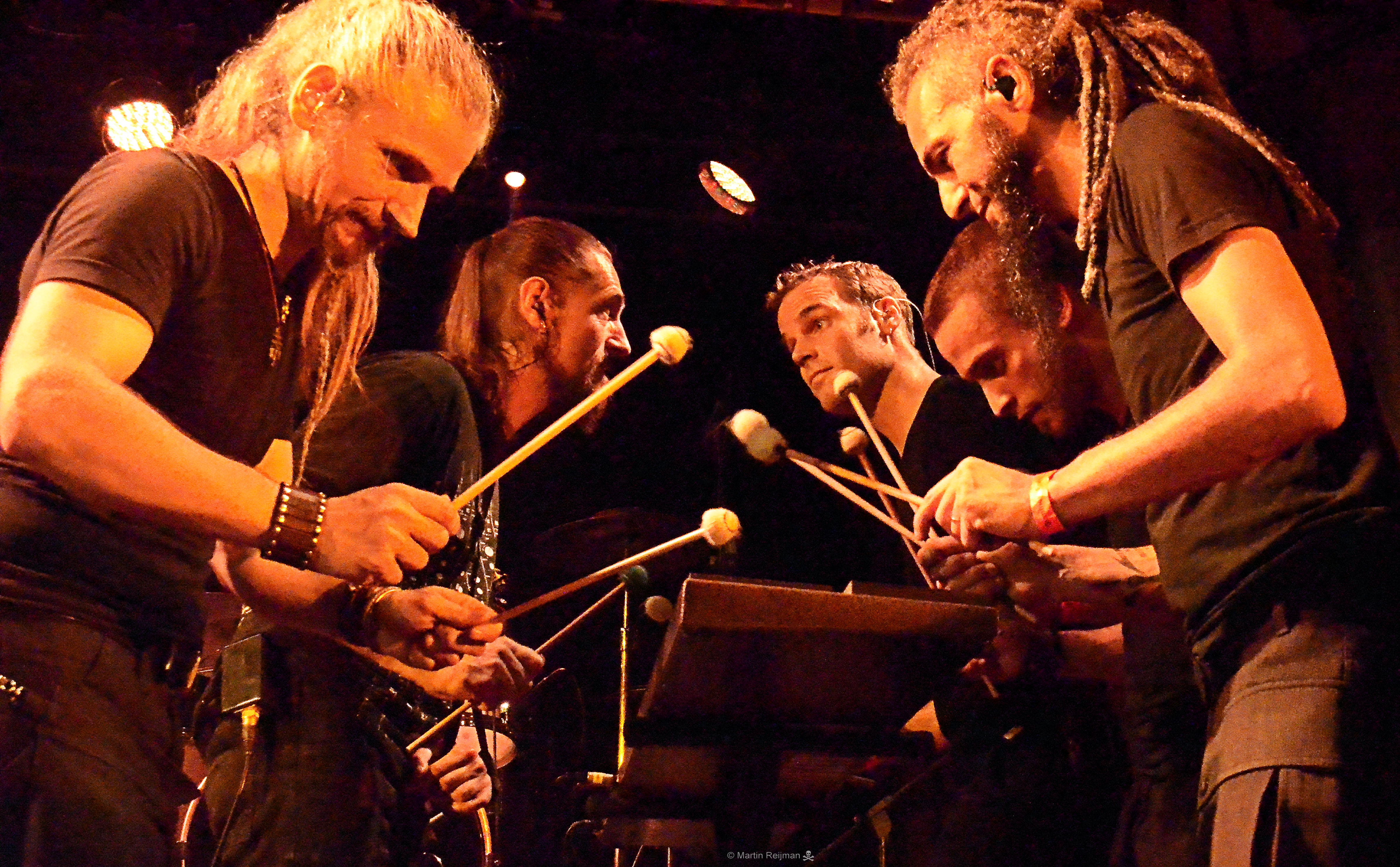
Lazuli - Nine Hands Around a Marimba.
Lazuli – Nine Hands Around a Marimba.

Well, the time has finally come. It really has. I cannot believe it has crept up so fast, but there is now only just over a week to go until one of the greatest adventures of my entire life.

Never in my wildest dreams did I ever imagine going on tour with two of the hottest and most happening European prog bands but as the days get closer, the anticipation gets progressively amplified. Will anyone turn up? Will everyone go away well and truly astounded? Of course they will, my inner voice constantly reassures.

So, this is it – Moon Safari and Lazuli, two bands who know each other very well, and whose contrast in styles makes for a perfect double bill. On the one hand, there’s the wonderful smooth melodies and close harmonies of the cool Swedes and on the other, there’s the complex, unique sounds of the French five, originally inspired by the Beatles, and if you listen intently to a couple of their songs, I Am The Walrus comes right back at you.

Moon Safari have carved a significant place for themselves in the British prog psyche, having won two of the Classic Rock Society’s 2014 annual awards, the Overseas Band and Live Band. How much these awards meant to them was borne out by the essay length acceptance speeches in perfectly modulated English they sent over and were read out by CRS supremo Stephen Lambe back in February.

Also, the redoubtable Jon Patrick, Master of the House of Progression, readily admits that Moon Safari is the band which helped him keep the faith after they appeared at the legendary but now defunct The Peel in September last year. If you want a taste of what to expect, check out their new two CD Live In Mexico album, full of some of the most heart-warming, uplifting prog around.

To describe Lazuli requires something of a personal testament. It was Friday evening at the Summers End Festival 2011 and there were some last minute changes after Sunchild were unable to perform due to visa issues. We were conscious of some guys resembling Legolas and Aragorn mingling with the audience. The next minute, they were on stage and like Prince Husain with his flying carpet, everyone was transported off to Lazuliland, a magical place where the musical rulebook was turned on its head.

There was no bass player: but there was a keyboard player who plays bass parts, drums and French horn; a drummer who also plays marimba; a guitarist who uses a screwdriver across his fretboard; a frontman/vocalist with flying hair and plaited beard who doubles up on guitar and mandolin, and a seated serious figure with an extraordinary instrument called the Léode which resembles a Chapman stick, and out of which can be coaxed an endless range of amazing sounds.

Though all their lyrics are in French, they completely captivated festival-goers and for my part, my musical landscape changed forever. Fast forward to last year and the word is they are back to conquer Lydney again at the 2013 Summer’s End Festival, following Oliver Wakeman and Gordon Giltrap’s wonderful Ravens and Lullabies. Theirs was another electric compelling performance rounded off by the brilliant instrumental Nine Hands Around A Marimba.

Before the weekend, I had mentioned to my dear friend and fellow lady of the prog Nellie Pitts that she ought to see Lazuli for the above-mentioned reasons. To say she was stunned, captivated and mesmerised is something of an understatement. The Mistress of the Merch Desk was well and truly Lazulied and her parting words were “I am going to get them back over here.”

As good as her word, Nellie started planning out the tour at the start of the year, having decided a double bill with Moon Safari would be something of a major event over here. Knowing our love of Lazuli (and our admiration for Moon Safari), she very kindly invited Martin Reijman (my other half and prog photographer) and yours truly as publicist and chief cheerleader to join her and the 11 players on the tour.

And here we are now, just a week away with months of pre-publicity behind us, Press releases to national music journos and local papers duly distributed and many many postings via social media uploaded to capture everyone’s imaginations.

Just for the record, the dates they are playing here are:

The Talking Heads, Southampton, on Wednesday 26 November

The Globe, Cardiff on Thursday 27 November

The Sound Control in Manchester on Friday 28 November

The Borderline in London on Saturday 29 November (A House of Progression promotion)

The Robin2 in Bilston on Sunday 30 November

Sponsors of the tour are The Merch Desk and Prog Magazine.

The response so far has been incredible and our biggest personal wish – indeed a dream – is for everyone there to have the best time and enjoy some of the best music our crazy little world of prog rock has to offer. As one particular prog disc jockey remarked on his show last night, this is going to be the tour of the year. We shall do all we can to make it so.

Seizing Galahad: The 3 2014 EPs

Review of Galahad, the 2014 Trilogy of EPs: “Seize the Day”; “Guardian Angel”; and “Mein Herz Brennt.”

Birzer Rating for all three: 9/10.

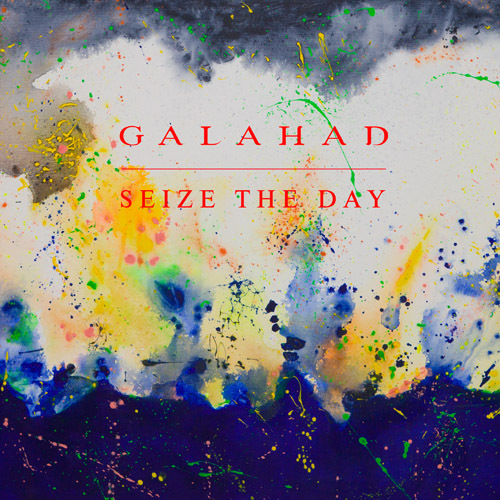
Galahad_Seize_EP

Two caveats as I review these three EPs.  First, I’d not come upon Galahad as a band until being introduced to them just a few years ago by the first lady of prog, Alison Henderson.  When Galahad first emerged in the U.K., we Americans missed them for some reason.  I’m not sure why, and I think this is an American failing.  At the time Galahad came together as a band in the U.K., I was firmly listening to Grace Under Pressure, Power Windows, and The Flat Earth.  But, this failing is now thirty years in the past.

Second, the moment I started listening to the band, I felt an immediate kinship.  I love these guys, and I love what they’re doing.  Exploring their back catalogue has been one of my sonic joys of the last several years.  

I hope they don’t mind the comparison, but they sound like the legitimate successors to the Midge Ure-era of Ultravox (pre-Uvox).  For me, this is not just a great thing, it’s a grand thing.  I loved the songwriting and flow of Vienna, Rage in Eden, and Lament.  Each moved me immensely, and I’ve always wondered why a band didn’t embrace the Ultravox sound and prog it up.  An album such is Rage in Eden is so full of ideas, it could easily have been three times as long as it was.  One could readily take Ultravox toward more electronica and minimalism, or one could beef the sound up, making the pop elements a part of the sound rather than the core of it.  Galahad is that second band–Ultravox on steroids, beefed up and presenting the music as a deep work of art, immersed in gravitas, and willing to be profoundly adventuresome.

I was happily surprised when Stu Nicholson announced that the band would spend 2014 focusing on just a few EPs rather than on a full album.  After the 2012 barrage of two albums—each astounding in its own right—the band had to be exhausted.  The release of three EPs seemed a good idea.  Of course, I’d love another Galahad album, and I assume we will get one.  So, let the guys do what they need to do to get ready for the next big one!  I can be patient, especially when it comes to excellence, and I’m positive Galahad will deliver.  These are guys who–thankfully–never do a thing half way.

Now that the last of the three EPs has been released, we can readily assess just what Nicholson and co. have accomplished in 2014.  And, frankly, it’s quite a bit.

I’ve already reviewed Seize the Day at progarchy.  This is the longest of the EPs in terms of songs.  Six total.  Two versions of “Seize the Day,” including the definitive “full version”, two versions of “21st Century Painted Lady,” and two versions of “Bug Eye 2014,” including a live version.

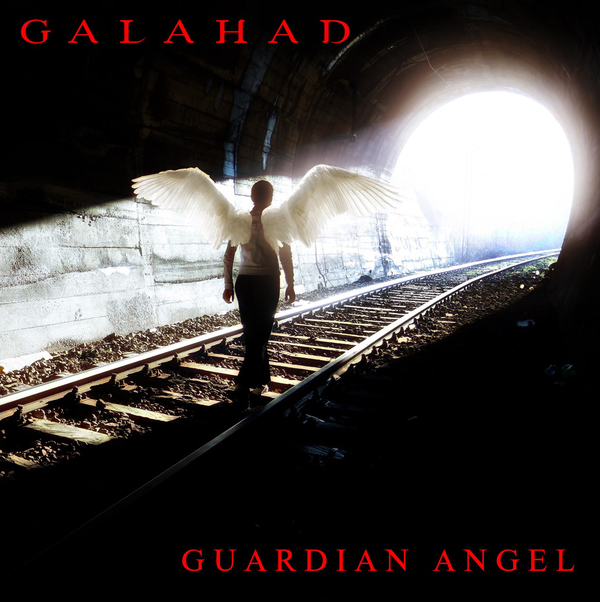
ga-ep-image

The second, “Guardian Angel,” came out this summer.  It presents the title song in four different versions, two of which appeared on the album, Beyond the Realms,  It also contains a piano version of “Beyond the Barbed Wire.”  Stripped down to its essence, the song reveals the delicate beauty and versatility of Nicholson’s voice.

mhb-cover

The final EP, “Mein Herz Brennt,” presents this title song in four versions as well.  I’m not familiar with the original song, and I’m still digesting this EP.  Though I was once fluent in Austrian German, I have a hard time appreciating the German vocals here.  They seem harsh and spooky, though this might very well have been Galahad’s intent.  The EP will probably grow on me.  When it does, I’ll report back.

Regardless, I’m really, really happy with what Galahad has done.  They’ve managed to remain prog while also being truly progressive, exploring new areas and sounds. 

I’m truly sorry they’ve not been a part of my life for thirty years, but I’m thankful they’ve been a part of it as long as they have.  A huge thanks to Lady Alison for sharing her love of this band with me.  Thank you, equally, to Stu and Co. for keeping alive the spirit of playful and meaningful innovation.  Galahad has always been the favorite knight of this Arthur-obsessed man, and Galahad has quickly become a favorite of this same prog-obsessed man as well. 

Long may they continue!

One may purchase each of the three EPs at amazon.com and at Galahad’s official site: http://www.galahadonline.com/

keepcalm2

Boom! Making Clockwork Angels Even Better.

Clockwork Angels by Neil Peart, Kevin J. Anderson, and Nick Robles (Six-issue comic series from Boom! Studios, 2013-2014).

A sample page from the comic series, Clockwork Angels.  The reds and blues are brilliant, as are the emotions depicted.  Art by Nick Robles.
A sample page from the comic series, Clockwork Angels. The reds and blues are brilliant, as are the emotions depicted. Art by Nick Robles.

By any reckoning, Clockwork Angels has done rather well. It is a prog-rock album, a concert, a live concert album and video, a novel, an audiobook, and now a six-book comic series from the relatively young publisher, Boom! Studios. Soon, I’m sure, Boom! will collect these six issues into a graphic novel, perhaps with a new introduction by Peart.

As the great Rob Freedman has argued at his website, Rush Vault, it could readily become a movie or a tv-series. Maybe even complete with action figures. No, I’m not exaggerating, and I’m not being sarcastic. Clockwork Angels has done very well, and I couldn’t be happier for Peart.

The novel, co-authored by Kevin J. Anderson and Neil Peart is, in and of itself, quite stunning. At essence, the story is little different than the one Peart told with Hemispheres. Chaos and order vie for power, with the individual—armed with integrity, intelligence, and creativity—making his own path. Yet, Peart and Anderson have made this story as fresh as fresh can be by adopting the form of a fairy-tale. It’s a rather Chestertonian and Tolkienian fairy tale at that. Peart even inserts himself (but, not by name) as the grandfather-narrator, well pleased with his children and grandchildren.

Adorned with color prints by Hugh Syme and printed on the highest quality of paper, the ECW novel is a wonderful thing to hold and behold.

clockworkangels_01_PRESS-4At the time that Rush began to plan the tour for the album, Peart stated in no uncertain terms that certain aspects of the story could not be produced visually, as he hoped to keep them in the imagination. In particular, he was talking about the actual Clockwork Angels. Far better to leave them to the individual imagination than to the visual artists. Additionally, they needed to remain in an aura of mystery.

I must admit, when I first heard that the story would be produced in comic book form, I was apprehensive. I have nothing against comics and graphics novels. Indeed, I think the work of such giants as Frank Miller and Alan Moore probably inspired and certainly anticipated the iPads and other tablets we know all wield—a perfect blending of word and image. But, I wondered, wow could Peart’s desire be adhered to, when transferring the story to a visual medium. Would the art do justice to the story, or would it simply detract? I realize I’m in the minority in this view, but I firmly believe that Peter Jackson has come close to destroying the beauty and integrity of Tolkien’s world. Tolkien’s world is too strong to be destroyed by such technological mimicry, but still. . . I didn’t want Boom! to do the same thing to Peart’s work.

Now that all six issues have appeared, I can render judgment. The artist, Nick Robles, has done admirable work. True to the fairy-like intent of the story, Robles presents all of his images as something between a water-color painting and modern (think Jim Lee of DC) superhero art.

clockworkangels_01_PRESS-7While Robles attempts to illustrate the Clockwork Angels, he does so in a way to minimize the destruction of imagination. Various lights and shadows, thankfully, obscure the more mysterious parts. Equally important, Robles not only draws the human face beautifully, rendering each with personality, light, and emotion, but his coloring makes some of the expressions jump off the page. His reds and blues are especially good. In other words, Robles really does augment the word with image, and I found myself appreciating this story in different ways than I had the original album and novel.

Robles and Boom! have done something I didn’t expect: they’ve made a brilliant story even better. Or least, they made me look at it in a very new way. What’s not to love? Gorgeous art; Peartian wisdom; and a story that mixes the best of Chesterton, Tolkien, and Ray Bradbury.

For ordering information, go here: Boom! Studios.

Steve Babb’s Lay of Lirazel is Now Available

Progarchists, it is well worth owning a copy of Steve Babb’s first book of poetry, The Lay of Lirazel.

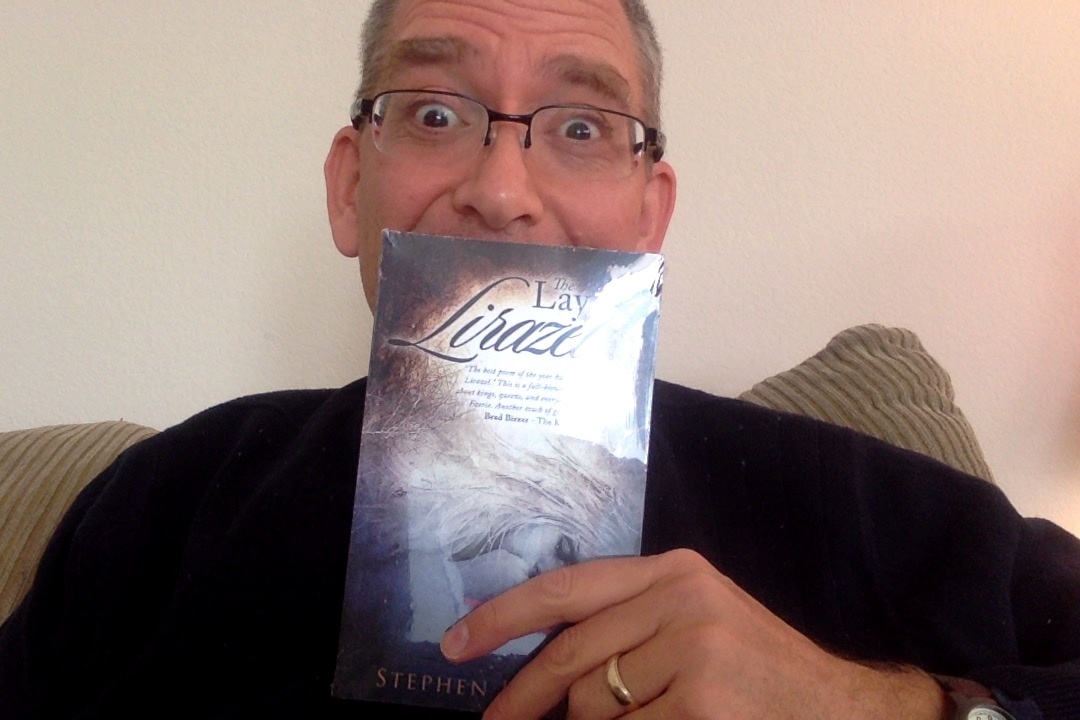
Photo on 11-15-14 at 12.59 PM #4
Goofy me, holding a thing of beauty.

Not surprisingly, given his intelligence and creativity as revealed over and over again in his work with Glass Hammer, Babb has tapped into the spirit of J.R.R. Tolkien with this book.  Indeed, imagine Tolkien as a lyricist for a prog band, and you’d have Steve Babb.  It would not be hyperbolic to claim this Lay is the sequel to Tolkien’s earliest writings, begun almost exactly a century ago–much of it in the trenches of France during the First World War.

Babb’s book has everything: drama, mystery, love, horror, and honor.  In particular, though, one can sense the rhythm and lilt of the poem.  I’m not sure if it makes me proud to be a lover of poetry or a lover of prog?  Of course, it makes me proud to be both.  Still, I’m not sure if the flow is prog, or if prog’s flow is poetic.

Too little poetry is published and almost never in the form of a lay.  Babb has proven his creativity repeatedly in his music and his lyrics.  As I’ve gotten to know Steve over the past two years, I can also state he is a man whose integrity matches his creativity.

What I now hold in my hands is a thing of beauty.  Congratulations, Steve.  Like Neil Peart, you never stop.  You not only get better and better in your craft, but you also take your experience into other realms.

All to the good.

For information, go here.