

Category: progressive rock music
Not Otherwise Specified: In Search of Personal

Not Otherwise Specified started as a one-man project back in December 2008, led by multi-instrumentalist Craig Kerley. During the period of six years, Kerley released two studio albums: “Judgement” (2011) and “Projective Instruments” (2014). Not so long ago, Not Otherwise Specified switched to a full band, with tendency of performing live. About this and more than that, we talked with Kerley.
Do you have a specific approach when you work on a song?
I like to think of my approach to songwriting as a disorganized trial and error method. It’s kind of an out of body experience where I sort out ideas that suck from the ones that I like. I generally start out by jamming on one instrument or another and then taking pieces of that jam to create some structure. Basically, I just keep messing around with the songs until they come together into something I enjoy listening to. Once that happens, the song feels finished to me.
How did the writing process for your second album “Projective Instruments” go?
The writing process for this album was pretty laborious. It took me about two years to complete. Generally, I tend to create a skeleton of the song and then listen to it over and over again while taking notes on what needs to be changed, removed, or emphasized. I then go back into the studio to make these changes and listen again, following the same process. With “Projective Instruments” I went through this loop many times before I felt the songs were at a place I was comfortable with. There comes a time, when you realize you could keep editing and revising the song forever. In the end you just have to let go and believe what you created is good enough.
 What was the inspiration behind “Projective Instruments”? Are there any stories behind the choice of name?
The name of the album is based in both the process I use for creating it and my hopes for how it will be digested by those who listen to it. In the field of psychology, projection is the action of taking underlying traits, conflicts, and belief systems, which we are often unaware of on a conscious level, and placing them on an abstract stimulus, such as an inkblot. When this happens, we take these stimuli, which have no meaning in of themselves, and interpret them based on our own personal meanings. A projective instrument is at its most basic level an abstract stimulus, which allows us to project our own meaning onto it. That is my hope for this album. I would love for those who listen to it to find their own personal meanings to attribute to the songs.
Two songs on the album are over 10 minutes. What does writing a song with an extended structure allow in comparison to writing a song with standard length?
I believe that writing longer songs provides an opportunity to more fully develop lyrical and musical concepts and images. Standard length songs are great for conveying singular emotional messages of low complexity, like anger, happiness, fear, and sadness. Long songs, however, allow you to address more complex emotional concepts like ambivalence, uncertainty, nostalgia, and contentment. Additionally, longer songs allow you to convey the process of changing emotional reactions as a function of time and maturity. I feel strongly that there is a place for both formats in modern progressive rock.
“Projective Instruments” was mixed and mastered by Jerry Guidroz, who previously worked with the likes of Transatlantic, Neal Morse, and Flying Colors. In what measure did he contribute to the album’s final form?
Jerry was the first set of outside ears I had on the project. It was wonderful having such a talented individual giving me feedback on what he felt would work best in the sound.
Why did you choose to close the album with a cover of Peter Gabriel’s song “Signal to Noise”? Are there particular reasons behind the choice of this tune?
The primary reason for choosing it is that it has been one of my favorite Peter Gabriel songs for a long time. It has an incredibly understated power in its chord progressions and presentation. So I thought, “What would it sound like if the power wasn’t understated?”

Not Otherwise Specified fully transformed from being a one-man project to a band that’s supposed to hit the road. Have you already performed live? Who is in the band, and were any of the members previously involved in any other bands or projects?
Our first live performance is a band will be on Saturday, November 15 at Sweetwater Live in Duluth Georgia. We are very excited about this opportunity to play in front of a live audience, and look forward to many more opportunities in the future. The band itself is made up of six very talented musicians. Ben Daniels (guitar) and Keith Tuggle (bass) have worked together for several years writing very creative progressive rock. Jeff Wheeler (drums) is a big fan of progressive rock and has played in many original and cover bands in the Atlanta area. Brian Arnold (Guitar) is a student of 80s and 90s metal and rock’n roll, and has played in many bands over the years. Marty Gelhaar (keyboards) has had a long career of playing for and providing technical support to many of the top touring acts in the nation. He is a student of Prog and as had the opportunity to play keyboards live for bands such as Yes and Kansas.
You already started working on new songs with the new line-up. How did it go so far?
It’s great having other writers in the process. We are still at the ”rough draft” phase of writing the album, but have about an hour worth of material so far. I am getting many new perspectives from the band members. As a result, I believe this next album is likely to rise to a whole new level.
Do you have a clear vision with Not Otherwise Specified, in terms what do you want to achieve with the band?
More than anything else, I just want people to have the opportunity to hear our music. Our goal is to keep putting out the best progressive rock we can, and to have as many opportunities as possible to perform that music live for the people who appreciate it.
Check Not Otherwise Specified online at:
Sunshine of Your Love: Thoughts on Jack Bruce and Cream
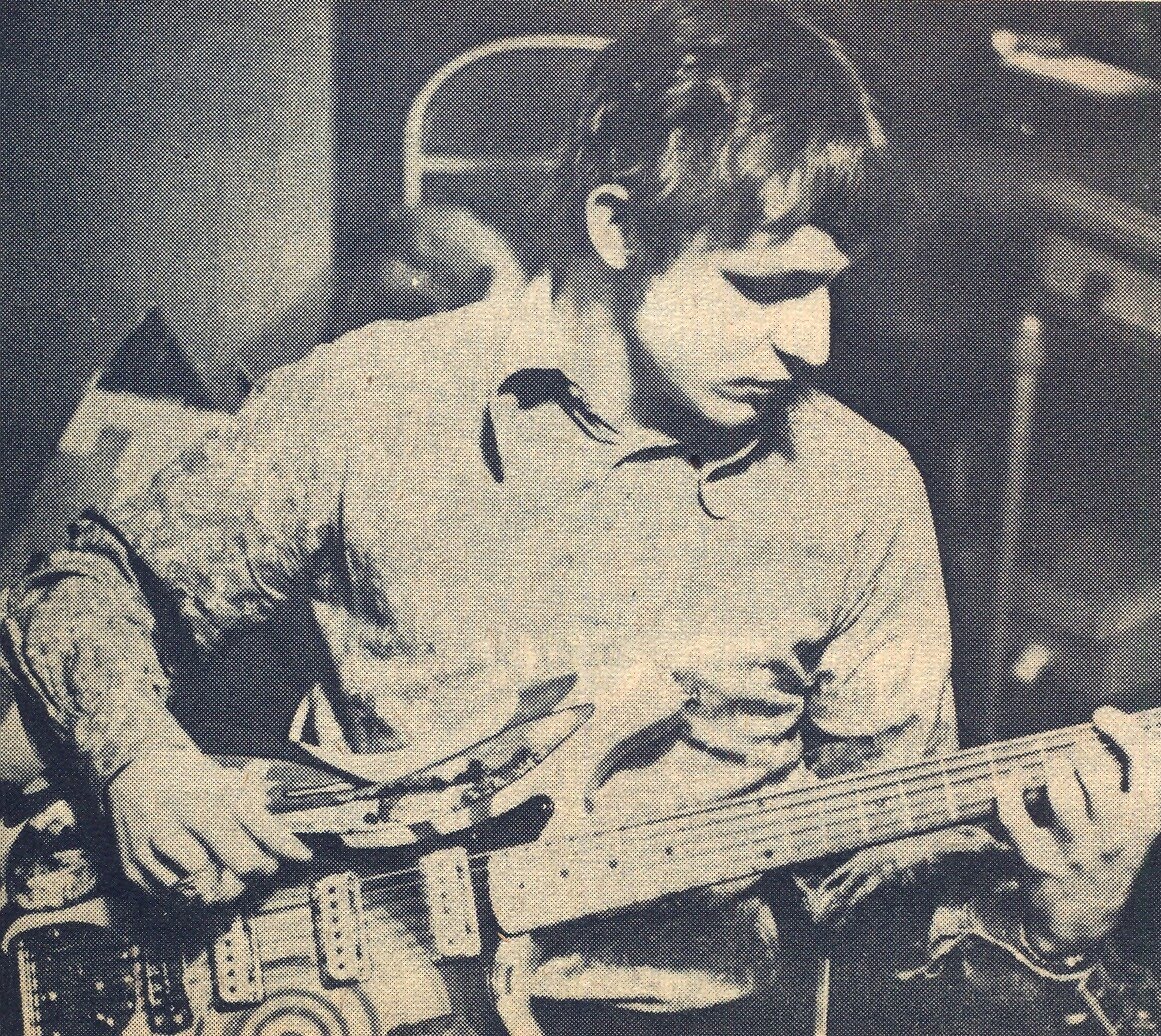 In 1968 Jimi Hendrix took the stage at the Winterland Ballroom in San Francisco, and as part of the set introduced a song that had worked its way into the repertoire: “Right now we’re gonna do a song by some real groovy cats, it’s too bad they are breaking up, it’s one of the heaviest groups in the world . . . it’s not sayin’ we can play the thing better than them, it’s just sayin’ we dig the cats and dig this song and we’d like to do it our own way, which will be an instrumental jam.” The song was Sunshine of Your Love, and the group Hendrix referenced was (The) Cream.
Hendrix’s powerful instrumental take on the song caps a double tribute: Cream wrote Sunshine of Your Love on the heels of seeing Jimi Hendrix perform in London, as a response to the jaw-dropping challenge he proposed as a performer and songwriter, and in its riff and melodies the song holds at once the past and future of rock and roll.
The song was penned by Jack Bruce, Cream’s bass player, chief vocalist, and lead songwriter. Bruce led the life of a musical prodigy, a force that pushed and pulled his similarly-gifted peers, to such an extent that Ginger Baker, arguably Britain’s most influential drummer and certainly one of Bruce’s few musical equals, left one band (Graham Bond Organisation) because of him and started another band (Cream) despite his presence. Guitarist Eric Clapton — another equal — insisted Bruce be a part of Cream, and Baker relented because, as he noted, both Clapton and Bruce had the same innate gift of “time.”
Since Jack Bruce died last week, I’ve thought a good deal about what Sunshine of Your Love, Cream, and this firebrand musician have meant to me through the years. Cream had hits, lots of hits, scattered across their three studio albums, but Sunshine of Your Love stands out among their work (“Crossroads,” rightfully still played on classic rock radio, being the highpoint of their live recordings). The riff is simple, as if, yes, they were taking cues from Hendrix, who disassembled the blues root of rock and roll, slowed the rhythms down, emphasized their laziness while adding blistering solos and an African funk. Separation of bass and drums and guitar became important, as if the transformation was about creating rather than filling space. In Sunshine of Your Love, Cream takes the Hendrix aesthetic and writes it large, in four minutes and ten seconds mapping Led Zeppelin, Black Sabbath, and most Heavy music for the next half century. It’s a blues made universal, and because of Hendrix’s own reaction one doesn’t get the idea that Cream was somehow playing Elvis to Hendrix’s Little Richard but, on the contrary, like Hendrix, actually embodied a much-needed cultural embrace. This wasn’t just heavy music for white boys.
Cream chugged hard and burned hot for two years before they couldn’t stand it or each other any more. Their recorded live work is mind-blowing but not for the faint of heart, and while Clapton became the superstar, with some justification, it was Bruce and Baker that ran the engine, driving each other mad while simply driving Clapton to greater heights. Sunshine of Your Love became ten then fifteen minutes long, the jams endless, the power draining as quickly as it had mounted. Clapton left for Blind Faith, not expecting Ginger Baker to follow even though he did, and Bruce was on his own. He released a fabulous solo record, Songs for a Tailor, with very non-Cream arrangements and approaches, and then from the perspective of a Cream fan like myself kind of drifted. He landed in projects like the one where he became the bassist for a power trio that Cream inspired, Mountain, hooked up with Robin Trower in yet another power trio, rid of Cream but not rid of Cream, and played various so-so groups with the jazz rock dudes of his era. He reunited with his Cream mates in 2005 for a set mostly plagued by the adult rock smoothness Clapton’s purveyed since 1972 (the stellar Pressed Rat and Warthog, a Baker chestnut that will never die because of sheer weirdness, notwithstanding). The grit, the volume, the burn were regrettably, inevitably, flattened. As with Clapton, as with Baker, Bruce’s best work was when he was a journeyman, with Cream.
It is a catalogue every bit as thrilling as it is brief. Those core Cream records remain embedded in the rock psyche, the elephant in any rock and roll room, their centerpiece Sunshine of Your Love.
Some Favorite Jack Bruce Moments
The Coffee Song
NSU
Sunshine of Your Love
Tales of Brave Ulysses
Deserted Cities of the Heart
Never Tell Your Mother She’s Out of Tune
Tickets to Waterfalls
Theme from an Imaginary Western
RochaNews: New Pineapple Thief Now Out
I’ll have a review of Magnolia soon, but let me state it’s the best TPT album since WHAT WE HAVE SOWN.
Thanks, Brian Rocha!
****

THE PINEAPPLE THIEF LAUNCHES “MAGNOLIA” ACOUSTIC PERFORMANCE VIDEO 10th album “Magnolia” out now on Kscope |
|
ENGLAND -U.K. rock troupe, The Pineapple Thief, has launched a clip of the beautiful title track from its new album Magnolia being performed acoustically by frontman Bruce Soord. Check out the video on the band’s Kscope page at:http://www.kscopemusic.com/artists/thepineapplethief or directly on Vimeo at:https://vimeo.com/110921949. “Here’s a stripped back acoustic version of ‘Magnolia’ I performed in my studio recently,” commented Soord. “All the songs on Magnolia began their life this way, on acoustic guitar and vocal, so it was really nice to go back and play this song again, in the form as it was when it was born.” Magnolia, which released last September on Kscope, can be purchased on iTunes at:https://itunes.apple.com/us/album/magnolia-deluxe-version/id905388556, Amazon.com at:http://www.amazon.com/gp/product/B00LVH0SW6/ref=dm_ws_ps_cdp?ie=UTF8&s=music or through the Kscope web-store at:https://www.burningshed.com/store/kscope/. The new album is currently streaming on Soundcloud at:https://soundcloud.com/kscopemusic/sets/the-pineapple-thief-magnolia-album-stream/s-tlChQ. A music video for the single “Simple as That”can be viewed on YouTube at:http://youtu.be/V3GMvXXd8a8. Magnolia follows the acclaimed 2012 album All The Wars and marks an important turning point for The Pineapple Thief, as it expands its musical horizons beyond the progressive sphere. Recorded at Snap Studios and mixed at Strongroom Studios in London, Magnoliarepresents the ultimate culmination of Soord’s ongoing quest to raise spirits and connect. A devastating yet uplifting collection of 12 beautifully crafted songs, it showcases the band’s intuitive chemistry and soulful demeanor, cramming a vast array of emotional shades and inspirational ideas into its 47 mesmerizing minutes.  1. Simple as That (04:01) 2. Alone at Sea (05:21) 3. Don’t Tell Me (03:35) 4. Magnolia (03:47) 5. Seasons Past (04:14) 6. Coming Home (03:06) 7. The One You Left to Die (04:19) 8. Breathe (02:35) 9. From Me (04:31) 10. Sense of Fear (04:31) 11. A Loneliness (03:22) 12. Bond (04:31) “‘Magnolia’ is a gorgeous album – immaculately produced, and assembled with real love and imagination” – Classic Rock Magazine (U.K.) “This is a fearless, consistently lovely and beautifully executed album that’s sure to be cherished” – Prog Magazine (U.K.) – Lead album review “‘Magnolia’ proves that The Pineapple Thief is still at the top of its game” –RebelNoise.com Formed in 1999 by founder and chief songwriter Bruce Soord as an experimental bedroom project, The Pineapple Thief has since continued to evolve and refine its sound. The group is seen by many as one of the most interesting and innovative rock bands the U.K. has produced in recent years. Previous albums like Someone Here Is Missing (2010) and All The Wars (2012) have made The Pineapple Thief’s reputation and fan base stronger, resulting in interest from a wider audience. With a new, expanding sound, Magnolia has all the potential to bring The Pineapple Thief to the masses. This, the band’s 10th record, could not only be a milestone, but also a mainstream breakthrough for the band. With Magnolia, The Pineapple Thief has created 12 musical gems that defy all classifications – anthemic, catchy, intense, honest and straight from the heart. The band will head out on a European tour later this month in support. -###-
|

| The Pineapple Thief online…
www.facebook.com/thepineapplethief www.twitter.com/pineapplethief The Pineapple Thief is… Bruce Soord – vocals, guitar |

ProgSphere News: Opus of a Machine
|
OPUS OF A MACHINE to Release Debut “Simulacra” on November 16th Upon their inception in 2013, Opus of a Machine has been stripping away the macho pretence of modern metal unlike any other band today. Their debut, “Simulacra” is fast, energetic, expressive and emotive. An explosion of high-energy heavy rock and colourful, progressive elements that infers little of the current paradigm of heavy music today. Taking with them the raw conviction of bands separate from the zeitgeist of progressive rock, Opus of a Machine bends the traditional, stares down the barrel of experimentation and explores sonic landscapes too fearful for most. Formed in 2012, Opus of a Machine began as a labour of love for guitarist Zac Greensill and vocalist/guitarist Mitchell Legg, who over a large period of growth, laid the foundations for their debut LP. With bassist Dale Prinsse and drummer Trevor Gee joining in mid 2013, the energy and passion that lifts their recorded work made it’s way to the live arena. Following a string of successful, high-intensity live shows with the likes of Caligula’s Horse, Jericco, Guards of May, Mass Sky Raid, The Orchard and other outstanding bands throughout 2014 in anticipation of their debut album, Opus of a Machine is forging a path onto the Australian and international stage. With influences such as Opeth, Tool, Radiohead, Devin Townsend, Karnivool, Metallica, Dead Letter Circus, TesseracT, Thirty Seconds to Mars, A Perfect Circle, 12 Foot Ninja, Oceansize, Rage Against the Machine, Voyager, Alter Bridge, Katatonia, and many others, Opus of a Machine is a limitless exploration of the vigour and intensity of metal fused with the subtleties of experimental rock. Opus of a Machine’s debut “Simulacra” is out on November 16th. The album is available for pre-order on Bandcamp, where two songs taken from the album are available for streaming. Opus of a Machine is: Mitchell Legg – vocals, guitars Dale Prinsse – bass Trevor Gee – drums Zac Greensill – guitars Opus of a Machine online: |

Press contact:
Nikola Savic / Prog Sphere PR
Gentle Storm Cover Art
Everyone’s favorite Arjen has just released this on Facebook. Looks gorgeous.
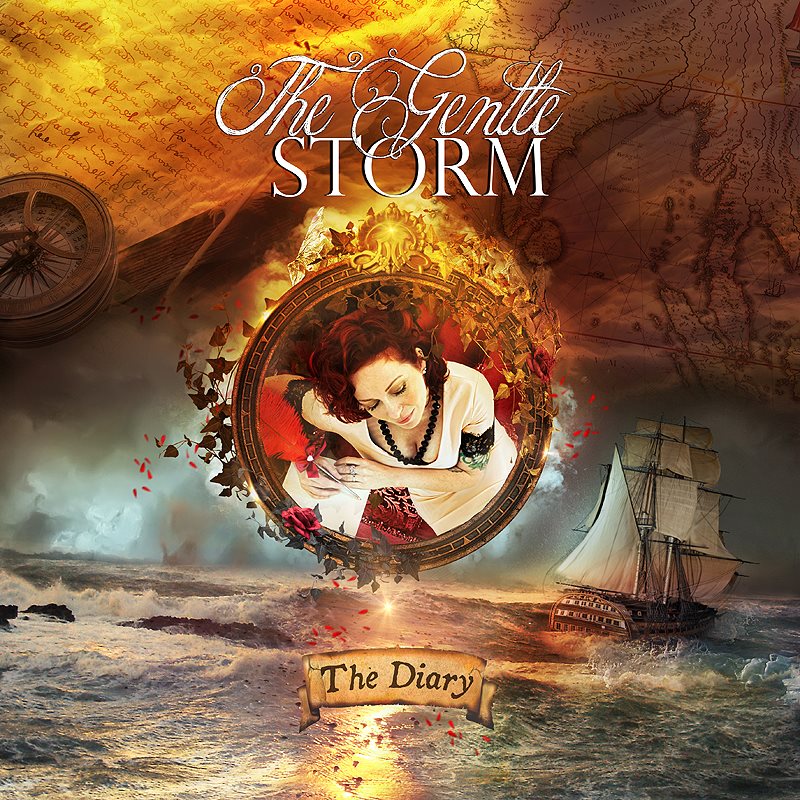
I’m very proud to present you the front cover of our upcoming The Gentle Storm album with Anneke van Giersbergen! The album title is “The Diary” and the image was made by the very talented Alexandra V Bach. More about the concept soon!–Arjen Lucassen, November 4, 2014
Andrian Belew Power Trio in Boulder
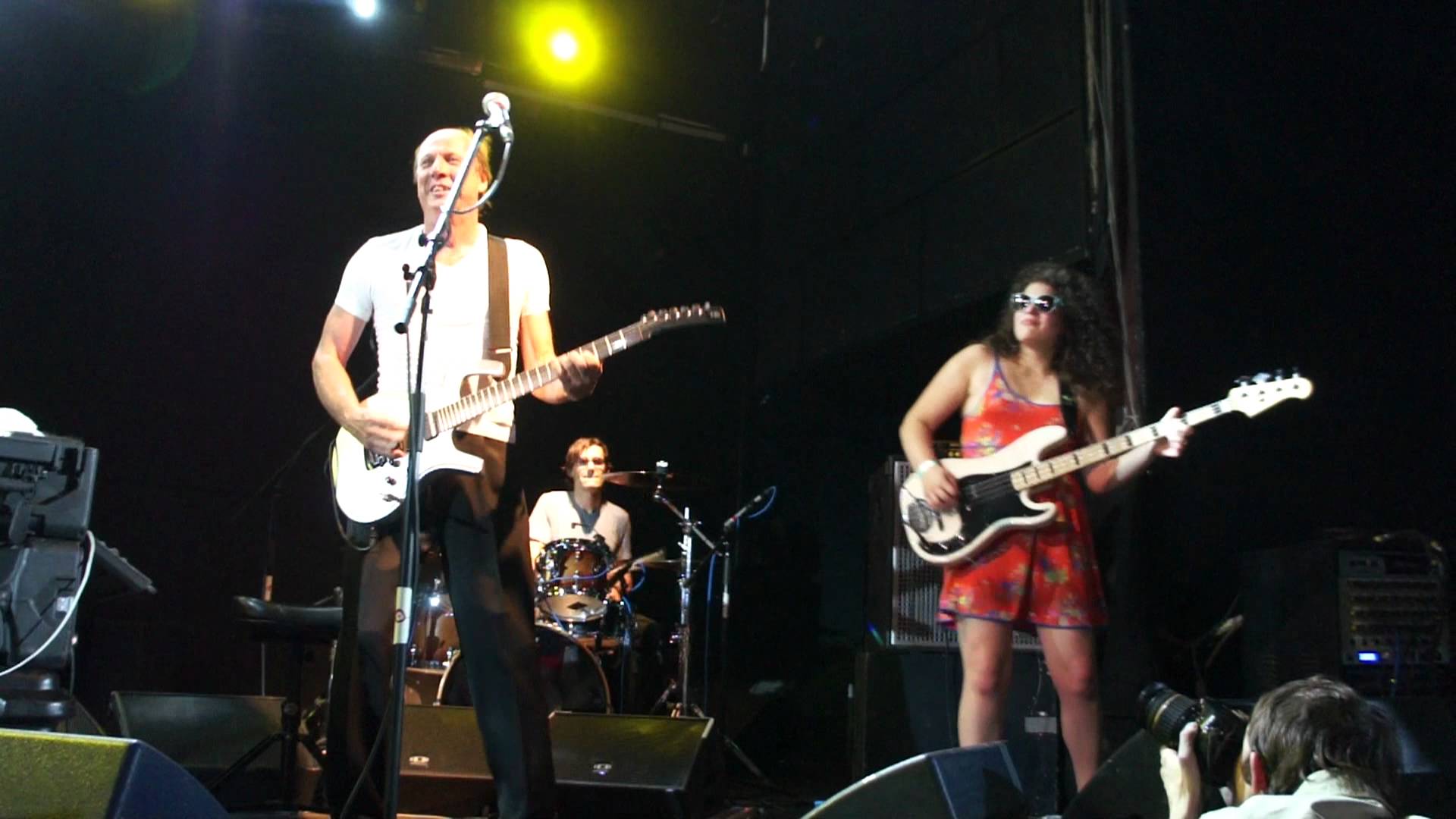
Adrian Belew Power Trio
Tuesday, Nov. 4, 2014
7:30pm
Boulder Theater
http://www.bouldertheater.com/event/adrian-belew
Adrian Belew (born Robert Steven Belew, December 23, 1949, in Covington, Kentucky) is an American guitarist, singer, songwriter, multi-instrumentalist and record producer. He is perhaps best known for his work as a member of the progressive rock group King Crimson (which he has fronted since 1981) and for his unusual impressionistic approach to guitar playing (involving arresting, yet frequently melodic sounds more akin to animals and machines than to standard instrumental tones).
Widely recognized as an “incredibly versatile player”, Belew has released nearly twenty solo albums for Island Records and Atlantic Records which blend Beatles-inspired pop-rock with more experimental fare. His 2005 single “Beat Box Guitar” was nominated for a Grammy in the Best Rock Instrumental Performance category. In addition to being a member of King Crimson, he is also in the more straightforward pop band The Bears and fronted his own band, “Gaga”, in the late 1970s and early 1980s. He has worked extensively as a session and touring musician, most famously with Talking Heads, David Bowie, Frank Zappa, and Nine Inch Nails.
Belew has recently moved into instrument design, collaborating with Parker Guitars to help design his own Parker Fly signature guitar. This guitar is noticeably different from the standard design, containing advanced electronics such as a sustainer pickup and a Line 6 Variax guitar modelling system. It is also MIDI-capable, allowing it to be used with any synthesizer with MIDI connectivity.
[A huge thanks to Laura Kriho, one of my colleagues at CU, for letting me know]
Now, It’s the Feast of All Hallows
Another glorious eve of All Hallows has passed, and our mocking of evil has succeeded admirably. Our efforts have secured the celebration today of the Feast of All Hallows, All Saints. Enjoy goodness, truth, and beauty–in a world without end.
Happy Halloween!
Happy Halloween, Progarchists! Enjoy some Kate Bush.
 Progarchy