Who wouldn’t love the sound of Billy Reeves! He possesses an immaculate, educated English voice. And, of course, there’s a great brain and soul behind that voice.
Enjoy Podcast 67.
The TesseracT Special
We speak to guitarist James Monteith about what makes this new album (their first for Kscope, Polaris) different from the predecessors.
Plus: how to vote for Steven Wilson in the Classic Rock magazine awards, and details of a new album from Norweigan art-rock masters, the mighty Gazpacho.
In this podcast (all from Polaris): Dystopia Hexes (collaboration with Martin Grech) Survival Seven Names
There is a saying about an artist’s difficult second album that usually applies to bands whose debuts gained a very little of recognition. Advent Horizon from Salt Lake City are in a similarly difficult juncture. They knew that if they wanted to start making waves they had to create an album who would wake people up, an album that would take attention from a bored music listener.
Advent Horizon haven’t gone out of their way to entirely distance themselves from 2011’s debut “Immured,” but instead they have refined and honed their strengths. The energy from the mentioned debut is still present and is multiplied by better songwriting, performance and production.
Using the “progressive” tag to describe “Stagehound” really does very little to explain Advent Horizon’s instinctive grasp of melodicism. They’ve made decision to stay away from everything that is nerdy on the modern progressive rock/metal scene, and have instead stuck close to the softer, more focused songwriting. Instead of muddling Rylee McDonald’s vocals, Advent Horizon use heavy, tonal guitar lines and atmospherics to lose the listener in the album’s sweetness.
The album opens with “Invasion Theorem,” a decent display of the band’s vows to address themes in a more direct way. Much more successful is the mid-album instrumental peak “Magic Chef,” which shows Advent Horizon’s multifaceted surface.
Perhaps unsurprisingly for an album written by prog youngsters, this is a record best listened to as a whole. The second half of “Stagehound” has all sorts of really amazing sections. It’s worth spending the time with the record again to reveal them. This is a sophomore effort that truly outplays its predecessor.
Listen to “Stagehound” on Bandcamp. Advent Horizon are on Facebook too.
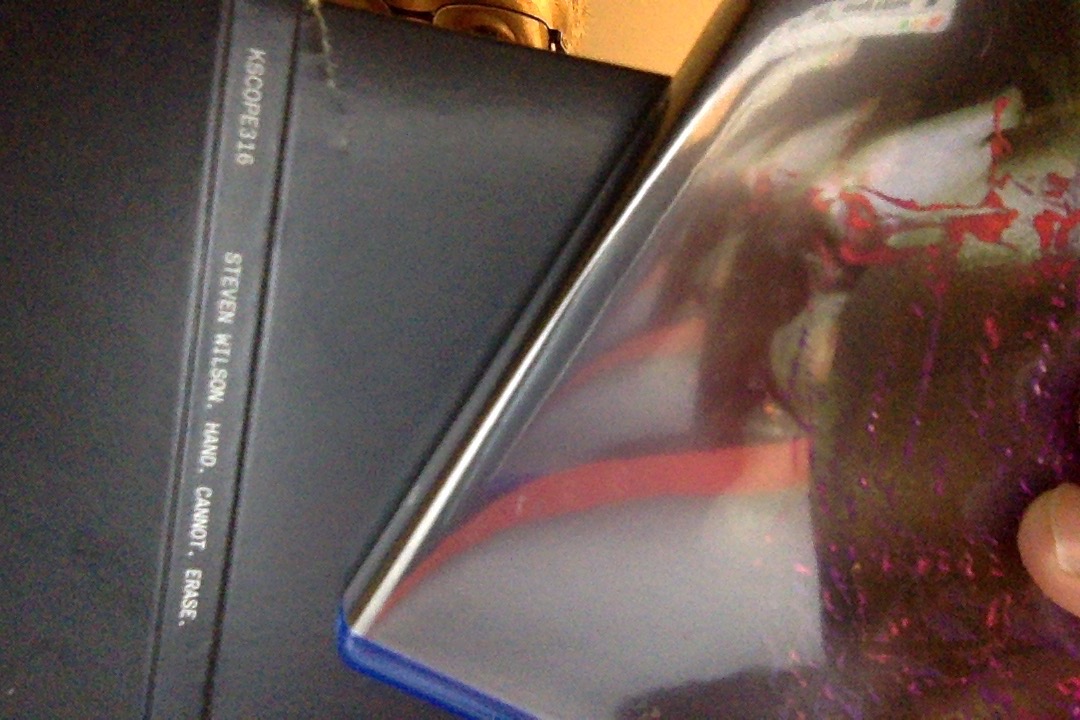
The blu-ray version of HAND.CANNOT.ERASE. Perfect sound, disappointing but sturdy packaging.
I’ve always been an audiophile (rather snobbishly), but I’ve also never quite understood the technology behind good audio. Thank the good Lord for friends such as Craig Breaden, Kevin McCormick, and Carl Olson who have so patiently explained the details to me. If I understood what they so kindly told me, I only did so for a moment or two. My fault, not theirs!
I do, however, very well know what I like and what I don’t like.
A few albums have rather happily blown my ears away over the years. I can think of many, but a few stand out rather dramatically. The production on 90125, Songs from the Big Chair, Skylarking, Afraid of Sunlight, Space Revolver, Night, The Underfall Yard, Fog Electric, and Le Sacre du Travail never in anyway become boring or tiresome. There’s always something new to discover in the production of each. And, each listen reveals a new aspect of beauty in the art.
And, the same is true of every single thing Steven Wilson has released, whether with Porcupine Tree or solo. For what it’s worth, I think Rob Aubrey and Steven Wilson are the two most important engineers and mixers of our day.
The only thing better than Wilson on CD? Wilson on blu-ray. Having fallen rather in love with Wilson’s fourth studio album, HAND.CANNOT.ERASE., I decided to order the blu-ray. Holy schnikees, am I glad I did. I’d write something cliché such as “music to my ears,” but that would be cheesy. Still. . . .
The good. The sound is nothing short of amazing with the blu-ray. Even though I can’t quite understand the technology as to why this is so much better (though, of course, there’s gobs more data on the blu-ray), it is. The sound is perfectly crisp. This is especially important given how precise every note is—written as well as played—on Hand.Cannot.Erase. The opening track echoes the sound of three well-known Canadian proggers. This is Rush done with no English reserve! Just pure imitation in the most flattering sense.
The album, of course, has been reviewed and reviewed—including by two progarchists. So, I won’t rehash what’s been said and written. I’ll only note, that I love this album almost as much as GRACE FOR DROWNING—my favorite album from Wilson and one of my top 25 albums of all time.
The good, part two. Extra tracks and bonus features. The blu-ray includes a number of additional tracks, though these are generally variations on the original album. Still, quite enticing. It’s interesting to listen to the instrumental version of the album as I have a hard time not hearing Wilson’s distinctive vocals and profoundly moving lyrics.
The good, part three. As always, the documentary that accompanies the album is equal parts enlightening and weird.
The thing just ripped/popped upon pulling out the CD booklet. Come on, KScope, you’re so much better than this.
The bad. The only bad thing is the HAND.CANNOT.ERASE. booklet. The booklet that comes with the CD is far superior to the one that comes with the blu-ray. The blu-ray booklet only has about half of the photos the CD booklet has. Considering that the blu-ray booklet is quite a bit larger per page, this is just bizarre. Indeed, while the CD booklet feels lovingly crafted, the blu-ray booklet feels a bit like something Costco might produce. Good, but middling. I really love what Kscope produces in terms of musical quality, but the company never seems to have gotten its packaging down to an art or a science. I’m quite gentle and protective of everything I purchase for my music collection, but my Kscope CD packaging ripped open when I lovingly removed the booklet to read. It wasn’t as much a rip as it was a pop that turned into a huge and ugly rip. As OCD as I am, this is quite unsettling. And, unfortunately, this isn’t the first time I’ve had this happen with Kscope releases. As often as not, the digibooks booklets—held by only staples—fall out all too frequently with Kscope products. I hope they work on this. Those of us who are willing to pay large sums of money for physical products want the physical products we deserve.
If you’ve not purchased the album yet, I highly recommend getting the blu-ray. Though the printed material that comes with it isn’t up to the perfection of the music, it is sturdier than what you’ll get with the CD packaging. And, the sound of the blu-ray outweighs any objection or deficiency.
Thank you, Mr. Wilson. I continue to learn from you, your art, and your excellence.
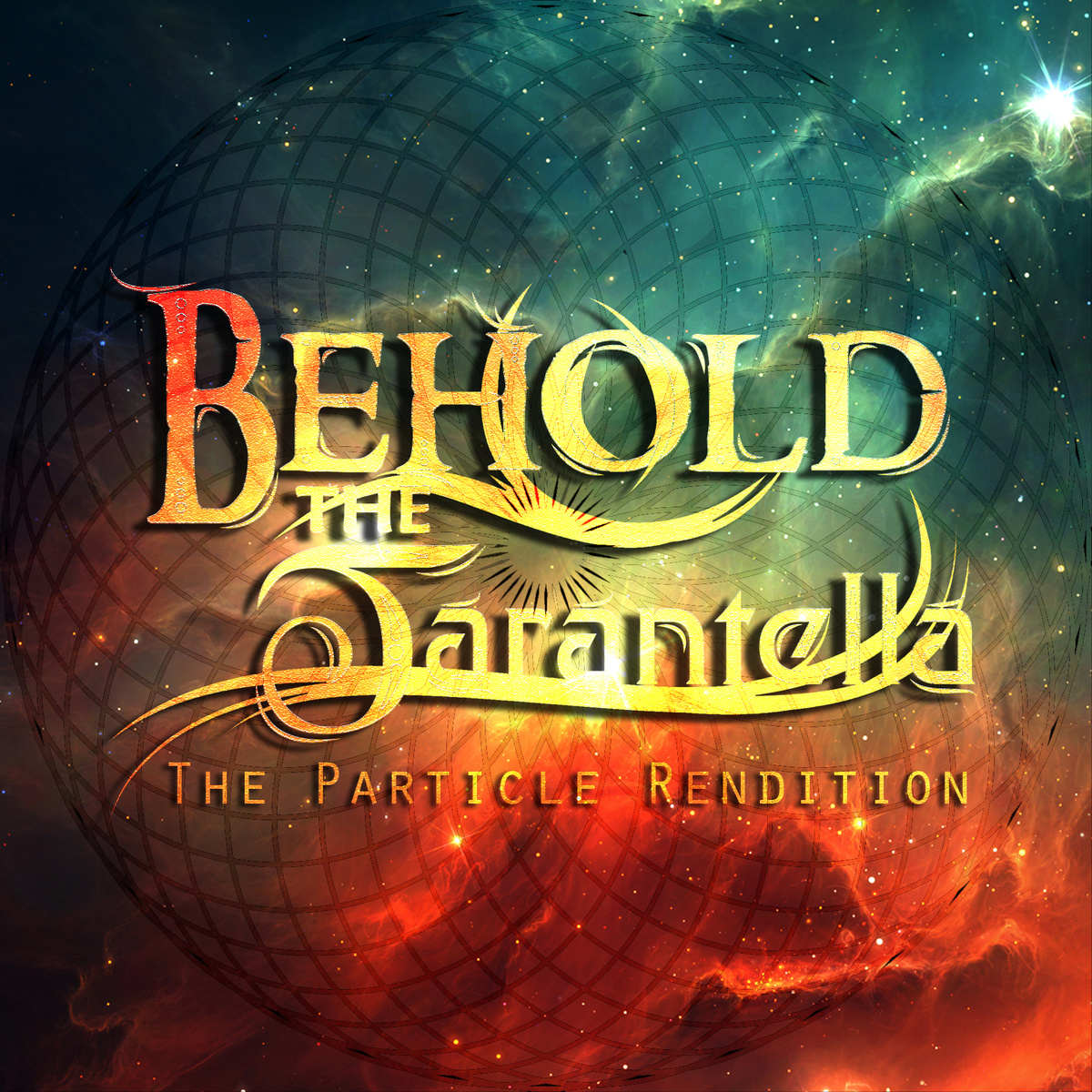
Behold, the Tarantella is a project of 24 year old Matty Apel who released his debut EP “Resonance” last year, and have just put out two singles for his upcoming full length titled “The Particle Rendition.” Matty is also involved with a band Phi, and about this all he talks in an interview with Progarchy.
How would you describe the first two singles taken from the upcoming album “The Particle Rendition”?
I would have to describe them as experimental in many ways. Each song is part of a developmental process in my writing style. I’m experimenting with different techniques I’ve learned and taught myself over time while trying to allow them to fit the story line I have in place for this album.
What can be expected from the rest of the material that will take place on “The Particle Rendition”?
Quite a bit, actually. The plan is for it to be a concept album that not only has in depth description of what’s taking place, but has music guiding your emotions through each scenario in the album. I want people to really paint a picture of what’s happening.
I suppose that you record your music in a home studio environment. What are the drawbacks and benefits of working in such surrounding?
Is it that easy to pick up on? Haha! Honestly, I don’t really find any drawbacks in recording my own music. I don’t have a time frame to record my music and I have the ability to mix and master it the way I want it. It’s not perfect, but I’d take it over something that’s been over-processed.
What are the themes you explore in your lyrics?
“Resonance” was all about the expansion of your mind and becoming comfortable in the body you inhabit. “The Particle Rendition” will still touch on that subject, but will go further by giving you a storyline and characters to follow. I’m basically writing this new album as a movie script or a play. At this point in time, I don’t want to reveal too much about the story and the ideas I’m playing around with, but I’m hoping to make it well worth the wait.
How much the music you make is the actual reflection of your personality?
I particularly enjoy this question, because art should be a reflection of who you are in some way. That’s why we all seem to have our own unique touch on the things we do. I’d like to say that the music is a pretty good reflection of who I am and the things that cross my mind on a daily basis.
Are you satisfied with Behold, the Tarantella’s position, and what would you love to change and improve?
It may seem cheesy, but I’m extremely satisfied with my current position, because I’ve gathered a larger fan base than with any other previous project. 500 likes on Facebook may not seem like much, but I’m grateful for every single one of them. So THANK YOU to all of you fans out there. I really appreciate all of you.
Have you ever experienced those moments when a song, or an album can change your views on something?
All of the time! Painted in Exile’s “Revitalized” is the best example, because the chorus contains a metaphor that I live by every day. The Contortionist’s album “Language” is also another incredible album that really spoke to me on a personal level. The flow of the music was extremely beautiful as well.
What do you do in your every-day life?
My life consists of music, video games, hanging out with my girlfriend and other friends, enjoying nature and the outdoors, chilling with my cats. I take it all day by day and I’m just grateful for what I have, because I know it’s more than some other people have even though it may not seem like much.
Are you involved in any other bands or projects beside Behold, the Tarantella?
I actually am involved in another project. The project is called “Phi”. We are a 5-piece band with influences like Animals as Leaders, The Contortionist, The Helix Nebula, Plini, and many more. You can check us out on our Facebook page. http://www.facebook.com/PhiBandia
What do you think about djent?
If it’s music, I give it a chance. I’ve jammed Meshuggah, Volumes, and Aristeia to name a few. I really enjoy the way they throw some crazy time signatures and tempo changes at you.
What are your plans by the end of the year?
My plans by the end of the year are to hopefully get out and play, release some new material, and just enjoy life. I haven’t been on the stage for over 3 years and it’s calling my name, so hopefully I can find a way to make things work out for both Behold, the Tarantella and Phi. A lot of people tend to set goals without enjoying the journey to hitting their goals, and I personally don’t want to be the kind of person that forgets what it took to get there.
Listen to Behold, the Tarantella on Bandcamp, and like the project on Facebook. You can also follow Matty’s other band Phi on Facebook.
Available now in paperback and ebook at amazon.com.
In his best-selling book, Ghost Rider, the Canadian drummer not only proves to be an excellent writer (imagine Willa Cather and Jack Kerouac as one person; a bizarre combination, I know, but an accurate one), but he also reveals himself, yet again, a serious and stoic social and cultural critic. Here are two sample passages from Ghost Rider.
The first day in Mexico was Selena’s birthday, and I had made careful plans on how to ‘memorialize’ that day. Early in the morning, I walked to the big cathedral in the Zocalo, went inside and bought two princess-sized votive candles (the biggest they had, of course) and lit them in front of the chapel for ‘Nuestra Senora de Guadalupe’ . . . . I sat there awhile, and cried some (well, a lot), amid the pious old ladies, tourists, and construction workers.[1]
Later in the book, in a less autobiographical nature, he explains his own vision of what art is.
I once defined the basic nature of art as ‘the telling of stories,’ and never had I felt that to be more true. I played the anger, the frustration, the sorrow, and even the travelling parts of my story, the rhythms of the highway, the majesty of the scenery, the dynamic rising and falling of my moods, and the narrative suite that emerged was as cleansing and energizing as the sweat and exertion of telling it.[2]
Each of these passages shows Peart at his deepest. The side the craves beauty and the side that craves telling the world about the beauty he has seen.
His travels also opened Peart to a number of personal revelations. Overall, he believed that “the elemental ‘faith’ in life I used to possess is completely gone,” and that with such an erasing of the past and its securities, “every little element of my former life, behavior, interests, and habits, was up for re-examination.”[3] Two specifics also emerged in this rebirth. First, he had to accept the help of others, recognizing it as the gift it is and was intended to be by the giver. Pride had to give way to charity. Second, he came to see a more mystical side of life, well beyond his previously steady devotion to late eighteenth-century European rationalism. In one incident—that would greatly influence the next three albums—Peart encountered a man who read his fortune through Tarot cards. The reading proved so accurate that Peart ‘s “jaw dropped, and it’s still dropping.”[4]
Though most orthodox religions forbid the reading of Tarot, artists as diverse as T.S. Eliot and Russell Kirk have employed its meaning—however tragic and deep or superficial and meaningless—effectively as a form of story telling, especially when regarding character and morals. Peart does the same through his lyrics over the next several albums.
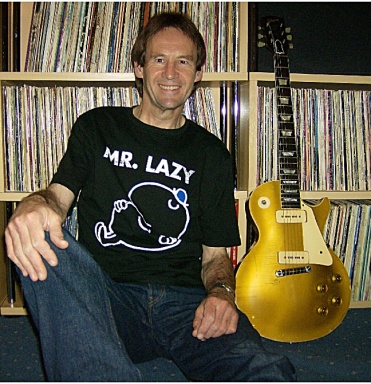
Mister Lazy he’s not. Photo borrowed from guitargonauts.info.
I’m not sure if I could exactly articulate my reasons as to why, but I’m not the least surprised that Dave Gregory’s birthday is two days away from the Autumnal Equinox. There’s a fullness and a force of the seasons not only in the calmness that radiates from Gregory’s humane qualities (he’s a true gentleman), but there’s also an intensity of life in all of his art.
Clearly, his music resides somewhere in that last joyous blast of summer love and freedom.
Regardless, happy birthday, Mr. Gregory. I know I speak for many upon many when I thank you for all you’ve given to the music world over the past four decades. Whether it’s pop, punk, new wave, rock, chamber, or prog, you give your absolute all.
The best way to celebrate such a feast? Listen and watch away!
And best of all, a brilliant interview with Dave. Well worth watching it all.
This is the entire set UTA played at ProgPower 2015 as shot by selfie-stick Guy. It’s on an iPhone so the sound isn’t perfect but the footage is pretty cool. Songs include:
1. Frozen Steel
2. Hail Of The Tide
3. Test Your Metal
4. Tonight We Ride
6. Daughters Of Winterstone
7. Realm Of Tomorrow
8. Dreamcrusher
9. Time Stands Still
10. General Of The Dark Army
I first became aware of Kevin Keller’s music through mere chance. Driving home from a family vacation at the beach, we were all tired (and sunburned!) and I turned to the “Chill” channel on the satellite radio. The miles went by as generic ambient music filled the car.
Then a track began playing that made me perk up my ears and listen closer. It wasn’t aimless synthesizer noodling; no, this was music with some depth, melody, and real beauty. Hitting the info button on the radio, I noted that the song was “Distanced”, by Kevin Keller. I made a mental note to investigate further when we got home.
I did, and I spent quite a bit of time enjoying the generous offerings on his Soundcloud site. Before I was done, I had purchased Pendulum (the album containing “Distanced”), Nocturnes, The Day I Met Myself, and In Absentia. Each one is unique, but they all feature Keller’s distinctive voice as a composer. His music has been labeled neoclassical, but it transcends categorization. In his official bio, he states that he was first a progressive rock guitarist before he moved to the piano, and you can hear that background in his music.
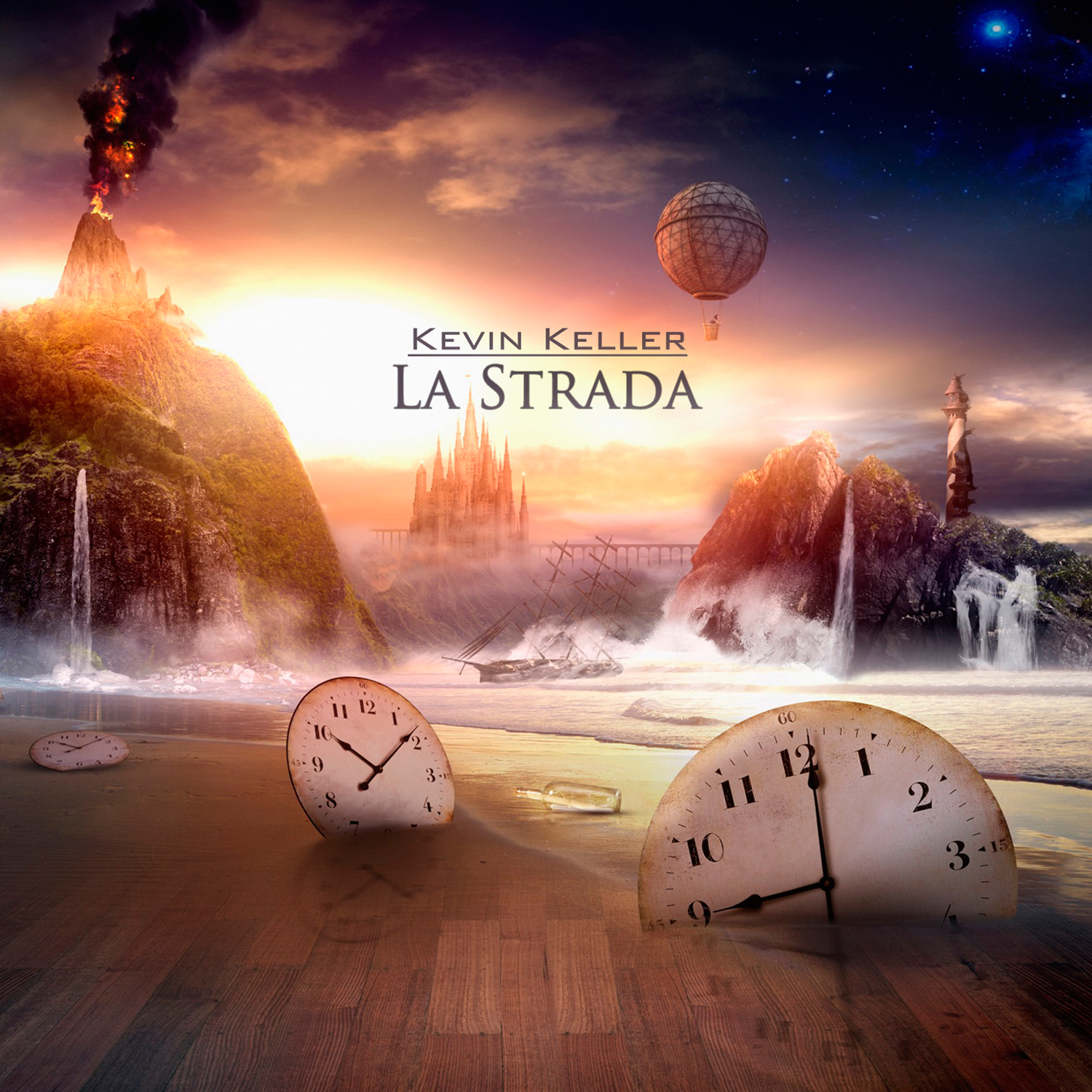
Keller is about to release a new album, La Strada, which has been crowdfunded, and it is an exceptionally fine work. It was recorded with the Salome Chamber Orchestra, with guest musician David Helpling lending his guitar talent to the title track, and vocalist Marta Karamuz contributing to the final song, “New Beginnings”.
La Strada is divided into two “sides” (are there plans for a vinyl release?), and the first one opens with “At the Start”, which is just that: a brief piano piece with understated string accompaniment that sets the mood for the rest of the album. It segues immediately into “Tunnel of Light”, which is a fascinating dialogue between Keller’s piano and the orchestra throughout, while some electronic rhythms percolate underneath. “Moments Lost In Time” begins with a delicate and somber theme on piano, but it soon morphs into an interesting mix of processed vocals, strings, and driving beats before closing with solo piano. “La Strada” features one of Keller’s most gorgeous melodies. If Rachmaninoff were alive and had access to today’s technology, he might come up with a tune as beautiful as “La Strada”. It features Keller’s piano with Eno-esque sonics that serve the melody perfectly. Side One closes with “Lightning Road”, which is another driving mix of electronic beats, piano, and strings. This song features some of Keller’s most playful and energetic keyboard work.
Side Two begins with what I consider the best track of the album, and one of Keller’s finest productions – the 9 minute, 18 second-long “Beyond The Infinite”. It begins with a rapid ostinato on piano. Layers and layers of sound are added (did Keller multitrack the piano?) as electronic percussion darts in and out from all sides. Deep, wordless vocals combine with ambient synths to provide a bed of sound that Keller uses to build controlled tension on the piano. A snatch of a spoken phrase floats by; I barely catch “The origin and purpose is to build a total…” before the disembodied voice breaks up. As piano, strings, and electronics repeat an ascending phrase, the sense of enormous energy building up is almost overwhelming. Gradually, though, the layers of sound are dropped until only piano and ghostly synths bring the track to an end.
After the sonic explosion of “Beyond The Infinite”, we definitely need some catharsis, and “All Of This Ends” provides exactly that. A stately and elegiac track featuring only strings and piano, this is the perfect response to the previous track, bringing things to a satisfying conclusion. But there is still one more song to enjoy, the beautiful “New Beginnings”. Featuring the lovely vocals of Marta Karamuz, it has hints of Philip Glass, Bach (via some pipe organ-sounding synths), and Roger Eno (not Brian). By the time it’s over, you feel as if you’ve been in a lovely dream, but it’s time to return to reality.
Since the early ‘80s, I have enjoyed the music of many gifted composers of contemporary instrumental music. While the majority of so-called “New Age” music is absolute dreck, some artists who were unjustly thrown into that genre have risen above it: Patrick O’Hearn, Harold Budd, Mark Isham, Brian Eno, Roger Eno, Robin Guthrie, and Steve Roach have all composed and produced music that will stand the test of time. Kevin Keller is also one of those special artists. He is not afraid to make music that is beautiful for beauty’s sake, and he has a deft sense of how modern electronics can enhance, not overwhelm, his compositions. He is one of the most talented composers working in music today, and he deserves the widest possible audience.
For readers of Progarchy, fans of Lunatic Soul will find a lot to love in Keller’s music. You can access it at bandcamp, itunes, and amazon. Details are at http://www.kevinkeller.com/.
Prog diva, Leslie Hunt Siebold (District 97), and her husband Chris have just announced the birth of their son, Julian Christopher. Congratulations to a truly beautiful family.


 Who wouldn’t love the sound of Billy Reeves! He possesses an immaculate, educated English voice. And, of course, there’s a great brain and soul behind that voice.




 Progarchy