Review: Jason Rubenstein NEW METAL FROM OLD BOXES

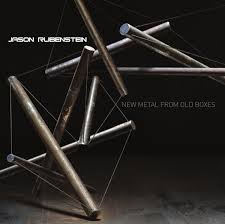
Review: Jason Rubenstein, NEW METAL FROM OLD BOXES (Tone Cluster, 2014).

new metalSo.  You’ve been a progger since the 1970s, you’re musically trained, and and you’ve enjoyed a solid if now former career as a software engineer with several major companies.  What do you do?  You write a brilliant, stunning, majestic soundtrack to your life, especially if you live in glorious San Francisco.

I exaggerate a bit, but not much.  This, essentially, is the background to music maestro Jason Rubenstein.  He has just released a rather stunning album, New Metal from Old Boxes (Tone Cluster, 2014; mixed by Niko Bolas and mastered by Ron McMaster).  While many Americans and other citizens of western civilization might simply desire new wine from old bottles, those of us who live in the republic of progarchy can rejoice heartily.  We can have our wine and our Rubenstein!

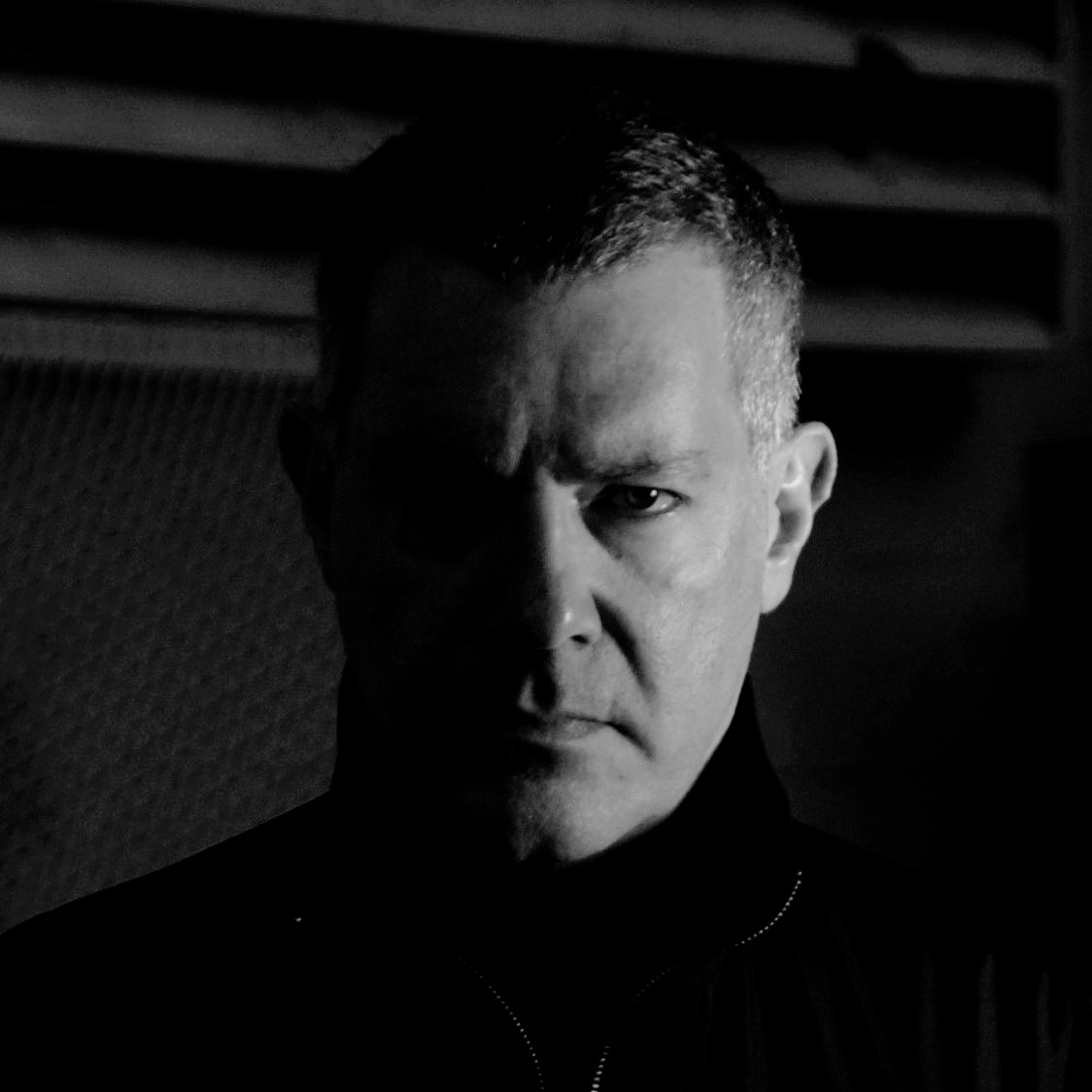
From the first listen, I was hooked.  This is a mesmerizing album best described as cinematic.  While dark and brooding (just look at Rubenstein’s photo—the guy is the perfect Hollywood dark hero), the music is always playful and mischievous, never coming anywhere near the dread of dull.

Almost effortlessly, Rubenstein employs classical jazz, noir jazz, prog, metal, classical, and jazz fusion.  If I had to label it, I’d called it “Cinematic metal prog.”  At times, it’s downright frantic, always extravagant, but never campy or over-the-top.  While this is certainly Rubenstein’s creation, he is never shy about borrowing styles from those he clearly admires.  I hears lots of The Tangent, ELP, King Crimson, Cosmograf, Cailyn, Tool, Dead Can Dance, and even Wang Chung (only from their spectacular To Live and Die in LA soundtrack)

Alex Lifeson? Harrison Ford? No.  Jason Rubenstein.
Alex Lifeson? Harrison Ford? No. Jason Rubenstein.

Rubenstein credits himself with keyboards, synths, samplers, computers, programming, and angry noises.  In terms of sound quality, this album is perfection itself.  Pardon me for employing such a Catholic term, but its production is immaculate.  Even the packaging is a work of art.  Like the music, it is dark, brooding, and industrial.  Intricate pipes and strings, smelting of iron, nail heads (in a V’ger pattern), more strings, more pipes, and, then, rather profoundly, a GQ-Rubenstein, looking every bit the Hollywood action hero.

Admittedly, looking over my review, I’m tempted to fear that I have given the impression this is just a hodge podge of musical ideas.  Please note, that nothing could be further from the truth.  This is the soundtrack of your best day.


To visit Jason Rubenstein’s beautifully designed website, go here.

Big Big Train: Banging the Drum for Real World

Oh my!

It was just the other day that Greg Spawton posted the latest fly-on-the-wall snippets of Big Big Train’s vocal rehearsals for their upcoming and eagerly-anticipated (slight understatement there) DVD recording in Peter Gabriel’s Real Worls Studios on the band’s Facebook page.

I’d just got over the excitement when – lo and behold, there’s another update, this time from the massively-talented multi-instrumentalist and BBT drummer – Nick D’Virgilio.

Enjoy the booms and crashes. I certainly did!


ELP, William Blake, and Jerusalem – The Divine Conection

Brain-Salad-Surgery-620x400

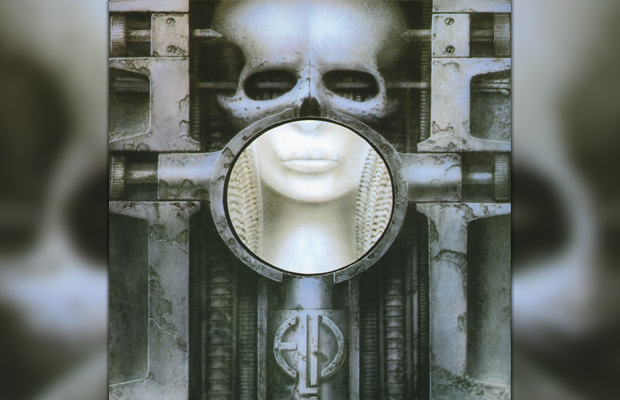
Back in the year 1973, Keith Emerson, Greg Lake, and Carl Palmer made an interesting decision regarding their album, Brain Salad Surgery. They decided to record their own version of the hymn, “Jerusalem,” and make it the first song on the new album. ELP had made a name for themselves in the world of progressive ROCK. These boys were not touring the Anglican Church circuit playing selections from the hymn book “whilst” citing the English Common Book of Prayer. Far From it. So why include a nearly 200 year old poem by William Blake, which was made a hymn by Hubert Parry in the early 1900s, in their new album? It seems like a strange choice, right? Well, maybe not.

And did those feet in ancient time
Walk upon Englands mountains green:
And was the holy Lamb of God,
On Englands pleasant pastures seen!

And did the Countenance Divine,
Shine forth upon our clouded hills?
And was Jerusalem builded here,
Among these dark Satanic Mills?

Bring me my Bow of burning gold;
Bring me my Arrows of desire:
Bring me my Spear: O clouds unfold!
Bring me my Chariot of fire!

I will not cease from Mental Fight,
Nor shall my Sword sleep in my hand:
Till we have built Jerusalem,
In England’s green & pleasant Land

And every British reader shouted, “AMEN!”

William Blake wrote “Jerusalem,” also known as “And Did Those Feet,” as a preface to a book of poems in the early 1800s. It is known for its heavy nationalism, which is why it is such a beloved hymn in Britain. Undergirding the poem is the legend of Christ’s supposed journey to England with Joseph of Arimathea. In the poem, Blake clearly questions the validity of the legend. The first two stanzas question the legend, and it is as if you can hear Blake answering his own questions. “And did those feet in ancient time / Walk upon England’s mountains green?” No! “And was the holy Lamb of God, / On England’s pleasant pastures seen!” Again, no! But, Blake wants to believe that Jerusalem was indeed “builded here / Among these dark Satanic Mills.”

I am reminded of what the early Christian apologist, Tertullian, once said: “What does Jerusalem have to do with Athens?” I ask, what does Jerusalem have to do with… London? Blake desperately wants Jerusalem to be built in “England’s green and pleasant Land” when he states that he is willing to fight without ceasing until the New Jerusalem is built in England.

This poem is simply dripping with religious imagery. From the Biblical image of chariots of fire taking Elijah into Heaven (II Kings 2:11) to God sending chariots of fire to protect Elisha (II Kings 6:17) to the prophet Ezekiel’s vision of chariots of fire in Heaven, it is clear that Blake wants a Heavenly army to fulfill his desire of the New Jerusalem established in England. Blake looks at the legend of Christ’s journey to England with skepticism, yet he looks forward to Jesus’ return with anticipation.

No wonder “Jerusalem” is so beloved in England. The hymn supports the belief that England and the West hold a superior sense of culture, society, truth… etc. What Englishman wouldn’t want to see the New Jerusalem established in England? But, there is a problem… those damned Satanic Mills. What are we going to do about those? And just what the heck are they anyways?

I’ll give you my thoughts on what they are, for what that is worth (not much, I assure you). From my reading of the poem, along with a quick glimpse of English history at the time, I believe the Mills are referring to factories and engines of war. Many argue that they refer to the rising problems of the garment factories and cotton mills in England, but I think that this poem was written far too early for that to be Blake’s main concern. The main British concern at the time was rising hostility with the French, not all that long after the American Revolution. As a rather pacifistic Romantic, Blake would have hated war. Yet, nevertheless, we see him calling for weapons of war in the next stanza. I believe he is doing so because, with this very poem, he wants to usher in the New Jerusalem “in England’s green and pleasant land.” However, before that event can take place, the factories and engines of war must be destroyed. There must be strife before Jerusalem can be established.

***

th

So, what does all of this have to do with ELP? Where is the connection?

First, why not place a favorite nationalistic hymn at the beginning of your new album? American musicians record their own versions of the “Star Spangled Banner” or “God Bless America” all the time, so it really would not be all that strange to place a patriotic song in a rock album.

Then again, knowing the rather a-religious (to put it nicely) tone to Greg Lake’s lyrics, maybe they meant to use it in a way not unlike William Blake. It is just barely possible that they were trying to refute the legend of Christ’s visit to England. However, I doubt that ELP was looking forward to the triumphal return of Christ and the establishment of the New Jerusalem in England. Rather, ELP wants to see Jerusalem built in England, but God has no part in it. How, you ask, did I arrive at this, well, random conclusion? Maybe “Karn Evil 9 1st Impression Part 1” can shed some light upon that:

And not content with that,
With our hands behind our backs,
We pull Jesus from a hat,
Get into that! Get into that!

We pull Jesus from a hat…. Think about that for a second. What does a magician do? Most magicians are masters of optical illusion, so, for ELP, is Jesus just an illusion? Perhaps the Grand Illusion… hehe. Is there nothing more to this song than a refutation of the original legend and a declaration that, since Jesus never came, then we must build the New Jerusalem ourselves?

Again, I ask, what does Jerusalem have to do with London? Well, for the Jews, Jerusalem was arguably the center of the universe. It was where God made his home on earth, in the Temple. It was where man could come to find the presence of God. However, the presence of God left the temple at the shredding of the curtain with the death of Christ. Man no longer needed a mediator to get to God. Man’s heart became the temple of the Lord. Therefore, Jerusalem lost its importance to humanity. For the nationalist who wants to believe that the legend of Christ’s visit to England was real, London is the new city where God’s presence should and will be. Furthermore, there was once a day when the sun never sat on the British Empire (one could argue that it still doesn’t). It would seem that Britain enjoyed the favor of God and would therefore be a logical place for the Heavenly Jerusalem.

For ELP, before London can become the New Jerusalem, the Satanic Mills must be destroyed. If they were weapons of war for Blake, what are they for ELP? In my opinion, there is no reason they can’t still be weapons of war. In 1973, the US was deeply entrenched in the Vietnam War, and with that war came all kinds of new technology designed to kill other people. The world was also firmly rooted in the Cold War, and there was an ever present reality that everything could be destroyed without a moment’s notice. Before ELP can make London their New Jerusalem, war must cease, and England must triumph.

But, then again, maybe not. Let’s look at “Karn Evil 9 Impression 1 Part 2” :

Welcome back my friends to the show that never ends
We’re so glad you could attend, come inside, come inside
There behind a glass stands a real blade of grass
Be careful as you pass, move along, move along

Come inside, the show’s about to start
Guaranteed to blow your head apart
Rest assured you’ll get your money’s worth
Greatest show in Heaven, Hell or Earth
You’ve got to see the show, it’s a dynamo
You’ve got to see the show, it’s rock and roll

Maybe, for ELP, it was always just a show. It’s just a dynamo, it’s just rock and roll. Maybe the whole discussion brought on by their use of “Jerusalem” is part of the show that they have created. Maybe this little article can sit next to the seven virgins and a mule. That would be nice. Maybe Greg Lake will pull Jesus from a hat; I don’t know.

It seems that the connection between William Blake and ELP isn’t really all that Divine after all. ELP starts, like Blake does, by refuting the legend, but their motives for ushering in the New Jerusalem are completely different than Blake’s. William Blake, I believe, honestly desired to see Britain become the “promised land.” For ELP, in the end, it was all just a show.

***

Other Progarchy posts on “Jerusalem” :

Dave Smith: https://progarchy.com/2014/06/11/jerusalem-a-view-from-a-brit/

Pete Blum: https://progarchy.com/2012/10/25/dark-satanic-mills/

Hiromi’s “Alive”: Jazz for Progarchists!

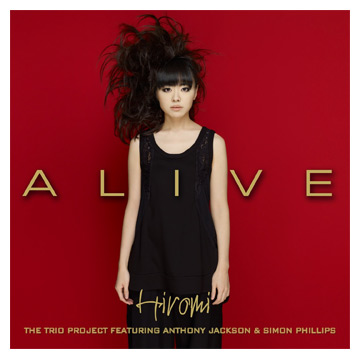
The petite, dynamic, big-haired bundle of mesmerizing musical energy named Hiromi Uehara (official website) recently released her ninth solo album in eleven years. Titled “Alive” (Concord Music Group, 2014), it is arguably her most overtly jazz album. Yet it also contains plenty of fusion, rock, and, yes, prog influences, as have her previous releases, which are marked by an instantly recognizable combination of breathtaking technique, astounding precision and speed, complex time changes, and boundless, mind-boggling virtuosity. I’ve been following her career since her debut album, “Another Mind” (2003), and have been both amazed and enriched by her music.hiromi_alive

However, one of the criticisms leveled against Hiromi, by some inside and outside the jazz world, is that her prodigious technical abilities tend to overshadow—or even overwhelm—other qualities, including nuance, emotion, and interpretive insight and dialogue. I think there is some merit to those criticisms, but I take them with a grain of salt. Frankly, the Argument From Lack of Emotion is, at best, quite subjective. Some people simply don’t like, or cannot handle, a cascade of notes (and last time I looked, Art Tatum and Oscar Peterson are both, rightly, hailed as jazz greats; and Hiromi loves Peterson’s music). Plus, I think many such critics miss the apparent fact that Hiromi, while clearly working within the broad realm of jazz, is also very much a prog-rocker in her heart of hearts—as well as a player of funk, soul, R&B, metal, electronica and, well, you get the idea. And all of us here at Progarchy.com know how often prog rock is criticized for having an abundance of technique but a lack of emotion resonance, a criticism that almost alway tells me much more about the critic than it does the music.

Hiromi’s acknowledged influences include the obvious—Ahmad Jamal (a mentor, and a jazz giant), Chick Corea (they recorded a duet album), Bach and Franz Liszt (the classical influences are often front and center)—and the not so obvious, at least to many listeners: Dream Theater, King Crimson, Frank Zappa, Jeff Beck, and Robert Fripp. The short bio on ProgArchives.com site states, “Her style brings a wholly new approach to jazz fusion, as her prog influence is derived primarily from such artists as King Crimson, Gentle Giant, and Frank Zappa rather than earlier jazz fusion artists. Her music is almost orchestral in scope, and each of the musicians she plays with has a virtuosic grasp of their instrument, allowing for each instrumentalist to have an approximately equal role in the direction of the music. Her music is more melodious than traditional jazz fusion but with an equally complex sense of rhythm. Time signature changes are not in short supply here.” It’s impossible for a prog rock lover to hear, say, “Return of the Kung-Fu Champion” (from her second album, “Brain”), and not hear a lot of prog influences in the mix:

Continue reading “Hiromi’s “Alive”: Jazz for Progarchists!”

Progarchy is Moving! New Address.

cu buffaloFor the next year, yours truly (ed.-Brad) will be living in Longmont, Colorado, and teaching at the University of Colorado, Boulder.  It is my goal to make CU an all-prog rock campus.  By the end of the academic year, I’m hoping CU students will chant things such as Socrates, Petrarch, Spawton, Tillison, Cohen. . . . We’ll see what happens.

Therefore, the physical address of Progarchy, July 1, 2014-July 1, 2015, will be:

Brad Birzer/Progarchy

1710 Whitefeather Drive

Longmont CO 80504

USA

Contact email will still be: progarchy@gmail.com

On July 1, 2015, progarchy hq will move back to its normal Hillsdale, Michigan, address.  Thanks for understanding!  Yours, BB

Progarchy Post #999

We’ve reached our 999th post just four months shy of our second anniversary. Our progarchist (also a novelist, DPRP.net reviewer, as well as an all-around incredible guy) Eric Perry prompted me to write something for this auspicious occasion.

And, really, I would be a fool not to follow Eric’s advice on this or any thing else.

First, a huge thanks to all of the progarchists. Not a single one of us gets paid for any of this, but, as you can see, each and every member of the progarchy writing team gives her or his heart and soul to the endeavor. So much time, devotion, and dedication.

Progarchists might be faulted for being more enthusiastic than critical, but no one could fault us for not caring or for not putting forth our best. I am honored to write with such friends and allies in this world. Indeed, I’m more than a bit humbled to think that whatever powers that exist decided I’d get to share an existence with these fine folks.

Second, I want to thank the bands and individuals of the music community for being so open to us. We realize that every time you send us something, you do so as an act of faith. Not only do you spend an immense amount of your own money and your time to share your art with us, but you also extend to us your most sacred thoughts and ideas, your very creations from the very depths of your being.

Not only have we tried to treat your art with all the respect it demands, but we have done so by pledging that we will attempt to write as well as you construct, perform, and record your music.

Third, an equally immense thanks to all of our readers. Of course, you’re a most diverse group, and you come from every single part of the world, though the vast majority of readers come, understandably, from the U.K., the U.S., and other English speaking countries. We’re happy to have every one of you, and we thank you profoundly for allowing us to be a part of your lives. As of this writing, every single post goes via email to 1,951 of you. Another 200-1,500 readers visit us each day, depending on topic, day of the week, etc.

Though we founded progarchy—in large part—as a way to promote Big Big Train and The Tangent—we have, I think, added to this list while not neglecting our original desire to advance the art of Spawton, Tillison, and compatriots.

A final thanks to the labels, the promoters, and the PR women and men who have helped us in innumerable ways. Right off, I can think of Karisma, Glass Onyon, Fresno, Kscope, Cherry Red, Bad Elephant, Sally Collier, Chris Thompson (now retired), Billy James, Brian Rocha, Cleopatra, English Electric, and many others.

Our first post hit the web on October 11, 2012. So, we’re not quite two years old. Yet, so much has happened in the prog rock world since then. Already, the market was being saturated with prog releases and prog-related releases. Progarchists joked that we were drinking from the fire hose.

As of June 2014, this hasn’t subsided. But, the quality and expectations have risen dramatically. There really can no longer be any such thing as just “another release.” For an album to qualify as excellent or even very good, it has to reach a VERY different standard than it did only three years ago. Releases from Big Big Train, The Tangent, Cosmograf, and Glass Hammer especially have almost completely remade the genre. Not only are these bands and others releasing albums of the highest calibre, they have taken the genre to levels unimagined even during the first wave of Genesis, King Crimson, Yes, etc. Truly, there is progress.

We are, as mentioned earlier, absolutely thrilled to play any role—no matter how large or small—during this great moment of art, music, and history.

Rush MOVING PICTURES–reviewed in Notre Dame Student Paper 1981

My family and I are in the process of moving to Boulder, Colorado, for the upcoming school year.  One of the terrible parts of any move is the packing.  But, there’s a plus side–things thought lost reappear!  And, so it is with this review I found in a spring issue of the University of Notre Dame student newspaper, The Observer.  Dated April 23, 1981, pg. 11, by Tom Krueger.  Forgive the quality of the image.  It’s a photocopy from microfilm run through a Scansnap.  So, in terms of image–blah!  Still, good to have it posted for historical reasons.

rush moving pictures review nd 1981

Rush is Everywhere in 2011 New York Times Bestseller

rvkeeper's avatarrush vault

RPOIf you’re not a science fiction fan you might have missed the news that Ready Player One was one of the biggest literary hits of the year when it came out in 2011. First-time novelist Ernest Cline became an improbable success story when his book about a Tom Sawyer-like character sticking it to the corporation in a dystopian future reached No. 20 on the New York Times bestseller list. But maybe the book’s success is no more improbable than Rush’s success, since the book is threaded throughout with wry Rush references.

cline Cline

The story takes place in the not-too distant future and it’s not a pretty picture. The environment’s a mess and the social order is collapsing. But there’s one good thing: virtual reality. For many people, the real living takes place online in a highly immersive massively multiplayer game.

Without getting too much into the details, think of the…

View original post 358 more words

Big Big Train: Voices for Real World

Greg Spawton has posted another video snippet on the Big Big Train Facebook page of the band’s preparations for their upcoming live recording at Real World Studios. If you’re a Passenger, it’ll be compulsive viewing!

An Announcement

Image

Ladies and Gentlemen,

It gives me great pleasure to announce that at 8.04pm this evening Salander gave birth to a new album. Everyone is doing fine. We have called it STENDEC. It weighs in at 65 minutes and we hope it will have a bright future. Anyone wishing to view our new arrival can do so via the Salander bandcamp page

Image