
Category: Progressive rock
Getting Started with Big Big Train
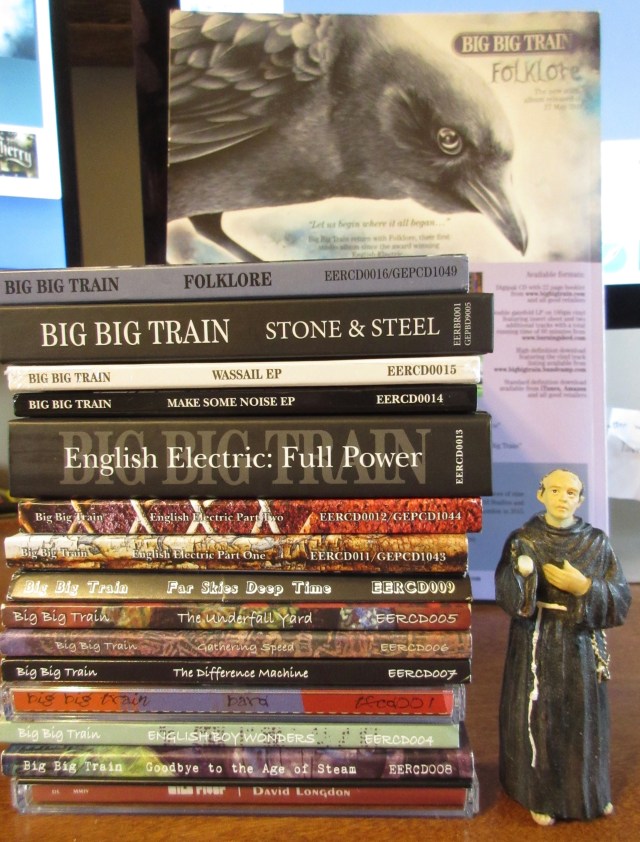
As most of you already know, progarchy began almost four years ago as an unofficial Big Big Train-fan site. We’re now getting to the point where our BBT offerings are looking a bit chaotic.
Here’s a helpful starting guide for those of you interested in getting to know BBT better.
Several years ago, I wrote a piece called “A Beginner’s Guide to Big Big Train.” This is an addition to that.
23 Years Later: ELEMENTAL by TEARS FOR FEARS
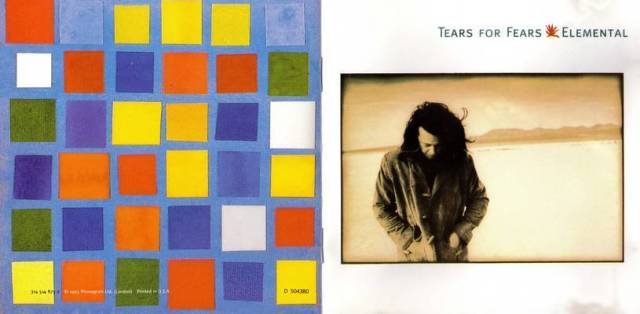
I’d never lived through a summer quite that humid. Even the two summers I’d spent in Fairfax, Virginia, seemed tame compared to that summer in Bloomington, Indiana. I was over at a friend’s house—sans air conditioning—and we were lazily talking as sweat dripped off us. She popped in a new CD, and I was immediately mesmerized by it, forgetting all of those pesky atmospheric woes. I knew the voice immediately, as I’d always been rather obsessed with the singer and the song writer, but I’d had no idea that the band had recorded a new album. The last one had been really good, but I’d not been blown away by it, at least not to the extent that the first two had captivated me. But, after just a minute or so of listening to the new album in the summer of 1993, I grabbed the booklet of ELEMENTAL and pored over the lyrics and the liner notes.
I’d known that Curt Smith had left the band, but I knew nothing about Alan Griffiths or Tim Palmer. Their names were all over the notes, almost as prominent as Roland Orzabal’s.
Continue reading “23 Years Later: ELEMENTAL by TEARS FOR FEARS”
Big Big Train’s Love Letters to the Proletariat: Interview with Greg Spawton
This is a very good interview from another WordPress prog blog, called Proglodytes! Read and enjoy!
Big Big Train has been enjoying some well deserved success lately. Starting with their acclaimed release The Underfall Yard in 2009, Big Big Train has only enjoyed more and more positive reception.…
Source: Big Big Train’s Love Letters to the Proletariat: Interview with Greg Spawton
Without Compare: FOLKLORE by Big Big Train
Big Big Train, FOLKLORE (Giant Electric Pea, 2016).
The band: Greg Spawton; Andy Poole; Danny Manners; David Longdon; Dave Gregory; Rachel Hall; Nick D’Virgilio; and Rikard Sjöblom. Engineered by Rob Aubrey.
Tracks: Folklore; London Plane; Along the Ridgeway; Salisbury Giant; The Transit of Venus Across the Sun; Wassail; Winkie; Brooklands; and Telling the Bees.

The centerpiece of third-wave prog, Big Big Train, matters. How they write music matters; how they write lyrics matters; how often they perform live matters; how they package their music matters; and how they market what they do matters. They are a band that has evolved significantly over twenty-plus years of existence, a restless band that never quite settles on this or that, but rather keeps moving forward even as they never stop looking back. In their art, they move forward; in their ideas, they move backward. All to the good.
Continue reading “Without Compare: FOLKLORE by Big Big Train”
Music: Giving the World a Rhythmic Sway — The Imaginative Conservative

“Music, too, is nature.” – Sound and Symbol by Victor Zuckerkandl This essay explores the differences between two perspectives on music: one ancient, one The post Music: Giving the World a Rhythmic Sway appeared first on The Imaginative Conservative.
via Music: Giving the World a Rhythmic Sway — The Imaginative Conservative
Lacuna Coil – Delirium – Album Review — The Blog of Much Metal

Artist: Lacuna Coil Album Title: Delirium Label: Century Media Records Date Of Release: 27 May 2016 I have been a fan of Lacuna Coil since the early days of ‘In A Reverie’ and ‘Unleashed Memories’, the latter of which remains a favourite to which I return quite frequently. I loved the melodies, the slightly Gothic […]
via Lacuna Coil – Delirium – Album Review — The Blog of Much Metal
Big Big Train’s FOLKLORE Arrives in Michigan
It’s not everyday that a Big Big Train album appears in my mailbox. An immense thanks to Kathy Spawton and Greg Spawton for sending it, and to the band for signing it!

Continue reading “Big Big Train’s FOLKLORE Arrives in Michigan”
Flow & Balance: The Exquisite Beauty of Folklore
What are the ingredients of a truly great album?
Well there’s the songwriting, of course: that’s a given. Likewise the performances of the players. But what else?
The overall sound that a band produces is important, for sure – the choice of instruments and how they’ve been employed in service of the songs, and how well the different qualities of those instruments have been balanced. And let’s not overlook other aspects of the production: the overdubs, the mixing, the mastering and so forth. (I’m sure we can all think of good albums that have suffered from a lack of attention to the latter.)
I think there’s one other underrated ingredient, however. For want of a better word, I call it flow: the way in which the different tracks on the album fit together and contribute to the experience of listening to an album as a whole. Note that I’m not talking particularly of concept albums here (although flow is a highly desirable quality of these). An album can flow well even if there is no story or common themes to link its songs together.
Continue reading “Flow & Balance: The Exquisite Beauty of Folklore”
Hackett’s Clip: Lamb Lies Down
MAY 31ST, 2016
FOR IMMEDIATE RELEASE
WORLD-RENOWNED GUITARIST/COMPOSER STEVE HACKETT REVEALS “THE LAMB LIES DOWN ON BROADWAY” CLIP
VIDEO TAKEN FROM 2CD/2DVD, BLU-RAY “THE TOTAL EXPERIENCE LIVE
IN LIVERPOOL,” DUE OUT WORLDWIDE JUNE 24TH VIA INSIDEOUT MUSIC
(New York, NY) – World-renowned guitarist/composer Steve Hackett has just revealed the first clip from his forthcoming 2 CD/2 DVD, Blu-Ray package THE TOTAL EXPERIENCE LIVE IN LIVERPOOL. The video for “The Lamb Lies Down On Broadway” can be viewed here. THE TOTAL EXPERIENCE LIVE IN LIVERPOOL will be released worldwide on June 24th via InsideOut Music and was filmed during Hackett‘s Acolyte To Wolflight With Genesis Revisited tour last year. Celebrating the 40th anniversary of his first solo album VOYAGE OF THE ACOLYTEand following his latest album WOLFLIGHT, the Acolyte To Wolflight With Genesis Revisited Tour was Hackett‘s effort to represent the many chapters of his career. Featuring two sets – one highlighting his solo work, the second paying tribute to Genesis – the two hour performance was greeted with enthusiasm by both fans and critics. A trailer for the release can be seen here.
 Progarchy