Discerning structural progression with that all-consuming guitar harmony –it’s 1991, but Chuck Schuldiner was already crafting that musical transformation of Death. Sort of chiseled with mathematical precision, these riffs can be overwhelming. Add some layering and complex transformations to the mix, and Death successfully exacts an emotional toll on their listeners. A musical arrangement so aggressive and poignant — baffling how such contradictions can gracefully coexist.
A revisiting of this classic album was purely accidental. I was driving up the Cascade Loop for a quick weekend hike and Death started playing on the radio. A drive through the tunnels with “Lack of Comprehension” on stereo was one of those fine death metal moments. An uneventful afternoon hike with stunning PNW visuals — but in my head, Death’s riffs were still playing in an endless loop.
The Power and The Glory (CD/Blu Ray) – Gentle Giant Introduction… Well I have always liked Gentle Giant since I finally got into them which was a good couple of decades after they disbanded in 1980. I barely took any notice of them back in the 70’s and I am pretty sure it was through […]
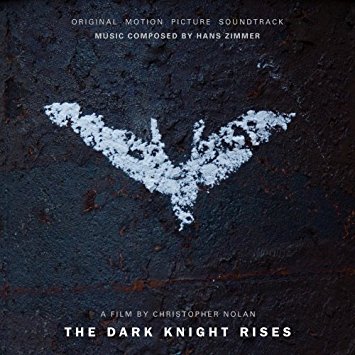
Is there any better modern cinematic composer than Hans Zimmer?
I would be stunned to find out that most lovers of prog music don’t also love really artful and meaningful films.
I’m not knocking goofy films. I love Bowfinger, Old School, etc.: movies my brothers and I lovingly refer to as “great stupid movies.”
And, of course, there are a number of movies that play what my friend, Mike Church, calls “juke box” music–The Wedding Singer or almost any John Hughes movie.
I’m, however, thinking of actual cinematic scores written for the screen.
And, to be fair–and probably state the obvious–many of the best modern soundtracks, such as those by Hans Zimmer–are clearly influenced by prog rock.
Gottwut’s sonic brew is rooted in the 90s. Not just industrial, techno and symphonic elements – Konglomerat integrates alternative, gothic and occasional hard rock riffs. In spite of constantly shifting its sound and tempo, the record manages to hold its atmosphere. Drawing from a broad spectrum of influences it simply packs enough ammo — more than enough to capture the attention of a goth or an industrial head. Needless to say, those vocals and compositions structured for live shows will inevitably draw well deserving comparisons with this massively influential industrial band from Berlin.
The first in a series of sales to celebrate 10 years of the Kscope label.
Many Paul Draper items – including the extremely limited limited cassette edition of Spooky Action – will be available at a reduced price until May 31st.
David Bowie
Welcome To The Blackout (Live London ’78) (cd pre-order)
Welcome To The Blackout (Live London ’78) captures Bowie live during the ISOLAR II tour at Earls Court, London on the 30th June and 1st July 1978.
The album was recorded by Tony Visconti and was mixed by David and David Richards at Mountain Studios, Montreux in January 1979.
Initials copies of the CD are packaged in a six-panel digipak with rare photos from Sukita and Chris Walters
Since I’m a college professor, the first part of May every year finds me grading final exams and final papers. It’s not fun. It can be gratifying, but it can also be depressing. Either way, it’s exhausting, and it requires some kind of respite afterwards, a mini-staycation of some sort, a passage into a place where the time is elastic, so that the passage back is simultaneously minutes and days after departure. The passage back (to the place I was before) is to an apparently transformed and renewed place. Or is it just that I was, in those brief moments, gone for so long?
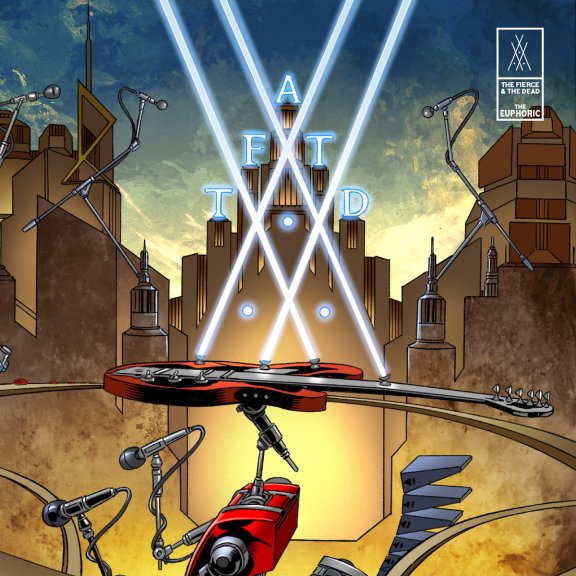
Refreshment comes this May with the BEM release of The Fierce and the Dead’s latest studio album, The Euphoric (official release date 5/18/2018). As I’ve come to expect from TFATD, I’m provided here with a glorious flow of instrumental passages.
One of the wildest and most disturbing aspects of modernity is how compartmentalized everything becomes. One important thing (a person, an idea, an institution) becomes isolated and, in its isolation, takes on its own importance, its own language (jargon), and, naturally, its own abstraction.
During the past 100 years, a number of groups have tried to combat this. In the U.K., most famously, there were a variety of literary groups: The Inklings; the Bloomsbury Group; and the Order Men. In the States, there were the southern Agrarians, the Humanists, the Lovecraftians, and the women (no official name–but Isabel Patterson, Claire Boothe Luce, Dorothy Thompson, and Rose Wilder Lane) who met for tea once a week and shared stories.
The first such known group in the English-speaking group was the Commonwealth Men, meeting in London taverns from 1693 to 1722, attempting to combine British Common Law thinking with classical and ancient philosophy.
It would not be an exaggeration to argue that meeting Carrie Nuttall served as one of the most important moments in Peart’s life and in precipitating Rush 3.0. In her, Peart found a reason to live fully, a reason to rediscover excellence, and a reason to return to his life in Rush. It was through their mutual friend, Andrew McNaughton (now deceased), that the two met.
In those days, Andrew and I often talked on the phone from wherever I wandered, and shared our sorrows and anxieties. Typically, Andrew was determined to find a “match” for this crusty old widower. When my motorcycle had carried me back across the continent yet again, to pause in Halifax, Nova Scotia, Andrew sent me a few test Polaroids of a photo assistant he had been working with-a pretty dark-haired girl named Carrie. Again, I was reluctant, gruffly telling him, “not interested”—but finally I made my meandering way west again, and stopped for a while in Los Angeles.[i]
When she met Peart, she knew next to nothing about the band.[ii] She told him, however, that she would love to see him perform again, especially considering his reputation as a drummer and his own love of music. For Peart, all of this proved almost Faerie-like.
Andrew introduced me to Carrie, my real angel of redemption; in less than a month we were deeply in love, and in less than a year we were married in a fairy-tale wedding near Santa Barbara. Carrie: Beautiful, smart, cultivated, artistic, affectionate; Deep green eyes, long dark hair, radiant smile; Tall, slender, shapely, nicely put together; Half English, half Swedish, all American, all mine. The answer to a prayer I hadn’t dared to voice, or even dream. Carrie. Soulmate, a lover, a wife, a new journey to embark upon, the greatest adventure. [iii]
Though still in pain—a pain that would (and will) never fully cease—when he met her, he found her instantly attractive intellectually as well as personally. They bonded almost immediately in friendship. She considered him a modern-day Conquistador, armed in black leather and mounted on a powerful red horse, forever seeking the road and adventure. But, his days of restless exploration had come to an end, and the Ghost Rider faded into memory. On September 9, 2000, just three days short of his forty-eighth birthday, Peart married Nuttall in Montecito, California.[iv]






 Progarchy
