

Ray Thomas, the former flautist for prog-rock pioneers The Moody Blues, has died at 76. If you are not familiar with Thomas’ talent, listen to his hauntingly beautiful flute solo in Nights in White Satin.
Ray Thomas, the former flautist for prog-rock pioneers The Moody Blues, has died at 76. If you are not familiar with Thomas’ talent, listen to his hauntingly beautiful flute solo in Nights in White Satin.
 In September 1971, Sandy Denny — on the heels of an incendiary contribution to “Battle of Evermore” from Led Zeppelin‘s upcoming fourth album — released her first solo record, The North Star Grassman and the Ravens. It carried with it the strength and grace of her previous efforts, and featured many of the musicians with whom she had built her reputation, namely Richard Thompson from Fairport Convention and the entirety of Fotheringay. It was a confident beginning to a too-brief solo career, and in its quiet power illustrates why Denny’s influence on the British folk and rock scenes was so profound. Like other inhabitants of her world — thinking Thompson, Nick Drake, Lal Waterson — she was writing ahead of the curve, making deeper and contemporary connections to the wellspring of traditional folk while avoiding the easier middle earth sword epics so much of the rock world was obsessed with at the time (“Battle of Evermore” being a successful example of this).
A sailor’s life, a lament, an existential sea chanty, “The North Star Grassman and the Ravens” has everything describing Denny’s talent: lyrical finesse, melodic beauty, the alchemical relationship of words to tune. And of course, that voice, the kind of voice that could sing the traditional “Tam Lin” with menace and authority on Fairport’s Liege and Lief (1969), and turn on a dime to deliver something as hauntingly beautiful as “The Sea,” a song of her own devise, from Fotheringay (1970).
There are three striking versions of “North Star.” The lovely studio original is shaded with classic early 70s British folk rock production (courtesy of John Wood), unfussy and earthy with a dynamic pop of bass and drums, Thompson’s restrained acoustic guitar not show-stopping but providing rhythmic chug while Ian Whiteman’s flute organ is suggestive of the hornpipe. A solo live appearance on the BBC has Denny at the piano, owning the song without a band, a confident performer on her way to becoming a national treasure. Denny recorded her last “North Star” in November 1977, just months before her death. Here, with a full electric band, the song has morphed from somber reflection to country rock grandeur. The recording was marred by technical difficulties in the guitar tracks and only released twenty years on, after Jerry Donahue (Fotheringay, Fairport) overdubbed new parts. Even with this in mind, Donahue’s playing and his history with Denny wins the day, making Gold Dust: Live at the Royalty one of the better samplers of her work.
soundstreamsunday presents one song or live set by an artist each week, and in theory wants to be an infinite linear mix tape where the songs relate and progress as a whole. For the complete playlist, go here: soundstreamsunday archive and playlist, or check related articles by clicking on”soundstreamsunday” in the tags section.
It came about this way: I received a 180-gram reissue of Genesis’ Trespass for Christmas. In a documentary on the making of the album Tony Banks said the band’s first truly progressive work had been inspired by listening to groups like The Nice, Family, and Fairport Convention.

Fairport Convention? I think I once saw a passing reference to “progressive folk” applied to their work, and was familiar with their definitive album, Liege & Leaf — a statement on their growing affinity with the English folk tradition. While Trespass has some folk-inspired moments it’s anachronistic to say Liege influenced Genesis’ 12-string arrangements and composite chords. I went back to Fairport’s debut, Fairport Convention, recorded in November 1967 (man, something about British bands and fall recording sessions) and released in the spring of ’68.
Oh my.
Continue reading “Time Has Shown The Wiser: Fairport Convention at Fifty”
by Rick Krueger
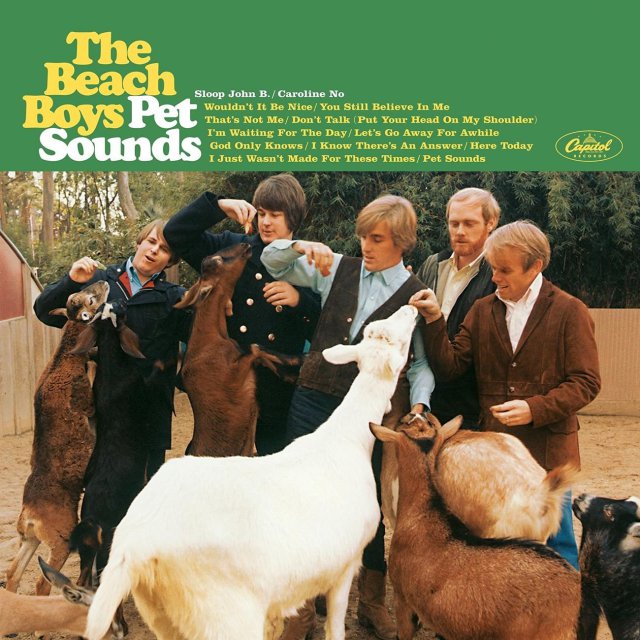
The good Dr. Birzer did a fine track-by-track survey of this milestone album for its 50th anniversary in 2016. While I’m tempted to say “just read his article,” it wouldn’t answer the implied question this series poses. How did hearing Pet Sounds change my life?
Though I always liked the Beach Boys, I didn’t glom onto Pet Sounds until I was in my 30s. My older brother had a few of their early records; I remember borrowing the In Concert album and subjecting my family to repeated plays on one vacation. Some of their songs from the 1970s filtered through to FM rock radio in my high school years, too; “Sail On Sailor” was particularly popular. I even arranged a medley of the band’s 1960s classics for my final choir concert at Lutheran High School East. But I typically thought of the Beach Boys as a group with cool harmonies, a Chuck Berry fixation, and decent songs about surfing, cars and girls.
Then, on a whim, I picked up the 30th anniversary edition of Pet Sounds in 1996. Which included liner notes featuring Paul McCartney quotes like “this is the album of all time” and “no one is educated musically until they’ve heard that album.” I figured I’d better give it a serious listen.
Continue reading “The Albums That Changed My Life: #8, Pet Sounds by The Beach Boys”
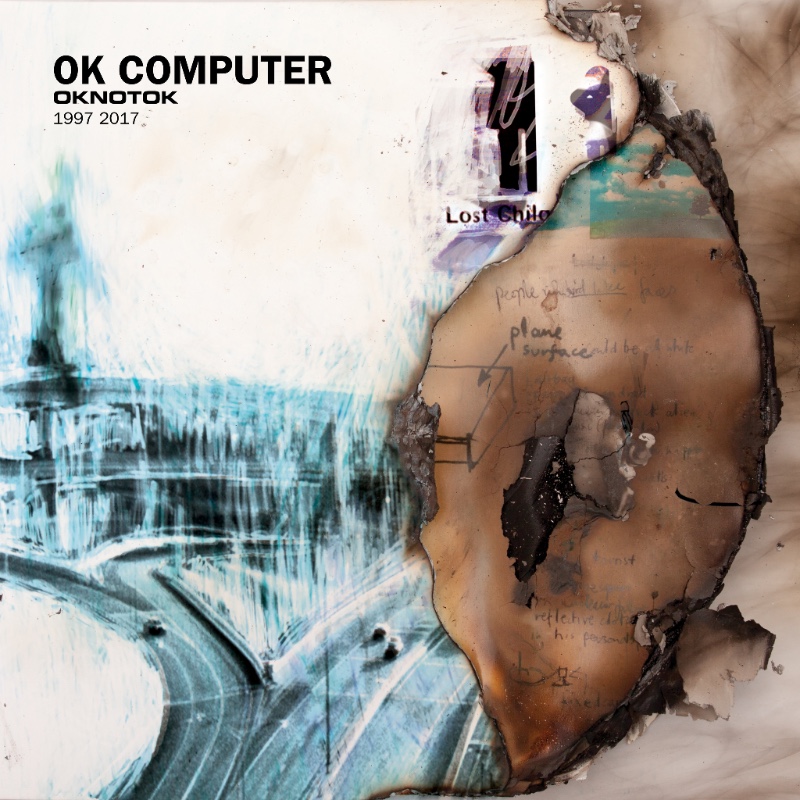
Like wine, Radiohead gets better with age. If Radiohead’s eerie, yet beautiful ninth album, A Moon Shaped Pool, failed to convince you of this fact, Radiohead’s 20th anniversary edition of OK Computer, OKNOTOK, surely will. OKNOTOK not only contains remastered versions of the original twelve tracks and all eight of the B-side tracks, but also features three previously unreleased tracks: “I Promise,” “Man of War” and Lift.” Unfortunately, because bands and artists have noticed that fewer and fewer people listen to tracks sequentially anymore, many no longer prioritize modifying and arranging their album’s tracks in a manner conducive to sequential listening. Radiohead, however, did not take this approach with OKNOTOK. From listening to the first track alone of OKNOTOK, one will notice that Radiohead went to great lengths to make their remastered album even more conducive to sequential listening than the original. The last three seconds of “Airbag,” instead of just ending, actually make up the original intro to the next track, “Paranoid Android.” By closing the gap between the two tracks, the change, although subtle, marks a huge improvement over the original. Overall, this flow remains noticeable throughout the entire album because of the noiseless seconds Radiohead shaved off the ends of its tracks. While these changes may seem minor to many, the seamless transitions truly give the album new life. The new tracks, meanwhile, fit seamlessly into the album’s themes of apprehension, uncertainty, injustice and ultimately, escape. Although Radiohead had completed the “new” tracks seen on OKNOTOK back in 1997, they did not release them, perhaps fearing they would not measure up to the rest of the album. For example, according to Apple Music’s synopsis of OKNOTOK, Thom Yorke claims Radiohead did not release the new track, “I Promise” twenty years ago “because we didn’t think it was good enough.” Even though Radiohead’s bonus tracks often sound better than most bands’ feature tracks, Radiohead, because of the importance they place on producing high quality music, will always remain Radiohead’s biggest critic. Nevertheless, “I Promise” definitely deserves its place in OKNOTOK. Featuring Thom Yorke’s melancholy voice, a guitar-driven melody, and occasional synth, “I Promise” gives listeners a comforting blend of sounds culminating together to make a peaceful ending. In the next track, “Man of War,” however, Radiohead throws listeners for a loop through an eerie combination of keyboard, synth, and screeching electric guitar. While perhaps unnerving to some listeners, the song’s grunge feel offers glimpses back into the sounds characteristic of Radiohead’s second album, The Bends. The final “new” track, “Lift,” offers a transcendent look into the life of one “stuck in a lift.” Featuring some beautiful harmonies between synthesizer and Yorke’s voice, “Lift” succeeds in adding further lyrical depth to the original OK Computer. The rest of the album features all eight of the remastered B-side tracks, which, for the sake of brevity, I will not review. Yet, the last track, “How I Made My Millions,” deserves recognition. From the song’s inception, listener’s will notice a lack of audio quality and strange sounds in the background. Unlike the other tracks, Yorke recorded this song at home on his four-track recorder and the background noises consist of his girlfriend cleaning the house. Almost all of the tracks on OKNOTOK sound (despite the musical “chaos,” at times) polished and professional. However, one can not say the same about “How I Made My Millions.” Nevertheless, the raw coupling of piano with Yorke’s voice strikes listeners with a mesmerizing beauty and makes the song a brilliant conclusion to one of the greatest albums ever. So, even if you may wish to leave 2017 and all of its failures and successes in the past, do yourself a favor: sit down and listen in entirety to the remastered, full of “No Surprises” album, OK Computer OKNOTOK.
Big Big Train is now a seven-piece outfit, as Andy Poole has resigned.
From the band:
ANNOUNCEMENT FROM ANDY POOLE AND BIG BIG TRAIN
Andy Poole will shortly be leaving Big Big Train.
Big Big Train would like to thank Andy for the significant part he has played in the band’s journey and we wish him well in his future endeavours.
Big Big Train will continue with the seven-piece line-up of D’Virgilio / Gregory / Hall / Longdon / Manners / Sjöblom / Spawton alongside the five-piece BBT brass band led by Dave Desmond.
For future live performance, the band has recruited an additional musician to assist with keyboard and guitar work. We will announce details in due course.
We also hope to announce a UK warm-up show for our July 13th Night of the Prog festival appearance at Loreley. We expect the warm-up show to take place on July 11th.
Best wishes
Danny, Dave, David, Greg, Nick, Rachel and Rikard
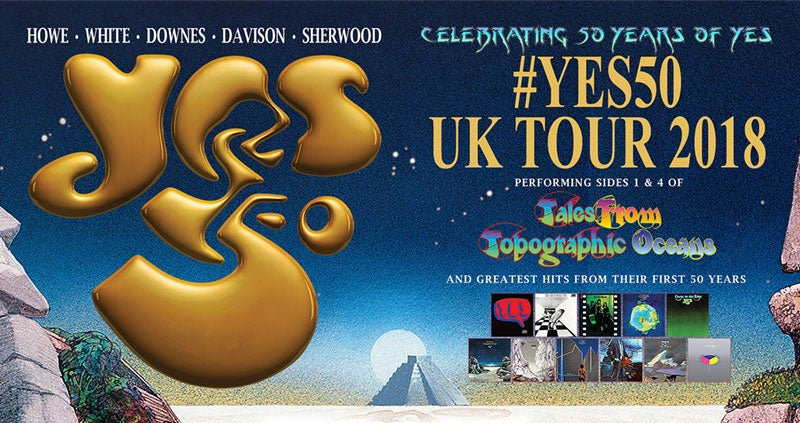
As one of the contributing writers here at Progarchy I look forward to what this year brings with new and exciting Prog. We have the 50th Anniversary celebrations of Yes and their music which us Yesfans are excited about. This will be Prog’s year to celebrate and enjoy all the music expected. Look forward to your comments on each article.
And let your Prog friends know about us! Happy New Year!

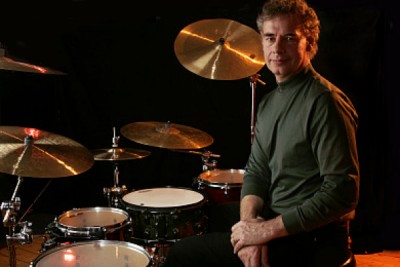
How many of your favorite albums has Bill Bruford played on?
All those amazing early Yes albums (oh man, who can ever forget the way the drums come back in along with Rick Wakeman’s organ solo in “Roundabout”?), plus King Crimson albums like Red and Discipline (to name just two of my favorites), not to mention his insanely great solo work (I will always love “Fainting in Coils” — am I right, Kruekutt?) and, all considered, it is undeniable that if anyone ever deserved 100 honorary doctorates for contributions to progarchy, that man would be Bill Bruford.
But now he’s Dr. Bill Bruford, and he earned the doctorate himself. You can download and read his dissertation (thanks, Internet!) or buy it this year in print because it is being published by the University of Michigan Press.
Congratulations, Dr. Bruford! And welcome to Academy!
Most of us have some sort of superstitions. Maybe we believe in a lucky number, carry a lucky rabbit’s foot (the rabbit might disagree about the luck associated with the foot), or have a pre-game ritual for our favorite sports team. On the flip side, we may harbor some superstitions about bad luck. Walking under a ladder, opening an umbrella indoors, having a black cat cross your path … those superstitions are prevalent as well.
For me, I always had a thing – negative that is – about the number 17. For some reason it just felt like an unlucky number. Whenever there was an occurrence of something not to my liking, any association with the number 17 was immediately seized upon. So, it was with a little trepidation that I approached 2017, including in terms of music. Boy, was I wrong, and boy, was I glad to be. Superstition status: shattered.
Once again, for the umpteenth year in a row, it was a great year in music, particularly in the genre of progressive rock that brings us all to this site. Once again, it was a year where the number of great releases exceeded the amount of time available to listen to all of them – as the wide variety of picks in the year-end lists on this site demonstrates. So, without further adieu, her is my own list.
 No one would ever confuse the music that Natalie Merchant writes and produces with prog. Not in the least! Well. . . ok, maybe a bit in the least. That is, while Merchant is firmly in the folk and pop tradition of American songwriting, she’s also willing to take grand chances. It would certainly not be out of the realm of reality to call what she does artful pop. And, artful it most certainly is.
Most recently, Merchant released a rather glorious 10-cd collection of all (almost) of her solo material. This package from Nonesuch, The Natalie Merchant Collection, is a thing of joy. The sound of the music is so crisp and the packaging is just perfect. I will admit, I’m a sucker for good presentation and packaging. The box is sturdy and the 100-page booklet that comes with the set is just stunning. This, my friends, is the way to release music.
I must also state—somewhat of an embarrassing admission that might be perceived as sexist by some—that I find Merchant one truly beautiful woman. When she was younger, she was what one would’ve called in the 1980s, “cute.” As she has aged, however, she has allowed her hair to grey, and she doesn’t hide the few wrinkles of age. Thus, I find her absolutely stunning as a middle-aged woman. Thank you, Merchant for NOT succumbing to the disgusting and plastic culture of “forever young.”
In addition to the solo albums Merchant has released, she also includes in this package a new studio album, Butterfly, and a final disk of “rarities.” At amazon, you can purchase this package—116 tracks!—for a mere $40. Quite a bargain, especially given the beauty of the package itself.
The new album, Butterfly, is quite good, but I need a bit more time to absorb it. I hope to do an in-depth review of it soon.
Of everything Merchant has done, however, I find her 2010 double album—Leave Your Sleep—not only her best, but one of the best albums of the rock era. Certainly, it should rank in the top 100 of all time. On it, Merchant playfully yet intelligently reconsiders children’s stories and poetries. The songs range from the most intense pop to the most whimsical. It’s pretty much perfect.
 Progarchy