soundstreamsunday: “Lean on Me” by Bill Withers

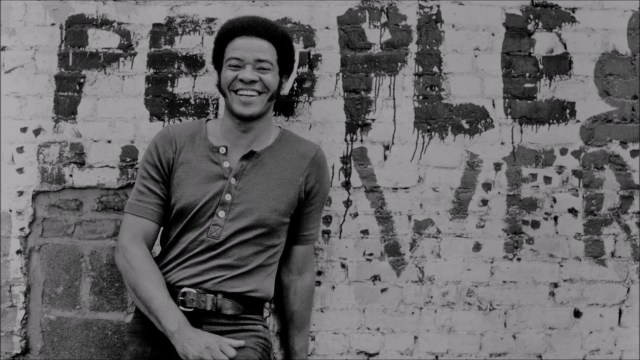
billwithers.jpgWhere Randy Newman and John Prine brought hyper-literate character study to the singer-songwriter genre, often inhabiting in the first person the figures they constructed in song, Bill Withers went for the emotional jugular, unabashed, and if there was any character being studied it was him.  Withers’ warm, supple voice, steeped in rhythm and blues and country, was his listeners’ point of entry, a vehicle in and of itself for delivering the musical goods.  Born in 1938, by the time he released his first record Withers was 33, had spent a decade in the service, and was working a factory job so soul-killing that a guitar and an empty notebook seemed as good a possibility as any for a better life.  His age helped him make records glowing with self-assured performances, and he became an unlikely pop star.  The hits came with that first record and kept coming through the 1970s.  By the time he did the unthinkable and retired in 1985, Withers’ legacy included some of the best American songs ever recorded: “Ain’t No Sunshine,” “Grandma’s Hands,” “Lovely Day,” “Just the Two of Us,” and “Lean on Me.”

“Lean on Me” is kind of like “The Weight” by the Band — it’s almost hard to believe that an earthly person actually wrote a song so integral to the late 20th-century American experience.  There is a grandeur to it, musically, lyrically, and sentimentally, that, even in its ubiquity, still shines.  It hit number one in 1972, but didn’t do all the heavy lifting to raise 1972’s Still Bill to number four, packed as that album is with great songs and arrangements popping with gospel funk dynamics.  In its album context, closing side one of the LP, “Lean on Me” is a beautiful respite from the personal strife suggested in “Lonely Town (Lonely Street),” “Who is He (and What is He to You)?” and “Use Me.”  The song evens a delicate emotional balance, and as an affirmation of simple friendship, it’s the finest kind of pop music.

soundstreamsunday presents one song or live set by an artist each week, and in theory wants to be an infinite linear mix tape where the songs relate and progress as a whole. For the complete playlist, go here: soundstreamsunday archive and playlist, or check related articles by clicking on”soundstreamsunday” in the tags section.

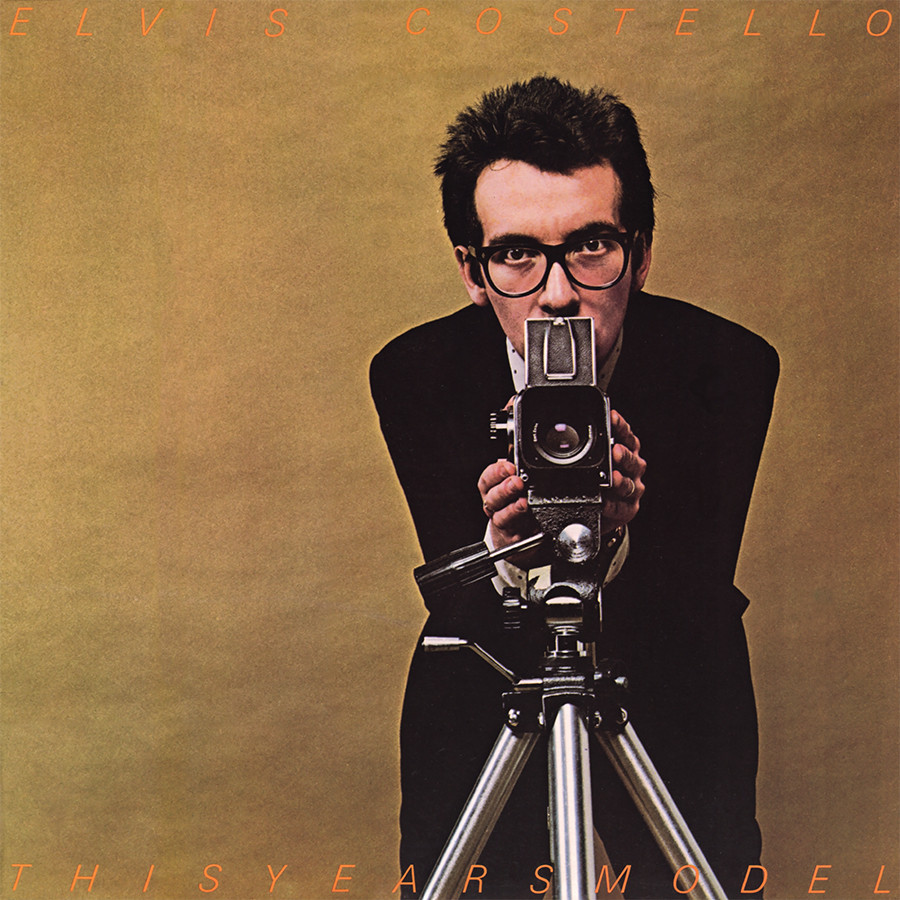
The Albums That Changed My Life: #3, This Year’s Model by Elvis Costello

by Rick Krueger

“The songs are lyrics, not speeches, and they’re tunes, not paintings. Writing about music is like dancing about architecture—it’s a really stupid thing to want to do.” — Elvis Costello, 1983, apparently quoting Martin Mull.

Ouch.

On the other hand, would I have ever even heard of Elvis Costello if it hadn’t been for the rock press?  Let alone listened to This Year’s Model?

Continue reading “The Albums That Changed My Life: #3, This Year’s Model by Elvis Costello”

Leave The Anger Out of It: Let’s Just Enjoy

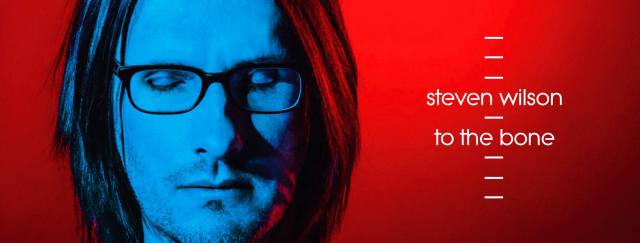
Steven-Wilson-To-The-Bone-Banner

There’s no doubt, it’s fun to be self-righteous from time to time.  Well, “fun” for the writer, if not for the reader.

I’ve been patiently waiting for my deluxe box set of TO THE BONE to arrive in Michigan.  It finally arrived today, and it’s a thing of beauty and wonder, at least in terms of packaging.  It’s now my fourth such Steven Wilson deluxe box set, and I assume the deluxe edition will always be my default purchase option when it comes to any thing new Wilson releases.

Our own beloved Richard has already reviewed the new album rather nicely and objectively.

I’ve only given the album a listen or two.  It’s pretty neat, but it’s not grabbed me in the way that the previous solo albums have.  Such is life.  I’m going to let my like or dislike of it grow organically.

Still, I must write this.  Not liking the album is an OK position to hold.  I saw several folks today on social media claiming that if you don’t like the new Steven Wilson, you’re betraying the prog tradition.  What the ????????  Let me repeat that: What the ????????

One more time: What the ??????

There are days I simply need to detox regarding social media and, especially, Facebook.  For some reason, the new Steven Wilson has become a lightning rod in the way Donald Trump is a lightning rod.  One either hates or loves him.  No via media.

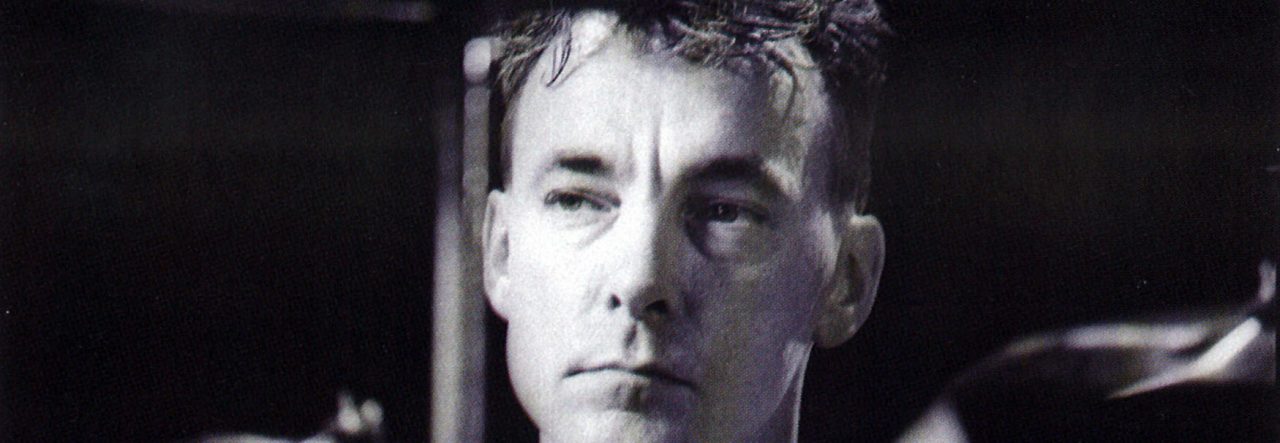
If I choose not to decide, I still have made a choice.  So once spoketh Neil Peart.  And, I agree wholeheartedly.

The Albums That Changed My Life: #2, Rubber Soul by The Beatles

by Rick Krueger

I’ve already written here about how, in late November 1977, this album grabbed me and has never let go.  Rubber Soul is (to paraphrase my previous comments) a sharp, cogent take on the folk rock fad of the time, mixing in flavors of soul, Indian ragas and Baroque elegance, with words matching the music’s new maturity.  It’s the sound of the Beatles downshifting and heading for new destinations, ready to move beyond shaking their moptops to a big beat and basking in the resulting screams.

There are no duds on either the British or the American versions of this album.  The UK Rubber Soul kicks off with “Drive My Car” — an exuberant Stax pastiche, a knowing mutual flirtation sketched in three-part harmony, topped with that goofy “beep-beep-yeah” tag on the chorus.  The US version, in contrast, starts with “I’ve Just Seen A Face” (from the British Help!) — Paul McCartney breathlessly singin’ and strummin’ a tale of new infatuation, a stream of consciousness laced with unexpected internal rhymes. Neither was at all typical of the Fabs; both sound wonderfully fresh, setting the tone for a different kind of Beatles record.

How many changes can you ring on the classic love song?  Rubber Soul shows how far the genre could stretch: surrealism with sitar (John peppering “Norwegian Wood” with non sequiturs a la Bob Dylan); break-ups with a backbeat (Paul’s “You Won’t See Me,” eventually covered with even more swagger by Anne Murray); suffering with added social comment (John’s “Girl,” featuring a chorus that’s just the title word and a deep, frustrated breath).  Ringo Starr does a country heartbreak turn on “What Goes On”; George Harrison glumly protects his personal space on the Byrds homage “If I Needed Someone.”  And this isn’t even including Paul’s earnest “Michelle,” which, if you were an easy listening artist and had already done “Yesterday,” quickly became the next Beatles tune to cover.

But what’s made Rubber Soul my ultimate touchstone for all things Fab is John’s “In My Life.”  It’s hard to top the reflectiveness and wisdom of these lyrics (in fact, I would argue that Lennon’s most famous songs are far less mature).  Every year they resonate more for me:

There are places I remember
All my life though some have changed
Some forever not for better
Some have gone and some remain
All these places have their moments
With lovers and friends I still can recall
Some are dead and some are living
In my life I’ve loved them all

But of all these friends and lovers
There is no one compares with you
And these memories lose their meaning
When I think of love as something new
Though I know I’ll never lose affection
For people and things that went before
I know I’ll often stop and think about them
In my life I love you more

Set to a lovely mid-tempo lope, with George Martin’s getting his Bach on for a gracious piano interlude, “In My Life” is evidence enough that, after Rubber Soul, both the Beatles and rock music would never be the same.   Listen to the album here:

Other Favorites by the Beatles: Well, the whole catalog, really.  But other favorites among the favorites are (as I’ve mentioned before), A Hard Day’s Night, Revolver, Abbey Road, and whatever Beatles album I’ve listened to last.

Related Favorites:

The Byrds: Essential Byrds (compilation); There Is A Season (box set); Sweetheart of the Rodeo.  Inspired by A Hard Day’s Night, the Byrds added Dylan, folk and country to the mix and made magic.  “Turn Turn Turn” is another song I never tire of hearing.

Cheap Trick: Heaven Tonight; At Budokan.  The Fab Four (pure pop version) of the late 1970s.  With added harder rock and wacky stage moves.

The Chipmunks: The Chipmunks Sing the Beatles. The first album my parents ever bought me.  Apparently I was tired of The Sound of Music.

Marshall Crenshaw: Marshall Crenshaw; Field Day,  The pride of Berkley, Michigan, replete with Beatlemania stage credentials.

The Smithereens: Blown to Smithereens (compilation); Meet the Smithereens (cover version of the complete U.S. album Meet the Beatles).  The Fab Four (pure pop version) of the late 1980s.


Thumpermonkey ‘Electricity’ EP – Q4 2017

Quirky progsters Thumpermonkey have announced their new EP ‘Electricity’, coming to a pair of ears near you some time in the last quarter of 2017 (that’s October, November, December).

It’s now available for pre-order on Bandcamp.

They’re also gigging! Official launch of the EP is October 6th where they will be joined by the delightful The Fierce And The Dead.

More information here.

New Release From Johnny Unicorn

Johnny Unicorn just released The Johnny Unicorn Archive (2004-2016).

You can indulge your Unicorn fetish (or your innocent-and-in-no-way-fetishist curiosity) at the link below.

https://johnnyunicorn.bandcamp.com/album/the-johnny-unicorn-archive-2004-2016

To the Bone by Steven Wilson

by Rick Krueger

“Rain all the truth down, down on me/Rain down so much you make a sea/A sea we can sail then sink like a stone/Down to the truth, down to the bone.”

To the Bone isn’t any sort of “prog turned pop” betrayal.  I don’t think it’s Steven Wilson’s masterwork either; Porcupine Tree’s In Absentia and Deadwing and the stunning Hand. Cannot. Erase. remain my favorites, along with the compelling concert video Get All You Deserve.  I do think that To the Bone is pretty special, though.  An accessible yet ambitious set of songs that compels repeated plays, it ably showcases Wilson’s immersive grounding in rock and pop of all stripes, his ongoing quest to extend that tradition, and his continued lyrical growth.

Continue reading “To the Bone by Steven Wilson”

The Karelian Isthmus

The Karelian Isthmus’ does further that recklessly snowballing early 90s black/death wave, but mostly into relatively less threatening waters. Compared to Norwegian and Swedish contemporaries, these Finns dial down the dissonance and integrate quite a few contrasting elements.

Florida death was undoubtedly a catalyst – surging across the great Atlantic it caused permanent mutations within the European scene. Within the early Amorphis albums, especially ‘Privilege of Evil’ and ‘The Karelian Isthmus’, we can clearly hear this wave brushing up against a firm melancholic chill – that Black Sabbath like doom metal overtones.

This confrontation of an all razing morbid dissonance with a doom like texture was unique – ideal for integrating even more vibrant influences.

Amorphis goes on to deck this framework with folksy tremolo picking, thick downtuned grinds, progressive riffs and brutal blast beats. Deep growls of Celtic influenced lyrics – “Distant gate, gothic grave, through ages our clan still remain” – does add to that vital grimness. It’s Carcass and Grave like abrasiveness, but mellowed with Finnish cultural influences. Essentially, all the elements which eventually lead Amorphis to their epic Tales From the Thousand Lakes, and beyond, are exhibited here – but in subtle and intense measures.

By Jarno Koskinen [CC BY-SA 3.0], via Wikimedia Commons

soundstreamsunday: “Angel from Montgomery” by John Prine

prine-on-couch-fca50a192d324d600e6f76c149c8061fdfeec145-s800-c85Successful Americana music hews a particularly demanding line.  It’s a “post” genre, looking to blues and oldtime musics as a starting point rather than an end, as a shared story for the getting-on-with of the next chapter.  To say the least, there’s a large margin for failure.  The masters of the form, like Randy Newman and Joe Henry and Leyla McCalla, offer an unaffected, plain spoken drive to the heart of an America that is in its essence a crossroads.  In such hands it goes far beyond a romance of sepia-tinged dustbowl-era hardscrabble, the sharecropper’s plow and his wife’s gingham print dress.  It is the common song and in it is America.

John Prine didn’t set out to do it, since as a genre it wasn’t really acknowledged until relatively recently, but he put flesh and bone to Americana songwriting.  Equal parts humor, sadness, and frank talk as broad as its landscape, the pictures in his songs are drawn, I think, from the same kind of middle-of-the-country upbringing that so imprinted itself on Mark Twain.  One of those songs, “Paradise,” from Prine’s 1971 debut, made its way to me as a tune John Denver covered on his 1972 album Rocky Mountain High.  Which was the first album I ever owned, so that when I was six I knew that John Prine, credited on the sleeve, had written one of my favorite songs.  Paradise was “where the air smelled like snakes, and we’d shoot with our pistols, but empty pop bottles was all we would kill.”  How the air smells like snakes I don’t know but I know what he’s getting at somehow — it’s the kind of thing a guy from Missouri or Kentucky who grew up when Prine did would say.

“Angel from Montgomery” is Prine’s loveliest melody, but not necessarily as it’s sung by him.  It’s been covered countless times, but it seems to be at its tuneful best if the singer is a woman, perhaps because its narrator is female.  So Bonnie Raitt’s version is the go-to, and Susan Tedeschi is its current champion (following Raitt’s interpretation).  But in these remarkable and wonderful tributes to Prine and his songwriting, what is absent is the charming gruffness Prine brings to the role play, and as recorded on that first record, an approach that is more gospel soul than sweet country ode.  On an album absolutely loaded with outstanding songs, Prine goes with the piano and organ and the churchy atmospherics because this is a song about a tested faith, where things could’ve turned out differently, and would have, “if dreams were lightning, and thunder was desire.”

soundstreamsunday presents one song or live set by an artist each week, and in theory wants to be an infinite linear mix tape where the songs relate and progress as a whole. For the complete playlist, go here: soundstreamsunday archive and playlist, or check related articles by clicking on”soundstreamsunday” in the tags section.

The Thrill of Fresh CDs

Look what showed up yesterday! Cheers to Lasercd for the prompt delivery.

I originally wasn’t going to purchase Big Big Train’s Stone & Steel Blu-ray because of the supposed issues with it not playing on some American Blu-ray players. Thankfully, it works perfectly on my home player, and I’m glad I was still able to get a copy before they ran out. The packaging is beautiful, much like everything Big Big Train does. I should have bought it a year ago.

My intro to BBT was English Electric: Full Power, so I still haven’t heard the English Electric albums in their original format. I figured I’d add these to my BBT collection before they too are unavailable. I may be young, but I despise the whole streaming thing. When I can afford it, I love to buy actual CDs. Even though I typically use iTunes to listen to music, I love having the physical CD with great packaging and a booklet. If the artists are going to go to such lengths to make a beautiful product, I want to experience it the way it was meant to be experienced.

Thank you to all the wonderful progressive rock bands out there making excellent music and caring enough about your craft to keep going. You make life for the rest of us a little bit easier.