Spock’s Beard Releases “Best Of” Collection with a NEW track written by Neal Morse featuring all members of Spock’s past and present!
Legendary Californian progressive-rockers Spock’s Beard are set to release ‘The First Twenty Years’ collection on November 20, 2015. Arriving as a special 2CD & DVD package, it includes a selection of the best tracks from their entire career, as well as a brand new 19-minute long track titled ‘Falling For Forever’ that features every member of Spock’s Beard past and present performing, including Neal Morse (who also wrote the track), Nick D’Virgilio & current vocalist Ted Leonard. All the tracks have also been re-mastered by long-term collaborator Rich Mouser, and the DVD portion of the release will include rare footage of the band in the 90’s, featuring vintage live performances from Progfest ’97 as well as the band rehearsing and recording “The Kindness of Strangers” album.
Pre-orders begin Now!
And..
In 2014, on the 8th show of their fall tour, Flying Colors took to the stage at Switzerland’s storied Z7 venue, and on film, captured a breathtaking live performance. With their critically acclaimed sophomore album Second Nature out for only a week, the concert recorded an exceptional rarity: band and audience, together, discovering an album for the first time. Release date November 13, 2015
We have bundled these 2 great releases in a special package and the first 200 people to pre-order this bundle will receive an exclusive signed frameable graphic signed by ALL seven members of Spock’s Beard past and present!
Pre-Order NOW!!!
Don’t miss your chance to get these 2 great releases at a great price and the free signed rare collectors item!
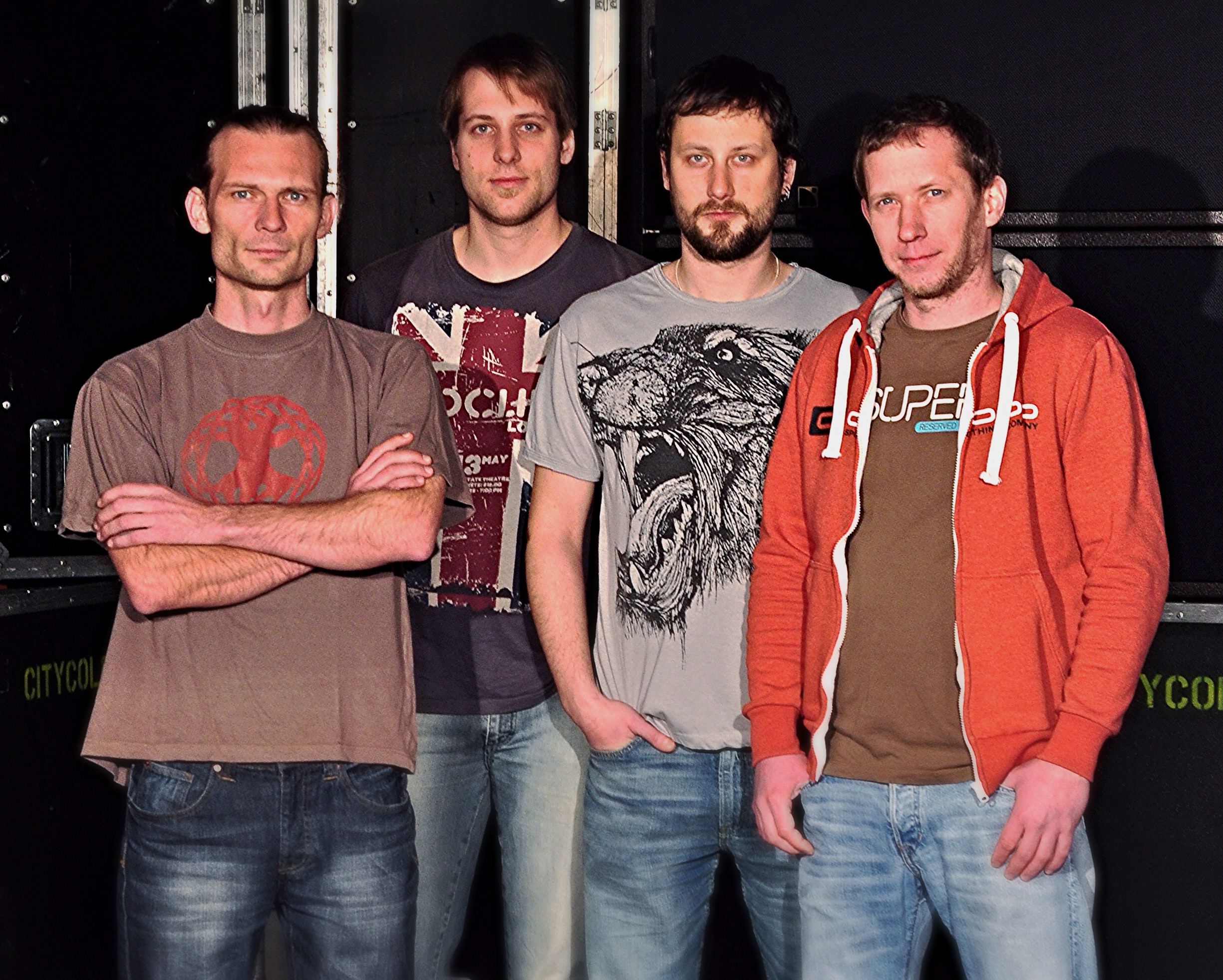
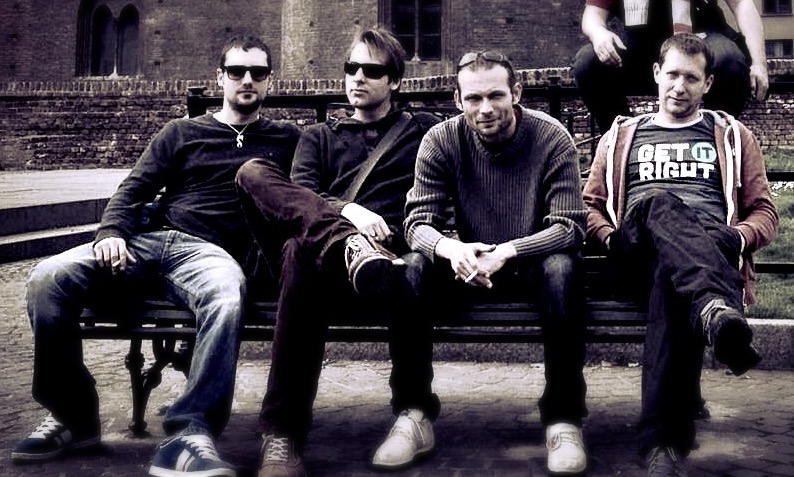
Instrumental rock band from Brno in Czech Republic, Ucan2 have recently put out their new single titled “Pompeii.” Check out what the band had to say about it, among other things.
How do you feel now that “Pompeii” has been unleashed?
We are so amazed for all the reactions we got from all over the world, it’s just amazing! We didn’t expect that at all, thank you everybody for downloading and for listening! The numbers speak for themselves, just great!
Are you satisfied with feedback you received so far for the new single?
YES, very satisfied! Lots of new fans and a lot of questions which we answered concerning gigs all over the world. We promise that we’ll do our best to fulfill our fans’ wishes to perform for them live in their city.
What was recording process like for “Pompeii”?
We had the song quite well prepared and figured out so it was just about going to the studio. As usual we recorded the drum track and then layed down the bass and guitars. Everything was recorded on Positive Grid app, great mature sound and no time wasted on setting up the mics in the studio, then we just did the master mix in the studio. We played a bit with the pans of the guitars and some sounds thats true, so we made 6 different versions and then just sat down and picked the one closest to what we felt is truly us.
How do you feel about the single’s production?
We did it all by ourselves so we had full control of the out come but the promoters did a great job, it just couldn’t do any better.
What inspired “Pompeii”? Any references to Pink Floyd?
No, we didn’t even thought of Pink Floyd when naming the song. It was about the feeling we had inside of us when we first played the whole song through, and it was definitely a crazy/burning feeling in the chest. So we looked for the right word and Pompeii came as the best one.
How do you feel “Pompeii” differs musically from the previous work?
Previously, Petr wrote all the music and the rest of the band did some tweaks here and there so it would be fun for the whole band to play, but this time, on the single we started writting together and more thought out the little details which make the song special, the Indian part in the middle with the 12 string acoustic was obvious right from the start.
Are you working on the album no. 2, when can we expect to see it out?
We are waiting for the right time, we are really not in a hurry, all the preparations just take time and we want it to be BIG next year. At this moment we are leaving Pompeii do its work for the band, we have been introduced to the world of music by this song and there is still our 1st record which we would like the new fans to discover and get used to our work.
What does the future hold for Ucan2?
We have in plan to record two more records named after the rest of two elements left, which will close one chapter of our band’s life. Other than that we think the most important thing nowadays is to play gigs all around Europe since we got so many invitations we would have to quit our work to perform everywhere. So we’ll do our best. We all love travelling and meeting new people and fans. We love to go site seeing in every city before we perform there just to feel the energy of the city and learn a little bit of the culture. Our biggest plan is to fly to Japan.
Is there anything else you would like to add?
Yeah, we are having a great time and we enjoy every little bit of it.
“Pompeii” is now available from Bandcamp. Check out the band on Facebook here.
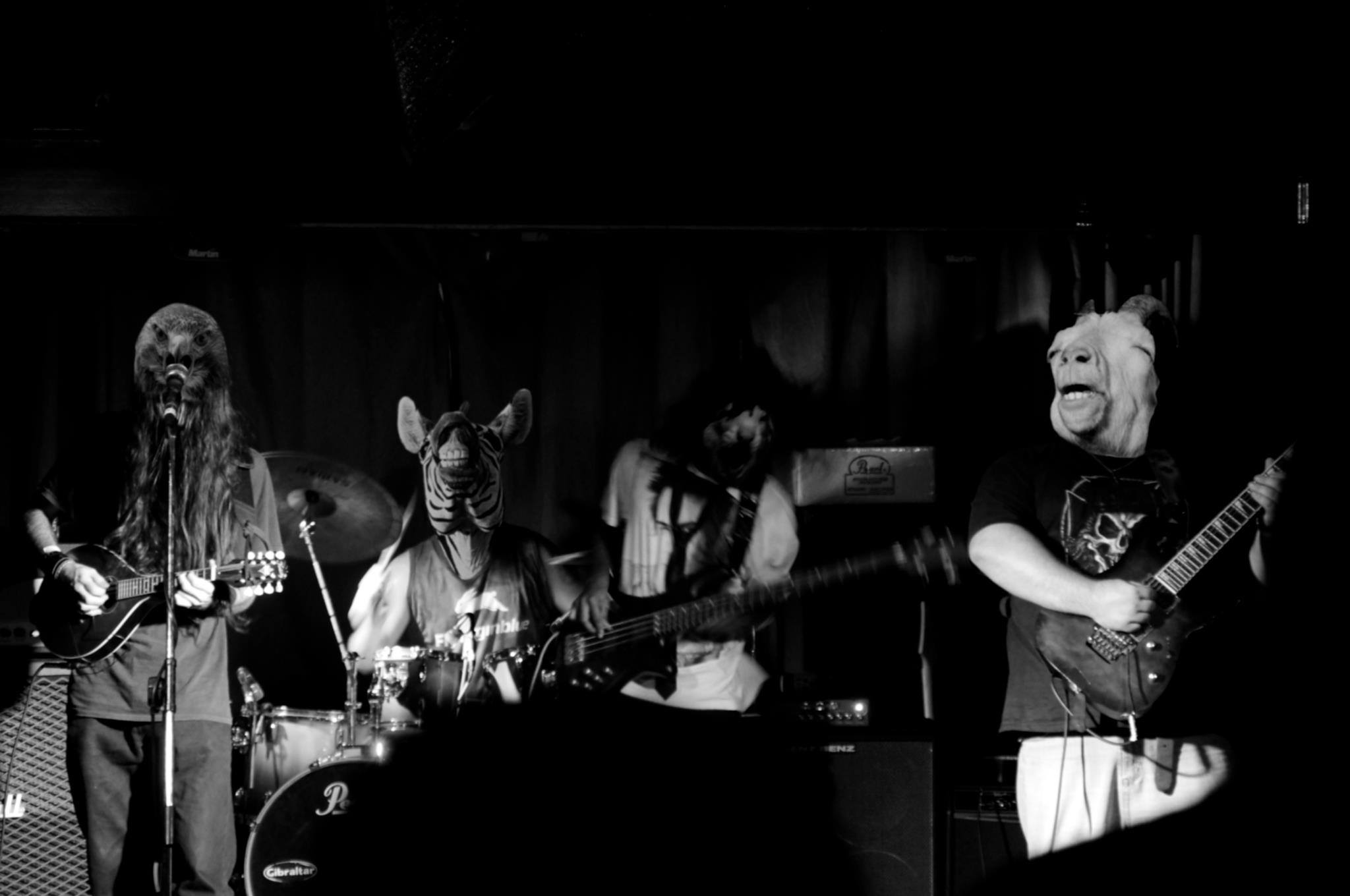
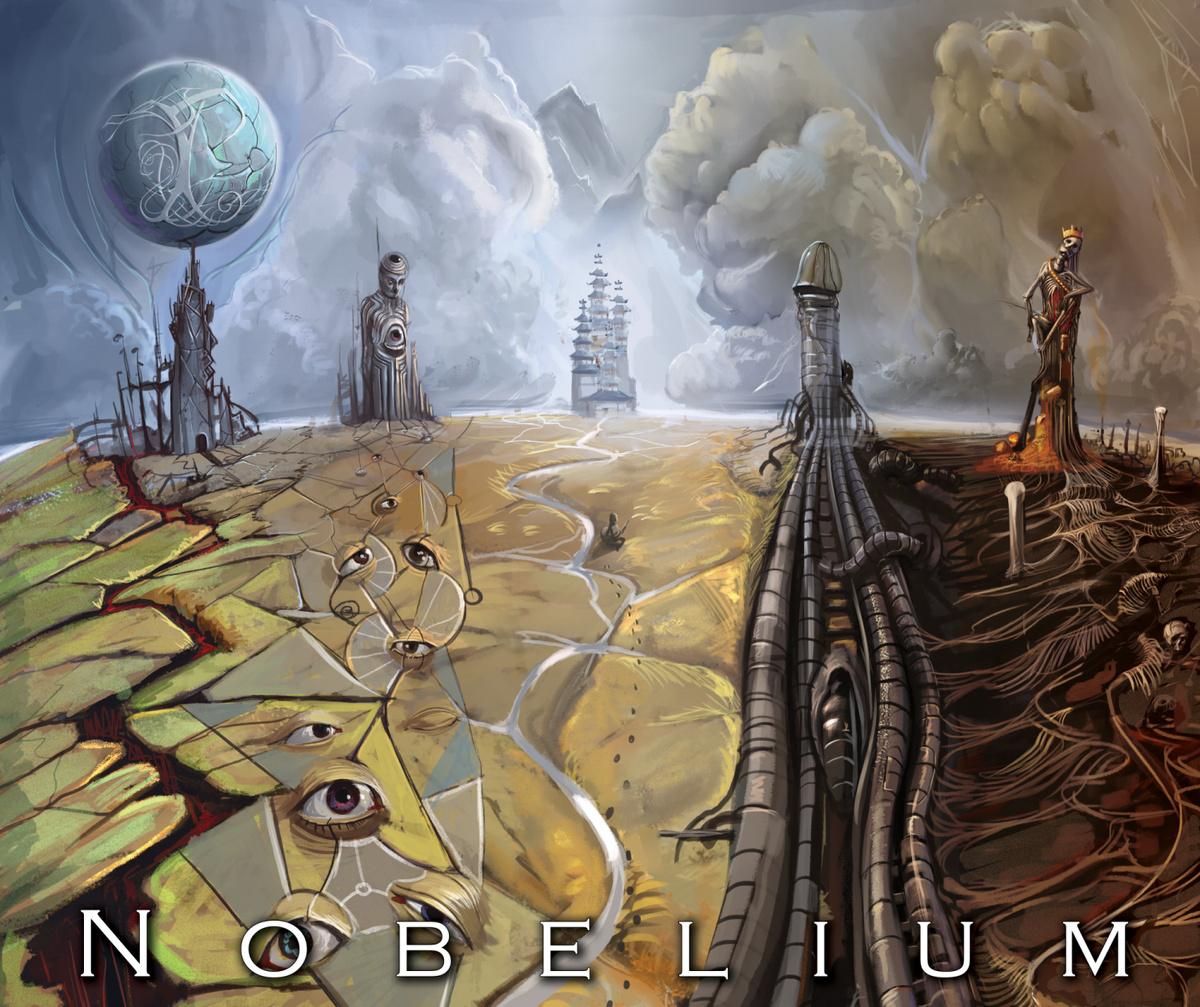
Brisbane prog metallers, Therein recently re-released their debut album “Nobelium.” Guitarist, singer and mandolinist Cameron Whelan answered our questions.
How did you guys come together in Therein?
I moved to Brisbane to recruit people for Therein, and I was introduced to Kned (drums) through a mutual friend. Then I met our old bassist Krishan at uni. Shortly after, Ryan (guitar) joined as he happened to be studying with Kned and was keen on some Prog. It all came together rather easily come to think of it.
Your debut album is titled “Nobelium.” What does its name mean, and how does it reflect on the material?
It’s sort of a silly title, but it stuck. Nobelium is a synthetic element, and it’s chemical properties are not entirely known yet. But it definitely exists. It also sounds like an imaginary place. I’m not sure exactly how it came to be, but I felt it was an appropriate title when Nobelium first came together. We had just finished our first collection of recordings and it felt complete, it made sense. But it was something new for us, we didn’t fully understand it.
“Nobelium” was recently reissued . I suppose that there were quite a few outtakes from the original recording, is that right?
Actually, no! The extra tracks were recorded during the years after it’s initial release, but we felt that they belonged on Nobelium.
What are some of the themes you explore in your lyrics?
Quite a few things. On Nobelium we have (in tracklist order) – Greed, introspection and self-repair, optimism, debauchery, sadness, horror and possession, fishing and fighting, and culture. So human things mostly, though it really depends on the song. One of our new songs is about a meteorite!
What are you referring to when saying “Every changing of habit makes a change in the machine” in “Introspect”?
It’s a quote from George Gurdjieff. I don’t follow his teachings or anything, but he had some good ideas. It’s the last line of the song, everything before it was pointing to looking inwards and realizing you are the cause of your own problems. So in this context the line is saying that for every small change you make to fix it, you make a change in yourself as a person.
Are you satisfied with how “Nobelium” turned out? Do you believe in improvement?
Yes, for both questions. Nobelium was our first real crack at recorded work. I think it turned out pretty well for the time, but we’ve improved significantly since then. As long as we’re working, there will always be room for improvement.
I guess that “Samual’s Reel” is a showcase of your Tom Waits influences. What is your way in general to maintain a good balance between employment of acoustic and electric guitars in a song?
Firstly I just need to point out that Tom Waits has nothing to do with Samual’s Reel. We’ve had this comparison once before. It’s very much rooted in Celtic music and Tom Waits is… well, Tom Waits. Experimental Jazzy-Blues-Something… I’m not sure what to call his music. But it’s pretty great, even if it isn’t Irish!
But, to answer your question. I think a good way to maintain that balance is to identify which guitar is the lead, and build the other guitar parts around that. In the case of Samual’s Reel, the acoustic guitar took the lead. So the electric parts bounced off of that to draw out some of the rhythmic and melodic elements.
What do you guys do in your spare time?
Drink beer and play music… Sounds awfully similar to what happens during our working hours too.
What is the last concert you attended?
WACKEN.
Oh, and Plini.
To people who don’t know about Therein, what would be your message in order to get their attention?
Listen up!
You can buy “Nobelium” from Bandcamp, and like the band on Facebook.
Yes played a true fan’s dream concert with a set list stacked with both obscure delights and time-tested classic favorites. Here you can see them perfectly executing a stunning live version of one of Yes’ greatest but least appreciated songs: “Tempus Fugit.” Props to Billy Sherwood for tying it all together seamlessly with that genius Chris Squire signature bass line. And all the vocals were uniformly superb in an expertly balanced and crystal-clear live mix.
It was a mind-blowing two concerts in one.
Toto took the stage promptly at 8pm and then played a perfectly-paced, flawlessly professional 90-minute set. Then after an intermission for the equipment on stage to be switched out and in, and for concertgoers to have a bathroom break and buy more libations at the bar, Yes began their own 90-minute set with a classy tribute to Chris Squire at 10pm: a single spotlight on his bass, a video tribute in the background, and “Onward” played over the speakers.
I hadn’t read about the tour, so I was unprepared for the delightful surprises that ensued. Yes took the stage and proceeded to fill their set with a bunch of obscure songs that only true fans would know about and be thrilled to hear! It was pure Yes heaven, not only for that reason, but also because I have never heard a better sound mix at a Yes concert: everything was clean and crisp and detailed and pure sonic perfection. Toto’s mix was a little muddy with vocals and keyboards often being somewhat lost, which I have heard even at shows by Yes in the past, but this time Yes’s mix was everything I could ever ask for and then some: it was even better than listening to an album version!
And how many times can you say that about a band? Usually not. But on this night Yes proved to me that they are in a whole musical class by themselves, with definitive and irrefutable sonic proof. Even the Steven Wilson and Rush concerts I saw in the summer didn’t sound this good.
Despite some audience members being baffled (obviously the Toto-only fans) by the set list, once the band played “Owner of a Lonely Heart,” the crowd again rushed the stage and started back up with the frenzied audience participation that had marked the Toto set. Those antics from the previous two hours had been expertly stoked, thanks to Toto’s expert intuition for fulfilling every audience craving and for executing truly genius live arrangements designed to give the crowd maximum enjoyment.
From this “Lonely Heart” point on, Yes played more of their classic “greatest hits” and basked in the intense love from an appreciative audience. You know, I must note that the audience was having so much fun at this prog double bill that the joy echoed even in the banter in the restroom at intermission. As the washroom jammed up with a massive crowd (the mature crowd obviously had treated themselves to multiple rounds at the bar that they never could have afforded in their younger days), concertgoers loudly traded, above the din of the water closet, their respective happy memories of Yes concerts they had seen in the past. It was proggy locker-room camaraderie at its finest and it was totally hilarious. And the concert was still only half over!
Blame Toto for it, I guess, because they had whipped the audience into such a delirious state of prog bliss. Radio hits like “Rosanna” and “Africa” were extended into concert-tailored specialities with extra, prog-length guitar and keyboard solos and audience participation-singing shenanigans.
It’s hard to pick a favorite song from the Toto set, because every single song was live perfection, but personal highlights for me included the chance to hear “Great Expectations” live, as well as “Orphan”, off of Toto’s XIV — easily, but surprisingly, one of the very best albums of 2015 (and much better than Yes’s recent Heaven and Earth which sounds shockingly unfinished and I have to blame the producer for that failure). “I’ll Supply the Love” also blew me away live.
In fact, “Running Out of Time,” which Toto opened with, was so blisteringly perfect and infectious the I could not get it out of my mind for the whole night after the concert ended. I couldn’t stop singing it during post-concert burgers! Which just goes to show you how Toto has achieved total Jedi mastery of sonic hooks; somehow, I think those amazing vocal harmonies must be part of the method by which they can pull off such mind tricks.
I was stunned by how perfect the vocals sounded live. These guys are totally pro and settle for nothing less than the heights of musicianship. It is very satisfying to see such standards upheld in today’s live venues and I am proud to be part of the Toto generation that carries this torch.
And Billy Sherwood really impressed me with the undeniable vitality he brought to Yes’s sound, as his vocals blended in perfectly with everything and his bass skills were an exquisite match for the virtuosity of Steve Howe.
As I listened to Steve, I had to say to myself that this guy is the greatest guitarist on the planet; he sounds like he has gotten better with age, if that makes any sense. And it does. Perfect sense. His playing is so tasteful and not a single note is wasted or ever excessive, which is quite the realization once you remember the conventional knock against prog.
Geoff Downes totally shone at the keyboards and laced everything together with his nimble playing. Every note could be heard with such clarity that it was a real treat. To hear such music on a record makes your jaw drop, but to hear it so effortlessly reproduced live without missing a beat is unbelievable.
But what I liked best was how Geoff even selected a bunch of unique keyboard sounds and timbres that were not in the original recordings but that were truly surprising and delightful live, making you wonder if you have just heard the greatest version of that Yes song ever! Probably. And you will never be able to hear it again! Wah. But what a happy memory!
Alan White, what can I say, the dude is amazing. He is so humble and does his thing without showing off but any musician with a brain knows just how essential what he does is. I envy the lucky fan that Jon Davison gave one of Alan’s drumsticks to. Alan makes me want to applaud his every drum fill, but I contain myself so that the other audience members can hear the show.
And finally we should note what a bundle of positive energy Jon Davison is, making him the perfect guy to lead up front. When he flashes that peace sign in “Your Move,” you cannot stop from smiling because it’s 100% genuine and no pose. With the rest of us true believers in the spiritual positivity of Yes, it is only something to which I can say, “YES!” Yes, Jon, you are awesome, and thank you for keeping Yes to be the greatest band ever (to quote Toto).
And on that note, total thumbs up to Toto for being such unrestrained Yes fans. They kept praising Yes throughout their set, which shows you what a class act they are. And those were not empty words: what better tribute can be paid to your lifelong inspiration, other than to make your own music that is perfect in its integrity and sealed with the highest standards of musicality?
Steve Lukather (guitar), David Paich (keys), Steve Porcaro (keys), Joseph Williams (vox), David Hungate (bass), Shannon Forrest (drums), you guys are incredible, and your integration of Mabvuto Carpenter (vox), Lenny Castro (perc), and Jenny Douglas-Foote (vox) into the show is totally pro. I admire your intense dedication to giving people a live experience that can never be matched by any audio reproduction. You may consider your musical flights to be lesser in comparison to Yes, but all I can say is, hey, “little wing,” fly on! (Yes, Steve, our minds are still blown by your solo.)
If you were lucky enough to catch this tour, count your blessings. For me, it was a rare and special occasion the likes of which we may never see again. Just last year, I was taking for granted meeting Chris Squire at a concert. Now, today, I look at that photo and I know that you never know what tomorrow may bring. So, carpe diem and savor those notes while you can. Long live prog!
A match made in prog heaven, Yes and Toto closed their 2015 Summer Tour with a flawless show in Vancouver, Canada.
TOTO SET LIST:
Running Out of Time
I’ll Supply the Love
Hydra
Hold the Line
Afraid of Love
Holy War
Pamela
Instrumental (Steve Porcaro duet with Lenny Castro)
Keyboard Solo (David Paich)
Great Expectations
Without Your Love
Little Wing
On the Run / Goodbye Elenore
Orphan
Rosanna
Africa
YES SET LIST:
Onward (song played over speakers, with video as a tribute to Chris Squire)
Don’t Kill the Whale
Tempus Fugit
America
Going for the One
Time and a Word
Siberian Khatru
Owner of a Lonely Heart
Roundabout
Starship Trooper
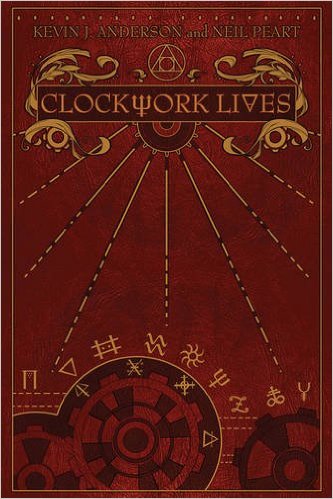
As any Neil Peart fan well knows, the great man just celebrated his 63rd birthday and his sequel to his co-authored novel, CLOCKWORK LIVES, comes out tomorrow. We all eagerly await with intense and immense anticipation this new work by Peart and Hugo-nominated science-fiction author, Kevin J. Anderson.
Out September 15, 2015.
I must also proudly note that my intellectual biography of the world’s greatest drummer comes out tomorrow as well. NEIL PEART: CULTURAL (RE)PERCUSSIONS (WordFire Press). It will be available in paperback ($14.99) and ebook ($5.99) but is now available for pre-order.
I have to thank a lot of folks for their encouragement with this book project, and I hope I give everyone due credit in the book. When I read the works of Steve Horwitz and Rob Freedman, I just knew that I had to write a book on Peart. I’ve loved Neil Peart’s words and musicianship since first encountering MOVING PICTURES in March 1981. I was in seventh grade, and I’ve never been the same. To me, Peart fits in the same category as J.R.R. Tolkien, Ursula LeGuin, Ray Bradbury, and Milton Friedman as influences on my young life. As Peart has grown, so have I. And, so, I presume have most of us.
This book also turns out to be my fifth published biography. The other biographies, however, have been almost completely academic. When I first started to write this book, I’d wanted to write an autobiography with the emphasis on how Peart shaped my own life and thoughts on a variety of things. Even during the first draft, I started deviating from this plan. By the final product, I’d left in only a few personal experiences. There are two reasons for this.
First, almost everyone who reads the book wants to know about Peart, not me. Second, some of the experiences are still too painful to make public fully. I can only state that Peart’s art and example has meant as much to me and my life as any figure outside of my family.
In the book, I focus on Peart as a man of letters, one of our greatest in the English language. I was pretty thrilled when PROG’s Johnny Sharp wrote:
But author Bradley Birzer does go a little over the top in his gushing praise of his subject. When an intro mentions Peart in the same sentence as Socrates and Cicero. . .
He’s completely correct, of course. But, you should’ve seen earlier drafts! Ha. Anyway, if you like what we do at progarchy, you’ll like the bio.
Actually, I was just thrilled that my favorite magazine reviewed my book! Even if Sharp had hated it, I’d still be pretty honored that Jerry Ewing and Grant Moon took it seriously enough to review. Still, I’m so glad Sharp actually enjoyed it!
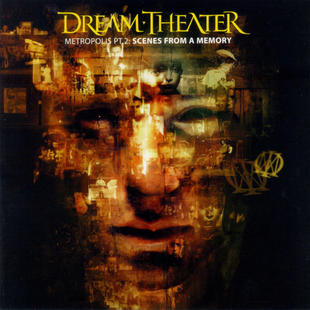
As Dream Theater quietly celebrates their 30th anniversary as a band this year, I bring you a look back at what is likely the group’s best album, Metropolis Pt. 2: Scenes From a Memory. Many might argue that Images and Words is their best, but I believe that Dream Theater reached unmatched levels of brilliance on their 1999 album. It is also one of the greatest albums ever created, in my humble opinion.
In the grand scheme of things, I’m a very recent fan of Dream Theater. I didn’t really “get into” the band in earnest until early this year. Somehow, though, I feel as if I have been listening to the band for years. Their music seems to transcend time and emotion, particularly on Scenes from a Memory. This album manages to capture so much emotion, feeling, and spirit through both the lyrics and the music itself. From the seemingly strange concept of a man discovering he is a reincarnation of a woman murdered in the 1920s to the blisteringly brilliant musicianship, Scenes From a Memory grabs the listener and doesn’t let go. The album also manages to reach back to the band’s first album with James Labrie, 1992’s Images and Words. As many of you know, Scenes From a Memory is an extension of the song, “Metropolis Pt. 1: The Miracle and the Sleeper,” and the album manages to include and build upon many of the themes and musical motifs introduced in that song. Continue reading “Metal Mondays – 30 Years of Dream Theater – Metropolis Pt. 2: Scenes From a Memory”→
What an honor to talk with the outrageously talented Rhys Marsh. Marsh is as generous with his time as he is interesting and (more than) capable. A true artist who follows his own path and makes his own way, he is armed with no small amount of integrity. He’s not only a man on the move, but he’s also a man who will continue to move the art world for decades to come.
Any typos are my fault, not Marsh’s–BjB
I must admit, I love this picture. Here’s the man himself, Rhys Marsh. He looks like he could’ve been an original member of Traffic.
Progarchy (Brad):Rhys, thank you so much for taking the time to talk to us. I’ve known of you and admired your work for a long time now, but we’ve only recently connected.
Rhys: Thank you, Brad — that’s really nice to hear.
Progarchy: I have to admit—and I’m sorry to state this is the case—but you’re not as well known in North America as well as you should be. Let’s try to change this! So, a really basic question and probably one that will bore you to death. Can you introduce yourself to those of us in North America? Where are you from? What’s your professional background, aside from music? I know you live in Norway now, but I assume by your name that you’re not a native? How long have you been in the music business? And other such basic fundamentals.
Rhys: I was born and raised in London, and moved to Norway almost ten years ago. In the late-nineties, I went to a performing arts college in south London — the same one that people like Imogen Heap and Adele went to — which is where I met Will and Francis, and we formed Mandala. We wrote half of our recently-released debut album in this period, and the other half in our first latter period, around 2005.
Marsh’s captivating solo album, SENTIMENT.
During those years, we played hundreds of concerts, at anywhere and everywhere from The Marquee Club in London to The Knitting Factory in New York City. We started off as a rock trio, then we added a live string section. At one point, for a few years, I was playing live about three times a week — either with the band or solo.
However, many years of doing the same thing and not seeming to get anywhere with it got to be really draining, so I had to find a new atmosphere. I lived in New York City for a brief period, and while there were some great times there, that wasn’t the change of environment that I needed, so I headed for the mountains. I’d always been drawn to Norway, and at the time mostly listened to Norwegian music — Magnet, Jaga Jazzist, Thomas Dybdahl, Anja Garbarek, Arve Henriksen — when the chance to move suddenly appeared (which was mostly due to the brilliance of MySpace). So I packed my guitar and laptop, and arrived at the tail-end of the winter. The house I moved into had a recording studio in the basement, and I immediately began work on what was to become my debut, ‘The Fragile State Of Inbetween’.
Just before the move, I’d started working with some Japanese musicians, and that led to a project called Unit, which also included Ingrid Chavez (David Sylvian / Prince). It was as surreal as it was wonderful to be singing duets with Ingrid, after listening to her for years on ‘Dead Bees On A Cake’ and some of the Sylvian b-sides from that era.
As soon as If arrived in Norway, I was also invited to sing in a few projects with the Oslo progressive crowd, such as The Opium Cartel, Ignore and Ketil Vestrum Einarsen’s solo project. After a while, I was asked to be the new singer in White Willow, though that never turned into anything.
Seems that the change of environment was the perfect catalyst, and after a few years of working on various projects like that — as well as writing and releasing three albums as Rhys Marsh And The Autumn Ghost — I decided to build my own studio and get more into producing albums for other artists. A year or so later, the idea of having my own record label also seemed like the right thing to do, and Autumnsongs Records is going at quite a pace these days.
For me there isn’t an “aside from music”. I made the decision when I was ten or eleven years old that music was going to be the thing that I do. I never chose a second option as a safety net — I just went for it, and had the confidence within myself that I could make it work. when I was growing up, my parents would always play music, and the main album that stood out was ‘Electric Ladyland’. one of my earliest memories is crawling over to the turntable, holding on to it as I lifted myself up, and turning up the volume.
I got my first guitar when I was three, but didn’t start playing until I was seven. although I loved Hendrix’s guitar playing (in fact, I think that the solo from ‘Machine Gun’ is the greatest of all time) it wasn’t only the guitar that I was fascinated with in this album — it was the sound. the details and layers of both the guitars and vocals, and the way they fit together, the interplay between the drums and bass, the texture of the cymbals. I could already pick out the different elements that made up the complete piece of music, and it wasn’t long before I first started experimenting with a four-track machine, playing guitars, keyboards and anything I could tap or hit to make sound like percussion.
Progarchy: Well, I’m just amazed at your productivity. Just recently you’ve released a solo album, SENTIMENT; a Mandala album, MIDNIGHT TWILIGHT; and a Kaukasus album, I. How do you explain this? Did god give you 2 extra hours in the day? Are you gifted with incredible amounts of energy?
One of my favorite albums of the past two years, “I” by Kaukasus.
Rhys: True to say, it has been a very busy few years! I think it’s partly due to the fact that I keep things very organised, so I’m able to work on several projects at the same time, without them conflicting with each other. since ‘The Blue Hour’ came out, in the autumn of 2012, I’ve released an album every six months. the writing and recording of ‘The Blue Hour’ was very heavy, and a lot of terrible things happened during that time, so the process of it became the thing that really helped me. Once I got into the swing of things I just haven’t been able to stop.
Although the Mandala album was already written and Kaukasus was a collaboration, but still, the recording and mixing tends to take longer than the writing anyway. and, to back up my theory, the next couple of albums are in progress as we speak.
Progarchy:A first follow up—can you sustain this level of writing, production, and output?
Rhys: Good question… probably not! Then again, this is what I do, so it just happens. I can’t imagine that I’ll carry on recording and releasing two albums a year, but I never thought I’d reach this level of output anyway, so who knows?!
Progarchy: And, a second follow up—what does each band or solo project allow you to do? That is, does each speak to a different part of your artistry?
Rhys: Yes, they do. I try to define my role in every project, otherwise I’d likely just end up doing everything all the time. I love being a part of Mandala — a clearly defined trio in the old-fashioned sense. I love to write a song, then know that Will and Francis will add their own thing, and the result becomes Mandala.
I also love to write, record and play everything myself, as i can get into the details and add the idiosyncratic details that appear when the same person plays all the instruments, like you get on the albums by Jason Falkner and Jon Brion. the only downside to that is that the songs don’t naturally translate to the stage.
Progarchy: Can you tell us a bit about your influences, musically and artistically? Each of your albums is clearly in the long tradition of rock and, to a certain extent, prog, but you’re also really doing very interesting stuff that probably couldn’t be categorized. From the somewhat martial bass and drum lines on I to the eastern (mostly Persian and Indian sounding) sounds on MIDNIGHT TWILIGHT to an almost Talk Talk intensity on parts of SENTIMENT.
Rhys: I listen to a lot of music. Apart from Hendrix, my parents also listened to Joni Mitchell, The Band, James Taylor, Van Morrison, and a little-known band called Quintessence, who released one of the greatest albums of all time, ‘Dive Deep’. This album also got me into Indian music, and I started listening to Ali Akbar Khan. The college we went to had a sitar, tamboura and tabla, and quite often we’d sit in a room that had no windows, turn the lights off, and jam. I also really enjoy the modes, harmonies and rhythms of Persian music, so that also often creeps into the balance.
My dad is also into the mid/late-sixties English blues movement, so we listened to lots of Peter Green’s Fleetwood Mac, John Mayall, Cream, Keef Hartley, then through to Rachmaninov and Chopin. I loved the heavier moods of Rachmaninov and Shostakovich, so when I started listening to progressive rock, I was immediately drawn to Van Der Graaf Generator and King Crimson.
But the one musician who changed everything for me was Nick Drake. When we were at college, Will and I would often take the bus into town during lunch time and go to the second-hand record shops (of which there were many). one day, in late 1997, we walked into one and they were playing ‘Cello Song’. I stopped in my tracks and was spellbound. when I found out who and what it was, I bought his three albums and listened to them constantly for months. for the next five or so years, I listened to them all, at least once, every day. He redefined everything i knew, and it was then that i started to write my own songs.
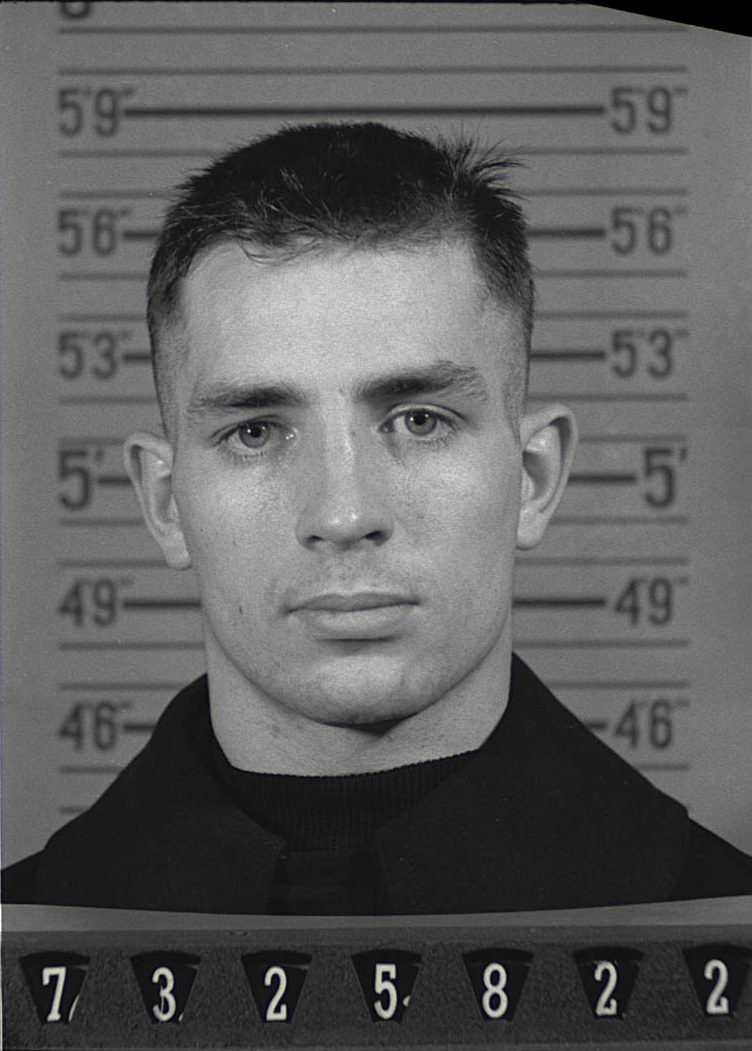
The greatest of the Beats, Jack Kerouac. Here, in his World War II days. Photo dated 1943.
Aside from musicians, I’m inspired by Jack Kerouac and Mark Rothko. I love the way that Kerouac’s words flow, and I like to have a similar feeling within the chords and melodies I write, so they aren’t too contrived, but more instinctive reactions to the moment. with my lyrics, I like to have a Rothko-style feeling to them, so that they can mean different things to different people.
Progarchy: Given that you’re very open to new ideas and love to incorporate a variety of styles and instruments, what would you like to do next? And, with whom would you like to work.
Rhys: I feel that with every album I make, I’m refining what I do, whilst also introducing new influences. So whist I’m boiling it down to its essence, it’s also becoming more broad. This is why it’s a great help to define my role in the album before I start. I have quite a large selection of instruments in my studio now, so it would be very easy to play all of them on every album I make, but that wouldn’t work in the long run, so I limit myself as much as possible.
There are so many people I’d like to work with. The list never ends. I have so many ideas for albums that I’ll probably never have time to make. I just hope I can make a good-sized dent in the list!
Progarchy:When you’re writing your albums, how much emphasis do you place on your lyric writing? As I listen to the three most recent albums, I hear lots of personal observations. Some are about everyday experiences while several seem rather mystical. Do you just go as the muse hits you, song by song, or are you hoping to convey certain themes in your music—about society, individuality, will, belief?
Rhys: My lyrics are always written from experience, though abstracted to different degrees, and inspired by different things, but they’re always personal and meaningful. I choose the words mainly by which sounds i need. the melodies mostly appear wordless, and then the words form from that, so they’re direct extensions of the music.
I’ve read a lot of dystopian literature and the English romantic poets, such as Percy Bysshe Shelley. the Kaukasus album was the one that I tried to write as distantly as possible, but still I found myself expressing my own feelings in there.
Progarchy:Ok, a hypothetical question. It’s 20 years from now, and at age 68, I’m trying desperately to finish a masterpiece on the history of rock and prog (if only!). Where do you see yourself in that history, and what statement would you like to make with your art?
Rhys: Maybe, just maybe, I would’ve released 40 more albums by then! I’d be very happy to just be a part of that history, and hopefully I’d be known as a multi-instrumentalist and producer who’s released a series of consistent albums over the years. I rarely look back, so I don’t really think about the albums I’ve already released. once they’re finished, I move on — musically and emotionally — so I’m not really working to a template when I create something new, which makes it both very exciting and quite impossible to think that far ahead!
Progarchy: Thank you so much, Rhys. What an honor to connect finally. I hope we can keep talking as you keep writing and producing such excellence.
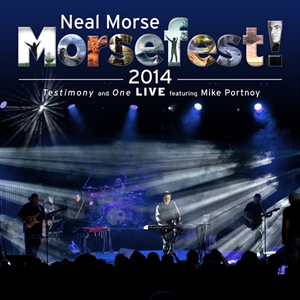
A review of Neal Morse, MorseFest 2014. Four CDs/Two DVDs. Radiant Records, 2015.
Birzer Rating: 11 out of 10 (yes, you read this correctly!)
And if Neal can find God, then what’s in it for me?
Could I take that same road?
Would the truth set me free?
–Andy Tillison, Mr. Prog, 2015.
MorseFest 2014
I am the proud owner of not one but two Neal Morse, MORSEFEST! 2014 six-disc sets. It’s prog, after all. Why not go overboard? Radiant has kindly sent progarchy all releases in, during, and through our three-year old life as a website. But, Radiant is just such an amazing label, that I refuse not to support them. For every CD they send me, I buy one from them. It only seems just.
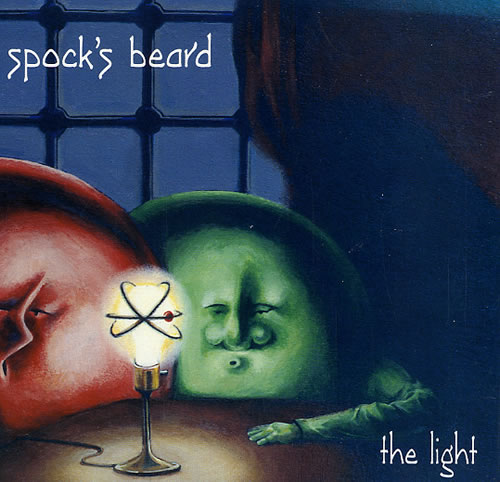
Before I even begin this review, I have to state two things which I’ve already noted several times on progarchy. First, Morse has always been a part of my adult life. I bought THE LIGHT by Spock’s Beard in Bloomington, Indiana, way back in 1994. I know that the official release date is early 1995, but I’m fairly positive I remember purchasing it the fall semester of 1994. I am, however, quite certain that I was the first person in Bloomington to buy it. I could never exaggerate the importance of that album to me. I had no idea about the neo-prog scene that had begun in 1985 or so, and I had considered lots of what was called New Wave in the 1980s to be the rightful inheritor of 1970s prog. Music by XTC, Talk Talk, and Tears for Fears struck me as the proper successors.
The first album that made me aware of third-wave prog. Spock’s Beard, THE LIGHT.
Then, after years of waiting patiently, THE LIGHT arrived and just blew me away. I couldn’t believe anyone was making that type of prog anymore. I lingered over the music and the lyrics, and I spent nights listening to THE LIGHT with the headphones on. The members of Spock’s Beard became immediate heroes to me and, especially, Neal Morse. That “meeting” led to me finding out about Marillion, Roine Stolt, and, ultimately, Transatlantic, Ayreon, The Tangent, and The Flower Kings.
Second, my rather large family loves Morse as much as I do. I remember how worried I was when I’d heard about Neal Morse becoming a born-again Christian and leaving Spock’s Beard. I was in shock, fearing that what is now called Third-Wave Prog was dead. How could prog continue without Morse—who was, to my mind, “Mr. Prog.”
I now happily give that title to the man I quote above, Andy Tillison, but I’ll explain why in a bit.
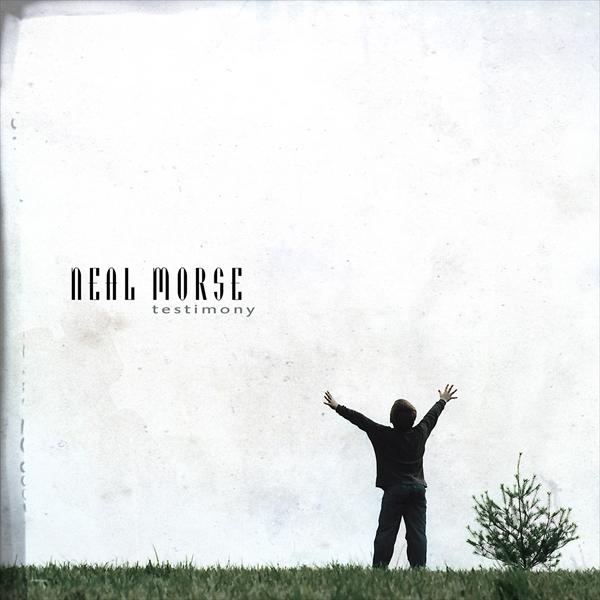
Testimony (Radiant, 2003). Morse’s first post-Spock’s Beard solo album.
Back to the point.
When TESTIMONY came out, I not only breathed a sigh of immense relief that Morse had continued to carry the prog banner, but I also was floored that he did it so beautifully. If Spock’s Beard had embraced the dramatic, Morse’s first post SB released embraced well. . . everything. This wasn’t just dramatic, this was story telling at its highest. Morse had ascended from playwright to a full-blown bard! An American prog folk bard at that.
For at least two years, I think (with only slight exaggeration), TESTIMONY was in constant rotation throughout the Birzer home. As a family, we’ve never been big on TV, but we’ve always loved music. The story of Neal’s conversion and the recovery of his daughter Jayda became as real and as much a part of my family history as did, say, the stories of Narnia and Middle-earth I was reading to my children.
My kids and I knew all the lyrics (still do), and we ALWAYS danced to Part III of the album. For some reason, my kids became convinced that all of Part III was the “Batman theme.” I’m still not sure how this came about, but it was pretty much set in stone. Neal Morse was Bruce Wayne by day and Batman by night! Hilarious.
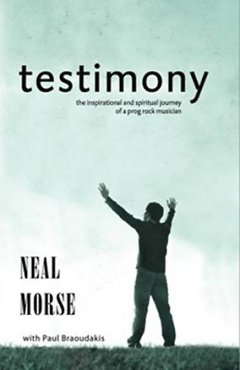
Morse’s autobiography.
I must also state that though I’ve followed Morse’s career for twenty years now—and rather closely—I’ve never met him, I’ve never corresponded with him, and I’ve never talked with him. What I know, I know only through his art, his autobiography, and the interviews he’s given. Still, I can’t separate him or his art from my own adulthood and, more importantly, from my family life. Probably more than any other musician or act with the exception of Rush, Morse’s music has provided the soundtrack for the Birzer family.
So, long story short, when I heard that Morse would be performing all of TESTIMONY and ONE live for MorseFest 2014, I was not only extremely excited, but I was also equally curious as to how he would make this different from his other releases. I’m a member of Morse’s Inner Circle, and I own everything he’s ever released commercially and many things he’s released only privately. I have every package—no matter how grand or small—Radiant has produced, and I’ve never regretted a purchase.
Not surprisingly, Radiant reflects the integrity of its owner and the label never does anything half way. Perfection radiates from all it does. As a perfectionist myself, I’m rather taken with fellow perfectionists. Add in the now-president of Radiant Records, the ever grand, gracious, and wonderful Chris Thompson, and you really do have something incredibly quite special in north-central Tennessee.
So, the question remained, how would Morse take these albums—especially TESTIMONY—which he has already played so often and make it alive again for an audience that knew the story intimately? After all, no child or family member of any progger is as well known as Jayda. Her story has become, in many ways, the story of third-wave prog.
Radiant Records. Founded by Neal Morse. Chris Thompson is now president.
Well, let me just be blunt—the story I’ve known and sung to and danced to for 12 years—is just as powerful now as it was in 2003. I’m not sure how to explain it, but when watching Morse tell the story again on the first night of MorseFest 2014, I was deeply moved. . . yet again. In part, it’s simply a powerful story—Morse apart from his wife while touring in Europe and getting the news that Jayda’s hole in her heart disappeared after immense prayer. In equally large part, it’s a powerful story for us because it’s still an utterly powerful story for Morse. His quite visible emotion as he tells the story again is as vivid as it was twelve years ago.
And, this raises an additional point. As charismatic as Morse is (and, he IS!), he is equally humble. It’s a powerful combination for his fans. Such a wholesome quality is all-too rare in this world of instant gratification and cynical self-promotion. Whenever something works well for Morse, however, he immediately thanks God and his family and friends.
It’s a truly inspiring witness to goodness and beauty.
I must admit, I get very frustrated when fellow rockers and proggers dismiss Morse as “too religious.” While I don’t share every aspect of Morse’s faith, I can’t help but be attracted to it. If Jesus is even half as cool as Morse sees Him, I’m in. Additionally, how many times have I listened to New Agey lyrics or left-wing politics and accepted them as simply part of the art? More times than I can count.
As a person who is privileged to teach the history of western civilization every autumn to 18-year old freshmen, I can state with absolute certainty that all of the greatest women and men of western civilization up until that demon Machiavelli used their art as a way to express their religious faith. This was as true for the pagan Socrates as it was for Michaelangelo. Historically, it’s been rather difficult to attain the heights that great art demands without a supernatural inspiration.
That said, it should be remembered and noted that Morse performed and recorded MorseFest in his home church, New Life Fellowship. And, it shows. Morse is reverent as well as excited. He’s also—and it took me a few listens and watches to realize this—quite relaxed. I’ve seen him perform many times live as well on DVD. If I had a complaint about Morse, it would be that when I’ve seen him live, he’s tended to rush things. Not much–just a bit. If this is a real criticism, take it as the weakest criticism ever offered.
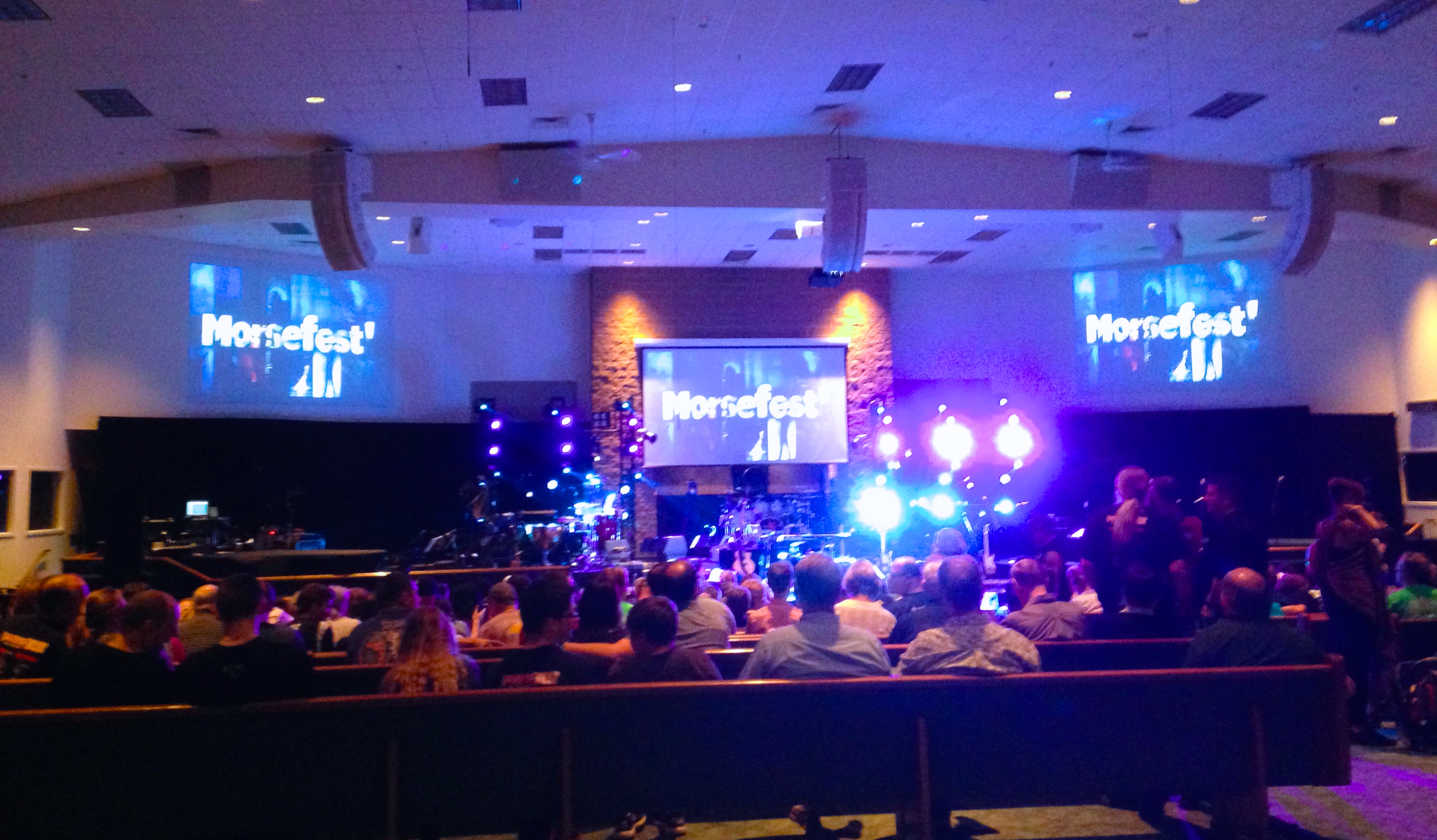
MorseFest, New Life Fellowship Church, Cross Plains, Tennessee. MorseFest 2015.
Now, having watched MorseFest 2014 and having attended MorseFest 2015 (Friday night only, unfortunately), I can state with certainty that Morse doesn’t feel rushed in the least. In fact, if anything, he was and is so relaxed that he allowed himself to express his own beliefs and convictions as fully as possible throughout the night.
As I mentioned in my review of MorseFest 2015, it was as though Morse had invited his five hundred closest friends into his living room.
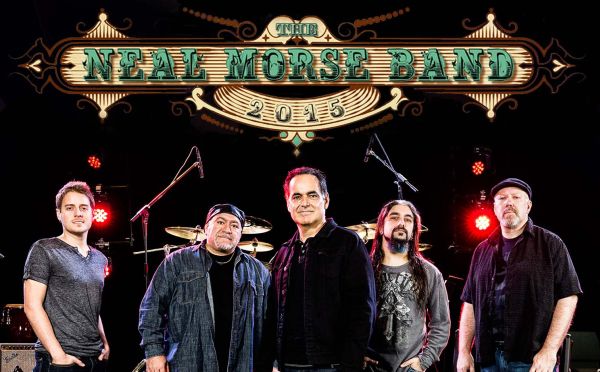
And, this leads me to the band. What more can I state? The five now full-time members of the Morse band play their hearts out. George’s lovable unmovable motion, Gillette’s fluid precision, and Hubauer’s intensity all contribute so much to everything Morse does.
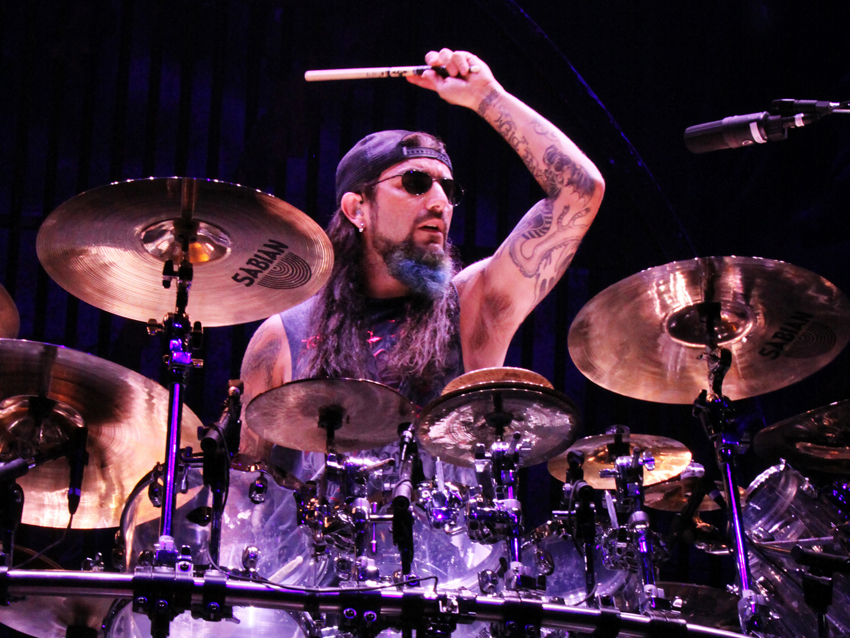
But, it’s Portnoy who steals the show (after Morse, of course). Portnoy. Portnoy. What to write?
Photo borrowed from Music Radar. The incredible and unstoppable Mike Portnoy.
Granted, I’ve been a massive fan of Mike Portnoy since 1992. And—on a personal note—let me state I’m only about 3 months younger than Portnoy. We come from the same generation and have the same influences. Again, as with Morse, I’ve never met, corresponded, or spoken with Portnoy, but I consider him a hero, a Peart-ian figure challenging the static of the present world and doing his own thing, quite successfully at every level. When Portnoy started playing with Morse in Transatlatnic and on his solo albums, I came to respect the drummer even more. The two really do complete each other as artists and as friends. That friendship comes through very beautifully on MorseFest 2014. It would be difficult to find a more moving moment on the whole set than Portnoy’s profession of his friendship with Morse. This isn’t spectacle, though a lesser personality would make it so. This is pure truth and honest revelation. What’s interesting is that in deferring to Morse, Portnoy becomes all the greater.
The sound, the production, and the packaging of the CDs and DVDs is, of course, perfect. After all, it’s Radiant.
Whether you own a few Morse releases or almost all of them, MorseFest 2014 is a must own for any lover of prog, rock, or western civilization! Get it now. Get it often. Get it frequently.
Let me finish with this. Over the past decade, I’ve argue that Neal Morse is “Mr. Prog.” I realize that title has been given to an Englishman who happened, like Portnoy and myself, to have been born in 1967. As much as I respect that musician, I strongly disagree with the assessment that he is “Mr. Prog.” Mr. Grumpy and Reluctant Prog, perhaps, but not Mr. Prog. Yet, after having met Andy Tillison, I can’t quite give the title to Neal without a slight reservation. Therefore, I take what Andy wrote on his most recent album quite literally. And, having affirmed and confirmed my suspicions and inklings while attending MorseFest 2015 regarding this new title, I offer Morse this title: “Reverend Prog.”