The Duda Abides: Progarchy’s Interview with Riverside’s Mariusz Duda

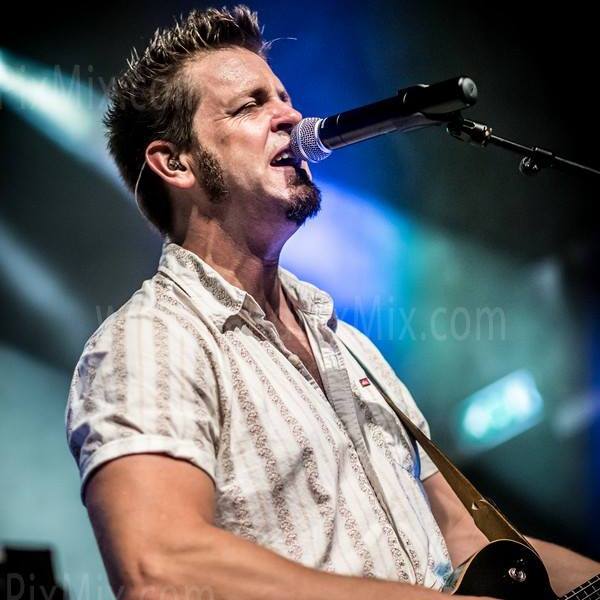
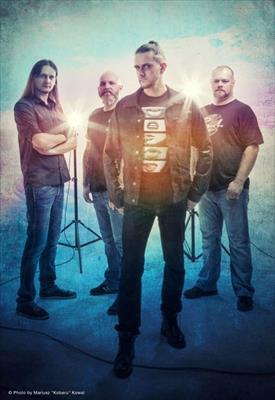
Riverside LTFM Band PhotoRecently, I had the good fortune to be able to talk to Riverside’s bass player, lead vocalist, and creative genius extraordinaire, Mariusz Duda. Despite nursing a summer cold, Mr. Duda was quite pleasant and offered some fascinating insights into Riverside’s most recent album (Love, Fear and The Time Machine), connections among albums, and a host of other topics. At the end, I tried to entice him and his Riverside band mates, with food, to play a local gig. Hope it works. Cross your fingers for me.

—————————————————————

Progarchy: First of all, thank you for taking the time for this interview. We really appreciate it. Second, congratulations on the new album. I’ve heard it a few times now and it is absolutely spectacular. Love, Fear, and the Time Machine has dispensed with the heavy metal elements and many of the hard rock elements of previous Riverside albums for a more melodic approach. What is the impetus behind the change in sound?

Mariusz Duda: Well I think that Riverside is that kind of band that [uses] melodies and emotions. We started with that kind of album, our career. Our debut album is full of emotions, full of melodies. Later I started to experiment a little bit. But I think since the previous album I went back to the main core that we have. I don’t want to repeat myself and repeat all the things that I have heard before. The thing I can do best is when I focus on the melodies and I focus the things that I am good at. So I just said to the guys that it’s time to reach into this melody mood, because this is the main idea behind Riverside’s music. Of course I would like to go even farther and focus on the melodies even more. But first of all, I wanted to change a little bit, the music, I wanted to change the mood. And I didn’t want to repeat myself. I didn’t want this time to delve into this vintage 70’s whatever. I wanted to push the boundaries and end up in a different place. I communicated this 80’s – I called it 80’s – I think that is the new path, the kind of era, in our music on the new album.

Progarchy: Yes, the third song, #Addicted took me back to my 20’s, as it had a lot of that 80’s sound.

Mariusz Duda: You know, those are my times. I’m not the generation of the 70’s, I’m 10 years later if I can say that. I grew up on tapes, I grew up in the time of the 80’s when on the radio I could hear songs. What I think is that in the 80’s we got really good songs on the radio. Now everything is, very shallow, flat, it sounds like a product made very quickly on an iPhone or iPad. In the 80’s you got really good songs that have lots of layers beneath the surface. Examples like Peter Gabriel’s stuff, or U2, or whatever. I really love that. I remember when I was 10, when I was 15, that was my era, and that’s the time machine, some memories connected with the new album. I really wanted to go back to this era. So I thought that would be great, to not maybe delve into 80’s, but to connect 70’s and 80’s with our style and come up with some kind of strange mixture. It’s not very progressive to be in the 80’s, but that’s the paradox because this [album] sounds much more progressive than other retro-vintage sounds.

Progarchy: Can you explain how each term in the album, “Love”, “Fear”, and the “Time Machine” relate to the overall concept of the new album?

Mariusz Duda: Actually, this is not an album about those terms themselves. The album is about making the important, life-changing decisions. I think in your lifetime there is a moment when you need to decide if you want to change your life or not. That kind of situation is usually when you have a midlife crisis, or you have some time where you are sick and tired of some patterns and you want to change something, what do you do? Let’s say you decide to change your life, some kind of twist, 180 degrees. Let’s say you decided to change your job, or you life, or move to another country, what’s going on then? Life changing decisions, something important, something that will have an impact on your future. From one side you feel this excitement, this freedom, maybe you said to your boss, “goodbye, I don’t like you, I’m going to start another life.” So you’ve got this good, positive feeling, and I called it “Love.”

On the other hand, there is this fear of the unknown, you didn’t know what to expect of this new life. You don’t know exactly. And there is other stuff, your experiences of the past and your imagination about the future, and I called it the “Time Machine.”

All these three elements are the most important forces that force you to make this very important, life changing decision. So that’s why it’s titled, those are the most important things when you want to change something in your life. You need to touch of love, touch of fear, and touch of your experiences from the past, your memories.

Progarchy: So what prompted you explore this theme?

Press_Cover_01 Mariusz Duda: Well, actually, there is some kind of personal background. And I think it is always connected with developing, evolving. We wanted to change something with our music too. I just felt it was kind of interesting. I wanted to do something a little bit optimistic than I do usually, a little bit more brighter, lighter. Last year, I did the solo project which is called Lunatic Soul, and it was very dark, it was about suicide. It was like a prequel about someone who died. And I just discovered, “my God, I’m delving into this darkness for so many years, maybe it’s time to do something a little bit more, you know, the light at the end of the tunnel.” So that was my first idea, to focus on the positive emotion. And focusing on the positive emotions was kind of connected with this transition into someone who is sad and was full of misery and he’s just trying to himself into someone who is more, in a better mood if I can say that. Someone who is more happy, to be happy, to feel happy. So, that was some kind of challenge to me, to go back maybe to go back to some kind of tunes that are not so dark. And I think the new album is also different.

Progarchy: Is there a connection with the last Riverside albums, since in the very last song on SoNGS, the protagonist seems to be saying “I’m going to take control of my life.” Even though that album had a pessimistic or dark tone, that piece seemed to be a little bit of optimism, he was saying “I’m not going to be a new generation slave, I’m going to be in control.” So could you say that relates to the new album, or there is a connection there?

Mariusz Duda: Well I have to tell you the last three Riverside albums are kind of connected again. I wouldn’t call it an official trilogy like the Reality Dream trilogy. I call it an unofficial new trilogy, I call it the Crowd trilogy, because all the lyrics on these albums are connected with social media, with the new modern life, those kind of elements that surround us these days. On ADHD and SoNGS, and the new album we’ve got this new modern language. I just wanted to take some features of our times, and that why we have #Addicted, that’s why we’ve got Celebrity Touch, and Under the Pillow, and ADHD we have this regular disc which is [a] Blu-Ray disc which is high definition and everything. And I think everything goes in this direction. Since the beginning of Hyperactive on ADHD until the final track on the new album, Found, I think there is this transition of the main hero who is just trying to finally feel positive. Maybe that’s not very original. But he is just in the moment when he realizes life doesn’t suck (laughs). You can deal with your life. And that is the whole truth, and it’s kind of obvious, but take a look at us and notice that so many people realize it maybe too late or when they have aged more than they would have liked to. That’s the way it is, you need to grow up and realize that, and you need to have your own experiences and to finally say “I like my life, I love my life even.”

So I think there is some kind of connection, maybe not strictly like on the Reality Dream trilogy. But I always try to create albums as movies. Yeah, Coda on the last album, that’s kind of positive too I would say, so that was like the pre-life of the life we have on the new album.

Progarchy: In general, where do you find sources of inspiration to use for a Riverside album?

Mariusz Duda: I don’t like to work an album like it’s some kind of job. I just feel that there are lots of things within my head. It’s kind of messy and kind of buzzy, and I know that I need to spit it out from time to time. It depends on how I feel and has different colors. It’s more introverted or more extroverted stuff. It doesn’t matter if it’s Lunatic Soul or Riverside or not, everything must be connected to or inspired by my personal stuff. I don’t need to be influenced by bands I am listening to now or read lots of dark books and decide “because of this, I will create that kind of mood on the albums.” Right now, since SoNGS, the last Lunatic Soul, this album, that was kind of personal. When I decided to do something about “slaves” let’s say, and I wanted to have this dark mood, then I started to connect the inspirations. Mostly I start with my personal experience, my personal needs of dealing with this subject that is just stuck in my head. I am usually trying to spit out what I have in my soul, in my heart, I don’t know, somewhere.

Progarchy: Do you think you are going to do another Lunatic Soul album before the next Riverside Album?

Mariusz Duda: I don’t know yet. If I catch a good flow with the guys we will continue this somehow. But I definitely have unfinished history with Lunatic Soul. I would like to do at least two more albums, including another prequel, because in my head I’m digging … I just see six covers and six symbols, different symbols of these albums. I will definitely need to go back to this. But I’m not sure if it will be Lunatic Soul first or another Riverside album, I have no idea. Maybe it will be something totally different to destroy this pattern somehow. I need to refresh myself from time to time too.

Progarchy: Do you ever have any internal conflict regarding an internal idea as to whether you should pursue it with Riverside or with Lunatic Soul?

Mariusz Duda: I’m one of these guys that can say “goodbye” to even the best ideas I have in my mind. Sometimes I really reject lots of good ideas for a more general cause, if you can say that. Because of this there is usually not a conflict like “ok, I don’t know if I should do this for Riverside or Lunatic Soul.” When I work on an album, I work on this album right now. So when I work on Lunatic Soul, this is this, I create this, I create that, but at times I see that this may be good for Riverside so maybe I’ll leave it, but it’s just an idea, not an entire song. I always know if it’s more for Riverside or Lunatic Soul or another future project. Riverside and Lunatic Soul are different musical worlds. Even if they sometimes sound similar in the studio, I can change instruments and change the whole mood.

But I have to tell you one thing – the track called Afloat, that was my idea that I wanted to use on the last Lunatic Soul, but it just didn’t fit, so I left it. When I started to compose the new Riverside with the guys and myself, I realized this idea could be very nice, I can use this somewhere in the middle of the album to take some rest. But actually it was something I [originally] wanted to use on Walking on a Flashlight Beam.

Progarchy: That’s an interesting bit of perspective. How would you describe the creative process in making a Riverside album, who does what?

Mariusz Duda: Well, I would say that I do just about everything (laughing). In the beginning we were trying to do lots of things together but I was this guy who was this director, editor, screenwriter, whatever. So I’m writing lyrics, I’m writing lyrics.

But to let you know one thing, when I do stuff with Riverside, I always try to use our band. I’m bringing my ideas and we are composing this together, and I am watching for reactions from the guys for these ideas. Thanks to this I know what I can follow, I can go in this direction and that direction. I need that. And sometimes there is interaction in bands, and thanks to this I can know where we should go with the music. This time I did kind of a personal thing and did a lot of things by myself, but also together with the guys. They were doing some composing.

Riverside should be a band anyway, but as the leader, the main composer and writer of lyrics, I don’t want to transform this into a one person band. No, each of us has a different musical style, a different way of playing, and that’s very necessary. Because of someone’s skills, you know what you can do and you know the limits, and that can help to find the final result.

Progarchy: And you know what the guys like to do, what their influences are and that affects the direction?

Mariusz Duda: Just imagine if you have musicians, you pay the musicians, and they can play everything, exactly everything you want them to. That’s kind of dangerous because the music could be everything and nothing at the same time. When there’s a band, and there’s guys where you know each other, you know what they like, what kind of music style, and you can write the music and you know the areas you can be in. Thanks to this you can develop the band’s style.

Progarchy: Poland is obviously a very different place now than it was at the time you and your bandmates were still growing up, having gone through a political upheaval and massive change at the end of the Cold War. It’s quite different from when you were different from when you were a kid in the 80’s right?

Mariusz Duda: I’m not from Warsaw, I grew up in a very small town in the north of Poland. It was almost a village, 18,000 people lived there. I moved to Warsaw at the new millennium when I was 25. But I remember as a kid, I did not have almost anything. We were really not rich as a family. My mother and my father, they would try to save money. I knew that we were limited, and this what I see in Time Travelers [from LTFM], that go back to the world of 30 years ago. I don’t want to go back to a times when there was nothing in shops.

I remember one thing when I was 10 I needed to wait for something, I need to respect things more, I need to deserve something. I was truly waiting for the small things, and I was really happy when I got it. Now these days you can have access to everything on each possible platform and everything at every moment in time. It’s just sometimes it’s ridiculous. People don’t know what to do with that, and they don’t feel happy these days. Where is their reason to be happy? You don’t have to wait for anything. I remember when I was a kid I was waiting for better times. I remember hen my friend got a computer, a Commodore Amiga or Atari or whatever, and I had nothing. Probably because of this, 30 years later I am a huge game lover and have this PS/4 and I can just woo woo!! And I don’t want to grow up!

I have that kind of job where I don’t have to work in the office, I can from time to time, of course, work hard in the studio. But mostly I can watch movies, play video games, and feel free!

Progarchy: My last question, but a very important one. I live in Austin, TX. Whose arm do I have to twist to get you guys to do a gig down here?

Mariusz Duda: Our manager, we’ll send you his personal contact (laughs). That would be great. This year will be our second tour in the U.S. So far we have only played single shows. Two years ago since Shrine we started to tour in America and played more shows and hopefully this year we will come back. One thing has changed in Poland, something connecting American visa. Now we have less problems with that. In the beginning we couldn’t even play [here] in 2005, but now I have 6 or 7 visas, working visas. Hopefully there will be a time when we play in your neighborhood. Mention this interview. I truly hope that will happen.

Progarchy: Ok, if that happens I’m going to contact your manager and take you guys out for barbecue after the show.

Mariusz Duda: Oh definitely. I don’t think of anything else right now! (laughs heartily).

Progarchy: Thank you very much for your time.

————————————————————

Some parting thoughts, in bullet point format:

  • What a cool guy, this Mariusz Duda. He answered my questions better than I could have possibly hoped. In general, I found him to be very easy to talk to and a very interesting conversationalist.
  • I loved the insights into the new album that he provided. In particular, I enjoyed hearing how there is a connection between the current album and the previous two, with the hero, as he called him, finally decides to take control of his life and realize he’s in control. In a sense, it reminds me of what Albert Camus once stated: “The only way to deal with an unfree world is to become so absolutely free that your very existence is an act of rebellion.”
  • Mariusz and the rest of the guys, if you end up reading this piece, make sure to look at the picture below (ignore the hypnotic waves emanating there from … ):

TerryBlacksBBQ1w

That’s what’s in store for you if you play here. Oh, and don’t let those pikers in Kansas City tell you they have better barbecue. They don’t. Texas has the best. Period. And to your manager, if he makes a gig in Austin happen, I’ll buy his dinner too.  So, Mr. Riverside’s Manager, we have the Austin City Limits Music Festival in the fall, South By Southwest in the spring, and lots of great venues available year round.  Are you hungry?

😉

Good-bye mass culture, good-bye prog: “It was fun watching the applecart being upset, but now where do we go for apples?”

Are we entering the era of the end of real prog?

Here’s the argument:

You can kiss the mainstream culture goodbye, because there is no such thing anymore. And if there is no mainstream culture, there is no can be no real prog because there is nothing “mass culture” for it to react to. So, we’re all proggers now, insofar as no one partakes of mass culture anymore.

Need more color on that “end of mass culture” thesis?

Here you go, some interesting commentary from Instapundit on the lack of enthusiasm for mass culture anymore:

First, while it had an enormous influence, mass culture had a surprisingly brief life. The first nationwide radio networks, the predecessors to the big three commercial networks, were born in America in the 1920s, right around the same time that Hollywood had completed building its nationwide movie chains. But mass culture has been dying since the mid-to-late 1970s, when cable TV, the VCR, and videogames first began to break the monolithic stranglehold that the three commercial TV networks had on viewers. It was around that time that the personal computer first took off, allowing early adopters to dial into the first information services such as CompuServe and early homebrew bulletin board systems.

While the Beatles were obviously influenced by Chuck Berry, Buddy Holly, and other early rockers, we were lucky that the Fab Four came of age during a period when there was still a traditional music culture they could ransack ideas from, including Tin Pan Alley, big band swing music and crooners, and classical music (thanks to their brilliant producer/arranger, George Martin). And as Charles Paul Freund perceptively noted at Reason in 2001, by the time of Sgt. Pepper, while the Beatles “continued to use rock elements to make their music, there is almost as much British Music Hall in their later work as there is rock.”

While the Beatles leaned heavily on the music traditions of the mid-20th century, concurrently, Berry Gordy borrowed a very different show business tradition to build his musical empire at Motown. Even as it was beginning to fade as a production technique in Hollywood, Gordy used the Hollywood studio system as a model to run Motown as a business. In the studio system, the film studios signed actors to long-term contracts, gave them allocution and dance lessons, and generally groomed them for stardom. Gordy did the same thing for his artists, and supplied them with songwriters and a crack house band called “the Funk Brothers” who played on virtually every great Motown hit.

Arguably, the Beatles’ role as a benchmark for what was possible in rock music didn’t wane until the end of the 1980s, when genres such as punk rock-influenced grunge and death metal removed much of the melodic impulse from rock. Motown’s influence on the soul and disco music of the 1970s would start to end in the early 1980s, as record labels and MTV pushed rap, which eschewed melody and traditional pop craftsmanship entirely.

“It was fun watching the applecart being upset, but now where do we go for apples?”

Big Big Train – live review, Kings Hall, London, Friday 14 August 2015

Light bleeds from the world

Starcross, the Underfall Yard

the iron and the stone is broken

the dream of the Western mind

searching for reason is gone now

It seems a lifetime since these words have been etched into my mind. Countless runs on the moors and trails of our Pennine hills amongst old quarries, broken shepherds rests, along sheep trods to old mining tracks, rusting old machinery dramatically lit by shafts of sunlight amongst stark moorland beauty ….. the words silently going round in my mind as I run blissfully up the hills.

Yet, somehow, it is but a few years since the Underfall Yard came into my life.

Never has music resonated and connected with me so strongly to the extent that it has almost become my theme tune for running, for life even …

So here we are, in a rainy and warm London, having a pre-show pint with some wonderful friends about to witness this magnificent piece of music performed live for the very first time.  In my mind there was somehow a nagging doubt that it was all some huge spoof, a wind up, and we would get to the venue to find it had all been a dream and that the concerts were in fact just us fans wishing beyond dreams that BBT would perform live.

The venue could not have been any better, a mini Bridgewater Hall lookalike with perfect views wherever. Small, modern and intimate – perfect.

There was palpable tension in the air and, as alluded by Nick on a previous post, a slight worry that the sound might not be right, the tracks may not lend themselves to live performance, could the group cut it …..  ?!

The lights went down. The band walked out. The audience was hushed.

Then David Longdon said “Hello ..shall we make some noise ?”, in a cheery voice and you could almost feel everyone relax.

And it started ….

Two and a half hours of the most sublime, moving and emotionally charged music I have had the pleasure to witness – ever.

Although they started with my least favourite track of the evening, it was a joy to see these people who I have listened to for so long, actually there on stage, performing with such energy and fun. My eyes were casting back and forward, yes, there’s Dave Gregory, that’s Greg Spawton tucked away at the back on the right, just next to Nick D’Virgilio … wow.

Once the little opening track had allowed them to loosen up, we moved into a powerful section with ‘The First Rebreather’ providing drama and the first opportunity for David Longdon to really open up that fantastic voice :

‘Searching for hope at the ninth hour …..’

What I wasn’t expecting was the 24 minute epic ‘The Underfall’ Yard to be so early in the running order but boy, did this deliver. From those first opening chords to the magnificent section with the lyrics above, this was a stunning tour de force : powerful, precise, tight, dripping with emotion and passion for the subject matter ….. wonderful.

I never thought I would get to see this track performed live and it really did feel like I had died and gone to heaven.

As a bit of light relief we then had ‘Uncle Jack’ which has always struck me as a quirky track with an awkward but charming feel to it. Maybe it’s the use of the banjo or it’s structure, but it was a delight to listen to live despite a couple of timing issues, not to be unexpected I guess in a first live performance !

So far we’ve not mentioned the brass band, or more correctly the brass section. At first I was a bit non-plussed as I could hear them but there was no sign on stage. Then I noticed they were sitting in the balcony just above the band. This was good timing as another track from ‘The Underfall Yard’ was next – ‘Victorian Brickwork’.

If you know this track,  you will be aware of the power of the closing section with it’s huge build up of brass, guitar and keyboard. If you don’t, you need to rectify that situation with immediate effect. The track itself is wonderful, a haunting lament that rolls along as the waves and sea it describes envelope us to finish off with the beautiful brass-infused wall of sound finale.

The hairs on my arms were tingling at this point, particularly when the trumpet (or cornet ?) soared so clear and emotionally over the crescendo coming for the stage below ……

Time was going so quickly, as I knew it would.  I couldn’t stop time, despite wanting to.

A 20 minute interval allowed everyone to regather themselves, take in what they had just witnessed and try and absorb what had just been.

An interesting choice to start the second part of the performance was ‘Kingmaker’ which, for me, is an often overlooked track sitting as it does somewhat between albums. The live performance was captivating and had me quickly checking my iPod on the journey home to give it the attention it deserves.

One feature of the performance was the energy of David Longdon. He was superb : lively and energetic. He added pathos and drama and at one stage even donned a subtle face mask during ‘Wassail’ that, along with his flute waving, was completely in keeping with the track. He really connected with the audience and delivered a virtuoso vocal performance that was stunning to see at such close quarters.

‘Summoned by Bells’ followed and was played with sumptuous ease, and again, we were treated to a wonderful brass section that could have frankly gone on for several hours and I think we would have all been very happy ….

Now, as a rule I hate drum solo’s with a passion, so was a bit taken aback as Nick D’Virgilio suddenly started thrashing around in a very accomplished drummer sort of way but then suddenly – bang ! – we are into ‘Judas Unrepentant’ as quickly as you like. A stunning way to open this track actually. Again,  if you know this track you will be realise it’s quite a complex little fellow with odd phrasing, clever structure and a wonderfully chaotic feel to it.  Somehow,  this was performed with hardly a missed beat, at least I didn’t notice one, and this was a complete hoot to see live. Loud, energetic, fun and impeccable played.

The mood changed dramatically for the next track – ‘Curator of Butterflies’ from English Electric 2. Danny Manners’ cultured keyboard playing provided a beautiful backing for Longdon’s vocals to soar powerfully. This wonderful track has, for me, always evoked feelings of loss, gentleness, delicacy and compassion and to hear it so beautifully played was mesmerising.

Grown men were weeping at this point it must be said ….

This utterly captivating performance was coming to a close, it had to, it couldn’t go on for ever. There was a sad inevitability that this was a moment in time that was going to be over too soon.

Anyhow, enough reverie. There was some serious business to complete in the form of ‘East Coast Racer’ a track which I have enjoyed immensely from the very first listen but is fast becoming my second favourite track of all time. There is something about its movement and rhythm, the way it mirrors the Mallard steaming along the rails at 120+mph, the elbows jutting from the cab and caps worn in racing style – everything about the lyrics, the history and the industry combine to stunning effect.

The performance of this track was simply astonishing.

During the mid-section the power of the brass section, the drum work of D’Virgilio and the build up of layer on layer of keyboards was spellbinding and when Longdon gets to the final lyric and belts out over all this …..

‘into history

into legends

she flies ………’

Goodness me ….. I’m not sure I’ve seen any live music as compelling as this and yes, I’m a fanboy and know the music inside out, so perhaps my views are a little biased but there was something out of this world about this performance.

To expect any great encore was maybe pushing it but we were treated to a lovely rendition of ‘Hedgerow’ which included sublime violin work from Rachel Hall. In fact,  this seemed to captivate Dave Gregory so much he didn’t seem quite ready for his guitar part, as though he was lost in the music and enjoying it as much as us .. a lovely moment !

So, that was it. It was over.

A performance I feel privileged to have seen and one I hope will be repeated should the band feel it was a success.

I sincerely hope they do because from a fan’s perspective it was everything I had dreamt and more …….

Thank you to all the Big Big Train band and the brass band guys for a truly memorable evening.

Setlist :

Come on Make Some Noise

The First Rebreather

The Underfall yard

Uncle Jack

Victorian Brickwork

—- interval —–

Kingmaker

Wasail

Summoned by Bells

Judas Unrepentant

Curator of Butterflies

East Coast Racer

—–

Hedgerow (encore)

Audio preview (rough mix) of new album tracks: Mantra Vega — The Illusion’s Reckoning @DaveKerzner

Great new work coming soon from Dave Kerzner and Heather Findlay — Mantra Vega:

Mantra Vega is a new transatlantic progressive rock band from Heather Findlay and Dave Kerzner (founding members of the bands Mostly Autumn and Sound of Contact respectively) along with Chris Johnson (Halo Blind/Mostly Autumn), Stu Fletcher (We Could Be Astronauts), Alex Cromarty (Mostly Autumn) and featuring legendary guitarist David Kilminster (Roger Waters/Steven Wilson).
Melding together their wide range of styles and influences in Progressive, Classic and Alternative Rock, Mantra Vega offers a fresh blend of female and male lead vocals and harmonies which deliver many a poignant message dressed in atmospheric soundscapes, emotional dynamics and captivating moods. With Heather Findlay’s expansive vocals which range from pure and angelic to raw and powerful, to the lush and intricate keys, guitars and sound design of Dave Kerzner and Chris Johnson, to soaring guitar leads and licks from Dave Kilminster, all sailing the soulful groove of the Cromarty/Fletcher rhythm section, there’s something for fans of artists like Peter Gabriel, Pink Floyd, Kate Bush, Fleetwood Mac, Yes, The Beatles, Sigur Ros and more.

The preview sounds amazing. Hear it over at SoundCloud:

Here is an audio preview of all new tracks from the forthcoming Mantra Vega album “The Illusion’s Reckoning”. Note these are early rough mixes and not the finals. This is meant to be a small taste of the songs “The Illusion’s Reckoning”, “Learning To Be Light”, “Lake Sunday”, “Veil of Ghosts” and “In A Dream” which, in addition to the songs from the Island single and more will be featured on the full album coming this October.

Thoughts on BBT’s live debut

To echo John, “Wow” is a pretty good way of summing it up. “Stunning” and “special” would also do. There are countless superlatives that could be substituted here.

I was thinking a lot about last night’s gig as I travelled north on the train this morning and I’ll share a few of those thoughts here. There’ll be no spoilers, and I’ll not be writing an actual review myself – I’m sure John and other Progarchists will be doing that more thoroughly and eloquently than I could.

The first thing that strikes me is how unusual it is for a well-established band, with such a body of work behind them, to have never before performed as a live act. That’s part of what made yesterday evening so magical to me, aside from the obvious special qualities of the music itself.

Second observation: debutantes could be forgiven some hesitancy or nervousness, and we might not expect them to sound as tight as a more seasoned unit. Yet there was none of that here. The thrill of seeing this music performed in a concert venue for the very first time was greatly amplified by the confidence and assurance of the performers. It simply felt like they’d been doing this as a band for years. (If only they had been…)

Third (slightly shamefaced) observation: I’ll confess to some doubts before last night. I worried about how well that amazing album sound, rich, multilayered and impeccably recorded, would translate to the live setting. Surely some of its depth and subtlety would be lost in the process? Well on that score I’m happy to have been conclusively proven a complete idiot!

These players have taken that advice to “run hard as you like” to heart. Moments that were powerful and energetic on record seemed to take on new power, greater energy. Yet none of the delicacy was lost – a testament to their skill as musicians.

Big Big Train have emerged from the chrysalis, and the splendour of their new form is dazzling.

bfly

Iron Maiden pays tribute to the history of video games with “Speed of Light” single

Get ready for a double album full of prog-length tracks!

It drops on September 4, but for now the single is out.

The single is short and sweet, and so anticipation builds for the epic tracks.

What will they be like?

In the meantime…

Iron Maiden Unleash New Video ‘Speed of Light’:

The day has finally come! Iron Maiden have released the first single from their upcoming 16th studio album, The Book of Souls. The band’s fresh cut “Speed of Light” goes back to the roots of Maiden’s legendary career while brandishing a music video saluting the evolution of video games.

At five minutes in length, “Speed of Light” is one of the shortest songs on the massive Book of Souls double album. The track definitely follows the classic Maiden style of their memorable singles, sounding almost like it’s been dug up from the Number of the Beast or Piece of Mind sessions.

The music video is somewhat of a departure for Iron Maiden despite the fact they put out their own Ed Hunter video game in 1999. Maiden mascot Eddie the Head makes his way through different generational styles of video games from the classic 8-bit climb ‘n’ dodge, to slick side scrollers and first-person shooters.

District 97 video for “Snow Country” from their killer album In Vaults @District97

District 97 have released a video for their stellar track “Snow Country” from In Vaults — one of the very best tracks from one of the very best albums of 2015, in case you haven’t been listening!

Go watch it over at PROG. The song is a showcase for top-notch songwriting. Now, in the video, you can watch the superb musicians in action as well. I love the way it starts out with the acoustic guitar.

Back to Basics – Muse’s Drones

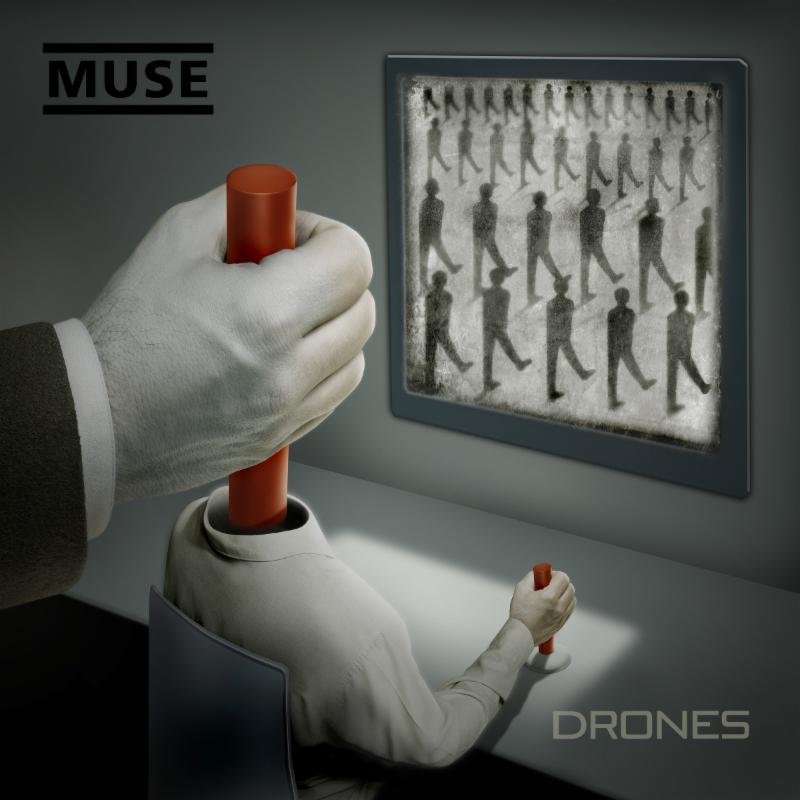
Muse“Drones” (Warner Music)

Tracks: 1. Dead Inside (4:24), 2. [Drill Sergeant] (0:21), 3. Psycho (5:17), 4. Mercy (3:52),   5. Reapers (6:00), 6. The Handler (4:34), 7. [JFK] (0:55), 8. Defector (4:33), 9. Revolt (4:06), 10. Aftermath (5:48), 11. The Globalist (10:07), 12. Drones (2:52)

MUSE-DRONESMuse have returned to their heavier, progressive roots with their latest album, “Drones.” After venturing into pop rock and dubsteppy techno pop garbage on 2012’s “The 2nd Law,” the three piece, made up of Matt Bellamy on guitars, vocals, and keyboards, Chris Wolstenholme on bass, and Dominic Howard on drums, decided that they wanted to hit number 1 on the US charts. To accomplish this, they turned to veteran AC/DC producer, Robert John Lange. It worked, and “Drones” became the band’s first #1 album in the US.

Now, you wouldn’t really expect a concept album to go to the top of the charts in this day and age, but that is exactly what happened. “Drones” is indeed a full fledged concept album about a dystopic society controlled by a government that dictates its citizens’ every move. Thus the title, “Drones.” The funniest part about all this is that the majority of people listening to this don’t even realize that it is prog, much less know what prog is. Some reviews I have read claim that the concept doesn’t really work, but I disagree. I think it works just fine, and it is incredibly applicable to today’s changing governmental policies in the West.

The story begins with despair and rage against a government that won’t allow its people to think. In the middle, we see the main character(s) (there really isn’t a character like in “2112,” but there is first person, implying a character) attempting to defect and revolt. In “Aftermath,” that character wishes everything were over. The album ends with survivors of the destruction (caused by the revolt) learning to live in the new world they have created.

The jewel of this album is the song, “Aftermath.” This song is to 2015 what Flying Colors’ “Peaceful Harbor” was to 2014. Muse really nailed it with this song – it is incredibly beautiful. The guitar work combined with haunting vocals and orchestra make this one of the top songs of the year. “The Globalist,” Muse’s longest song to date, is quite progressive, merging from quiet to a heavier rock towards the end. The album ends perfectly with Bellamy singing a sort of a cappella hymn (he sings several different parts that are overlaid). It is stunning.9088_original

The second half of “Drones” is much stronger musically and lyrically than the first half, although “Mercy” and “Reapers” are excellent tracks, with the latter having enough time signature changes to make even the most ADD prog fans happy. However, the poor lyrics in the chorus of “Pyscho” are offensive and sophomoric. The short “[Drill Sergeant]” intro to the song is rather annoying as well, creating more of a distraction. The re-emergence of the drill sergeant in the song itself also draws away from the music. The short JFK speech later in the album works, however (despite my great distaste for the President as both a politician and a human being).

Another misstep for this album is the packaging. I decided to pony up and buy the cd, thinking it would come in a nice jewel case. Instead, it came in a cardboard sleeve, which I found to be quite lame, particularly from such a major record label like Warner. However, the booklet has artwork for each individual song, and it is quite stunning. The artwork really adds depth to each song. I’m sure the vinyl package is probably pretty nice.

Despite the few minor missteps in “Drones,” Muse created one of the best albums of their career with their most recent output. The fact that it is one of their most successful gives me hope for a possible growing popularity of prog, although I assume most people are ignoring the best songs in favor of the more radio friendly “Dead Inside” or other such pieces. “Aftermath” and “The Globalist” are transcendently awesome in a way most people might gloss over. The balance of hard rock, piano, keyboards, classical music, and Chris’s awesome bass riffs (the dude is a beast) make this an incredibly enjoyable album to listen to, faults and all. It is definitely one of the top releases of 2015, across any genre.

http://muse.mu

A conversation with Spock’s Beard’s Ted Leonard

Ted

In his first official Progarchy assignment, rookie Progarchist Adam Sears talked to Ted Leonard of Spock’s Beard about their new album, The Oblivion Particle, set for release on August 21st by Inside Out Music.  The Oblivion Particle is the follow-up to 2013’s Brief Nocturnes and Dreamless Sleep, as well as Ted’s second SB album on main vocal duty. In addition to the album, they also cover everything black holes to cruise ships to venereal diseases.

—–

PROGARCHY  First off, just like to say that the new album is great! It has some of the stuff I’d expect from Spock’s Beard, but it had a lot of new fresh sounds.

TL   Yeah, there’s a bit of both, there’s a bit of harkening back on songs like “Tides of Time” and some of the other songs are a bit of a departure, like “Minion”.

PROGARCHY  You wrote “Minion” as well as “Hell’s Not Enough”, correct?

TL   Yes, I started writing “Minion” a long time ago, about the same time I wrote “Hiding Out”, which was about 2010, but it just kinda got shelved. Then I resurrected it, but I wasn’t sure what band I was going to submit it to, until it started shaping up and then it started sounding more Spock’sy than Enchanty to me.


PROGARCHY  What inspired you to write “Minion” and “Hell’s Not Enough”?

TL   “Minion”’s a little tough to get into without incriminating myself. But basically it’s about being in an oppressive relationship. Feeling like someone else’s little bitch, as it were.

PROGARCHY  Ah, yes. Been there, done that. I think we’ve all felt that way at some point.

TL   Haha, yep. Then “Hell’s Not Enough” is kind of an interesting song, given my background and the band’s background. It’s not a terror on religion in itself by any stretch- it’s more of a lash out at cult leaders and people who manipulate the week-minded. There’s a reference to the Jonestown thing, where it says
“Hook line and sinker, thank God you’re not a thinker, here take this fruity drink, you’re fine”. (laughs) So that’s what that’s all about.

PROGARCHY  I don’t remember where I saw it, maybe on Facebook or Twitter, but you have mentioned that The Oblivion Particle is the best project you’ve ever been involved with. Tell me why that is.

TL   You know, I don’t know if it’s necessarily better than BNaDs. If I posted that late at night, there’s a chance I was, ya know, gushing…

PROGARCHY  Or just overly excited?

TL   Yeah, or drunk… haha, but no, I do feel like it’s super, super strong. I think it holds up against BNaDs quite well. And I also think, for variety’s sake, it’s more of a wide array of styles wrapped up into one album. I think it’s super cool, because of that. And the sound quality of the recording is so well done.

PROGARCHY  I’m sure a lot of that is due to Rich Mouser. Did he engineer, as well as mix and master the album?

TL   As far as the engineering goes, there was a lot of it done in our houses. Some of the guitars were recorded at Al’s house and I recorded some of the vocals at home, then we did some at the studio. So he [Rich] engineered most of it, but we tried to do a lot at home this time. The bass is always engineered at home. We tried to save some money because BNaDs turned out to be pretty expensive.

PROGARCHY  On August 29th in Los Angeles, you are doing double duty, performing with not only Spock’s Beard but also with your band Enchant. What are a couple of differences in the group dynamics and your relationship with the two bands?

TL   Spock’s Beard approaches their career with more business sense, so there’s a degree of being business partners with them rather than being old buddies. But we are good friends, especially with Dave, because we hang out and play in cover bands. It’s a little different than the camaraderie of Enchant where we’ve known each other for a long time. Some of us have known each other more than half our lives. So we’re almost like brothers. We laugh like brothers and we fight like brothers. (laugh). It’s totally different than Spock’s, especially because I came into the band way later. But it was actually less weird then you’d think, ‘cause I knew the guys pretty well from before. So definitely a difference in the dynamics. They’re both good, just different.

PROGARCHY  You’ve been performing with Spock’s Beard for four years now. Do you still feel like the new guy or do you feel like you are now an accepted member of the band since you’ve now completed 2 albums and performed many many shows?

TL   Yeah, I think the shows have definitely solidified it, especially the cruise [Progressive Nation at Sea 2014], was a cool thing with Neal being there, being out in the audience, and then me being on stage with Neal in Transatlantic. I think what fans took away from Transatlantic was there’s no weirdness. Neal respects me, I respect him. So, I don’t feel like the new guy anymore. It has been quite a while and we have played a lot of shows. By the time you finish the 2nd album you start to feel that this isn’t an audition anymore.

PROGARCHY  So what should we expect to hear on The Oblivion Particle?

TL    Sonically, we branch out- there are plenty of moments, keyboard tones especially- we’re not just relying on the four keyboard tones that Spock’s has always been famous for- the tron choir, tron strings, tron flute, and organ. And of course piano. There are a lot of analog synths going on- kind of a nod back to certain eras of Genesis with the tones, like Duke era to mid 80’s, rather than going for a strictly 70’s sound, which has kind of been the Spock’s thing, at least with the keyboards. There’s a sonic difference in what you hear from Dave too. On most albums, he’s mostly playing with a pick the whole time. With this album, he plays quite a bit of finger style. Tonally it’s not the same old Dave on every song. Another cool thing about this album are the piano highlights- there are three of them, that I can think of off hand that are really cool piano parts kind of out there by themselves. There’s one in the breakdown of Minon, there’s one in the beginning of the song that Ryo and Al wrote [The Center Line], then the bass comes in and does a really cool thing with them. As far as the overall vibe of the album- it gets big and huge, pulls back and gets really intimate, those are all typical characteristics of Spock’s stuff and this album is no exception.

PROGARCHY   Why is the album called the Oblivion Particle?

TL   You know, we’re going to have to invent a reason, because I get that question all the time, and I honestly have no idea.

PROGARCHY  Does it have anything to do with CERN or the Large Hadron Collider?

TL   Well, some people have theorized that it is the opposite of the “God particle”, or whatever they were trying to find. I can’t remember what that particle is actually called.

PROGARCHY  The Higgs boson. Yeah I’m kind of a nerd and like reading about that stuff.

TL   (Laughs) Yeah that’s right!  But I don’t know, I think it just sounded cool. But some of the songs have an invention theme like “Bennett Built a Time Machine” and “A Better Way to Fly”. It seemed kind of science-y, so we thought it would be cool to have a title that went along with that.

PROGARCHY    In “Disappear” when you’re singing “We could disappear” are you sure you’re not referring to the Large Hadron Collider’s theoretical creation of a black hole that may swallow us up?

TL   Yeah, I’m going to use that! I’m gonna fake like I’m that intelligent!

PROGARCHY  What is your favorite track of the Oblivion Particle?

TL   Ok, my favorite track, that I didn’t write, (laughs), is “A Better Way to Fly”. Although I love “Get Out While You Can”- it’s totally short and concise. It has me going into a Bono territory with the voice, so it’s a little different for me. I really dug that. You always try to do things a little bit different, otherwise people get sick of you. (laughs)

PROGARCHY  What was the most difficult thing about recording this album?

TL   I would say, the timing on some of the songs. Especially with some of John’s songs, like “A Better Way to Fly”. That one is going from 6 to 7 to sometimes 8, then back. There were times when I was recording along his scratch vocals, and I was just watching the wave form to know what beat to come back in on. Now that I’m trying to learn it for live shows, I’m sitting there just having to count ‘cause it’s really trippy. I’m comfortable doing songs in odd time, obviously, but this song is really giving me grief. And I’m playing a lot of keyboards on it too, so it’s like… ugh!!! That song is going to be the toughest one.

PROGARCHY  So you’re definitely going to be doing that song live?

TL   Yeah, we are, unfortunately. I love the song, but it’s giving me… it’s giving me fear. It’s a great song for Jimmy too, because he’s just pounding back there. He really comes out of his shell on this album, not that he ever was in a shell, but on the first album he wanted to keep it safe and not try to overstep his bounds. But on this album  he just kind of got free reign and he was like “I’ll take it”. On the last couple of tours when Nick and Jimmy were having their drum-off solos, of course Jimmy shined and did well, but now that he’s the ONLY drummer, we’ve had these nights where we’re like “Hey, take a solo!” and he just goes and does it completely off the cuff. It’s always like the best thing ever. I never get bored watching him take a drum solo, and usually get bored watching EVERY drummer do a solo. That’s usually a good time to take a piss! But he’s always doing something different and interesting and pulls it right out of his hiney. Al and I would be just sitting on the side of the stage just like laughing at how cool it was. So this time around it was just like “Do what you do! Tear it up!” So there are a couple of moments that come off like a drum solo in that song, which is good stuff!


PROGARCHY  Track 4 of the The Oblivion Particle is “Bennett Built a Time Machine”. If you were to build a time machine and you can change one thing in your past life, what would it be?

TL   Well, I think, just like the song goes, there might be some historical moments that would be interesting to be a part of, but it would be really hard to slip into it unnoticed, unless you go dressed for the period I guess. I think what most people think of when going back to the past is revisiting pivotal moments in their own life, like maybe they could have changed things, but we all know how that turns out with the paradox factor. I can think of a few moments in my own life, where things would be vastly different. But then I’d come back and realized I created a black hole or everyone’s dying from some strange disease I introduced by accident, maybe a bad venereal disease because I somehow changed the course of events that led my past self into sleeping with someone I shouldn’t have. So yeah I come back 20 years later, and the whole world is a wasteland.

PROGARCHY  Maybe that should be the plot for the next Spock’s Beard concept album?

TL   (laughs) Yeah, there are not enough venereal diseases in concept albums.

PROGARCHY  Or in prog in general.

PROGARCHY  After your European Tour in September and October, Spock’s Beard is going to play Cruise to the Edge in November, which will be on the same ship you guys performed on at last year’s Progressive Nation at Sea. What was it like performing on a boat in the middle of an ocean?

TL   Yeah! Washy Washy, Happy Happy! Yeah that’s going to be really nice, and I’m going to be doing double duty again! Well, when we were in the theater, it was kind of a rocky night and you could actually feel it while on stage- even just walking around. It just made you feel like you were drunk, which you know. I’m familiar with performing drunk. That’s happened, but not often. I usually don’t drink that much when it comes to prog, but I have done plenty of cover band gigs where I’m like “Oh my God, I don’t even know how I’m going to do this third set!” I usually have like a beer before, a beer on stage, or maybe two. So by the end of the show, there might be three beers in my system, but it’s usually a two hour show, so it’s pretty tame. And then afterwards it’s a completely different animal, especially when you know you’re getting on the bus in a total controlled environment. You spend three weeks out on the road and you just have to come home and detox. I can’t imagine if we were out there, like some of the big bands, for six months at a time. I would be just like Keith Richards. I would totally just look like that by now already.

PROGARCHY  (Laughs) Let’s get back to the cruise… how was it playing the outside pool deck area?

TL   Oh, that was amazing! Especially when I opened with Transatlantic. You could see the port going by and the boat getting up to speed, so you could really feel it. It was really super windy. I needed the music for that band, but my charts were just flying all over the place. Luckily, the guitar tech saw it and started taping it down for me. But it was incredible. And the reception was awesome for both bands, but especially for Spock’s Beard on that first night, by the pool… that was really cool. And when everyone knows that Neal’s on the boat, to get that kind of reception out of the crowd was pretty cool for me. Then of course the second night in the theater when he came out and did the thing, that was just so cool. I think the weirdest part of that night for me was singing “Walking on The Wind” with Neal right in the front row. I was like, “Well damn, you should sing this  too, dude!” But it was cool, it turned out really cool.

PROGARCHY  And here, I will add my Chris Farley style Interview question… remember when I saw you guys play at Progressive Nation at Sea, while I was in the hot tub? That was Awesome!

TL   (Laughs) Yeah, hopefully I have time to do that for some bands on this one, maybe Marillion. That’d be cool!

PROGARCHY  Ted, thanks so much for your time. Congratulations on the new Spock’s Beard album and good luck with the tour! I’ll see you at the CalProg show on the 29th!

TL   Cool! I’ll see you there!