Queen — Forever (2 CD Deluxe Edition) ♫♫♫♫

Queen — Forever

Time Lord’s Rating: 8/10 ♫♫♫♫

This is an excellent compilation of killer Queen songs about that crazy little thing called love. But it’s more than a greatest hits package. In the two-disc deluxe edition, it provides an unparalleled synoptic view of the development of the band’s inimitably epic sound.

Three new songs lead off the collection: “Let Me in Your Heart Again,” “Love Kills,” and “There Must Be More to Love Than This” (with Michael Jackson). They alone are worth the price of admission. Play them loud and revel in the greatness.

The first track “Let Me in Your Heart Again” (4:35) is a true slice of power chord awesomeness, but I also recommend that you hunt down on iTunes the William Orbit synthed-up remix (6:42) of it, which has a totally different flavor, yet is also pure genius.

The compilation doesn’t unfurl in chronological order, so let me unscramble the mix. This is so I can let you know about all the goodies on the discs and where they happen to be coming from.

Digging into the Seventies, we get thirteen tracks. But Queen II (1974) only contributes one track: “Nevermore”; however, Sheer Heart Attack (also 1974) yields “Dear Friends,” “Lily of the Valley,” and “In the Lap of the Gods… Revisited.” Fantastic music!

From the same decade, “You’re My Best Friend,” “Love of My Life,” and “’39” show up from A Night at the Opera (1975), while “Drowse,” “You Take My Breath Away,” “Long Away,” and “Somebody To Love” represent A Day at the Races (1976). Amazing how much skill is found in this band.

Finally, “Jealously” shows up from from Jazz (1978), but “Spread Your Wings” is an extra favorite track of mine, from News of the World (1977). I have to hit repeat on that one again and again.

Moving on to the Eighties, for twelve tracks, we begin with four from The Game (1980), namely, “Play the Game,” “Crazy Little Thing Called Love,” “Save Me,” and “Sail Away Sweet Sister.” I favor the last two especially. Repeat, repeat!

“Las Palabras de Amor (The Words of Love)” is from Hot Space (1982), while from The Works (1984) we get “It’s a Hard Life” and “Is This the World We Created?” Oh, but wait, the Eighties are not over yet…

“Who Wants to Live Forever,” “Friends Will Be Friends,” “One Year of Love,” and “Forever” are from A Kind of Magic (1986); then, the Eighties end with “The Miracle” from The Miracle (1989).

The Nineties yield nine tracks. “Don’t Try So Hard,” “Bijou,” and “These Are the Days of Our Lives” represent Innuendo (1991); but “I Was Born to Love You,” “A Winter’s Tale,” “Mother Love,” “Made in Heaven,” and “Too Much Love Will Kill You” come from Made in Heaven (1995).

Queen is a one-of-a-kind band with amazing material and top notch talent. If you have worn out Classic Queen and Greatest Hits, this is where to turn to next. God save the Queen!

Finnish prog rock outfit Minutian are releasing their second album on Jan 30

Great news from Finland regarding the artists behind the awesome Repercussions debut album:

MINUTIAN TO RELEASE SOPHOMORE ALBUM JANUARY 30

The Finnish prog rock outfit Minutian are releasing their second album early next year. The album, titled Inwards, will be released through Secret Entertainment and is the follow-up to 2011’s favorably received Repercussions.

After the tragic death of guitarist Jaakko Jernberg in 2012, Minutian dealt with their loss with a lengthy process of writing new material. This work has now resulted in nine tracks of progressive rock music with originality and emotion.

The title Inwards depicts not only the overall expression of the music and the process leading to its creation, but also an underlying theme in the lyrics. A common theme wasn’t as much intentional as it was a result of shared feelings and experiences. The album’s narrative tells a story of the protagonist struggling with his visions and seeking ways to mend his shattered thoughts to ultimately find safety. The story encompasses several differing perspectives.

The album is dedicated to the memory of Jaakko Jernberg. The album closes with “Redeemer,” a song he composed and wrote lyrics for.

Inwards features piano arrangements by Helsinki-based composer Elias Patrikainen. The album is to be mixed by Toni Kimpimaki at Redfive Studios. Mastering will be handled by Ronan Chris Murphy, known for his work with King Crimson, Terry Bozzio and Ulver.

The release date of the album is January 30, 2015. A digital single will be available in advance. An album release gig will take place at Korjaamo Culture Factory in Helsinki on the day of the release.

Minutian – Inwards
1. Hollow Heroics
2. On Derelict Sidings
3. The Crust Of The Earth
4. Void Within
5. Onus
6. Burning Bright
7. Manifest
8. Aphelion
9. Redeemer

LEAH — “Enter the Highlands”

The new LEAH album sure sounds great!

Because pre-orders are available on iTunes, we are able to listen there to 90-second previews of every song on the album.

Enjoy the previews! And be sure to download “Enter the Highlands” today…

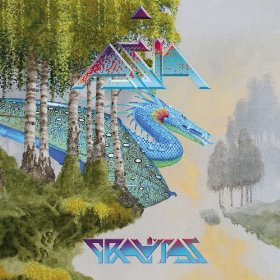
“Gravitas”: A mediocre Asia album, but a decent John Wetton solo album

As an Asia album: 6/10asia_gravitas
As a John Wetton album: 8/10

Earlier this year I posted about the (then) upcoming, new Asia album, “Gravitas,” and wrote the following about the first single, “Valkyrie”:

The positives: Wetton sounds great; his vocals are impressively strong and clear at the age of 64. The song itself is quite decent, with the distinctive Asia “sound”: soaring keyboards, big chorus, and lyrics tinged with semi-mythical elements. The negatives: the video is rather (very!) low budget, the song sounds quite a bit like most Asia songs of the past couple of decades, and young Coulson seems underused. What strikes me odd, as I’ve read about this new album, is that while the band members talk about Coulson bringing a harder, even more metal-ish, sound with him, it doesn’t show up in the first single or in the clips of the other eight tunes. And, of course, none of them really sound prog-gy at all. Come to think of it, when did Asia last really incorporate anything obviously proggy in its albums?

Having now listened to the entire album a dozen times or more, I confess to being a bit conflicted. The positives are pretty much as described above. Wetton, who is 65, sounds exceptional; his vocals are strong, clear, and with plenty of nuance and bite, as evidenced on the title track. If anything, my appreciation for Wetton as a vocalist expanded in listening to this new release, especially for the various colorings and emotional nuances he brings to the table. The production, handled by Wetton and keyboardist guru Geoff Downes, is mostly excellent (see below for the negative), featuring lush soundscapes and impeccably crafted waves of vocal harmonies, a classic Asia staple.

In short, the top end—lead vocals, vocal harmonies, and keyboards—sound great.

Unfortunately, the rhythm section and guitar ranges from occasionally agreeable to rather boring. There are times, frankly, when I wondered, “Carl Palmer still plays drums, right? Where, oh where, is the bass?!” Yes, there are a few moments that rise above average (“Nyctophobia”, for example), but overall the drums are so far back in the mix and so generic sounding, it may as well have been Session Drummer Bob Smith behind the kit. The same could be said for much of the bass guitar, with a couple of exceptions, such as a nifty solo-ish section in “Russian Dolls”. Simply put, the bass and drums are often quite pedestrian, especially for players of this caliber; they might as well have been mailed in via Pony Express and then told, “Sit down way back there and play quietly!”

As for the harder guitar sound, I’ve heard heard more rockin’, “in your face” guitar on Michael Jackson albums. Sam Coulson might be the next Joe Satriani, but he rarely gets a chance to show what he brings to the table, and his solos are short, safe, and sadly generic. There is more guitar in, say, “Sole Survivor” or “The Heat Goes On,” than on the entire “Gravitas” album.

Having listened to “Gravitas” several times, I went back and listened to “Asia” and “Alpha”, which established, for me, the benchmark for subsequent Asia albums. Two things stand out: first, the early Asia songs were far more interesting, especially musically, with a remarkable amount of “proggy” elements for such commercially successful albums (of course, the early ’80s were far kinder in that regard, as also evidenced by Yes’s “90125”); secondly, the early Asia sounded like a band that wrote songs as a band and wanted to be a band. The input and influence of Steve Howe and Palmer are readily evident, even if Wetton and Downes were the primary songwriters. And so the songs were far more diverse, ranging from “Heat of the Moment”, with its upfront guitar lick, to the dramatic push-and-pull of “True Colors”, to the deeply longing, semi-epic “Open Your Eyes” (a personal favorite). To sum it up, the songs on “Gravitas” lack variety, suffering from sameness and, in places, some overly long and repetitious choruses and outros.

“Gravitas” is, as an Asia album, rather mediocre; it has some good moments, but is lacking. Those good moments are due mostly to Wetton’s singing and Downe’s keyboards. Lyrically, there is a singer/songwriter quality here that also suggest this is more of a Wetton vehicle than a real band effort. There’s nothing wrong with that, I suppose, but I miss the interplay and band-oriented sound of earlier Asia.

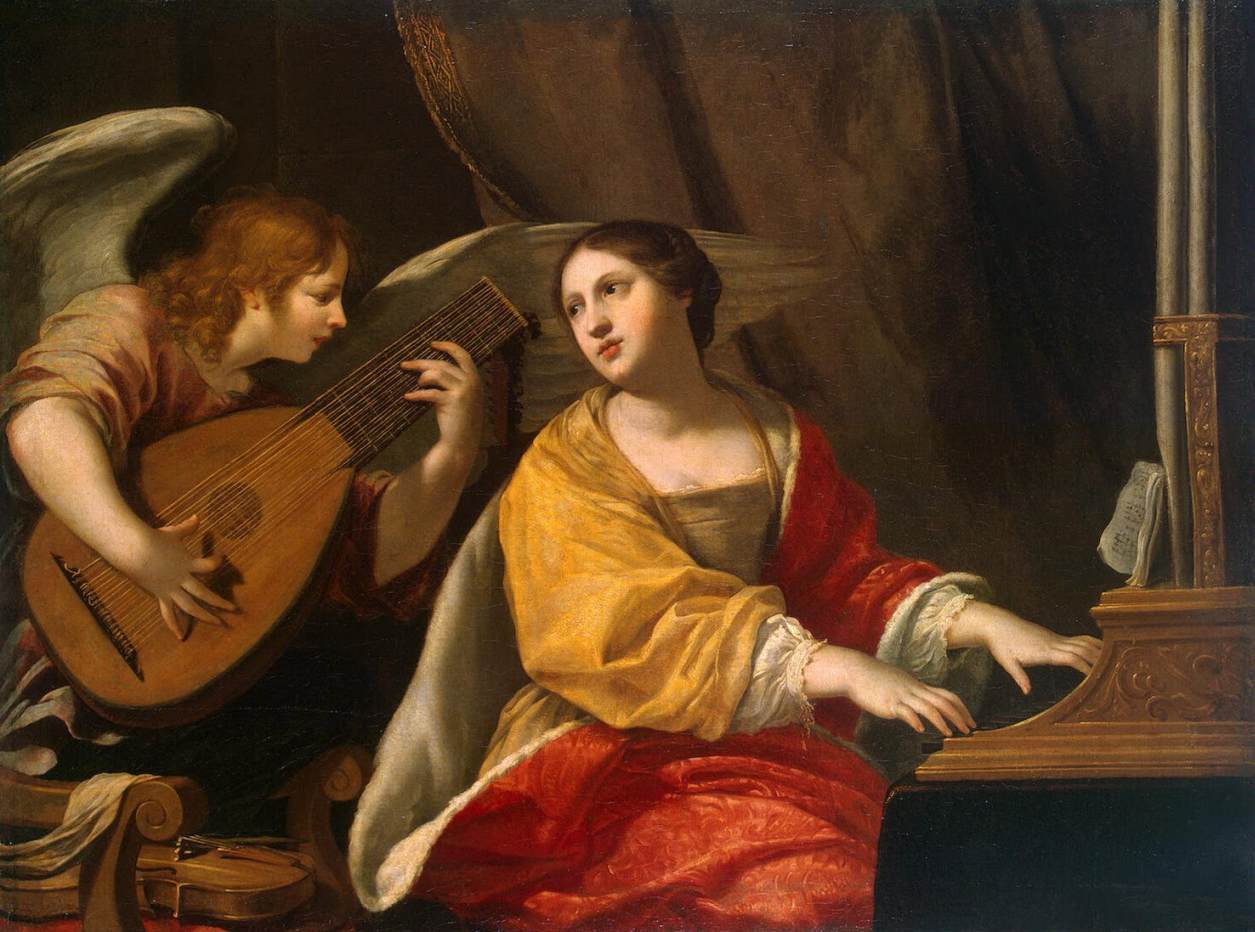
Feast of St. Cecilia, Patroness of Music

Blanchard,_Jacques_-_Saint_Cecilia_-_17th_cExcuse the overt religiosity of this post, but I just can’t let the Feast of St. Cecilia, patroness of music, pass without acknowledgement.

My maternal grandmother kept a picture of St. Cecilia above her bed, and my wife and I were blessed to inherit this image.

I have a great aunt, Cecelia, who passed away at the age of 21 (from tetanus) and a daughter, Cecilia Rose, who died on the day of her birth, August 8, 2007.  May all Cecilias dance together in eternity.

Daniel Lanois on the art of producing: “I … look for commitment and a lot of heart and soul…”

DanielLanois
Daniel Lanois performing in 2008 (Wikipedia)

AllAboutJazz.com has a fascinating interview, conducted by Nenad Georgievski (writing from Macedonia, of all places), with legendary producer and musician Daniel Lanois. Here is an excerpt:

AAJ: When it comes to production, what are the things you look for in people’s music which will decide whether you produce them?

DL: I look for points of strength. It’s nice if there is a singer in the band and for the singer to have a big personality, something unique about their voice. I also look for commitment and a lot of heart and soul, because in the beginning what we do, which is representing the artist, plays a big part in the equation. Yes, you can apply a lot of muscle and you can pay your advertising after, but essentially it needs to have a lot of soul and it needs to be in existence for the right reasons. So, authenticity is the beginning, and then advertising comes later (laughs).

AAJ: Where is the meeting point between the artist’s ideas and the producer’s ideas about the outcome? Is your primary aim as a producer to help realize an artist’s vision, or to expand it?

DL: I think the producer’s job is to produce something magical within the offering of the artist. And I find that a vision comes together quite quickly when a magic moment appears. When that magic moment appears, a new vision comes into play and I don’t think people should assume that people are coming into studio with a small vision and that it’s all we operate by. I think people are hoping that they are going to bump into something fresh. When that happens then we get to be naive all over again in terms of freshness, and then a brand new vision comes into play for both parties.

AAJ: With some artists you’ve worked with over a series of albums (like U2, Gabriel, Dylan), does your function alter as you get more familiar with each other?

DL: There is no doubt that there is a relationship that develops and people’s roles change. When I first started working with U2 I was to be the engineer of the project, and then everybody in the camp realized that I was very musical. And I was able to make contributions with harmonies, understanding of rhythm and the arrangements -I was able to enter the world of music with them and not just sitting in the technician’s chair. Everybody in that camp is very smart, so they realized that my talent was such that I was able to be as much a musical producer for the record making process as Brian Eno is. So that became the strength of that relationship. Everyone knows how to work with equipment to a certain degree, but what is most important to that relationship is the evolution of our musical minds. That’s it; you are able to work with the strengths of the people in the room.

And:

AAJ: What is it that keeps people like U2, Dylan, Gabriel, Neil Young, hungry to keep doing it at this point in their careers?

DL: That is a very fundamental question and that question applies to the whole world and not just the artists that I work with. What keeps us interested in innovation? We are human beings, we evolve and we like new ideas. With my current work I want to invent sounds that take us to the future. If there is anything that I have learned from all of the artists that I’ve worked with, it’s that they have a similar appetite to know what lies ahead, around the bend, what’s over the mountain. It’s just the way it is. Even after 60 years of rock and roll we still have an appetite to know what might be the new thing, what expression still needs to be expressed, and so on. So, as we grow and as we grow through life we look things differently when we reflect on our work.

Lanois’ most recent album is “Flesh and Machine” (see www.fleshandmachine.com):

 Daniel Lanois: It’s a very technologically driven record and I use a lot of sampling and dubbing. But I sampled my own instruments and my own voice. Well, I sampled other people’s records as well (laughing). This allowed me to have a very unique personality and for the record to find its own direction. I have dreams to step into the future with my sonics, so I decided to go after symphonic or orchestral results but without the sound of familiar orchestral instruments. I wanted brand new ones that haven’t been heard before. So that was part of my driving force and criteria.

Here is a cut from that album:

Montage — “Strawberry Skies”

Montage’s eponymous 2014 debut album has a nifty song on it that is quite epic: “Strawberry Skies”

You can take a listen to it above. But I would recommend grabbing it for 99 cents and dropping it into your playlist. It has many very nice elements.

Clearly this band from Finland is a prog force to be reckoned with. They do hard rock but with all kinds of other aspects thrown in: folk, early prog rock, and psychedelia. You will hear influences from The Doors, Rush, Caravan, Mastodon, and Black Mountain.

Montage is:

Mikko Heino – vocals
Roni Seppänen – guitars
Jukka Virtanen – keyboards
Taneli Tulkki – bass
Kim Etelävuori – drums

It all comes together for Ascending Dawn @AscendingDawn on Coalesce

marlain

Thank you to Ascending Dawn for sharing news with us about your smoking hot album release.

All our Progarchists should definitely check out Coalesce for its sick metal riffs and Marlain Angelides’ powerfully passionate vocals.

The hook-heavy tunes are available now on Bandcamp. Lots of crunch and kick with a melodic edge distinguish this fine release.

My favorite track is “Integral” but there are a lot of other really good ones here to sink your ears into.

Ascending Dawn is: Constanze Hart (bass), Mark Weatherley (drums and guitars), Owen Rees (guitars), Marlain Angeles (vocals)

hart

Hello, Patricia Tallman!

One of the many exciting things about writing for an active website is finding out who is following you. Every week, progarchy.com receives new followers at its own website (through wordpress—we’ve over 2,400 subscribers as I type this), through twitter, and on Facebook. We have some accounts on some other social media, but I’ve (–Brad) have never quite figured out to use them.

Maybe Chris or Carl can.

More often than not, understandably, the follows come from musicians, agents, and music fans. Makes sense. But, every once in a while, one comes out of left field.

This week, I was thrilled to see that Patricia Tallman is following us on twitter.

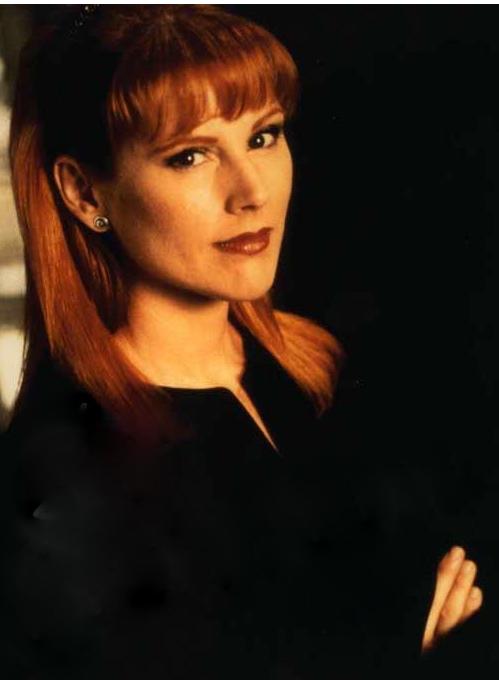
Patricia-TallmanCurrently the CEO of Studio JMS, Tallman will be familiar to most of you as the face of Lyta Alexander, the most powerful telepath in the Babylon 5 universe. By season of that greatest of all TV shows (EVER!), she is the post-Vorlon weapon of mass destruction. And, what a character and what an actress. I become rather taken with her from the first moment she flashed those intense eyes, red hair, and brilliant intellect on screen.

She also has appeared as an actress and stunt person in numerous TV shows and movies, including various incarnations of Star Trek, Army of Darkness, and Austin Powers.

And, back to B5 for a moment. As most of you probably know, Christopher Franke, German krautprog demigod composed all of the music for the series. Naturally, it’s rather good though now currently difficult to find.

Pat Tallman, whether you’re joining us because you’re a music fan or simply because you know we’re YOUR fans, welcome. Glad to have you aboard.

Neither Bending Nor Conforming: Fractal Mirror Comes of Age

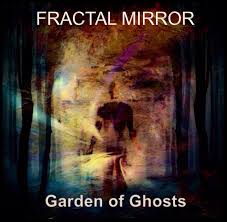
Review of Fractal Mirror, “Garden of Ghosts” (privately released, 2014). The Band: Leo Koperdraat; Ed van Haagen; and Frank Urbaniak. Art by Brian Watson and layout by Frank Urbaniak. Additional personnel: Brent Kull (mixer); Larry Fast; Don Fast; and Andre de Boer.

Songs: House of Wishes; The Phoenix; Lost in Clouds; Solar Flare; The Hive; Solar Flare Reprise; The Garden; Orbital View; Event Horizon; Legacy; and Stars.

Birzer rating: 9.5/10.
GOG

Take a Dutch singer/keyboardist and a Dutch bassist, an American drummer, and an English artist. Add a little Kashmir-Zeppelin and a lot of Bauhaus, some Cure from the Faith period, and a touch of Gilmour-era Pink Floyd. Mix in some master jazz and prog stars to produce, contribute, and engineer. Throw in a dash of social media to connect it all. Finally, glue it all together with lyrics that might make Neil Peart blush at the timidity of his own Canuck individualism. Even with such diverse and various ingredients, you’d probably still not arrive at the genius that is Fractal Mirror.

“I will not bend or conform; this is how I’m meant to be.”

Indeed, it is. The first Fractal Mirror album proved a spectacular success. This second release, even more so. By infinite degrees. This sophomore release offers a full-bodied constitution and a virtuous soul to the emerging voice that was the new-born first album.

Fractal Mirror has come of age.

In a very definite sense, the title of this release “Garden of Ghost,” tells the listener almost all of what he or she needs to know about the whole. From the opening lyrics, Leo Koperdraat’s haunting, quavering voice shakes the listener to his deepest longings and desires as well as to his greatest fears and anxieties. This is not an album for the weak of soul, the narrow of mind, or faint of heart. This album is full-bodied, and it demands immersion, not just polite appreciation. While the ghosts fits the tone of the album completely, a “maze” might have worked as well as “garden.” The garden, if it exists, is the garden one finds in a nineteenth-century cemetery. It is certainly not the English garden of even the most psychedelic of Beatle songs. Here, if it exists, the garden collects stones, obelisks, mutated lambs and gargoyles, crumbling and cracked names, and pieces of rod iron and greened bronze and copper. A fog hovers over it all, and the damp penetrates all who enter it.

Fractal Mirror’s Garden of Ghosts is fully prog, though not the prog of our fathers. If Andy Tillson and Brian Watson (who also happens to be the main artist of FM) are correct that we have been living in the third wave of prog since about 1994—and I think they are right—2014 might very well reveal a transition to a new wave. As I look back over my posts for the past five years, I realize that every single year I write something akin to “201X, the greatest year in prog yet.” Yes, I’m prone to hyperbole, but I did mean this every time I wrote it. For the first time in a half-decade, I’m not sure this year, 2014 by Christian accounting, is the best year in prog. There have been some truly brilliant releases this year, indeed, some of the best prog I’ve ever heard. I think it is quite possible, however, that Big Big Train, The Tangent, and Glass Hammer took us to an unsurpassable level last year, perhaps the very culmination of third-wave prog.

The best releases of this year, such as those by Cosmograf, John Bassett, Salander, and Fractal Mirror, offer a progressively retro look, in theme and in musical styles. That is, many of the best releases this year have been scavenger hunts of the years 1979-1984 while cleaning those remaining and latent treasures and reimaging them.

What we have this year, 2014, is prog, to be certain, but it comes very close to post-post modern prog. Atmospheres, tones, and lingerings have replaced force, rhythm, and drive. “Ocean Rain” might serve as the touchstone rather than “Close to the Edge.”

To put it another way, the music of 2014 seems as intense as anything before it, but it also seems content to be contemplative and deeply intellectual, an autumnal repose of the mind and soul, an in-taking of breath, anticipating exhalation.

“This winter feels like forever, a garden of regret.”

FM has created a thing of real genius with Garden of Ghosts. I apologize that this review is so introspective and reflective, so utterly subjective. But, the 2014 prog scene has brought out the most existential questions in me. As I listen and listen and listen to Fractal Mirror, I can’t help but feel a most fundamental soul searching.

For what it’s worth, I’ve been listening to this album for roughly a month now, and I’ve found it one of the most difficult things I’ve ever reviewed. Not because it’s bad, but for exactly the opposite reason. It’s so interesting and complex, so very good, that I wanted to give my own thought processes time to catch up with it. I’m certain that as I continue to listen, I will discover even more depths as well as breadths.

I must also note: it’s well worth getting the physical CD. Brian Watson has presented us with some of his best artwork, and Frank Urbaniak’s layout sets what should be the standard for all cd layouts. The lyrics are well worth reading over and pondering, again and again. The band even included a brief description of the intent and meaning of each song. I resisted reading these until just right now, as I come to a close with this review. As it turns out, my interpretation of the themes of the album—loss, age, regret, concern, and hope—mesh with what the band has explained here. Again, a masterwork of autumnal existentialism.

For more information, see www.fractalmirror.net.