Dr. Geddy gives a lecture, dedicated to his Mom, on “the true Immigrant Song”:
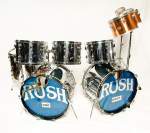
Dr. Alex gives a seminar on the meaning of prog; i.e., how to make true progress in life:
Dr. Geddy gives a lecture, dedicated to his Mom, on “the true Immigrant Song”:
Dr. Alex gives a seminar on the meaning of prog; i.e., how to make true progress in life:
I was fourteen when Brain Salad Surgery was released. I had first discovered ELP through the Trilogy album. That was one of two albums to be seen with under your arm at school. The other was Physical Graffiti. Consequently, this would be the first ELP album I had bought on the day of release. And boy was I excited. The sleeve looked magnificent and opened differently to other albums, and the album label ( God how I miss labels ) was a wonder to behold. I had heard that the first track was going to be their version of Jerusalem and was interested as to how it would sound. The needle hit the plastic and out came the bombastic sound. Mr Emerson’s synth sound had changed as he was now playing poly moogs and the drum sound was really tight and crystal clear. Then Greg’s dynamic tenor voice sang those words. A repeat of the opening salvo in the middle, another verse and then the really over the top ending. As far as I was concerned, no other band around could have pulled that off.
Britain was a different place in 1973. Radio One was our one and only national pop radio station. If you wanted your record to chart you needed it played on radio one. ELP released Jerusalem as a single. Radio One banned it. It never got played. They banned it on the grounds that it was irreverent. A Rock and Roll band had the audacity to take a beloved hymn of the British people and turn it into a rock/pop song just didn’t sit well the BBC hierarchy.
I was a choirboy in the early 70’s so I knew the song well and thought it had a good tune. It was different to sing compared to some of the other hymns we sang. So I connected with it and even today enjoy singing along with it. There was a time when our country had a mild discussion as to whether God Save The Queen should be replaced. Suggestions included Land of Hope and Glory and Jerusalem.
For the past two seasons now our national cricket team has come out onto the ground at the start of play each day to the strains of Jerusalem. ( for our cousins across the pond…yes.. a game can last 5 days and end in an exciting draw ) It is usually sung by an operatic singing star of the day and is supposed to strike up pride in our country and send our boys into cricket battle with determination. It is also sung at the Promenade concerts performed at the Royal Albert Hall each year. If you were to ask the general public in Britain to name their favourite hymn or even just to name any hymn, Jerusalem would be in the top three every time. Some people would be hard pushed to name any other hymn but maybe that is a reflection on a dwindling church going population.
Going back to Brain Salad Surgery……. if Jerusalem was not on the album or in a different spot on the album, then it would have been a poorer album because of it. Till we have built Jerusalem in England’s green and pleasant land.
Now bring on Toccata.
[This is an email I just sent out to the Progarchy authors, and they suggested I make the conversation public. I plan on writing a longer piece on the topic soon – Bryan Morey.]
I have a question that is mainly directed at those of you who are British, but maybe those of you who were around in the 70s can answer it as well. During the fall semester, in my Restoration/Romantic Brit Lit class, I read (and wrote a paper on) William Blake’s poem, “Jerusalem.” When writing that paper, I figured a post on ELP’s Jerusalem was in order. I know this poem/song is a traditional British hymn expounding British nationalism, but I’m not exactly sure what emotions or responses the song brings up for a Brit. I know what I think of or feel when I hear the “Star Spangled Banner” or “God Bless America,” and I’m wondering what images or thoughts “Jerusalem” conjures.
I’m also interested in your opinions on why ELP made “Jerusalem” the first song on Brain Salad Surgery. It is hardly a typical rock song. And for those of you who remember when this album came out, what was the general reception to ELP’s version of “Jerusalem?”
Thanks!
Let me know what you all think in the comments.
[Review of Anathema, Distant Satellites (Kscope, 2014). Reviewed from digital files and without liner notes or lyrics.]
I would give much either to have the opportunity to write a different review or avoid writing a review of this album altogether. The latter is my usual M.O. when I don’t like something or when I think something is subpar. Though other progarchists would justly and properly disagree with me on this issue, I think it important to spend our time writing and thinking about beautiful things. Life is simply too short to waste on mud, muck, and decay, and art is too precious and rare to squander or abuse it.
Also, simply put, I’m not good at writing about things I don’t like. I would also guess that spending time with things that are poor or corrupt damage my soul (and yours) irreparably.
But, I can neither ignore the new Anathema nor write a positive review of it without being dishonest. Distant Satellites is not corrupt, but it is, for the band, sub par. I wish Anathema would have taken more time with the writing of this album or simply have taken time off for a rest. Or, perhaps, the band could have released just a few of the best songs as an EP rather than as a full-fledged album. As an album, it can’t hold together.
A year ago, if someone had asked me to discuss the present state of rock music, I would have sung the praises of Big Big Train and The Tangent, correctly claiming that each band was reach so far and attaining so much that they were very close to becoming untouchable. 2014 wouldn’t change this assessment. BBT and The Tangent are not only at the very top of their game, they are at the very top of THE game. Outside of North American bands (I’m intentionally excluding Rush and Glass Hammer), I would have gladly said that Cosmograf and Anathema were so close to untouchable as to be nearly at the level of the top two. 2014, thus far, has drastically changed the prog landscape. Whereas Cosmograf has moved into the top three with its new masterpiece, Capacitor, Distant Satellites reveals a broken or, at best, wounded, decaying Anathema.
How different a year ago was. Looking at the trajectory of Anathema—from A Natural Disaster to Universal—I would have placed good money on the rise of the band. Well, not really, I think gambling is a waste of time and money. But, you get the idea. I mean, really, Universal has to be one of the best live albums of the rock era. In terms of intensity and significance, this was a band with everything. While I would not have rated the two lead vocalists of Anathema—Vincent Cavanaugh and Lee Douglas—at the level of, say, David Longdon, Susie Bogdanowicz, or Leah McHenry, they would be close.
As mentioned above, I really wish I could write a different review for the new album. I have now listened to Distant Satellites close to a dozen times in hopes of coming to love it. Every listen, though, only makes realize how poor it is compared to their previous releases. Not that it’s terrible. Overall, it’s ok, but it’s, unfortunately, not much better than ok. I find myself wanting to skip through almost every song. There are two exceptions to this. Track Four, “Ariel,” has to be one of the single best songs Anathema has ever written.
The second best song on the album, “Distant Satellites,” is fascinating, but not necessarily for the right reasons. I’m fairly sure that if I allowed 100 dedicated prog fans to listen to it for the first time without giving them a single piece of information about the track, 75 to 90 of them would claim it to be a never-before-recorded track from Radiohead’s Kid A sessions. Indeed, I won’t be totally surprised when my physical copy finally arrives from the UK, if the liner notes reveal that Thom Yorke actually wrote the track and sang lead vocals on it. It’s one thing to pay homage to an exemplar, it’s a very different thing to mimic them. I really don’t know what to make of all of this, or why Anathema decided to pursue the course it did.
I really wish I could proclaim Distant Satellites to be the finest work yet by Anathema. I would be lying, though.
If you’re an Anathema or Kscope completest, buy this. Otherwise, I simply can’t recommend it. Other than tracks 4 and 9 and, possibly, 10, it’s not worth the price. Purchasing it would be kind of like putting stock in the Skylab project a few days before it crashed into Australia.
Let’s all hope the band’s followup puts them back into orbit.

The best surf band in the world, The Madeira, is releasing their first live album, SONIC CATACLYSM, this week. It’s, in part, a celebration of the band’s tenth anniversary.
The brainchild behind the band, Ivan Pongracic, an economist by day, is also a fellow progger. Though Dick Dale informs the music than any other person, there’s certainly a lot of Alex Lifeson and Steve Hackett thrown in as well.
To celebrate their tenth anniversary, The Madeira will be playing a special show in Indianapolis on June 14.
On July 22, the band will open for Dick Dale, also in Indy.
To order any of the band’s cds, go here: http://themadeira.net/
Stephen H. Webb has some interesting remarks in his review of Christopher Partridge’s book, The Lyre of Orpheus:
Partridge seems hardly aware of how pathetic it is that heavy metal has devolving into specialized sub-genres like death, thrash, sludge, and drone, each with their own code of conduct and their own lines of fashion accessories.
Without Christianity, rock’s agitations become spume and splutter, which suggests that rock cannot be essentially transgressive. Transgression is always derivative, secondary, reactive, and thus essentially conservative, secretly in service to the hegemonic order it seeks to overthrow. Dissonance is dependent on the natural appeal of harmony, just as Satan’s activities are possible only due to God’s providential permission. That is why rock, when it tries to be overtly blasphemous, ends up being overly impressed with its own puerile histrionics.
Rock is a threat to Christianity not because it is essentially transgressive, but because it too often acquiesces to modernity’s distancing of art from truth. The result is a mindless numbing of the emotions …
The honesty of rock is in its vocal yearning, not its electric thrashing. The alternative to transgression is transcendence, not docile submission to social order. Rock was born out of blues, folk and Gospel, not sexual aggression and gender bending. There is nothing inevitable about rock’s demise, although it might take a miracle for rock to rediscover its voice.
During the month of May, some of us Progarchists switched into “Rush Appreciation Mode” as we paid tribute to the group that, for some of us, forever altered our view of what music could be on the occasion of the 40th anniversary of their self-titled debut release. This very site is a reflection of our appreciation for a genre of music that, for so many of us, started with our first exposure to Rush. For so many, they were springboard into the world of progressive rock.
Of course, there’s another generation of progressive rock fans from the 1990’s who cut their teeth on prog through Dream Theater, while for some of us older folks, Dream Theater was the group that picked up the torch for progressive rock starting in the 1990’s, when iconic bands such as Rush and Yes had either changed their songwriting approach and/or gradually declined in popularity. Still other prog fans recently found their love of the genre through Tool’s and/or Steven Wilson’s works.
In the spirit of the more recent iconic, progressive hard rock groups such as Dream Theater, Chicago-based Fire Garden has released their first full-length album, “Sound Of Majestic Colors,” which follows their December 2012 EP release, “Prelude.” As is the case with most prog, repeated listens will reveal layers within the music, but the album is also accessible from the get-go.
Prog fans will have little trouble picking out styles and sounds similar to Dream Theater, but anyone who dismisses the group simply as a knockoff of DT does so at their own peril, for Fire Garden is very much their own band.
That said, the album opens with perhaps the group’s biggest nod to its Dream Theater influence in “The Joker.” Guitarist/songwriter Zee Baig channels John Petrucci’s guitar sound from “Train Of Thought,” there are echoes of the Derek Sherinian era DT with some nice organ work, some percussive keyboard patches that take from Jordan Rudess’ work in later years and even some fast kick drum work that might recall Mike Portnoy’s heavier playing prior to his departure from DT. A vocal-heavy middle section breaks up the influences noted above, showcasing the group’s range.
Despite liking “The Joker” quite a bit over repeated spins, I was a bit fearful that I might be subjected to an album not unlike “Train Of Thought,” which is one of my least favorite DT albums, but oh, how Fire Garden quickly proved me wrong.
It’s rare that I’ll hear a succession of tracks for the first time and think, “This one’s my favorite!,” then say to the next, “No – THIS one’s my favorite,” but that’s exactly what unfolded during the first four tracks on “Sound Of Majestic Colors” as “The Joker” gave way to the soulful “Alone,” abandoning the bombast of the opening track for a slower, more atmospheric vibe. We then get a touch of “Images And Words”-era Dream Theater with the big-sounding “Time Machine,” but Fire Garden then shows us an altogether different side with “Endless Memories,” with bassist Barry Kleiber weaving melodic bass lines over acoustic/electric guitars, setting the tone for what is easily the most accessible track on the album. The track features a lovely, soaring chorus that’ll no doubt have audiences singing along.
This changing up and blending of styles that Fire Garden seem so comfortable writing continues throughout the album with a trifecta of big rtracks in “Redemption,” “Behind The Face”, and “Echoes Of Silence,” then broken up by the lovely, harmony-laden “Far From Grace,” and finally, the cinematic album ender, “The Last Step.” If rock radio was still open to progressive hard rock they way it was 20 years ago, tracks from “Sound Of Majestic Colors” would find a place in station’s rotation, to be sure.
It’s worth mentioning that throughout “Sound Of Majestic Colors,” singer Kevin Pollack does a fine job using his range – a bit lower but a welcome change from the wails of many prog/metal vocalists – bringing the proper measure of energy, emotion and, well, gravitas to each song.
The lyrics on the album tend to explore dark themes – battling demons both internal and external, sometimes literal – in “Alone,” “The Joker,” “Echoes In Silence” and “Redemption,” greed in “Time Machine,” love lost in “Endless Memories,” and finally, reaching for redemption/rejuvenation in “The Last Step.”
Half of the 10 tracks on “Majestic Colors” clock in between eight and nine minutes, giving the band plenty of space for stylistic exploration without falling into the noodling/padding trap that’s so often a cliche of prog. They also avoid cramming as many time signatures into each tune as possible just for the sake of it, making the album quite accessible to those ears tripped up a bit by odd-meter shifts.
Fire Garden also gets it right with the album packaging and liner notes, very much reminiscent of Hugh Syme’s best work with Rush and Dream Theater, as each lyric is mated its own piece of artwork, beautifully complementing our listening experience in way that liner notes from the aforementioned bands do.
Knowing that the prog community is a tight-knit one, I would highly advise any reader with influence over any prog festival or cruise – as is the case these days – to quickly snap up Fire Garden as they’d be a worthy addition and sure-fire fan favorite. Better still, how’s about groups like Rush and Dream Theater consider the next generation of prog by dropping the well-worn “Evening with…” format and getting these guys out on tour to build as big a following as possible?
“Sound Of Majestic Colors” is more than enough evidence that Fire Garden has an extensive palette of talent and styles to “paint” with, making this release a more than worthy addition to prog fans’ libraries. Dream Theater’s ridiculously, prodigiously-talented lineup may still have a tight hold on prog’s hard rock torch, but Fire Garden stands as a potential successor with “Sound Of Majestic Colors.”
Mark Judge reflects on rock and roll:
But then, what is rock and roll? I would argue that we don’t know, and that not knowing is part of what gives the art form its mysticism and power.
Ironically, there is now an entire rock and roll industry that is very insistent that we know what rock and roll is. From the Chuck Berry to the Beatles, punk to hip-hop, rock is about rebelling against societal norms. But what about artists like Adele, U2, Coldplay, and Lykke Li, who seem to not only want to break new sonic ground but reexamine and even reinforce ancient truths about love, death, human nature, and God? Are they iconoclasts? Or are they rediscovering the truth of things, a truth that is not contradicted by the religious establishments that pop music is supposedly meant to dismantle?
Rock critics don’t like to think about those questions, because it may mean questioning their own dogma.
[The first of at least two reviews of Fire Garden, Sound of Majestic Colors (Fire Garden Music, Chicago, IL, 2014). Official Website for the band and label:
. Kevin Williams will also be reviewing the album. Frankly, I’m not qualified enough re: prog metal to review this. But, my love of the album kind of forced my hand.–BjB]

***
With no intention of being jingoistic, I’m very happy to see a nice resurgence of progressive rock in America. The English and the Scandinavians currently provide the touchstone, but I would hate to see the Americans not compete at all!
Of course, when it comes to North America, we’ve had some great prog bands and individuals in for the long haul: Rush, Glass Hammer, IZZ, Dream Theater, John Galgano, Kevin McCormick, 3RDegree, Neal Morse, Spock’s Beard, and a few others. Recently, we’ve seen the rise of Hour of the Shipwreck and Astra as well.
Now, we have Fire Garden, a new progressive rock/metal band from America’s third largest city, Chicago.
The brainchild of professional photographer Zee Baig, Fire Garden will release its first full-length album, Sound of Majestic Colors, tomorrow. This closely follows the band’s first EP, The Prelude, which came out at the beginning of the year. Three songs overlap: “Time Machine,” “Far from Grace,” and “Forsaken,” though the former two appear in slightly different versions on the EP and the LP. Certainly, each of these releases from Fire Garden is well worth owning.
When I first heard the Sound of Majestic Colors, I wrote my thoughts down quickly:
Confident, melodic, intense, moving, driven. Fire Garden is the present and the future of progressive metal. Sound of Majestic Colors is a triumph in every way.
Additional listens have only added to my wonder and astonishment regarding this album.
First, let me discuss the superficials, that is, the appearances of things. Visually, Sound of Majestic Colors is an incredible package. The CD case (very important to me) provides a fascinating mix and incorporation of black and white photography, psychedelia, Macintosh imagery (a play on the spinning beach ball of doom—at the center of the cover photo), and weapons of mass destruction.
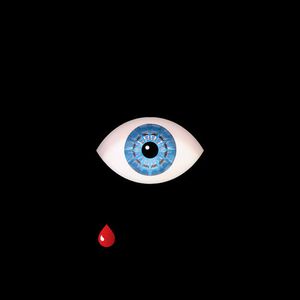
If I had to compare it to anything, I would compare it to the best packaging Dream Theater ever produced—that for Train of Thought LP. But, frankly, Train of Thought’s artwork tried to be a little too psychedelic., little too Floydish. The eyeball on the cover has failed to age well, and it now appears far less creepy than it does derivative. Fire Garden avoids the clichés, creating its own vision for the album. Far from contrived, its psychedelia comes from the heart and the soul.
My copy of Sound of Majestic Colors arrived with business cards, bumper stickers, circle window stickers, a full-size poster, and bookmarks (see photo below). All of this is done with absolute class, and I welcome such things greatly. Indeed, I will be keeping these things in a very safe place accompanying similar items I’ve collected and received from Rush, North Atlantic Oscillation, Porcupine Tree, etc.
Second, instrumentation, performance, and ability of the musicians. My first reaction to my even asking this is simply: “Holy Schnikees! Are you kidding me?”
Though these guys are young, they sound so very, very good. I am not a huge fan of Dream Theater, as I feel they really have little soul and more or less write music to chase notes, all of it trapped in a graceless cycle. I have always, however, respected the talents and abilities of the individual musicians in Dream Theater. Imagine that same ability, but augmented by and with real story telling strengths and melodic overrtones and undertones. Combine Dream Theater’s skills with some serious artistic class, and you have Fire Garden. Kevin Pollack—vocals. Perfect. Zee Baig—guitars. Sheesh. Beyond perfect. Frank Lucas—keyboards. Perfect. Barry Keliber—Bass. Perfect. Chuck White—Drums. Holy Moses. More than perfect.
Production and mastering—perfect. The depth to this recording is astounding. Everything is clear, everything is deep, and everything is layered. Again, imagine Dream Theater’s production, but even more top notch.
Third, lyrics. I’m a huge fan of good lyrics, and I consider them essential to the success of any album. Lyrically, this album is as layered and dark as its production. Lots of angst, guilt, and questioning in the lyrics. In the end, though, the lyrics exist for a real and meaningful purpose, a poetic one. Song titles such as “Alone,” “Endless Memories,” “Redemption,” “Forsaken,” and “Far from Grace” reveal everything about the seriousness and intent of the album. That Baig offers his greatest thanks in the booklet to Almighty Allah says about everything that needs to be said. Baig is a serious man, and he takes his art as seriously as he takes his faith. If you’ll permit some Aramaic—Amen, Zee.
If you’re looking for something well done, something taken seriously, and something that—in terms of style—varies from heavy to metal to prog to AOR to arena and back to prog metal, look no further.
Fire Garden is not just the present and future of American prog metal, the band is the present and future of all prog metal.

Alas, we have arrived at the end of this ten part series. The final band I would like to draw your attention to hails from the great state of Texas. They are a sextet known as Hands and they are one of the most talented bands I have ever had the pleasure of listening to. As a matter of fact, I consider these Texan minstrels to be up there with Universe as two of the finest American prog bands (apologies to Kansas and Styx). Their first album, released in 1977, features quite an array of instruments besides the standard guitar, bass, keys, and drums, including flute, saxophone, oboe, violin, and vitar. This band is no doubt America’s version of Gentle Giant, although I prefer the vocals of Hands to those of their British counterparts. Each song is a treat, and although idiosyncratic compositions are ubiquitous in the prog rock world, these guys seem to have the ability to produce a unique tune every time. Here are just a few songs from the album that I especially enjoyed:
1. Zombieroch– the opener is a fun and rollicking instrumental straight out of the Gentle Giant catalogue.
5. Worlds Apart– the first song to feature vocals, similar to John Wetton’s soft and raspy voice; excellent performance on the keys.
6. Dreamsearch– my favorite piece; a sweeping epic with fine guitar, bass, and keyboard work; features a brief but funky clavinet riff, transitions to a wonderful bass and keys interplay, and then finally to flute and keys.
7. Left Behind– opens with Simon and Garfunkel-like acoustic guitar and piano, but eventually transitions to electric guitar before ending the same way it opened.
Hands has remained active over the years, releasing a handful of albums, their latest as recently as 2008. I found every song on this album enjoyable to listen to, which I admit I cannot say of every prog album, even some of the most noteworthy ones. Hands deserved more attention, but unfortunately they couldn’t quite reach that level of stardom that some of their British comrades did. I hope you will take the time to listen to their eponymous debut album. You won’t regret it.
Also, although this series has ended, I will not ignore other obscure prog rock bands, and neither should you. The website Proggnosis is an excellent database of bands old and new, well documented and rare, good and bad. Take some time to discover some of the hidden gems of the prog world.