The strange case of the Scandinavian essayists and a missing guitarist

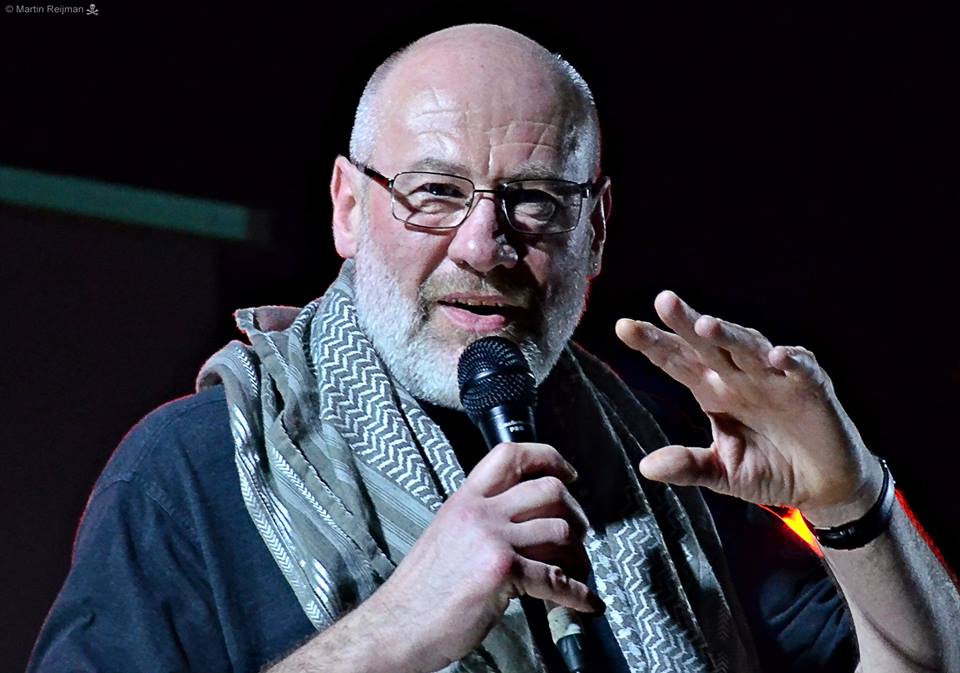
Fish, the mighty CRS Awards' Master of Ceremonies.
Fish, the mighty CRS Awards’ Master of Ceremonies.

There are not many occasions for which I would happily strap the Progmobile to my derrière and take a four hour drive north for an overnight stop in Rotherham. However, this was the must-attend Classic Rock Society Awards held at the rather modest Montgomery Hall, Wath-upon-Dearne, close to the bright lights of Barnsley, Rotherham, Sheffield and Doncaster.

As prog’s pride of Yorkshire Andy Tillison told me last year, the Montgomery Hall was at the forefront of activities back in the early 80s as it was there that Arthur Scargill, firebrand leader of the National Union of Mineworkers, started rallying the troops against widespread pit closures and more pointedly, his nemesis, Prime Minister Margaret Thatcher.

So, this was a hall with a volatile history, a million miles from the peaceable, gentle gathering of loons, musicians and fanatics who make the annual pilgrimage to the awards that always seem to throw up a few surprises during the course of the evening.

Part of its appeal is in the way fans and the band members, many of them up for a prestigious award, all mingle and interact, affirming once again what a big lovely cuddly happy family prog now is.

Because it was an awards ceremony, Martin and I took it upon ourselves to “dress up” for the occasion, his steampunk jacket catching the eye of one of the night’s major players and my black velvet cape apparently coveted by one of the award presenters.

One of the thrills was meeting people there for the first time and I was so looking forward to finally making the acquaintance of David Longdon, whose leg I had been pulling on FB about winning the Male Vocalist Award. Like all those other awfully nice Big Big Train chaps, his modesty was disarming and charming.

It would not be a proper gig if Maestro Tillison did not encounter some form of technical hitch. Sure enough, his trusty keyboard conked out 15 minutes before he was due to go live, so he had to borrow Mike Varty’s stack. Proving yet again how intimate prog can be, he delivered compelling renditions of GPS Culture and Perdu Dans Paris enhanced with some Floydian flourishes and a drum solo. I did not and could not move throughout the show. It had me riveted to my seat.

Out in the corridor after Mr Tillison’s spellbinding work-out and observing Big Big Train’s Messrs Longdon, Dave Gregory and Danny Manners, I heard myself saying to anyone who would listen “I wish Brad Birzer was here tonight”.

We then bumped into Steve and Jo Hackett – as you do, exchanging pleasantries with them about the Genesis Revisited gig at Southampton Guildhall in October to which we are going, but this time with the addition of Nick Beggs back as bassman. The great man pointed out that he was now surrounded by huge long haired, blond Viking types, the other being the show’s rather splendid chanteur, Nad Sylvan.

And so it was on to the business end of the evening, the awards themselves. Fellow Progarchist John Simms has eloquently documented the winners elsewhere in these columns. The Classic Rock Society’s Stephen Lambe and Steve Pilkington kept the tone light, frothy and occasionally chaotic, handing over to the imposing Fish, the Master of Ceremonies, to “open the envelopes” and announce the winners.

Well, there was no disputing any of the winners this year. The Big Big Train camp scooping best song and band was reason enough, but according to sources close to the CRS, it was neck and neck between David Longdon and Damian Wilson for Male Vocalist. And no, I did not know the result beforehand but wishful thinking is a very underrated force.

The most emotional moment was seeing the gorgeous Christina Booth join her Magenta band-mates Chris Fry and Rob Reed to pick up Album of the Year for The Twenty Seven Club. Christina has been very public and positive about the recent treatment she has been receiving for breast cancer. Now sporting a short punky, elfin haircut, Christina got the loudest cheer when she was practically enveloped by gentle giant Fish when he presented her with the Female Vocalist award.

There were other moments of personal satisfaction, Moon Safari picking up the CRS live gig award and them pipping Lazuli among others for the Best Overseas Band of the Year. Their submitted speeches were wonderful – articulate in their precise and perfect English, Stephen Lambe reading them out like schoolday English essays. How this bodes well for the joint Moon Safari/Lazuli tour for which I am acting as chief cheerleader later this year. You will all be there, won’t you?

And there was joy for my lovely fellow lady of the prog, Jill Lerner, as her band HeKz picked up the Best Newcomers Award. Steve Hackett received the bass player award on behalf of Lee Pomeroy, his erstwhile band member who has also been seen in concert outside Buckingham Palace, supporting Grace Jones, and with some boy band called Take That. His acceptance speech gave thanks to all for granting him the John Jowitt Award – the IQ/Arena /Frost* bassman now exempt from being voted for having won it almost every year since inception.

Magenta’s Rob Reed won the best keyboards award and the young, dapper and hirsute Henry Rogers of Touchstone, Alan Reed and DeeExpus picking up the drumming honours. Even our esteemed MC got himself an award for his lyrics from sponsor Mr Tillison.

The highlight was an on-going missing guitarist situation when best guitarist Steve Hackett was declared officially absent, presumed getting something from out of his car. It must have been a very dark night out there because Fish had to tell a few tall tales while a search party was sent out to retrieve him, but in the end, the hunt was called off.

Stephen Lambe also found himself in a tricky situation, having to receive the Unsung Hero award for his fellow Summers End co-conspirator Huw Lloyd-Jones, no nepotism or altruism intended of course!

So, those are your winners for another year, and again, if proof was needed of what another stunning year had been for prog, take a close look at those winners and some of the other nominees such as Lifesigns, Steven Wilson, Nick Beggs, the Flower Kings and Spocks Beard who all left empty-handed.

But that was not all. Here is a recommendation for you all. Go out and get yourself a DVD of Alchemy, the rather wonderful musical, composed by Clive Nolan, keyboards supremo of Pendragon and Arena, available from Metal Mind. If ever you wanted to see what a prog rock West End musical would look and sound like, it is all here, performed by the Caamora Theatre Company.

It is a Victorian steampunk melodrama, steeped in the supernatural as good conquers evil in the pursuit of finding a way to make lead into gold through alchemy. With Nolan playing the good guy, Professor Samuel King, he has his work cut out against baddie and arch-enemy Lord Henry Jagman, a role that Andy Sears (Twelfth Night) was born to play.

“The Ends Justify The Means” is one of the funniest and nastiest songs you will ever hear and in Sears’ grateful hands, it was one of the highlights of the show. There is also romance, betrayal, pathos, passion and revenge in there too and one of the other barnstorming performances comes from Paul Manzi (Arena/Oliver Wakeman Band) looking like an exotic gypsy king as mercenary Milosh. Among the backing musicians are Pendragon’s drummer Scott Higham and keyboards player Mike Varty (Credo, DeeExpus and Landmarq).

Well, you can see what you missed and not surprisingly, a standing ovation was in order for this cracking show. Let’s hope there are further live shows planned as again, this demonstrates the diversity of prog in all its colourful splendour.

One other thing I feel I ought to point out about the evening was the number of lady proggers present for this great, great evening. The tide really has turned and most were there because they wanted to be and not under sufferance to appease their partners.

Back at the hotel afterwards, it was death by distorted disco in the bar immediately downstairs where some birthday celebrations were taking place. Somehow, I sensed we had been in the right place!


Photograph of Fish by Martin Reijman.

From the best FB-group you can find!

Being a Passenger means you probably are a member of the evergrowing Big Big Train facebookgroup. Among all interesting subjects being discussed there we have now also learned how to bake bread the proper way! Read Jon Collin’s blog about Big Big Bread! Enjoy!

Brand X – rare recordings

As a teenager I was a big fan of Genesis (and still am), and as a budding, slightly obsessive completist I sought out the solo material and extra-mural projects of band members as well as the group recordings (as much as my limited income at the time would allow). It was through this route that I had my first real encounter with Jazz Rock Fusion, in the guise of Phil Collins’ solo project, ‘Brand X’.

I was quickly blown away by the virtuosity, energy and inventiveness of Messrs Collins, Goodsall, Lumley Jones & Pert, with later contributions from Robinson, Giblin & Clark. This was exciting music, which took me to places that Prog rock didn’t, and I loved it (and it took me into the multi-faceted realms of more conventional jazz, too). I even managed to catch the band on tour in 1980 at Bradford University, sharing the bill with Bruford, which was a particular joy.

I was delighted to discover that some of the band’s rarer material had become more widely available recently. One was a live recording of a show the band performed in September 1979 at the Roxy, LA. Most of the material here is from the ‘Product’ album (the first of their recordings that I bought, and which they were promoting at the time), and the recordings are of a slightly poor quality, probably being audience-recorded bootlegs. There is a good interaction between band and crowd, with some attempts at Pythonesque humour in places (the band had Michael Palin write sleeve notes for ‘Do They Hurt’ in 1980), though there are some slightly annoying ‘whoops’ from the audience at times: throughout, the musicianship is first rate, as one would expect.

The other is a collection of early session recordings from 1975 & 1976 with early versions of tunes from their first couple of albums, and other material which never made the official releases. So we have ‘Dead Pretty’, which became ‘Born Ugly’; ‘Why Won’t You Lend Me Yours?’ which emerges as ‘Why Should I Lend You Mine (When You’ve Broken Yours Off Already)’; and an early version of live standard ‘Malaga Virgen’, which begins life as ‘Miserable Virgin’.

An interesting couple of collections, which give some insights into the workings of this great group of musicians.

Classic Rock Society Awards Night 2014

As a lover of Progressive Music for many years now – from the days when I simply knew it as ‘good music’ back in my school days in the 1970s – I have been delighted to see the recent resurgence of the genre. This has been in no small measure down to the efforts of groups like the Classic Rock Society, who have been striving to keep the flame burning, particularly during the dark days when ‘Prog’ was considered by many to be a word not spoken aloud. This striving, though, happened (sadly) under my radar for a large number of years, but I recently came across them, and was delighted to discover that they functioned in my own neck-of-the-woods in South Yorkshire.

Once I’d made this discovery, I ventured out to a few of their gigs in the humble surroundings of the Wesley Centre in Matlby, near Rotherham – interestingly for me the site of a former Methodist Chapel – and when I heard that their awards night was on the horizon I decided to go along (taking my younger son with me, as a fellow traveller). These are my personal reflections on the event.

The venue – the Montgomery Hall in Wath-upon-Dearne – is similar to the Wesley Centre in lay-out, though it has a larger capacity and a larger stage, which proved helpful for the evening’s entertainment. We began with a short solo set from the brilliant Andy Tillison, who coped seamlessly with a keyboard malfunction shortly before the off which left him having to rely on someone else’s equipment for his performance. There didn’t appear to be any problems caused, and Andy gave us around 20 minutes of magic – one man and his keyboards performing without the aid of backing tracks, loops or a safety net and giving us stunning renditions of ‘GPS Culture’ and ‘Perdu Dans Paris’. As a recent ‘convert’ to his work, particularly with The Tangent, I found it sublime and wonderful.

The ‘business’ of the evening was the awards themselves, and after suitable lubrication with ‘Big Big Train’ beer, on sale at the bar, we settled down to find out who had topped the polls at the end of what many have called a classic year for Prog. The awards were presented this year by none other than Fish, who brought his own laconic wit to the proceedings. The awards went to:

Best Male Vocalist – David Longdon
Best Female Vocalist – Christina Booth
Best Keyboard Player – Rob Reed
Best Bass Player – Lee Pomeroy
Best Drummer – Henry Rogers
Best Guitarist – Steve Hackett
Best Album – The Twenty Seven Club – Magenta
Best Track – East Coast Racer- Big Big Train
Best Lyricist – Fish (presented by Andy Tillison)
Best CRS Live Act – Moon Safari
Best UK Band or Artist – Big Big Train
Best Overseas Band or Artist – Moon Safari
CRS Newcomer – Hekz
Unsung Hero – Summer’s End

Amusing incident of the night has to go to Steve Hackett, who having picked up the Best Bassist award on Lee Pomeroy’s behalf, disappeared and was nowhere to be found when his own award was announced. He did eventually return, but we were deprived of what would, I’m sure, have been a great acceptance speech!

The business done, we returned to the music, with a 2-hour performance, with numerous singers and a full band as well as visual images and a virtual choir, of Clive Nolan’s epic rock opera, ‘Alchemy’. This was not a piece with which I was familiar, but it carried you along with a good narrative, well-told and performed: I shall no doubt return to it in the future.

So, five hours after arriving, we set off back home, thrilled by a great evening of rock in the fabulous company of fellow fans and ‘passengers’. Three highlights for me: seeing Andy Tillison perform – an absolute treat; meeting Dave, David & Danny from Big Big Train – real, genuine guys who seem at times quite bemused by their much-deserved recent accolades; and seeing my young son, James, ask Steve Hackett if he would take a photo of James with Fish (he’d already got one with Steve when he came to Sheffield last year!)

All in all, a wonderful night, and a fitting celebration of another classic year for lovers of Progressive Rock!


A.C.T are back!

I’m stoked! On Saturday 1st March fine Swedish proggers A.C.T are doing their comeback at Musikens Hus Goes Progressive! New record coming up in the beginning of March as well!

Not very many live clips around but this one from KB in Malmö is great!

Two major awards for Moon Safari

Wow! Not only did Big Big Train perform the classic hat trick at last night’s CRS Awards! The fabulous Moon Safari from Skelleftå, Sweden, were also heralded with the awards for “Best Overseas Band” and “Best Live CRS Gig”!! So well deserved! Big Big Hooray!!!

Three Major Awards for Big Big Train

This photo was rather unceremoniously stolen from Steve Llewellyn's Facebook page.  Let's hope he doesn't mind!
This photo was rather unceremoniously stolen from Steve Llewellyn’s Facebook page. Let’s hope he doesn’t mind!

If you’ve not noticed before, we progarchists kind of, sort of, really, really like Big Big Train.  So. . . it’s with much excitement that we report this.

The Classic Rock Society of the U.K. has just awarded BBT with three well-deserved awards: 1) David Longdon for best vocals; 2) “East Coast Racer” as the best track of the year; and 3) Big Big Train as Great Britain’s best band.

The progarchists of progarchy hq in central Hillsdale County of Michigan are doing a little victory dance for our friends across the Atlantic.

Congratulations to Greg Spawton, David Longdon, Nick D’Virgilio, Dave Gregory, Danny Manners, Andy Poole, and Rob Aubrey.  And, of course, to Jim Trainer as well.  Amazing and brilliant and wonderful.

Rush’s First

Image
Early Rush: John Rutsey, Geddy Lee, and Alex Lifeson

Rush landed in my life like a broken window when I was thirteen, that weird, shard-like spiral guitar intro to The Spirit of Radio busting things open for me in 1980.  It wasn’t an easy sell at first — Rush is a studied taste and I’d still say on most Rush records for every moment of musical or lyrical poetry there are two that are just brainy.  What maybe distinguishes the band, though, is their absolute, all-in commitment to THEIR muse as a trio.  It’s been mentioned in these pages before, but worth reiterating: Rush is as powerful now as they were 40 years ago, despite just about every obstacle you can throw at an artist.

Forty years ago next month Rush released its first, self-titled album.  In its way it’s one of the most intriguing records in their catalog because, unlike almost every other one of their albums, it is a product of its time and shows it.  That it’s also a prime example of early 70s hard rock is often lost in the various fanboy legends of Rush, where all songs are anthems and where first drummer John Rutsey is alternately pitied or maligned for not being Neil Peart.  Rush the album is a tight, finely-walked tour of guitar rock, a thick, sludgy, power trio slab that screams North American midwest, 1974.  There are odes to hard working folks, stoner rock birds flipped at the Man, ballads and blues boogie admonitions to the ladies, and hard luck stories from the rock and roll road.  This was not a lightly-traveled terrain: Mountain, Robin Trower, and armies of Uriah Heep-ish bands were all pounding to dust the path blazed by the Yardbirds then Cream then Zep, and Rush was very much a part of the meat-and-potatoes rock circuit that included bands like REO Speedwagon and the Amboy Dukes.

But Rush intrigues for a number of reasons, not least of which because as a record it shows a working rock band fully constructed.  They were young but had paid their dues, there was no doubt, witnessed by the super tight performances.  And looking back at the record 40 years on, there are moments when Alex Lifeson’s chord voicings or Geddy Lee’s bass patterns seem to jump forward to their present work.  They had a kernel of a sound and a whole lot of chops, and I’d argue that when they replaced Rutsey with Peart they possessed an uncommon strength, which allowed them to deconstruct their sound and build it up again, to eventually realize a vision absolutely unique in rock.

Technically, too, the record has a lot to recommend it.  Working with limited technology, even for the era, the band created an album with a saturated, present guitar sound that was clearly evolving with what could be reproduced on a record.  The separation is very good, although the drums don’t always pop like they could, probably as a result of the guitar’s appetite for bandwidth, rather than Rutsey’s playing, which swings with the best hard rock records of the time.  The extended soloing space, too, is defined and disciplined, guitar-focused and deriving more than a little from the studio recordings of Led Zeppelin, one of Rush’s early beacons.  Rush had their ears on this recording, and I don’t think it’s any mistake that more recent stoner and heavy rock records have a lot in common sonically with Rush’s first.

Thirty years after Rush released its first record, they recorded Feedback, an homage to their influences.  Played back to back with Rush, the two albums almost seem of a pair, their respective sounds not that unlike, and as if the songs on Feedback might have made up the rest of the set had you seen the band in ‘72-73.  Feedback arrived two years after Vapor Trails, when Rush re-asserted its harder, guitar-focused edge, and began a phase of fine work that continues up to their most recent record, Clockwork Angels.  As the title of that album suggests, this is a band that appreciates the spiral and the cycle of their art, the seed of which can be heard, if you’re listening for it, on Rush.