Fighting Generation Bland: The Short Career of Ordinary Psycho

One EP, two LPs, and an insert with a mission statement.  What they lacked in quantity is made up for, a million times over, in quality.
One EP, two LPs, and an insert with a mission statement. What they lacked in quantity is made up for, a million times over, in quality.

The English band Ordinary Psycho enjoyed a short but brilliant burst of life from about 1997 to 2004.

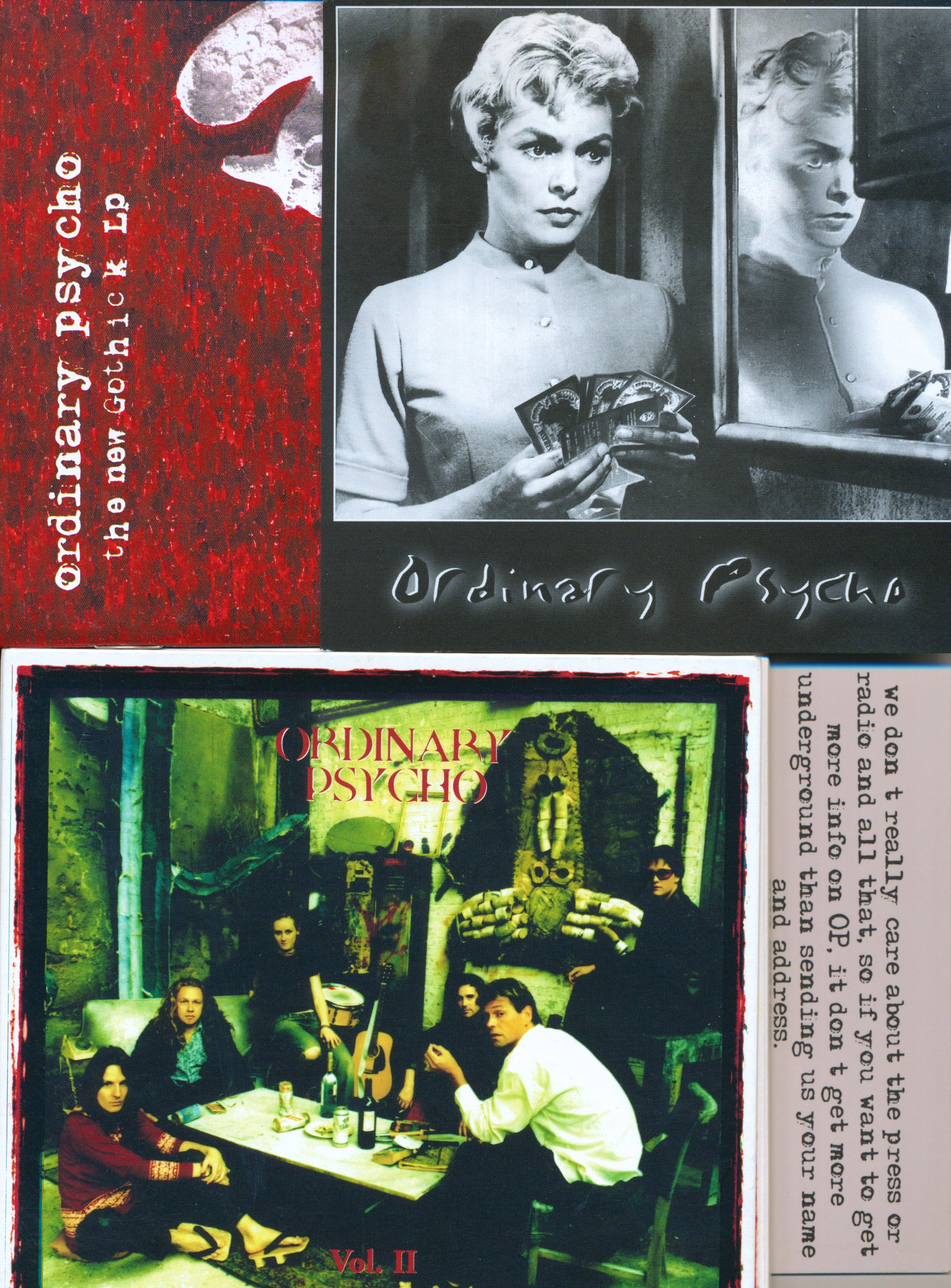
Their first EP, “Introducing Ordinary Psycho, Special Limited Discovery CD (With Marion Crane,” offered the world only twenty minutes of music. So well crafted, though, the music continues to speak to me after innumerable listens over the past sixteen years. Enjoying its pleasures as I type this piece, the music seems as alive to me today as it did in 1998. In 2000, they released their first LP, The New Gothick LP (sometimes just The New Gothic–without the k). A year later, they released their second and final LP, Vol. II.

https://progarchy.com/2013/09/24/ordinary-psycho-calling-david-gulvin/

As I’ve mentioned in a previous post—back in September 2013—I first encountered the music through a Talk Talk discussion group sponsored by a Danish website. David Gulvin, one of the two founders of Ordinary Psycho, popped into the discussion offering the band’s introductory cd. I requested one, and, lo and behold, it showed up in the States only a week or so later. I immediately fell in love with it, and I still consider it one of my most prized cds (out of a rather unseemly large collection!).

The brain child of brothers Tony and David Gulvin, Ordinary Psycho incorporates normal rock instruments—guitar, bass, and drums—but the band also employs lots of real strings (viola and cello, predominately), piano, double bass, and various forms of percussion. In the background to many of their songs, one can hear church choirs, children’s choirs, soundbites, samples of everyday life, and movie dialogue.  All of the music warrants careful listening and high-quality headphones.

In the band’s only EP, “Introducing Ordinary Psycho,” the 20-plus minutes of music tell a story revolving around Alfred Hitchcock’s masterpiece, Psycho (based originally on Robert Bloch’s novel of the same name). In what could best be described as a theatrical play or actually interesting performance art, Ordinary Psycho manages to ask the most important existential questions for any person—who am I, why am I here, what do I do—in a soundscape that flows as naturally as human creativity allows in this rather crazy world. The production on this little EP is immaculate and the flow of the music and the lyrics simply perfect.  Again, though I’ve heard the story of Marion Crane told many, many times, it never fails to grab me.  This is how powerful the Gulvin brothers can be in their art.

The lyrics of all three releases titillate the intellect as well as the soul. No mere lyrics of “baby, baby”, the Gulvin brothers offer some of the most serious social and cultural criticisms I’ve ever encountered since Roger Waters and before Andy Tillison. “Generation X gave away to Generation Bland” screams one of the first lines of the first song of the first album. The brothers employ lots of Catholic imagery (Gnostic, too), critiques of anything bureaucratic (corporate, governmental, or educational), and an existential embrace of some vision of life ranging from the carnival-esque and to what would be considered mildly anarchist and libertarian.

Though one can hear many of these same themes throughout the three Ordinary Psycho releases (always creatively presented and often with raw anger), no style of music predominates. Any attempt at labeling this music would fail miserably. There are straight rock, prog, punk, folk, theatrical/music, and acid elements throughout. Never does any album, song, or passage move predictably, though, and one style easily and readily blends into another. Each album makes sense, however, and each clearly and abundantly overflows with intense imagery and equally intense creativity.

Sadly, there’s very little to find about the band or its history. It’s official website, www.ordinary-psycho.co.uk is defunct. Utterly kaput. Across the web are questions from fans asking such things, repeatedly, as “Does anyone know what happened to Ordinary Psycho?” or “Does anyone know where to find” this or that Ordinary Psycho release? But, there’s no solid information out there.  When I googled the band, I came up with the piece I wrote about them last September.  I could quote myself, but I know as little about the band’s actual history today as I did then.  So, quoting myself would only be vain.

From what I can tell (and I have received a very nice email from Tony Gulvin, but with no details about the band or why it called it quits), the band began in the mid 1990s, released the EP and the two LPs, and ended itself around 2004.

Youtube has a couple of songs available as well as a few videos of some live performances. Classic Rock (the magazine) had one article about the band in July 2000, though it, in and of itself, is a bizarre article [as a quick note—I was able to access this about a year ago, but I’m unable to access it as I’m writing this piece].   It’s clear that the writer for Classic Rock had no idea how to classify the band.

It’s also very difficult to locate any of the Ordinary Psycho releases any where, even in specialty shops on the web. But, you should try. Really, you should. You should track these releases down as quickly as you can.  Make it a treasure hunt (sorry, I have small children–such enthusiastic imperatives just come into existence from time to time!)!  Listening to this band is an absolute feast for the ears, the mind, and the soul. I’m sorry they only produced what they produced. But, holy schnikees, it’s so much better to produce one great thing (or three great things) than a load of trash.  Really.

That Ordinary Psycho was and remains a cult band only adds to its mystery.   I feel today about the Gulvin Brothers the way many in the 1970s and 1980s felt about J.D. Salinger. His absence only added to his attraction.

Still, if the Gulvin brothers re-emerged, they’d find no greater fan than yours truly.

If nothing else, Tony and David, please release all of your music through Soundcloud or Bandcamp so that the world can enjoy your sheer brilliance. In this surreal existence of sorrows, the Good Lord knows we can always use a little extra truth, beauty, and goodness.

*****

Ordinary Psycho’s Discography

EP

“Introducing Ordinary Psycho, Special Limited Edition Discovery CD (With Marion Crane)”

LPs

The New Gothic LP (2000)

Vol. II (2001)
An Interview with Integrity’s Minstrel: John Bassett the Brilliant

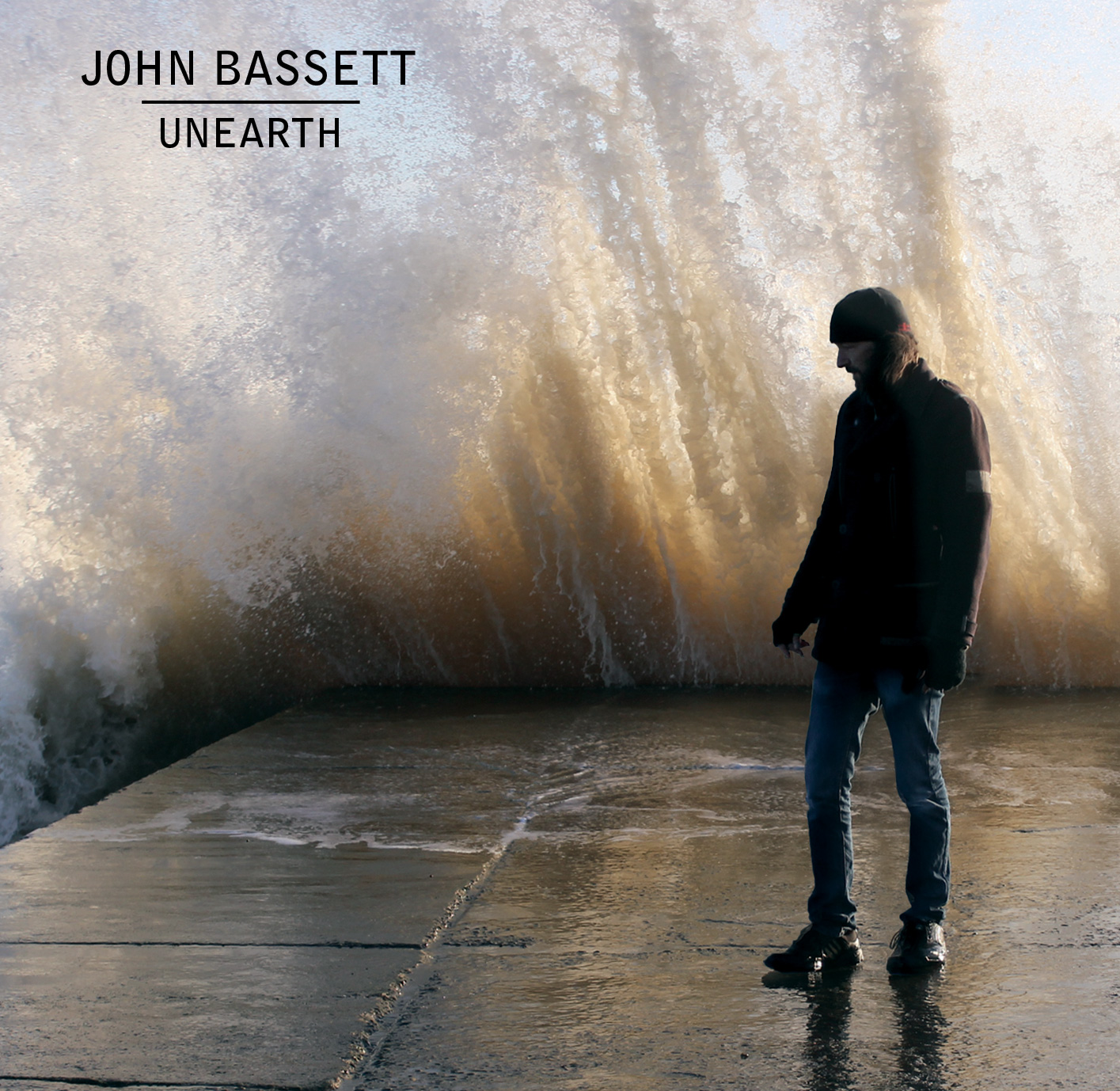
Much to my happiness, I had the chance to talk with John Bassett, Integrity’s Minstrel, about his new solo album, UNEARTH.  UNEARTH has already received a properly enthusiastic reception from the music community.  For good reason.  John is simply brilliant, and every note radiates goodness, creativity, and substance.  For all intents and purposes, John is the Neil Peart of his generation, though with less of a Nietzschean streak than the younger Neil possessed.  So, without further blathering on my part, it’s my honor to present an interview with the mastermind behind Kingbathmat, John Bassett.  As you’ll see, John is as intelligent as he is musically talented.  His insights here speak volumes.

Unearth-Album-Cover

***

Progarchy (Brad): John, thanks so much for talking with us.  I know how busy you are.  It’s a great honor to talk with you.  As you know, we progarchists are huge fans of yours.  So, let’s get started.  What is your goal with a solo album? Why do one?

JB: Hi Brad, I’ve got a bucket list of musical projects I want to achieve before I pass into the next world and one of them was an acoustic album, so that is now crossed off my list. I suppose overall, I was attempting to recapture the days when I was first started learning guitar, and writing my first songs. I was astonished to find that I could create tunes out of nothing, it was a revelation to me, an individual, who at that time was quite unconfident, lost and unsure of himself. I would listen back to recorded cassette tapes of those early songs with a sense of pride thinking that there may actually be something that I may be good at after all and that I might not be as I first thought, completely useless. Around that time I became quite infatuated with writing songs and was obsessed with the album “Pet Sounds”. So this is me now, recreating that past frame of mind and musical sensibility with the more modern outlook that I have today.

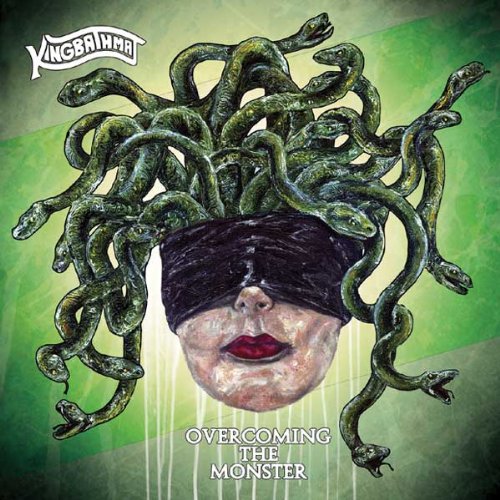
Kingbathmat OTM

Progarchy: When writing songs, do you come up with lyrics or music first? How does it all come together?

JB: Music always comes first for me. It usually happens in this order, I’ll sit down, in a comfy chair with a tasty beverage, pick up an acoustic guitar and create garbled, wordless vocal melodies over a sequence of chords which sound pleasing to me or emotionally meaningful. The vocal melodies are always very precise and there are usually no words assigned to the tune, lyrics always come later. I don’t know if this is a commonplace procedure for people who write songs but its the way I’ve always done it, especially in regards to vocal melodies. Sometimes when mumbling these incoherent melodies over these chords a word will abruptly spring out of nowhere that fits perfectly with the tune, this happened recently with the song “Comedian” (last track on “Unearth”), the word “comedian” came out of nowhere whilst composing and when this happens I feel obliged to keep that word in the song even if it means I have to change the entire concept of that song so as so to fit that one word into it. Luckily with that word “comedian” it subsequently reminded me of a situation in my childhood from which I then drew on for the rest of the lyrics for that particular song.

Progarchy: Why take the solo album into more acoustic and acid folk?

JB: I never intended for it to have a psychedelic folk slant, but I suppose I just can’t help tinkering with different sounds in the studio. I love acoustic records, there’s something pure, honest and unfiltered about that style and that’s what attracted me to making this album and for the nostalgic reasons already mentioned above.

Progarchy: Any chance you’d make a Kingbathmat album incorporating some of the style of Unearth? Maybe a concept album, alternating between soft and hard styles?

JB: I’m unsure where to go with the next KingBathmat album, I’ve got a concept idea, I’ve also got some instrumental tracks I’m curious to make. I don’t know, there are a few tracks that I’ve started working on. It will probably be more cinematic and more experimental. I do want to take that emotional vibe with “Unearth” and introduce some musical shocks within it. Set up a musical pretext and then flip it around but of course it would have to work musically and not undermine it.

Progarchy: Who are your artistic (music, lit, etc) heroes?

JB: I feel the best artists are those individuals who achieve something worthwhile for themselves and others and yet all the while, retain their original sense of self. Being honest and truthful is all important to me. I don’t like an artist who adopts a facade generated by his over inflated ego, you can see this with numerous successful artists who start to delude themselves. In my opinion, musical artists that have achieved huge success but then also remained true to themselves would include Jimi Hendrix, Kurt Cobain, Frank Zappa and Rory Gallagher, I’m sure there are many others but those are the notorious ones that first spring to my mind. This level of authenticity shines through when you observe them in interviews, there’s seems to be no bullshit with them, and I think it is this attitude that not only endears them now to the public but also enabled them to create brilliant music. Many may have died through drink and drugs, yet artistically, I feel they remained unaffected. So I suppose it is this authenticity element that I admire and would like to emulate from these people.

Sketch of Bassett by the lovely Anne-Catherine de Froidmont.

Progarchy: Anyone currently you’d love to work with?

JB: There’s loads of people I’d like to work with, If I was to start mentioning names this page would turn into an infinite scroll of people that would never unravel. Ideally the best people to work with in a musical sense are those that can do what you can’t do or what you’re lacking in. Someone who has a different musical sensibility to you and therefore can inspire you to think in a different way which then resets your sonic freshness button.

Progarchy: Your lyrics and videos possess both surrealism and biting cultural criticisms? What message, if any, would you like the listener to take?

JB: Well I suppose with this latest album I’m just speaking from my own personal mindset, yes I maybe overly paranoid, and I may have a deep mistrust of authority but I’m hoping that other people will identify with my individual thoughts and emotions, as effectively we are all the same aren’t we? I don’t really have a pre-composed message that is deliberate I’m just literally expressing my thoughts as they come. Fear is a commodity that is openly traded virtually through mediums, I don’t believe it exists in of itself, it’s only created in our minds, but fear can and is placed into our minds by others for means of control through suggestion and the success of that placement of fear is dependent upon their power of influence. Music is a hugely motivational and powerful force that can inspire and influence people, it can remove the obstacles of imposed fear and encourage people to be brave and make a change. Yet popular mainstream music as supplied by the music industry into the millions of homes around the world has never been so uninspiring, worthless and devoid of any true meaning. If there is a message to be taken from popular music today it is that of a uniformly materialistic message to go and buy unnecessary things that will help you inflate your own personal idea of status. It is unbelievable really, the turgid, vacuous, corporate entities that are bandied around and promoted with serious money under the banner of music. This is now considered the norm for mainstream music. I find it hard to believe that this is a natural stagnation that has occurred as some state and rather more so a deliberate removal of an influential and motivational force available to the public, perhaps it is a controlled demolition of music? There is plenty of good music out there, whether its pop, rock whatever, but unless you actively search it out, its not going to find you and your not going to find it. I like this quote that I read last week from a guy called Tim Hall – “Never forget that the majors’ business model is based on keeping the public from hearing music that the majors don’t own” – this I feel is very true, and over the many years I have been doing this, the options for self promotion seem to be decreasing, and if any new avenues appear they are very soon closed off. In some ways its a reflection of the world today where corporations grow bigger, monopolise and restrict individuality, creating an identikit world of mundanity. The only real way for any music that is both created and produced independently to become successful is through people power, word of mouth and endorsements from the public, just as any change in society can only truly be achieved through a collective show of strength. So if you like my songs or any other musicians/bands that self release their own music, please share and tell your friends about them as it means so much.

Progarchy: Thank you so much, John, for your time as well as your insights.  You are the future of prog.


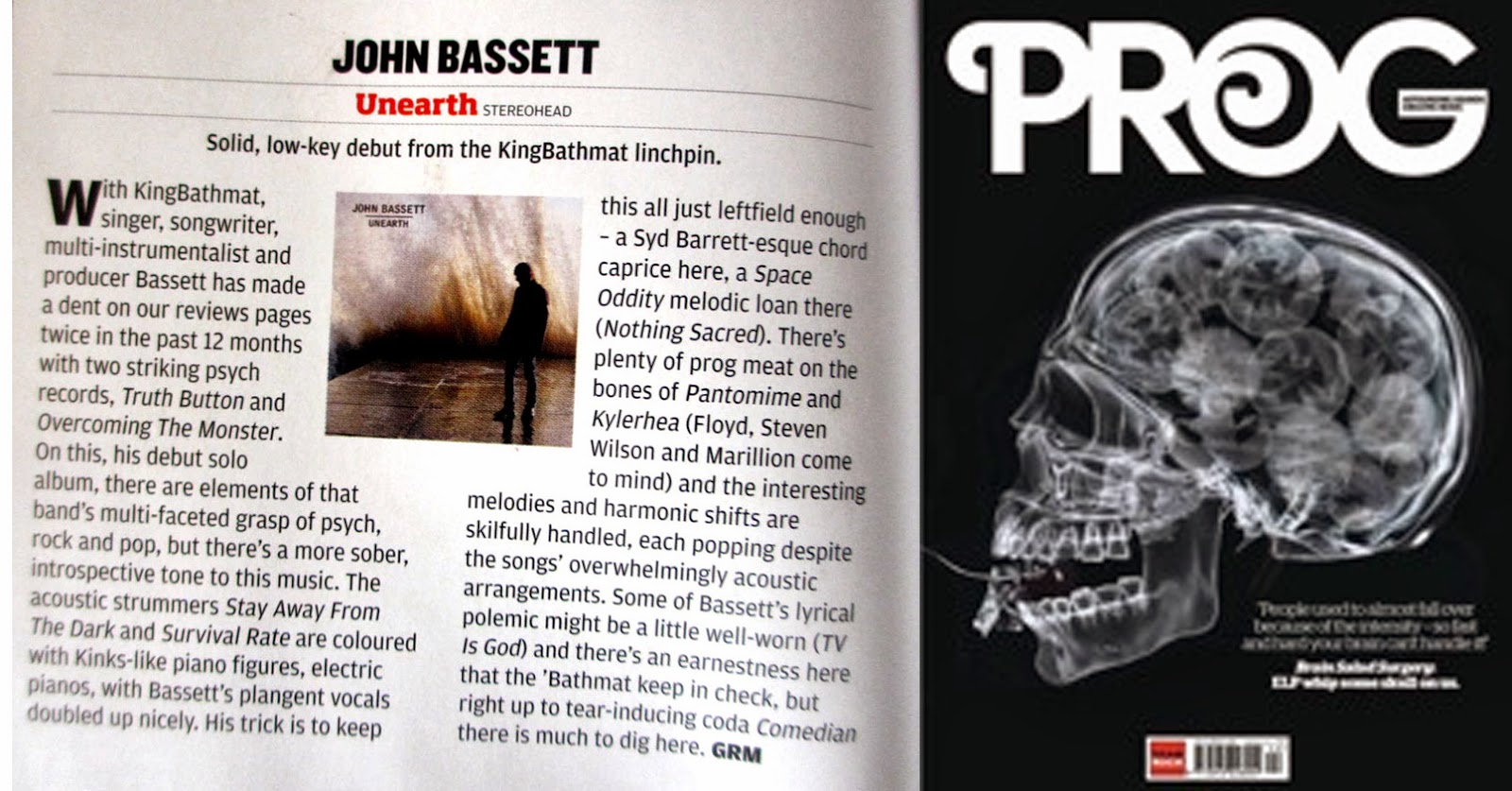
PROG, edited by progmaster Jerry Ewing.

You can order John’s solo album through Burning Shed as well as from his own website.  He’s worth supporting!