

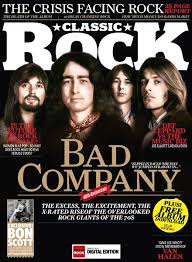
 Classic Rock Magazine’s most recent issue (March 2014) has a fascinating article/editorial asking, “Is This the End of Rock”? The website has reposted it as well–http://www.classicrockmagazine.com/blog/is-this-the-end-of-rock/.
Well written, Scott Rowley’s article laments the decline of the popularity of rock—as there seems to be little new talent, few companies, and even fewer cd shelves promoting and selling rock music. In particular, with the decline of genre-radio, there’s no precise way to get a “mass movement” behind a band, a song, or an album.
Such laments, of course, can be heard in the book publishing and movie-making industries as well, as the author of the piece readily admits.
In some ways, I can sympathize with the article’s author, but only in a a very few ways.
I grew up with an amazing radio station, KICT-95FM, out of Wichita, Kansas. I started listening to T95 sometime in 1978 or so. I was 10. As a teenager, I would rather listen to it or to my albums than watch TV, any day. I even had the great privilege of having roughly six years of working for classical, rock, and news radio as a DJ and as a news reporter.
KICT95 and my albums were the soundtrack and the background of my life. For a long time in my life, radio was everything.
Whether I was delivering pizzas or writing debate briefs (I was a high school debater–yes, I’m sure you’re shocked!), I always had music playing. Though I now teach professionally, little has changed. I would still rather listen to good music and write than watch TV, though I’m, admittedly, a big fan of science fiction. Our house and my home and work offices always have music playing. And, of course, I edit this website, dedicated to music.
Technology and a vastly expanding digital market has changed everything over the last two decades. Steve Jobs, in particular, decentralized the world of media. We no longer have to look to Arista or to CBS or to MGM to provide entertainment, all based on a corporate profit model.
As with all decentralization, it means harder work at all levels. Bands will have to find time to write, to record, to tour, and to promote. Fans have harder work as well, making choices about what to buy, how to search it out, and how much time to promote it.
In other words, in music, we’ve gone from from the equivalent of a world of Walmarts and Targets back to the “ma and pa dime stores”, the local soda fountains, and the corner groceries and drug stores.
Rock, as a genre, consequently, could follow two paths. It could follow jazz in the late 1980s and basically die out or become so specialized as to become, sadly, merely obscure.
The other path is to follow prog, and the ways paved, in the mid 1990s, by Marillion, Spock’s Beard, and the Flower Kings.
The loss of CDs, centralized, corporate music making, and genre radio has been a huge boon to the creativity of prog as a genre. We proggers—fans and musicians—have formed small but highly inclusive communities, using the internet as a means of communicating, sharing, discussing, debating, and promoting our favorite bands. I know how frustrating it is for such great groups as Big Big Train, The Tangent, Cosmograf, TFATD, Leah, and others to get a market. I would give much—and have, especially given my own limited financial resources and time—to promote progressive rock wherever and whenever possible. I would love Greg Spawton or Andy Tillison to do nothing all day but write music, never having to worry about a 9 to 5 job. If I had the financial means, I would gladly serve as a Patron, allowing them to do nothing but write and produce.
But, objectively, we also have to admit, as a genre, we proggers (fans and musicians) have done really, really well over the last twenty years. If we want art as expression and not as market campaigns—forgive me, Mr. Peart—we’ve succeeded. Rather than a Walmart or Target (is it Tesco in Britain?) of prog rock, we have lots and lots of wonderful, small-town stores and boutiques, intimately connected to their customers. Rather than a Coors or a Budweiser, we have in the prog world, neighborhood after neighborhood of locally-produced, finely honed craft beers. Rather than a General Motors or Ford, we have folks making model cars in their garages. Well, you get the idea.
And, those prog labels that have done beautifully–such as Insideout, Radiant, Kscope, Bad Elephant–have done so precisely because they have allowed for the flourishing of creativity and have promoted it, rightfully, as the creativity that it is.
As with all changes in the market and technology, there are those who will adapt, create, and succeed, finding a place. There will also be those who—out of failure to understand or sheer bad luck—fail. If mainstream rock wants to succeed as a genre, it needs to look to prog, not jazz, as a model. It needs to accept decentralization and intimate relationships with the fan base.
As proggers, we have almost everything to praise. Rather than lamentation, we should be celebrating. The old taskmasters are gone, and we’re–the small labels, the musicians, and the fans–now in charge.
 Progarchy