Remember 1992? The Cure or Dream Theater as the Future of Prog?

For me, the only great thing to come out of the Mike Portnoy/NHS controversy (which doesn’t seem like it should have been a controversy, at least to this American) was that it re-awakened my interest in Portnoy’s time in Dream Theater. I’ve followed him almost religiously in his non-DT efforts (Transatlantic, Neal Morse Band, Flying Colors), and I think the world of him—as a person and as a drummer. Yeah, he’s got a bit of a temper—but he seems to let it run wild only when life calls for it to run wild. I can’t really blame him. Plus, the guy is so outstanding in what he does, I can’t help but admire him. I would give a lot to have his restraint, frankly.
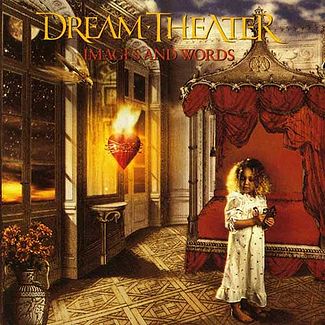
dt images words
The first prog metal album, IMAGES AND WORDS.

But, my point in this post is not about that “controversy.” Instead, that moment in England caused me to pull out all of my Portnoy-era Dream Theater, 1992. I’m not what you’d call an intense fan of Dream Theater, but I have purchased every single album (studio, live, ep) as it’s has come out since IMAGES AND WORDS.

When I first got IMAGES AND WORDS, I was impressed with it. I listened to it with fervor, but, even then, I really loved side two and I really didn’t love side one.

Remember 1992?

1992 was a great year for music, but it was an uncertain year for prog.
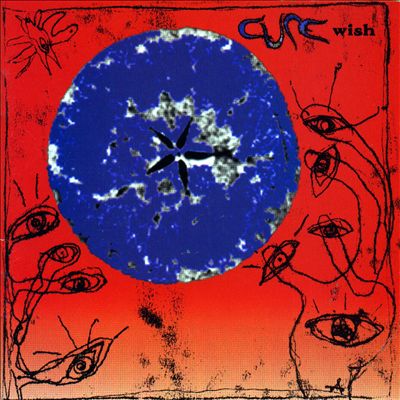
cure wish
Half prog (in a Traffic kind of way), half wacky pop. WISH.

At the time, The Cure’s WISH seemed as likely a candidate for inheriting the mantle of prog as did Dream Theater’s IMAGES AND WORDS. In hindsight, it’s easy to give the award to Dream Theater, but not so easy in 1992. Go back and listen to “From the Edge of the Deep Green Sea,” but also listen to “Open,” “Cut,” “To Wish Impossible Things,” and “End.” There’s a LOT of prog on that Cure album. Plus, I would consider DISINTEGRATION a prog album. My point: if you listened to Dream Theater (metal prog) and The Cure (pop prog), it was impossible to determine who was more prog.  At least in 1992.

Add the albums from Phish, Pearl Jam, and U2 that year.

A lot could’ve happened.

Well, here we are 23 years later. Thanks, Mike. You paved the way then and you continue to do so.

Did Dave Grohl admit that Soundgarden was a far better band than Nirvana?

The former drummer of Nirvana (#3 on my personal list of Most Overrated Rock Bands of Alltime), recently spoke with Rolling Stone magazine about Soundgarden’s album, Superunknown, released twenty years ago. Superunknown, in my completely objective opinion (ha!), is the greatest album to come out of the Nineties grunge scene in Seattle. And, frankly, it sounds as if Grohl, now frontman for Foo Fighters—a group I far, far prefer to Nirvana—seems to agree:

Superunknown is, in my book, right up there with ’90s classics such as Radiohead’s OK Computer, Jeff Buckley’s Grace and U2’s Achtung Baby. I always found Nirvana to be rather boring, just as I found Pearl Jam to be rather boring and rather pretentious (I don’t usually care for bands who try to constantly make Big Statements); it doesn’t help that I cannot stand Eddie Vetter’s weird, warbling voice. But, hey, let’s focus on the good stuff. Soundgarden is coming out with various deluxe packages of the remastered Superunknown (my copy should arrive this week), and Chris Cornell—who was good friends with Buckley—spoke recently to Radio.com about the album’s anniversary:

Cornell, I should remind readers, once said, “I was a nerdy shut-in who listened to prog-rock.” And while Soundgarden is constantly compared to Led Zeppelin, the group was more influenced by Black Sabbath, the Beatles (Cornell’s favorite group), Kraut rock, the Stooges, the Clash and other punk-ish groups.

Speaking of the hit song, “Black Hole Sun,” Grohl remarks, “It was so much more melodically sophisticated than anything any of the other bands in Seattle were doing. It was a big deal.” The same could be said for the entire album, which is, musically and lyrically, one of most eclectic and sophisticated hard rock albums ever produced. Billboard.com has a really good piece about the album that gives a track-by-track tour of the entire 70 minutes. Apparently the making of Superunknown pushed the limits of the technology involved:

Michael Beinhorn, who produced the album with the band at Seattle’s Bad Animals studio in the summer of 1993, told Billboard in 1994 of how he’d overload “tape to the point of distortion, using massive EQ, massive compression. We experimented with chains of four equalizers and four compressors in one signal chain, on one instrument. The end result is a record that is both incredibly dense and overwhelmingly present. There is a tangible sense of air being moved.”

Another interesting note, new to me: the final song, “Like Suicide,” was inspired by a dead bird. Death and mortality, of course, figure heavily in the album; there is a sense of apocalyptic foreboding that is equally chilling and compelling, in large part because the songs are so, well, singable (beware, however, trying to match Cornell’s high notes). My favorite track, “Limo Wreck,” features all sorts of weird tunings and time signatures at the service of a haunting, dirge-ish cut that swells in intensity as Cornell wails: “Under the shelf/The shelf of the sky/Two eyes, two suns/Too heavenly blinds/Swallowing rivers/Belongs to the sea/When the whole thing washes away/Don’t run to me.”

Once I’ve had a chance to listen to the remastered album, I’ll share some more thoughts.