CHRONOMETREE: Glass Hammer’s 3rd-Wave Prog Masterpiece

Glass Hammer, CHRONOMETREE (Sound Resources, 2000).  Artists: Steve Babb and Fred Schendel with Brad Marler; Walter Moore; Arjen Lucaseen; Terry Clouse; Susie Warren Bogdanowicz; Sarah Snydor; and Jamie Watkins.

Tracks

  • “All in Good Time/Part One”—Empty Space & Revealer; An Eldritch Wind; Revelation/Chronometry; Chronotheme; A Perfect Carousel; Chronos Deliverer.
  • “All in Good Time/Part Two”—Shapes of the Morning; Chronoverture; The Waiting; Watching the Sky.
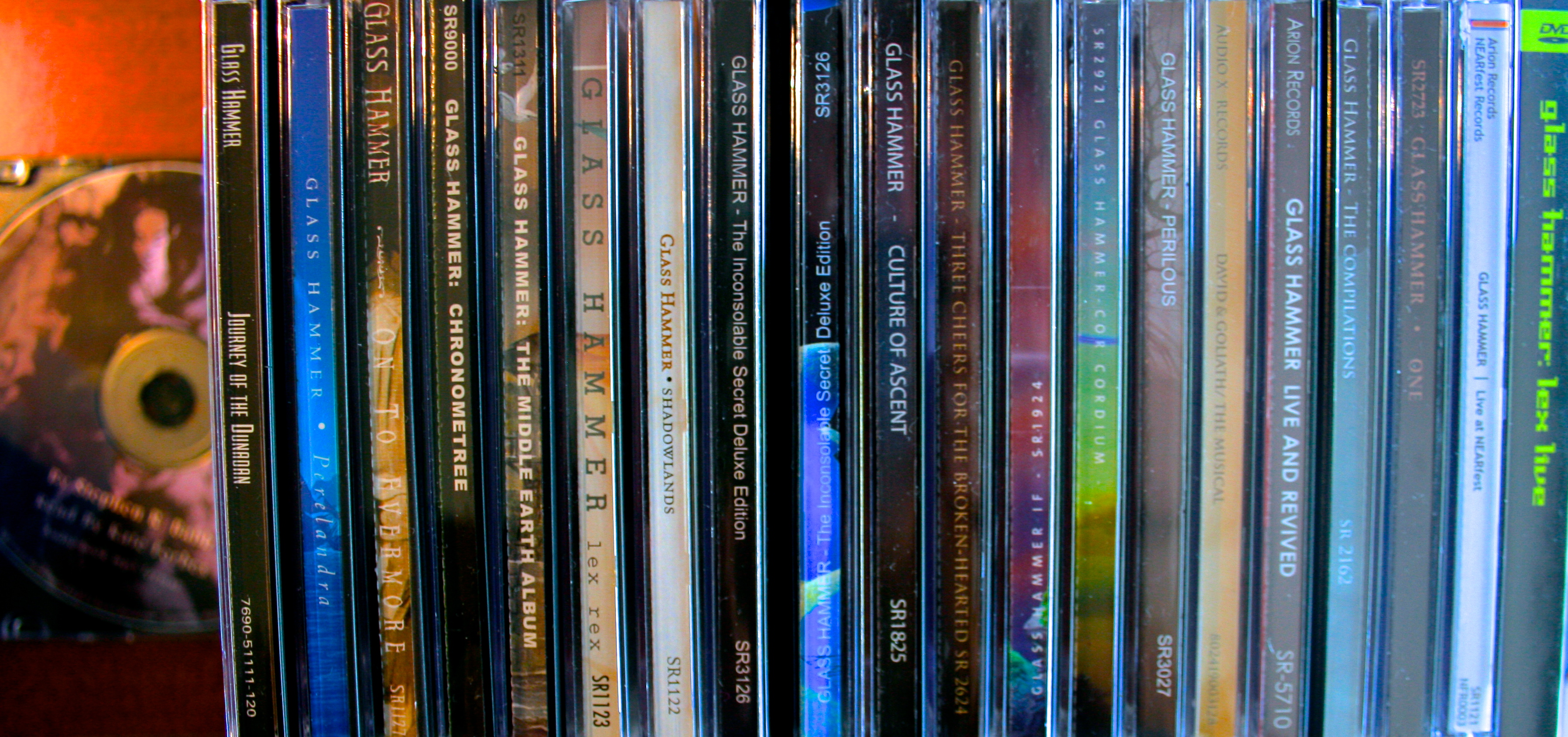
Taken when PERILOUS came out.

Fifteen years ago, Glass Hammer released a masterpiece: CHRONOMETREE.

I almost modified “masterpiece” with bizarre and unexpected, but masterpiece probably doesn’t need exaggerations or qualifications.  All masterpieces are bizarre and unexpected.  They don’t fit the norm.  Neither does CHRONOMETREE.
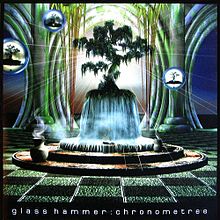
A gorgeous cover or a gorgeous album.

Originally, Fred Schendel had written the music to be a part of a solo instrumental release.  Steve Babb liked the music so much, he asked Schendel to make it a GH album, a concept about concepts.  Schendel happily agreed.

I remember my wife and I left town for a week’s vacation and when we returned a lot of Chronometree’s music had already been written by Fred. He wanted it to be an instrumental solo project, but the sound of that Hammond organ and the retro style of the music was such that I insisted we make it a full blown Glass Hammer project with a storyline. We never imagined it would be such a turning point for us. That’s the moment we embraced our roots and we have never truly repented of it. Prog fans couldn’t resist the storyline, as everyone could relate to our character “Tom” and his slacker friends. Chronometree was a prog album about taking prog albums too seriously. We’re all guilty of it. Leave it to Glass Hammer to call attention to that.—Steve Babb, July 28, 2015

It’s worth remembering at this point that GH had not fully established itself as a major and globally-known progressive rock act when CHROMONETREE first appeared.  While Babb and Schendel had been friends since the 1980s, they had been releasing Glass Hammer albums only since 1993.  Though they loved progressive rock, they had no idea where the genre existed in the early 1990s.  Many now label them—in hindsight—as “neo prog,” a part of the second wave of progressive rock.  They are really, however, pioneers of 3rd-Wave Prog and have maintained their status as one of the two or three premier bands of 3rd Wave over the past fifteen years.  Their music, always deep and often overblown (when necessary), really defines the American aspect of 3rd-Wave Prog.  They are, to put it bluntly, quintessential to 3rd-Wave Prog.  They define it, they embody it, and they progress it.

In the early 1990s, however, Babb and Schendel labeled themselves “fantasy rock,” blending the imaginary worlds of the Inklings (C.S. Lewis and J.R.R. Tolkien) with the musical talents and stylings of Kansas and Yes.  To their surprise, they sold well, supported by their own successful recording studio, SOUND RESOURCES, which had recorded everything from country music to audio books.  Indeed, they have never lost money on any Glass Hammer releases, and their popularity and profitability has grown at the same pace as their artistic innovation and confidence.

Let me admit a personal bias here.  I know Steve Babb, and I consider him a very good friend.  He is, from my perspective, a man of immense talent as well as as integrity.  Every dollar he and Schendel have earned is much more than justly earned.  They appeal to the soul and the mind, not the emotions or the pocketbook.  Yet, they have done well where so many others have failed.  Indeed, the less commercially viable and artistic their art has become, the more successful they have been.  A beautiful paradox.
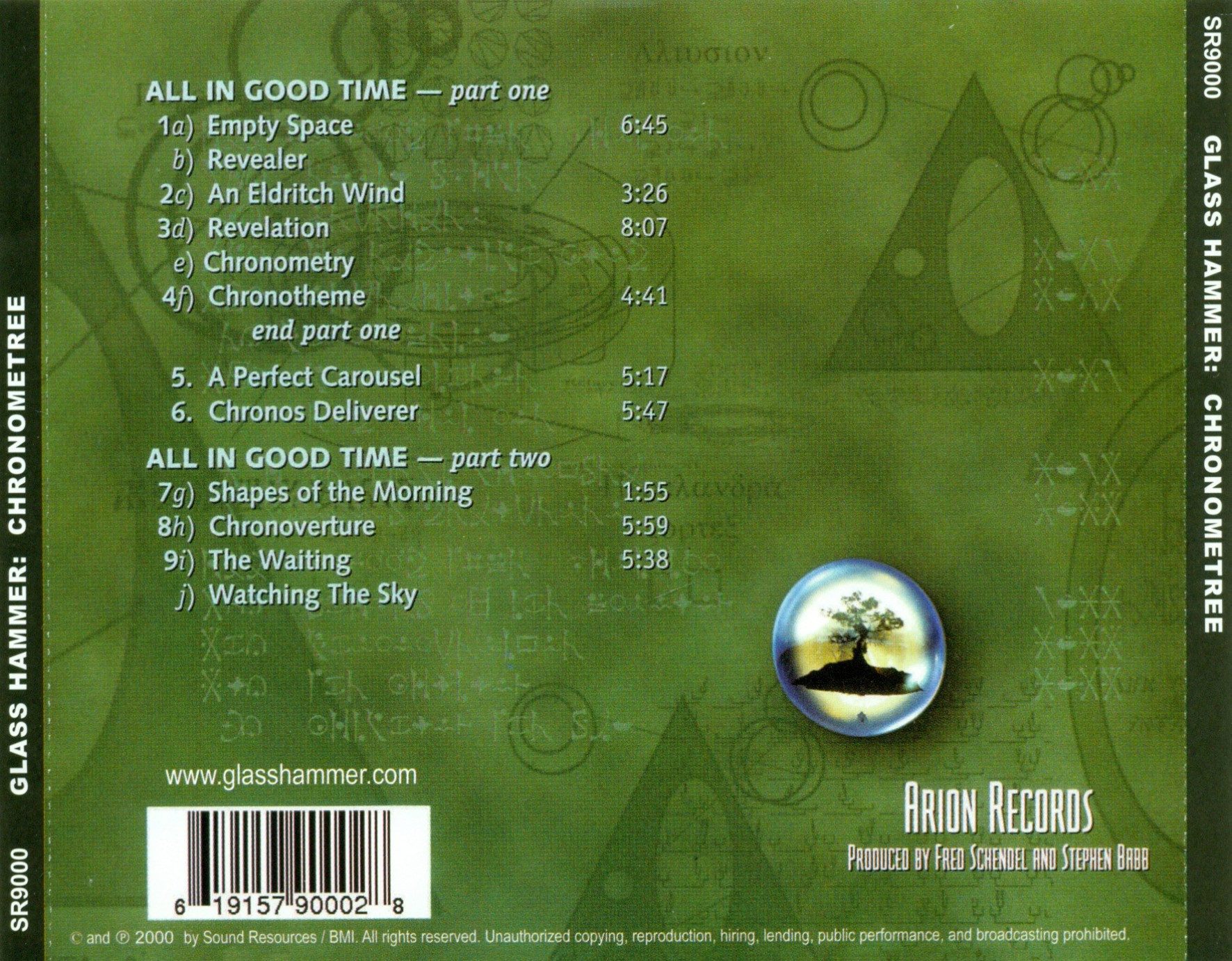
The titles.
The titles.

I have had the privilege of writing about their history over at Carl Olson’s magnificent Catholic World Report: http://www.catholicworldreport.com/Item/2988/the_music_of_glass_hammer_an_appreciation.aspx

Prior to CHRONOMETREE, Glass Hammer had written and produced three of their fantasy rock albums: JOURNEY OF THE DUNADAN (1993); PERELANDRA (1995); and ON TO EVERMORE (1998).  In almost every way, CHRONOMETREE signaled a new era for Glass Hammer.  Though still rooted in fantasy, the story of CHRONOMETREE is as much science fiction and psychological study as it is fantasy.  While it is only a notch below LEX REX in terms of artistic expression, it was a necessary precursor to LEX REX and to all of the albums that have followed.

Star voice changing feel call it out

sounding round the bright sized time

We never saw again

Forgot between the real pulse

The breath of life attain

Let play the sonic wind revealing

Not turning form loose tale

Of awesome thunder turn around the scene

To passion shall not surely fail

–From the opening of CHRONOMETREE.  Tom, it seems, is getting word from 1972’s CLOSE TO THE EDGE.

As mentioned above, every single Glass Hammer album has been better than the previous one.  And, yet, there’s not a dud anywhere in GH’s discography.  GH really do define excellence at every level: song-writing; lyrics; production; and packaging.  One consistent criticism of GH has been that they are “retro-prog.”  Forgive me a pet-peeve, but this is total nonsense.  There is no doubt that Babb and Schendel possess a healthy piety toward those who come before them.  But, so does any great artist.  Art cannot be so radical that it is not recognized by the larger community.  It also is never totally derivative unless it is an obvious mockery.

Do Babb and Schendel love Yes and Kansas and Genesis?  Of course.  So does probably everyone reading this article.  Yet, Babb and Schendel move well beyond their inspirations.

If nothing else, Glass Hammer should be praised not only for their very healthy innovation (Have you ever heard an album like LEX REX?  No, it’s unique.), but especially for their never-ending pursuit of excellence.  I offer the following two pieces of evidence out of a hundred such: 1) Susie Warren Bogdanowicz as singer.  This woman is a goddess of song and voice.  Outside of David Landon and Leah McHenry, she is the single best voice in rock right now.  2) Aaron Raulston, drummer.  This guy could easily hold his own against Peart, NDV, and Portnoy.

Lesser men than Babb and Schendel might be intimidated at having such talent in their band.  But, NOT Babb and Schendel.  They seek the excellent and incorporate it whenever they can.  They’re leaders, not cowards.  And, they wisely realize, adding the extraordinary talents of a Bogdanowicz or Raulston only serves to make them all better.
Glass_Hammer-Chronometree-3-CD-

CHRONOMETREE is the last of the somewhat original lineup, though it should properly be considered a nexus for the band as well as for 3rd-Wave Prog.  Brad Marler provides lead vocals, and even the brilliant Dutch prog master Arjen Lucassen plays on the album.

As most describe the album, CHRONOMETREE is as a “tongue-in-check” concept album about being too obsessed with concept albums.  Having spent many hours of my pre-marriage days wearing headphones and listening intently to progressive rock over and over again in the dark of my bedroom, analyzing every lyric to the point of absurdity, I very well understand the obsessive element.

And eldritch wind howls and moans

Through the space that I was shown

Can you hear their urgent call

Hidden in the sound

As this smoky room begins to fade

And eldritch wind howls and moans

Through the space that I was shown

I’ve been called to other stars

(and the heavens know my name)

I’ve been shown another world

As the vinyl turns

As the vinyl turns

–An Eldritch Wind

Perhaps by grace alone, I have turned this teenage obsession into a healthy hobby as an adult.  Regardless, I can relate to the protagonist of the album, though I can also assure the reader that I have never believed that the albums or bands were sending me gnostic messages.

I have always, however, looked for the symbolism and deeper meanings in progressive rock albums.  Obviously, Babb and Schendel have as well.  For me, the lyrics are the biggest draw to prog.  But, equally important is how artists mingle and match the word and the note.

With just the moon

To light our way

We headed back to Tom’s house

To wait for the day

The voices in his head

Had told him wrong

Science reduced to the musings of a song

All mixed up with the essence of his bong

Chronometree!

–Watching the Sky

If you know Glass Hammer, nothing in this article has been a revelation to you.  You know very well that Glass Hammer should be the proper synonym for beauty, truth, goodness, and excellence.  You also know that Babb and Schendel would NEVER release anything that is less than perfect.  And, you know that as natural leaders and artists, Babb and Schendel readily and properly form community around them and their art.

If you don’t know Glass Hammer, I envy you.  I would give so much to listen to GH for the first time. . . again.
Hasse Fröberg & Musical Companion – “HFMC”

Of the three Musical Companion releases to date, HFMC is undoubtedly the most mature as well as the most cohesive.

http://theprogmind.com/2015/08/25/hasse-froberg-musical-companion-hfmc/

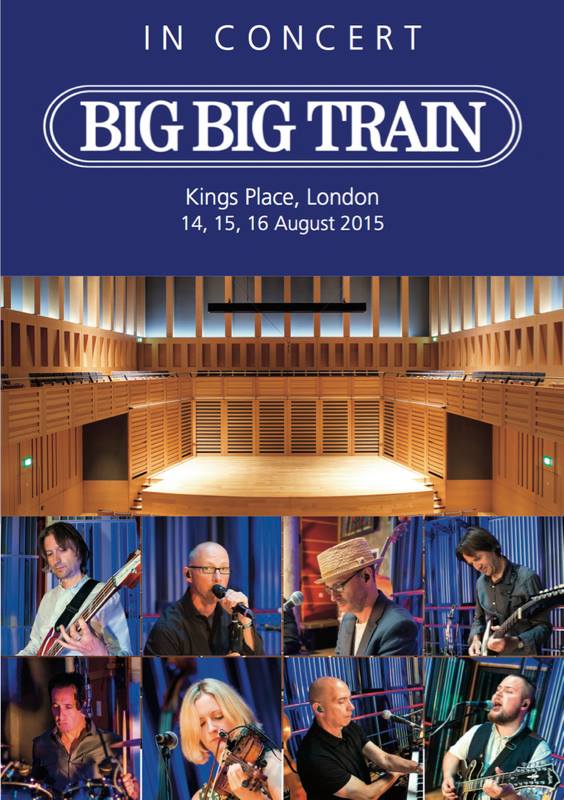
Behind The Hedgerow: Big Big Train (from the London Concert Book)

[Earlier this year, Professor Geoff Parks very kindly asked me to contribute to the BBT Concert Book, introducing and celebrating the band live for three dates this past weekend.  As any progressive rock lover knows, this happened and, surprising to no one except the members of the band, BBT performed with absolute and utter brilliance.  From my perspective, praise of BBT is praise of integrity itself.  Below is what appeared in the concert program.  I am deeply honored to have been a part of this event, even if armed only with a keyboard and separated by 3,500 miles–Brad]

bbt-london-2015-programme

Over time, most bands fade, while some others merely linger.  A few, however, grow, evolve, develop, broaden, deepen, and reach.  Toward what?  Toward excellence, toward true community, toward art, toward creativity, and toward beauty.

Big Big Train is such a band.  More importantly, it is an artistic community, in and of itself.

Founded in the early 1990s when progressive rock had become not just “weird” but almost anathema for most folks, Big Big Train stood for something solid and good even when the footing was unsure.  Writing dramatic and cinematic pieces—complete with false starts and re-dos and some clumsy grasps (one album from 2002 is even a four-letter word)—Greg Spawton and Andy Poole pursued their dreams of making their own music.  Though they correctly offered pieties to the past of Genesis and Yes, they wanted to be their own touchstone.

Then, something happened.  Gathering Speed.  At once an homage to the brave who defended the motherland against the rapacious fascists of central Europe, Gathering Speed proved to offer a distinctive sound, a “Big Big Train” sound.  Drama, time shifts, jarring passages becoming melodic and melodic becoming ethereal, and truly fine lyric writing made this album a gem.

Then, something happened.  Again.  The Difference Machine.  Astonishingly, even better than Gathering Speed, The Difference Machine told the haunting story of the stars and the souls, and the souls and the stars.  At what point do the two become one?  Chaos, order, sacrifice, dreams, death, loss.  Everything that matters in life (and death) is here, in every lyric and every note.

Then, something happened. Again.  The Underfall Yard.  Oh, the majesty of that new voice, that voice that so perfectly captures Spawton’s and Poole’s music.  That voice doesn’t just define the sound that the two remaining founders of the band had so long pursued, it gives it harmony in a perfect, Platonic sense.  The listener begins the album, lulled by that voice.  Toward the middle, we don’t know if we’re in Hell, Purgatory, or Holy Mass.  By the end of the album, we care desperately that an electrical storm has moved out to sea.

Then, something happened.  Again and again and again.  English Electric One, English Electric Two, English Electric Full Power.  A two cd set with a glorious booklet.  And, now, we see what Spawton and Poole had seen for twenty-three years: an idyllic English landscape, marred by human error and the will to destroy.  But, also leavened with the will to love, to discover, and to create.  English Electric, despite the power implied, is the delicate holding of a soul, a soul that can choose the good or the ill, the true or the terrifying, and the beautiful or the horrific.

And, now, a toast of Wassail to three live dates in London, 2015.  There, in the heart of English liberty, the heart of English commerce, and the heart of English dignity.  For there, behind wind-swept pioneers, Spitfires, divers and architects, station masters, fallen kings, intriguing uncles, decrepit athletes, shipping manifests, curators, and loyal dogs, lies . . . something.

There, just behind the hedgerow.  If you look and listen with attention and care, you’ll find the keepers of all things good, true, and beautiful.  They call themselves Big Big Train.

The State of Progarchy, Mid-2015

progarchy aDear Progarchists,

This year, 2015, has absolutely blown me away in terms of quality in music.  Since nearly a decade ago, I’ve been convinced that each year is the best prog year ever, only to find that the following year is even better.

Long may this trend continue.

As I’ve had the opportunity to explain before, the five main editors—Carl Olson (AOR), Chris Morrissey (Metal), Craig Breaden (Blues, rock, experimental), and Kevin McCormick (classical)—and I (prog) founded progarchy with the intent of offering writing equal to the music.  That is, we felt it only just to write as well as our favorite musicians played.  After all, who wants to read a sixth-grade level review of a Big Big Train album?  Greg Spawton is extremely smart.  Andy Tillison is extremely smart.  Leah McHenry is extremely smart.  Robin Armstrong is extremely smart.  Well, you get the point.

What would be a site dedicated to the beauty of music be without writing and thinking to match the level of the art reviewed?

Have we always succeeded?  I’m not sure.  Have we always tried to succeed and match the quality of our thinking and writing with the quality of the music we hear?  Absolutely.  And, whatever the faults of progarchy, I can state with certainty that I believe this website to be one of the finest websites—in terms of writing—that exists on the internet.

Since the founding of progarchy nearly three years ago, our readership has grown and grown, while our base has remained steady.  In addition to over 3,000 permanent email subscribers, we get an additional 400 to 8,000+ visits a day, depending on topic.  In case you’re interested, our biggest draw is Neal Morse with Rush being a close second.

Yesterday, something somewhat surprising but very nice happened to us.  A very, very high quality music label asked us if we’d be willing to advertise.  When we started progarchy, we avoided this for two reasons.  First, we were brand new and who would want to advertise with us?  Second, we wanted to prove our “objectivity” first.  Well, objectivity isn’t exactly the right word.  Craft, honesty, art?  Enthusiasm, certainly.  Criticism, often.  But, honesty—definitely.

After receiving the offer, I immediately emailed the other four editors.  Unanimously, we agreed it was time to promote commercial interests and labels who fight not just for success but for excellence.  So, beginning very soon (perhaps as early as tomorrow), you’ll see a brilliant banner and link across the top of progarchy.

I think we’ve proven ourselves over the last 2.9 years.  And, just in case you’re worried the money we receive from advertising might just send us on round-the-world junkets, be not afraid.  The first thing we’ll do is pay for our domain name for the next 12 months, spruce up the site a bit, and, especially, start indexing our reviews and interviews—making them far more accessible to our readership.

A huge thanks to the editors and authors of progarchy and to all of you reading this.

Yours, in appreciation and humility, Brad

A conversation with Spock’s Beard’s Ted Leonard

Ted

In his first official Progarchy assignment, rookie Progarchist Adam Sears talked to Ted Leonard of Spock’s Beard about their new album, The Oblivion Particle, set for release on August 21st by Inside Out Music.  The Oblivion Particle is the follow-up to 2013’s Brief Nocturnes and Dreamless Sleep, as well as Ted’s second SB album on main vocal duty. In addition to the album, they also cover everything black holes to cruise ships to venereal diseases.

—–

PROGARCHY  First off, just like to say that the new album is great! It has some of the stuff I’d expect from Spock’s Beard, but it had a lot of new fresh sounds.

TL   Yeah, there’s a bit of both, there’s a bit of harkening back on songs like “Tides of Time” and some of the other songs are a bit of a departure, like “Minion”.

PROGARCHY  You wrote “Minion” as well as “Hell’s Not Enough”, correct?

TL   Yes, I started writing “Minion” a long time ago, about the same time I wrote “Hiding Out”, which was about 2010, but it just kinda got shelved. Then I resurrected it, but I wasn’t sure what band I was going to submit it to, until it started shaping up and then it started sounding more Spock’sy than Enchanty to me.


PROGARCHY  What inspired you to write “Minion” and “Hell’s Not Enough”?

TL   “Minion”’s a little tough to get into without incriminating myself. But basically it’s about being in an oppressive relationship. Feeling like someone else’s little bitch, as it were.

PROGARCHY  Ah, yes. Been there, done that. I think we’ve all felt that way at some point.

TL   Haha, yep. Then “Hell’s Not Enough” is kind of an interesting song, given my background and the band’s background. It’s not a terror on religion in itself by any stretch- it’s more of a lash out at cult leaders and people who manipulate the week-minded. There’s a reference to the Jonestown thing, where it says
“Hook line and sinker, thank God you’re not a thinker, here take this fruity drink, you’re fine”. (laughs) So that’s what that’s all about.

PROGARCHY  I don’t remember where I saw it, maybe on Facebook or Twitter, but you have mentioned that The Oblivion Particle is the best project you’ve ever been involved with. Tell me why that is.

TL   You know, I don’t know if it’s necessarily better than BNaDs. If I posted that late at night, there’s a chance I was, ya know, gushing…

PROGARCHY  Or just overly excited?

TL   Yeah, or drunk… haha, but no, I do feel like it’s super, super strong. I think it holds up against BNaDs quite well. And I also think, for variety’s sake, it’s more of a wide array of styles wrapped up into one album. I think it’s super cool, because of that. And the sound quality of the recording is so well done.

PROGARCHY  I’m sure a lot of that is due to Rich Mouser. Did he engineer, as well as mix and master the album?

TL   As far as the engineering goes, there was a lot of it done in our houses. Some of the guitars were recorded at Al’s house and I recorded some of the vocals at home, then we did some at the studio. So he [Rich] engineered most of it, but we tried to do a lot at home this time. The bass is always engineered at home. We tried to save some money because BNaDs turned out to be pretty expensive.

PROGARCHY  On August 29th in Los Angeles, you are doing double duty, performing with not only Spock’s Beard but also with your band Enchant. What are a couple of differences in the group dynamics and your relationship with the two bands?

TL   Spock’s Beard approaches their career with more business sense, so there’s a degree of being business partners with them rather than being old buddies. But we are good friends, especially with Dave, because we hang out and play in cover bands. It’s a little different than the camaraderie of Enchant where we’ve known each other for a long time. Some of us have known each other more than half our lives. So we’re almost like brothers. We laugh like brothers and we fight like brothers. (laugh). It’s totally different than Spock’s, especially because I came into the band way later. But it was actually less weird then you’d think, ‘cause I knew the guys pretty well from before. So definitely a difference in the dynamics. They’re both good, just different.

PROGARCHY  You’ve been performing with Spock’s Beard for four years now. Do you still feel like the new guy or do you feel like you are now an accepted member of the band since you’ve now completed 2 albums and performed many many shows?

TL   Yeah, I think the shows have definitely solidified it, especially the cruise [Progressive Nation at Sea 2014], was a cool thing with Neal being there, being out in the audience, and then me being on stage with Neal in Transatlantic. I think what fans took away from Transatlantic was there’s no weirdness. Neal respects me, I respect him. So, I don’t feel like the new guy anymore. It has been quite a while and we have played a lot of shows. By the time you finish the 2nd album you start to feel that this isn’t an audition anymore.

PROGARCHY  So what should we expect to hear on The Oblivion Particle?

TL    Sonically, we branch out- there are plenty of moments, keyboard tones especially- we’re not just relying on the four keyboard tones that Spock’s has always been famous for- the tron choir, tron strings, tron flute, and organ. And of course piano. There are a lot of analog synths going on- kind of a nod back to certain eras of Genesis with the tones, like Duke era to mid 80’s, rather than going for a strictly 70’s sound, which has kind of been the Spock’s thing, at least with the keyboards. There’s a sonic difference in what you hear from Dave too. On most albums, he’s mostly playing with a pick the whole time. With this album, he plays quite a bit of finger style. Tonally it’s not the same old Dave on every song. Another cool thing about this album are the piano highlights- there are three of them, that I can think of off hand that are really cool piano parts kind of out there by themselves. There’s one in the breakdown of Minon, there’s one in the beginning of the song that Ryo and Al wrote [The Center Line], then the bass comes in and does a really cool thing with them. As far as the overall vibe of the album- it gets big and huge, pulls back and gets really intimate, those are all typical characteristics of Spock’s stuff and this album is no exception.

PROGARCHY   Why is the album called the Oblivion Particle?

TL   You know, we’re going to have to invent a reason, because I get that question all the time, and I honestly have no idea.

PROGARCHY  Does it have anything to do with CERN or the Large Hadron Collider?

TL   Well, some people have theorized that it is the opposite of the “God particle”, or whatever they were trying to find. I can’t remember what that particle is actually called.

PROGARCHY  The Higgs boson. Yeah I’m kind of a nerd and like reading about that stuff.

TL   (Laughs) Yeah that’s right!  But I don’t know, I think it just sounded cool. But some of the songs have an invention theme like “Bennett Built a Time Machine” and “A Better Way to Fly”. It seemed kind of science-y, so we thought it would be cool to have a title that went along with that.

PROGARCHY    In “Disappear” when you’re singing “We could disappear” are you sure you’re not referring to the Large Hadron Collider’s theoretical creation of a black hole that may swallow us up?

TL   Yeah, I’m going to use that! I’m gonna fake like I’m that intelligent!

PROGARCHY  What is your favorite track of the Oblivion Particle?

TL   Ok, my favorite track, that I didn’t write, (laughs), is “A Better Way to Fly”. Although I love “Get Out While You Can”- it’s totally short and concise. It has me going into a Bono territory with the voice, so it’s a little different for me. I really dug that. You always try to do things a little bit different, otherwise people get sick of you. (laughs)

PROGARCHY  What was the most difficult thing about recording this album?

TL   I would say, the timing on some of the songs. Especially with some of John’s songs, like “A Better Way to Fly”. That one is going from 6 to 7 to sometimes 8, then back. There were times when I was recording along his scratch vocals, and I was just watching the wave form to know what beat to come back in on. Now that I’m trying to learn it for live shows, I’m sitting there just having to count ‘cause it’s really trippy. I’m comfortable doing songs in odd time, obviously, but this song is really giving me grief. And I’m playing a lot of keyboards on it too, so it’s like… ugh!!! That song is going to be the toughest one.

PROGARCHY  So you’re definitely going to be doing that song live?

TL   Yeah, we are, unfortunately. I love the song, but it’s giving me… it’s giving me fear. It’s a great song for Jimmy too, because he’s just pounding back there. He really comes out of his shell on this album, not that he ever was in a shell, but on the first album he wanted to keep it safe and not try to overstep his bounds. But on this album  he just kind of got free reign and he was like “I’ll take it”. On the last couple of tours when Nick and Jimmy were having their drum-off solos, of course Jimmy shined and did well, but now that he’s the ONLY drummer, we’ve had these nights where we’re like “Hey, take a solo!” and he just goes and does it completely off the cuff. It’s always like the best thing ever. I never get bored watching him take a drum solo, and usually get bored watching EVERY drummer do a solo. That’s usually a good time to take a piss! But he’s always doing something different and interesting and pulls it right out of his hiney. Al and I would be just sitting on the side of the stage just like laughing at how cool it was. So this time around it was just like “Do what you do! Tear it up!” So there are a couple of moments that come off like a drum solo in that song, which is good stuff!


PROGARCHY  Track 4 of the The Oblivion Particle is “Bennett Built a Time Machine”. If you were to build a time machine and you can change one thing in your past life, what would it be?

TL   Well, I think, just like the song goes, there might be some historical moments that would be interesting to be a part of, but it would be really hard to slip into it unnoticed, unless you go dressed for the period I guess. I think what most people think of when going back to the past is revisiting pivotal moments in their own life, like maybe they could have changed things, but we all know how that turns out with the paradox factor. I can think of a few moments in my own life, where things would be vastly different. But then I’d come back and realized I created a black hole or everyone’s dying from some strange disease I introduced by accident, maybe a bad venereal disease because I somehow changed the course of events that led my past self into sleeping with someone I shouldn’t have. So yeah I come back 20 years later, and the whole world is a wasteland.

PROGARCHY  Maybe that should be the plot for the next Spock’s Beard concept album?

TL   (laughs) Yeah, there are not enough venereal diseases in concept albums.

PROGARCHY  Or in prog in general.

PROGARCHY  After your European Tour in September and October, Spock’s Beard is going to play Cruise to the Edge in November, which will be on the same ship you guys performed on at last year’s Progressive Nation at Sea. What was it like performing on a boat in the middle of an ocean?

TL   Yeah! Washy Washy, Happy Happy! Yeah that’s going to be really nice, and I’m going to be doing double duty again! Well, when we were in the theater, it was kind of a rocky night and you could actually feel it while on stage- even just walking around. It just made you feel like you were drunk, which you know. I’m familiar with performing drunk. That’s happened, but not often. I usually don’t drink that much when it comes to prog, but I have done plenty of cover band gigs where I’m like “Oh my God, I don’t even know how I’m going to do this third set!” I usually have like a beer before, a beer on stage, or maybe two. So by the end of the show, there might be three beers in my system, but it’s usually a two hour show, so it’s pretty tame. And then afterwards it’s a completely different animal, especially when you know you’re getting on the bus in a total controlled environment. You spend three weeks out on the road and you just have to come home and detox. I can’t imagine if we were out there, like some of the big bands, for six months at a time. I would be just like Keith Richards. I would totally just look like that by now already.

PROGARCHY  (Laughs) Let’s get back to the cruise… how was it playing the outside pool deck area?

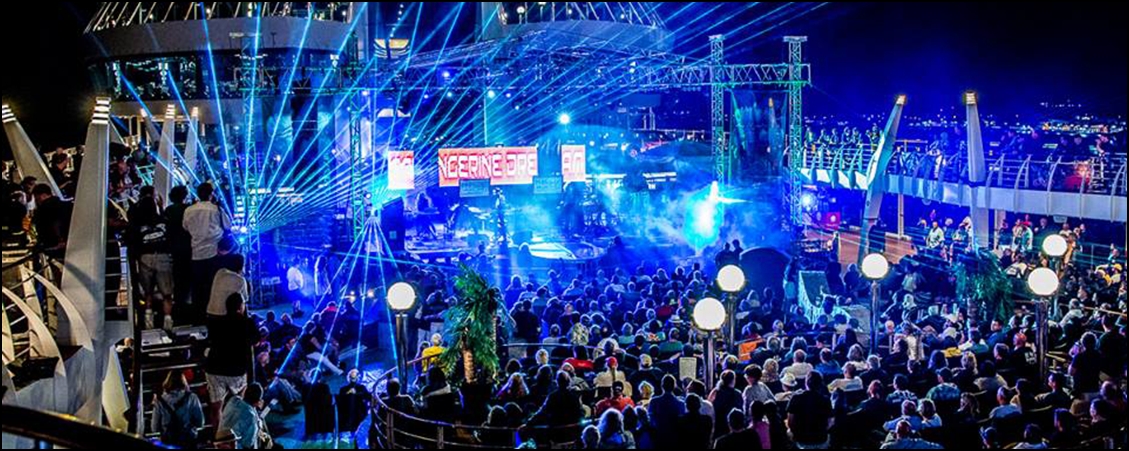
TL   Oh, that was amazing! Especially when I opened with Transatlantic. You could see the port going by and the boat getting up to speed, so you could really feel it. It was really super windy. I needed the music for that band, but my charts were just flying all over the place. Luckily, the guitar tech saw it and started taping it down for me. But it was incredible. And the reception was awesome for both bands, but especially for Spock’s Beard on that first night, by the pool… that was really cool. And when everyone knows that Neal’s on the boat, to get that kind of reception out of the crowd was pretty cool for me. Then of course the second night in the theater when he came out and did the thing, that was just so cool. I think the weirdest part of that night for me was singing “Walking on The Wind” with Neal right in the front row. I was like, “Well damn, you should sing this  too, dude!” But it was cool, it turned out really cool.

PROGARCHY  And here, I will add my Chris Farley style Interview question… remember when I saw you guys play at Progressive Nation at Sea, while I was in the hot tub? That was Awesome!

TL   (Laughs) Yeah, hopefully I have time to do that for some bands on this one, maybe Marillion. That’d be cool!

PROGARCHY  Ted, thanks so much for your time. Congratulations on the new Spock’s Beard album and good luck with the tour! I’ll see you at the CalProg show on the 29th!

TL   Cool! I’ll see you there!

Anthem of the Mind: Why Neil Peart, Part II

[Please be warned: this is a serious essay with an advertisement at the end—so, don’t feel ripped off!–Brad]

Out September 15, 2015, from WordFire Press.

A week ago, I tried to explain—in the first of a multipart series—why I decided to write a book about Neil Peart, lyricist and drummer for Rush.  Biographies of rock musicians generally either become fanboy lovefests, People-magazine exposes, or clinical dissections.

I pray and assume I’m guiltless when it comes to the second and third reasons.  I’m sure, however, that I will rightly be accused of the first.

The youngest of three boys, growing up in central and western Kansas, I happily had a mother who allowed us to listen to whatever we wanted and read whatever we wanted.  Television was never huge in our house, and I’m still rather mystified when peers of my age group quote The Brady Bunch or The Partridge Family.  If I had the choice between tv and listening to an album, the album won every time.  I don’t remember a time in my life when music wasn’t playing somewhere in the house or in the car.  And, it wasn’t just rock.  We listened to classical and jazz.  Never opera, and I despised musicals and county music.  I did come to love opera, but only in my adult years.  Almost every room, however, had some form of stereo system, album collection, and headphones.  From the age of 10 or so, I could hook up a fairly complicated stereo system, splice speaker wires, etc.

Though my brothers have long given up their love of progressive rock music, they did love it immensely in the early 1970s.  My oldest brother is 8 years older, and my older brother five years older.  From around 1971 or 1972 (I was born in 1967), I remember Jethro Tull and Yes.  Soon, it would be ELO, Kansas, and Genesis, too.  Rush, though, I’d never heard—or, at the least, if I had heard them, the band did not make an impression on me until the spring of 1981.

For some reason that I have since long forgotten, I got in trouble in the spring of 1981 while at school  Back then, when discipline was still a central part of junior high education, any one of us could get any trouble for almost anything.  No one questioned it back then.  If the teacher or an administrator decided you were in trouble, you were in trouble.  I was a very good student when it came to academics, but I could care less about rules.  In fact, I hated them.  Regardless, in the spring of 1981, I earned a detention—which meant sitting in the school library around a wooden table with the other kids who had earned detention.  That day, it was me, another kid named Brad, and Troy.  I’d know each of these guys since first grade, and I’d always been friendly with them.  We weren’t, however, close.  Troy, if I remember correctly, was wearing a Duke (Genesis) pin on his jacket.  Of course, I was immediately taken with it.  You know Genesis?  I know Genesis!  Exactly moments for a 13-year old.  It turned out that Brad and Troy knew as much as I did about prog, but they had definitely embraced harder prog, while I had always gone for more symphonic prog.

Have you heard the new Rush yet, one of them asked me?  Rush?  No, never heard of them.  Oh, Brad, you have to listen to Rush.  Moving Pictures might be the greatest album ever made.

I’d had a lawn mowing business for several years at that point, and I was rather frugal with my money—except for books, Dungeons and Dragons stuff, and albums.  Of course, as soon as I left school that day, I purchased Moving Pictures.  I can still remember staring at the album, taking off the cellophane, and removing the vinyl from its sleeve.  There was something so utterly magical about dropping the needle on side one of a new album.  Drop, crackle, hiss, pop, DUN, Dun, dun, dun “A Modern-day warrior, mean, mean stride”!!!!!!  Where on God’s green earth had I ever heard anything so good?  At that point in my life, nothing could rival Tom Sawyer.  Then, Red Barchetta.  Oh yeah, who wouldn’t want to get into a car and drive at outrageous speeds while escaping from authority?  Even then, I was rather instinctively libertarian.  YYZ reminded me of a lot of jazz my brothers had played me, and I thought every drum crash was the drummer (a guy named Neil Peart, I soon discovered) throwing glass bottles at a wall.  Limelight seemed great.  Camera Eye was utterly mysterious, especially for someone who had only known the big cities of Denver, Wichita, Dallas, and Kansas City.  Witchhunt seemed appropriate, and I thought of the hypocrites I’d known who often acted with outrageous righteousness.  Vital Signs seemed the perfect ending, catchy and a bit weird with words I’d never heard before, such as “evelate.”

I can still see my 13-year old self reading the lyrics of Moving Pictures.  I read them again.  And, I read them again.  And, again.  And, again.

And, the pictures of the three guys who made up the band?  They looked so cool.  They didn’t look hippiesh and all wizardy like the Yes guys on Yessongs.  No, these three guys looked like they could’ve grown up around the corner from me.

So, there you have it.  Neil Peart has been my hero since detention at Liberty Junior High School, Hutchinson, Kansas.  He taught me not to be him, but to be myself.  Thank you, Brad and Troy.  Thank you long forgotten teacher who thought I was a trouble maker.  You were probably right.  Little did you know, however, that you were the catalyst that lead me to Rush and to Neil Peart.  And, here I am, thirty-four years later, and I’ve just written a book on the guy.

www.humblebundle.com/books
http://www.humblebundle.com/books

[And, here’s the advertisement:]

On September 15, 2015, WordFire Press, founded, owned, and presided over by the incomparable Hugo-nominated science fiction author, Kevin J. Anderson, and his equally amazing wife and famed author, Rececca Moesta, will be publishing my biography, Neil Peart: Cultural (Re)Percussions.

It will be $14.99 for the paperback and $5.99 for the ebook (all formats).

For another 48-hours, however, you can order it as a part of the Humble Bundle Music Book Bundle.  For $15, you can get an advanced review copy of NEIL PEART: CULTURAL (RE)PERCUSSIONS as well as a number of other fantastic books, including CLOCKWORK ANGELS: THE NOVEL.  And, you even get a preview of the sequel, CLOCKWORK LIVES.  It’s well worth it, especially for just $15.

Here’s the link: https://www.humblebundle.com/books

Steven Wilson Remixes Yes FRAGILE

Taken straight from yesworld.com

****

YES’s ‘Fragile’ Remixed and Remastered in 5.1 Surround & Stereo Mixes – out 30th Oct

Fragile is the fourth in a series of remixed & expanded Yes Classics. The album has been mixed for 5.1 Surround Sound from the original studio masters by Steven Wilson & is fully approved by Yes.

Release date: Oct 30th 2015

image: http://yesworld.com/wp-content/uploads/2015/07/Fragile-460.jpg

Fragile

BLURAY/CD

The Definitive Edition Blu-Ray Disc features:

– Album mixed in 24-96 5.1 PCM Surround Sound & in DTS-HD MA 5.1 from original multi-track sources.
– New Album mix in High Resolution Stereo
– Original Album mix (flat transfer) in High Resolution Stereo
– Six additional tracks

– Original Roger Dean artwork expanded & restored with material from the Roger Dean archive & with full approval of the artist.
– Presented as a 2 x digi-pack format in a slipcase with new sleeve notes by writer Sid Smith along with rare photos & archive material.

Blu-Ray exclusives

– Full album instrumental mixes by Steven Wilson
– Two additional alternate takes
– A full album needle-drop of an original UK vinyl pressing
– US promo singles edits as needle-drops.

image: http://yesworld.com/wp-content/uploads/2015/07/Fragile-460.jpg

Fragile

DVD-A/CD

The Definitive Edition DVD-A Disc features:

– Album mixed in 24-96 5.1 DTS vLossless Surround from original multi-track sources.
– New Album mix in High Resolution Stereo
– Original Album mix (flat transfer) in High Resolution Stereo
– Six additional tracks

– Original Roger Dean artwork expanded & restored with material from the Roger Dean archive & with full approval of the artist.
– Presented as a 2 x digi-pack format in a slipcase with new sleeve notes by writer Sid Smith along with rare photos & archive material.

TRACK LISTING

Original Track Listing

01 Roundabout
02 Cans & Brahms
03 We Have Heaven
04 South Side of the Sky
05 Five Percent for Nothing
06 Long Distance Runaround
07 The Fish
08 Mood for a Day
09 Heart of The Sunrise

Additional Tracks

10 We Have Heaven (full mix)
11 South Side of the Sky (early version)
12 All Fighters Past (previously unheard)
13 We Have Heaven (acapella) mixed by Steven Wilson
14 Roundabout (rehearsal take/early mix)
15 Mood for Another Day (alternate take of Mood for a Day)

In addition to the main album, Steven unearthed a virtual treasure trove on the multi-track tapes, allowing him to mix full length & acapella versions of “We Have Heaven”, an earlier take of “South Side of the Sky” & – in perhaps the most exciting discovery of this series to date – a previously unheard segment of a piece now called “All Fighters Past” which incorporates ideas that would later form parts of “The Revealing Science of God” (Tales from Topographic Oceans) & “Siberian Khatru” (Close to The Edge) performed in the style of Roundabout! With a further two additional tracks – alternate takes of “Roundabout” & “Mood for a Day” & numerous exclusive to Blu-Ray edition features, including the complete album in instrumental form mixed by Steven Wilson, this is the definitive edition of Fragile.

PERSONNEL

Jon Anderson: Vocals
Bill Bruford: Percussion
Steve Howe: Guitars, Vocals
Chris Squire: Bass, Vocals
Rick Wakeman: Keyboards

ABOUT FRAGILE

“I wanted to hear something inspiring…”
– Jon Anderson
(from the sleeve-notes)
With Fragile – the fourth album by Yes, Jon Anderson’s wish was fulfilled. Recorded in September 1971 following rehearsals a month earlier Yes was, by this point, on something of a roll. The Yes Album had been a chart success in the UK & had started to make inroads in the US album charts following a highly successful tour there. The challenge – to take the band to the next level of success – had to be met quickly to build on that momentum. The Yes Album was both the peak & natural end point of the first period of Yes album recordings.

It had marked the arrival of Steve Howe, the expansion into long-form material & with a final date at London’s Crystal Palace Bowl, the departure of keyboardist Tony Kaye. His replacement, ace session player & Strawbs member, Rick Wakeman, completed what came to be regarded as the first classic Yes line-up. Wakeman brought with him an expanded array of keyboards, including a Moog synth & Mellotron & proved every bit as strong a soloist & arranger as Steve Howe. With this line-up, Yes was ready for the big league.

Released in Late 1971 in the UK & at the beginning of 1972 in the USA, the album reached the Top 10 in both countries (7 UK, 4 USA). With additional impetus from the hit single “Roundabout” in the USA – a track which became a radio staple – the album quickly reached platinum status & went on to sell millions over the past 44 years. The album’s long form pieces were presented in a running order which allowed for the placement of solo led tracks by each of the five members, a novel way of presenting an album that merely enhanced the reputation of the band as a group where each member could be viewed as band member & star soloist in their own right.

Tracks such as “Roundabout” & “Heart of the Sunrise” have rarely been out of the live set-list & the album was performed in full by Yes in venues worldwide in recent years to unanimous standing ovations. Another key factor in Yes’ history was the fact that the album occasioned the arrival of sleeve artist extraordinaire, Roger Dean, a man who would go on to design logos for the band – including the famous ‘bubble logo’ – stage sets & numerous album sleeves & and artist who, despite having provided equally dramatic sleeves for numerous other bands, is always most readily associated with his work for Yes.

A NOTE ABOUT AUDIO SOURCES

In keeping with earlier releases in this series, Steven Wilson’s approach to this album for new stereo & 5.1 mixes is to faithfully retain the spirit & sounds of the original album mix, while applying modern mix techniques to bring further clarity to the individual instrument, vocal & overdubs for each track. The songs, instantly familiar to a multitude of Yes fans, remain so, with the new mixes – especially in 5.1 form – providing a greater sense of space for each voice to be heard, Anderson’s voice seems to join the listener in the room, Howe & Wakeman’s solos glisten with clarity & Bruford/Squire remind all that they were unmatched as a rhythm section during that period.

Read more at http://yesworld.com/2015/08/yess-fragile-remixed-and-remastered-in-5-1-surround-stereo-mixes-out-30th-oct/#gJOxEgZBIwRd8UJl.99

Cruise to the Edge: Register Now

Cruise to the Edge 2014

Cruise: CRUISE TO THE EDGE, the third annual YES fan cruise and ultimate prog rock experience
Ship: Norwegian Cruise Line’s 2,394-passenger Norwegian Pearl

New LOGO

Promoter: On the Blue Cruises (otblue.com)

Itinerary: Pre-cruise event on Saturday, November 14 in Miami before setting sail along Bahamian waters Sunday, November 15 through Thursday, November 19, visiting Key West and Great Stirrup Cay, Bahamas.

Yes Logo

Lineup: Legendary progressive rock bands YES and Marillion will lead an all-star lineup of over 25-plus bands
Booking: Cabins aboard the full-ship charter are now only $499 USD per person. For booking and more information, visit: CruisetotheEdge.com and connect on Facebookand Twitter.

Updated Cruise to the Edge artwork

On course to sell out for the third-year-in-a-row, the 2015 CRUISE TO THE EDGE–the annual YES fan cruise and ultimate prog rock experience sailing the Caribbeanthis November 15-19–announced a few updates today (8/6), including: the addition of Mike PortnoyNeal Morse Band and Haken to the artist line-up; confirmed an all-star tribute and musical farewell to beloved bassist and founding member of YES, the late Chris Squire; and two new payment options designed to make it affordable for prog rock enthusiasts to attend this historic event. Fans may secure their spot aboard the cruise for only $499 USD per person (details outlined below).

The third annual five-day, four-night cruise will feature multiple stages of progressive rock music from the iconic and GRAMMY-winning rock band YES, special guest Marillion and 25-plus bands, aboard the NCL Pearl. A new addition to this year’s cruise itinerary is a special pre-cruise event, complimentary to all cruisers, on Saturday, November 14 at Magic City Casino in Miami, before setting sail to crystal clear Bahamian waters, visiting Key West and Great Stirrup Cay, Bahamas. The special pre-cruise concert will feature an IPA beer tastingartist meet and greets, performances from Martin Barre of Jethro TullThree Friends and Lifesigns, as well as an after-hours “Electric Prog Jam, where passengers become the stars, playing instruments to selected prog rock songs.

Legendary progressive rock bands YES and Marillion will lead an all-star lineup aboard this year’s cruise (with most artists playing at least two sets), including the just-added acts (iconic drummer Mike PortnoyNeal Morse Band and Haken), plus AnathemaAllan HoldsworthThree FriendsPFMSagaMartin BarreCaravanSpocks BeardNektarÄnglagrdLifesignsIO EarthAirbagCasey McPhersonMessengerDave KerznerMoon SafariBarracuda TriangleJolly; EnchantThank You ScientistSteve RotheryBad Dreams; and AHEPJ. It will all be hosted by UK journalist and preeminent YES expert, Jon Kirkman.

Portnoy will act as official “music director” for an all-star tribute to beloved bassist and founding member of YES, the late Chris SquirePortnoy will be joined on stage by many friends of Chris in this musical farewell to one of Progressive Rock’s Greatest Performers.

Besides the great musical performances, prog-rock music fans will get a chance to participate in special events and activities, including: “Storytellers” style concertsfeaturing behind-the-scenes stories from select bands, showcasing their writing/recording style and process, band history; Prog Panel Q&A Sessions; Meet & Greets; Bon Voyage Sail-Away Concert and more. In addition, Multiple Performance Stages throughout the ship will keep the action going into the wee hours with a surprise or two along the way.  Finally, cruise attendees will be able to enjoy the ship’s 13 bars and lounges, various eateries, casino, spa, fitness center, basketball and volleyball court, bowling alley and more.

CRUISE TO THE EDGE has announced two new payment options (beyond the standard payment plan):

 EZ PAY PLAN: This special no interest installment plan is designed to assist fans who need an extended installment option in order to attend. While supplies last, fans may secure their spot aboard the cruise for ONLY $499 USD per person down (double occupancy), with the remaining balance payable over twelve equal monthly installments beginning the month after the initial reservation is completed and debited on the 15th day of each month (or next business day). Click here for more information.

– PAID IN FULL PLAN: For those who prefer to pay their cruise fully in advance, a 5% discount off the base fare is available.  Fans will save money and have the peace of mind of knowing that their cruise is squared away and fully paid for.

CRUISE TO THE EDGE has been carefully designed to meet the discriminating requirements of the most avid music fan/cruise vacationer, producing a true fan and artist experience in a surreal and relaxing setting.  Produced by On the Blue Cruises, CRUISE TO THE EDGE is a playground for the serious fan where music and a luxury cruise hook up for the vacation of a lifetime. For more information, visit CruisetotheEdge.com and connect on Facebook and Twitter.

The Gift Working Titles

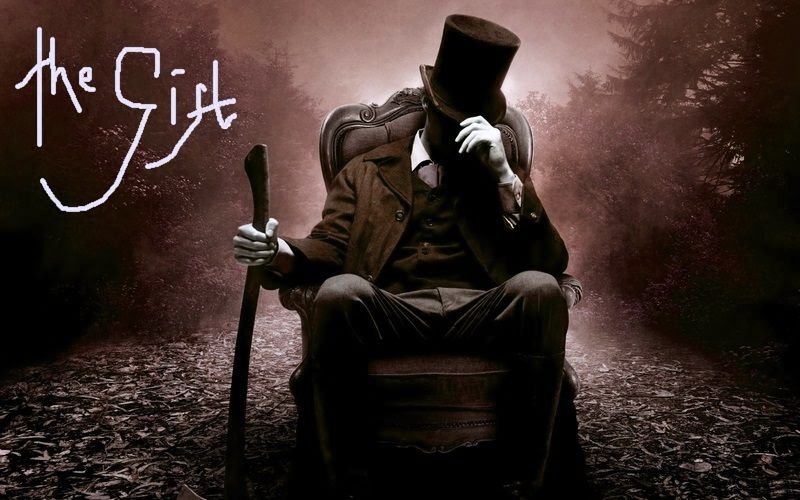
Mike Morton, the Peter Gabriel of our generation, has the following update on social media.  And, the picture for the new album–a cross between a Ray Bradbury scene and a Glass Hammer album cover!

The Gift have a big lump of music ready to finesse and record. The next release will be an album, not an EP! Working titles are: Pandemonium, Lost In Echoes and Sacred & Profane. The first one decribes this summers, the second is where we go to more often as we lose people, the third is what rehearsals with the boys can feel like! Artwork being scoped out already. Here’s a tease…

11217664_859635110750740_701317171679958234_n