For those of you who love Chestertonian Prog as much as I do, we don’t have to wait much longer. I just received a very kind and interesting email from Mark Ptak of the prog band, Advent.
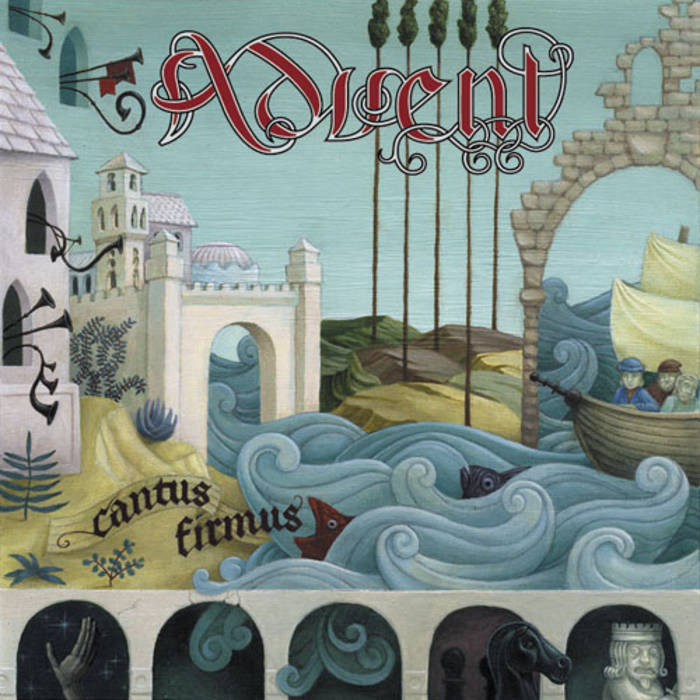
I just wanted to make you aware that (after what seems like an eternity, I know – especially for us, with all the various unavoidable delays) we’ll finally be finishing mixing this weekend (woo-hoo!) and entering the mastering stages of Advent’s new release, “Silent Sentinel,” hopefully starting next week, I believe, with Bob Katz over at Digital Domain in Florida. (http://www.digido.com/) Bob is one of the most sought after mastering engineers out there, and we’re very pleased to have the fruits of our laborious efforts in his capable hands again. Cover artwork will be done once more by the extremely talented artist, Michael Phipps, who previously did “Cantus Firmus” for us. We’re looking to have the album ready for purchase by August, so please feel free pass the word around that the album will soon be made available. I’ll have more details in the not too distant future, but for now, thanks, and be prepared for one helluva musical ride when this thing is released – as there’s almost a double album’s worth of material coming at ya! Talk again soon…
Best, Mark
Nothing to make a June day even better. Very excited about this. To order the first album, Cantus Firmus, please click here.
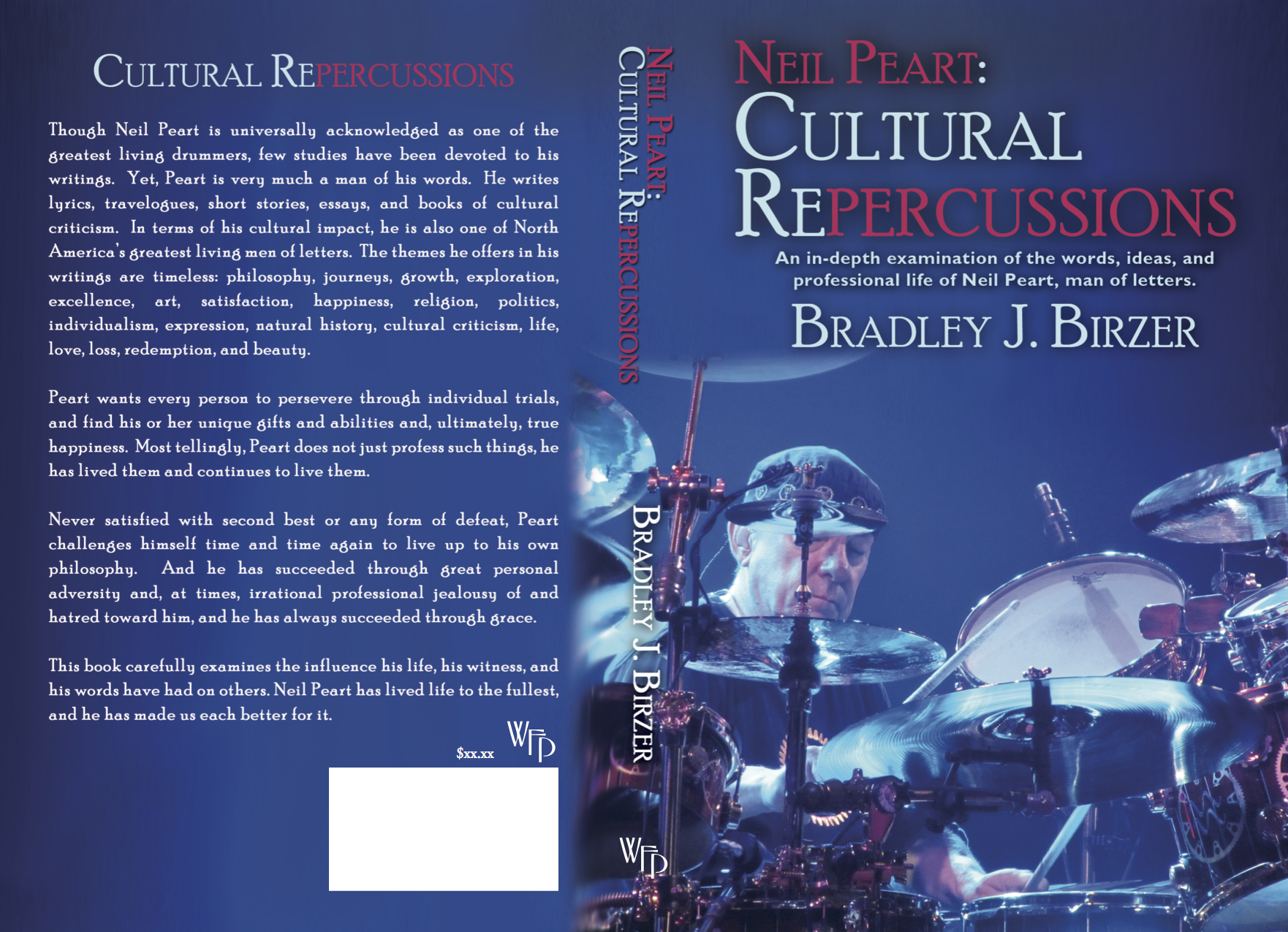
I’m really happy to announce (ok, show off) the cover of my Neil Peart biography, NEIL PEART: CULTURAL REPERCUSSIONS (WordFire Press). It will be available this August in tangible and e-book formats.
Hope you love it!
Neil Peart: Cultural Repercussions, forthcoming August 2015 from WordFire Press.
Last night, my wife and I—just about to celebrate our 17th wedding anniversary—treated ourselves to a concert by Tears for Fears.
For those of you who read progarchy.com regularly, you know that not only do we as a website love the work of TFF, but I, Brad, have been rather obsessed with Roland Orzabal and Curt Smith since 1985.
Yes, 30 years—just four more years than I’ve been in love with Rush. And, of course, what a comparison. Can you imagine Peart and Orzabal writing lyrics together? Tom Sawyer meets Admiral Halsey!
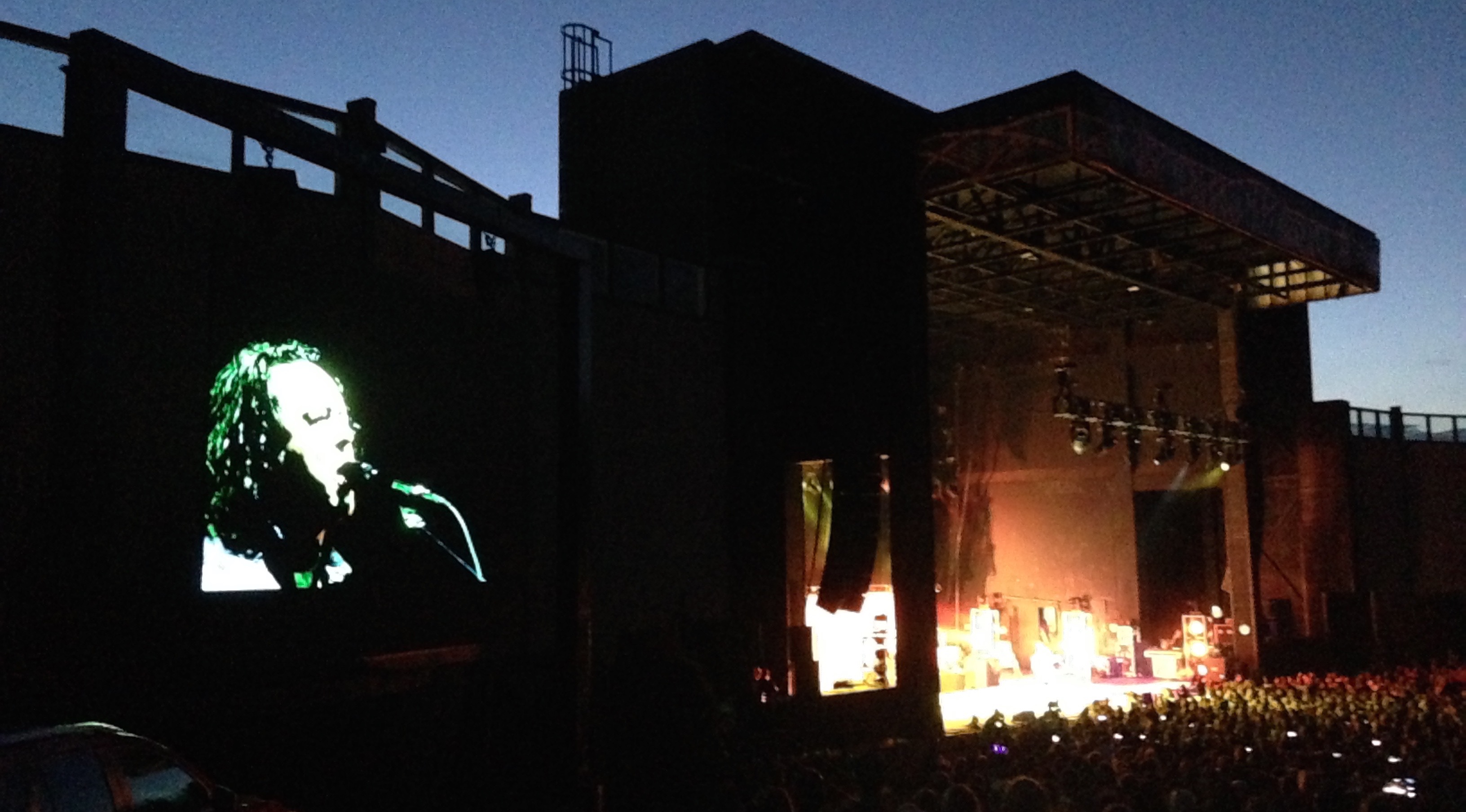
A blurry iPhone picture from last night’s concert in Denver: Tears for Fears.
I came to TFF in the same way almost every American my age did, from hearing “Everybody wants to rule the world” on MTV. What a glorious song. Here was New Wave, but New Wave-pop-prog. Here were intelligent lyrics. Here, to my mind, was music done properly. Having grown up on Yes and Genesis and Kansas, I wanted my New Wave to be just a bit edgier than, say, that of the B-52s. I wanted my New Wave artists to take themselves as seriously as Yes had done on “Close to the Edge.”
Well, as I’ve written elsewhere at progarchy, Songs from the Big Chair has remained in my top 10 albums of all time—ever since I first purchased it in 1985. Of course, I worked backwards after discovering TTF, finding The Hurting to be a brilliantly angsty and claustrophobic look at the world. I think I’m just about six years younger than Curt and Roland, and I could easily imagine them as schoolmates.
Since 1985, I have purchased every single thing TFF has released—every TFF studio album, every live album, every cover, every b-side (TFF’s b-sides are every bit as good as the Cure’s; the b-sides for each matter, a great deal), every remaster, every deluxe edition, and every solo album. No matter the cost, I’ve happily paid the price. When I switched to CDs in the 1990s, the first two I bought were The Hurting and U2’s October. I also have Orzabal’s novel. Yeah, I’m definitely a bit obsessed.
Have I revealed enough of my TFF street cred to move on?
***
So, despite loving TFF as one of my three favorite bands for thirty years (Rush, Talk Talk, and TFF), I owe the two Englishmen a rather large apology. For thirty years, I’ve dismissed their live performances as much as I have lauded their studio work. Not that I really knew much about them live. I’d never seen them actually in the flesh. Everything I knew of them live had been recorded, and it always felt a bit “uninspired” to me, with their vocals especially sounding weak.
Well, let me be blunt. I couldn’t have been more wrong.
Last night, TFF played their hearts out. I mean: Played. Their. Hearts. Out. Holy Moses. Not only were they amazing live, they were even better live than on their studio albums. I thought it must be just my excitement at the moment as I listened to them last night. My very American enthusiasm—the kind that makes the Brits think me “over the top”—can sometimes get the best of me. But, no. Right after the concert, I listened to the brand new remastered (Steven Wilson) version of Songs from the Big Chair just to check myself and my impressions. I wasn’t wrong. They did sound better live than on Songs from the Big Chair. But, for thirty years, I’ve been wrong! So, my apologies.
From the first explosion of sound to Roland and Curt waving their final goodbyes to the audience, they performed flawlessly, with deep emotion, and with a complete (equaled only by Rush fans at a Rush concert) connection to the audience.
And, Roland and Curt loved every moment of the concert. No English reserve here. Just pure love of the art.
The show began with what I assume was a taped recording of a number of voices singing “Everybody Wants to Rule the World.” In hindsight, I’m questioning whether this was taped or not, as the voices might very well have been Roland’s, Curt’s, and the guest female vocalist’s (I apologize—but I didn’t catch her name). However it was done, it was done well. From complete darkness and the disembodied voices floating around the venue, an explosion of light and sound revealed the full band, and they immediately played the opening song of “Everybody. . . .”
From that very first explosion and revelation, TFF held the entire crowd (about 18,000—there were no empty chairs or spots in the entire venue) in rapt attention. I mean, that audience belonged to TFF: lock, stock, and barrel.
Though the band never took a break—expect for a minute or so before the encore—it would be fair to divide the show into two sets, broken by a cover version of Radiohead’s “Creep.”
The first set ran for 10 songs without a single pause in the music—with the exception of some very sincere and humorous banter from Roland, Curt, and the audience—Everybody; Secret World; Sowing the Seeds of Love; Pale Shelter; Break it Down Again; Everybody Loves a Happy Ending; Change; Mad World; Memories Fade; and Closest Thing to Heaven.
Set Two, coming after Creep, consisted of: Advice for the Young at Heart; Badman’s Song; Head over Heals; Woman in Chains; and Shout.
So, TFF played at least one song from every studio album except Raoul. The first set emphasized The Hurting and Everybody Loves a Happy Ending, while the second set featured The Seeds of Love.
As a three-decade long TFF fan(antic), let me make a few observations—all of which were revelations to me last night, whether minor or major ones.
First, as noted above, Roland and Curt were in top form. Not only did they sound simply perfect (Roland’s voice only gets better with age), but they were obviously happy and confident. Indeed, I think they were fairly overwhelmed by the loving response of the audience. At one point, Roland talked about a recent conversation with Curt. Roland, remembering their performance at Red Rock’s in 1985, asked Curt when the “best days” were? Curt responded: “now.”
Second, Roland is hilarious. He loves adding weird voices on a number of his songs. This, I knew. I just assumed it was all studio fun. What I’d never realized before—not yet having seen them live—is that Roland is very clearly channeling Peter Gabriel from his Genesis days. No, Roland wasn’t wearing strange outfits, but he was definitely playing different characters throughout the songs, especially in the first set. During “Break It Down” (featuring a very enthusiastic Curt, even though this song came from one of the two albums Roland wrote without him), Roland pretended to be Paul McCartney’s Admiral Halsey. It was hilarious and quite true to the art.
Third, set one could’ve been none more prog. It was just so artfully woven together. Every song flowed into every other so beautifully. Really, so TERRIBLY beautifully. I was riveted. Whether the songs were in the XTC vein of “Everybody Loves a Happy Ending” or the Steve Reichian vein of “Pale Shelter,” everything flowed together so perfectly. Obviously, Roland and Curt had created, essentially, a whole new album with their choice of individual tracks. What a tapestry of sound and texture.
Sadly, I never caught the names of the supporting band members, but they performed perfectly as well. In particular, I was struck by how the band as a whole rearranged songs from The Hurting, changing out the brass for fascinating drum or guitar fills. Again, it could get NONE MORE PROG! The transition between “Memories Fade” and “Mad World” was especially powerful, with the guitarist capturing the attention of the audience with a really weird but compelling solo. It could’ve been a 1972 Yes concert.
Fourth, the real friendship—whatever their past—between Roland and Curt was palpable. Simply put, these two men belong together. In a full-bodied Aristotelian/Thomist kind of way, nature meant these two to walk the earth together at the same time. One of the most moving (of many moving) moments came when Curt sang “Change.” As he sang the lyric, “What has happened to the friend I once knew,” Roland just looked at him with a knowing and satisfied smile. All spontaneous, all beautiful.
Fifth. This wasn’t a nostalgia tour. This was real. A real concert with real artists who have made art so well that it breathes freely and readily even after three decades.
What more to say? 13 hours after Roland and Curt waved goodbye to us, I’m still in a satisfied state of mind and soul. That my wife and I got to share that evening—an evening of art, friendship, meaning, and creativity with one of my three favorite bands over 2/3 of my life—means everything. I’m just basking in the afterglow.
If you have the chance, do not under any circumstances miss this tour. I’m already planning on seeing Tears for Fears again in Detroit in September. When I asked my wife if she’d want to go to see them again, she responded, “Of course.”
Most proggers regard side two of Hounds of Love as Kate Bush’s greatest work. I love it as well, and I have since I first heard it thirty years ago this coming autumn. Who wouldn’t be moved by the invocation of Tennyson’s Ninth Wave, by Kate as an ice witch, and by the observation of it all from orbit? The entire album, but especially side two, is a thing of beauty.
A vision of the Natural Law itself: Kate Bush, ca. 2005
Equally gorgeous to me, though, is Bush’s 2005 album, Aerial, and, in particular, side two, “An Endless Sky of Honey.”
No one, no one is here
No one, no one is here
We stand in the Atlantic
We become panoramic
The stars are caught in our hair
The stars are on our fingers
A veil of diamond dust
Just reach up and touch it
The sky’s above our heads
The sea’s around our legs
In milky, silky water
We swim further and further
–Kate Bush, “Nocturn”
Indeed, let me blunt, it’s not only my favorite Bush song, it’s probably one of my top ten songs of all time. All 42 minutes of it—an examination of the beauties and creativities in one twenty-four hour period.
Birdsong.
The song is without a flaw, to be sure, and it’s the interplay of Bush’s ethereal vocals, the adventuresome grand piano, and the tasteful upright bass that makes this song such a gem even with nothing more than a superficial listen. The drumming, too, does much for the music. It’s not varied, it’s consistent in a Lee Harris fashion. In it’s consistency, it allows every other instrument to swirl in a varied menagerie.
But, even more than this, it’s Bush’s use of birdsong that makes this song nothing less than precious in the history of music. If music at its highest reflects the turning of the spheres, as Plato believed, then Bush has mimicked nature with perfection. It’s as though Bush embraced the Natural Law in all of its mysterious rhythms and held the entire delicate thing in a shaft of sunlight, that moment when the twilight sun peers into stained glass revealing not just the spectrum and the mote of light, but the unpredictable oceanic dance of freed dust particles.
Not atypical for prog epics, Bush broke the song in multiple parts: Prelude; Prologue; An Architect’s Dream; The Painter’s Link; Sunset; Aerial Tal; Somewhere in Between; Nocturn; and Aerial. Again, not atypically, there exist no moments of silence between the parts, each part lushly flowing into what follows.
Whose shadow, long and low
Is slipping out of wet clothes?
And changes into the most beautiful iridescent blue
Who knows who wrote that song of Summer
That blackbirds sing at dusk
This is a song of color
Where sands sing in crimson, red and rust
Then climb into bed and turn to dust
Every sleepy light must say goodbye
To the day before it dies
In a sea of honey, a sky of honey
Keep us close to your heart
So if the skies turn dark
We may live on in comets and stars
Who knows who wrote that song of Summer
That blackbirds sing at dusk
This is a song of color
Where sands sing in crimson, red and rust
Then climb into bed and turn to dust
–Kate Bush, “Sunset”
If side two of Hounds of Love, “The Ninth Wave,” reached deeply into Celtic myth, disk two of Aerial, an “Endless Sky of Honey,” reifies the thoughts of Aristotle, Cicero, Thomas Aquinas, and Thomas More, calling upon the rigorous reflection of creation itself.
Nature makes nothing in vain, but only grace perfects nature.
Last night, as I was getting ever closer to sleep, I decided to check out the website for Rocket 88 Books.
I’ve been reading and throughly enjoying their book on the history of Dream Theater, LIFTING SHADOWS.
Lo and behold, what did I find on the website? That Rocket 88 will soon be releasing a paperback version of the 2012 coffee-table book, THE SPIRIT OF TALK TALK.
For those of you who know me, you know how much I adore Talk Talk. But, even with my normal lack of frugality and my love of the band, I just couldn’t bring myself to pay the price that was being asked for that hardback–no matter how beautiful–three years ago.
And yet, here it is.
So, of course, I ordered it. Immediately. Here’s the response I awoke to from the press:
Hello Bradley,
Congratulations, you were the first person to pre-order the new paperback edition of the Spirit of Talk Talk book! And before we have even told anyone it is avalable, impressive work
The email that was sent to you to confirm the order bounced back though, that address you gave us was bradletbirzer@xxxxxxx.com
We have taken a high level executive decision and reckon it should have been bradleybirzer@xxxxxx.com and have updated it.
We can also confirm we have your order, reference number: xxxx.
We will keep you updated along the way on progress we can tell you that books are planned to be in the UK in October but will take a little longer to get to our warehouse in the US, so you should expect to have your book in November.
It sounds like you’re very, very good at executive decisions.
Yes, bradleybirzer@xxxxxx.com is correct. I can only blame large, clumsy fingers on my typo. I don’t want to badmouth my fingers too much, though, as they’ve served me well in handshakes, eating, opening doors, etc.
I just happened to be on the Rocket 88 website and saw the new books. Great press, by the way. I’m just finishing up the LIFTING SHADOWS about Dream Theater.
Again, thanks for taking the time to clarify. No worries on October or November. Either way, I’ll be happy.
Yours, Brad
And, finally, their response to my response to their response:
Ha! Yep keep those fingers handy.
Thanks for your kind words and great to hear you’re also enjoying Lifting Shadows. We have a couple more titles coming in that area too which may interest you as we are presently working feverishly to finish books from Devin Townsend and from Opeth.
Ok, so I know that I wasted some poor person’s time. But, you know what? They now have my total loyalty. If every one in the world brought this kind of excellence and humor to what ever it is they do, we’d have a pretty great world.
Tracks: Wassail; Lost Rivers of London; Mudlarks; and Master James of St. George.
Wassail, the new EP from Big Big Train
As far as I know, I’ve never tasted Wassail.
Of course, I come from Bavarian peasant stock and possess, sadly, not a drop of Anglo-Saxon or Celtic blood in my veins. My wife, however, is blessed with Celtic as well as Swedish ancestry, and I’m more than happy to have played a role in passing those genes on to our rather large gaggle of children.
As far back as I remember, though, my very German-American family drank something that sounds quite similar, at least in essence if not in accidents, to Wassail, Gluhwein. Even the very word Gluhwein conjures not just the scents of warm cinnamon, cloves, and anise, but also the idea of heavenly comfort and satiation.
Much the same could be said of all of Big Big Train’s music. Not that it doesn’t have its share of tensions and darker moments within the music, but, it’s hard to imagine a band in the world today that better understands the goods and beauties of this world than does Big Big Train. They find glory in even the most ordinary of things. And, rightly so.
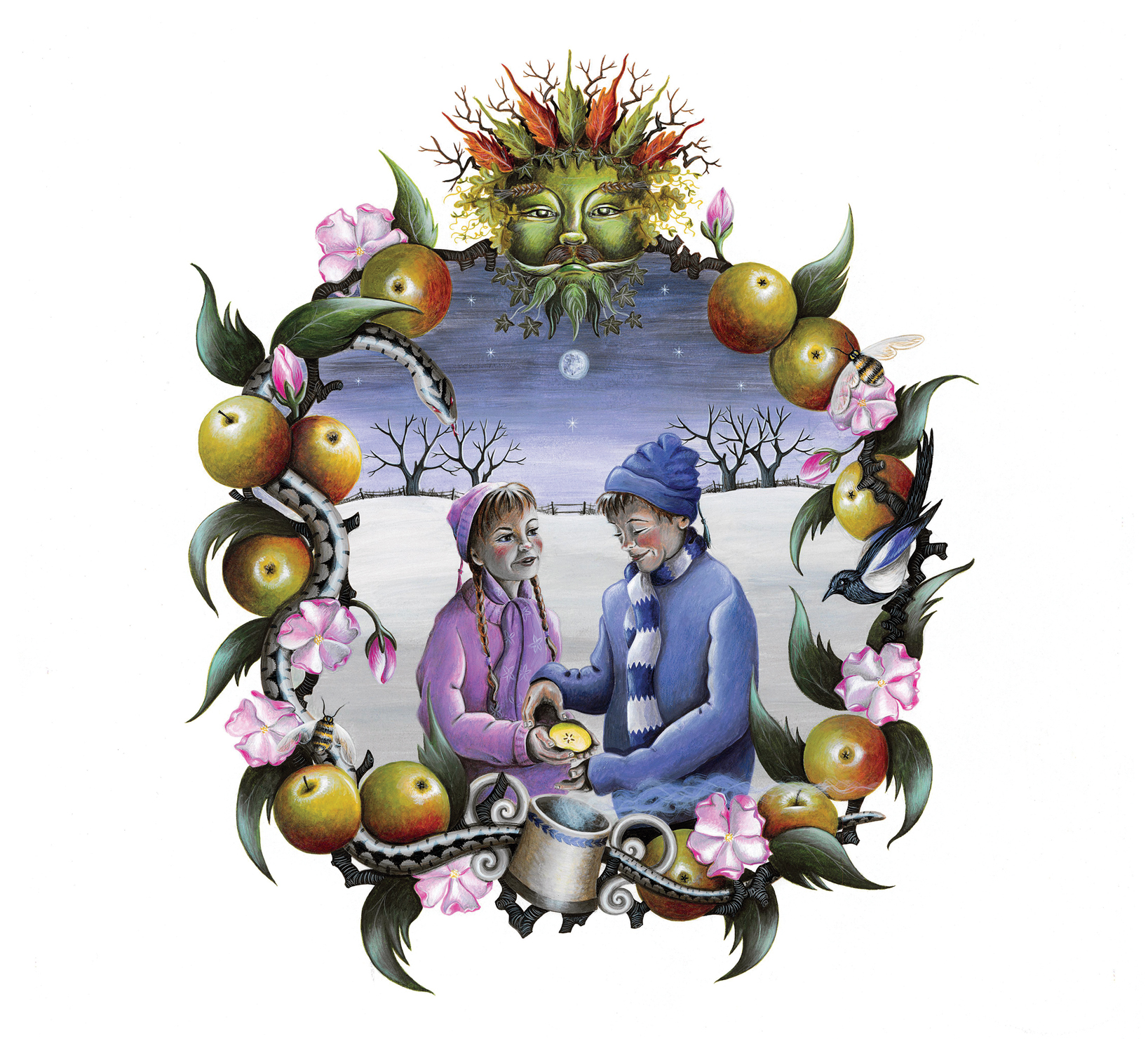
A beautifully rendered cover, layered with symbolism equal to the music in every way.
Wassail is a triumph, frankly. Not a huge triumph in the way The Underfall Yard or English Electric were each immense, almost overwhelming, triumphs, but a triumph, nonetheless.
A good, little truth.
In Greek, one would employ a word that has become utterly perverted over the last hundred years to describe Wassail best: a “dogma.” Literally, translating it from Greek to Latin, a dogma means a “good little thing,” a thing good in and of itself whether we understand its relation to larger truths or not.
Such is Wassail. A good little truth, whether we understand its relation to anything else or not. Only four songs at 25 minutes and 39 seconds, Wassail ends all too quickly. And, yet, for those nearly 26 mintues it plays, it fills our souls to the brim.
The opening song, “Wassail,” is a sing-songy English folk tune, completely with poetic and thoughtful lyrics. Here is the apple—the symbol of the devil, the instrument that caused the Fall, and the fruit that, to this day, brings so much love and joy. How can one thing be so loaded down by so many meanings—from the very existence of the universe and our relation in it, to the very thing that serves at the heart of what our grandmothers make best? This is a Longdon song, pure and simple. It is, for all intents and purposes, the sequel to Hedgerow, but without the rock edge.
The second song, “Lost Rivers of London,” is as much a Greg Spawton-song as the first was a Longdon song. What remains of the ancient world under the very streets of the city that represents so much good and truth in this world? What has nature wrought, our ancestors cultivated, and our current generation forgotten? These are quintessential Spawton questions, and, of course, true to Gregorian form, he serves as our modern natural historian, our urban archeologist, and our prog bard.
The third song, “Mudlarks,” is also a Spawton song, but its fullness comes across as a Big Big Train song more than the song of any one person. On “Mudlarks,” every member of the band, contributes and plays his or her heart out. Of the four songs, this is the most pop-rock oriented, despite the use of a whole set of rather folksy strings.
The final song of the EP, “Master James of St. George,” reveals just how much the band has evolved since the song first appeared—rather gloriously—on The Underfall Yard. Recorded live at Peter Gabriel’s Real World Studios, this version of “Master James” is much more layered than the original. Whereas the original offered a folksy minimalism, this version is layered almost beyond reason. The new strings add much but what really comes to the fore in this version is Danny Manner’s keyboards.
Big Big Train in Real World Studios.
The Wassail version of “Master James” in no way makes the original obsolete. Quite the opposite. This new version just makes those of us who love BBT justifiably a little prouder of them. For, really, this version shows just how truly alive their music is, how much depth it possesses, and long it will be remembered. . . long after any of us have vanished from this world.
Let us just hope when we get there (wherever “there” is), we know which apple to choose. It’s pretty clear that BBT wishes us well, and they’ve even kindly provided the soundtrack for that journey.
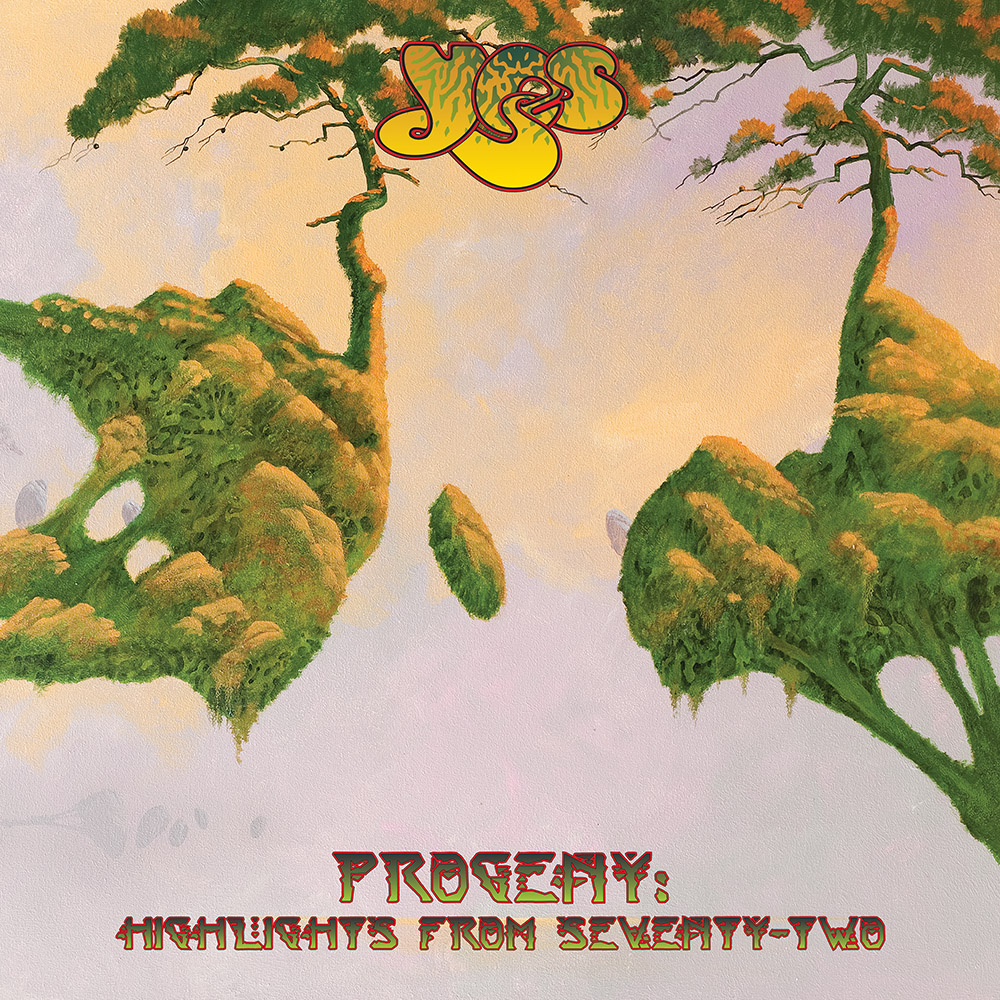
A review of YES, PROGENY: SEVEN SHOWS FROM SEVENTY-TWO (Rhino, 2015).
PROGENY (Rhino, 2015)
As I’ve mentioned a number of times, I was born in the summer of love, 1967. The youngest of three boys (eight years younger than the oldest and five years younger than the older), I inherited my music tastes at a very early age. Our house always had music playing—whether classical, jazz, rock, or pop. I especially loved the first three, though I could belt out most of the words to Three Dog Night with the best of three year olds. Crazily, I was able to sneak out of the crab, crawl downstairs (duplex), and put my favorite records on the turntable at 3 in the morning. No, I’m not exaggerating. I wanted the entire house to listen!
My favorites, though, even as a little kid were the songs by Yes, the Moody Blues, and Jethro Tull. Soon, of course, bands such as Kansas and Pink Floyd would join this august company.
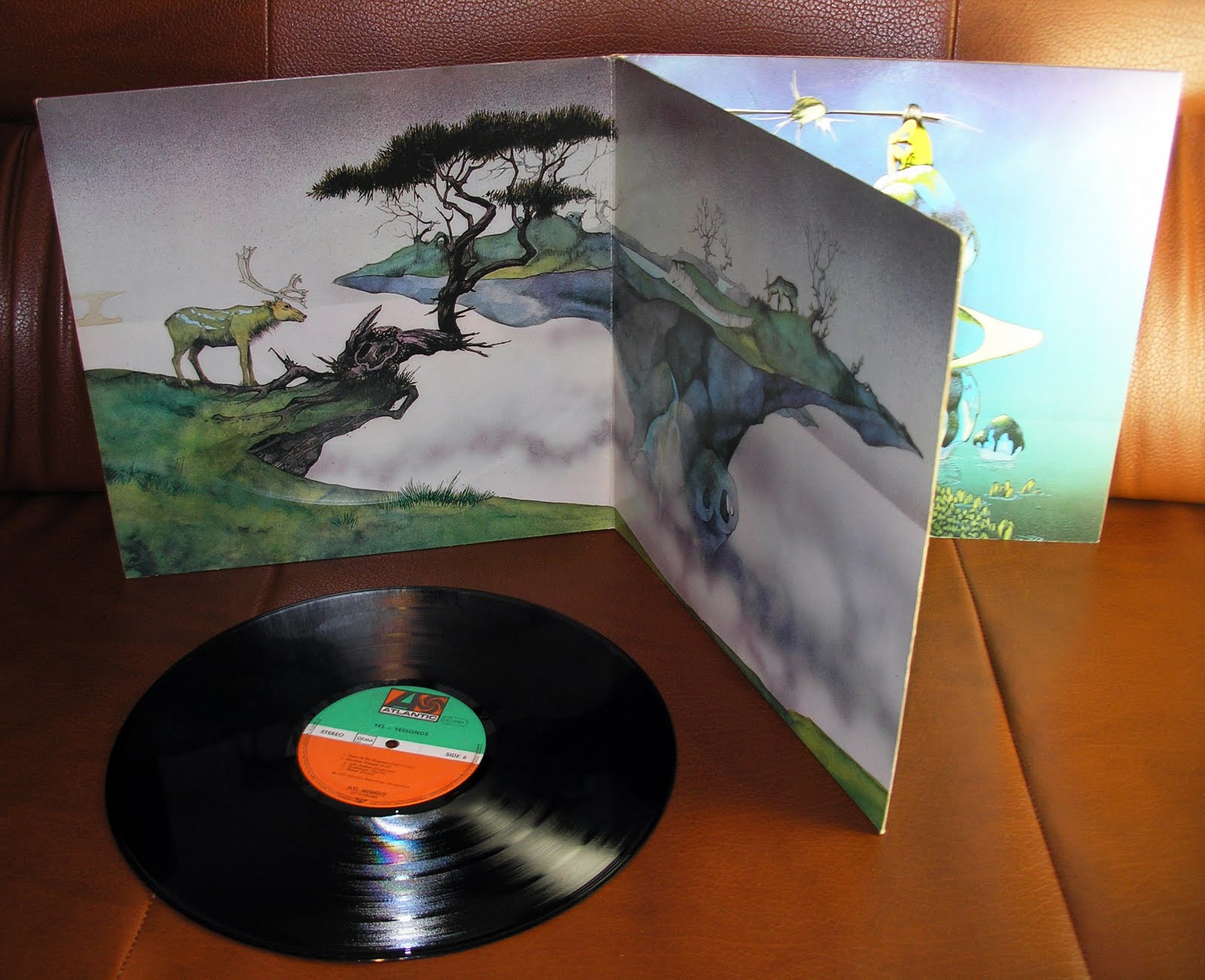
Sometime in 1973, one of my brothers purchased YESSONGS on LP. Three albums, complete with huge gatefold and lots of pictures (indeed, a really great book that came with it). I loved every aspect of YESSONGS. I loved the music, I loved the Roger Dean paintings, and I thought the pictures of the members of the band (including Eddie Offord) hilarious.
Not too many hippies hung out in central Kansas, so these guys looked really weird, mystical, and Tolkienesque to me.
Anyway, I spent a considerable amount of time as a small kid poring over the lyrics and the Dean images. How did those islands float? How did the deer get from one to the other. Of course, it all had been written about in C.S. Lewis’s Perelandra, but I’d yet to encounter that brilliant novel.
I can state with certainty that the entire package of YESSONGS—from lyrics to music to image—shaped my own imagination fundamentally.
So, when I heard that Yes would be releasing a fourteen disk live set from 1972, PROGENY, I couldn’t resist. I didn’t want the abbreviated version (the two disk highlights), I wanted the full thing.
Two things almost stopped me. First, I’m no longer a huge Yes fan. I was as a kid. Obsessed for quite a while. And, in college (1986-1990), too. Admittedly, I’ve purchased every single album—live or studio—Yes has produced. But over the last twenty some years, I’ve purchase the music out of habit more than out of love. There’s no doubt that every Yes album has something good on it, but the goods—at least to my mind—have become increasingly sparse. I don’t’ say this to ignite a flame war. But, from my very subjective viewpoint, Yes just isn’t as good as it once was. Some bands, such as Rush, get better and better. Others simply fade, and still others merely linger.
Second, I’m generally rather skeptical about these kinds of packages. If I’m shelling out over $50 for music, it better be amazingly good—music as well as art. I have, however, spent lots and lots of money on Rush (R40) and Tears for Fears (the Steven Wilson box set of SONGS). So why not for the work that really immersed me into prog.
“Dear God,” I thought as I hit the purchase button on amazon, “let PROGENY be worth the money.”
And, it is. This is the mother lode. This is the touchstone, the very source material, for YESSONGS. It’s pure, it’s raw, it’s flawed, it’s genius. At one point, during the beginning of a Wakeman solo, a local radio station playing Chuck Mangione, comes across the loudspeakers. Oh, Spinal Tap, how wise you are. Anderson makes a joke about it. Anderson and Howe even get along, making jokes from time to time.
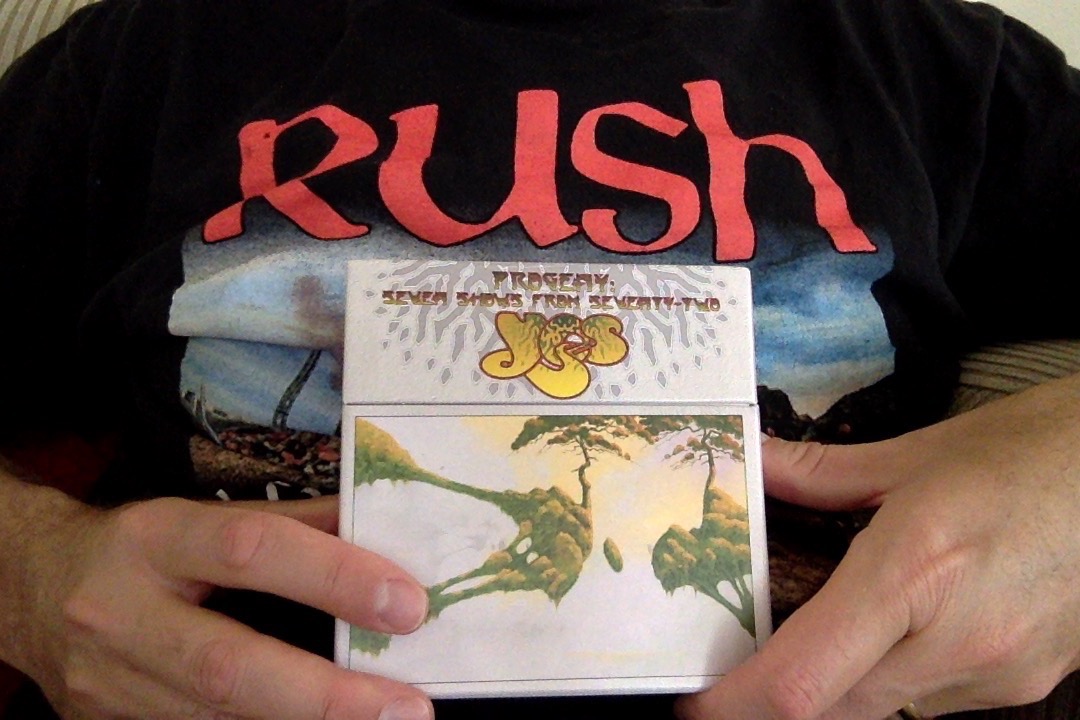
I mentioned on facebook that PROGENY is an “outrageous Yes overkill live package.” It is. And, I love it. Pure over-the-top prog. Seven concerts, fourteen disks, seven sleeves, a glorious booklet, a firm and tasteful box, and, of course, 10 hours/31 minutes/32 seconds of music. Phew.
Despite a similar playlist for each concert, each performance is unique. For those of us who have listened to YESSONGS so very much it’s been grafted onto our very DNA, PROGENY is a brilliant revelation. Mistakes as well as fascinating solos (long, short, punctuated) predominate. While at this point in my listening, I couldn’t state the guitar solo on Roundabout is better at the Toronto show than it is at the Knoxville show, but I certainly hear every difference. This is a young, confident, happy Yes. This is a Yes that wants to change the world and do so through love, not through corporate dominance and lawsuits and bitter relations.
This is the Yes that taught me to love prog.
This is prog. This is love. This is Yes.
[Corrected two things: It’s Eddie Offord not Eddie Jobson (thanks, Duane Day); and I was off on time.]
[Old Progger’s review taken from amazon.com; which I hope is kosher!–BB]
By Old Progger
My copy of the full 14 CD version of Progeny arrived three days before the official release date, so I’ve had time for a really thorough listen to these gigs in their entirety. There are, as you know, seven full length gigs here, but is there too much music to trawl through? Of course not. You’re a prog fan so you have an attention span, right? Right! The music on offer here is great stuff. There’s real zing on display here. The band play as a tight, well-disciplined unit and they’re coming at you with real committment and energy.
Before I splashed my cash I was a tad concerned that the restoration processes might detract from the ethereality and mystique which made Yessongs such a wonderful album. I needn’t have worried. The fog which obscured much of the detail has been lifted to reveal layers that we couldn’t have known were there. In particular, Wakeman’s keys have real atmospheric breadth and depth, and Anderson’s young voice is every bit as angelic as you always imagined.
The full contents of the booklet are posted on Yes’ website. This will help your decision to buy or not and they’ll also give a good indication of the level of attention to detail which has gone into the restoration of the original analogue tapes. They’re worth your attention, certainly convincing me that instead of sitting on the splinter-inducing fence marked ‘compromise’ and far from plunging lemming-like over the precipice marked ‘cynical cash-grab’ the producers have clung gecko-like to the sparsely populated and narrow ledge marked ‘integrity’. The tale of how Chris Squire’s bass sound was rescued is worth reading more than once!
Yes fans will immediately spot even subtle differences between the performances because, like me, they will know all the studio and live versions of everything like the backs of their hands. The more significant departures will jump out at them. For example, the Yessongs version of Yours Is No Disgrace is included here without the edits and you’ll easily spot where they were! The differences over 14 CDs are are otherwise too numerous to list. Importantly, this valuable material has not been robbed of it’s character by lazily pushing the whole thing through software to smooth out the wrinkles. All the buzzes, pops and crackles are there to be heard. We hear the band tuning up and even occasionally fluffing cues. Jon Anderson’s spoken introductions are all kept and all the instruments and voices exist in their own clear sense of space, instead of the muddines we’ve all complained about on Yessongs. If you buy this, what you will hold in your hand might be easily described as the best quality bootleg you ever owned!
Packaging is nice and sensible, not ‘shouty’ like some of rock’s gaudier boxsets which fit nowhere except on your coffee table, yelling “Look at me!” This robust little box will fit nicely, and with some class, in your regular collection. There is a distinct lack of the usual pointless and lazy montage of old photographs in the booklet. What you will find are genuinely useful and interesting sleevenotes and some very nice new Roger Dean artwork.
Sure, it costs money, but considering what you’re getting I really don’t think anyone’s being excessively greedy here. I will be returning to this collection again and again. It’s one of the best boxsets I own.