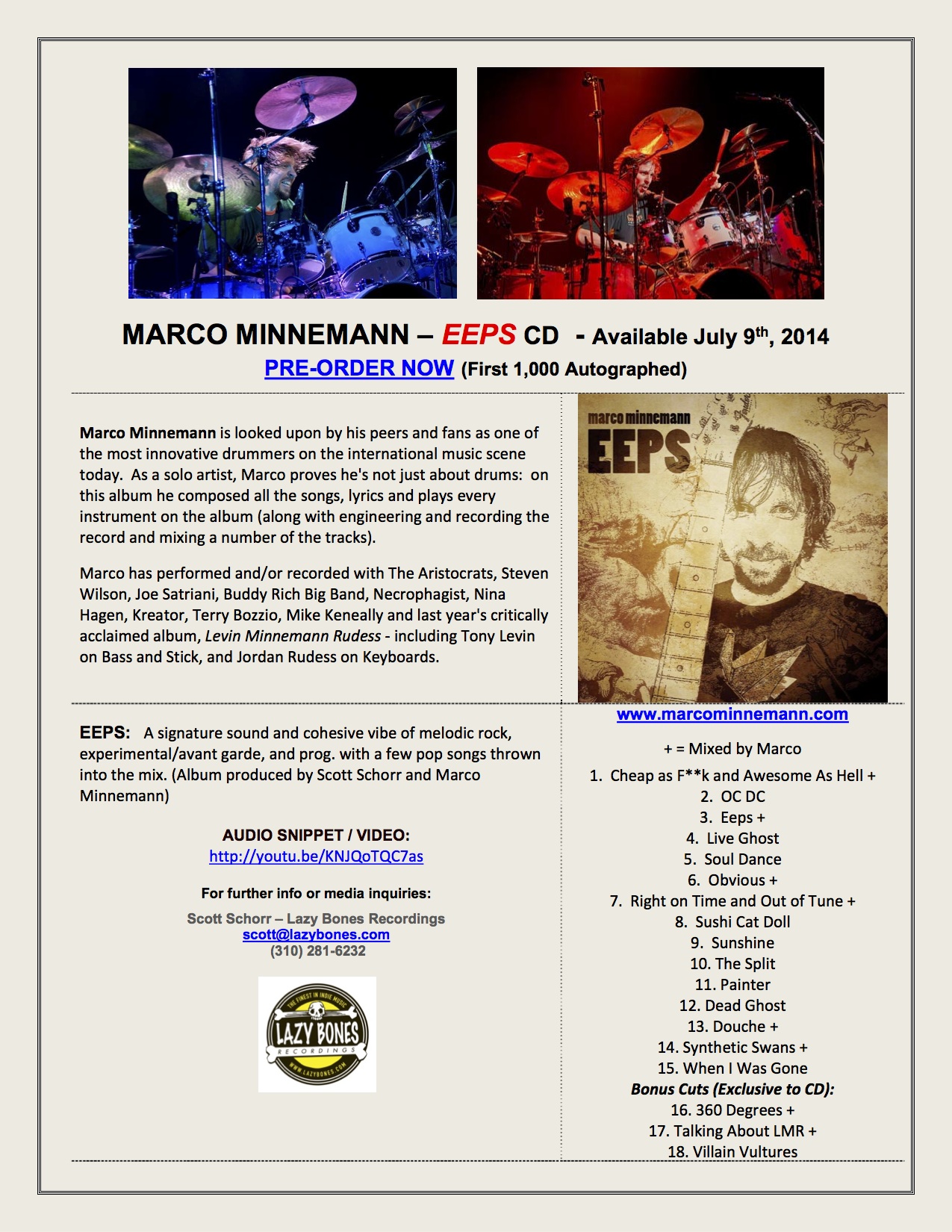
American genius. Susie looks like she’s having a blast.

American genius. Susie looks like she’s having a blast.
From Detroit’s Classic Rock station, WCSX:
Foggy skies may have stood in the way of Rush’s Geddy Lee and Alex Lifeson from receiving their honorary doctorates from Nipissing University yesterday (June 12th) in person, but it didn’t stop them from recording very insightful speeches for the graduating class.
Embedded below, Lee and Lifeson’s speeches reflect on their past experiences, both personal and as bandmates, and drove home to the graduates the value of hard work and perseverance.
Clocking in together at just over five minutes, their speeches are short and straight to the point but pack a heartfelt punch. If anyone in your family is set to graduate soon (or just needs a boost of inspiration), you’ll want to pass these videos on.
Enjoy: https://progarchy.com/2014/06/12/dr-geddy-lee-the-university-of-rush-studies/

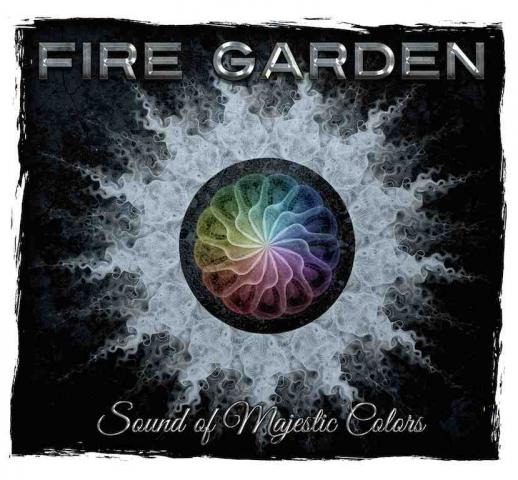
[The first of at least two reviews of Fire Garden, Sound of Majestic Colors (Fire Garden Music, Chicago, IL, 2014). Official Website for the band and label:
. Kevin Williams will also be reviewing the album. Frankly, I’m not qualified enough re: prog metal to review this. But, my love of the album kind of forced my hand.–BjB]
***
With no intention of being jingoistic, I’m very happy to see a nice resurgence of progressive rock in America. The English and the Scandinavians currently provide the touchstone, but I would hate to see the Americans not compete at all!
Of course, when it comes to North America, we’ve had some great prog bands and individuals in for the long haul: Rush, Glass Hammer, IZZ, Dream Theater, John Galgano, Kevin McCormick, 3RDegree, Neal Morse, Spock’s Beard, and a few others. Recently, we’ve seen the rise of Hour of the Shipwreck and Astra as well.
Now, we have Fire Garden, a new progressive rock/metal band from America’s third largest city, Chicago.
The brainchild of professional photographer Zee Baig, Fire Garden will release its first full-length album, Sound of Majestic Colors, tomorrow. This closely follows the band’s first EP, The Prelude, which came out at the beginning of the year. Three songs overlap: “Time Machine,” “Far from Grace,” and “Forsaken,” though the former two appear in slightly different versions on the EP and the LP. Certainly, each of these releases from Fire Garden is well worth owning.
When I first heard the Sound of Majestic Colors, I wrote my thoughts down quickly:
Confident, melodic, intense, moving, driven. Fire Garden is the present and the future of progressive metal. Sound of Majestic Colors is a triumph in every way.
Additional listens have only added to my wonder and astonishment regarding this album.
First, let me discuss the superficials, that is, the appearances of things. Visually, Sound of Majestic Colors is an incredible package. The CD case (very important to me) provides a fascinating mix and incorporation of black and white photography, psychedelia, Macintosh imagery (a play on the spinning beach ball of doom—at the center of the cover photo), and weapons of mass destruction.
If I had to compare it to anything, I would compare it to the best packaging Dream Theater ever produced—that for Train of Thought LP. But, frankly, Train of Thought’s artwork tried to be a little too psychedelic., little too Floydish. The eyeball on the cover has failed to age well, and it now appears far less creepy than it does derivative. Fire Garden avoids the clichés, creating its own vision for the album. Far from contrived, its psychedelia comes from the heart and the soul.
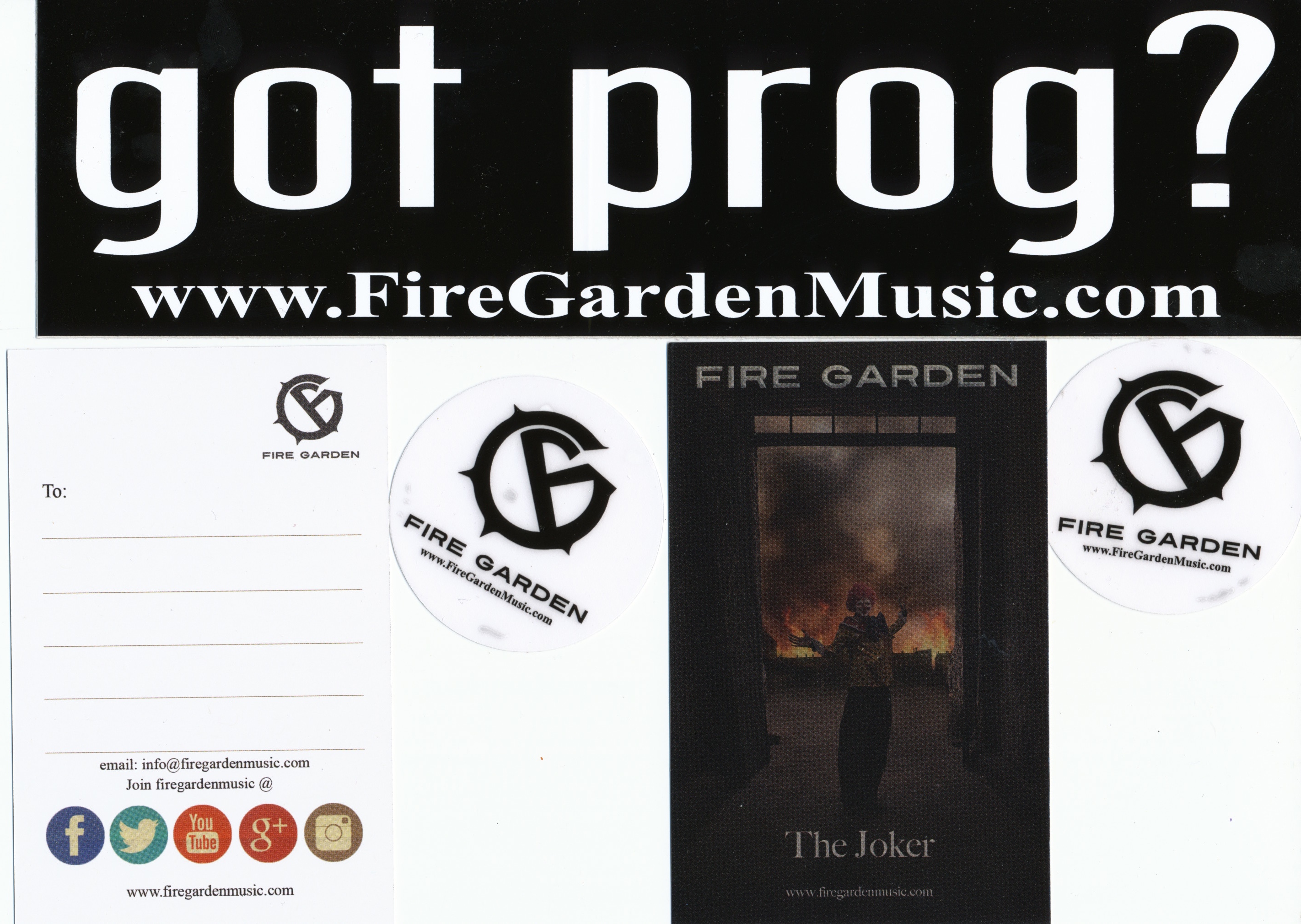
My copy of Sound of Majestic Colors arrived with business cards, bumper stickers, circle window stickers, a full-size poster, and bookmarks (see photo below). All of this is done with absolute class, and I welcome such things greatly. Indeed, I will be keeping these things in a very safe place accompanying similar items I’ve collected and received from Rush, North Atlantic Oscillation, Porcupine Tree, etc.
Second, instrumentation, performance, and ability of the musicians. My first reaction to my even asking this is simply: “Holy Schnikees! Are you kidding me?”
Though these guys are young, they sound so very, very good. I am not a huge fan of Dream Theater, as I feel they really have little soul and more or less write music to chase notes, all of it trapped in a graceless cycle. I have always, however, respected the talents and abilities of the individual musicians in Dream Theater. Imagine that same ability, but augmented by and with real story telling strengths and melodic overrtones and undertones. Combine Dream Theater’s skills with some serious artistic class, and you have Fire Garden. Kevin Pollack—vocals. Perfect. Zee Baig—guitars. Sheesh. Beyond perfect. Frank Lucas—keyboards. Perfect. Barry Keliber—Bass. Perfect. Chuck White—Drums. Holy Moses. More than perfect.
Production and mastering—perfect. The depth to this recording is astounding. Everything is clear, everything is deep, and everything is layered. Again, imagine Dream Theater’s production, but even more top notch.
Third, lyrics. I’m a huge fan of good lyrics, and I consider them essential to the success of any album. Lyrically, this album is as layered and dark as its production. Lots of angst, guilt, and questioning in the lyrics. In the end, though, the lyrics exist for a real and meaningful purpose, a poetic one. Song titles such as “Alone,” “Endless Memories,” “Redemption,” “Forsaken,” and “Far from Grace” reveal everything about the seriousness and intent of the album. That Baig offers his greatest thanks in the booklet to Almighty Allah says about everything that needs to be said. Baig is a serious man, and he takes his art as seriously as he takes his faith. If you’ll permit some Aramaic—Amen, Zee.
If you’re looking for something well done, something taken seriously, and something that—in terms of style—varies from heavy to metal to prog to AOR to arena and back to prog metal, look no further.
Fire Garden is not just the present and future of American prog metal, the band is the present and future of all prog metal.

|
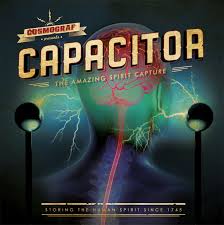
Cosmograf’s CAPACITOR is everything a rock album should be. And, I do mean EVERYTHING. EVERY. SINGLE. THING. It is wholesome, fractured, creepy, uplifting, contemplative, mythic, existentialist, moving, intense, wired, dramatic, contemplative, Stoic, mystifying, weird, satisfying, honed, nuanced, dark, and light.
The Meaning of It All
If I could capture the album in one sentence, comparing it to other forms of art, I would and will put it this way: CAPACITOR is an Edwardian journey into the Hades of the Ancient Greeks but emerging in BIOSHOCK.
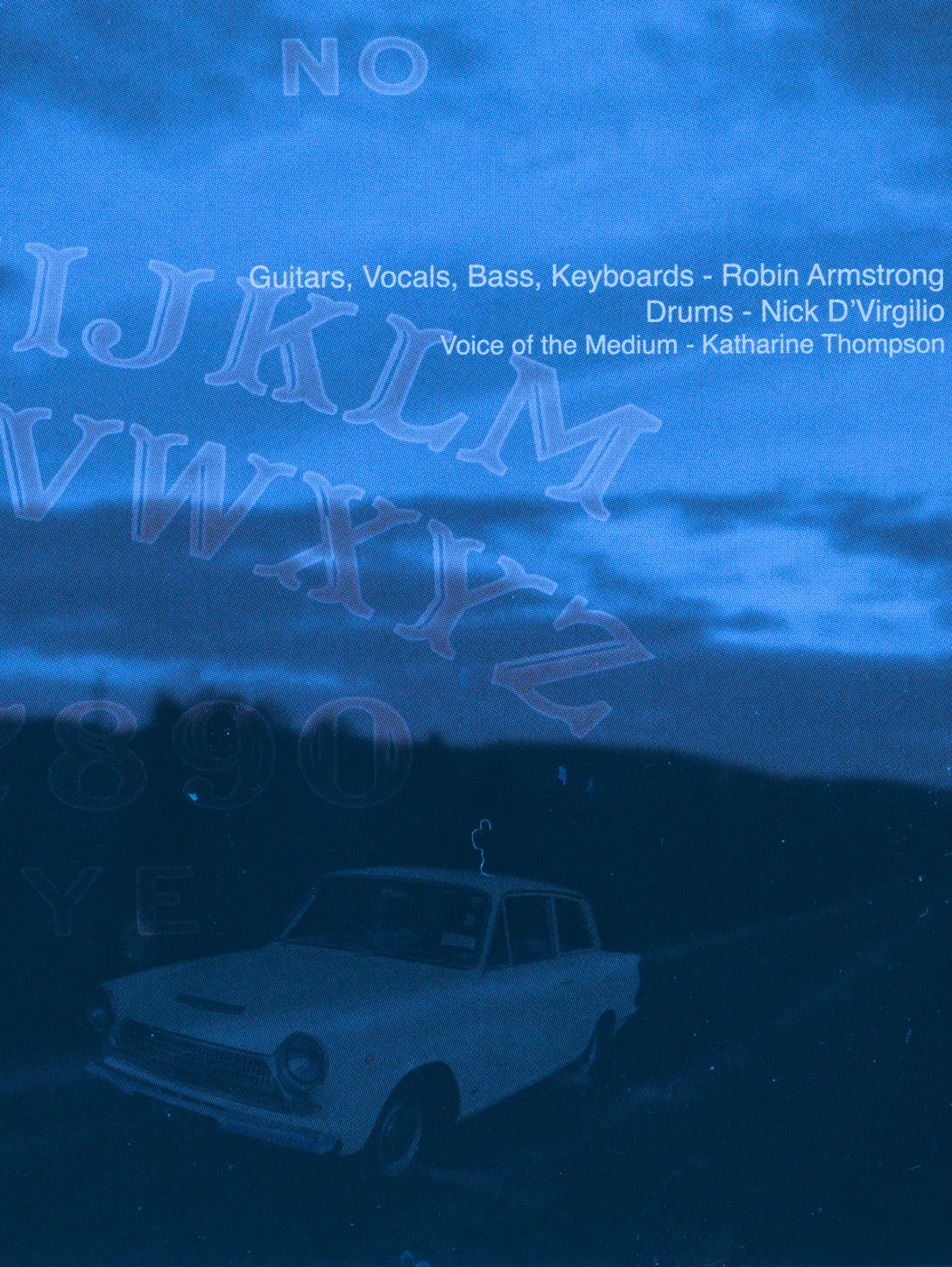
Then, think about the artists involved. Andy Tillison plays keyboards on it. Matt Stevens plays guitar on it. Nick Beggs and Colin Edwin play bass on it. NVD plays all of the drums. Our modern master of sound, Rob Aubrey, the Phill Brown of our day, engineered it.
[Correction: from Rob Aubrey. My apologies for getting the credits and terms mixed up. “Hi All, Actually I didn’t ENGINEER it as such…. I recorded the Drums with NDV and then everything else was Produced and Engineered by Robin… He Mixed the album at home and I was here in an advisory role, just giving a hand when he ran into problems or I felt things needed more work. Robin and I mastered the album together just a few Months ago on my studio system here (Pro Tools) using all of his original sessions so Robin could make adjustments to the overall dynamic and “tweak” individual sounds if necessary. I cannot take credit for much as Robin really is the genius here!”]
Then, of course, there’s the artist supreme, the writer, director, and producer of it all, Robin Armstrong. English wit, critic, musician, lyricist, father, husband, entrepreneur, and demigod of chronometry, Armstrong is one of the most interesting persons of our day and age. He’s already proven everything an artist should in his previous albums, especially in The Man Left in Space.
Armstrong is a driven man, and it’s impossible to think of him without thinking not only of perfectionism, but also of his insatiable desire to perfect a thing even more so. In terms of constitution, he is probably incapable of doing otherwise. We all benefit from his unrelenting drive.
On the latest album, CAPACITOR, Armstrong explores the Edwardian fascination with spiritualism, giving us not “steam punk” but what should be called “vacuum tube punk,” something quite different from that of either H.G. Wells or Bruce Sterling.
The statement “energy cannot be created or destroyed” appears in print, in word, and in song multiple times on CAPACITOR. If this is true, Armstrong asks through his characters and story, where does our energy—our soul—go after the body fails us? We are everywhere and in every time, he notes, surrounded by the ghosts of the dead. Even if we don’t personally believe in an afterlife, we see “what they left with us.”
Ghosts appear frequently on the album, as does a vaudevillian preacher and a spiritual medium. In the end, though, especially by the final two tracks, Armstrong is critiquing the rise and predominance of “the machine,” any gadget that mechanizes us, makes us less than human, and distracts or captures our very soul and very essence, thus diminishing our humanity.
The person, it seems, can never be fully an individual without body and soul, not in war with one another, but in healthy tension.
The Meaning of It All, Continued
Musically, CAPACITOR immerses us into perfection itself. See above for the musicians Armstrong has brought together. He’s obviously a creator of community and a leavenor of talent. He’s also within the prog tradition, with musical passages inspired by, indirectly, Porcupine Tree, Pink Floyd, Big Big Train, and The Tangent and, directly, The Beatles. Indeed, one of the most rousing moments musically comes in “The Reaper’s Song,” a song that, in large part, pays homage to THE MAGICAL MYSTERY TOUR by the Beatles (1967).
Sitting in a station, waiting for a train to come
Frighten all the people, standing on the platform
Trying not to push them over
Trains are gonna crush them
Stupid little people
Stupid little people
Another track, “White Car,” has absolutely nothing to do with the unfinished fragment of the Yes song from DRAMA (1980). Yes’s song will have to continue in my soul as an unresolved enigma until the end of time.
A Masterpiece
It goes without stating (though, I will state it anyway!), the last several years have been not only amazing when it comes to rock, but they have also been, probably, the best years in the history of progressive rock.
2014 has been no different.
Please, however, don’t think of Cosmograf’s CAPACITOR as merely another Cosmograf release or as merely another prog rock release.
Of course, there is no such thing as “just another Cosmograf release,” though we might become a bit jaded when it comes to another “prog rock release.” There’s so much coming out at the moment, it would be understandable—if not forgivable—to take the historic moment for granted. Even with the somewhat overwhelming number of music cds appearing over the last several years, CAPACITOR is truly something special and, dare I use a word overused and misused for its sappiness, precious.
From my way of thinking, CAPACITOR is the best cd of 2014 and one of the best prog rock releases of all time. It is, at least this year, the one for all others to surpass. I very much look forward to those who embrace the challenge.
To pre-order for the June 2, 2014, release, please go here.
Though I’m certainly no pacifist, and I rather love and owe allegiance to the American republic of the founding period, I can’t help but think of Peart’s lyrics when it comes to the beating of drums on Memorial Day weekend.
We see so many tribes overrun and undermined
While their invaders dream of lands they’ve left behind
Better people…better food…and better beer…
Why move around the world when Eden was so near?
The bosses get talking so tough
And if that wasn’t evil enough
We get the drunken and passionate pride
Of the citizens along for the ride
They shoot without shame
In the name of a piece of dirt
For a change of accent
Or the color of your shirt
Better the pride that resides
In a citizen of the world
Than the pride that divides
When a colorful rag is unfurled
Amen, Neil. It’s one thing to honor those who have given their very lives for us, it’s quite another to use those same sacrifices for nationalistic, egotistical, and nefarious agendas.

Though I more often than I like fall back on the use and employment of labels, I also realize that labels reek of unimaginative and ridiculous and poorly developed thought. We label rarely to clarify. Instead, we label to move a thing out of the way and start looking at the next thing. And, even it is our intent originally to understand the thing through a label, the very process of the labeling of a thing places it rather firmly as this or that, thus automatically dismissing our possibilities in fully understanding the thing and allowing it to take on a life and identity of its own.
For those of us who prog, I often think of the frustrations I feel whenever I go to Progarchives. An excellent site in most ways, its obsession with labeling drives me a bit bonkers. Over the last decade, I have discovered that—at least according to Progarchives—I possess a loving relationship with what they call “cross-over prog.” What on God’s great green earth does this mean? Doesn’t prog automatically mean that something crosses over something else??? That fusion has occurred in unexpected ways? Isn’t the very essence of prog as an art form that it really cannot be defined or categorized?
When I saw that the new issue of CLASSIC ROCK had downloaded onto my iPad this morning, I rolled my eyes.
Don’t get me wrong, I’m thrilled to get the new issue. CLASSIC ROCK is one of the few periodicals I read faithfully. To say I’ve been frustrated regarding the move from the old app to the new would be not just a gross understatement, it would be false. Despite attempting at least 20 times (following, specifically, the directions provided by CLASSIC ROCK) to switch from the old to the new, I’ve failed. I finally gave up trying, accepting the limitations of the old app.
So, maybe a little lingering frustration. . . .
But, I would’ve rolled my eyes anyway. Next to a sensationalist photo and headline regarding Guns n Roses reads “Nu-Prog, The 10 Bands Revolutionizing Rock.”
Nu? Really? Neo Prog or New Prog would sound ridiculous. But, Nu? Sheesh. Are we quasi-literate five year olds?
The 10 bands are Syd Arthur, Knifeworld, Haken, Messenger, Archive, Incura, Sontaag, Alcest, Gazpacho, and Plank! I only know three of the ten, but I’ll be checking out the others.
But, who am I to criticize? A friend of mine once joked with me that I defined prog as “any music Brad Birzer likes.” Sadly, there’s probably a lot of truth in this in my arrogant little brain.
Words are sacred. Art is sacred. We should love our music and all of its expansiveness as much as we love our words and all of their importance. There’s no such thing as “nu” in the English language. If we’re going to claim we’re entering a new stage of music, let’s give it a proper name, not an advertising slogan or soundbyte.
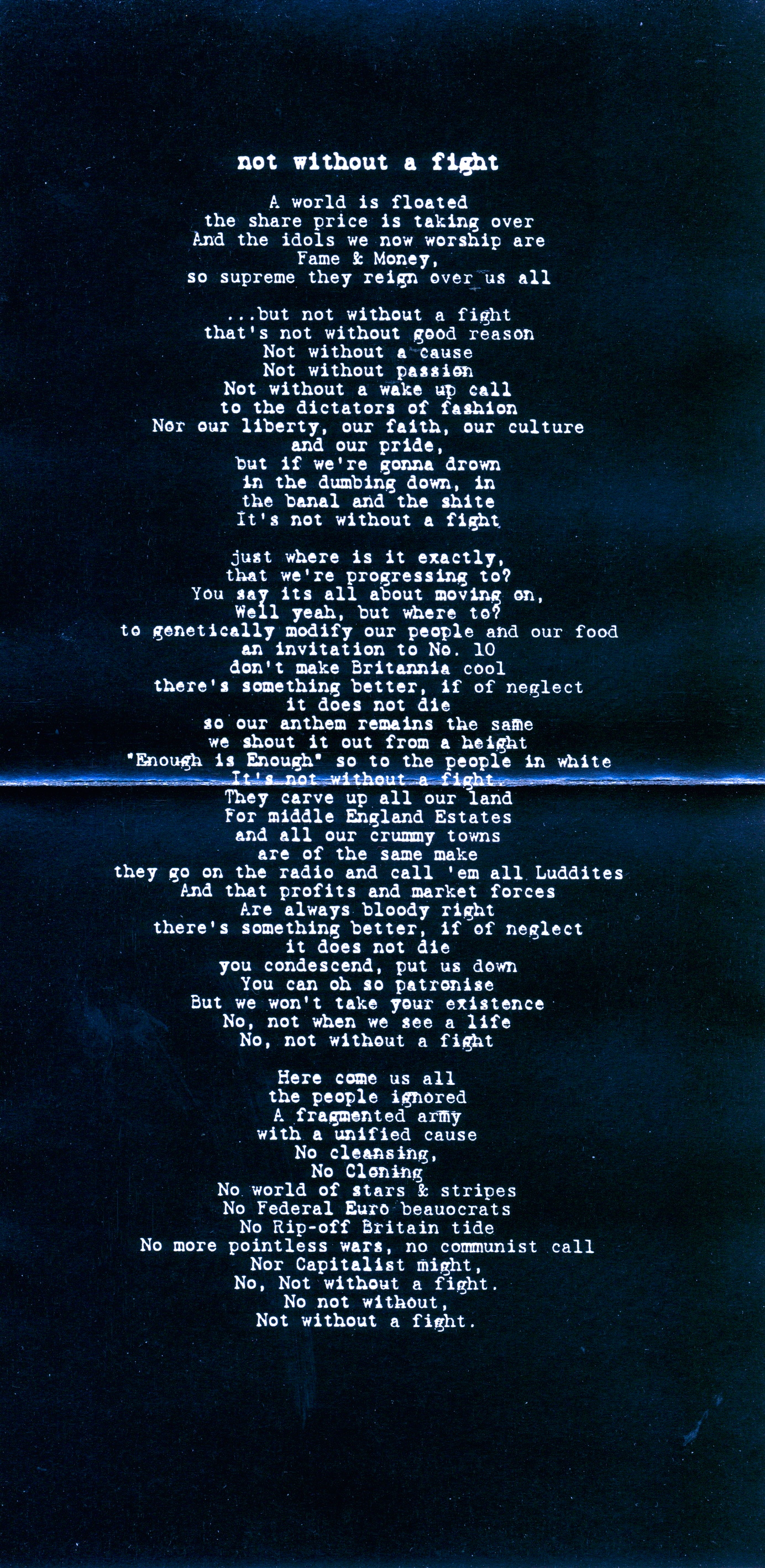 Punk Prog at its finest.
“Not without a Fight” recorded August 2000. Written by David Gulvin and Tony Gulvin.