
Thanks to Father Simon and James Brandon for sharing this with me. Amazing.
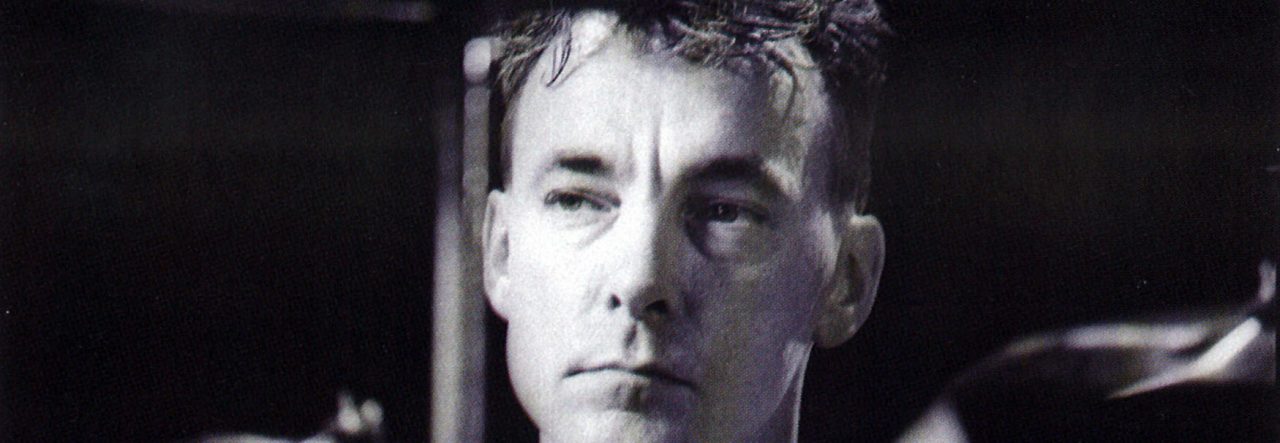
Thanks to Father Simon and James Brandon for sharing this with me. Amazing.
|
RUSH GUITARIST ALEX LIFESON TO GUEST ON RENMAN MUSIC & BUSINESS WEB SHOW “RENMAN LIVE” NEXT WEEK Tune in live Wednesday, April 22 to join the conversation! |
|
LOS ANGELES – Renman Music & Business, the music industry mentoring website founded by longtime industry veteran, Steve Rennie (aka “Renman”), will broadcast another episode of its Renman Live web show next week, Wednesday, April 22, with special guest, legendary Rush guitarist Alex Lifeson. The show will air live starting at 5:00 p.m. PDT / 8:00 p.m. EDT on the Renman MB YouTube channel at: https://www.youtube.com/user/renmanmb. Head over to Renman Music & Business at: http://www.renmanmb.com/live/renman-live-w-rush-guitarist-alex-lifeson for more info and to submit questions in advance. Viewers can also ask questions live on air by calling the Renman Live hotline: 1-310-469-9067 during the show. “People ask me all the time how you learn the music biz,” said Rennie. “Simple. Hang out with smart people. “On my web show, Renman Live, I’ve been lucky to have had some of the smartest, most talented people in the music biz join me to share their stories, insights and advice with aspiring artists and music pros who are dreaming of doing something big on their own and need some inspiration and direction. If you are interested in the music biz, watching an episode of Renman Live is the next best thing to sitting on the couch with me and my guests.” Guests who have appeared on Renman Live include Nate Reuss (FUN.), Pretty Lights, Brandon Boyd (Incubus), Andy Biersack (Black Veil Brides), Grouplove, Paul Tollett (Founder, Coachella), Charles Attal (Promoter, Lollapalooza), Kevin Lyman (Founder, Warped Tour), Troy Carter (Manager, John Mayer), Richard Griffiths (Manager, One Direction), Pat Magnarella (Manager, Green Day), Tom Corson (President, RCA), Mike Caren (President A&R, Warner Bros), Aaron Bay-Schuck (A&R Exec, Bruno Mars), Jeff Castelaz (President, Elektra Records) and many more. Over the last 36 years, Renman Music & Business mastermind, Steve Rennie, has become one of the most successful and respected professionals in today’s music business. He has amassed a broad swath of experience as a concert promoter (Sr. VP Avalon Attractions now Live Nation 1984-1990), record company executive (Sr. VP GM Epic Records 1994-1998), internet entrepreneur (ArtistDirect 1998-2000) and artist manager (Incubus 1998-2014). Now, he is dedicating himself to mentoring this next generation of artists and music pros who will shape the music industry of the future. In 2012, Rennie founded Renman Music & Business: http://www.renmanmb.com, an online education portal for the music industry featuring a YouTube channel: http://www.youtube.com/user/renmanmb with over 500 video clips with tips from industry pros, a web show, Renman Live: https://www.youtube.com/playlist?list=PLaCGuUBKBfsuEGSchAEyI9fFuMXzJVuun, which has livestreamed over 100 episodes so far, and more. Earlier this year, Rennie launched Renman U, an online course designed to be “an insider’s guide to today’s music business,” at: www.renmanu.com. Once enrolled, Renman U students receive an interactive set of online video lessons designed to teach aspiring artists and music business professionals what it takes to succeed in the music industry. Course lessons are based on Rennie’s more than 36 years of experience at the highest levels in the business, and include quizzes, written exams and more. Rennie recently spoke with Forbes.com about his Renman U program. Check out the interview at: http://www.forbes.com/sites/ruthblatt/2015/04/16/a-coaching-approach-to-becoming-a-music-business-insider/. An introductory Renman U video can be seen on YouTube at: http://youtu.be/Q-GQyl5zNk8, while a free demo is available at: http://renmanu.com/course/renman-u-free-demo/. Keep up with Renman Music & Business on the new Renman MB app for iOS: https://itunes.apple.com/us/app/renman-music-business/id912847478?ls=1&mt=8 and Android: https://play.google.com/store/apps/details?id=com.beachfrontmedia.renmanmusicandbusiness and online at: www.renmanmb.com. -###- |
While I’ve mentioned this in passing, i’ve yet to announce formally that I’m writing a book on the words and ideas of Neil Peart. So, if you’ll permit me, I’ll do it here.
I’m writing a book on Neil Peart.
There. Done. Announced.
And, I’m having a blast, not surprisingly. The book will come out this fall (2015) from WordFire Press under the editorial expertise of Kevin J. Anderson and Rebecca Moesta.
At the moment, the place-holder title is The Neil Peart Generation. I’m hoping to come up with something better.
In the meantime, here’s an excerpt–a raw, unedited version of my section on Peart and Rush in 1996-1997, just before all of the tragedies hit. I hope you enjoy. This is about 2,000 words of the ca. 40,000 word book. At least as I see it now.–Brad
***

Rush 1.3.5
Test for Echo, the band’s sixteenth studio album, is an anomaly and a beautiful transition from the first full stage of Rush (1.0) to the final stage of Rush (2.0). Arriving a full three years after Counterparts, Rush fandom had never had to wait so long for a new album from the band. “During that time,” Peart notes in the official tourbook, “Geddy and his wife produced a baby girl, Alex produced a solo album [Victor], and I produced a tribute to the big-band music of Buddy Rich. We worked; we traveled; we lived our lives; and it was fine.”[1] The title of the album even reflects the time away from one another and from their fans. “Test for Echo,” Peart explains, was a means of Rush both asking and assuring its fan base that neither was alone. “Everybody needs an ‘echo,’ some affirmation to know they’re not alone.”[2]
Test for Echo possessed neither the overall hardness of the 1993 album nor the denseness of a Power Windows (1985). Neither, however, was it as light and sleek as Presto (1989) had been. Instead, it sounds like almost nothing Rush had done before, and yet, it sounds almost like nothing Rush did after. In the context of the history Rush, “Test for Echo” is, to be sure, its own creature. Certainly, Lifeson had never played such a strong and assertive role in the creation of an album as he did with this one. Peter Collins, English producer of Power Windows (1985), Hold Your Fire (1987), and Counterparts, returned to produce this album, keeping his view on the overall structure of the full album, with Clif Norrell (Catherine Wheel) serving as recording engineer and Andy Wallace (Faith No More) as mixing engineer.[3] While Test for Echo contains driving songs, it also contains a lot of whimsy and humor. Lee explains why the album needed both as to best reflect the meaning of the album as a whole:
“It’s about the numbing process that happens when we are exposed to great tragedies and then we’re exposed to moments of hilarity,” said singer-bassist Geddy Lee, whose band returns Tuesday to Target Center in Minneapolis. “I feel that that’s the condition of contemporary man now – when we read the paper or when we watch TV, we’re not sure if we’re supposed to laugh.”[4]
Despite being the most “progressive” album the band had produced in a decade or so, Test for Echo also has a relaxed, comfortable feel to it, something rarely found on a Rush album. Strangely, the band, especially Lee and Lifeson, felt real tension with one another during the recording of the album. There were, according to Lifeson, even a few explosions at and with one another. Lee remembers the process of making the album with little fondness.
Test for Echo was a strange record in a sense. It doesn’t really have a defined direction. I kind of felt like we were a bit burnt creatively. It was a creative low time for us.[5]
Peart, however, downplays the tensions, at least in his remembrances, and, instead, focuses on the new drumming technique he had learned from Freddy Gruber between this album and Counterparts. “I could feel I had brought my playing to a whole new level, both technically and musically. ”[6] Indeed, by the following summer, Peart was so enthusiastic about the album and the tour that he claimed “we’re already planning our next studio album.”[7] In an interview with Eric Deggans of the St. Petersburg Times, Peart thought the band had reached its peak. “Over the years, we learned how to write, how to play and how to arrange and now we have a full toolbox. Time and experience. . . [in original] there’s no substitute for that.” With previous albums, the drummer claims, he “struggled to find new ways of challenging” himself. With Test for Echo, however, he believes he “came in with so much,” he had to “edit” himself.[8]
After three years of the three members of the band being apart, though, it took more than a bit of time and patience for the band to come back together as a whole. As mentioned above, Lee expressed frustration for the beginning of the project. “Neil was being Mr. Aloof a little bit. So we kind of circled each other and we talked.”[9]
Whatever the tension, the end result is a thing of wonder. Beginning with an airy atmosphere and almost pleading guitar, the opening track, the title track, resolves into a progressive grunge. The lyrics express shock at a world that has become completely commodified in the images the media presents to the world. The result, vertigo.
Don’t touch that dial
We’re in denial
Lyrically, the song compliments “Show Don’t Tell,” from Presto. Yet, unlike that deeply personal and self-judgmental song, this one asks how all of what was once private is now public?
As if Peart has to respond to the intrusion and commercialized weaponization of mass media, he offers a statement of integrity in the following song, “Driven.” Unlike earlier Rush songs that deal with similar themes, Driven leaves lingering questions. Can a person be so driven that he finds himself “driven to the edge of a deep dark hole”? Yet, Peart (and the listener) avoids the abyss, determined not to linger in any one place too long. “And I go riding on,” the song concludes. “Driven” offers Rush at its best: great lyrics; a perfectly progressive rhythm; and Lifeson’s tastefully-grungy guitar sound. Lee considers it a “quintessential Rush song.”[10]
It’s worth noting that the video Rush produced for this song is possibly the most interesting video the band ever made. Visually, it anticipates the grime of the Matrix, but it also combines elements of Blade Runner and The Road Warrior. Armed with measures of the bizarre and carnival-esque, it is pure punk dystopia.
The third song, “Half the World,” enters a heavy candy-pop-rock world of music. Lyrically, however, Peart continues to express shock at the state of the world, a world divided by so many things. Some trivial, some major. Taking the lyrics literally, the listener cannot help but believe the world will always remain divided. The ultimate division: those who lie and steal; and those who live honorably.
The fourth song, “The Color of Right,” offers a more positive take on similar notions, noting that right (and righteousness, properly understood) can transcend all differences in this world. This is Peart at his Platonic and Aristotelian best.
Track five, “Time and Motion,” returns the listener to the style of the first two tracks of the album, offering nothing less than a mini-prog gem. As the title indicates, the song plays with the modernist ideas of time and movement, similar to Permanent Waves’ Natural Science.
Time and motion
Flesh and blood and fire
Lives connect in webs of gold and razor wire
Everything is connected to everything else in this world, and, yet, this can mean we’re each attached to both the good and the ill. Thus, man must be:
Superman in Supernature
Needs all the comfort he can find
Spontaneous motion
And the long-enduring kind
“Totem” looks, rather whimsically and mockingly, at all types of religions, meshing Christianity with Hinduism with a variety of pagan practices. The song ends, ominously, with “Sweet chariot, swing low, coming for me.”
“Dog Years,” the seventh track, again revealing Rush’s rather humorous side and considers exactly what the title claims: the life of a dog, complete with fleas, sniffs, and howls. That this song appears after totem is not accidental. Both explore irrationality and instinct. Peart, however, considered the song a “feast” at the time of its release, arguing at length about its own depths.
Well, no. As always I try to weave it in on several levels, so certainly the listener is welcome to take it just as a piece of throwaway foolishness. That’s certainly in there. Even the story of its writing is kind of amusing, because it was right when we got together for the first time, the three of us, after quite a long break apart. We did a little celebrating the first night and the following day I was a bit the worse for wear, and a little dull-witted, and I thought, “Gee, I don’t think I’m going to get much done today, but I’m a professional, I’d better try.” So I sat down all muzzy-headed like that and started trying to stitch words together – that’s what I was there for, after all. “Dog Years” is what came out of that kind of mentality, and born of observations over the years too, of looking at my dog thinking, “What’s going through his brain?” and I would think, “Just a low-level zzzzz static.” “Food. Walk.” The basic elemental things. When I look at my dog that’s how I see his brainwaves moving. Other elements in there of dog behavior, and I’ve had this discussion with other dog owners too: “What do you think your dog is really thinking about?” I say, “I don’t think he’s thinking about too much.” That was certainly woven into it as well.[11]
A heavy track that would not appear out of place on Counterparts, “Virtuality” considers the reality and unreality of the world wide web, connecting all things intangibly, one to another.
“Resist” is a deeply personal anthem, a restatement of Peartian principles of individualism, but done so in a very acoustic, singer-song writer friendly way. Inspired by the dark romantic, Oscar Wilde, Resist never crosses the line into melodrama.[12] Rather, it successfully embraces a bardic feel. “I can learn to close my eyes/to anything bug injustice.” Combining humor with a progressive rhythm, “Limbo,” offers an instrumental Rush version of the “Monster Mash,” complete with Frankenstein sound effects. Interestingly enough, it’s also a play on and against a more infamous Rush, Rush Limbaugh–Rush Limbo.[13]
“Carve Away That Stone,” finishes the album on an uplifiting note, rewriting the tragic Greek myth of Sisyphus. In the traditional story, the gods punish Sisyphus for his deceit, making him roll a stone up a mountain, only to have it roll back down, forcing Sisyphus to start all over again, endlessly. In the ancient version, the gods punish Sisyphus not just for his deceit but also for his hubris, that is, his very challenge of and to the power of the gods. Peart’s extremely Stoic lyrics call for the good person to accept the fate of the gods, and to push the stone with all his best effort and integrity, thus showing to the gods and all of humanity that man can indeed best them. The song ends with the wry note: “If you could just move yours/I could get working on my own.” In other words, every man, woman, and child shares the fate of Sisyphus in this world. Accept it and move on.
Notes:
[1] Peart, The Test for Echo Tour Book: Official Guidebook and User’s Manual (1996).
[2] Peart, Test for Echo Tour Book.
[3] Peart, Test for Echo Tour Book.
[4] Lee quoted in Jim Abbott, “Echo Has More than One Meaning,” Minneapolis Star Tribune, October 27, 1996.
[5] Lee quoted in Vinay Meon, Rush: An Oral History, Uncensored (Stardispatches, 2012, iBooks). At the time of the album release, Lifeson felt great about it. See his interview with Steven Batten, “Testing for Echo: Rush Return After Two Years in Hiding,” Northeast Ohio Scene (October 31-November 6, 1996). Lifeson especially liked the “aggressiveness” of his guitar. Peart thought that the tension came from Lifeson, as he had the experience of producing Victor on his own and wanted to assert much of what he’d learned from that. See Alan Sculley, “Rushing Back Into the Spotlight,” St. Louis Post-Dispatch, June 5, 1997.
[6] Peart, Traveling Music, 34.
[7] Peart quoted in Betsy Powell, “Peart is a Different Drummer,” Toronto Star, June 30, 1997, pg. E4.
[8] Peart quoted in Eric Deggans, “Rush Recharged,” St. Petersburg Times, December 6, 1996, pg. 18.
[9] Lee interview, “Text for Echo World Premier, WKSC-FM (Chicago), September 5, 1996.
[10] Lee interview, “Text for Echo World Premier, WKSC-FM (Chicago), September 5, 1996.
[11] Peart interview, “Test for Echo World Premier,” WKSC-FM, September 5, 1996.
[12] Peart, Test for Echo Tour Book.
[13] Paul Verna, “After a 3-Year Break, Trio Regroups for New Atlantic Set,” Billboard (August 3, 1996).
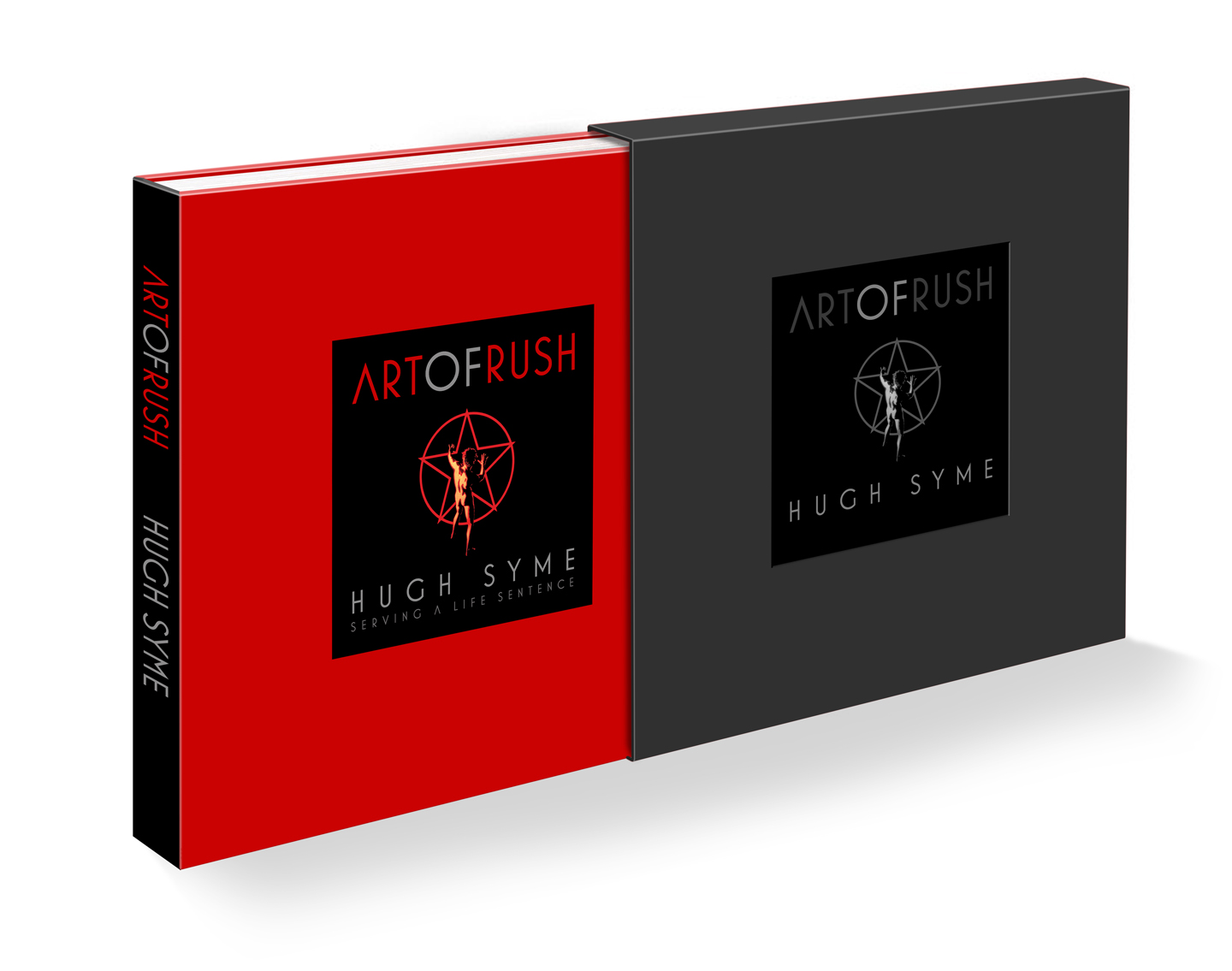 Sheesh, this looks gorgeous. And, to make it even better, the narrative is written by one of the best music journalists anywhere, Stephen Humphries.
The Art of Rush is a 272 page coffee table book that delves into the 40 year relationship with Rush and their longtime artist and illustrator Hugh Syme. The stunning book begins with a foreword penned by Neil Peart, and contains original illustrations, paintings, photography, and the incredible stories behind each album that he has designed with the band since 1975.
Kevin J. Anderson, co-author with Neil Peart, of Clockwork Angels, the novel, has just revealed publicly the cover of the sequel, Clockwork Lives. It looks quite stunning.

 I’ve been thinking a lot lately about the amount of new music I’ve listened to since joining Progarchy, and I’ve been wondering how I managed to get along without much of the music I listen to on an almost daily basis now! I’ve also been thinking about my first exposure to what I now understand to be progressive rock. At the time, I would have just called it classic rock.
I was a little kid. Maybe 6th grade, but for some reason I think it was a few years earlier. Let’s go with 2004 or 2005. I remember sitting in my brother’s bedroom as my Dad plugged his 40 gig iPod classic (remember those, black and white screen, weighed a couple pounds) into my brother’s stereo to relive the glory days with his college roommate who was in town and over for dinner. My first experience hearing Rush was the high pitched Geddy Lee saying, “We’d like to play for you side one from our latest album. This is called 2112.” Those last few words stuck in my mind for years as being so incredibly cool. And I felt cool for listening to it. Even though I didn’t remember the music at all for the next few years after that, I did remember, “This is called 2112,” and those words seemed to constantly run through my head.
Fast forward a couple of years. I’m sitting in the car with my Dad (in a church parking lot, of all places), and my Dad says, “Here’s a song I think you’ll like.” He must have known even back then that I would come to have a profound love of history. He played “Bastille Day” from All the World’s a Stage. He played a few other songs from that album, but I can’t remember which. All I remember is not being able to understand Geddy Lee’s vocals, and my Dad saying that maybe that was a good thing. A few days later, I remember bragging to my friend’s Dad that I had listened to classic rock. I felt so cool. (I probably sounded like a little loser, but hey, I felt cool.)
Fast forward again (maybe seventh grade?). I’m in my brother’s room again helping him move furniture or something. He blasts “Tom Sawyer” over his stereo. I feel cool yet again, something I didn’t often get to feel being bullied at school as a kid. Such is life. Soon after that, I got a copy of The Spirit of Radio: Greatest Hits 1974-1987 from the local library and put it on my computer and iPod. Admittedly, I only listened to about half that album, the 70s stuff through “Tom Sawyer,” but I loved it. I would blast that stuff whenever I could.
Backtrack back to 6th grade, when my brother downloads some Muse albums onto my iPod during a family vacation. I started listening to that on a regular basis as well. Fast forward again to sometime in high school, when I get to see both Dennis Deyoung and Kansas live at our town’s annual 4th of July festival. Needless to say, I quickly acquired some of their music as well.
Fast forward again to the first week of my freshman year of college (September, 2012). I’ve since acquired several more Rush albums, my favorite being A Farewell to Kings. I’m sitting in my dorm room listening to Rush on my speakers, and Connor Mullin, my dorm room neighbor, asks from the hall, “Is that Rush?” That began a series of conversations over the ensuing weeks about “progressive rock,” a term I had never heard before. I had always thought of it as classic rock. Connor and I spent hours over the next few months watching different live videos of classic prog bands from the 70s, and, in the beginning of November, the two of us drove to Detroit to see Ian Anderson perform Thick as a Brick and Thick as a Brick 2.
I was sold on Prog. The next fall, two tools (Connor and I) walk up to Dr. Birzer’s office to talk to him about our shared enjoyment of prog. Despite this being the first time we had ever met him, he, out of the graciousness of his heart, invited both of us to join Progarchy! And the rest is rock n’ roll history.
And it all began with my Dad, Rush, and “2112.” I think I’ll go give that another listen.
[PS: I just talked to my Dad after he read this article, and he told me that a friend of his introduced him to “2112” when he was in fourth or fifth grade. It seems we all discover it around the same age. May Rush long live on in our hearts and stereos.]

Okay, I was clearly too hasty in my earlier attempt at formulating an inductive hypothesis and comprehensive generalization from that one example of a terrible Rush video.
The video to “Subdivisions,” for example, is awesome. It captures nice footage of the band playing (which any good Rush video must have in abundance) as well as adding suggestive “real life” footage related to the lyrical themes.
The song itself is a perfect example of what a great band can do when they engage in bold musical explorations and do not let their future be defined by their past.
They can hit it out of the park!
Admit it: all of Rush’s videos look ridiculous.
As time passes, that fact grows more and more undeniable.
Every single one of their videos deserves to mocked MST3K-style.
So, to get things started, here is “Time Stands Still“…

From yesterday’s major Toronto paper:
The prog-rock trio formed in 1974. To put this longevity in focus: when a 21-year-old Peart drove his mother’s Pinto to Pickering, and nailed his audition with existing band members Geddy Lee and Alex Lifeson, Pierre Trudeau was prime minister. Stateside, a scandalized Richard Nixon was about to resign. And Paris was home to the new Charles de Gaulle Airport.
Politicians come and go. Buildings open and close. But one thing that hasn’t changed since that July day more than 40 years ago: Rush is still, first and foremost, a live act. In the same way Corvettes are designed to go fast or the Kardashians were placed on earth to destroy synapses, Rush is all about playing in front of an audience.
“Live shows were always religion for us,” says Peart, sipping his double Macallan. “We never played a show — whether it was in front of 15 people or 15,000 — where it wasn’t everything we had that night.”
Here’s a reissue of it for a smaller paper.
It captures the essence of Peart fairly perfectly . . . at least from what I know and love of the man.
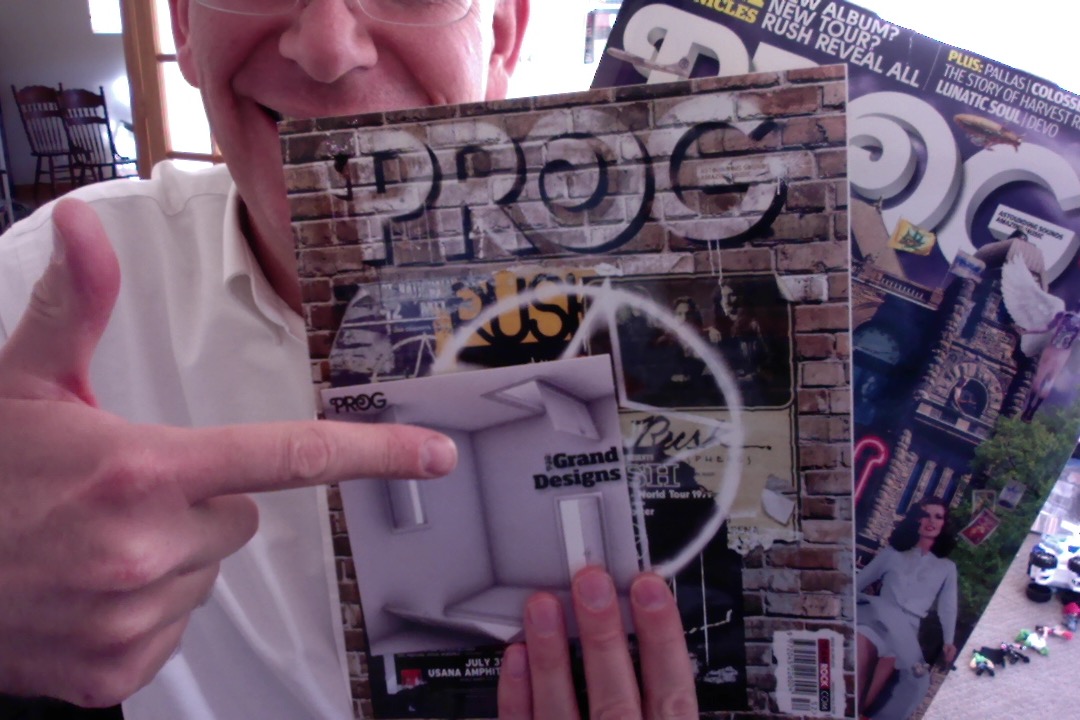
As many of you probably know–and, if you live in the United States, you definitely know–when PROG hits the newsstands in the U.S., it is always two full issues behind what is being released in PROG’s home, the U.K. Barnes and Nobles carries them as does Hastings. Booksamillion might, too. I’m not sure. Hastings, I’ve noticed, gets them a little faster than does B&N.
Regardless, they’re slow in crossing the Atlantic and appearing on our magazine shelves. In large part, this is simply because the U.S. does not possess the magazine reading culture that the U.K. does. Not a great comment on the U.S., but true, nonetheless. Things such as Soap Opera Digest and Us that one finds at grocery store checkouts sell very well, while magazines and journals dealing with news, foreign policy, science fiction, music (except for Rolling Stone), or anything else that is basically not too ephemeral sell poorly. Such is life.
Editor Jerry Ewing has worked extremely hard–as he does on all things–to make PROG more accessible here in the States. And, the iPad app created by Jerry and Teamrock is truly a thing of beauty. I eagerly download my new copy of PROG the moment it hits the newsstands in the U.K.
Just this week, however, a Facebook friend very kindly–though, he’s probably sick of me whining about not getting PROG quickly enough in the U.S.–sent me a copy of PROG 52. It features Rush, so this was a double blessing and gift for me. Indeed, I’m thrilled. On FB, my generous English friend uses the the latinized version of his name, and I don’t want to take advantage of his privacy. Still, it was a wonderful gift on his part. Mark, I thank you profoundly.
Within a half hour of receiving and delving into the actual tangible issue, PROG hooked me. The iPad app is a beautiful thing, and I do read it fully. But, there is nothing akin to holding the actual issue in my hand. The size, the quality of paper, the always excellent writing, and rather eye popping graphics of the real, tangible deal are just so much better than anything the iPad can show.
Even more than than the joy of a book being actually held, the magazine–with its spectacular mix of image and word–is a very, very (very!) nice thing. So, I splurged–purchased a print subscription within a half hour of Mark’s gift arriving in the mail.
Thank you, Mark. Thank you, Jerry. I’m sold.

 Progarchy