
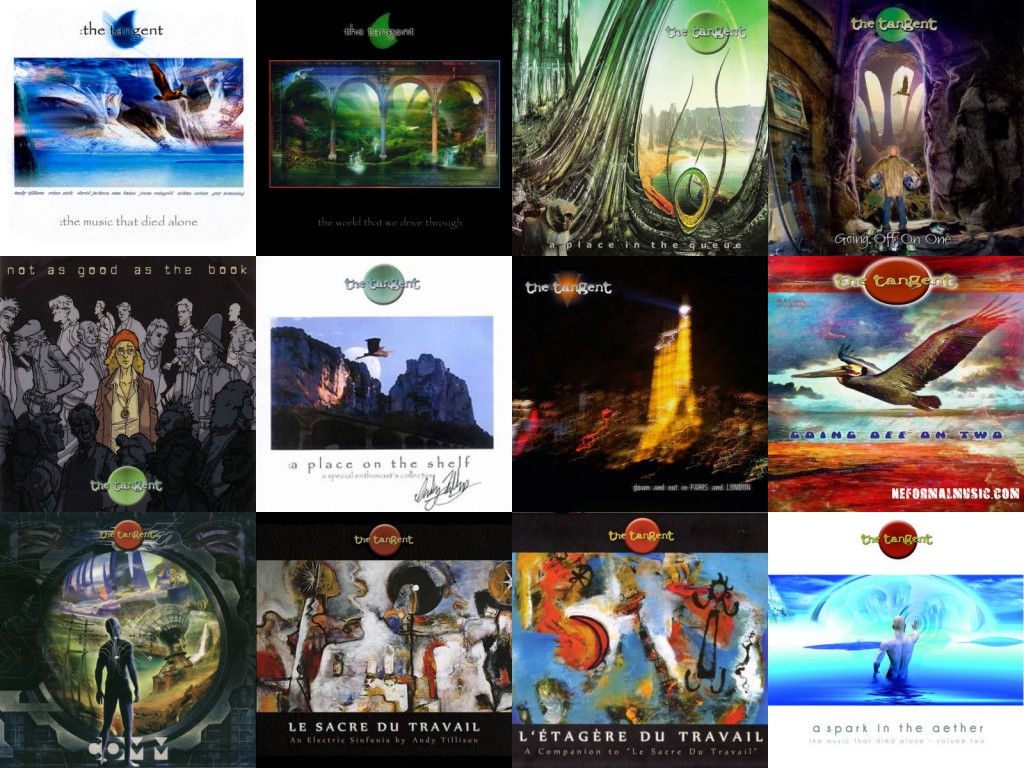
David Elliott, Progmeister and founder of Bad Elephant Music, never does anything not worth listening to. But, here, he’s especially good. Three hours of The Tangent. Enjoy!

David Elliott, Progmeister and founder of Bad Elephant Music, never does anything not worth listening to. But, here, he’s especially good. Three hours of The Tangent. Enjoy!
Andy Tillison just posted this to Facebook, about 26 minutes ago.
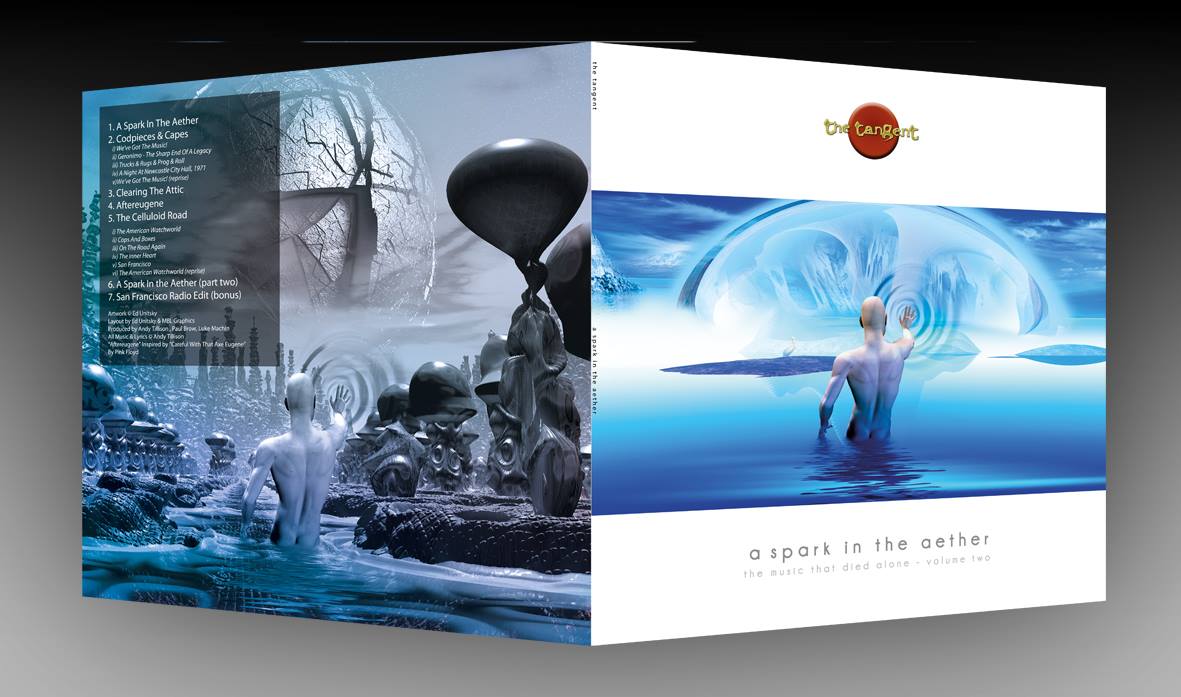
A Bunch of info for a Saturday Evening……
1. – Pre-orders are now open from the Tangent Website www.thetangent.org– on BOTH editions of “A Spark In The Aether” – the CD and the DOUBLE LP which has THREE and a HALF Sides!!!. For those of you across the Atlantic, the CD we sell is the European 6 panel Digipack version…. We are not selling either of these cheaply as we are no longer really wanting to be an online record store, we fully expect people to buy from cheaper sources unless they wish to have a signed copy through the post and pay a bit more to help the group function…. and buying these from us IS a major help.
2. We will only be stocking 50 copies of the Vinyl Edition. We will number these 50 and I will sign and write a short personal greeting on them to everyone who buys one. Although the price is at a premium, this is because importing these very heavy double LPs, buying them from IO stock and reposting them abroad is a pretty costly affair. We made a LOSS on COMM vinyl editions and we don’t wish to repeat that exercise! So the Fifty are for sale, right now and when they have gone, they will have gone. Other suppliers will of course be selling these at a better price without signatures, messages etc…
3. I am happy to announce that an official promotional Video filmed “on Tour” with The Tangent will be released by Insideout this coming Tuesday. We’ll link to it from this page of course. The video is for the title track of the album and is – just good vibes man!
4. I’m going to be presenting a monthly radio show on Cliff’s Progzilla radio station, the first episode of “Dance On A Volcano” will be on SUNDAY March 22 – more details to follow. The show will (as it used to do when I presented it on Radio Caroline in the late 90s) feature prog old, new, obscure, forgotten and dishonoured, also Jazz Fusion, Jazz Rock, Zeuhl and Canterbury a-plenty. The show will not be a long advert for any bands I might be in!
5. OK. I’ll ring Jonas about doing some gigs….
Well, Andy Tillison and Sally Collyer did, and we had an amazing, very good, awesome, wonderful time! They’re on their way home now, but the memory and goodness of their visit remains palpable. Tillison lectured as well as performed before a Boulder audience on Thursday. It was an amazing event, and I’ll report more fully about it in the next day or two.
In the meantime, pull out some Tangent, put on the headphones, and turn out the lights.
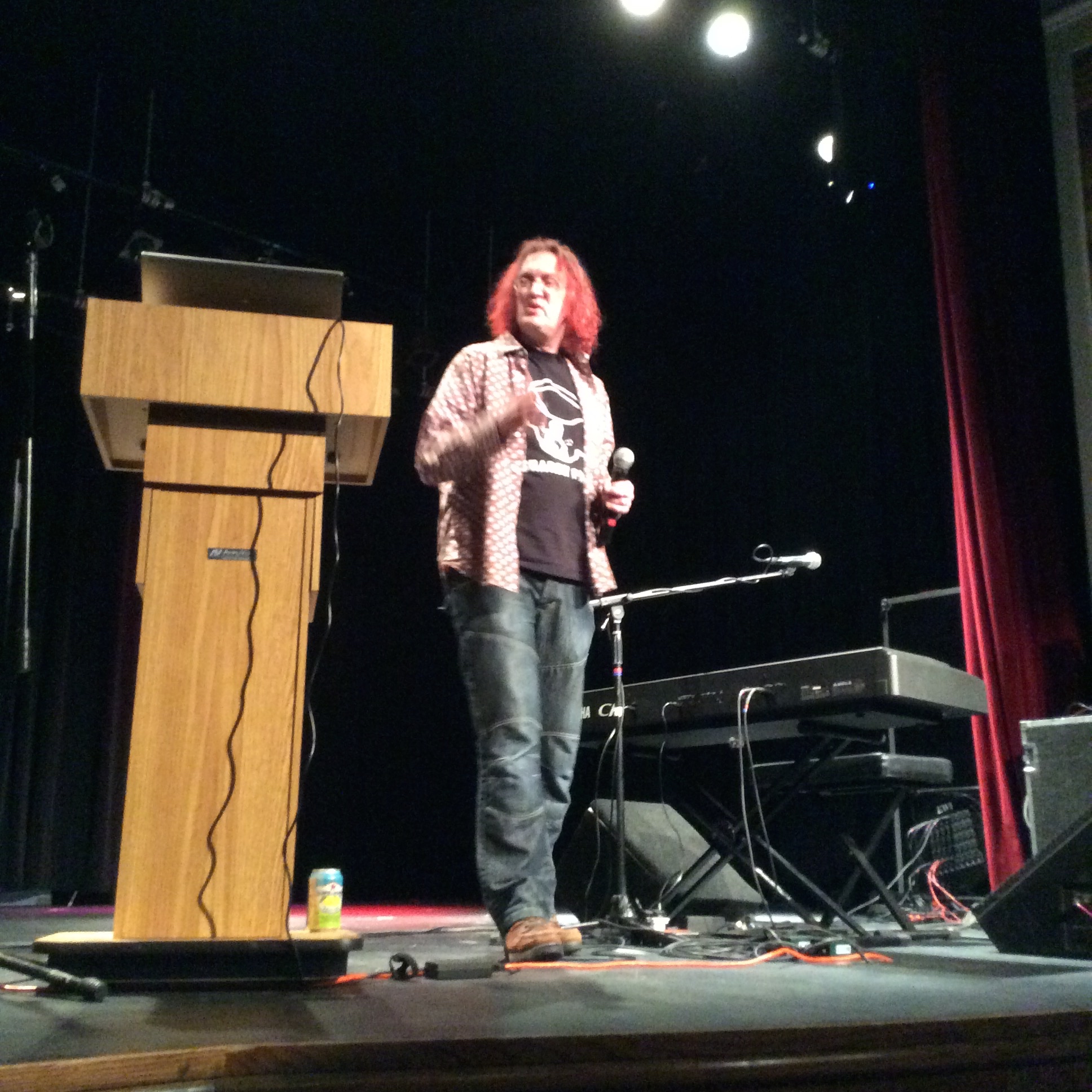

I’m privileged to announce that Andy Tillson (PO90, The Tangent) will speak tomorrow night at the University of Colorado-Boulder. If you are within driving range, please join us. Tillison will speak at the Old Main Chapel, Boulder campus, 5:30-7.

 Eight-plus minutes of pure prog joy (and Tillison-patented cultural criticism).
I’ve been thinking about this for much of the year. 2014 seems like a very different year for prog—especially when compared with 2011, 2012, and 2013.
 The incredible music of 2014 in the prog world—from John Bassett, Newspaperflyhunting, Fire Garden, Tin Spirits, Arcade Messiah, Andy Tillison, Cailyn Lloyd, Galahad (Stu Nicholson), Salander, Fractal Mirror, and a host of others–further convinces me we’ve entered into a new wave of prog, as I’ve mentioned in a previous post.
Andy Tillison and Brian Watson have convincingly argued in favor of dividing the history of prog into three waves, the third wave beginning around 1994 or so.
If Tillison and Watson are correct, and I suspect they are, I believe we might have entered what we could call the fourth wave.
The turning point came in 2013 with grand and profound releases from Big Big Train, The Tangent, and Glass Hammer. These albums were so excellent, perhaps the best in prog history, that they might very well have represented the apex of third-wave prog.
 Take a listen to any of the above mentioned artists in 2014. Their music, especially when compared to the releases of the previous several years, offers something much more experimental and reflective. The story telling is less narrative and more punctuated, the lyrics more imagistic.
Anyway, I’m thinking (and typing) out loud. I’ll give it more thought.
Earlier today I searched YouTube for some suitable music to post on Sally Collyer’s Facebook timeline since it’s her birthday and all. What would be more suitable than a nice piece of footage from a Tangent gig, I thought! 🙂 And really perfect it would be if I could find a clip from the gig I attended, the one in my old hometown Kungsbacka, south of Gothenburg, Sweden. Imagine my joy when I actually found these two clips from the absolutely fantastic Monday evening, when The Tangent and Karmakanic joined forces for the last time on the short but intense tour they were out on in the last week of May and beginning of June. They started out with two gigs in Sweden, continued with three shows in Germany and The Netherlands and played, what first was meant to be the end of the tour, for an apparently ecstatic audience at Celebr8.3 in London. But, alas, the festival gig wasn’t the last, so they actually flew back to Sweden again to finish the tour at Kungsbacka Teater! Which, naturally, I’m so very happy they did! And so, watching the clips this morning made me again feel the happiness to be here, now, in this very time, being able to enjoy all the wonderful music being played by fantastic bands like The Tangent and Karmakanic. And soon, oh soon it’s time for the highly anticipated gathering of friends, also known as Big Big Train Live at King’s Hall, which probably will be The Pinnacle of my life as a music lover. 🙂

Driving across the grass seas of western Nebraska and eastern Colorado this past week, I made sure my listening list was quite specific and quite orderly. Across the western parts of Nebraska, traversing the mighty and winding Platte several times, I listened to Big Big Train, ENGLISH ELECTRIC PART ONE. Not FULL POWER, but the original PART ONE. Back to this in a moment.
Once the Platte split into north and south, I took the south fork, and I went for The Tangent’s THE MUSIC THAT DIED ALONE. Andy always inspires me. But, the combination of Andy and Roine Stolt as my car flew (legally, of course) through such nearly forgotten towns as Julesburg, Ovid, and Sedgwick proved perfect. Andy never fails to find the beauty in lost hope.
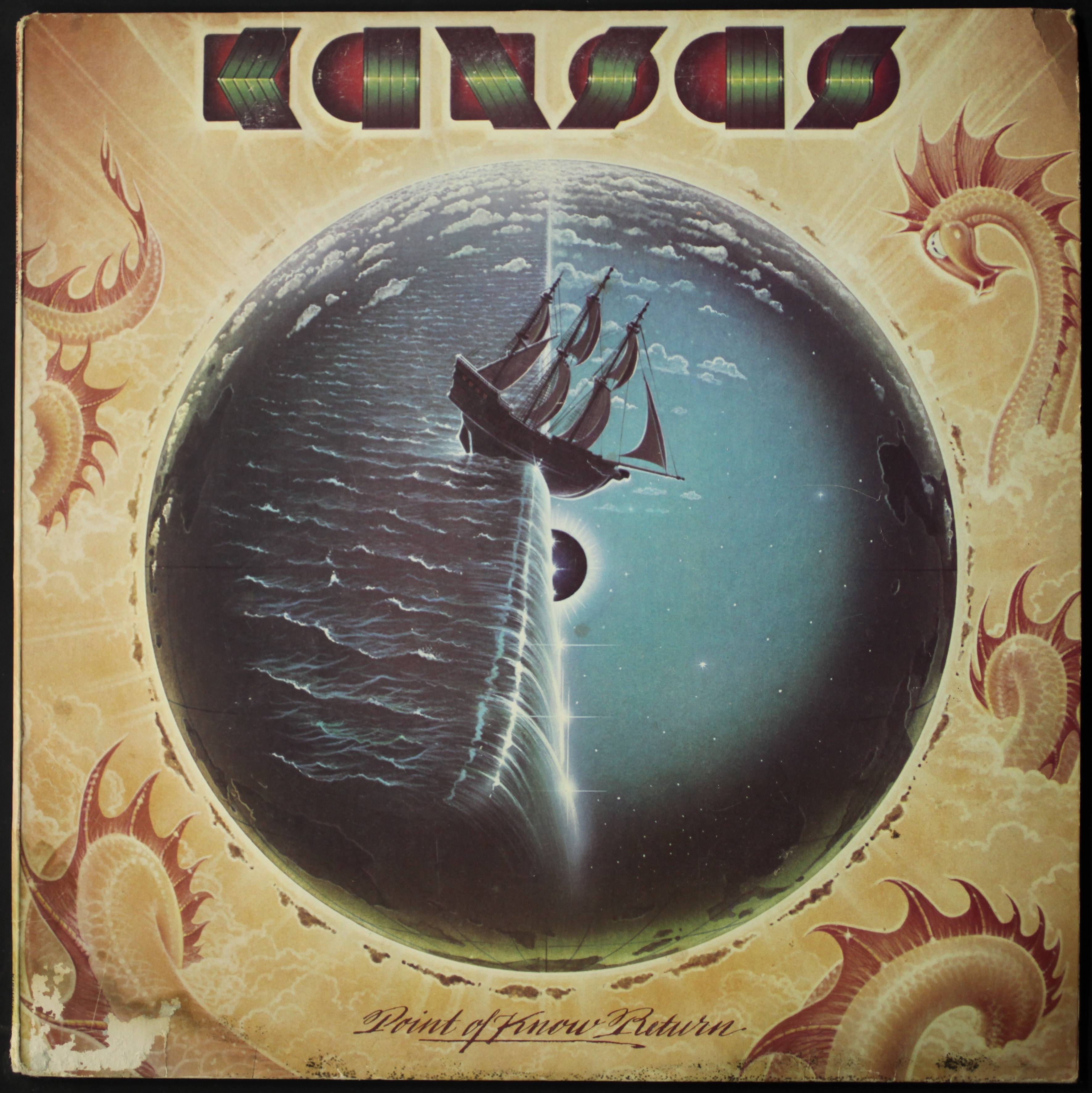
A bit of patriotism hit me after The Tangent finished, so I went for Kansas’s THE POINT OF NO RETURN. Amazingly enough, the entire album took me from the ending of THE MUSIC THAT DIED ALONE to our brand new house in Colorado. Truly, as we driving up to the house in Longmont, the final notes of “Hopelessly Human” played.
As promised, back to BBT, ENGLISH ELECTRIC PART ONE (EEP1). First, its pastoral tone fit the Nebraska countryside beautifully. The skies, not surprisingly, were as broad as were deeply blue—the kind of blue one finds only in the Great Plains on a summer day. But, the grasses were a treat as well—variations of greens and golds, generally quite tall and swaying under the pressure of the continental winds.
Second, I’ve not listened to EEP1 for at least a year. Indeed, once ENGLISH ELECTRIC FULL POWER (EEFP) came out, I considered it the definitive edition, putting away PART ONE.
I won’t in any way, shape, or form suggest I had any thing at all to do with the final ordering of EEFP. Such a claim would be nothing but hubris. And, it would be completely false. This was not, however, for want of trying. I bugged Greg openly on the internet and privately through emails about this. I interviewed him about it, and, as a friend, tried to put him in a corner. Greg, the quintessential English Stoic gentleman, quietly (though not in quiet desperation, I pray) took the suggestions of this overly eager and earnest American (overly eager and earnestness are two of our defining traits as a people) with kindness. Thank you, Greg.
I know there was some debate among the progarchists whether or not Greg and Co. were messing with a work of art unnecessarily by re-arranging the order of things and filling in the corners with EEFP. But, from the beginning, I was on Greg’s side. It’s his creation, and he can do with it as he will (and the rest of the members of the band, of course).
Listening to EEP1 this week only confirmed my thoughts. It is a stunningly beautiful, calming, and mesmerizing work. Like all great works of art, it demands full immersion by the participant. Pastoral, it is also equally humane and cinematic. It is a part of the English bardic tradition at its very best. A community of minds and talents produced this album, and we are blessed indeed to exist in a world that allows such works of art to emerge and flourish.
But, for me, especially as a historian, EEP1 is now an incomplete yet intriguing part of a puzzle. It belongs in the archives now, a glorious blueprint, but not quite the complete thing.
This discussion, I think, is not mere mental wrestling. BBT is not just another band, and EEP1, EEP2, and EEFP are not just mere new releases. BBT is a definitive band of prog’s third wave, and EEFP is possibly the finest statement of music over the last two and a half decades. It is the legitimate successor to Talk Talk’s SPIRIT OF EDEN.
How the album came together, how it evolved, and how it is received is not merely academic. It’s now a critical part of our history as lovers of music, art, and human genius. It is now an integral part of the western tradition. Long may it continue.
***
A review of Steven Wilson, COVER VERSION (Kscope, 2014). 12 Songs total: Thank You; Moment I Lost; The Day Before You Came; Please Come Home; A Forest; The Guitar Lesson; The Unquiet Grave; Sign ‘O’ The Times; Well You’re Wrong; Lord of the Reedy River; An End to End
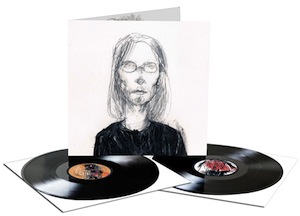
Steven Wilson is nothing if not interesting. Vitally so. Everything he does matters in some way to the contemporary world of music. He’s even made it somewhat big, at least by alternative and prog standards.
This brand new release from Wilson is a compilation—slightly redone—of cover versions (not surprisingly) of some of his favorite songs over the past two decades. Several of the songs he recorded in professional studios, he notes. Others, he recorded in hotel rooms as a form of music diary. I am exactly two months older than Wilson. Though I lived in Kansas and he in England in the 1980s, it’s pretty clear that we grew up with the same music in the same era. He, himself, notes this in his choices. Songs covered come from Donovan, Abba, and The Cure, to name just a few. Some of the songs, such as Wilson’s version of The Cure’s A Forest are deeply electronic, while others very much feel like the acid folk he produced with Storm Corrosion.
In many cases, Wilson’s versions are superior to the originals. In all cases, they are worth listening to.
Wilson has never been shy about borrowing from others in his music—Pink Floyd in early Porcupine Tree, U2 on his first solo album, and Andy Tillison (to the “nth” degree) on his most recent solo album (THE RAVEN THAT REFUSED TO SING sounds very much like a The Tangent album from roughly 5 or so years ago).
It’s great to see Wilson openly name his sources and proclaim his heroes with COVER VERSION. In particular, his take on A Forest makes the entire album worth purchasing. But, then again, this is a Steven Wilson release. No matter what he does, we need to pay attention.
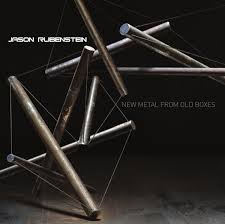
Review: Jason Rubenstein, NEW METAL FROM OLD BOXES (Tone Cluster, 2014).
 So. You’ve been a progger since the 1970s, you’re musically trained, and and you’ve enjoyed a solid if now former career as a software engineer with several major companies. What do you do? You write a brilliant, stunning, majestic soundtrack to your life, especially if you live in glorious San Francisco.
I exaggerate a bit, but not much. This, essentially, is the background to music maestro Jason Rubenstein. He has just released a rather stunning album, New Metal from Old Boxes (Tone Cluster, 2014; mixed by Niko Bolas and mastered by Ron McMaster). While many Americans and other citizens of western civilization might simply desire new wine from old bottles, those of us who live in the republic of progarchy can rejoice heartily. We can have our wine and our Rubenstein!
From the first listen, I was hooked. This is a mesmerizing album best described as cinematic. While dark and brooding (just look at Rubenstein’s photo—the guy is the perfect Hollywood dark hero), the music is always playful and mischievous, never coming anywhere near the dread of dull.
Almost effortlessly, Rubenstein employs classical jazz, noir jazz, prog, metal, classical, and jazz fusion. If I had to label it, I’d called it “Cinematic metal prog.” At times, it’s downright frantic, always extravagant, but never campy or over-the-top. While this is certainly Rubenstein’s creation, he is never shy about borrowing styles from those he clearly admires. I hears lots of The Tangent, ELP, King Crimson, Cosmograf, Cailyn, Tool, Dead Can Dance, and even Wang Chung (only from their spectacular To Live and Die in LA soundtrack)
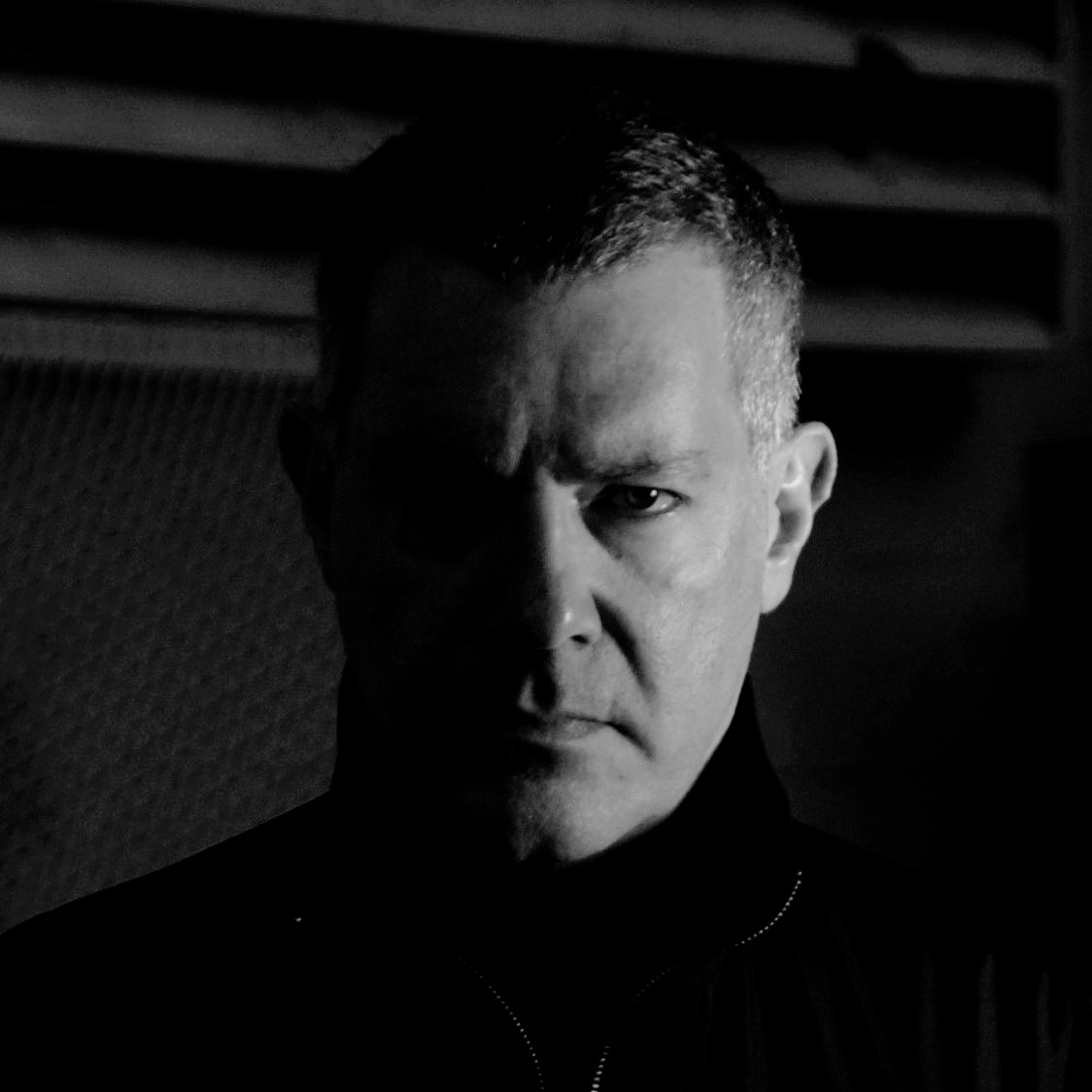
Rubenstein credits himself with keyboards, synths, samplers, computers, programming, and angry noises. In terms of sound quality, this album is perfection itself. Pardon me for employing such a Catholic term, but its production is immaculate. Even the packaging is a work of art. Like the music, it is dark, brooding, and industrial. Intricate pipes and strings, smelting of iron, nail heads (in a V’ger pattern), more strings, more pipes, and, then, rather profoundly, a GQ-Rubenstein, looking every bit the Hollywood action hero.
Admittedly, looking over my review, I’m tempted to fear that I have given the impression this is just a hodge podge of musical ideas. Please note, that nothing could be further from the truth. This is the soundtrack of your best day.
To visit Jason Rubenstein’s beautifully designed website, go here.
 Progarchy