

In the liner notes for English Electric (Part One), Big Big Train’s members offer us this comment on “A Boy in Darkness”:
Uncle Jack told David the true stories of how children suffered in the mines in the 19th century. Although there has been considerable progress there are still plenty of dark corners where children may suffer. This song is about shining light into those dark places.
Darkness. I listen to this song, and questions bubble up from somewhere deep, dark, and hot. I think of another song about darkness, with what I’ve always taken to be an allusion to the turning off (loss?) of a television:
Tube’s gone, darkness, darkness, darkness
No color no contrast
(Joni Mitchell, “The Hissing of Summer Lawns”)
It seems lame, making more words here from their already complete sonic poetry. (“Lame” as my daughters pronounced many things when they were teenagers, but even more as in “the halt and the lame.”) Will you forgive me this? If it gets to be too much, and you stop reading, I’ll understand.
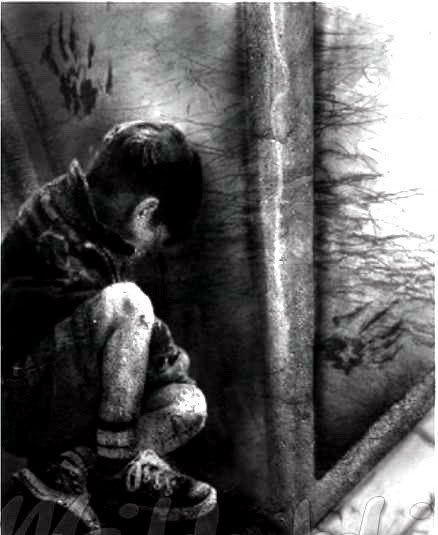
(from photobucket.com)
Comparing one darkness with another is always such a problematic endeavor. But here in this song we can hear more than one darkness, if we will listen. If “progress” brings light to any darkness, it is always to some particular bit of darkness at a given time. Even the light itself — the light that we literally see, anyway — makes shadows when it shines. Shadows somewhere.
David Longdon’s voice rings in my ears with a pain that I don’t fully know myself. But I have known well some who have known that pain, and so I am never more than one step away. A friend, a family member. I don’t know Godfrey Fletcher, but I do know this one, that one, and another one whom I cannot name here. I cannot name them because their pain has in each case become a part of who she or he is, a self-shadow that will always follow. It seems as though they must wear it like a kind of shame, even though the shame is really that of someone else.
Dark places. A sense of place should be a sense of home, a sense of belonging. One’s hearth.
Dark corners. Corners are where one must stand, having been naughty. When the darkness is brought by an Other, it becomes a verb, and one is cornered.
As I listened to this song this time, I heard an insistent silence that asked me what I might give to fuel the light. I can watch news programs (“no color no contrast”), read online reports, furrow my brow and shake my head gravely for abstract children. But how can I help to shine this light that is so desperately needed? I KNOW persons — real, breathing, potentially bleeding friends, relatives, acquaintances — who must deal with darkness that is in no way abstract. Could I be to them a light, yet also some relief from the heat? A cooling light?
Mines are dark places where not everyone goes, where many did (and still do) avoid going. Will I take this song as a call to go into some mine? Will I know which mine I should enter? Will I be able to see it as a mine? Can I love a structure, call it home, if this means owning its dark corners?
Does something of me need to burn in order to bring some light? Do I dare to face a part of myself that might have turned out not as father, but as “this hunter”?
Heart(h) of Darkness?
“The horror! The horror!”
 Progarchy