Clockwork Angels (Best of 2012 — Part 2)

Another one of the albums in my Top Ten for 2012 is Rush’s Clockwork Angels.

Stories like “Xanadu” and “Cygnus X-1” were what first enthralled me. So it is a dream come true to have a full-blown concept album from Rush after all these years. And with an accompanying novel, no less.

“Though Rush has often embraced huge themes and stories, sometimes over several albums, this is the first time the band has attempted a full concept. The story, nearly sixty-seven minutes long, follows the journey of a young man finding his own voice in a society ruled by indeterminate god-like fates (the Watchmaker and the Clockwork Angels), a rule-based conformity but peopled by a number of eccentric persons and subcultures,” writes Brad Birzer.

The story seems to be ever ancient (obviously it’s an epic remake of Red Barchetta, and Subdivisions, and [insert your favorite Rush song here]), yet ever new: “a very Calvinistic set of gods attempt to control all through mechanized precision, while alchemy, rather than science, has progressed. The album is divided into twelve songs, each represented by an alchemic symbol positioned at each hour of a twelve-hour clock.” (Brad Birzer on the story)

Brad also notes:

What is especially fascinating is that Rush—in music and lyrics—has with Clockwork Angels created an all-embracing mythos, referencing their own works and music going back to the band’s very first album. There are hints, some overt and some not, from albums across the past four decades, and the protagonist must—as with Aeneas and a number of other classical heroes—experience, survive, and outwit the gods.

In Clockwork Angels, though, the hero realizes one very vital thing: the divine will always control time. The gods might not control our individual fates—despite what the priests and politician tells us—but, in the end, Chronos devours all. But, within that given time in the world, man can do many things, and he can even dream and pursue the highest of all things.

In other words, Neil Peart continues to inspire. As Brad has noted elsewhere, “Neil was the big brother who introduced us to the literature our teachers seemed to have misplaced: classical myth, Voltaire, Coleridge, Twain, Dos Passos, Hemingway, Rand, Tolkien, Eliot, and others.”

Brad’s tribute to Rush there hits the target:

In the late 1970s, 1980s, and 1990s many of us lovingly thought of ourselves as the younger brothers of Peart. He was the genius kid with integrity, who always walked through the halls with two hilarious, equally smart (if not overtly intellectual) and infinitely loyal friends. One of his friends had parents who had survived the Holocaust camps of the Nazis. The other friend had folks who had escaped the prison camps of the Communists. Now, the three were free to express themselves in any way they so decided on this side of the Atlantic.

These three confidently confronted the world as a perfect trio, unbreakable and ever mutually re-enforcing and inspiring.

We looked up to all three as those who could understand our failures and successes, our desires and our alienation, our rejection of conformist culture and our drive to better ourselves.

Going where I want, instead of where I should
I peer out at the passing shadows
Carried through the night into the city
Where a young man has a chance of making good

A chance to break from the past
The caravan thunders onward
Stars winking through the canvas hood
On my way at last 

Also on my 2012 list is Oceania. Like Brad, fan boy Billy Corgan also knows how to pay appropriate tribute to Rush.

Mark Hollis in Ecstasy, Live in 1986

In the spring of 1987, while browsing the new music at the Hammes Bookstore at the University of Notre Dame, I fortuitously came across an album called “The Colour of Spring” by a group I had previously dismissed as nothing more than a trendy New Wave band with the bizarre name of Talk Talk.

Though I knew next to nothing about Talk Talk or their music, I was quite taken with the cover, a James Marsh painting of a number of butterflies and moths with a variety of surreal designs on them.  Judging the album by its cover, I decided to take a chance and make a spontaneous purchase.

After a listen to “The Colour of Spring” back in my dorm room in Zahm Hall, I was a convinced Talk Talk fan, and I’ve been ever since.  Indeed, I’d never heard anything like the music or the lyrics.

In the opening track, Hollis sings with astounding conviction:

“Try to teach my children/To recognise excuse before it acts/From love & conviction to pray.”

In the concluding song, Hollis again brings in a religious theme–this time of the nature of evil, and the power of good to overcome it:

“As bad as bad becomes/It’s not a part of you/Contempt is ever breeding/Trapped in itself/Time it’s time to live”

With at least fifteen musicians and two choirs performing on the album, including Traffic’s venerable Steve Winwood, “The Colour of Spring” is complex, religious, and dramatic.  It was made by musicians who clearly love what they do and who enter into music as fully as humanly possible.  Even to this day, I feel chills when I hear the album.  It’s not lost any of its quality, even after twenty-two years.

Two years later, in the fall of 1988, when I was working at as a classical host and a rock DJ at WSND-FM, Talk Talk released its fourth album, “The Spirit of Eden.”  Now regarded as the foundation of the post-rock movement, the album might be one of the finest non-classical albums ever made.  Intense, moody, and deeply meaningful, the “Spirit of Eden” captures and propels the imagination for a little over a 40 minutes.  Costing an outrageous sum of money to produce, taking 14 months to make, and employing 16 musicians and a choir, the “Spirit of Eden” simply confused the music industry.

In a radio interview (available on the Talk Talk facebook page), Hollis acknowledged that the lyrics—based on the notion of creation and destruction, on the loss of real and traditional communities in the modern world, and on the disturbing absence of silence—have a profound meaning for him.  In the middle of the opening 18-minute song, Hollis sings:

“Summer bled of Eden/Easter’s heir uncrowns/Another destiny lies leeched upon the ground.”

Another song, “Wealth,” rewrites the famous “Prayer of St. Ignatius of Loyola.”

Talk Talk’s final album, “Laughing Stock,” has a similar feel to “Spirit of Eden,” in terms of music and lyrics.  On the fifth track, “New Grass,” Hollis sings:

“A hunger uncurbed by nature’s calling/Seven sacraments to song/Versed in Christ/Should strength desert me. . . . Lifted up/Reflected in returning love you sing/Heaven waits/Someday Christendom may come/Westward.”

*****

Photo from: http://skyarts.sky.com/talk-talk-live-at-montreux-1986

After twenty-two years, Talk Talk released its first live DVD.  Recorded July 11, 1986, in Montreaux, Switzerland,” the band—Mark Hollis, Lee Harris (drummer), Paul Webb (bassist), two keyboard players, and two percussionists—offers the small Swiss audience every single thing they have to offer over roughly 90 minutes.  The concert, consisting of 15 songs (fourteen listed, but the best song by far, the 1 minute 30-second long “Chameleon Day,” receives no official notice in the packaging) is nothing short of inspiring and heady, and the music—even the earlier poppier stuff such as “My Foolish Friend”—has an organic, impressionistic, jazzish, progressive feel.

Some songs unexpectedly come to life in fascinating ways, such as “Does Caroline Know,” a relatively weak studio cut.  In concert, though, it stuns and comes off as a progressive rock epic.

Every person on the stage seems to be enjoying himself immensely, each a professional and artist fully in sync with every other person.  Harris, especially, plays with such steady ferocity that I feared his drum kit might collapse during the concert.  It didn’t, and Harris played with passionate verve throughout.  He clearly holds the varied instruments and musicians into a centric and cohesive whole.

But, most importantly, Hollis sings as though he is standing before the court of God, afraid to squander any precious talent bestowed upon him.  As strange as this might read, he appears as though he is full ecstasy. I mean ecstasy in its original sense—not as something sexual, but as something divine.

He seems the perfect medieval saint, enraptured by the Divine.  There are moments during the concert when he walks back to a bench/seat in front of the drum kit and simply collapses.  Yet, even in these down moments, he is fully and completely one with the music, if his body movements, swayings, and motions are any indication of the state of his soul.  Indeed, from roughly the third song to the end, he seems to be completely immersed in the art and intensity of the music.

At the end of the concert, when Hollis says:  “Thank you very much.  Good night.  God bless.  Thank you very much,” he seems to mean every word of it.

Oceania (Best of 2012 — Part 1)

The Smashing Pumpkins

One of the albums in my Top Ten for 2012 is The Smashing Pumpkins’ Oceania.

Volcanic bass guitarist Nicole Fiorentino and Rush fanboy Billy Corgan deliver some especially mind-blowing musical moments. The title track invites us to go swimming in 9:07 minutes of heavy prog wonder, in which we encounter an acoustic guitar island and then ride out more waves with multiple distorted guitar solos.

But every track is a keeper. In the album order, my four fave tracks are “Quasar” (which rocks things off with an appropriately heavy mystic quest, as the chorus sings out the Tetragrammaton—YHWH—until meditative bliss is encountered), “The Celestials” (complete with a heavenly epiphany—see next paragraph below), “My Love is Winter” (an incredibly melodic mind-grabber that builds the tension expertly in a prolonged way and then attains delirious resolution after teasing us delightfully with the extended musical deferral), and “The Chimera” (for its epic monster riffing).

“My Love is Winter” was the divinely lovely song that stayed with me most when away from the headphones; but “The Celestials” is perhaps my upper-echelon selection for epic greatness. It opens with an awesome sing-along acoustic guitar enticement. Then it blasts into rock trio orbit at 1:16 as the bass (oh yeah! dig the bass!), the guitar, and the drums prepare for the jump to light speed. And wham, at 1:52 we launch into hyperspace and the whole world suddenly accelerates and then magically slows down as, now outside time, we cosmically survey it all via the synthesizer’s lens. Powered into crazy warp speed by the ripping guitar beginning at 2:22, then eventually, at the edge of the universe, at the three-minute mark, the horizon of spiritual enlightenment is crossed as the music invites us to contemplate the spiritual master’s most divine insight (sung in harmony with the guitar): “Everything I want is free.”

Wow.

“Everything I want is free.”

Give somebody this album as a gift for Christmas.

May the music help you swim in the ocean of love. Ride on!

Oceania

‘Tis the Season…

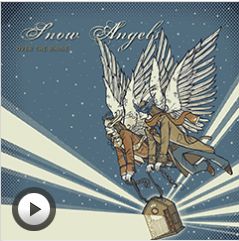
…for some free music! Noisetrade is offering a download of Over The Rhine’s Christmas album, “Snow Angels”. Nice, jazzy/folk holiday music. Click the album cover to go to the download page.


Missing John Hughes

I have no idea if this is an American thing or not (and, quite possibly, a midwestern American thing at that), but I really miss movie maker John Hughes.  The man knew how to write, how to bring together immense talent, and how to promote good music.  After all, he brought together Steve Martin, John Cusack, Oingo Boingo, and Echo and the Bunnymen,

As we do every Thanksgiving break, the entire Birzer clan watched Home Alone.  We have every line and every crazy moment memorized.  But, we love it nonetheless.

As we finished the movie, I couldn’t help but think of some of my favorite John Hughes moments.

Who can really forget Ferris’s best line:  “It’s not that I condone fascism. . . or any ism for that matter.  Isms in my opinion are not good.  A person should not believe in an ism.  He should believe in himself.  I quote John Lennon.  ‘I don’t believe in Beatles, I just believe in me.’  A good point there.  After all, he was the walrus.”

Or, the main character of “She’s Having a Baby” fearing the death of his wife during child birth with Kate Bush’s “This Woman’s Work” playing over the scene?

Or, Farmer Ted  growing up a little too quickly in 16 Candles?

And, so many other scenes.

At the time (the mid 1980s), no two movies hit me as hard as The Killing Fields and The Breakfast Club.  Vastly different, of course, the former revealed the evils of totalitarianism.  The latter, though, expressed our anger at the both the Yuppies and the Hippies.  Each group had screwed up the world miserably, and we wanted to make our own way.  They’d divided us into convenient categories, and we rejected them.

And, the movie begins with a quote from David Bowie.

Hughes knew us very well.


Not So Jolly…

Amongst the many victims of Hurricane Sandy were the band JOLLY. These guys had been deep into the recording of their next album and were looking forward to a European tour next spring with Riverside – then the storm destroyed the home of drummer/producer Louis Abramson, along with most of their gear.

They are running an Indiegogo campaign to raise funds for gear replacement.

Massive Bereavement from Effloresce by Oceansize

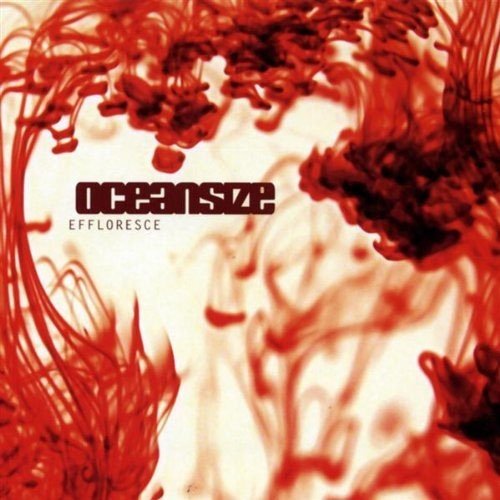
I was first introduced to Oceansize a few years ago after reading a general review of progressive rock by a devout Catholic (a priest I think, not you Brad!). He discussed a number of albums produced over the last few years that had escaped me and I decided to take a chance on Effloresce.  I purchased the CD with no internet listening beforehand. At first I just didn’t get it; what was this all about? There were too many things going on for my brain to register. It literally blew my mind. I just couldn’t get my head around it. But after about 4 or 5 listens it hit me like a sledgehammer, but in a good way, where pain is pleasure. I have listened to this album so many times it’s stupid really…can one album be so good that I spend so much of my precious time listening to it? The whole album is like a massive earworm to me, I have trouble getting it out of my head after listening to it… trouble sleeping, you bet!

Of all the brilliant tracks on the album, I’ve chosen Massive Bereavement to comment upon because it includes so many of the elements of progressive music that I like.

  1. It’s long and it takes me on an emotional journey.
  2. It has multi-layered guitars (three of them), played in the usual complex time signatures. The guitar sound is dissonant, atonal and challenging but it’s also soft and melodic at times. It’s full of great little riffs without any noticeable solos. If someone can identify all the time signatures for me then I would appreciate it!
  3. It has some fantastic ‘off’ beat, syncopated drumming. The drum is another key instrument, it’s not just there to hold the beat together (thanks Nigel). It adds extra texture and complexity. In fact of all the many albums I’ve heard, Effloresce is my favourite for drumming.
  4. The structure is typical of a ‘prog’ song i.e. it’s typically unstructured in the traditional sense and you’re not quite sure what you are going to get next. It builds up slowly and carefully, slipping in and out of strangely hypnotic vocals. An unsettling interlude follows – the song almost ‘simmers’ before the tempo speeds up; more lyrics follow building up the tension before exploding into a frenzied vocal and concludes with an attack of manic, duelling guitars.
  5.  The mood of the song is at first hallucinatory; it has a dream-like quality that is also disturbing; there is a sense of foreboding. As the vocals kick-in, there’s a palpable sense of anxiety and related despair as if someone is trying to get somewhere but can’t. As if in a dream I feel disconnected from reality without the ability to control my circumstance. A sense of trying to understand someone or something but being unable to, then realising that whatever I am searching for is different from my expectation. This is the emotional state the song triggers in my mind and I cannot escape from it.
  6. The vocal style, its emotion, is in perfect harmony with the mood of the song. At times dream-like but also contemplative, despairing and finally, almost hysterical.
  7. Lyrical meaning – what is the song all about? – perhaps asking Mike Vennart, who wrote it, would be a good idea.  I’ve heard on one blog that it’s about the death of Bill Hicks, the American comedian who died tragically young and who (allegedly) the band admired. His comedy involved direct attacks on mainstream society, religion, politics, and consumerism. However, I’m not going to hypothesize. Musical lyrics, like most verse, can be interpreted in different ways. What I know is that the words resonate with me and this significantly adds to the song’s enjoyment. I leave it to the reader to listen carefully to the song and make of them as you will. (They are at the end of this review).
  8. I never tire hearing this song. Every time I listen to it I capture a little bit more of its essence.


I read one review saying that Oceansize are like Mogwai meeting Tool and indeed, there are similarities with both. I personally ‘connect’ with the Mogwai sound, Tool not so much, but I believe there is an extra level of musical complexity to Oceansize. I would recommend either a very, very good hi-fi system OR a very good set of headphones to gain maximum appreciation of the complex sound of the band. The ‘inner-ear’ experience is superb.

Massive Bereavement is a stunning track from an album full of exceptional tracks. It’s an awesome debut album and currently in my top 10 of all time. Please, if you haven’t heard them, check out their other three albums, Everyone Into Position, Frames and Self Preserved While the Bodies Float Up. I hope you won’t be disappointed.

Oceansize fit into the edgy, dark and heavy side of Prog but that’s just where I like to be. Intense stuff. Welcome to the dark side J

PS – Totally unrelated anecdote

Massive Bereavement is a superb warm up track for the gym. I’ve developed a special 10 min cycle routine for it. A low rpm start, gradually building up the power to an explosive intensity and climax (Yes I am slightly deranged!).


The Lyrics

Billy’s worries take control
All at once needing seething teething
Take one more

He is growing

And we were searching for a truth that was there all along
All those knowing little seeds would be the words to this song
That righteous indignation dollar turning you on
Turn off the television turn off the television
All at once needing seething teething
Take one more

He is growing as god looks on
He is growing, god looks on, god looks on
What a way to go i’m still running for that bus that we missed years ago
A perfect antidote more connections made it’s inevitable
That he was reaching out to touch me he was reaching out to touch me he was
He was reaching out to touch me he was reaching out to touch me he was Reaching out

He’s not joking joking joking

Indelible an ever-changing colour you winner man
He’s invincible and screaming at the world that you’re wrong you’re so wrong
And i was reaching out to touch him i was reaching out to touch him i was
I was reaching out to touch him i was reaching out to touch him i was Reaching out

I’m not joking joking joking
Is this not what you expected
Ah ah ah ah

David Longdon’s Wild River

David Longdon, Wild River (2004)

Those of us who grew up in the era of 70s rock remember a time when American FM stations played everything under the sun, and didn’t bother too much with categories, straight-ahead, punk, progressive, or otherwise.  There wasn’t really a point, because whether it was Buddy Holly one moment or Yes the next, it just all kind of got lumped together as rock — a young art, then, with lots of potential.  I think this achieved a certain illumination in those of us tuned in, to the potential of finding complex worlds even in the simplest of songs, and fresh air in a 12-minute time-changing epic.  There’s a lot of discussion on Progarchy, veiled and explicit, about what prog is.  This is as it should be, because there are so many reasons for why music achieves progressiveness.  It can be a splatter-art dionysian revelry or a heavily-mannered architecture, but it is the intention that is perhaps similar in the various executions of the art, and why, as I mentioned in another review, prog is riskier, more failure-prone, than, say, old time music or country blues or punk.  It is duty-bound to ‘prog’-ress.

I believe one of the ironies of the story of progressive rock is its oft-pointed-to golden period, roughly the early- and mid-70s, when the storied and hairy pioneers of the genre rolled in semi-trucks over the land, painting broad swaths of sidelong vinyl canvas with twiddly squonks and noodly solos, periodically emerging with a real gem that actually sold respectable numbers of triple gatefolds.  Genesis, King Crimson, Yes, Supertramp, Rush, Barclay James Harvest, those semi-truckers ELP, and the hosts of second stringers who got enough traction with either the freakout crowd (Hawkwind, Gong) or the Middle Earthers (Uriah Heep, Gentle Giant) to keep working bands out on the road for decades longer than anyone would imagine.  Then, chapter two, punk raises its head, and the proggers flee their patch bays for the comfort of (often very good, and often quite proggishly weird) new wave pop, digestible without having to get up for a pee mid-song.  Yup.  For every Foxtrot there are thousands of copies of Abacab, for every Close to the Edge there are bins-full of 90125.  Shall I enumerate the ratios for Rush and Supertramp, too, to this crowd? I think not.  You hear me.  This eventuality was not a bad thing — the proggers were striving to keep their muse alive in an era of undeniably important cultural change — and I think it by and large says a lot about the survival instincts and musicianship of the first-stringers.  Yes, I will always wish Rush had another “Xanadu” in them, but am also glad they figured out how to edit.  Now to the irony:  the prog “revival” tends to focus on the lengthy suites favored by the hairy period of prog, rather than the pop songcraft that came with short back and sides.

David Longdon’s record Wild River fits into the song-driven, streamlined version of progressive rock circa 1980.  Not to say it’s retrograde, but rather that it is essentially a pop record with a prog pedigree.  Longdon, who joined Big Big Train as vocalist in 2009, has a vocal timbre very close to Phil Collins and Peter Gabriel, and in fact worked with Genesis as a possible replacement for Collins in the early aughts.  He did better finding Big Big Train, I think, and Genesis probably did worse in not choosing him.  In the interim, Longdon produced 2004’s Wild River, a lovely collection of succinct tunes that I find expressive and joyful, light (as in luminous), and full of the twists and turns that should keep close listeners tuned in.

“Always” opens the record with a briskly fingerpicked guitar, bass, and drums, and a nice Hammond organ.  Longdon’s vocal is fluid, jazzier than his closest comparisons Gabriel/Collins, and the song has “hit” written all over it.  It is like Seal’s best work, and is also reminiscent of that period in the early 90s when the pendulum was swinging from both grunge and synth pop to a more organic sound championed by producers like T. Bone Burnett.  The balance of the record lives up to these set expectations, with an earthy, upbeat acoustic approach brightening the songs.  The sex romp of “Honey Trap” is fun, nice and hooky, darkened by the mixed emotions of the narrator.  “Mandy” is where the mandolin kicks in (Mandy/mandolin?), but there is no forced quaint-ization because of it; flanked by organ, drums, and electric guitar, with a ska section in the chorus, it actually works. That said, a mandolin and an English singer always makes me think of the venerable and much-missed Ronnie Lane, who knew himself how to work these elements, and who I could see singing the hell out of this song.  Thankfully, Longdon does this himself, doing justice to a tune about, as far as I can tell, the politics of relationships (nothing new, but effectively and hazily wrought).  Here’s the thing: I’m one of those listeners who discerns the lyrics last — I’m just much more interested in how a song’s layers and textures fit together.  I listened to this song about five times and until I wrote this review I didn’t care what the lyrics were about, it’s just a great tune, where the vocal is another instrument.  Which is why I knew I was going to like this record.  It works as a musical piece first, and the lyrics work as lyrics should, a combination of poetry, narrative, and tune.  It’s a master working who can take a line like “You decide, my feet are on the ground,” and shape it to a melodic hook.  “About Time” adds strings and a creeping dissonance, again with a short ska section in the chorus (and again effectively done — this is not a worn device).  While comparisons fall short, I see a certain Nick Drake angle working here, with Bryan Ferry looking on.  The Englishness, in other words, is more than apparent, but that’s what this music is, and it works.  “Vertigo” boasts the line, “Vertigo, look out below, all my surroundings are spinning around, must be the masochist in me that wants another chance.”  I find this compelling rather than precious, and the arrangement is so variegated that I’m shaking my head:  this is a pop tune.  Broadway should be knocking at Longdon’s door, but he’s better than that, I think.  His are not vocal gymnastics for the sake of impressive technique.  He serves his songs.  And that’s perhaps what makes this album transcend.  To reference Bryan Ferry again, Longdon has the similar ability to create a soundscape that centers on his vocal but doesn’t depend on it solely.  The mid-paced title track sets the tone for the record and is its literal centrepiece.  “Life is a wild river, not a low cut stream, and I need to believe, I need to hang on, to hold on to someone,” Longdon sings, his British R&B working a ground often neglected since the death of Dusty Springfield.  It works as the album’s middle piece, and the followup track, “Loving and Giving,” is reflective, slowing the pace further.  But with “In Essence” the valley is crossed, the ground rises and the pace picks back up.  This is album crafting, and “This House” rocks out, harmonica hitting a soul note with a bullet mic vocal treatment and dirty guitar giving the lie to wallowing in one’s self-pity.  “This house doesn’t feel like a home anymore” might read like a pop-psych platitude, but Longdon sings it like the universal sentiment it can be, tapping into a commonality we can all relate to.  “Joely” goes to guitar and string quartet, with a hoedown fiddle, profiling what I imagine is a young woman whose life has gotten away from her:  “Joely, the world’s your oyster, Take a knife, open the shell, and sever the creature.” How can this sound so good? But it does. Progress. And then the spoken poem at the end….  Poetry. Narrative. Tune.  “Falling Down” follows, with a rubbery bass and a Gabriel-esque delivery, balances holding on to the past with working towards the future.  This may be the mate to “Wild River,” urging onward in the face of history — “I can’t say I’m not dissapointed,” Longdon sings, and I don’t know about you, but I can relate to this some of the time — dashed expectations happen, they don’t have to define our lives, but they’re there.  The final track, “On to the Headland,” is an optimistic last salvo, solo guitar and voice.  Lighters up, please.  We’re moving forward, damn the torpedoes.

I really like this record and I’ll be presumptuous and say you should too.  But be prepared to only find it on Big Big Train’s site.  Not on iTunes, not at Amazon, not at Emusic.  What the ?#@>????  There is no reason on earth this shouldn’t be out there.  N.B. David Longdon and BBT:  give it up, proggers. Great records deserve a listen.

[David’s album, Wild River, can be ordered here.]

A wonderful album ……

Image


The Rumour Cubes – The Narrow State 

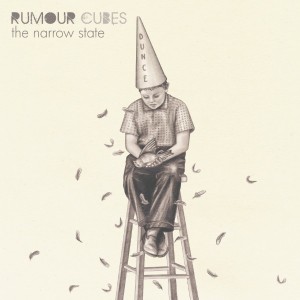
A simply tremendous little album that will blow you away if you like sweeping crescendos of violins building up into a wall of noise with spine-tingling effect then being thumped right in the chest with the most amazing spoken word section of The Gove Curve :

 Cold white fish, on wood beneath a river

Fast right schools bleed silver

Contract, bend stab bend

Touch on light on scales

They divest and vie patterns

On tiers of municipal glass

“The money follows the child”

Attend to the fish bone

The slim neck

Crooked hush

A down, put down handle

Stab in the dark

In a film handle

An old black phone “what ?”

For this one is the Gove Curve

No, this one is the Gove Curve

The river, the silt

Smoothed cling film

Gutted gape of rock

Where guts slip

Deep

Red

Oak grain

The State is narrow and you are basically gone

Gone all bone scuba

It is in the varnished fucking floor

Your face a rut around us

Build to up crinckle shine

Like the winds that hurt us

On Mars

float perfectly sad leaf,

float bight fresh green

fold

feathers torn the dead wing

sunk in the wreath boat

sunk in fine claps of copper flame

orange and green flecks

silent carnival

blinkless

eyes …..


Rumour Cubes are a 6-piece ensemble from London who’s music captivated me the first time I heard it with their EP ‘We Have Sound Houses Also”.

With wonderful titles such as “The University is a Factory”, “Triptych” and ‘Tempus Fugit” it might be easy to dismiss this as an art-house fancy by some bright young student types – but it goes way beyond that and has a real depth suggesting some true talent at work here.

That they play instruments well is beyond doubt – many aspiring bands can play perfectly well – but Rumour Cubes blend this with a marvellously cinematic sound borrowing cues from the likes of the aforesaid Mono, with hints of Sigur Ros and Explosions in the Sky but all the while managing to sound like, well, The Rumour Cubes.

 A fantastic discovery and well worth your attention.


Detailed review: “Citizens of Hope and Glory: The Story of Progressive Rock”

Citizens of Hope and Glory: The Story of Progressive Rock (Amberley Publishing, 2012) by Stephen Lambe

Ten years ago, my wife and I had the pleasure of spending a day in Belize as part of a week-long Caribbean cruise. Our tour guide, oddly enough, was from Germany; he and his family had moved to Belize some twenty years prior. I’ve never been a tour guide, but I assume it must be challenging in many ways: dealing with difficult and clueless tourists, recounting the same information again and again, trying to find the right combination of being informative and entertaining, and being the leader of the tour while not making the tour about yourself, but about the country, the culture, and the sites. This tour guide was exceptional: he was informative and detailed without being obsessive about every nook and cranny; he had a passion for his adopted homeland but also a knowing sense of objectivity; he mixed together trivia and humor and history with ease; he helped us experience Belize with the knowledge that we were in capable hands. It made for a delightful day.
Stephen Lambe, author of the recently published book, Citizens of Hope and Glory: The Story of Progressive Rock, reminds me of that tour guide. Now fifty years old, Lambe is something of a late-comer to prog, although he states so with a certain British dryness. He begins with with a wink and wry sigh: “To my constant irritation, I missed it. I was born in 1962, so by the time I had had my Prog epiphany in 1978 it was all over.” Only two sentences in and you have a nice phrase to insert into your next musical conversation: “Prog epiphany”. Lambe recounts how hearing the 1971 Yes album, Fragile, “blew my mind”; that was in 1978, as punk was rudely clawing and pawing its way onto the musical throne, albeit briefly.

And so the tour begins, with Lambe making it quite clear from the start what he hopes to accomplish—and what he will not try to do, for this or that good reason. It’s a small thing, but also significant. Having written a couple of books myself (and trying to finish a couple more at the moment), I think certain books—especially non-fiction works intended to educate and inform on a particular topic—should state from the start what they will and will not do. Lambe’s book is the third book I’ve bought that is dedicated solely to prog music. And, without naming the other two, I’ll simply note that this is the first of the three to be straight up about what the reader will find between the covers. (The other two are collections of essays, and are more academic in tone; they are mixed bags at best.)

What parameters does Lambe set? First, he focuses mostly on “symphonic” prog groups, with some mention of progressive metal, electronic music, and certain pop/rock groups, such as Talk Talk, XTC, Kate Bush, Tears for Fears, Elbow, and Radiohead, that have embraced many elements of prog without themselves being or becoming prog. Secondly, Lambe uses almost no quotes from either musicians or other publications. “I have chosen”, he states, “to make this book a personal history … in the hope that my experience and opinions will strike a chord with other fans of the genre. This book contains fact and opinion. … In the end this is a history of Progressive Rock filtered through my own tastes and experiences and I hope it is all the better for that.”

Some readers might be put off by such a statement, and I can appreciate their concerns. Lambe the tourist guide has spent over thirty years living in the land of Prog, and he has definite opinions about the sights and sounds therein. Personally, I like the approach. It reminds me of the similar tack taken by the exceptional American music critic, Will Friedwald (just a year old than Lambe, by the way), whose books on Sinatra and other popular and jazz singers from the early and mid-twentieth century are opinionated, informative, occasional quirky, often humorous, and never dull. Granted, Lambe is not the writer Friedwald is—but few people are. But Lambe, like Friedwald, is both knowledgeable and reasonable; he has his preferences, but he never pontificates, lambasts, or chides. On the contrary, he is agreeably positive; his occasional criticisms are almost always along the lines of noting that Album B is simply not quite as good as Album A by the same artist—and here are some reasons why.

Third, Lambe points out that since he is English, he tends to focus on artists from the UK, especially when he writes about the 1970s. Fair enough, especially since England in the 1970s was the center of the prog universe. The book is a chronological history; it does not try to be cute and jump around needlessly. Over the course of the book’s ten chapters, Lambe highlights about sixty essential prog albums, what he calls “pivotal albums”. These are not necessarily the “best” prog albums, he takes pains to note, but are a good, solid start to any prog library. Groups that receive substantial attention from the ’70s include Yes, Genesis, King Crimson, Gentle Giant, and Emerson, Lake and Palmer. Later groups include Marillion, The Enid, Twelfth Night, Rush, Magnum, Dream Theater, and Porcupine Tree, among many others. Due attention is given to American and European bands, including groups from Poland, Italy, and Germany.

Lambe is at his best when he makes connections, highlights influences, shares his personal experiences, and places bands and albums within both immediate and larger contexts. Here is a good example of his approach, about halfway into the book, in the chapter, “The 1980s: A Short-Lived Revival”:

Much more of a surprise than the last gasp of Yes was the seemingly sudden emergence of King Crimson. Towards the end of the 1970s, Robert Fripp had been increasingly active. This included an excellent solo album, Exposure, and work with Daryll Hall, Peter Gabriel and his own band, The League of Gentlemen. Working largely in the USA, he had managed to re-invent himself as a pioneer of the New Wave rather than a Progressive Rock dinosaur. In 1980, he set about forming a new band.

This time, Fripp had a different style of music in mind, something informed by the post-punk pop of Talking Heads (from which band he stole innovative guitarist and vocalist Adrian Belew), the intricate minimalism of Steve Reich and the rhythmic complexity of the old King Crimson. With a rhythm section comprising Tony Levin (on bass and the strange Chapman Stick) and Bill Bruford (drums), the band began rehearsing in Britain before taking a short set on tour in small British venues. I caught this tour at Keele University and was very impressed, although despite playing Crimson classics ‘Red’ and ‘Larks Tongues in Aspic’, they had less an hour’s worth of material. They were called Disciples at that point, although it was no surprise when they changed their name to King Crimson.

The resultant album, with its striking, minimalist cover, is a masterwork. It mixes Talking Heads-style vocals and song structures with a Prog style that few people had heard before. Belew sounds like he is having a whale of a time, his vocals clearly heavily influenced by David Byrne of his former band, but his melodic sense superbly utilized. His inventive guitar playing dips in and out of Fripp’s more intricate patterns. Bruford and Levin sound like they were born to play this music, with Levin’s intricate and inventive Chapman Stick work particularly impressive. But Fripp was the boss, and his remarkable guitar patterns are what make Discipline so memorable.

Of the ten chapters, six are devoted to history, groups, and albums; the other four are about the important relationship between technology and prog, the various aspects of live performances, prog art and design, and the content of prog lyrics. I would have preferred, if push came to shove, for the latter four to have been grouped together as the second part of the book rather than be dispersed among the historical chapters, where they break up the narrative flow. As it was, I skimmed some of those four chapters; however, I’ve no doubt they will prove informative to readers interested in those specific topics, especially musicians, producers, and others actually involved in creating music. The Epilogue, “Darlings of the Press at Last?”, notes that “Progressive Rock is a specialist genre once again, with an aging audience. However, the success of Porcupine Tree, Dream Theater and Elbow should give us all hope. Wherever there are people are willing to put in a little work to get more than a catchy tune and a trite lyric out of music, then Progressive Rock, in some form, has some hope for survival.” I suspect that most of the contributors and readers of Progarchy.com agree completely.

Lambe’s book is, I think, a near perfect introduction to progressive rock for nearly anyone interested in the topic. Passionate, obsessive prog fans who have spent years reading and collecting and communicating may find it a bit “101” at times. But even they will likely appreciate how Lambe has put together a cohesive narrative that makes many connections and fills in many holes without losing sight of the forest for the trees. This is a tour worthy taking, with a very adept and enjoyable tour guide. Highly recommended.