

Songs have lyrics. Unless they don’t. And music doesn’t have to have lyrics. Unless it does.
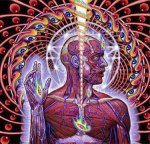 What I’m thinking about again today is words (words, between the lines of age, as Neil Young sang). “Beyond words” or “I can’t put it into words” are ways of calling attention to the wordiness of words, to the way in which words only word (sure, let’s verbify it too) when they waft and waver, when they have a warp and woof with those tiny spaces where something can dwell that’s not words but more like fervent wishes. Tool’s Lateralus had words that arrested me on first exposure. My rights were read to me by the first three songs I heard from that album (“The Grudge,” “The Patient,” and “Schism”), first passing by me like strangers that ignored me (and I them) but then they frisked me, cuffed me, and shoved me into the back of a completely unexpected and soundless squad car. Wondering about the words, I went to the web. There they were, all wordy and flat and what the hell is this anyway and it’s not like it strikes you as poetry when you read it there, so there must have been some mistake. But back to the music and there were the words again, but in the music Maynard made love to them. Keenan keened them, you might say, and they writhed with a painpleasure that no “PARENTAL ADVISORY” sticker would ever cover. It was the singer and the song locked in a tense embrace that made the meaning manifest.
All of this is about that clearing that I mentioned before, and it’s really about Spock’s Beard that I was talking before, and not about Tool at all. It’s about the way in which the meaning that I want remains aloof, remains Other. It’s about the way in which Nick D’Virgilio’s voice does the same sort of work with words that I encountered a while back in Maynard James Keenan. A work with words in which the words are emphatically not tools. They’re not simply “used” or “employed” in order to bring forth something else. That’s the way we tend to think of words when we’re doing our everyday-saying, when we’re not singing but talking (hear Adrian Belew now? It’s oooooooooonly TALK!), as if talking were something infinitely distant from singing. (It’s really not, but we need the supposed contrast as a provisional intuition pump.)

I’m listening today to Feel Euphoria, and the comparison to my first encounter with Tool (not tools) is like an insistent throbbing. Throbbing, pulsing, thumping. The drumming! Of course! The drumming and the singing are on especially intimate terms here. That was going on in Tool in amazing ways, but here it’s amazing while also being much more subtle, a sumptuous sort of subtle. And I would say even more tensely intimate, in a wondrous, meaning-making sense. The artfully restrained but deeply athletic sonic synthesis of Alan’s Guitars, Dave’s bass and Ryo’s keys are a luxurious garden through which Nick’s percussion and vocalization can dance together, hand in hand.
And TENSIONS. Such richly meaningful tensions arise here: “Onomatopoeia” is blissful tension, because what “sounds alike” never truly sounds alike. “The Bottom Line” is tension because the singer who looks for it is himself found by it. “East of Eden, West of Memphis” is a glorious geographical tension. And then there’s that guy named Sid. Of course he’s an enigmatic tension (if I insert a Y and allude to Syd, can you Barrett?). Nick sings in the first person, but at least part of the tension here is with that “first” designation. It’s him, or it’s someone else I know or remember, or perhaps it’s even me, myself (an I). Or it’s all of us. Or maybe not any one of us in particular. And the closing call to “Carry On”:
When your whole world comes apart
There’s a place for you to start
This was my place to start with Spock’s Beard, my place to go back and pick up on the words that, in my prior post, I did not yet know. Today Tool provided a tool, but only a tool. It was really about SB. And another tension, too: It was really about how we might listen to any words when they are words to a song. But that’s not to say that such listening will always be rewarded, which is why it was really about SB, and (not to elevate unduly, but) about NdV.
So, those of you who’ve known all along: Does this all sound right? Or does it sound just wrong enough to make a tension that might be right? Does it help to talk of the tension that emerges when one sings rather than talking?
 Progarchy