

A long time ago in a galaxy far, far away, long before the reflection of the ritual of work and tales of forgotten war heroes searching the radio waves there was a time when the music died alone.
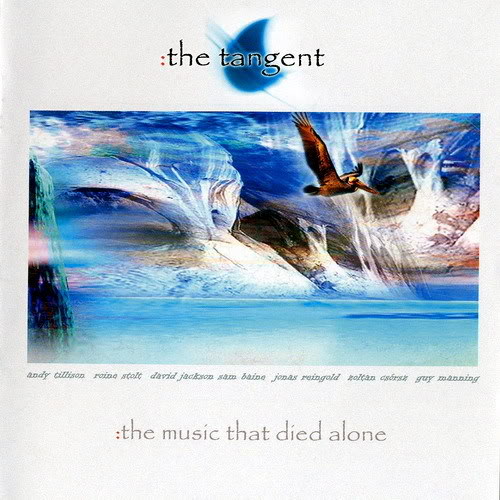
Back in October 2003, ten years ago this week, a Prog super group came together over international borders between the UK and Sweden and produced a monumental debut album ‘The Music That Died Alone’
Lead by Andy Tillison of Parallel or 90 degrees and joined by fellow members of the group, Guy Manning and Sam Baine, The Tangent was formed from Tillison’s original prog solo idea and was bolstered by other prog heavyweights Roine Stolt, Jonas Reingold and Zoltan Csörsz from The Flower Kings as well as David Jackson from Van Der Graaf Generator.
Of course this is history and well known by many of the prog rock community, and the Tangent door has revolved again and again since then , even now with the releases of ‘Le Sacre du Travail’ and ‘L’Etagère du Travail’ (2013) some of the first people to work on the debut album have returned.
Ten years has passed since and a lot has changed, and yet some things have remained the same, but it is worth remembering this marvelous release and why it is so special.
It should be considered in the context of this look-back that Prog in 2003, was still emerging on the back of a new wave lead mainly by the charge from Swedish groups as well as Neil Morse and a few American metal based groups such as Dream Theater, Tool and Symphony X, (a top ten of the time would have revealed a large predominance of Prog metal entries.)
Rising up in the UK was the development of Steven Wilson and Porcupine Tree and defying this heavier progression was a group that drew on Jazz influences and the Canterbury scene. More Hatfield and the North, Caravan and National health than metal, it was blended with a healthy love of Symphonic influences from the 70’s, Tillison and Co developed a sound that felt familiar and yet it wasn’t too retro to be seen as old.
The standout feature of the album was its truthfulness, an aspect that resonates through every subsequent Tangent album. Tillison’s lyrics lamented the loss of the music he loved in the title track, (which ironically was making a return on the back of albums like this one) and spoke openly of the issues of night terrors, a sleep disorder which affects many through their early years. These were honest feelings which felt grounded and real, a million miles from Shastric scriptures and the moans of a screwed up super rich rock star.
The album has aged well, and stands out above many of its contemporaries mainly because people could identify with it. Within the band’s own releases there have been few greater moments that the songs on this release.
Many of the bands fans rate this as one of the best from the group, indeed it was a wake up call for some who were looking for a musical belonging and found it when they listened to it for the first time. Ultimately this reflected in the end of year results when it was catapulted to the top spot on many music website polls.
2013 has been a spectacular year with a pocket busting choice of new music and yet if this album lies in amongst your growing collection of releases from the past, give it a spin, gaze into the lush artwork of Ed Unitsky and be reminded of something special.
 Progarchy