
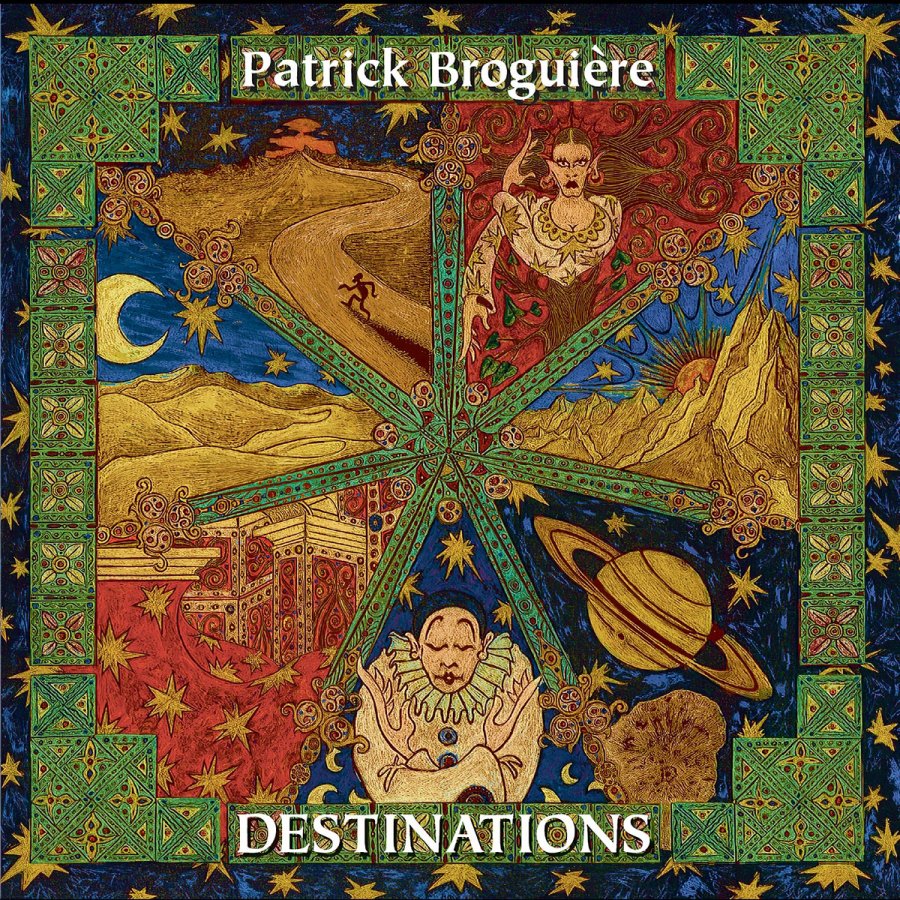
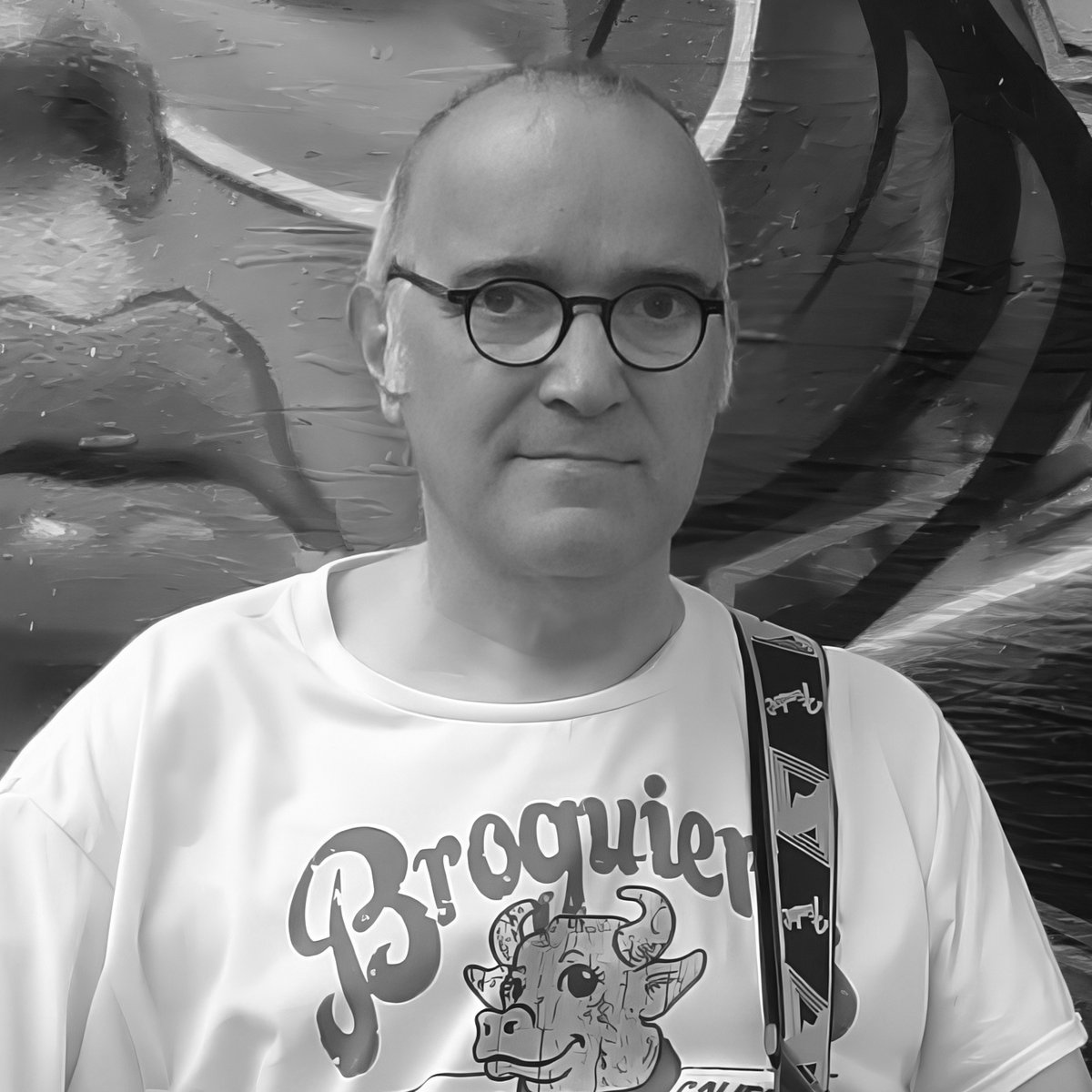
Patrick Broguière, a seasoned French progressive rock composer and multi-instrumentalist, continues to captivate listeners with his ability to blend diverse musical styles into cohesive, cinematic narratives. Following the success of his previous album A Secret World, Broguière has just released Destinations, a concept album that takes listeners on a journey through imaginary lands, each with its own distinct soundscape. Known for his meticulous attention to detail and innovative use of technology, Patrick pushes his compositional boundaries on Destinations, emphasizing vocals and exploring themes that transport audiences to fantastical realms.
In this interview, Patrick discusses his creative process behind Destinations, his musical evolution over the years, and the influences that continue to shape his distinctive sound. From the album’s use of relative keys and vocal elements to its captivating artwork, Broguière reveals the intricacies of his latest project and what listeners can expect from this imaginative and immersive musical voyage.
Destinations by Patrick BroguièreCongratulations on the release of Destinations! Can you tell us how this album represents your evolution as a composer since your last release, A Secret World?
With each album, I try to come up with something new compared to the previous ones. In Mont Saint Michel there was a real drummer, in Châteaux de la Loire there was the influence of Renaissance music, in A Secret World it was a bit of a patchwork of my influences, but I tried to unify it all by staying around the B minor tonality for all the tracks. For Destinations, the main change was the emphasis on vocals.
You mentioned that the concept for Destinations emerged gradually. How did the idea of exploring different imaginary lands through music develop as you composed the album?
At first, I thought of calling the album Voices, given all the voices I’ve introduced. But as the first tracks on the album were The Land of Elves and The Land of Rock (Rockland), the idea of journeys into imaginary lands eventually took hold. From there, the choice of the word Destinations eventually emerged, as it seemed to be unused by other musicians.
The decision to use relative keys of D minor and F throughout the album creates a sense of unity. How did you settle on this approach, and how did it influence the album’s sound?
Single tonality is an approach that comes from classical music and is often used in dance suites and symphonies, for example. That said, there are many other ways of achieving unity in classical music. Getting back to the album, the fact that all the tracks are in D minor or F major means that you have to be more inventive to ensure that the pieces don’t sound the same despite their common tonalities. In fact, it’s just an arbitrary constraint that stimulates creativity.
Destinations features an impressive lineup of vocalists. What was the process of working with voices from commercial sound banks, and how did you create such natural-sounding melodies from these elements?
First of all, it has to be said that today’s sound banks are really amazing. For example, I’ve also used some very successful symphonic string banks to imitate string staccatos. After that, realism is achieved by working carefully on the choice of different sounds and their sequencing. The album also includes two spoken voices produced by AI. As I don’t perform live, I make full use of all the technological marvels of the moment. At the moment, there are a lot of problems in the world, but I have to admit that technological progress is exciting.
Could you walk us through your creative process for one of the album’s tracks? For instance, how did “The Land of Elves” come together, both musically and conceptually?
The composition of this piece began when I found a simple guitar arpeggio on the three rock chords C F G, which I modified a little by playing C F.add9 G. Then the rest of the music followed in a somewhat mysterious way. After that I transposed the piece to F with a capodastro to give the theme F Bb.add9 C. After the music, the melody and the elf theme came when I bought my sound bank on the elf language. Finally, a friend of mine, the musician Jean Philippe Brénot, really encouraged me to stretch this piece. So I found other themes, other instruments and a guitar solo to flesh out the composition to the 10-minute mark.
The album blends progressive rock with cinematic and atmospheric elements. How do you balance these influences while maintaining your signature compositional style?
I admit I’m not sure how it all fits together. All musicians have different influences and as far as I’m concerned I use a lot of different sounds to compensate for the fact that I’m not a band like the progressive giants Genesis or Pink Floyd.
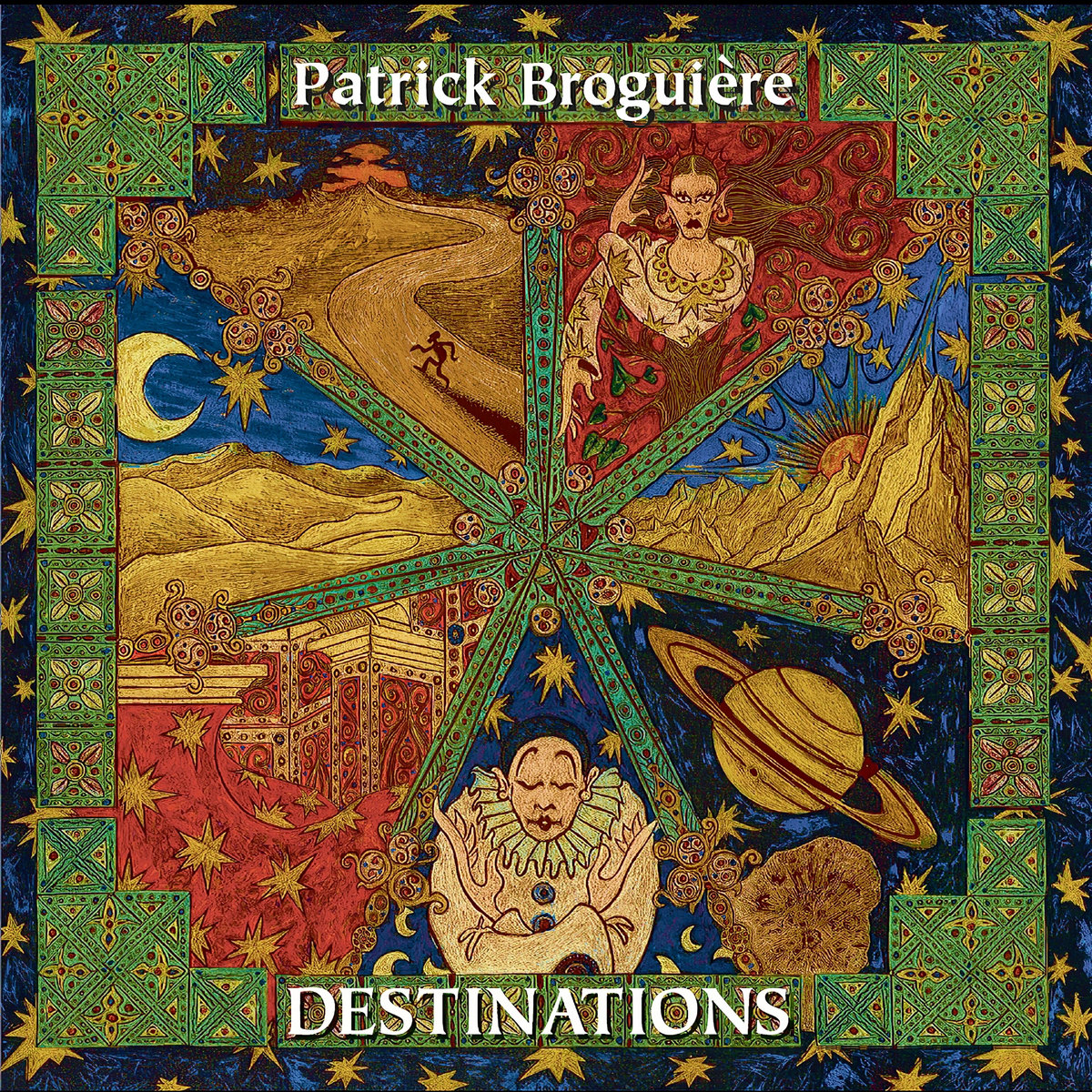
The album artwork, created by Hervé Thibon, complements the music beautifully. What was your collaboration like, and how does the artwork reflect the themes of Destinations?
This time, Hervé worked from the finished album. So he quickly came up with the idea of drawing a circle with 7 sections representing the 7 songs on the album. So in order there’s a queen of the elves, a land of boulders (rockland), a view of Hyperion and Saturn, a Pierrot for Dreamland, a nod to my Brocéliande album, a desert and a character heading towards dawn/sunset for The Last Destination. Also the decorations and illuminations are inspired by the famous Book of Kells from the year 800. After the design on paper, it took Hervé a month of work to finely engrave the painting on glass.
You’ve drawn inspiration from mythology, history, and visual art throughout your career. Were there any particular stories or artistic influences that shaped Destinations?
On Destinations, I didn’t have any specific influences like the Renaissance for Châteaux de la Loire. But I do know that I thought a lot about Pink Floyd, particularly Meddle, which encouraged me to write long songs and use sound effects. I also remember that the organ on Hyperion with the bird sounds was of course inspired by More. As for the rest of the album, I don’t have any particular memories: most of the influences are unconscious.
Rockland and The Land of Elves have radio edits on the album. What led you to create shorter versions of these tracks, and how did you decide which parts to highlight in these edits?
These short versions were made with the idea of making videos with these two songs, which I thought were catchy enough to reach a wide audience. The video for Rockland by Jean Philippe Brénot is already online. The video for The Land of Elves will be released in November. After that, the choice of shortening was made by keeping the main themes as much as possible.
Your use of both guitar and keyboards drives much of the album’s narrative. How do you approach blending these two instruments to tell a cohesive musical story?
In fact, I think it was Mike Oldfield’s Tubular Bells that made the biggest impression on me because of the way the guitarist does everything himself. Back then it was with a multitrack tape recorder and now it’s with a computer. After that, the coherence of the compositions is obtained by choosing a theme for the album, by taking care of the arrangements and also, for example, by choosing a main tonality.
Having started your career at 15 and been influenced by Ritchie Blackmore, how have your early influences shaped your current approach to progressive rock composition?
At first, like many teenagers, I wanted to be a guitar hero. Then I quickly went from a taste for the virtuoso guitar/keyboard of Deep Purple to a taste for the more epic guitar/keyboard of Genesis and Pink Floyd. That’s also when I got a taste for concept albums. So, as I wasn’t really a guitar hero, I gradually got interested in keyboards, then home studio, then composition, while studying harmony and counterpoint at the conservatoire. From Blackmore and Gilmour I’ve also retained a strong taste for the Fender Stratocaster.
You’ve had a long and varied career, from releasing music in the 90s to publishing books and now returning to music. How has your creative journey outside of music influenced your recent works like Destinations?
In fact there was an indirect influence because after I’d done two books I studied magic and close-up for 2 years. I did some tricks to music that one really enjoyed. And at the end I unfortunately failed the school’s final exam. It upset me so much that I decided I absolutely had to go back to music only and it was this challenge that led to the composition of A Secret World. Destinations is a continuation of that project but with new sounds.
Can you talk about your love for blending genres like classical, medieval, and Celtic with progressive rock? How do these influences manifest on Destinations?
We talked a bit about this in the previous questions. There was the influence of the blending of styles by Mike Oldfield, Pink Floyd or Genesis, the folk guitar, the electric guitar plus the study of classical harmony.

You’ve described Destinations as a musical journey meant to take listeners to different worlds. What do you hope listeners experience when they listen to the album from start to finish?
Above all, I hope that listeners will enjoy listening to the album in its entirety, unlike the current fashion for mp3 playlists of singles. I also hope that this music will make them dream!
What’s next for you after Destinations? Are there any other projects or musical ideas you’re currently exploring?
Right now I’m feeling a bit drained after two albums that were released quite close together! So I’m just jotting down a few ideas with no clear direction at the moment. I’m also doing some promotional work and I’ve been filmed playing guitar for the forthcoming The Land of Elves video.
Destinations is out now; stream/download/purchase it from Bandcamp here.
 Progarchy