
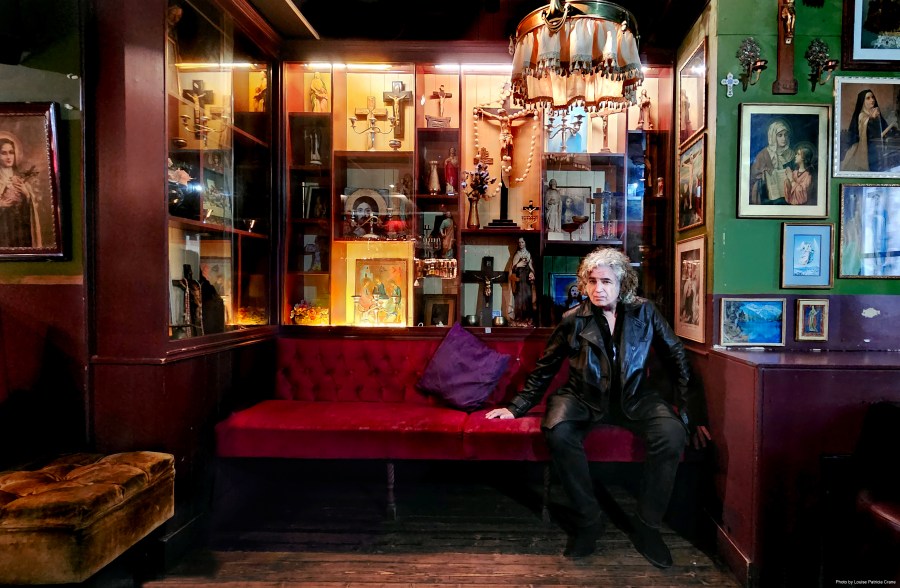
“A Musical Memoir Like No Other” – as always, the estimable Alison Reijman nailed it in her review of Who’s The Boy with the Lovely Hair: The Unlikely Memoir of Jakko M. Jakszyk last fall. Stranger than fiction would be an understatement; only Jakszyk could have told this page-turning, hair-raising narrative — the son of Irish and American parents, raised by a older Polish/French couple, driven both to make his mark in the music business (from having his shoes noticed by Michael Jackson to joining The Kinks for a week to becoming the singer in King Crimson’s final incarnation to date) and to suss out the twisty, elusive truth of his life story.
In fact, Jakko’s past has consistently fed his most personal art, from radio dramas and one-man theatrical shows to his pensive, potent solo albums The Bruised Romantic Glee Club (2007) and Secrets and Lies (2020). Released later this month, his new record Son of Glen continues his quest for both clarity about his past and a settled present, building from subdued acoustic beginnings to an explosive electric finale with patient, long-breathed confidence. Like all Jakszyk’s work, it’s bracing stuff that nonetheless goes down smooth — fearless, affecting and engrossing.
It was a pleasure to talk to Jakko about the new album. Even at the end of what I’m sure was a long day, he was positive, attentive and kind — when I had audio problems at my end, he generously recorded the interview and sent it to me! My thanks to him for his time and for going the extra mile. Audio is immediately below, with a transcription following.
We last talked about five years ago, after your last [album] had been released, and I know you published your book in that time. What are the things that you see as milestones or turning points on your path between Secrets and Lies and Son of Glen?
Well, I guess the book came in between. I did a one-man show at the Edinburgh Festival, which is loosely based on events in my life; that followed the album.
And then, as a result of that, I got the book deal. And although I’d been asked to complete another record, I kind of started bits and pieces. Really, what inspired the record as it stands now was partly the work I did on an album called Netherworld by the lovely Louise Patricia Crane.
And I did a lot of things on there at her behest, I think; I found myself digging deep into my musical DNA and my past to come up with stuff that is part of what I grew up listening to, but stuff I hadn’t ever really used in my own work.
And then when we’d finished, when I’d finished the book, again, I was in a weird place and Louise was incredibly significant in building my confidence back up. And then I remember one evening we were having dinner and, having discovered my real father after decades of fruitless searching for him, she pointed out something that I guess was kind of obvious, but hadn’t crossed my mind in that the reason I exist at all is that my American airman father was stationed in England and fell in love with a dark haired Irish singer.
And here I was all these decades later, kind of repeating the same thing! Which was, I guess, kind of staring me in the face, but it was only when she mentioned it. And so that became the inspiration for the title track and the title of the song, really.
I then, armed with this conceptual idea — both [my] kids play, they’re both great musicians, both my kids. So there’s always instruments in the house everywhere. And they quite often, both of them, my daughter and my son, mess around with alternate tunings. I’ve never really done that. And I remember picking up a guitar and I had no idea what was going on, tuning-wise. And I came up with this pattern, and that started the whole title track.
And then it just developed. I didn’t set out to write some epic. It was just this conceptual idea, a few chords, and then it just kind of started to write itself, really. And then that set the tenor of the whole record, and the idea of making it relate to the book.
Okay. You mentioned some musical areas that you dug into when working on your partner’s album that you had maybe put aside or not necessarily used. Could you be a little more explicit about that?
Yeah, sure. When I was a kid, the band I probably saw live more than any other was the Gabriel-era Genesis, because they played locally to me, where I live in England. And I was completely taken with that. But I’ve never really done anything Genesis-like, I don’t think, on my own stuff. And there were certain references that Louise was utilizing when we were creating her album. And I thought, “oh, okay, yeah, I used to love that record!”
And so Genesis, there’s bits of Jethro Tull, again, a lot of acoustic-type stuff that’s not really normally evident or fundamental to any of the work that I’ve done. I think I’m referring to those specifically in terms of my own record. But there was other stuff. There’s a lot of the references that she utilized that I was able to kind of replicate, because I understood the musical language.
To backtrack a little bit, one of the things I noticed is that a number of the chapter titles in your book become song titles on Son of Glen. I’m assuming that’s a deliberate thing, and that there’s some significance involved with that.
Yeah, some of them were ideas I’d started and then wrote the book. In fact, there was a couple of things I’d done when I was promoting the book later on. There was a couple of instances where it was a really interesting thing, where I would talk about how some of the songs are kind of diary entries. They’re responding to something that’s happened. And so I was able to say, “well, look, what I’m going to do now is read a passage from the book that describes the event in detail, and then I’m going to play the song that I wrote about it.” So I was able to do that at that stage as well, because the two things started to overlap.
And sometimes I’d just have a title, which I then used as the title for the chapter of the book, and then extrapolated from that. And some of the things I’d already started, that were from way back, but fitted into the conceptual continuity of the whole nature of the book and the album together.
Another thing I noticed: if you divide the album into LP sides, each one opens with a distinct version of that instrumental, “Ode to Ballina”. Is that simply for the sake of variety, or does that play a part in how things unfold musically?
It was a deliberate ploy. I thought, and I was deliberately thinking about it as vinyl, even though I know it comes out on CD too. For the first time really, I was definitely thinking about it in vinyl terms. I had a conversation with Thomas Waber, whose label it is, and we were discussing about how the length of albums has got preposterous due to the ability to store more information on a CD. And in his head, and kind of mine, those album era years of the ‘70s, 40 minutes, 45 minutes, that was enough, that was ideal. So, I did think in those terms.
And I thought, well, “Ode to Ballina” is a piece based on my emotional response to going to Ireland, back to where my mum came from for the first time. And so I thought, that’s a great place to start, because that’s the kind of start of the story. And then halfway through, to reiterate that theme, but do it — by which time I’m now a musician, and I’m living a life as a musician — to reiterate that same thematic idea, but in a more modern, more electric way. So that was deliberate, as was the beginning of each side and the end of each side.
I knew I definitely wanted to end with the 10-minute title track. And I wanted to end side one with the song I wrote about Louise.
And as I heard that album, what I felt like was that the whole thing built from the acoustic beginning on the first side, it was almost like this long 40-minute crescendo, which was really effective.
Oh, well, thank you.
Because like you say, on side two, you’re bringing in more of the electric elements, and it just sort of gains in whoomp, to use a technical term.
[Laughs] That’s great. You know, these things, you have a rough outline of a conceptual idea, and then the music kind of takes over and presents itself in a way. So it’s a combination of finding a vehicle and then somehow something else takes over. I mean, I don’t know what it is, whatever you call it, you know, inspiration or the muse or whatever.
Yeah, I felt good that I’d kind of dealt with some subjects that are peppered throughout the book and ended up with a paean to my real father. That’s the mystery of the beginning of my book and the beginning of my life. That’s where the book ends, really: me finally, after decades of fruitless searching, finding who he was and stuff about him after being thrown all sorts of red herrings by my mother and downright lies.
I know one of the themes of the book is how difficult it has been to get to the truth, because you had to pick your way through any number of deceptions and equivocations.
Yeah. And it feels, like all of us, we want a degree of stability, we want to know who we are, we want some solid ground on which to stand, you know.
And you keep thinking, “Oh, OK, that’s what happened. Fantastic.” And then, and then, you know, a few years later, the rugs pulled out and you thought, “Oh, hang on, that was all bulls–t. Wait a minute!”
And so, you find yourself constantly in a state of flux. And, you know, these things, as we’ve discovered in the decades since — at its most basic in the 50s and 60s, I think the attitude was, “Well, having children adopted has got to be better than bringing them up in a home [orphanage],” and it’s only in the intervening decades that a lot of research has been done into how that experience fundamentally affects an awful lot of adopted kids, and it f—s with your psyche and it and it has a whole controlling influence on your whole personality.
So as you say, these songs are full of people from your history, your birth mother, your adoptive father, your current partner, your biological father, a friend who passed away. Does writing about them, whether in your book or for this album — how does that make a difference in terms of how you think about them, how you feel about them?
Well, I think writing the book in particular, because it’s so detailed and so if you’ve read the book, you’ll realize how long it is.
Oh yeah, that was one of the things that I think was fascinating about it, is how much detail and depth and — your life has been so full of incidents and coincidences and synchronicities, as well as — frankly, the incredibly difficult foundation that you had. But again, you can tell that you’re processing this.
Yeah. I tell you what, there was a weird thing right at the end of writing the book. There was a sense of achievement. Because I know when I was first approached to write the book, the publisher sent me a kind of contractual breakdown and advances and all this. And then I ignored it.
And about three weeks later, they said, “Do you not want to do this?” And I said, “I don’t think I can do it. I’m a small person at the bottom of the Himalayas. I can’t get up there. That’s miles away.”
And then they suggested, “Well, maybe we can get a ghostwriter.” And I said, “You know what? I’m not going to use a ghostwriter. So, I’m going to write an opening chapter. And if you think it’s of any worth, then let’s discuss it further.” And that’s what I did.
So, when I finished the book, there was a sense of achievement and euphoria that I’d actually done something that extraordinary and that long and [of] that depth. And that stayed with me for about a week. And then we had a meeting about it coming out.
And then suddenly it dawned on me that I’ve written this unbelievably personal, exposing stuff. And everyone would — you know, people were going to read this!
So that was a real shock. I mean, I know it sounds ridiculous in that that’s the very nature of writing a book. But that really freaked me out.
So, it was a whole rollercoaster of emotions, because on one level, it was incredibly cathartic. But on another level, you know, all these things have happened. There’s an approximate chronology in your head of how things led one thing to another. But when you sit down in a concentrated way and lay it all out before you, all of those things, the random things that you mentioned, you know, it’s kind of weird moments of luck and timing.
But they’re all kind of connected, because had I had a normal upbringing, I would not have been so driven and I wouldn’t have felt so fundamentally insecure and have a low self-worth, which means I wouldn’t have just worked like a maniac, you know, and said yes to everything. So I would never have put myself in those different places and gone forward, so it’s a kind of weird mishmash of the experience.
So, you’re still left with those fundamental flaws in your personality from what happened as a child. But at the same time, it’s enabled me to live this extraordinary life and meet the most amazing people. So, it’s a weird kind of car crash of of all those things, of all those emotions.
And I think the cathartic nature of it, seeing it all written down, understanding how bits fit. When I finished the book, I went into some post-adoptive counselling as well. And one thing I found is that, whilst you can place what happened and how you feel as a result of what happened and while you can understand it and see the logistics of it, what it doesn’t do is stop you — you still feel those feelings. The difference is, you now know where they come from, and you understand how that journey has manifested itself. But it doesn’t — for me anyway, it doesn’t stop those innate feelings. You just know where they come from.
[On the other side: Jakko talks with and about Steven Wilson, best mate/drummer supreme Gavin Harrison, the guys in Marillion, Robert Fripp, the future of King Crimson releases, and much more!]
I think that would be part of what makes both the book and really both of the albums you’ve done for Inside Out compelling, at least for me, because they are very honest. And as you say, there’s catharsis, but maybe there isn’t closure. Maybe it’s as you say, it’s a thing you wrestle with, but now you know the source.
Yeah, that’s how I end the book. I start the book — the last line of the opening chapter is, you know, “Who the hell am I and how the hell did I get here?” And then the last line is something along the lines of, “I now know how I got here, but I still don’t know who the hell I am.” There’s no completion.
I was chatting to Steven Wilson and Steven said, “I can’t write stuff like you write in terms of the subject matter.” Because he had this rather lovely idyllic childhood where nothing terrible happened and there’s no overt emotional trauma or anything. He said, “You’ve experienced something completely different, which is why you write what you write.” And he said, “And that’s why I write songs about serial killers!” [Laughs] So it’s a double edged sword, you know.
With the album, you certainly had your partner helping you out quite a bit. You also had some guests, I know. What do you think your guests especially contributed, musically or otherwise?
Well, you know, Gavin [Harrison] — Gavin’s been my best pal since the early 80s, although he is at pains to express that I’m not his best pal, [Laughs] but he’s been my best mate and we’ve done so many things together. And I think Gavin is arguably the finest drummer of his generation. I think he’s amazing. And he would always be my first choice. But Gavin’s in a place now where he can pick and choose what he wants to do and what he doesn’t want to do. He certainly doesn’t need to do anything for the money.
And I was a bit nervous about asking him to play anything. So, I played him the title track, which was very finished sounding, but with fake drums. And he responded incredibly positively and said, “I really like this. Can I play on it?” And I thought, “Fantastic!” So I said, “Yeah, of course.” So that’s why Gavin plays on it.
Ian Mosley, I’ve got to know Ian Mosley; he has been a really lovely, supportive influence. Where I live geographically in England is very near where Marillion are from. So they’re in the firmament around here.
And I was going through a really tough time five or so years ago when I got divorced. I was about to get divorced and I bumped into him and I didn’t know him very well. And he was really sweet and then kept calling to check I was all right. And then Steve Rothery messaged me. I didn’t really know him very well at all; I’d done some live stuff with John Wetton that he was involved in.
And he wrote to me and said, “Oh, are you free this evening? I’ve got a spare ticket at the Barbican [in London].” And I was only when I got onto the train to meet him later that day. I said, “Wait a minute, have you been talking to Ian?” He said, “Yeah, we’re all a bit worried about you.” It’s that amazing, lovely, supportive thing,
So I see Ian for coffee and we go out for meals and stuff. And I was telling him about the album and — the same thing! He said, “Oh, well, I’d love to play on it.” I said, “Oh, wow, I’d love you to play!” So that’s how he played on it.
My son [Django] plays bass on all the album, apart from one track where I play bass, I think. And he’s a genuinely, genuinely great player, very musical, got a great feel, great vibe. Plus, he’s cheap and local because he lives in the same house as me!
And who else? Caroline Lavelle is this brilliant cellist. I’ve worked with her on and off over the years and [she’s] an amazing musician. And I wrote that piece for Irish low whistle, one of [the versions of the] “Ode to Ballina” and I wanted it to be low whistle and cello. So, I wrote this part and she very kindly agreed to play on it for me.
OK. Kind of moving sideways, King Crimson’s been inactive since 2021. I saw you folks on your last US tour and you were fabulous as usual. But it does seem like for Robert Fripp and David Singleton, curating their history is this never-ending task. Are you involved in any sort of Crimson-related projects right now, whether they’re archival or . . . ?
Yeah, I’m involved in several things. In fact, David and Robert live in the same place, near the Midlands here. And I went up for a day to go through loads of different stuff with David and have dinner with him and Robert in the evening. And that’s when I heard that Robert had had a heart attack in Italy.
So, there’s a few things. One, later on this year — I think it’s coming out this year — we’ve done a really extended version of A Scarcity of Miracles, the album that I made with Robert and Mel [Collins]. And because of the nature of how we recorded that, there’s lots and lots of alternate takes. Mel playing different instruments, completely different takes. There’s a track where I had originally programmed drums into it and then accidentally sent Robert a version without the drums. And he liked it without the drums, so we didn’t put drums on. But now, Gavin has now put drums on that track. And then some other tracks where I’ve done different overdubs. There’s some tracks that we didn’t put on the finished album.
And also, David Singleton has put together this amazing one-hour piece using bits from all over. So, it’s a very expanded, genuinely very different version of the record. So that’s coming out.
And the thing I’m currently working on is a King Crimson studio album of all the new material that we wrote. So, we’ve been doing that. We started doing it a couple of years ago, and then the momentum was lost. But they decided, let’s get this finished. So that’s what I’ve been doing most recently.
Now, listen, if and when that comes out is not down to me. How it comes out, what it ends up being, whether it’s an album, whether it’s … I don’t know. I’m not in charge of that.
Yeah, that’s Robert’s baby, I’m sure.
It’s Robert and David, yeah. I mean, we’ve done studio versions of all the new material and some other bits and pieces that wasn’t played live. So we’ve done that. And then there’s some other things in the pipeline which have been held up by — international admin; that’s the best phrase I can use. I don’t know what, if anything, might happen as a result, you know, of doing this record.
I guess Robert’s going to rethink everything. I think he’s fine physically. He had a heart attack, not a cardiac arrest. They’re two very different things. And he’s had stents fitted. And I know quite a few people that have had that and go on to have incredibly normal lives. But I think it depends on how you deal with it psychologically. I’ve had a few exchanges with Robert. He sounded pretty good. But who knows?
Well, we certainly wish him the best. Because no matter how well the recovery goes, as you say, it’s a shock and it’s something you have to adjust to and deal with.
Yeah. Yeah.
So with Son of Glen pretty much ready to come out, have you been looking beyond that at all? Live work, further work with Louise Crane, anything in that ballpark? Or is the focus on the new album for now?
Well, it’s on the new album. Yeah, I’m seriously considering trying to do some live things; I hadn’t really thought about it until quite recently.
As far as Louise is concerned, I think she needs to, and is more than capable of, branching out on her own. I think there’s a terrible misogyny about women in rock.
I know that on her album, which is fantastic — I think anyone out there that’s not listened to it, please, please go and listen to it. It’s called Netherworld and it’s got some amazing things on it and great players on it as well! But, you know, she kind of got overlooked in the reviews, because my name’s on it. Whereas the whole thing was driven by her; she really deserves the credit.
I mean, listen, you know, I will help her in whatever way I can. But I think she needs to take control and prove to people that she’s not just a pretty face. She’s an incredibly talented individual that needs to be taken seriously.
I think you make a good point. I don’t know if you’ve heard the albums by The Anchoress, Catherine Anne Davies. I found those incredibly powerful. But she’s spoken of the same thing, how she, how women in rock, women in prog aren’t really taken seriously and that someone like her needs to take the ball and run with it. So, I get where you’re coming from.
I think in retrospect, I should have — she very kindly gave me a coproduction credit because I helped a lot. But I think in retrospect, that was a — I should have let her take the credit because otherwise, people just latch onto my name. And there were even reviews where it said it was produced by me. It wasn’t! She was in control of the whole thing. A lot of what was good about it that I did was as a result of her encouragement and forcing me down a particular way to try and come up with stuff. So, yeah, all power to her!
Yeah, it’s her vision and you were helping her do that. And that makes perfect sense. Those are all the questions I have, unless there’s anything else you want to cover. As I say, I think the new album is — it was moving and it’s got a lot of thought and power behind it, there’s a real emotional punch. So, I don’t know if “enjoy” is the right word, but it’s really good and I wish you all the success in the world with it.
Oh, well, that’s very kind of you. I hope more people think like that!
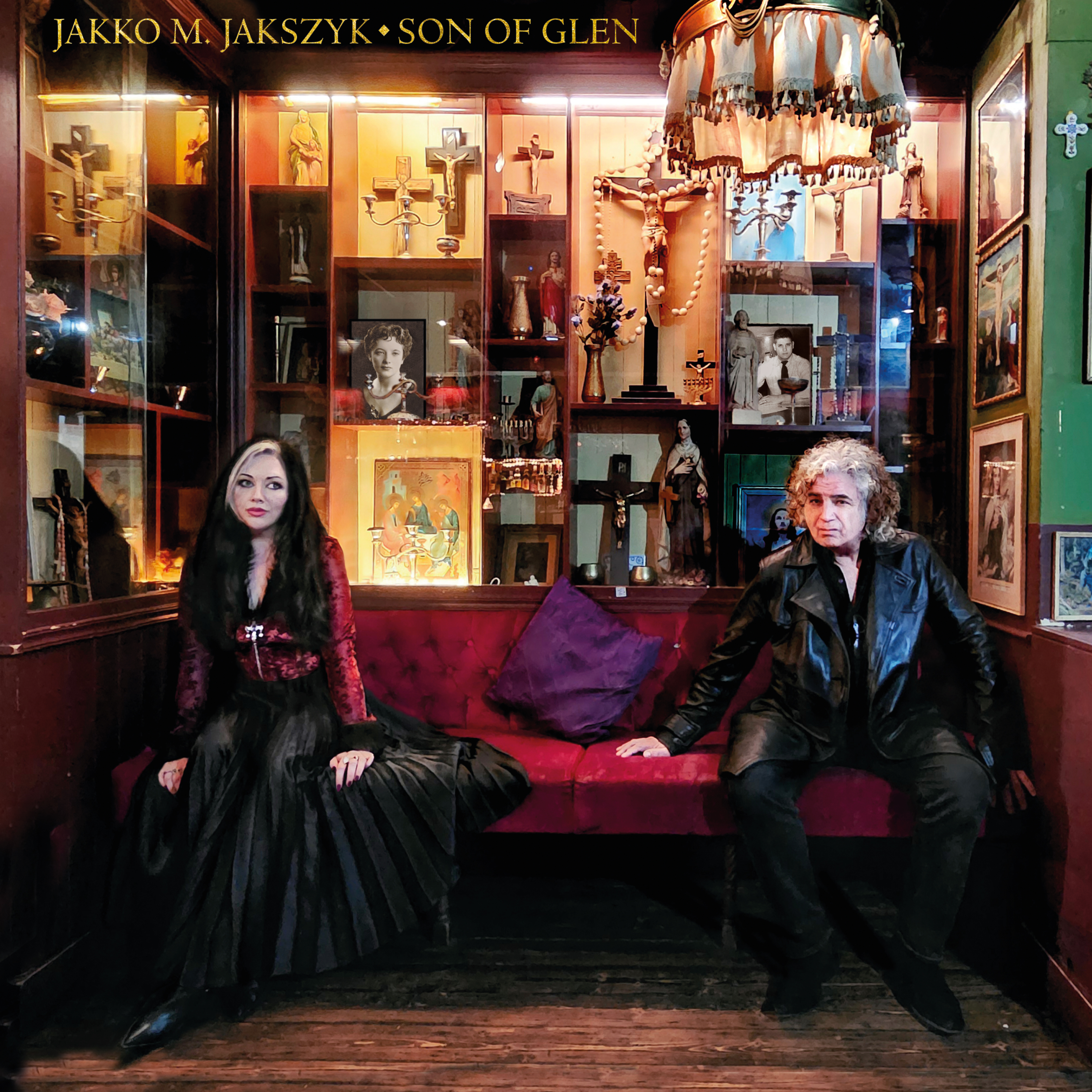
Son of Glen is released June 27th; preorders are available at the InsideOut webstore and Burning Shed [vinyl and CD] and Bandcamp [digital download]. Jakko’s book Who’s the Boy with the Lovely Hair? (published by Gregory Spawton’s Kingmaker Publishing) is available from Burning Shed and The Band Wagon USA (where autographed copies are still available).
— Rick Krueger
 Progarchy