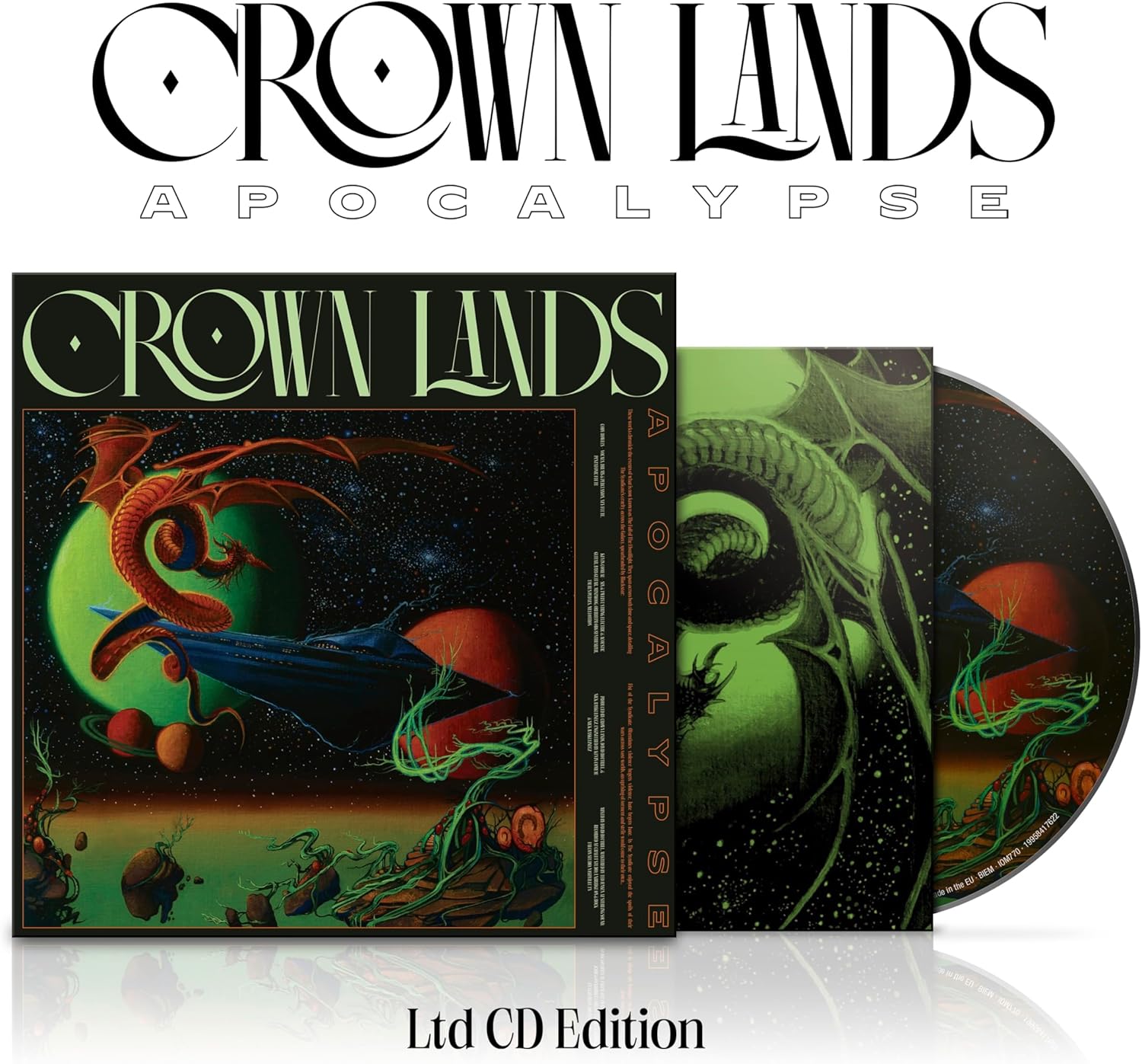
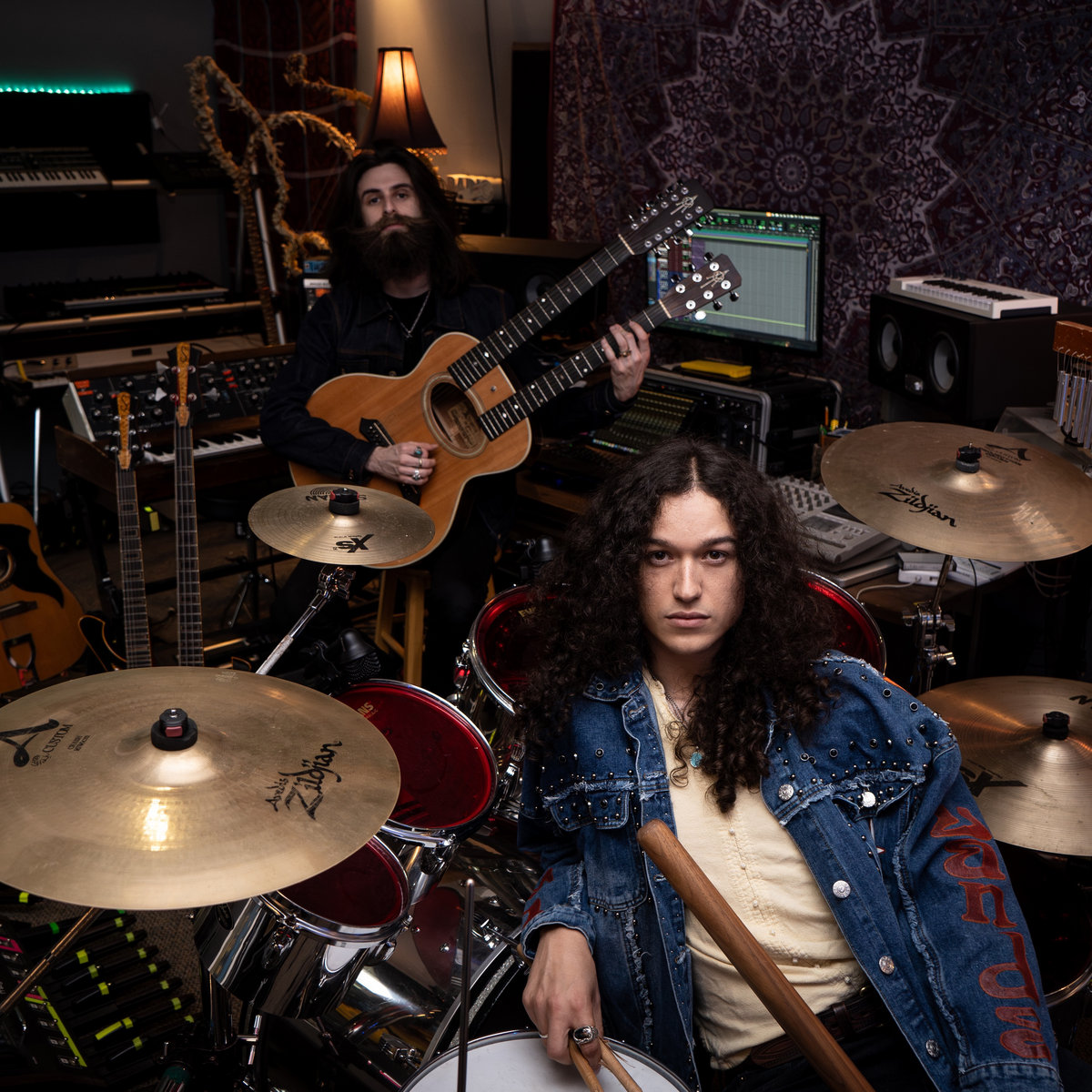
Crown Lands appeared on the music scene with EPs in 2016 and 2017 and then an impressive 2020 debut LP. They won a Juno award in 2021 for Breakthrough Group of the Year and were also nominated for Rock Album of the Year. The year 2021 was a dazzling revelation of their love of Rush, as Crown Lands released the seven-minute single “Context: Fearless, Part 1” (along with a tribute to Neil Peart) and also the White Buffalo EP, which contains the epic 13-minute long-form track, “The Oracle.” In 2023, the stunning LP Fearless cemented their status as prog titans. In 2024, they were again nominated for a Juno award for Rock Album of the Year. Now their follow-up prog LP, Apocalypse, is about to be released in May 2026. To find out more about the thrilling sci-fi/fantasy story unfolding across the records, Progarchy recently had a chat with Cody Bowles, who is drummer and vocalist with Crown Lands. A transcription of our April 15 talk follows below.
I see you’re wearing your Rush T-shirt. I thought I’d wear my Crown Lands White Buffalo shirt.
Hey, I love it. Yes, I can’t help it. It was just a perfect occasion.
Well, it’s good to meet you. Huge fan. Fell in love with your music instantly. And so we’re very excited to hear about the new record. We asked the record company to send us an advance copy, if they have it. But so far, we’ve only heard the two tracks on Bandcamp.
Yeah, we are so thrilled that this thing is coming out. We worked so hard on this and I think it’s by far and away like the most complex and lovely piece of music we put out, honestly, to date. We really pushed ourselves on it.
Well, I was thrilled to hear “Apocalypse” when it was suddenly announced, to my surprise, because I fell in love with your music when I heard “Context” and “Starlifter” and “The Oracle.” To hear long-form pieces of such high quality! Well, I mean, that’s what we live for at Progarchy.
Okay!
But when the Fearless album came out, I was excited that suddenly my favorite songs became the shorter songs. Songs like “The Shadow” and “Lady of the Lake.”
That’s so cool.
So I’m curious what the new album is like. Are the other tracks shorter in length? Do they resemble the ones I mentioned on the earlier album, or are there some new surprises?
Yeah, it’s actually funny you say that because we actually do have a number of shorter songs on this upcoming release. Just to contrast with the large side-long piece. As it goes, you know, if in a perfect world, we would have multiple long pieces and short songs, but we kind of envision our albums with vinyl in mind. So, we have a limitation for how long a side can be. But yeah, “Apocalypse” is the big one. And then we have some shorter, shorter companion pieces surrounding that. But they’re pretty densely packed.
I love that you limit yourself with the vinyl discipline: “This has to fit on a vinyl.” Because I think too many bands end up boring us, by stuffing too many tracks on a CD. Whereas that discipline to create an artistic whole, well, it’s something we know and love from our favorite albums in the past. But I love how you’ve taken up the torch of: “We want to tell a story, as well as create beautiful music.” Could you tell our readers a little bit more about what the story is, not just on this album, but tying together the other albums?
I would be delighted. So where would you like me to start? With this album, or from the beginning?
Let’s start with this album. What’s the story on Apocalypse?
Yeah, so the story of Apocalypse tells the tale of the rise of the Syndicate, who are this intergalactic, space-faring conquerors and warlords, led by the right hand of the Syndicate, Blackstar, who serves as the villain and the antithesis to everything that Fearless, our hero, stands for.
It talks about the Syndicate’s conquest of the planet Karagon, which is Fearless’s home world, and its fight against the native Ebonflight, who are dragon riding, space dragon riding, might I add, people who have lived there for thousands of years and they fought many different threats on their own planet.
But when this intergalactic force comes and threatens their existence, they give it their all, but they are ultimately crushed by this force, all while Fearless in the timeline of this story is sleeping and is kind of like in this hibernation under the water. And so they take all the resources from the planet and they take all these spoils of war from the Ebonflight they’ve defeated and they head back home to their home world.
And on the journey back home, there is a fight that breaks out on the home planet, and the reinforcements that they meet, rendezvous with on the way back, they start infighting between themselves, fighting over the hordes of, you know, these spoils of war. And it tears them apart and on back home, the Syndicate is like this ideology that kind of supersedes the government. I’m writing a lot about this right now, so tell me if it’s too much!
It’s not too much, keep going!
Okay, cool. So this, so this ideology, this rogue ideology, supersedes the government and this, it’s like everyone becomes radicalized to the Syndicate, and they want to, instead of changing the way they rule their world, they want to take resources from outside of their own planet and bring it to their own at the cost of life and other people’s sovereignty and resources.
And so the Syndicate is kind of born to what we kind of know it as in Starlifter, through this apocalypse.
And so when Blackstar gets back home, he finds that all of this war that he’s waged outside abroad has come back to himself and come back to his own planet and has affected him personally. He finds his wife and his family is destroyed and everything he knew and loved is gone as he once knew it.
And so it’s not an apocalypse of only one planet, Fearless’s planet. It’s also an apocalypse of his own world and the whole viewpoint of, you know, there’s this whole message through Apocalypse where we talk about hate begets hate and violence begets violence. And it’s like this cautionary tale.
And so we end it by kind of hinting that there is a glimmer of hope in the world yet. Fearless will rise in the stars above, is kind of one of the last lyrics that we say in Apocalypse. And it’s just hinting at Fearless kind of still being there as this force of good, this force of hope that has the potential to change the world. And then we end it with this arpeggiated sequence that harmonically goes directly into “Starlifter: Fearless, Part 2,” if you were to play them back-to-back. So it serves as a prequel, direct prequel to “Fearless, Part 2.”
Okay, so that makes sense. I remember reading some of it online. I love your description of it because we know who the bad guys are in the beginning: the colonizers. But then as the story unfolds, I hear you describing it this way: that the colonizers aren’t just extracting value from elsewhere; this whole cultural model is how they’re destroying themselves. So this is actually a parable for our times. I confess that on Fearless, I didn’t follow the story. I just understood the music as my source of delight.
Yeah. Yeah, of course. Yeah. Yeah.
Now that we’ve established the prequel, what happens on the Fearless album and what else do you have planned in further musical adventures? And I’ll just confess my interest in this parable. I think that to stop the apocalypse that we’re living through, where the colonizers are destroying the whole planet, there needs to be a return to reverence for the planet. There needs to be learning from contemplative spiritual traditions. For example, the indigenous people who have lived with the planet so long and didn’t cultivate this extractive model.
I agree. Yeah.
So sorry for the long preface, but my question is: How does the story continue on Fearless? (I’m sorry I missed it.) And what more do you have planned for the future?
Yeah, ohh no, it’s OK. I love these questions and thank you for asking them, honestly. I do agree with you, just to preface. Yeah, I agree. We do need to return to this kind of love and appreciation for the world that we have and the resources we have and to kind of look at it and change our framework from which we operate. To be more sustainable.
But to answer your question, the story of Fearless begins with Fearless awakening from the prior song, “The Oracle,” where he is kind of lured to chase this destiny that he is told by this old sage to go on this mission and this quest. And of course, an oracle speaks always in half-truths.
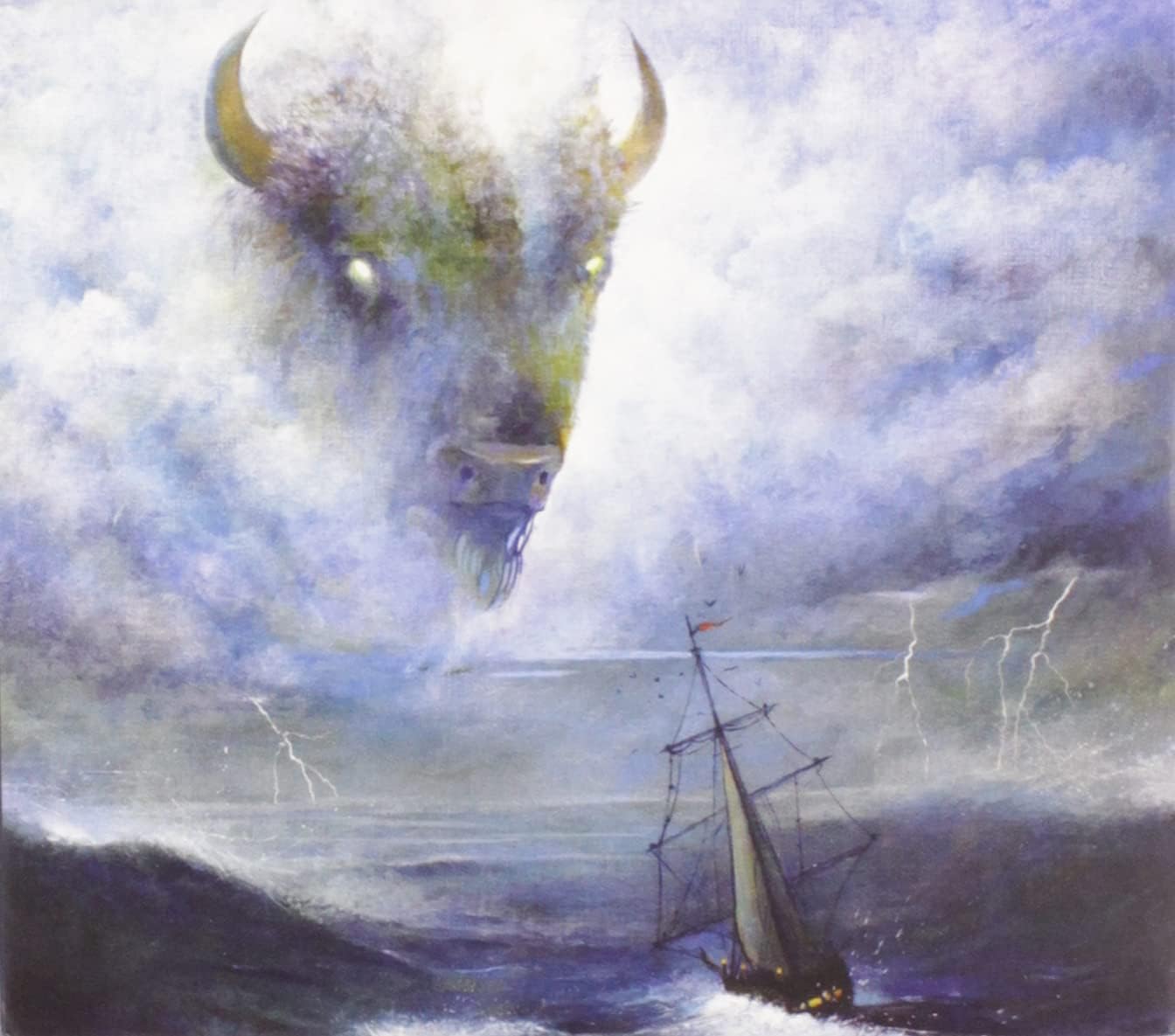
And so they kind of like, they tell him what he needs to do in order to achieve his goal, in order to attain his ambition. But there is a cost, there is always a hidden cost. And so his ship that he’s on capsizes and he falls down into the ocean and he’s drowning. And, in this world, we have this goddess kind of character, kind of embodying the spirit of nature. Her name’s River.
And she kind of imbues him with this power of her power. The power of nature is infused, kind of within him. And as she imbues him with his power in the song of “The Oracle,” he is entombed in this kind of case of ice, this never melting ice, and under the ocean. And there he slumbers for hundreds of years.
And then when he awakens in “Fearless, Part 2,” he comes out and the oceans that were once there are now just barren desert. And he can see, as far as he can see, he sees just desolation and pure, pure just absence of life where there was once rife with vegetation and jungle and his people. And so he looks out and he sees this giant tower in the distance.
And it’s what we call a space fountain, which is kind of like this tower that goes from the ground into space. And they have these, like, giant machines, these whirring sentinels that are whirring by through the canyons and scavenging, almost kind of like you imagine like the Matrix and those machines and how they kind of proliferate and they have this very oppressive nature to them.
And so he’s kind of imbued with this almost supernatural power. He’s lived far beyond his mortal coil. And he’s almost like this demi-god kind of character. And so he makes it his mission to kind of find out what is going on and to destroy these things, because he feels it is inherited evil, right? And he kind of has this feeling like everyone he’s known and loved is gone.
So he makes it his mission: he makes his way toward this fortress where this spire is looming and he sneaks into this tower. He goes up to the top and there’s these things called Starlifters, which are the vehicles by which the Syndicate exercises its plan by stealing the power of the sun and harnessing it for itself, ferrying it away to their planet so they can fuel their own stuff for their own corporate greed or whatever it is.
And he connects with this machine. He finds that there’s one machine there and it’s all automated. It’s all AI. And he finds one machine kind of transcended this: this program, and it is aware; it is self-aware. And he connects with it telepathically using his own sort of super, superhuman powers. And he, he becomes one with this machine.
He merges with the machine in a sense to kind of understand what is going on. He learns everything that is going on. He learns that these things are being used as a tool for extraction and for war. And this sentient consciousness that is created, that emerges from it, is commensurate with all of this Starlifters.
And so what he does is there is a sort of Dyson sphere built around the sun in the story of Fearless. And it’s said in the first kind of verse of the song. And so what he does is he takes the commensurate consciousness of the Starlifters and makes it his mission to dismantle the Dyson sphere.
But during this whole thing, the Syndicate catches on and sends like a battalion to intercept Fearless. And so Fearless becomes all of the Starlifters and they’re fighting this giant war. And through this whole conundrum, there’s a giant, there’s a great sound that is emitted. And the sound is so great that it tears a fabric through space and it creates a black hole and it threatens to destroy everything and everybody.
And so what Fearless does is he takes the Starlifters, these vehicles that are able to interact with the sun and extract the power of the sun directly, and he uses all of them to dismantle the Dyson sphere and flies headlong into the black hole. And that’s…
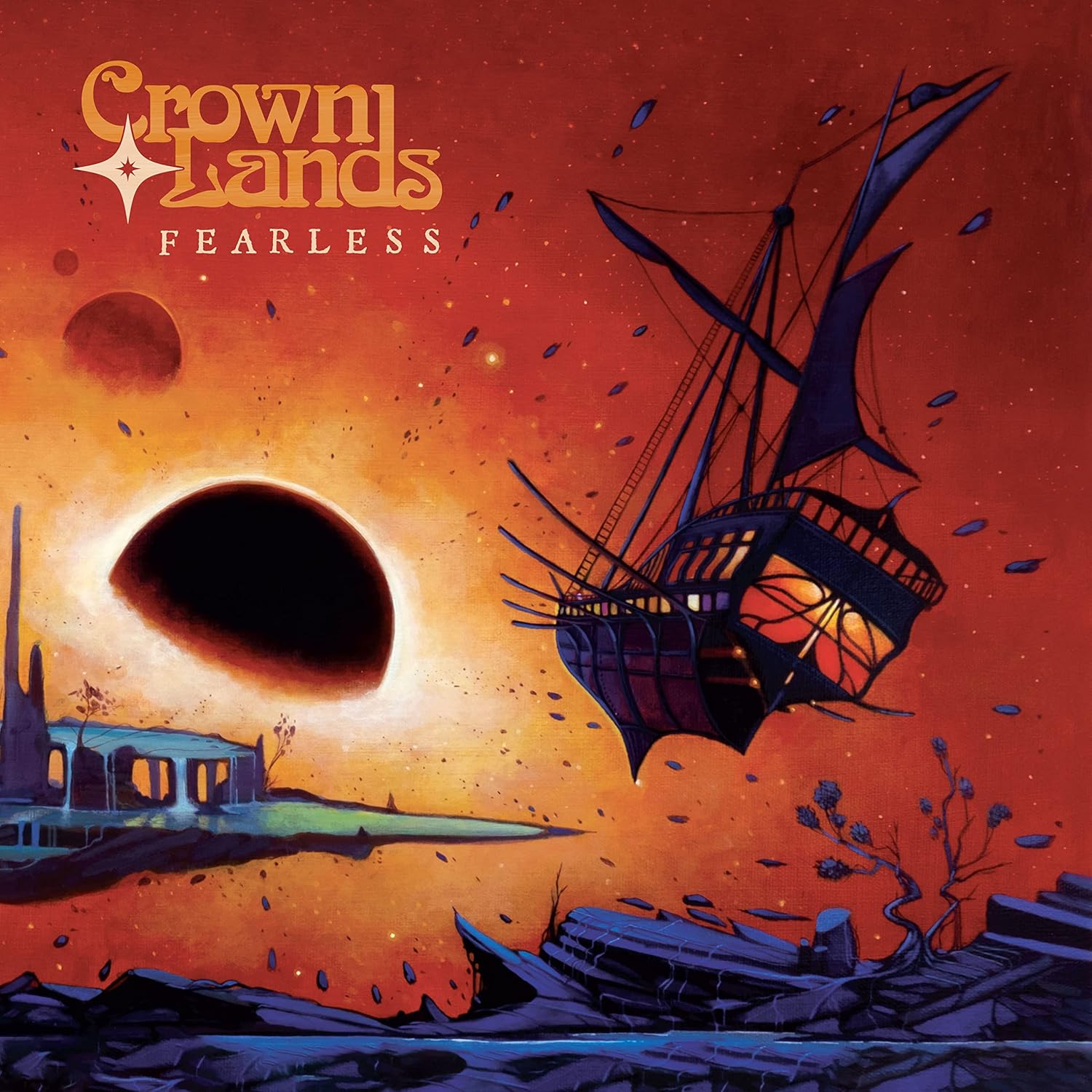
I caught that much because of the musical allusion in “Starlifter” to A Farewell to Kings, “Cygnus X-1,” which is, you know, very cleverly done at the end of the song. So, I knew that someone was going into a black hole at the end. But everything you just described is that one song?
Yes, that’s that one song.
Which to me is incredible that you have this imaginative vision that sustains the music you’re creating. It explains why I found it to be so substantial. What happens on the rest of the album?
Well, thank you. Yeah, so on Fearless, you know, it was the first time we had done something so intense. I mean, we did with “The Oracle” as well. But like, we decided that it would only be the one side; the others, the other album, the other songs on the record, except for “Lady of the Lake,” doesn’t tie into the greater story of the Fearless chronology, like “The Shadow,” “Citadel.” But “Lady of the Lake” does, and it talks about the time, like in the very ancient past, where this goddess, this River goddess, is worshipped and this great temple is being constructed. And they fight against, the Ebonflight are fighting against this ancient evil on their own planet.
Okay, so some songs tie into this storyline and some stand apart. If I’m following, we’ve got “Apocalypse,” “The Oracle,” “Star Lifter: Fearless, Part 2,” and “Lady of the Lake.” What about “Context: Fearless, Part 1”?
Yeah, so “Context” was our first foray into this whole thing. And yes, it sort of, to give you an answer, it sort of does. It doesn’t quite make sense with the greater story, because we didn’t really know what we were doing back then in terms of the story. We just knew we wanted to paint a picture, we wanted to make a story. But it talks more about these travelers coming to a planet where music is kind of lost and they kind of reestablish music, at least in the music video that we created for “Context.” We have the character The Oracle, in it, for example. She’s in the music video, but we don’t really talk about her in the music itself. And so that was kind of when we were still finding our footing and how we wanted to tell this tale.
Well, that’s okay. It still makes sense to me. I mean, you call it “Fearless, Part 1,” and symbolically, it’s about the loss of music, trying to find the lost music. That’s a symbolic encapsulation of this larger story that you’re giving me the details about. I mean, it harkens back to “2112”: finding the lost guitar. And it’s a wonderful symbol: this music, if we discover it, it’s going to be the way that we avoid this destructive cultural action that’s consuming everything. So, thank you for the explanation. What do you have planned for albums beyond this?
Yeah. Totally. Yeah. I love that question too. Good thing you asked. Well, I just created, I just finished the story for the next record. So we have that down and it’s going to be a sequel to Fearless. And it’s going to culminate in a ridiculous conclusion, I think, to this trilogy that we have going on. And I feel like it might either be, it either might be the end or the beginning of a new story. We deal with different topics this time. It’s going more into an abstract space, of kind of like COPAS or like cycles and like pattern recognition and it’s very progressive music and it’s got this element that’s more angular and we have, we have electric drums being used, and Chapman Sticks and like we’re going to some really strange places, but thematically.
So you go King Crimson on the next one.
Very King Crimson, yes. And it’s like interlocking and interlacing polyrhythms, which is really fun. But it deals with, like, time, and what is beyond time, and what in, like, in what destiny is, and free will, and that’s the struggle between the two.
That’s wonderful. So when you say you have it written, what are you doing? Are you writing like a treatment for a movie screenplay, and this treatment is just a short summary, in some Word document somewhere?
Yeah, so I have a very extensive document on my computer that has, it’s almost like an offline Wikipedia with hyperlinks and everything, of everything of this whole world. Because I’m writing a Dungeons and Dragons-esque two campaigns surrounding this lore. So for the record, I’ve made it my own document for it and I’ve written out absolutely everything. The story arc and character arcs for each character. Blackstar and Fearless obviously will meet and face off toe to toe. Um…
But, like, I’ve just kind of written this whole treatment, and then I pitch it to Kevin, and then he kind of makes a tweak or two. And then we kind of scrap over what it should be and we elaborate, extrapolate on it. And then I kind of come back and I update it. And then we write the music and then I make the lyrics over top, to fit the narrative that we want to say.
This is amazing to learn of this level of detail that you have offline that, you know, no one’s seen except you and Kevin. It seems to me that you could do more with it than just musical storytelling. In addition to the musical artwork, I feel you were suggesting it could be a role-playing game.
Thanks. Yeah. Yeah.
I mean, my request would be, can it be turned into a novel? If you don’t want to write the novel, can you give your treatment to someone who’s a novelist, who’s written sci-fi novels, who could work with this? Because I feel like those of us who have just been listening to the music so far would benefit from a novelization of this epic storyline.
Well, good. It’s cool that you mentioned that. Outside of Crown Lands, I’m a writer and I’ve been working on my own unique fantasy world for 14 years now. I even created my own language, spoken language for it. Yeah, so I have a book series that I’m actually working on right now and I’ve been working on it.
Wow. You’re like the prog rock Tolkien.
Yeah, that’s like the greatest compliment I’ve ever had. But yeah, so I’m really deep into it right now. And then when we wanted to do this stuff, we started doing this stuff. Kevin was like, why don’t we use your world and what you’re making? And I was like, no, no, no, this is, this kind of has to be separate. Something I pour myself into outside of music.
But as for a novelized treatment, that’s something that I would love to make one day. But we’re working with, we’re talking to some people about possibly bringing it to the comic format, visual novel, graphic novel format. And I’ll be writing an extensive campaign, maybe make a whole, like, module and lore book.
And then from there, we’ll see. The sky’s the limit. But I do have a lot. The thing is, it’s like, there’s so much to juggle. You know, it’s like we have to make the next record. We’re always making music. And then outside of that, we have these D&D things, which do take a lot of time.
And then writing my own story. I’m also working on a solo record, which is really fun. And things like that. So there’s not enough time. I wish there was so much more to that.
I know. Well, whenever you find inspiration strikes, just pursue it because what you’re doing is so beautiful. And I’m thrilled, I didn’t know this, I’m thrilled to hear you’re doing a solo record. I have to say I love your voice. It’s very unique. Of course, it’s going to remind people of Geddy Lee and Robert Plant.
Thank you.
And yet you have your own voice, right? Even though you have your inspirations, you have your own voice that I think is just beautiful to listen to.
Thank you so much. I really appreciate that. And I take those comparisons, you know, as a badge of honor. It’s obvious that I was very inspired by these people and their voices and the way they approached melody, et cetera. But I definitely don’t want to copy them, right? And you got to put your own spin on it. And I definitely do. Yeah. And I appreciate you seeing that.
Well, I love how you wear your influences. You establish your prog credibility with these long-form pieces. But then the lovely achievement on these shorter works of art — the new song, the short song, “Through the Looking Glass”! You must be proud that you’ve done something new and special there, because to me, it sounds even better than those songs, the short songs I fell in love with on Fearless: “The Shadow,” and “Lady of the Lake.”
Yeah, thank you. I feel like, I feel like we’re always pushing ourselves to just kind of one-up ourselves from the last work. You know, like I’m very much an artist. I’m always looking forward. I never look backward. I’m like, I’m so done with whatever we put out. I want to push myself further, make it more interesting, more exciting.
And every song we approach has, like, its own — we almost treat it like it has its own personality, its own sonic identity. And I’m really proud of that one.
Tell me a little bit more about these languages you’ve invented. Sorry for the nerdy question, but I’m interested in languages. I’m curious, where did you go for inspiration to invent your own languages?
Wow, I love this. I love this so much. I’m obsessed with linguistics. Honestly, just my own nerdy interest. I started obviously with Tolkien and Sindarin and Quenya. And I got deep into that and I was like, wow, someone did it. It’s possible. This is amazing. And then I looked.
So my wife, she’s from Morocco and she’s Moroccan and Indonesian and I love those languages. I myself am part Moroccan. So I was getting more in touch with that and I was inspired by dialects because as you might know, there’s a lot of dialects and in Morocco, there’s a dialect called Darija, which is a mixture of the local Amazigh, Spanish, French, and Arabic. And it’s kind of like this wild amalgamation that you can’t really teach in a school, but you learn it and you speak it. And so I was really inspired by grammatical tendencies in that language.
I also studied Mandarin quite a bit. And so, yes, I really love, really love that language. My best friend, he’s Taiwanese, and I grew up kind of around that and with him. And I just have this, always had this really beautiful love for language and how you use such a different part of your brain when you are kind of thinking in different languages. And so for this world that I’m creating, I was like, the deepest thing I think I could do is to create a language because I’m obsessed with creating convincing cultures that feel like they could be real. And I have this culture, they’re called the Kaldur, and they worship fire.
And they worship this season of fire where the the Aurora Australis kind of rains down from the sky in these shards of specks of flame. And these people worship it because it helps them in the desert. It’s kind of what activates the plant that bears water. And so I wanted a I wanted a language that centered around that. And I was inspired a lot — I speak fluently in French — I was inspired by some French, Mandarin, and Arabic. And I was very inspired by those. And a little bit of grammar from Mongolian.
And I kind of was looking up everything. And I was just, I’m such a nerd. I was looking up everything I could on these languages and linguistics, and I self-taught as much as I could, and I created this language called Eltazar. And it’s called like the language of the tongue of the God King, because this kind of ruled by this character called the God King who wields this living God as this crown on its head.
So I have this whole language that I’ve created and I’ve went through all of the syntax, the everything you pronounce, the phonetic alphabet, and all the rules, the grammar, and it’s fully speakable now, which is really cool.
But it took me a couple of years. And it’s still obviously a constant work in progress, but I’m a massive linguist nerd and I would love to learn it for real. You know, like I feel like I’ve been learning it only through whatever I’ve consumed, but I would love to learn with the teacher sometime.
I think it would be great if you could include bits of it in the album art or in the lyrics and liner notes, just as special Easter eggs for people who are your fans. We want to learn about this world that you’ve created in whatever detail you choose to share with us over time. As I say, it adds extraordinary depth and satisfaction to the whole experience of the artwork. But we’re out of time. Thank you so much for joining us today. Everyone at Progarchy truly appreciates it. We’re looking forward to the new album on May 15th. Your record company is…
Inside Out.
So we’ll be looking for the CD and the vinyl from Inside Out, and merch on the band’s website. Are you going to have those lovely gatefold-sized booklets with art and storytelling from the album again?
You know, I wasn’t sure how people felt about it. And so we never had thought about doing one for Apocalypse until there was another interviewer, I think a couple of weeks back, that mentioned the same thing. And I was like, I turned to Kevin and I was like, oh my gosh, we have to do this. We have to do this again because I guess people like it. I had no idea.
Oh yeah, like when I learned of it, I was like, okay, I have to collect that. So I got that, and the T-shirts, and the merch, and all the rest. So yes, please keep doing it. The fans want collectibles because when you have the beautiful artwork, you want it in your life in as many different ways as possible.
Yeah. Okay. Of course, well, I’m gonna get on the label about that to make that happen. Yeah.
Okay, thanks. And I’m so pleased to have this special interview with the Tolkien of Prog Rock. Thanks again, Cody.
Yeah, thank you so much. That means a lot. Thank you.