

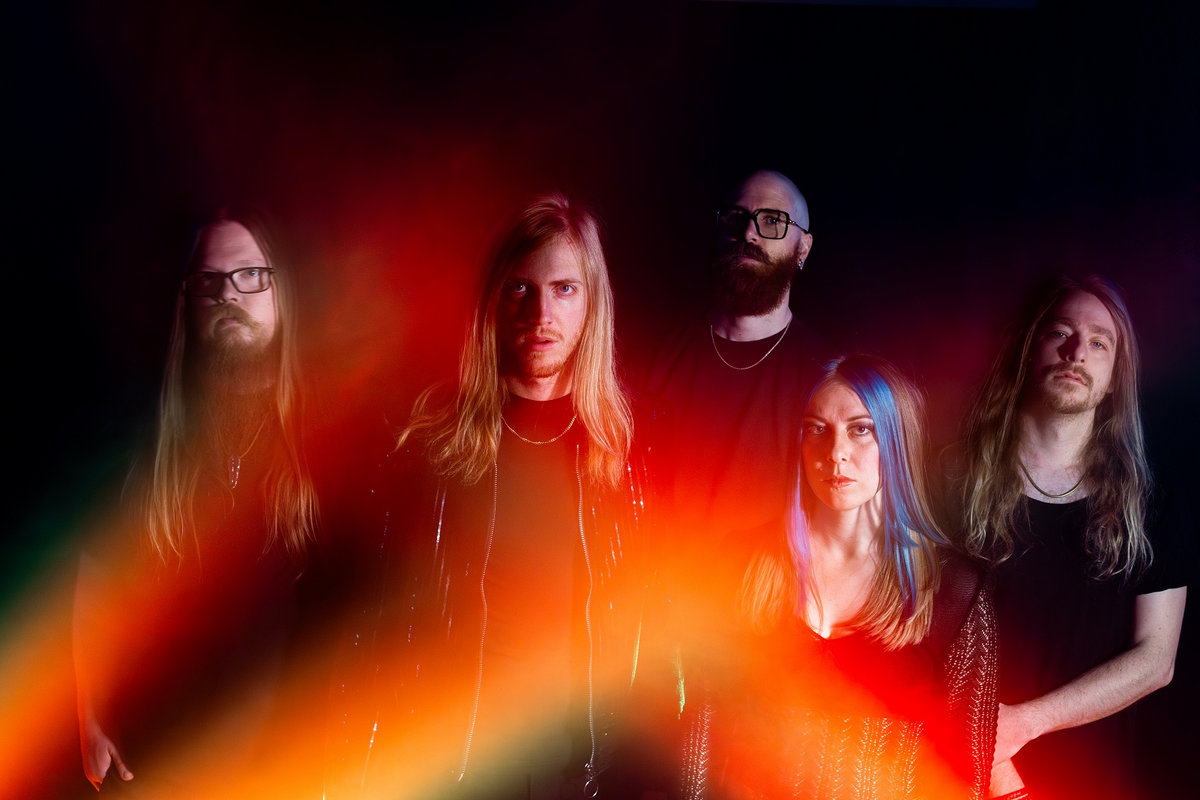
Progarchy.com interviewed Rylee McDonald of Advent Horizon earlier this month (on Monday, May 4th, also known as Star Wars Day, which fits well with the epic sonic vibe of prog: “May the Fourth Be with You”).
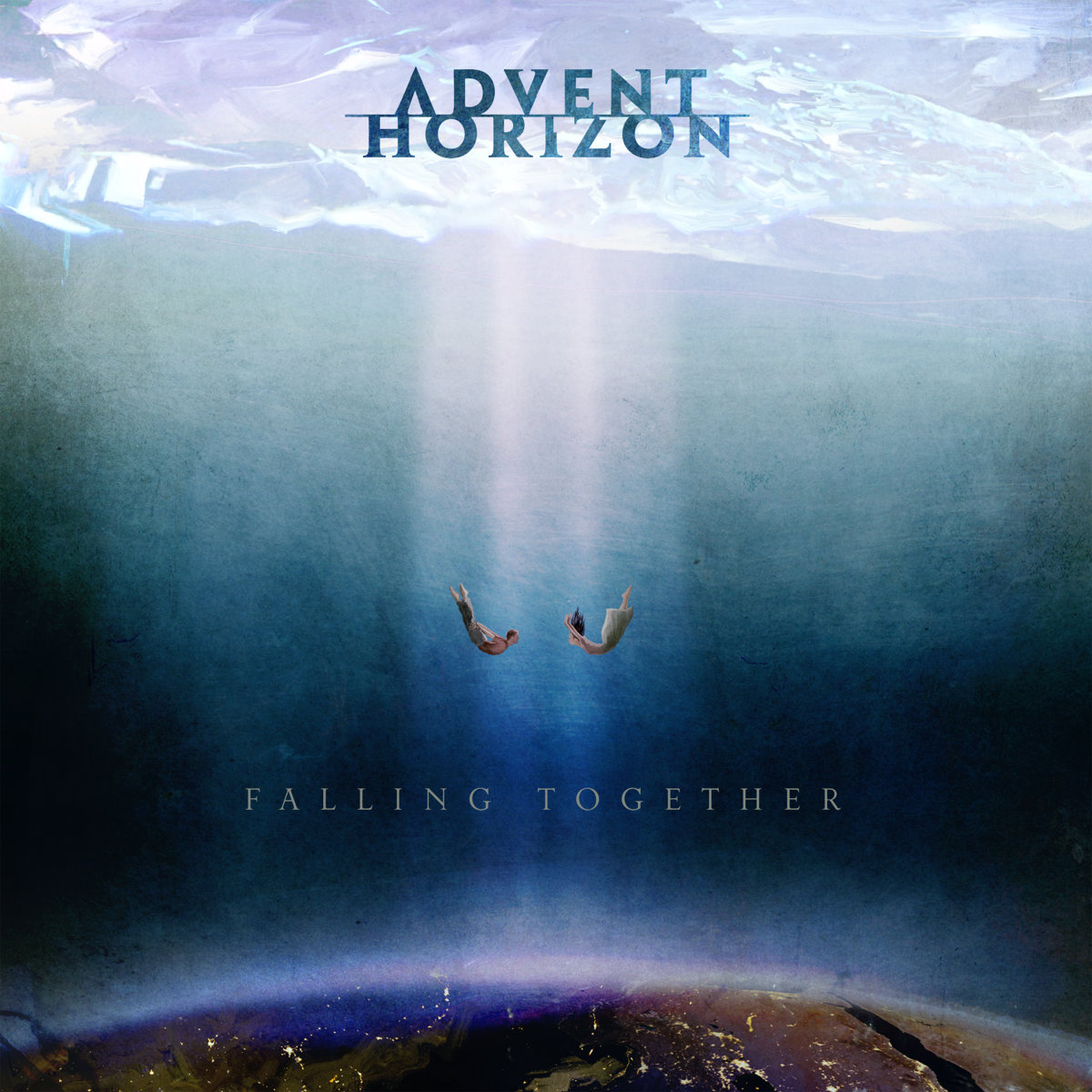
Advent Horizon’s brilliant new prog album, Falling Together, is released for this weekend, starting on May 15, 2026.
Our conversation with Rylee dove into the story behind all the songs in incredible detail. Many thanks to Rylee for his time and his thoughtful explanations.
This is a very rich prog album that you do not want to miss. Progarchy recommends that you buy this five-star album Falling Together today. We hope that this interview serves to enhance your enjoyment of it.
Progarchy: I was pleasantly surprised when the record company sent over a copy of your new album. I confess I wasn’t familiar with your band, but I was delighted when I listened to it. It was, it was, it was amazing. It was so good. I couldn’t believe it.
Rylee: Nice.
So I have this high quality task of having to go back and listen to all your old albums. I haven’t done that yet. I’ve just been enjoying the new one.
Well, thank you.
And it’s a pleasure to talk to you about it.
Well, thank you, man. I’m excited. And yeah, the new one, there’s a lot to dig into there. So certainly take your time before you go backwards in time.
Well, right away, the album begins with a 19-minute track that is amazing. The first thing I thought, when I was hearing it, was how high quality the production is. So tell me about where it was recorded, how was the recording and mixing and engineering done? Because the sound is definitely above average. It’s an amazing sounding album.
Well, thank you. First of all, I’m excited to hear you say that. It was, so this album was all recorded at a studio here in Utah called Cold House Studios. And it was kind of co-recorded and produced between myself and my good friend Zach Boorman. And so we pretty much just locked ourselves in Zach’s studio for about 5 months of last year.
January through May, non-stop. It was like three, four days a week, for five months, just chipping away at it piece by piece. And yeah, I have a lot of experience with studio work. I’ve spent a lot of time recording, producing, mixing albums for artists. So I’m a fairly seasoned audio engineer, but Zach is an absolute master. He’s just incredible. He has ears of gold, man. Everything he touches sounds so good. So yeah, it was a fantastic experience working with him and his studio and just really fun and gratifying to be in a creative environment where we can just experiment all the time. And, you know, any time one of us would say, hang on, wait a second: I think it’d be really cool if we added a Mellotron here, or if we added an extra guitar harmony on top of this guitar solo, or whatever. It’s fun to be able to just have the ultimate creative freedom to let anything happen.
Well, I couldn’t believe it when I heard the album. I was thinking, how have I not heard of these guys before? It was obviously my fault (to have overlooked Advent Horizon) because the sound was just so top-notch. There’s no substitute for experience and expertise. And clearly both you and Zach are highly talented in that regard.
Well, thank you. I appreciate that. And I’m interested to hear your take on our last album before this one, when you have a chance to listen, A Cell to Call Home, because that one was 100% produced in my basement, in the room that I’m currently sitting in. And it sounds really good. I do think our new album is a significant step up, but I’m interested for you to hear the difference between the two, between Basement Advent Horizon versus Studio Advent Horizon.
Thank you. Well, I look forward to it. But it seems as if in music, musicians are always getting better and better. So, it was a pleasure to be introduced to you in what sounds like you’re operating at the peak of your powers.
I’d like to think so. I would love to think that that’s the case right now.
Well, take the 19-minute opening track, “In a Lone and Dreary World.”. It has so much variation. From harsh vocals to clean vocals to distorted guitar tones to clean guitar tones. It seems like there’s a surprise around every corner. Even, suddenly, there are female vocals.
Yeah.
So who is the female singer in your band?
So that would be my wife, Kristen. And she is, she is now, I think we can finally officially say, she is an actual member of this band. It’s been, it’s been fun, kind of seeing her gradually come into the fold with this group and become more and more of an actual participating member collaborating with us. So, Kristen and I met in high school, and we met through music. The first time I ever saw her, she was singing at a high school open mic. And I just fell in love with her voice instantly, and soon after fell in love with her as a person. And we’ve kind of been together ever since, since we were 16 years old, basically. But it’s interesting that we had never performed together until our last album, A Cell to Call Home. That was the first time in our relationship of, you know, having been together for 15 years, that we had ever actually performed as a couple. And it’s been really cool.
So, Advent Horizon, a little history backstory for you, and for those who don’t know, for a long time, we were a four-piece band. It was myself, a bass player, Cason Wood, our drummer, Mike Lofgreen, and then we have a fourth utility member. Originally, it was Levi Benjamin Shell, and then more recently, since 2015, Grant Matheson has become absolutely indispensable to us. So, we’ve been this four-piece group for years and years, but I have this bad habit of writing music that my baritone voice doesn’t want to sing. And so, when I’ll be just down in my basement in my studio, dinking around with ideas in Pro Tools, there are times where I’ll come up with a vocal melody and I’ll try to sing it and go, nope, that doesn’t work for my voice.
And so I’ll yell, hey, Kristen, can you come down here? And she’ll come down and I’ll set her in front of the microphone and say, just humor me. Could you record this part for me really quick? And every time, as soon as she sings it, it’s like immediately, oh my gosh, that’s how it should sound. Your voice is perfect for this. And so gradually over the years, there have been more and more songs that incorporated her vocals, kind of just as a like, as the default option, like she was available and conveniently, she’s also incredible. And yeah, so it took us a while to admit openly like, okay, she’s actually a member of the band. But we’re to that point now and I’m proud to say it.
That was a very long answer for a very short question. Sorry about that.
No, I’m happy to hear all the details and I’m glad that she’ll be singing more and more on the albums, because your voice is amazing, but so is hers. The Advent Horizon website has Grant and Cason and Mike listed, but Kristen is not listed as a band member. It has the pictures of the four of you. You’ll have to get the record company to update that.
We need to fix that. And that’s actually our bad. Grant and I handle all the website design together, but it’s tough because we are still an independent band. We’re actually not signed. We don’t even technically have a record label at this point. We have a press agent and we have a team of people helping us out.
But it’s one of those many things where, when you’re an independent band, you handle all of your own web design, all of your own advertising, all of your own, you know, everything falls on you, and you end up with so many jobs on your shoulders that it feels like spinning plates, and you’re jumping back and forth like, oh, the website’s out of date. Oh, our social media is out of date. Oh, we need to do more videos.
Ah, it’s crazy. So we’ll get around to fixing the website sooner or later, I promise.
Thank you. So, Inside Out is just distributing the album?
I don’t think Inside Out is in any official capacity involved with this record. You would have received it through Royal Avenue Media, which is Roie Avin. Roy is our press guy, our PR guy. And so he’s been graciously helping us get the word out about this album, and I believe it was through him that you received the record.
Yeah, it was from him, so I assumed it was on Inside Out. I didn’t look closely.
Right, because he does so much for Inside Out, right? You’re not the first person to assume that. And you know, who knows, maybe this is a foot in the door for us with Inside Out. We would certainly be interested in working with them, but the offer has not yet been extended. So here we stand as an independent band.
Well, someone should sign you and promote you as widely as possible, because your music is excellent. Tell me about the first track, “In a Lone and Dreary World.” What is the story there? I’m still becoming familiar with the album. I’ve only listened to it about 10 times, but it’s so rich. It takes a while to get into everything. Why are there two voices? Is this a story told from one point of view or from the point of view of two different people?
Yeah, that’s actually a really good question. First of all, I have to comment on, you said I’ve only listened 10 times, and that right there is a testament to how awesome progressive rock is. Is it not? That, I mean, if we were talking about any other genre, if we were talking about country or pop or whatever, 10 times would be all you need to hear every… I mean, three times would be enough to catch most of what’s in an album, right?
I agree. I agree. Exactly.
But it’s a beautiful thing that we are working in a genre where it is expected that you will listen 10, 20, 30 times to an album just to get to know it. So awesome!
Yeah, and you hear new things on the 10th listen.
Right, there’s always more to dive into. I just… I love it. That’s why I’m so happy in this genre, with this community of people. But yeah, so as far as the story of that first song, “In A Lone and Dreary World,” that song, and actually the whole album really, is kind of a personal journey.
For myself and my wife. We both grew up in very religious households, very religious communities. And while we had amazing childhoods and wonderful families, both of us, we have together gradually fallen away from organized religion over the last decade.
And so there’s a lot of personal experience there. I don’t think either of us harbor any, like, incredible negativity towards religion; but it’s just, there’s been a lot of learning and personal growth, and understanding ourselves, that has happened over the last decade. So, the story of the album is that essentially. It’s our personal introspection on what we have gone through as a couple, and how that whole experience has shaped where we stand in our lives, but also has helped us grow together as a couple in this shared experience that we’ve had.
That certainly comes across in the lyrics. It seems to be a love song where you’re singing to each other. And then the track ends with a repeated phrase, “Saved and sound, saved and sound.” Not “safe and sound,” but “saved and sound.” And I was wondering, what does that phrase mean, in your understanding?
It amazes me that you’re the first person who’s asked that. Like, I don’t even think any of the band members ever asked that when I wrote that lyric, because I don’t know why. Nobody’s ever asked. But, so, for me, there’s a lot of word play going on in the lyrics of this whole album. Not just the lyrics, but the song titles, the album title. Like, the album title Falling Together is a little bit of like a, you know, when you, when people leave a religion, it’s often said that they’re falling, You know, falling from grace, or falling, or whatever. So, the album title is Kristen and I are “falling together” away from religion towards the lone and dreary world of the earth, the world of man, you know. And so, there’s a lot of, like, imagery and symbolism, and a lot of it is subtle enough that I think it has to be explained before people are like, oh, that does make sense. But yeah, so, “saved and sound” is just another one of those where there’s a lot of, like, kind of tongue in cheek, like, using religious phrases, but in a way that, like, almost flips it to where usually you would say, like, when I found God, I have been “saved.” But, in this case, like, I’m using the phrase “saved” as, like, for me and Kristen, our relationship.
I don’t, I mean, this is all, this is conjecture and I, like, this is maybe not a great thing to say, but I don’t honestly know if we would have lasted as a couple, had we not made this journey together. And so, we have been “saved” through this mutual experience that we’ve had in our own weird way.
And that’s why there’s the whole, like, “when I’m with you, all else seems to pass to the side.” Like, ultimately having us, us being together as a couple, having each other to get through this life together, that’s, at the end of the day, what really matters to us.
That’s lovely. The thought I had was that because you don’t have any hard feelings towards your upbringing, the “saved” part is still there, but the something new added is the “sound.” The “sound” of the two of you making beautiful music together. The “sound” is the solid ground that you feel that you’re standing on now.
Wow.
And the title of the song, now that I’ve heard your explanation, the title of the song seems to be ironic. You know, our former congregation, or whoever, would say that now we’ve departed into “a lone and dreary world,” but ironically, it’s the opposite.
Yeah, and that’s exactly the intent. I’m glad that you got that. And I love what you said about the sound being representative of us making music together. That’s beautiful. I hadn’t even considered that before. That’s amazing. I’m going to start telling people that that’s how I intended it. I’m stealing that. Ha ha ha!
Well, no, it’s the beauty of art is that the richness of it is a gift. You’re not fully conscious of what’s being produced, but you’re offering it. And then, many things can be found there, even by you yourself later on. I also thought there was an ambiguity in the album title. Things could be “falling down,” as in: “falling apart”; or, things could be “coming together,” all the pieces are falling together.
Yeah, like a puzzle piece. And that’s, there’s so many ways. I’ve always loved album titles that have so many multiple meanings, you know, like, I mean, classic example, like Moving Pictures by Rush, right? And I love titles that could be perceived in multiple ways and the artwork helps to show how it can be perceived multiple ways. So yeah, that’s, I mean, I do not make any claims of this being anywhere close to as much of a masterpiece as Moving Pictures is, but that was a little bit of an inspiration to me there.
Well, every song is amazing. “Faith’s Window” has a witty line. I’m trying to remember how it goes. “Faith is a window that we can’t look through,” if I got that right.
You got it, yeah.
And then when it speaks about, “but I’m addicted to you,” who is the “you” that you’re speaking of?
So that song is actually, I mean, it’s that, first of all, that’s my favorite song on the album personally. That’s the song that, it just hits me the best. I’ve, now this is two questions in a row that I’m answering with Rush references, but I’m a massive Rush fan. So that song…
You’re allowed!
For me as a vocalist, and also as a producer, it just feels like 80s Rush. It feels like Power Windows-era Rush in certain sections to me, and it makes me so happy. So, like, it speaks to me, like, sonically, but also lyrically. It’s intensely personal. It’s a little bit about…
I’m trying to say this: I’ve struggled a little bit explaining it, because it’s kind of a touchy subject for a lot of people, but it’s morality as it applies to religion, specifically, sexual purity. And that, growing up in a religion, in a religious environment, where you are told that you must keep yourself pure, and expression of love is something that should be limited until marriage, and all that kind of stuff. And not that I don’t believe it’s good to be, you know, to be moral, and to decide for yourself what your code of morals are, but I do believe that there can also be harm done when that message is taken too far.
And it’s kind of my way of trying to work through all of that in my own head of, like, how important is that purity, and at what level does it become obsessive to say you have to be pure until a certain point, but then after that point, anything goes as a couple; you know, it’s like, there’s just a weird line to walk. And when you grow up in a religious environment where you are being told, these are your morals, rather than being told, you need to find for yourself what your own morals are, that I believe can be harmful. And I think that’s where I’ve, where I’ve ended up with all of that. So, the addicted to you was kind of, like, talking about wanting to find ways to express love, but feeling limited, and feeling constrained, and feeling like I’m not allowed, or I should be cautious about my expression of love.
That’s fascinating. I understand the song better now. And it does strike me as a favorite, because it’s so generous and open-hearted. It seems like the critique of religion comes in more on track four, “Past Life Parable.” There, there seems to be, if I’m remembering correctly, there’s criticism of practitioners of religion whose morals don’t match what they preach. Do I have that right?
Yeah, I think so. The way I describe that song is, that is kind of my, it’s my internal thoughts, which remember, all of this, all of these songs, as critical as they may sound, ultimately, it’s just me trying to work through my own thoughts on everything. And my thoughts are changing. And it’s possible that, you know, years from now, I’ll look back on these songs and go, oh, man, I was way too harsh.
But on “Past Life Parable,” I was kind of working through my feelings on positions of power within the world and how a lot of people, we as humans, have this tendency to take people’s word, without proof of them actually delivering what they say they’re going to deliver to us. And that applies in religion, obviously, that’s the context here for me, but I think it’s a universal theme that also applies to careers, to relationships, to politics, to all sorts of areas of our lives where we will give over our time, our money, our mental and physical energy to somebody who says they’re going to provide us whatever, eternal salvation, or they’re going to make our country a better place, or they’re going to whatever. We have this tendency to say, sure, I’ll give everything to you, without any proof beforehand. And it oftentimes turns out that we are just being used for political gain, religious gain, power, you know? So that song is kind of, like, my way of working through all of that.
So, the reference to “bread and wine,” if I understand, has to do with a critique of people who practice a communion ritual, a ritual that should be an expression of love and community, but that, in the telling of this song, has become a cover-up for people with questionable morals. So what the meal should be celebrating as a coming together of humans is actually a cover-up, or something like that.
Yeah, I could see it that way. I think there is an element of that. There’s also an element of, it’s interesting, because there’s a phrase within the Mormon religion, which is where I was raised, “moderation in all things.”
And I think that’s, probably, kind of a common phrase that’s used across a lot of religions, but that’s, my experience was, in church as a child, I was told, like, moderation in all things is important. And I have over the years come to understand that that rule, moderation in all things,
should also apply to religion. Religion can be a good thing that can bring people together, that can create a beautiful community, that can lift the world up. But when taken to its extreme, when you become addicted to the divine, it can tear apart the world. It can be something that divides us, something that creates an “us versus them” mentality in the world. And so that’s, a part of what I’m saying in the song, is that, like, that “flying high on bread and wine, addicted to the divine,” is just me saying like, hey, you’re taking a beautiful thing too far.
Right, and you’re becoming a fanatic. That makes sense. I used to go to graduate school with a fellow who, one of his sayings was, “Moderation in all things, including moderation.” That would be his toast.
Yeah. Oh my gosh, that’s amazing. I love it.
Well, you said that “Faith’s Window” is your favorite track. I would say my favorite songs, I can’t pick just one, they would be those three in a row, “Faith’s Window,” “Patience,” and “Past Life Parable.” They just flow together so beautifully. And I love those giant chords in “Patience.” There are points in the song where those giant chords just float in the expanse. Makes me think of Pete Townsend on “Baba O’Reilly,” just letting the big chords hang in there and ring out.
Oh yeah. Totally, totally. That’s a big influence on me. And it’s entirely possible that I was unconsciously channeling Pete Townsend in those moments. Because now that you say it, it’s like, whoa, that’s like so similar. Very cool.
Yeah, Pete meets Power Windows.
Yes, exactly. There’s Pete with more reverb.
And the “Patience” lyrics are very witty too. You’re coming to a consciousness of your own strengths and weaknesses.
Nice. Well, thank you. I appreciate that. I yeah, I mean, and so, “patience” as it applies to that song, that’s simple. That song has the least lyrics on the album. It’s just a couple of verses with like a repeated refrain, right? And that’s, that song is really just, like, me. That one’s a little bit less religious in its messaging. Honestly, that’s probably the only song that I would say isn’t
really about religion. It’s more about me. It’s kind of like an introspection on my own tendency to jump at opportunity without really thinking. I’m a very, like, ambitious, driven person. I will work myself to the ground if I have to, to achieve what I’m looking for, what I’m aiming for.
Which has led to a lot of successes in life, but it has also worn me down at times. And so that’s, kind of, just me trying to remind myself to not get carried away.
Interesting. I think it is related to the religion, because that sort of character can be invested in religious practices, maybe prematurely, or beyond the bounds of prudence, and then discovering, wait a minute, I’ve been passionately rushing into all this and maybe I shouldn’t have gone that far because these people are a little bit questionable. I don’t know.
Yeah, that’s fair. That’s a fair assessment. Yeah.
And then there’s “Gravity, Part One” and “Part Two.” I think “Part One” is just an instrumental prog-fest.
Pretty much, yeah.
But then what is the metaphor of “gravity” about? I haven’t cracked the code on those lyrics yet. What’s that song about? “Gravity, Part Two”?
I, that song is a little bit, out of everything on the album, that one is the most ambiguous in its lyrics. There is meaning there. There’s definitely, especially there are certain phrases in the album, in that song that have significant specific meaning to them.
As far as the reference to “gravity,” there are, there’s a couple of things. First of all, “gravity” can mean multiple things, right? Gravity can be the thing that holds us down to the earth. It can be, and therefore also metaphorically through religion, can be a thing that holds us down, that holds us back from reaching the heights that we could otherwise attain. Gravity can also mean, though, like, the “gravity” of the situation, right? You’re dealing with an intense thing that really needs to be considered before jumping into it. So, there’s the first verse ends with “gravity is stepping out of a window just to find that you float away.” And that phrase is using both meanings of gravity in a way, because like gravity is like is the metaphor for religion for me that was holding me down.
And once I’ve let go of that, I can step out of that window of faith, the faith window that I can’t look through. I can step out of it and fly up to heights that I hadn’t been able to reach as a human being before. But also, that is, the situation of letting go of religion and experiencing the freedom of flying, is a, it’s a manifestation of the “gravity” of the situation that I’ve been through, if that makes sense.
It does, it does. That is the most striking line in the lyrics. And so, it sat with me. Haven’t been able to figure it out, but you explained it so beautifully.
So then in the second verse, the second verse ends with, “gravity is what holds us together.” We are one when we’re all afraid. And I’ve kind of turned the meaning of the song a little bit away from my personal, like, letting go of my past, and that being the thing that allows me to fly.
I’ve turned it from that, to kind of a little bit of a critique, and the rest of the song ends up being this, a critique on how fear is used as a point that unites people. And this happens for control.
Right, for control. It’s a tool.
Tool for control, right? And so, “gravity,” when you can create these “grave” situations that people are afraid of, when they’re afraid of the other, when they’re afraid of the other group of people that they don’t understand, and they divide themselves, that unites this group of people. And that’s the whole, like, creating situations of “gravity” is a way to control people, and those people feel like they’re one because they’re all afraid, but really they’re separate.
That’s lovely. So, if you let go of the fear, you can fly.
Exactly, exactly.
And the last track, “Animals.” Of course, the song title makes me think of Pink Floyd immediately, especially when it’s an acoustic guitar-driven track.
You’re not the only one: myself, myself included.
Why does the album conclude with that song? What’s the meaning of it?
That song is… Well, first of all, I’ve always liked… I’ve always appreciated albums that end with a more thoughtful song rather than going out with like a big epic climax crescendo of all the craziest solos. I much prefer endings of albums that make you sit and think after the album’s over. You know, so going back to the Rush example, Rush loves to do that.
They love to put these ending tracks on albums like “Between the Wheels” on Grace Under Pressure, like “Mystic Rhythms” on Power Windows. They love to end the albums with these songs that make you sit for four or five minutes after you finish listening and just take a breath, and go: “Whoa, what did I just, let’s think about this,” you know? So that’s kind of, like, the first thing is, that I wanted to end the album with something that was a little more, like, introspective and atmospheric, and kind of put you in a pensive mood. But also, that song is about kind of the end of the road, the end of life. And I’ve always felt like, religion at its core, while it can be used for a whole lot of other things, the fundamental reason religion exists is to explain our purpose in the world, and what happens after this life, right?
And when you remove yourself from a religious setting, you have to go through a whole lot of thought about, okay, what is my purpose in this world then? If I wasn’t put here by a God, if there isn’t some grand plan for my existence, then what is my purpose in this life?
And that’s something that I think a lot of people get very down about. And it’s also something, it’s a reason why a lot of people spend their lives choosing to push their way through,, and stick with a religion because they’re afraid of the alternative. And so for me, “Animals” is kind of my thoughts on life and the fact that I don’t know what the purpose of life is, but I’ve come to a place of peace with that, because the world, while it is a lone and dreary place, with a lot of suffering, a lot of fear, a lot of bad things that happen, it’s also an incredibly beautiful place. And there’s so much diversity, and culture, and beauty in nature. And whether we as human beings have been put here by a God, or whether it was just luck of science and biology, either way, are we not incredibly blessed that we get to experience this world? And should we not, instead of focusing on what happens after this, should we not just appreciate and enjoy the wonder of the world that we get to experience?
Rylee, thank you so much for taking this time to meet with us today. And I appreciate you going a few minutes beyond our scheduled time to give us that explanation of “Animals.”
Thank you. Oh, no worries at all. Happy to talk.
I think you have to go to your next appointment, because I saw a door open in the background.
That was actually my dog walking into the room. Maybe he’s reminding me it’s time for his walk appointment.
Well, thank you. I think you’ve found your calling. I would say your calling in this world is to make beautiful music. You add so much beauty, and this album is going to be on my Top 10 List because it’s such an incredible surprise to discover music of such high quality. So, it’s good to meet you, Rylee. Thank you again for taking time to talk to us.
Thank you so much, Chris. This has been an absolute pleasure. Really appreciate you taking the time to check out our music. Thank you.
I hope we’ll meet again, maybe live in concert.
That would be amazing. I would love that. I would love that.
Advent Horizon is:
Rylee McDonald – Vocals, guitars, keys, percussion
Mike Lofgreen – Drums, percussion, screams
Cason Wood – Bass, fretless bass, synthesizers, electric and acoustic pianos, organs, hand claps
Grant Matheson – Vocals, keys, guitars
Kristen McDonald – Vocals
Additional musicians:
Zach Boorman – Guitars, pianos, synthesizers, backing vocals, percussion
Doug Robinson – Supplemental guitar on In a Lone and Dreary World
Cressa and Griffin McDonald – Background vocal ambience on Animals
Recorded and mixed by Zach Boorman
Produced by Advent Horizon and Zach Boorman
Mastered by Jens Bogren
Artwork by Travis Smith

