Well, the new year is barely a week old and almost immediately, the Dream Team double bill is announced for a mini-tour of England and Wales in November.
There cannot be two more exciting and contrasting bands that Lazuli and Moon Safari who are confirmed for five dates in November with possibly extra dates to follow.
So we come to Pt 2 of DPRP’s overview of Yes’s works up until Keys to Ascension which features guest contributors Theo Travis, Adam Holzman, Rob Reed and Luca Scherani.
It is that time of the year to recall and reflect on what has been another extraordinary year for this crazy little thing called prog.
Again, as the fans and consumers of huge quantities of prog, our expectations were high and once more, the bands continued to deliver in the most spectacular fashion.
A question I have asked myself on many occasions this year is where on earth is this music coming from? It appeared there was a whole new seam of invention and creation being mined in the most spectacular fashion by the current torch-bearers of the musical genre.
There have been so many highlights both on record and indeed live this year. Watching bands, especially The Enid, Haken and Maschine overcome the extreme cold at HRH Prog; seeing Benoit David and Michel St Pere dazzle with Mystery at Celebr8.2; encountering Steven Wilson at the Royal Festival Hall in the same week as the Flower Kings, Neal Morse, Transatlantic and Steve Hackett were at Camden’s Electric Ballroom (plus three other gigs we attended), and of course, celebrating the return of Lazuli to Summers End, all brought immeasurable joy to this humble observer.
The “wow” moments have come thick and fast, the personal high being The Big Big Weekend, when a simple idea took on a life of its own and became a celebration of the warmth and camaraderie between one very special band and its fans. Here’s hoping there will be a chance to repeat the occasion next year.
Central to all of these activities of course is the music, that has been extraordinary, exhilarating, life-affirming, game-changing and frankly brilliant.
There were ten particular albums which stood out for me and here they are in order of preference:
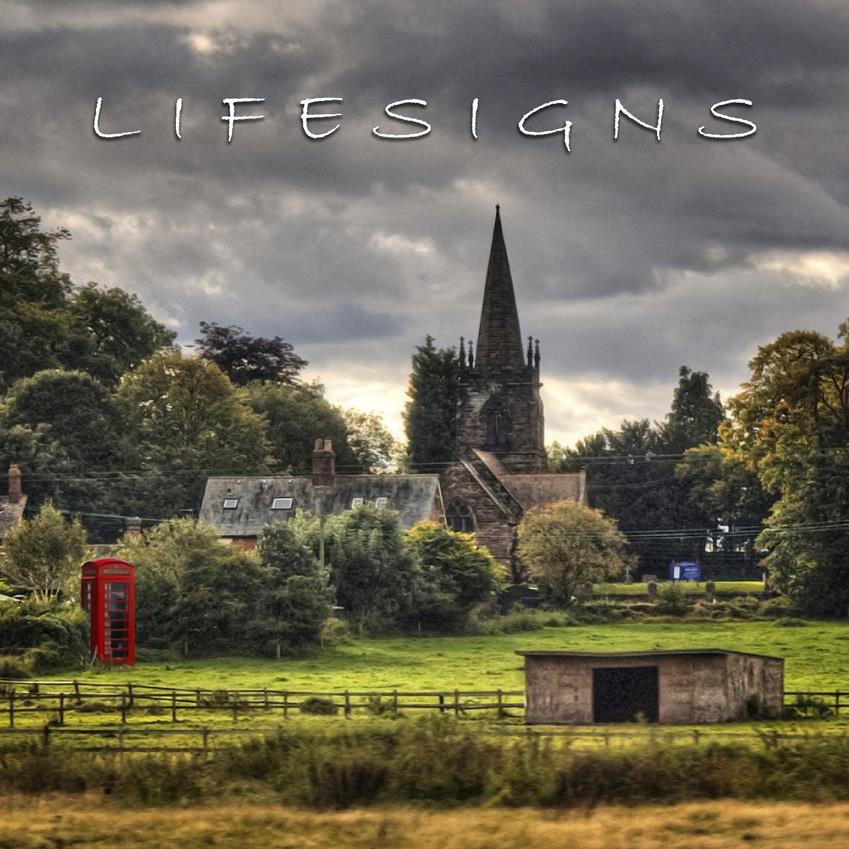
1) Lifesigns – Lifesigns
A beautifully balanced album composed by John Young containing all the classic prog elements and some stunning performances from a “who’s who” of players. Shining out in particular are JY’s superb expressive voice and virtuoso keys, Nick Beggs’ sonorous bass and frenetic Chapman stick, Frosty Beedle’s energetic drumming, together with dreamy guitars from both Robin Boult and Steve Hackett, and classic flute flourishes from Thijs van Leer.
What made it stand out for me was the very deep spiritual chord it struck especially through the lyrics which reflected on some of my own personal life experiences and hopefully, lessons learned as a result. It will be wonderful to see it all performed live next March.
2) English Electric Pt 2 – Big Big Train
Well, how do you follow English Electric Pt 1 which was my 2012 album of the year. Pt 2 came oh so close to repeating this feat in 2013 and East Coast Racer is without doubt the stand-out long track of the year. Nobody can get through this remarkable composition without marvelling at the innate splendour of the legendary locomotive so lovingly built and still a centrepiece of British industrial heritage. The whole album is a musical meditation on times past and all that we have lost in order to gain in the name of “progress”.
3) The Raven That Refused To Sing – Steven Wilson
As a long-time SW naysayer, I locked myself away in a darkened room to listen to Raven with a view to writing a negative review. How nice to be proved wrong once in a while. Finally, I felt him reaching out and grabbing those of us sitting on the fence. Everything about it oozes total power and artistry, the playing and production an exercise in consummate prog excellence.
4) The Mountain – Haken
Having finally caught up twice live with one of prog’s emergent stars this year, they deliver the killer blow with an album bursting full of pomp and swagger. It fuses prog metal with some deft touches including the Marmite track The Cockroach King which channels Gentle Giant and Queen, plus the mighty Atlas Stone, a cinematic masterpiece of epic proportions.
5) The Twenty Seven Club – Magenta
This is arguably the finest album so far by the Welsh quartet, a breath-taking collection of carefully crafted songs, each depicting a particular musical legend whose life was cut short at that tragic number. It could have been mawkish or contrived; instead, it hit new heights through both the instrumentation and the gorgeous voice of Christina Booth. Here’s hoping her current treatment for cancer will enable her to return to the stage very soon to perform those glorious songs live.
6) Le Sacre Du Travail – The Tangent
One of the most eagerly anticipated albums of the year did not disappoint as Maestro Tillison and his all-star cast rewrote the prog script harking back to Stravinsky and indeed Bernstein with its extraordinary musical scoring and individual take on the world of work. As someone who now listens to Steve Wright in the Afternoon by design rather than choice, its meaning has taken on a whole new dimension!
7) The Man Left In Space – Cosmograf
There are many great storytellers in prog but Robin Armstrong is one of the best. He draws on his own personal influences such as David Bowie, Pink Floyd and Neil Armstrong to recount the ultimate double-edged tale of how success can lead to the ultimate sacrifice. The claustrophobia and loneliness are palpable throughout.
8) [REDACTED] – Also Eden
After a near-fatal motorcycle smash and two changes of personnel, Also Eden up their personal ante with an album of such dense atmospherics, it is akin to taking a walk down by the water on a warm misty evening and entering into a parallel universe. Rich Harding’s penetrating voice and Simon Rogers’ soaring guitar are your pathfinders into this rather ghostly new world which also draws on influences such as Rush, Marillion, Francis Dunnery and Steve Hackett.
9) Rise Up Forgotten, Returned Destroyed – Shineback
Always expect the unexpected with Tinyfish’s mainman Simon Godfrey whose songwriting is right up there with some of the best. Breathing fresh life into electronica, RUFRD is a deceptively clever album which uses samples from Bulgarian singer Danny Claire to build a story drawing on his vivid imagination during his childhood experiences of insomnia.
10) Fanfare & Fantasy – Comedy of Errors
After their excellent debut album Disobey, this album affirms Comedy of Errors as a growing force in prog, their brand of melodic prog echoing Marillion and Mystery but with a few surprises along the way such as Time’s Motet and Galliard.
Dominique Leonetti with Romain Thorel on drums and Vincent Barnavol on hand drum.
Few bands out there in Progland have a unique power and magic to completely rip up the rule book and make music which messes with your mind, touches your soul and fills you with a joie de vivre, that leaves you ever gasping for more.
As regular readers of my occasional blogs may now be more than aware, I have forged a very close connection with prog’s most original and certainly most exciting live band, Lazuli. Who? Well, if you live in the USA, you may not have encountered them yet but, hopefully, that will change soon.
Having performed in mainland Europe and also Canada, Lazuli’s one US appearance was at Rosfest in 2009 and their first live UK gig was at the Summers End Festival two years ago. They were Friday night headliners, unknown to all – including yours truly – but a handful of the more savvy festival goers.
We were conscious there were some guys resembling the cousins of Legolas, Boromir and Aragorn mingling with the audience but, having noted how striking they looked, thought nothing more of it – until they arrived on stage as the headliners. The rest, as they say, is history.
As well as looking like the good guys in Lord of the Rings down to their goth Masonic attire and elaborate hair styling, including a plaited beard, their inventory of instruments is extraordinary, comprising French horn, mandolin, marimba (more of which later), beat box, assorted guitars, an elegantly angled keyboard,a single hand drum and the Leode (more of that later too). Their other USP (unique selling point) is that they do not sing a single word in English.
Now imagine how all that could look and sound when delivered live on stage. I tell you in all sincerity – it is mind-melting. Central to the sound is the aforementioned Leode, an instrument invented by the band’s original guitarist Claude Leonetti after he lost the use of his left arm in a motorcycle accident back in the 90s. According to the band’s website, Claude had a dream about creating an instrument, literally a sonic box of tricks which he could operate with one hand. This extraordinary electronic device, resembling a Chapman stick can conjure up all manner of sounds, ranging from Middle Eastern mysticism to out and out prog metal.
Their UK debut at Summer’s End was without exaggeration the greatest live performance I have ever seen. Never mind none of us being able to understand a word they were singing, such was the sheer brilliance of their show, it was as if you were being transported away to a parallel musical universe, indeed to Lazuli Land.
It was not just the originality of their music, which owes much to the influence of the Beatles, to whom they listened when they were young Lazulis, but the way they delivered the songs – with a passion, a love, a belief, an intensity and also with great joy and humor.
Frontman Dominique (Domi) Leonetti, brother of Claude, is quite bewitching with his clear, powerful pitch perfect voice and his almost waist length hair secured in a long ponytail which takes on a life of its own when at his most animate. He also plays rhythm guitar, acoustic guitar and mandolin.
His main compadre is the ever-smiling guitarist Gederic (Ged) Byar, a fellow possessor of an extravagant head of braided hair and sculpted beard, but blessed with a fluid, vibrant smooth style which runs in perfect parallel with the cutting edge sounds of the Leode. He even occasionally runs a screwdriver up and down the fretboard,
They don’t have a bass player either. I thought I ought to mention that. The lower registers are left to the laser eyed Romain Thorel and his keyboard, again another instrument which seems to have an endless repertoire of sounds ranging from piano to drums. Oh, and he is the one who also trebles up on French horn and the drums, freeing up regular drummer Vincent Barnavol to play marimba, a hand drum resembling a djembe and beat box.
So, there’s the lowdown on what they do and how they do it.
French prog tends to either veer towards the avant-garde and experimental or the more Celtic. So, in many respects, Lazuli really have broken the mould, their songs centering on subjects important to them such as L’Arbre (The Tree) that is all about nature and man’s evolution (or lack of it).
Their most recent album 4603 battements, released in 2011, had time as its central theme. Many would argue that their adventures in recording are a far different and less exciting proposition than their live shows but I defy anyone to hear the incredible 15H40 (more about this later too) and its depiction of time ticking without a sense of wonderment. The album title translates as 4603 beats because that is how many there are on all 11 songs on the album.
And so to the present. Lazuli have been more than aware that I have been their UK cheerleader in chief since that epic performance two years ago. Last year, they performed at Germany’s Night of the Prog at Loreley, which clashed unfortunately with the first Celebr8 festival here in the UK.
So it was a masterstroke when the Summers End organisers announced they would be back for this year’s festival, along with German band Sylvan who had been the main crowd pleasers the year before in 2010. When Prog magazine asked me to write a preview of this year’s Summers End, it was a chance to touch base with Lazuli again to get their reaction about coming back to the UK to play.
Thanks to Google’s translation facilities, Domi provided some charming responses to my questions, saying how they grew up on British music so to cross the Channel to play here was very symbolic. Of their 2011 show, he said it was “beautiful and terrifying at the same time.” However, the welcome they received was so warm, they soon forgot their anxiety and enjoyed “this precious moment”. They were very excited and honored to be back at the festival.
Fast forward to Saturday October 5, the night they were appearing at Summers End, following the main headliners Gordon Giltrap and Oliver Wakeman performing the stunning Ravens & Lullabies.
Well, Lazuli rocked up halfway through the afternoon. It was great to catch up with them again and I gave them a copy of Prog magazine with my preview, ending up using my very rusty French to translate back to them the quotes they had given to me!
Cutting to the chase, they finally came on half an hour late and I must admit the ensuing one hour and forty minutes were a bit of a blur, because all that Gallic sorcery and charm was still there. Again, it is that connection they make with the audience which is so special as they give every part of their being to making their performances as dynamic as possible.
One song Film D’Aurore saw Domi with a tiny light on his hand that he shone onto his expressive face, but it is the extraordinary Le Miroir Aux Alouettes which hopefully you can see at the end of this paean, which is them at the height of the powers for many reasons, mainly its immense tempo change halfway through when Romain takes over drums from Vincent, then the whole mood goes from folk to Arabic scales.
Romain is such an accomplished musician, he gets his own solo spot to show off his incredible versatility on the keyboards, all improvised with a bit of jazz and funk thrown in this time. Even Domi and Ged crouch down by the side of the stage to watch him in full flight.
Then when they played 15H40, Domi decided to spin out the tension and to my utter surprise, decided to include yours truly in the song when trying to convince everyone it was “twenty to four” instead of around midnight so he jumped down from the stage and sought my counsel on the time.
Well, the time was ticking away and fast approaching 12.30 when they were called to order because of the lateness of the hour. So, instead of playing the brilliant 12 minute long Naif where audience participation is key to its success, they pushed the marimba to the front of the stage. And this is where the true genius of this band really showed with their Nine Hands Around The Marimba as all five band members simultaneously played chords and melodies, while taking the occasional potshot at each other. And was that a few bars of Solsbury Hill in there somewhere too?
If it was not for some of the throng having to rush out to get the bus back to their weekend lodgings, the band would probably still be playing as no-one wanted them to go.
How can I explain it succinctly? This band has such a positive, humble and uplifting vibe about them that they seem to reach inside and illuminate every corner of your inner being. Even over a week after the show, I am still buzzing about them like a hyperactive queen bee!
If you want further proof then catch their new DVD, Live @ l’Abeille Rode, the first part of which is them performing their live show without an audience but which is so beautifully shot, you feel you are part of the invisible crowd watching – and probably cheering them!
Well, what more can I say about this French connection except that Martin Reijman, who loves photographing them, and I are doing a crash course in French with a view to meeting up with them again next year in France. My aim is to interview them in French which hopefully will further help us all to understand the essence of this truly remarkable, unique band.
If you want to learn more about them, go to: http://www.lazuli-music.com/ and you can tell them Alison sent you.
Otherwise, please enjoy the Summers End encore (courtesy of Pete “Pedro” Waite) or Le Miroir Aux Alouettes shot at the Night of the Prog last year.
Simon Godfrey hears an early playback of Rise Up Forgotten, Return Destroyed.
Today endeth the first half of an extraordinary year in prog, one that will go down as another milestone in the resurgence and regeneration of this much maligned and often misunderstood genre of music.
Tomorrow is July 1, the first day of the second half of the year and notable because it happens to be Canada Day. It was also the day in 1879 when American evangelist Charles Taze Russell published the first edition of The Watchtower, the world’s most widely circulated magazine and the British Government revealed in 1963 that former MI6 agent Kim Philby had been spying for the Russians.
So obviously, with Philby, 50 years on, now yesterday’s man, something epic has had to happen to make July 1 memorable again.
This was probably the train of thought which emerged during the first board, or should that be bored, meeting of the newly formed Bad Elephant Music founded by David Elliott, the esteemed producer of the progressive rock podcast, TheEuropean Perspective, broadcast on The Dividing Line Broadcast Network.
For reasons best known to himself and his accountant, he decided to dip his toes into the murky waters of record label ownership and to help him achieve this, he enlisted the expertise of legal eagle, and prolific blogger James Allen along with Tim “Mouse” Lawrie, a ridiculously talented young music producer and erstwhile Merch Desk sales assistant – such is his latent versatility.
Of course, if you are going to start a record label, the one crucial thing you need is “product” and if it is going to be your debut release, it needs to be a bit of a beast.
Well, it just so happened there was a certain progressive rock troubadour, Simon Godfrey, who was in need of a suitable platform from which to launch a new solo project under a brand new shiny title. It was a match made in heaven, surely.
As a result, tomorrow will see a new epoch in progressive rock begin as Shineback’sRise UpForgotten, Return Destroyed goes on general release on the Bad Elephant Music label.
Simon, as most of you know, was the frontman of those great English eccentrics, Tinyfish, who ennobled themselves with the title of the world’s smallest prog band. However, they built up a formidable following borne out by the antics in the Fishtank, their fans’ forum, some extraordinary music, culminating in the cult album The Big Red Spark and the general mayhem which ensued during their live gigs.
Cue July 8 last year and the band reluctantly performed their last live gig at the inaugural Celebr8 festival in south west London. This was due to Godfrey’s worsening hearing problems through tinnitus. It was a memorable performance which involved a Princess of Prog tee-shirt, talcum powder and gaffer tape. You had to be there.
Anyway, this may have been the end in one regard, but in another way, it was a new beginning for Godfrey, who decided he wanted to make an album of his own on which he could indulge his passion for electronica.
So, he packed away his guitar and set about writing an album with a suitably far-fetched theme, the story of Dora, a young girl who films her dreams, based on Godfrey’s own childhood experiences in and out of the Land of Nod. For it to be far-fetched required the lyric writing services of his long time friend and Tinyfish’s iconic narrator – as he likes me calling him – Robert Ramsay, or as Godfrey describes their collaboration, the Sir Elton John and Bernie Taupin of Prog without the hair transplants of course.
They gave us a taste at Celebr8.2 in May with a suitably chaotic performance which also involved a duck, but that’s a different story for another time.
The album owes a huge debt to some of the influential bands from Godfrey’s formative years such as XTC and Japan, as well as incorporating the discipline, excuse the pun, of projects by the likes of King Crimson.
You cannot make an album like this without having a tight-knit group of some of prog’s most “happening” musicians, such as guitarists extraordinaire, Matt Stevens, Dec Burke and from Dec’s band Hywel Bennett plus Andy Ditchfield from DeeExpus, plus much in demand drummer Henry Rogers.
The result is ground-breaking, a techno album made in a progressive idiom which never sounds like any of the traditionally inspirational giants of the past. Instead, you can hear Japan, Eurythmics, Kraftwerk, a smattering of 70s glam rock rhythms, a hint of Sgt Pepper’s Lonely Hearts Club Band and even a touch of Bjōrk without the histrionics.
Bjōrk? Yes, indeed, because Godfrey discovered some samples made by Bulgarian dance singer Danny Claire in his files and without her knowing, he made her his Dora. Her breathy, spacey samples are included as blogs on the album to which he has added instrumental section to make them relevant to the story. Apparently, she is delighted with the results as well she may be.
So groundbreaking is this as a prog album that is humanly possible to either dance or throw shapes along to tracks such as the stand-out Crush Culture. Other songs such as Passengers channels The Twilight Zone while the title track, the longest on the album, brings together all the players for one huge techno workout with added progginess.
Co-produced by Godfrey and Lawrie, Rise Up Forgotten, Return Destroyed is a bit of a game changer in terms of what it brings to the progressive rock table this year.
The first half of this year has brought us a cavalcade of classic prog compositions, courtesy of The Tangent, Big Big Train, Lifesigns, Spock’s Beard and Comedy of Errors to name but a few personal favourites.
Shineback offers none of the above.
What it does instead is to start an entirely new chapter and therefore, it too is at least worthy of a mention on the Wikipedia page devoted to significant anniversaries of events which took place on July 1.
British prog fans are a hardy bunch of rockers who tend to follow the music wherever it may lead. So while hundreds of prog fans were enjoying the warmth of the Mexican sun at Bajafest and others were basking in the afterglow of the Cruise to the Edge in the Caribbean, a select gathering got a taste of prog in a cold climate.
Let me explain. The weekend before last saw the inaugural staging of Hard Rock Hell’s (HRH) Prog Festival.
It was running alongside the first ever AOR Festival so, effectively, it was two festivals for the price of one. Both were being held in a former Yorkshire steel mill, now Magna, a science adventure center which is one of the UK’s flagship Millennium projects opened in 2000.
There had been a certain amount of hoo-ha over here last year when the festival was first announced, due mainly to some clumsy messaging by the organisers which gave the impression it was the only festival happening for proggers. Of course, we are blessed with great prog festivals over here, among them the established and much loved Summer’s End and the newer kids on the block, Danfest and Celebr8. However, to cut a long story short, another brand new festival, Y-Fest, which was due to be held just along the road in Sheffield a month before this new behemoth took place, had to be cancelled.
It was not our intention to go, the festival being a good four hours’ drive up country but when we were offered a couple of tickets by a competition winner, well, it would have been rude not to! First and foremost, it presented an excellent opportunity to come and observe how the new bad boy on the prog block would perform.
Well, for the benefit of those not familiar with the venue, it is a huge black monolith, a catacomb of interlinking areas which, in some places, look like something from a sci-fi film set from where some may have not successfully escaped at closing time! http://www.visitmagna.co.uk/science/
As the families arrived to do the usual adventure tour, the various musical tribes began appearing to enjoy two days of non-stop music from a stellar cast of bands. Now, the reason why I say prog fans are a hardy breed is because in the great scheme of things within Magna, while the AOR crowd had a lovely warm arena with a large stage and good acoustics in which to enjoy their music, our “space” was an area adjacent to the loading bay through which instruments and other nefarious musical accessories were being delivered and retrieved throughout the day, resulting in the bay doors being constantly left open. Add to that the very high industrial cathedral-like ceiling and the concrete floor and it soon became obvious that this was going to be a weekend for thermals, scarves and woolly hats.
However, such was the good natured humor, one of our number, Richard Thresh, turned up in a Hawaiian shirt but had not gone as far as A N Other who was bravely sporting a pair of shorts. And whereas the lady members of the bands appearing would usually opt for something skimpy and appealing, thick tights, overcoats and furry boots were the order of the day.
It is going to be another vintage year for prog and if you do not know when or where it is going to start, then may I suggest you put Monday January 28 2013 into your diary?
Why? Because on that day, the first wave in the tsunami of brilliant new British prog rock will be available to the discerning listening community in the form of Lifesigns.
Let me tell you a little bit about it. First, it is another prog-ject following on from Kompendium’s Beneath the Waves and Genesis Revisited II that both had guest lists straight out of prog central casting. Also, three of the main players from those albums, Steve Hackett, Nick Beggs and Jakko Jakszyk will be appearing on Lifesigns.
Heading up this album is John Young, the classically trained composer, keyboards player and vocalist whose CV includes stints with Asia, the Strawbs, Greenslade, Fish, Uli Jon Roth and his own John Young Band. He also tours with Bonnie “Total Eclipse of the Heart” Tyler.
After such an illustrious career, John decided six years ago he ought to write a prog album which would draw together all the musical influences in his life including classic bands of the 70s such as Yes and Focus.
To cut a long story short, John moved to the delightfully named town of Leighton Buzzard in the Home Counties of England where his next door neighbour was music producer Steve Rispin to whom he started playing some of his musical ideas, usually late at night. Nick Beggs is also resident in this town and John invited him to be a central collaborator to Lifesigns. Frosty Beedle, drummer with Cutting Crew, who had a huge hit with (I Just) Died In Your Arms Tonight, became the third musical member of the core Lifesigns group with John and Nick.
So where is this all leading? Well last January, John and Nick invited Martin Reijman, my prog partner in crime, and me to come and hear an early version of the album.
By way of explanation, Nick and I go back a long long way – over 30 years – back to when I was working as a reporter on the local paper in Leighton Buzzard, but that’s a story for another time.
We had also met John both via Facebook and at a gig so it was an real honor to be among the first to hear the genesis of Lifesigns. Eighty five per cent of the album had been completed then and we were both struck by its classic British prog style, full of uplifting melodies, harmonies and instrumentation. By then, Steve Hackett had also added a couple of his signature flourishes to the arrangements.
After that, John also secured the services of one of his heroes, the legendary Thijs Van Leer of Focus who provided some lovely flutelines, then guitarists Jakko from King Crimson and Robin Boult, who has played with Fish.
The months passed and John got back in contact to say the album had been completed and Esoteric Records would be releasing it. He invited us back to hear the finished article but unfortunately Martin was unwell on the day in question and is still to hear it. So I returned alone to Steve Rispin’s studio in a beautiful part of rural Buckinghamshire to hear the album and meet Frosty, and John of course.
Well, the finished article was sensational. It was quite mind-blowing to think of the various processes and mixes the music had been through to achieve the final sound. Lifesigns is one of those quintessentially classic British prog albums (with a dash of Dutch artistry) which takes you on a long and memorable journey through some very special sonic landscapes.
The opener Lighthouse nearly knocked me off my chair with its wall of sound that conjured up crashing waves. As John is keen to point out, the theme of the album is life itself and is open to any interpretation the listener may want to put on it.
The three of us ended up at the local bar in the neighboring village where John recounted an extraordinary story of a meeting he had with another of his heroes, the brilliant Patrick Moraz of Refugee, Yes and the Moody Blues in the bar of the Los Angeles’ Hilton Hotel. Maybe one day, I will take a verbatim note from John of the story and share it with you here.
Anyway, that’s the background to Lifesigns which I hope you will all hear and adore, made by a group of incredibly charming guys who genuinely love making the music. It was a real privilege to have been a party to its progress last year.
[Ed. note–I’m thrilled beyond words to share webspace and writing space with Alison. She’s been one of my favorite prog writers for a long time, and I’ve found through correspondence she’s as spunky and witty as she is kind. So, thank you for joining us, Lady Alison. The pleasure is all ours.]
It never ceases to amaze me to this day how very few ladies love prog. Even in these “enlightened” times, it still seems as though we continue to be an endangered species but well worth preserving.
Though there is a thriving private Ladies of Prog Facebook group, here in the UK, the physical and spiritual home of prog, there is a relatively small group that make up the Sisterhood of the Prog. We all know each other, we get on really well together and we all share a passion for a very diverse range of bands. From conversations I have had with fellow lady proggers, it seems that IQ and its offshoots are a particular favourite along with Frost*, It Bites, Steve Hackett and of course Rush (though the debate still rages on as to whether they truly are a prog band).
My long standing joke is that there is never a queue for the ladies’ washroom at concerts: in fact at the classic Transatlantic concert at the Shepherds Bush Empire in London two years ago, I would guess there were less than 100 lady attendees among the 2,000 strong audience.
So I can only go by my own personal experiences of prog which started longer back than I care to mention and can be traced to a chance meeting with an older man on a family holiday in Majorca. I was 12: he was 15 for the record. He was a huge fan of Curved Air who had just announced their arrival through their debut sensation Air Conditioning and on the strength of that, my first record purchase was Curved Air 2 from the proceeds of six weeks’s baby sitting. It was simply the whole package which appealed – that classic edgy sound with Darryl Way’s haunting violin and Sonja Kristina’s sultry singing being the real appeal.
So while my school friends getting steamed up over David Cassidy and assorted Osmondpersons, my prog world became full of astonishingly beautiful men with long hair and languid features who played just as spectacularly as they looked. I also had a platonic male friend into prog who played me Meddle by Pink Floyd after which I wrote a very long prose poem based on Echoes involving a stranded submarine and astral projection. How I wish I had kept hold of it.
Along came Fragile and suddenly, life made perfect sense. Here was the music on which to build the soundtrack of your life. So I retreated to my bedroom for the best part of three years to listen and learn from this extraordinary music, and tuning in every Saturday afternoon to Radio One for the weekly gospel of prog according to the Rev “Fluff” Freeman. He even wrote me a letter starting “Dear lovely Alison” after I sent him an essay about the virtues of Patrick Moraz joining Yes.
So the foundations were set in prog stone in an early age, crystallised by going to see Yes for the first time on the Relayer tour and the subsequent seven or eight times in the various permutations. They will always be my prog torchbearers because of the way they have fused so many styles and influences to produce something totally original and memorable, well, at least until before June last year but that is another story.
There have been some long intermissions since because life does have a habit of getting in the way but the prog ideology within was always there, albeit temporarily snuffed out by circumstance. However, Yes have always been there when the going got tough. I do remember listening to The More We Live/Let Go from Yes’s Union album and crying for the first few times I heard it because it reminded me of where I wanted to be rather than being in a very destructive marriage. And when that marriage broke up, Jon Anderson was there with In The City of Angels to tell me it was all going to be okay through Top of the World, For You and Hurry Home.
So prog has saved my life, restored my sanity and informed my reality every step of the way since.
In conclusion, how do I explain this eternal love of prog? Easy, really. The best music takes you on a journey and offers an experience which is both personal and profound. It lets you decide what you want it to be and every definition you give is right, because there is no wrong. It is all down to perception and interpretation, and the wonderful musicians who provide it never tell you how you should think or feel while listening to it. That makes all prog fans free thinkers who find their own level in the music and then celebrate it with other aficianados. It is a totally unifying force of expression.
And there is so much more. Without Sonja Kristina, I could never have had an early perception of what it means to be a liberated, independent and creative female. Without Jon Anderson, I could never have understood and interpreted the wonders of life then re-arranged them into a lifelong philosophy. In his words and part of my mantra, “I count my blessings, I can see what I mean”. And in Keith Emerson, and I shall keep it clean, I got to appreciate the more physical side of prog – and at last I finally got to see him with Lake and Palmer two years ago. That is now more or less the full prog set seen live.
Prog has been my life, my philosophy, my fun and my passion. That I can write about it now is a dream come true and also getting the chance to finally meet some of the legends that make it. It has been so influential in shaping who I am and the way I think. And so far as I am concerned, prog rock chicks will always like it over 20 minutes long with a three weird key changes, an undanceable time signature and an organ solo. My case rests!



 Progarchy