Rush’s First

Image
Early Rush: John Rutsey, Geddy Lee, and Alex Lifeson

Rush landed in my life like a broken window when I was thirteen, that weird, shard-like spiral guitar intro to The Spirit of Radio busting things open for me in 1980.  It wasn’t an easy sell at first — Rush is a studied taste and I’d still say on most Rush records for every moment of musical or lyrical poetry there are two that are just brainy.  What maybe distinguishes the band, though, is their absolute, all-in commitment to THEIR muse as a trio.  It’s been mentioned in these pages before, but worth reiterating: Rush is as powerful now as they were 40 years ago, despite just about every obstacle you can throw at an artist.

Forty years ago next month Rush released its first, self-titled album.  In its way it’s one of the most intriguing records in their catalog because, unlike almost every other one of their albums, it is a product of its time and shows it.  That it’s also a prime example of early 70s hard rock is often lost in the various fanboy legends of Rush, where all songs are anthems and where first drummer John Rutsey is alternately pitied or maligned for not being Neil Peart.  Rush the album is a tight, finely-walked tour of guitar rock, a thick, sludgy, power trio slab that screams North American midwest, 1974.  There are odes to hard working folks, stoner rock birds flipped at the Man, ballads and blues boogie admonitions to the ladies, and hard luck stories from the rock and roll road.  This was not a lightly-traveled terrain: Mountain, Robin Trower, and armies of Uriah Heep-ish bands were all pounding to dust the path blazed by the Yardbirds then Cream then Zep, and Rush was very much a part of the meat-and-potatoes rock circuit that included bands like REO Speedwagon and the Amboy Dukes.

But Rush intrigues for a number of reasons, not least of which because as a record it shows a working rock band fully constructed.  They were young but had paid their dues, there was no doubt, witnessed by the super tight performances.  And looking back at the record 40 years on, there are moments when Alex Lifeson’s chord voicings or Geddy Lee’s bass patterns seem to jump forward to their present work.  They had a kernel of a sound and a whole lot of chops, and I’d argue that when they replaced Rutsey with Peart they possessed an uncommon strength, which allowed them to deconstruct their sound and build it up again, to eventually realize a vision absolutely unique in rock.

Technically, too, the record has a lot to recommend it.  Working with limited technology, even for the era, the band created an album with a saturated, present guitar sound that was clearly evolving with what could be reproduced on a record.  The separation is very good, although the drums don’t always pop like they could, probably as a result of the guitar’s appetite for bandwidth, rather than Rutsey’s playing, which swings with the best hard rock records of the time.  The extended soloing space, too, is defined and disciplined, guitar-focused and deriving more than a little from the studio recordings of Led Zeppelin, one of Rush’s early beacons.  Rush had their ears on this recording, and I don’t think it’s any mistake that more recent stoner and heavy rock records have a lot in common sonically with Rush’s first.

Thirty years after Rush released its first record, they recorded Feedback, an homage to their influences.  Played back to back with Rush, the two albums almost seem of a pair, their respective sounds not that unlike, and as if the songs on Feedback might have made up the rest of the set had you seen the band in ‘72-73.  Feedback arrived two years after Vapor Trails, when Rush re-asserted its harder, guitar-focused edge, and began a phase of fine work that continues up to their most recent record, Clockwork Angels.  As the title of that album suggests, this is a band that appreciates the spiral and the cycle of their art, the seed of which can be heard, if you’re listening for it, on Rush.

Chthonic Journey by Ezekiel Graves

ChthonicThe blues moves like a river. It rolls deep, and long ago breached the banks of its Mississippi creation myth.  If you ask where the real blues lives today, you’ll find as many answers as there are street corners, but I see one version as a line running through the Kinks, Miles Davis, Captain Beefheart, the Ramones, shouting back at Charley Patton, hollering towards Dock Boggs — anyone drawn to its punky bones, the rattlesnake shake embedded in its progressions.

Ezekiel Graves approaches his electric blues along this continuum, through the drones embedded in the banjo and guitar tunings he grew up around in western North Carolina, and these blues are all over Chthonic Journey, his new record of solo electric guitar available on bandcamp (http://ezekielgraves.bandcamp.com/).  The songs are meditations, skeletal structures where rhythm lazily lopes after the beat.  There’s no hurry, though the pieces are short, and the relaxed progress of the album satisfies and stirs.  If you’ve ever wished Richard Thompson’s intro to Calvary Cross lasted longer than its fifty seconds, then this might be your record.  Thompson is a key here, and Graves’s other work has shown his influence more directly — on Chthonic Journey, though, Thompson only occupies a room adjacent to a distinctly American blues.

But while I think there’s an honest authenticity of experience to Chthonic Journey, I’d hesitate to call the record or Graves’s playing American Primitive or Old Weird America or whatever the hell America was before it became less apparently interesting — that’s gazing on this music from a remove, an imagined distance of something past (and which plagues so-called “oldtime” music) — and besides there’s way more here that snaps and buzzes and denies, reminding me of the way Miles Davis played off Pete Cosey, snake charming riffs and using electrical wah itself as a voice and a texture, conjuring memories deeper, more present, than nostalgia.  And still calling it blues.

Records like Chthonic Journey are elemental because they capture an artist in motion.  It reminds me of the Billy Joe Shaver lyric, “moving’s the closest thing to being free.”  I think Zeke Graves is moving, putting an edge to his map.

Some gracious insight from the artist himself:

What was the genesis of the songs?

I had been trying to adapt Southern old-time fiddle tunes to electric guitar–as an exercise and a way to introduce some new patterns and phrasing into my playing, but also as a jumping off point for improvisation.  I liked the idea of starting with something very traditional and taking it to a completely different and out-there place.  Fiddle tunes are typically comprised of two alternating sections (that can potentially cycle endlessly)–each a melody or riff that is enhanced by drones played on open strings.  I thought this would translate well to guitar in an open tuning.  It’s enough musical raw material to keep things interesting, but harmonically simple and static enough that you can go in a lot of different directions without worrying about a lot of chord changes or things getting too cluttered.  This led to the first piece, “Twin Sisters” which is a haunting, modal fiddle and banjo tune from Southwestern Virginia.

I kind of abandoned the fiddle tunes thing at that point (although it will be popping up again from time to time), but I kept the idea of starting with simple, modal themes and improvising from there with an emphasis on space and dynamics.  I wanted to hear how sounds began and ended, the attack and decay.  Once I had that approach in mind, I would just get my guitar into a tuning I liked (mostly ones used by country blues artists of the 1920s and ’30s or modifications thereof), play around until I had a riff or two to start with, and let it spin itself out from there.  I tried to be patient and be as much a listener as a player.

How did you record the album?

I did it all in my little studio loft at home.  Initially, I was using a Tascam stereo portable recorder to capture things, just because it was easy to grab it and press record whenever I had an idea.  I would record for as long as I felt like, and then transfer that over to my computer/audio workstation for listening on studio monitors. Once I realized I was working on a project, I switched over to recording with a Shure SM57 microphone running into Cubase software.  As simple as things can possibly be.

Once I had a large batch of recorded material to work with, I had a few sessions where I would listen and take notes–marking down beginning and end times of sections that sounded compelling with brief descriptions of the sounds.  I pulled those shorter sections out (there were maybe 20 or 30) and then did the listening process over again and whittled them down again to 9 or 10.  I liked the extreme spareness of what I was hearing, but felt that some of the selections could use additional sounds.  Not because I wanted to fill up the empty space or I thought something was missing, but because I thought another tonal color would actually cast things into sharper contrast and make the initial guitar tracks pop out at you even more starkly (to use a visual metaphor).  For these overdubs, I would quickly get a sound I liked with my guitar, amp, and effects and then play along with as little premeditation as possible, focusing on texture, letting accidents happen.  That’s pretty much the whole process.

Tell me about the title of the record.

I was reading some fiction that used a lot of mythological allusions.  In researching those a bit further, I came upon the word “chthonic” (as in “chthonic deity”).  It means “subterranean” or “having to do with the underworld”.  I liked the strangeness of how the Greek word translates into English–it just looks and sounds wrong.  It also sounds like a mispronunciation of “sonic”, so it’s kind of a pun.  More associations came to mind.  The trope of blues as the devil’s music or the fiddle as the devil’s box.  Blues and folk as “low” music as opposed to “high” culture.  “The underground”, as in underground music or movements.  The idea that you have to go beneath the surface to find what is really there.  So I ended up with “Chthonic Journey”, kind of a quest to find something that was lost or stolen.  This is my first attempt in a while to actually release any recorded music, and I have been through some weird places during that gap…so maybe that has something to do with it.

Six of the tracks are called blues.  Definitions, inspirations?

I overused the word “blues” in the titles to call attention to it and question whether any of this stuff could possibly be called blues, or whether a person like me in this day and age could play something you could call blues, or whether that genre name could mean anything so far from the social and historical conditions that created it.  I wanted to show some self-awareness and a sense of irony or humor about my appropriation of these gestures, idioms, and techniques that I use in my playing.  But I also wanted to leave open the possibility that blues is just an expression of life and feelings, and that sounds can go beyond anything material, political, or worldly.

There’s a lot here to think about, musical roots and branches.  Are you working in a tradition?

I think so, or at least engaging it in different ways.  I grew up hearing a lot of what you might call very traditional Appalachian music and still play it with my family and some different groups of friends.  You could see it as being limited or anachronistic from the outside, but once you get inside it it opens up and you see how strong and deep and regenerating it can be.  I learned to play banjo and some fiddle in the last few years and it has completely changed how I play and think about guitar.  I’m particularly interested in these points where the traditional and the experimental music worlds overlap:  raw and gritty timbres, drones, modality, open tunings, the spaces in between the intervals of equal temperament, rhythmic complexity rather than harmonic development.  I don’t feel any conflict in bouncing between those two worlds and feel like I draw a lot of energy and inspiration from that dynamic.

Who would you consider your musical contemporaries?

Really, anyone who is filtering the traditional (or more broadly, American Music) through a personal prism and coming up with something of their own.  In the past five years, I’ve played shows with Marisa Anderson, Chuck Johnson, Daniel Bachman, Glenn Jones, Jack Rose, The Black Twig Pickers, Steve Gunn, and a bunch of others who are roughly scratching in the same dirt.  That is the kind of company I aspire to musically.  I always want to play with and dip my toes into other sounds and scenes though, and am somewhat wary of pigeonholing myself into what is increasingly being written about as a sort of new “American Primitive” scene.  That’s a whole other piece of fat to chew on though.  When it comes down to it, I am just suspicious of genre names and always want to question why and how they’re being used.

What’s next?

Well, I have a bunch of songs that I’ve written over the past few years (like with singing and chord progressions) and I’ve started working with some other musicians to arrange those and have an electric band that can play out.  The idea is to merge the original songs with the kind of guitar playing you hear on “Chthonic Journey” and also bring in some traditional tunes and motifs too.  So I want to develop and then record that.  It’s been a lot of fun so far and I’m excited to see where it leads.

Lou Reed

I’m probably not alone on Progarchy in feeling the loss of Lou Reed.  His death reminds me that there was a time when the wider world considered rock’n’roll the domain of the artless, or that its limits were Dylan’s increasingly obscure folk-based lyrical flights over standard electric blues workouts.  Lou Reed changed this, and along with others like Jim Morrison, Iggy Pop, and Arthur Lee virtually created the idea of rock music as a postmodern art form, a concept so outrageous it was called punk.  His band, the Velvet Underground, harnessed both an essential primitivism and a cultivated, even academic, new music approach, backboning lyrics of doper despair, sun-drenched love odes with dark clouds hanging ‘round, and downtown cool cruelty. His solo work, hit and miss as it is, never smacks of giving up.  He was an uncomfortable icon, combative with fans and critics, yet his humanity had a profound impact on his words, his music, and the countless musicians who followed him.  He was inspired, and an inspiration.

If his wasn’t an art, I don’t know what is.

A Guitar Zero: Steve Hillage and System 7

Image
The Gong tribe having “tea” — Hillage and Giraudy at left.

Gong was one of prog’s dark horses — too droney for the shredders, too silly for the serious, too jazz for the rockers and too rock for the jazzers.  A moving target, their sound sprung mostly from self-styled pothead pixie Daevid Allen, a founding member of Soft Machine who, abandoned by that band in France due to a bum visa (it was 1967, how bad could it’ve been?), created a web of musical partnerships and produced a set of jazz-driven psych records, culminating in the trance-soaked Radio Gnome Trilogy (1973’s Flying Teapot, 1974’s Angel’s Egg, and 1975’s You).  Evaporating into its disparate parts shortly thereafter, Gong and its many members to this day hover like clouds, appearing and disappearing with their seasons.

But that trilogy of albums remains a grail of sorts, a kind of rebuke to prog either as bacchanal for sci-fi bikers on the one hand or as outpost for conservatory-trained longhairs on the other.  They indeed smell like early Soft Machine, but way more fragrant.  The knotty songs sing like bop, but usually, around mid-point, lift off into breathy, woman-moaning space jams that have a lot in common with contemporaries like Cosmic Couriers/Jokers, Amon Duul II, and like-minded European bands that came late to the acid party but then stayed long past last call.

If Gong made any money at all it had to have gone right back into the drugs, but for at least one of their members Gong was less a destination than an early stop on the journey.  Steve Hillage, a Canterbury regular, jumped ship from Khan and landed on planet Gong long enough to stamp the Trilogy with his signature fluidity and tone, driving the songs into a direction that would later, with the rise of trance electronica, appear prescient.  With his partner, Miquette Giraudy, who along with Gilli Smyth provided Gong with its siren cooing — for how else to describe it? — Hillage split from Gong soon after Allen did, and made a bunch of records in the late 70s, not altogether unlike the Gong records he contributed to, that ended up having a big impact on British beat mechanics like The Orb.  With such recognition, he and Giraudy put together System 7 in the early 90s, producing both beat-heavy and ambient records featuring Hillage’s guitar textures and Giraudy’s burbling synths.  While it wouldn’t be fair to say these records — Gong, Hillage solo, System 7 — don’t have any wasted notes, they all have way more to recommend them than not. “Master Builder” (from You) remains a favorite, a far-reaching and future-seeing ommm drone that morphs into a breathtaking jazz jam with Hillage, on fire, heaving the whole mess past the summit.  The influence of Miles Davis’s electric bands is palpable.  Hillage never lost sight of that kind of funk, and saw the relationships between the deeply groovy and the deeply abstract.

Two recent albums, featuring Hillage then and now, go a long way towards making this point.  Live in England 1979 finds Hillage at University of Kent, playing a well-chosen selection of some of his better known songs.  Taped for broadcast, the sound is good, and the playing is energetic, the killer rhythm section giving Hillage plenty of room to showcase his always tasteful, melodic soloing.  At its best, such as on “Salmon Song” and the clutch of other driving, George Clinton-filtered-through-Frank Zappa funky tracks, Hillage has no peer except perhaps Adrian Belew in the King Crimson of that same era.  The guitar is angular, the singing gonzo, the funk is there. (Hearing this, I think it would have been fascinating had Brian Eno or Robert Fripp gotten ahold of Hillage in one of their productions at the time.)  Contrary to how you might imagine an ex-Gong sounding in the wake of punk, the music is surprisingly fresh, with “1988 Activator” even admitting Johnny Rotten happened.  The only dinosaur-betraying moment is a cover of Donovan’s “Hurdy Gurdy” Man, which had been a minor hit for Hillage several years earlier and which he was probably obliged to play.  It’s a drag on the set, and when in the midst of the solo he breaks into the main riff of “Master Builder” it makes Hillage sound like he’s out of ideas, which he clearly wasn’t.  The CD adds a couple of studio tracks, what sound like demos from his 1977 album “L,” so as a whole the album’s pieced together and not without flaws, but a fun listen and, in its live moments, has some booty-shaking space power.

You can watch the entire show here — it’s really worth a look:

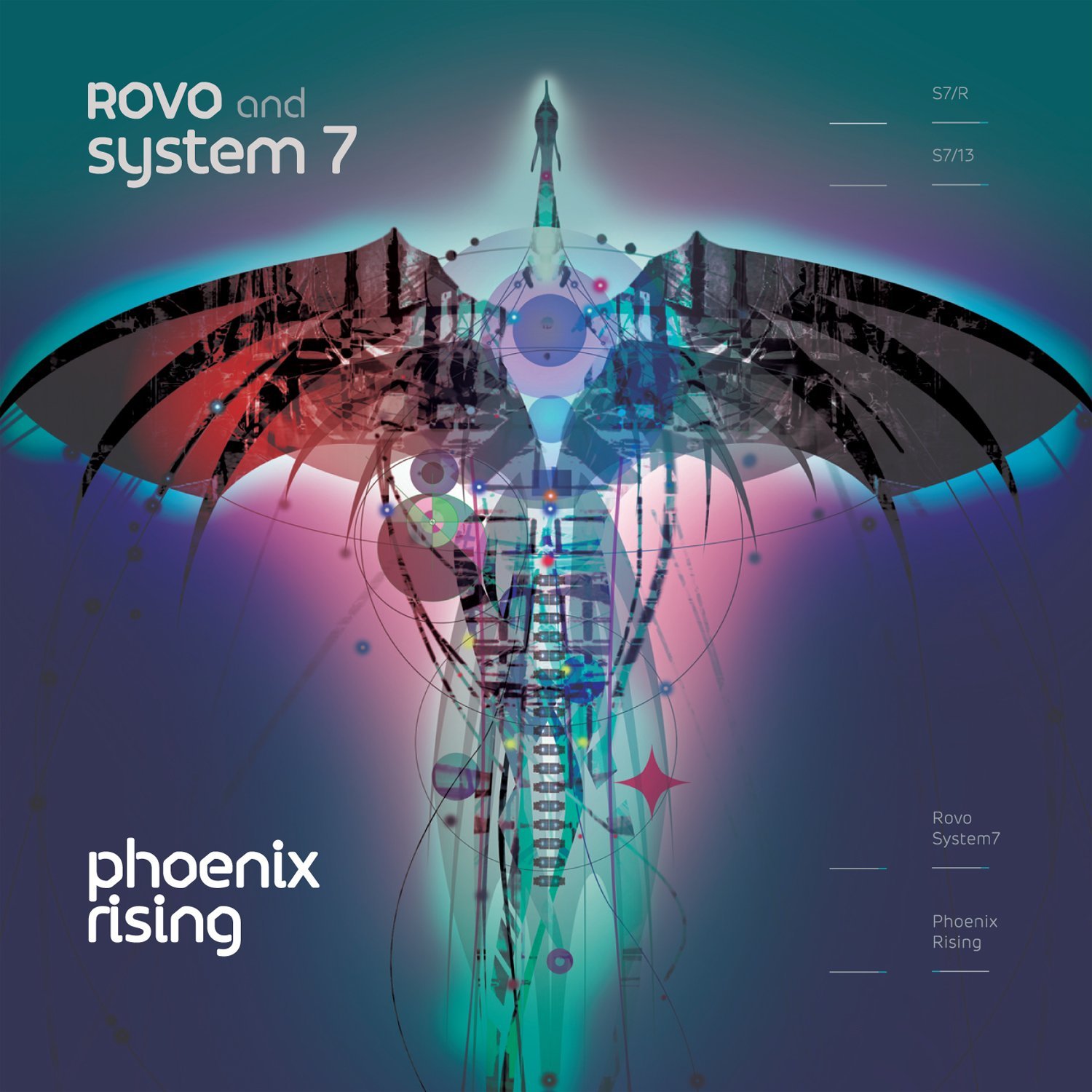
More coherent in its conception and execution, Phoenix Rising finds Hillage and Giraudy, as Sysem 7, paired with Japanese post-rock/electronica/space outfit Rovo, and is a nice example of electronic/analog jazz fusion.  The opening track, “Hinotori,” lays it all out.  Two drummers, two guitarists, violinist, bass, keyboards, lots of processing.

Image

If this suggests a Mahavishnu Orchestra obsession, you’d be right on.  John McLaughlin’s fabled band and its Inner Mounting Flame is directly quoted, as Hillage and Rovo cover “Meeting of the Spirits.”  Now, the problem with covering McLaughlin is similar to the problem of covering the Beatles — how to do it and make something else out of it that’s your own while also reminding all of us why the song’s so great in the first place?  While I’m not certain this is achieved, and have been on the fence about whether the track belongs on Phoenix Rising given the strong writing in the other compositions here, it does fit the spirit of the record, which mostly makes me think of what a Santana album would sound like if Carlos decided to make a smooth electronica record but keep half his band in analog mode.  Are barriers being broken? No.  Am I going to put this in my McLaughlin mix? Sure.  Does it work? Absolutely, and it’s an enjoyable listen all the way through.

What impresses me about Steve Hillage is his journeyman’s approach to his music.  He’s a gifted musician with that most cherished of attributes, an identifiable sound, but I have a feeling he’s never been terribly happy resting on his laurels or going for a money grab.  He participates in the occasional Gong one-offs, but I think is more at home in the kind of environment Rovo provides on Phoenix Rising.  Not the star, not the solo soloist, but an integral part of a larger group.  In “Unzipping the Zype,” on Live in England 1979, Hillage sings “I ain’t no guitar hero, I just want to be a guitar zero.”  I doubt that wish will ever come true for him, but his drive to find a level stage has been a benefit to those of us listening.

Chris Wade Takes On The Great Horned Beast

Chris Wade, known to Progarchistas as the genius behind Dodson and Fogg, is also a rock writer, and has just published a book on Black Sabbath.  I happen to know that he’s a huge fan of Sabbath’s first record (as am I), and so look forward to his take on the devil’s chord, flashing the horns, and all things sabwise.

Get thee to a Kindle, or order a paperback from Chris directly (the paperback will also be available on Amazon soon):

http://wisdomtwinsbooks.weebly.com/books.html

Men Singing by Henry Fool

ImageHenry Fool’s new album, Men Singing, is an alternate history, a prog rock proclamation that it was the Soft Machine, not Elvis, who invented rock and roll, out of the ashes of bop, not blues.  Led by keyboardist Stephen Bennett and stellar no-man vocalist Tim Bowness (who joins his bandmates in not singing on the album — he plays guitar here), Henry Fool conjures first wave English prog and ambient while alternately dodging and burning the spirit of King Crimson’s “Starless” and Soft Machine’s Third.  If anything could convince me this is the way rock’s mainstream should have shaken out, Men Singing is it.

In writing* and on record, the project’s relationship to first generation progressive rock is explicit and real — Phil Manzanera is a collaborator here — but also cautious, with an important ambition to avoid simple mimicry.  Any way you look at it, this is not an easy thing to pull off, and in fact is the central obstacle to bands consciously working in the contemporary prog rock genre.  How to avoid stylistic forgery? The early prog groups had an entirely different set of references that, naturally, did not include prog, and there’s an uneasy recognition that once it’s “prog” it’s no longer prog.  With that said, if it’s possible to meet expectations while pushing boundaries, Men Singing more than succeeds.

The four-song album begins with the longform “Everyone in Sweden,” which maps the record.  The aggressive, energetic rhythm section structures the melodic builds and mixes, suggesting the work of Robert Wyatt with Soft Machine, Jaki LIebzeit with Can, and Klaus Schulze with Tangerine Dream.  Which is to say that Bitches Brew-era Miles hovers like some benevolent deity.  But this is not a music stuck in the past.  It has a smartly produced, live sound that brings the drums and bass up front — with a rising and falling cadre of guitars and horns and glockenspiels and mellotrons working alongside — while avoiding the airtight digital separation or cleanness of many contemporary prog albums.   It works anew the fertile ground turned over by post-rock instrumental bands like Pell Mell and Tortoise, and arguably offers a more focused experience than either of those estimable groups.

At 40 minutes, Men Singing is well-paced and doesn’t linger too long, which might have been a problem in different hands or in different eras.  Terrain is explored, not exploited, and the two 13-minute cuts are satisfying in their development.  The two shorter pieces make their point even more powerfully, with “My Favorite Zombie Dream” going some distance towards explaining the band’s name, a homage to Hal Hartley’s late 90s movie but really a nod to Hartley’s music, which colors his films in a moody, darkly humorous palette.

It’s hard to recommend this album too highly, which, given Bowness’s involvement, should be no surprise.  And while an instrumental album called Men Singing might feel clever, the voices on this record show it’s only half a joke.

*http://timbowness.wordpress.com/album-writings/henry-fool-men-singing/

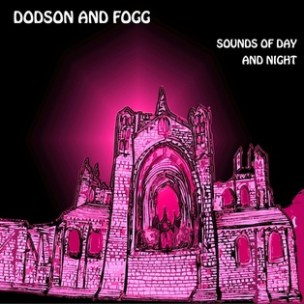
Sounds of Day and Night by Dodson and Fogg

ImageI remember reading an interview with Peter Buck sometime in the late 1980s, right as R.E.M. was beginning to peak, in which he insisted it was much harder to write/play slow ballad-y songs than fast pop songs.  A greater risk of dead space, more chances for messing up a tempo, less reliance on a two- or three-note riff.  I thought it was funny at the time, because I was trying to learn guitar (an instrument that confounds me to this day) and thought, shit, I can’t do anything BUT slow.  As I’ve thought about it over the years, though, and as I have put my mind to writing my own songs, I think what Buck was saying is that in the wider genre of guitar-based rock and roll, slower songs tend to be far more reliant on a vocal melody and therefore also the words, that is, real songcraft.  And real songcraft, in performance, can’t be successful if you sound like you’re rushing it or that you’re trying too hard.  Go listen to John Prine.  Spin up Joe Henry.  There is a lean restraint, a kind of patient heart.

I thought again about what Buck said as I listened to the mid-tempo pleasures afforded by Sounds of Day and Night, Dodson and Fogg’s third record.  The band is a project of Chris Wade, an independent artist whose second record, Derring Do, I reviewed on Progarchy earlier this year (https://progarchy.com/2013/02/10/steamfolk-the-derring-do-of-dodson-and-fogg/).  Wade’s Dodson and Fogg intentionally visited early 70s British folk rock on the first two records, even drafting in bona fide players from the period to help out.  The surprising thing was that a young man, working in his home studio, could so effectively evoke that period while making original music so distinctively his own.  While Dodson and Fogg continues to explore these roots on Sounds of Day and Night, the new album is a more relaxed and natural, less finessed effort that may have as much in common with Iron and Wine, Devendra Banhart, and modern American/Scots/Irish singer-songwriters, as with a romanticized past inhabited by shades of Drake, Thompson, and Denny.  Over the course of a year in which Wade has released three Dodson and Fogg records, his music has become increasingly limber.  A mandolin picker/oldtime musician/RT-loving friend of mine describes this phenomenon as the difference between learning the song and knowing the song.  I think Chris Wade increasingly knows his songs, and it’s showing.

The new album is bookended by instrumentals, parts 1 and 2 of the title track, which are only distantly related, one being an entrance and the other the door out.  I have a soft spot for this approach, something not many singer-songwriters are comfortable with, and for the melodies Wade works.  The outro also features a sitar, which, given the slow trajectory of the record towards the acoustic psychedelia of “Clocking Off,” makes a certain Harrison-esque sense.  These instrumentals set the tone for the production of the record, which, like Derring Do before it, evokes a balance of the pastoral and the urban, with acoustic guitars to the fore but electrics winding their way down the lanes, atop smart, spare, brushy drumming.  With woodwinds and brass appearing here and there, Sounds of Day and Night offers a classic folk rock listening experience within a newer framework suggesting the airier approach of the solo work of Sam Prekop or Archer Prewitt (both of Chicago’s The Sea and Cake), or the Kingsbury Manx (https://progarchy.com/tag/kingsbury-manx/).  Like most great music that inhabits a cultural continuum, there are subtle hints and quotes along the way, a bass out of Green Day (“Sounds of Day and Night”), a keyboard out of the Doors (“Night Train”), and a  British vibe that resists pinpointing but steers more towards the Kinks than Donovan.  I think the feel of the album is best encapsulated on “Hear It In The Morning Still,” a medium tempo drift, with nice vocal hook, that builds to a relaxed electric crescendo and gently rides out with a pretty groovy trumpet.

Sounds of Day and Night is an easy record to like.  It shows an independent artist building his own catalogue using his own steam, on his own schedule, doing what he wants to do without hindrance (or help, it should be noted) from a record or management company.  Chris Wade is on a progress, a trajectory that I don’t think has peaked, even with three increasingly strong albums behind him.  (I think he’s still finding confidence in his very capable voice — his tendency to double track his vocal is rarely necessary.  Plus I’d like to hear this music live with a band, because his songs have evolved into vehicles that could sustain jamming live).  But this band is in a good place:  with two solid albums behind it and the current record outdoing its predecessors, Dodson and Fogg is a musican/band/project demanding attention.

I asked Chris about the new album, recording on his own, and Dodson and Fogg’s growing reputation.

Sounds of Day and Night followed closely on the heels of Derring Do — tell us about its evolution.

Well I had started this new album right after I had finished Derring Do in January I believe. With me working at home like this, I am free to go into the office and put ideas down everyday if I feel like it, so there’s no set dates for writing and recording. This album just came together over January/ February to June, more songs came, others went that weren’t really up to scratch. Also I had left them for a couple of months and gone back, listened again and decided what else needed putting in. It was a really satisfying process for this album. I really enjoyed piecing it together.

Although trumpeter Colin Jones is present, the rest of this record is just you (or is it? are you drumming?).  Did this have an effect on your songwriting?

Actually it was the same because all these songs are written on an acoustic with my vocal, then I add bits and pieces in, and I usually sent them off to Celia Humphris (singer from folk rock band Trees) and the others and they normally choose which ones they fancy doing, Celia mostly. She picked them out on Derring Do and then sent them back to me when she had some ideas, which were always brilliant. This time I did send them off to her but she was quite busy and preoccupied with other things, which is cool, just a shame. Some of the other contributors that were lined up to appear didn’t really work out, so I decided to do more instrumentation myself. The light drumming is me also, but I’m not a massive drum fan so I kept it quiet and subtle, little taps and ride cymbals. I like that kind of percussion sound, and bongos, tambourines, things like that to accompany a song without blasting away all over it. Learned a bit more on the flute and used more keyboards to broaden the sound a bit. And also I had been ready to release it for a while, and didn’t fancy waiting around for longer. I like to get these albums out, and because people who are getting into the records know another one will be coming along soon, they are all ready for a new record. It’s cool getting to a stage where I know there are a loyal selection of people who are going to be interested in listening to my music, getting what I am doing and knowing what to expect to a certain degree. It’s bloody brilliant actually.

I feel like Sounds of Day and Night, while it still shows an influence of classic, early 70s British folk rock, has a more contemporary feel than Derring Do.  A lot more free flowing, perhaps a deeper psychedelic strain happening.  What do you think?

I think you could be right, especially about the free psychedelic elements. This must be because I handled all the instruments and was just having fun playing some weirder stuff on certain instruments, doing whatever came into my head. There were melodies coming up all the time and I was adapting them to different instruments and building full songs out of little bits of melody. It was an addictive experience, spending a day drinking coffee and shutting myself in the office all day. But there was no conscious decision at all, this was all just straight out, but it’s my personal favourite of the three records I have made so far. I also think the production is better on the new one, the mixing and the quality of it. I am very proud of the cover art that my girlfriend Linzi Napier has done. Her first exhibition is in July at Otley Togs Gallery, and the piece from this album cover is set to be the one on the main advertising banner outside the venue. Really exciting and very proud of her!

Derring Do got some attention in the British music press. How do you feel about the album’s reception?

I was overwhelmed by the reactions to it. There are publications like the CRS, a chap called James R Turner reviews my things for them and he is really complimentary to my music and a site called Pennyblack Music has a writer named Malcolm Carter and he has said some very kind things about Dodson and Fogg and he really loved Derring Do. Also Brian Watson on DPRP gave it a glowing review. For me it’s so rewarding to see how other people view my songs and how they have taken them seriously, to see what they got out of them. I like people who really get music, understand what you were doing. But I still am really surprised by all the positive reviews. I knew I had made a good album though, otherwise I wouldn’t have dared release it three months after the debut, but still I was overwhelmed by some of the comments.

What are you listening too lately?

Lately I’ve been listening to Caravan a lot, a band called Skin Alley (one of their members, Ksrysztof, played accordion on my first album), Jethro Tull, especially the Thick as a Brick album, Beatles, Black Sabbath’s Sabbath Bloody Sabbath album (one of my favourites since I was about 9) and also some Tom Petty.

Are you performing live?

Not yet no. I haven’t managed to get any like minded musicians from Leeds together for shows and I definitely don’t really want to do a solo acoustic gig, There’s too much stuff on the albums that adds character that I think a  solo acoustic thing would be dull. I’d probably fall asleep on stage. But I do want to get a band together for shows one day because people keep asking me if I am playing live soon.

Last time we talked to you, we asked you about the business of getting to listeners, as an independent musician who records and markets his own music.  Have your thoughts on this changed much at all? Any label interest since the release of Derring Do?

I’ve had no label interest because I don’t think it is too common these days. An obscure cult band like this isn’t going to attract a big label and the genres people tag on it like prog folk and acid folk, don’t make it sound very commercial, not that i am interested at all in being commercial but you know what I mean. Besides I love doing it myself, all the business and promo side as well, and setting up distribution deals for abroad and sending the discs all over the place to those familiar names, it’s like living a dream, I love it. I think if someone else was in charge of my artwork, my royalties, my PRS, the promotional side, I would be a bit nervous. I like to have it all in front of me. I’ve recently discovered a band called The Tangent, when I met the band leader Andy Tillison and his partner Sally Collyer at an art gallery and got on with them. I think he is great to his fans and he and Sally have a great relationship with them, and look how big that band is. Their new record has been a massive event to many people all over the world, so you can only admire them both. I think a lot of artists could learn from that approach. People are parting with money to get your music, which is an honour, so I always email back and forth with people who are buying my albums, and have a laugh with them, because being friendly and open is so much better, and more fun,  than being up your own bottom and unapproachable. Saying that, I’m not well known at all so maybe I see it from a different side than to someone who is famous.

It’s been less than six months since I reviewed Derring Do.  Can I expect another one in October? What’s next for you?

Definitely not October, haha. I’d be knackered. Got to get some fresh air and not breathe in jostick fumes all day… for a while at least.  I think that will be it for the year, I want to take a little break from recording, get some fresh ideas and take a step back. I’ve got loads more ideas, some of them are acoustic like the first album, and some are more of a full band sound. But I want to take my time as well, get Celia back in for the next one and hopefully some other guests. Next up will be another Dodson and Fogg album, and the first album is also getting a vinyl release by a US company which I am excited about. It’s been a dream all my life to have an album on vinyl and I can’t believe I’ll be getting it. I am basically just loving this music project. I have done other stuff, audiobooks and non fiction books, but i have never had a reaction like this. it’s always moving forward and is so positive.

Is there a link to a sample/YouTube vid for readers?

This is my youtube channel: http://www.youtube.com/user/sofaguard

There’s some free tracks up there from each of the 3 albums and a couple of videos too, one starring my father in law as odd ball cretin roaming through the woods.

[Also check out Dodson and Fogg’s webpage: http://wisdomtwinsbooks.weebly.com/dodson-and-fogg.html]

Tomorrow’s Harvest by Boards of Canada

ImageSay what you will about the actual music contained in it, “Tomorrow’s Harvest” is the perfect title for a Boards of Canada record, any Boards of Canada record, really.  And that “tomorrow” is not a pretty one, reflected in a music that is somberly electronic, accompanied by visuals — scant as they are — suggesting you’ve found a fourth generation copy of a lost, lyric-less music from an uncle long dead: a polaroid of a TV screen showing a video of a film.

Nearly but not quite anonymous, Boards of Canada have made a career of hipster stand-offishness, which would make them precious, not to mention enormous risk takers in a genre not exactly known for its lack of anonymity, if the music that brothers Michael Sandison and Marcus Eoin create wasn’t so distinctive, so darkly humorous, so consistent. Their currency among their champions has lasted decades now, across four proper albums and a clutch of EPs, weakening the knees and strengthening the fingers of cube farm keyboard jockeys the world over.

ImageThe new record picks up where The Campfire Headphase (2006) left off.  That album, a more melodic, less creepy, and mellower version of their landmark Music Has a Right to Children (1998) and its follow-up Geogaddi (2002), saw their star dip a bit among the worshippers, though I thought it quite respectable, their version of Manual’s Ascend or Aphex Twin’s Selected Ambient Works.  Tomorrow Harvest’s tone is set, like other BOC albums, with the cover photo, a faded urban skyline overlaid on a scrubby western sea of test-site hardpan, post-apocalytpic in its desert-ed-ness. The ghosting of the transparencies has a lot to say not only about the message in the title, but also about BOC’s music, where disappearing is as key to the song as the introduction of the next melody, beat, or bass line.  The shifts evoke 70s-era Cluster or 90s-era Tortoise, where tunes can seem to be made out of nothing yet go on for 6 or 7 minutes, and be utterly transfixing, mesmerizing.

This album was long awaited by the band’s fans, a seven-year gap unusual even for BOC.  The stir of mysterious hype that accompanied the album’s release was even more unusual, an odd mix of coded messages issued by the band and its label, that I found curious coming from a group that prizes its own silence.  I also think the plan was fairly quickly abandoned after the only people who got it were the people who perpetrated it.  Perhaps Warp Records demanded BOC do something, anything, to tart up a new release, but I guarantee the band’s fan’s don’t care about such tactics:  given that the messages were relayed via blinkered hipster hubs like All Songs Considered, Amoeba Records, and Other Music, they were only preaching to the choir anyway.  Such hype also, inevitably, raises expectations.

To say that Boards of Canada is doing something new on Tomorrow’s Harvest would be misleading.  Their style is what they are, and it hasn’t changed substantially across records (for this let us be thankful).  Their (often beautiful) melodies have their own dark taxonomy, their approach — warbling, occasionally souring, vintage synths, beats that fade in and out, treated human and machine voices murmuring incantations that in their repetition can take on cracked, dark angles — should be a patent.  BOC’s debut signalled a music different from anything else out there, and to this day the band can really only be compared to themselves.  On Tomorrow’s Harvest, Boards of Canada continues to create inspired, original music that has matured as it’s maintained an imprint of disciplined creative achievement.

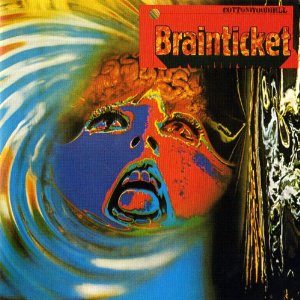
Cottonwoodhill by Brainticket

ImageBrainticket’s Cottonwoodhill (1971) has been re-released again, this time by Cleopatra, that venerable house of psych and goth back-catalogues.  Roughly lumped in with German rock of the period, Cottonwoodhill was one of the many ambitious brainchildren of Joel Vandroogenbroeck, the Swiss musical polymath behind Brainticket who later went on to create music libraries for TV and film. (Knowing this, Cottonwoodhill makes a lot of sense, its jazz-funk amalgam suggesting less the communal freakouts of its European contemporaries as the soundtrack to Bullitt or Dirty Harry, where Hollywood finally caught on that something weird was happening in San Francisco but couldn’t bring itself to actually use a ballroom jam to back up the car chases or bar scenes.)

When I first heard Cottonwoodhill in the mid-90s, it struck me then as it does again now:  a very pleasant, well-produced, rhythmically cohesive psychedelic jam, heavy on the organ, with some trippy spoken word passages by Dawn Muir, who intones in a posh English accent, suggestive to me of the White Witch out of C.S. Lewis, the impressions of a woman seriously stoned out and orgasming.  So where Brainticket’s contemporaries, like Amon Duul and Tangerine Dream, pushed their music to live outside of their own era, Brainticket’s music solidly inhabits early 70s European psychedelia, more akin to Out of Focus or Krokodil.  With some interesting polyrhythms running underneath and a kitchen-sink approach to layering found sounds and treated tracks, there is an argument here for seeing Vandroogenbroeck as divining a thread or two of Eno/Byrne’s My Life in the Bush of Ghosts.  But that’s perhaps a bit optimistic and trying too hard to bring a different respectability to what is, in the end, a really fine example of art gallery soundtracking of the late 60s and early 70s (something documented most effectively on Virgin Records three-CD Unknown Deutschland/Krautrock Archive), which is where Brainticket probably really belongs.  Still, I think it’s appropriate to think of Vandroogenbroeck as being in the same group of individualists, including Chris Karrer, Christian Burchard, Hans Joachim Roedelius, Florian Fricke, and Klaus Schulze,  who drove “krautrock” forward with no consideration of worldly reward.

Get thee to an excellent 2012 interview with Joel Vandroogenbroeck:

http://www.redbullmusicacademy.com/magazine/joel-vandroogenbroeck-interview

13 by Black Sabbath

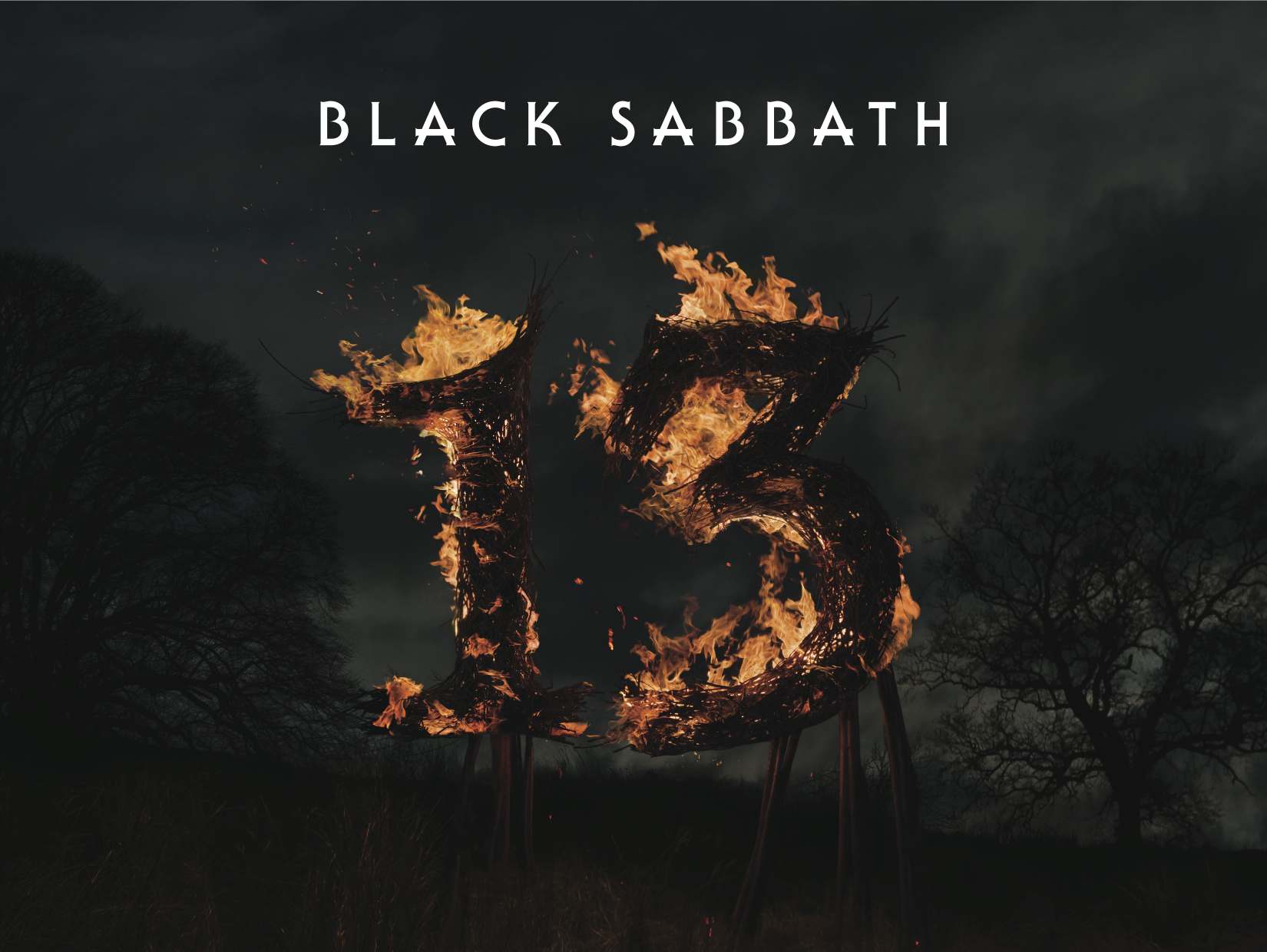
ImageEvery year for the past three years my wife takes our boys to see family in New Jersey and New York.  I’m tasked with various projects: painting, fixing up stuff — things I can get kind of lost in.  The sound track for the work is almost invariably Black Sabbath, cranked loud.  Of the bands I loved when I was a teenage metalhead, Sabbath is one of the very few that I can still listen to regularly and never tire of.  My boys often request “Iron Man” on the way to school, oblivious to the fact it has nothing to do with Tony Stark, or “The Wizard,” believing it to be straight out of Harry Potter land.  I oblige, for it is Art, and it is good.

There is a grayscale of Black Sabbaths.  The original band responsible for inventing heavy metal in the early 70s:  Ozzy Osbourne, Tony Iommi, Geezer Butler, and Bill Ward (it’s important to note this same incarnation was responsible for then dragging that reputation through the murk); the band lifted from its Ozzy-less decline by the horns-flashing Ronnie James Dio, who led them through two classic albums of pop metal renaissance in the early 80s (as well as a stunning modern metal record recorded under the name Heaven and Hell — the title of the first Dio-led Sab record — released shortly before Dio passed away at the age of, yes, 67).  Then there are the one-offs, like the Sabbath of Born Again, which, while it may have afforded the oddly too-dedicated fan moments of pleasure, never really could come close to the considerably prolific glory days of the Sabbath of the 70s.  And of course, the countless reunion tours and shows that, while cool in their own way, haven’t much new to say.

So it’s with some interest that we see, in the last week, the release of the first Black Sabbath album with Ozzy Osbourne — of all original material — since 1978.  This was a much-hyped record, complete with some major drama.  It’s remarkable that all the original band members are still with us, and had the original band actually made this record, I would have pre-ordered the complete deluxe whatzit with vinyl and booklets and stickers and all that jazz.  But, for whatever (probably lawyerly) reason, drummer Bill Ward declined to participate, after initially agreeing.  His replacement is Brad Wilk, of Audioslave and Rage Against the Machine.  Not a bad choice, but not making things right with Ward reflects poorly on the band and its legacy.  While Ozzy and Iommi got most of the attention, Ward and bassist Geezer Butler were the heart of the original band, creating the rhythmic punch that propelled Iommi’s epic riffs and Ozzy’s wail.  Imagine John Bonham living and Led Zeppelin doing its reunion show a few years back without him, and you get an idea of the scale of Sabbath’s mistake.  (Seriously, revisit “The Wizard” from Sabbath’s first record, for an idea how important Ward’s drumming was to this band.) Drama number two, an even more serious problem:  Tony Iommi battled lymphoma during the making of the record, and without Iommi there is no Sabbath.

That the king of the metal riff was laid low, though, doesn’t seem to have made much of a difference, nor would I expect it to:  of the small handful of British rock guitarists who have wielded real and lasting influence over the years, only Iommi is still creating the quality of work he first hammered out in the youth of his career.  And, in Iommi’s hands, this semi-reunion works.  Aided by Butler’s big bass, which has always been able fill the holes for the band live and thicken the sludge in the studio, 13 manages a number of feats.  It is sonically the successor to Iommi/Butler’s last record, the aforementioned excellent album they made in 2009 with Dio, The Devil You Know.  13 is also a welcome reminder that Black Sabbath started out as heavy blues band that knew how to swing, something not many of their metal peers take terribly seriously anymore, much to the detriment of the genre.  While Wilk has come under criticism for not having Bill Ward’s loose and woolly approach, his roots are in bands that borrowed heavily, heavily from Sabbath and Zeppelin, and to these ears he holds up his end admirably.  Lastly, I’m probably not alone in thinking Ozzy would be the ruin of this project.  His bandmates rarely coasted, as he has been known to do over the years (reaching a cartoonish nadir with his reality show several years ago).  I’d even argue that Ozzy was really sapped artistically after the tragic death of Randy Rhoads, the esteemed guitarist of his first two solo records.  He lost his voice, or rather, since his intonation is notoriously iffy, the character of his delivery.  At its best a frightened and frightening illustration of Geezer Butler’s lyrics — which tend towards ruminations on existential anxieties, and which, for rock song lyrics, were truly revolutionary when Sabbath debuted in 1970 — Ozzy’s voice has the ability to deliver the perspective of an innocent man observing a nightmare.  His voice is back on 13:  if Butler and Iommi threw down the gauntlet, Ozzy picked it up with energy to spare.

The songs are long, they take as long as they need to unfold, and riffs and themes from other albums revisited (a stock-in-trade of the band’s since its beginning).  I get the sense producer Rick Rubin knew that the band’s fans don’t care, never cared, about hits or brevity (“Paranoid” notwithstanding) but about dynamics, tension and release, being trapped with Ozzy inside the riffs.  Being in the middle of a classic Sabbath record is to be far from the fringes of pop fashion or postmodern punk irony: that this version of Sabbath has again achieved its hallmark effect when its players are in their 60s further demonstrates that to be metal is to be a true believer in music’s transportive powers.