Progressive Rock, Regressive Listening

Spin up aural reader’s aid here or here.

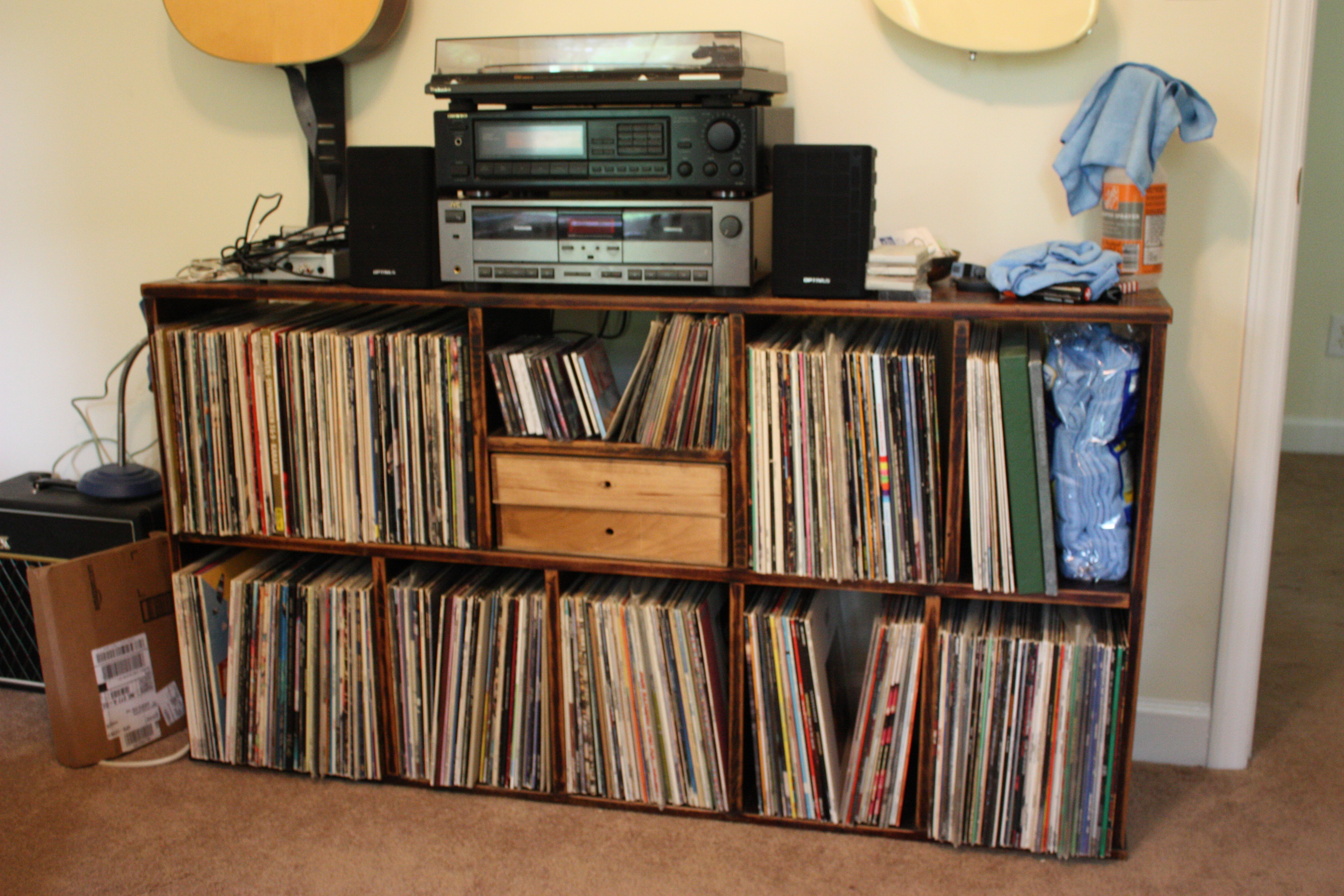
Years ago, before I was old enough to know better, I gave myself a gift:  I didn’t sell, trade, or give away my LPs.  Not that I treated them that great.  They spent a season or two in a damp garage, and then were loaned for a decade to my nephew, to do with what he would — he just wasn’t allowed to get rid of them.  That nephew is now getting close to graduating from college, and last fall my wife and kids and I moved just down the street from his parents, who graciously stored (and moved, on occasion) those four or five hundred LPs longer than anyone should have to.  So I’ve now recovered them — although I think, and my sister isn’t denying it, that there may be another box of records lurking somewhere — and put them in the old cabinet my dad built for his LPs back in the 1950s.  I’m going through them slowly, alphabetizing, cleaning, playing.  It is a satisfying process, and a relief from the digital melee life has increasingly become.  What was once cutting edge technology now appears quaint, matched up against things like randomized online playlists and noise-cancelling headphones.  A side of an LP takes some patience and some tolerance:  pop and rumble can lead to madness or joy, depending on the baggage one’s ready to let go of.

The Temple
The Temple

The increased hipness of vinyl amongst the cognoscenti (such as they are) is for me a mostly marvelous thing.  It means I continue to have access to old records, and in some cases to newly minted ones, and also to things like styli and cartridges and cleaning tools.  I’m jazzed, too, that this seems driven by an impulse towards the physicality of the medium — music has always been something in the ether, but the grooves in a phonodisc, as a mechanical representation of sound, not to mention the marvel of the gatefold sleeve, is a very tangible and human-scaled thing.  It is not digital and it is not nano, and for many of us its immediacy has beauty and warmth.  However, I’ve found that the new vinylistas have inspired a kind of fetish cult, something I relate to to some extent, I’ll admit, that worships the process over the music.  The revival is a retro-geek early tech adopter kind of thing, except in this case the technology is a Rube Goldberg version of something the digital crowd (which I’ll own to being a part of as well) thought they’d exterminated.  Like I said, I get this and relate to it, but mostly, my return to the LP has been an experience in nostalgia — a reliving of the days where I would put on a record without a lot of fuss and listen to an album side — and an awakening to an appreciation of the sound that I never would have been able to define in the era before compact discs.

That sound is not quantifiably better, as some would have you believe (IF you have a $3,000 turntable, IF your stylus fits the disc, IF your preamp and amplifier are tube-driven, and on and on and on…).  It misses a point, rarely addressed, that music is mastered for vinyl differently, that equalizations are important at that stage to avoid mechanical failure, that is, the needle popping out of the groove.  You’re left with a high-end that can veer towards sibilance with wear or if the disc was not mastered well, but also with muscular, defined lows that lend rhythm sections a rounded bounce.  The rest, really, is all mojo.  This is different for everybody, but for me it is a combination of a couple of things:  the vision of the lazily spinning phonodisc, like a river unwinding its story, touches my sense of the real and palpable.  And then there’s the presence, that constant background, made up of rumble and clicks and pops, instantly identifiable, unavoidable, reflecting a mechanical process that is not perfectly replicable.  Replicability is the stuff of the digital world, the download, the OS.  That the LP, with all its noise and uniqueness, seems to coax from me an emotional response that approximates a sense of comfort and familiarity, is something I’m still attempting to wrap my head around.  Maybe it’s better that I can’t fully articulate it.

FinalVinyl
My modest vinyl playlist in iTunes as it currently stands.

As real worlds and humans are imperfect and usually a little cracked, so is the world of my LPs and my own behavior with regard to them.  I am enjoying them immensely, finding deep joy and satisfaction in what they hold and in the memories I have of when I first bought and played them, when the world, not that long ago, was more analogue and still just that much more slowly paced.  I am also…digitizing them.  Ha!  Ironies abound, as friends have observed.  I am converting full sides of LPs, taking care NOT to break them into their constituent songs, as a deliberate attempt (as a midlife crisis?) to recapture the original experience I had with many of them.  So yes, progress is slow but more and more my iPod is playing back crackle and pop and Rush.

Bryan Ferry and The Jazz Age

Any of Progarchy’s Roxy Music or Bryan Ferry followers are probably already well aware that one of Britain’s greatest vocalists of the rock era has released an instrumental album.  A hot jazz album at that.  Ferry’s project was to recast a handful of his classics — for in addition to his distinctive voice the man is a fine songwriter — as Dixieland standards.  The improbable outcome of this ambition is that it works, and then some.  I think this is due to the soundness of the songs, Ferry’s deep feel for melody, and the rich layering that Roxy and his solo bands brought to the originals.  There are a lot of horizons these songs could veer off towards, and to hear “Avalon” and “Virginia Plain” receive a Hot Five treatment could make you think they were written for that type of performance.  “Love is the Drug” becomes a haunting Cab Calloway standard, and it’s possible to hear Ferry’s early influences — there is no way he could not have loved Calloway’s “Minnie the Moocher.”

Ferry brought to these interpretations the desire to emulate not only the arrangements of old jazz records but also their sound.  The band he put together recorded with one vintage microphone in the middle of the room — although he concedes each musician was also miked separately (which more easily accomplished the “stepping up to the microphone” of soloists of the jazz age) — with the entirety mixed and released in mono.  I supposed one could see affectation here, and there are plenty of Ferry followers who would rather the man write new songs or partner with Eno or whatever….  But Bryan Ferry has made a career and art out of affectation, and that he does it so well on The Jazz Age is a real testament, I think, to his talent as a songwriter and his skill as a performer.  I should emphasize, too, that this is not Rod Stewart reinterpreting the standards in front of a full orchestra, or “Pickin’ on Roxy Music,” but rather in its eery mono-ness conjures the craziness of Raymond Scott, the wooziness of the American swamp.  There is edge here.

Last month Bob Boilen interviewed Bryan Ferry on NPR’s All Songs Considered, and while I’ve been a fan of Ferry since Roxy’s Avalon came out, I found his thoughts on his new record illuminating of his career as a whole.  Check it out here.

Rock Docs, Volume One – It Was Twenty Years Ago Today

In May of 1987 I had just finished my sophomore year at Texas Christian University, was one year away from getting my first computer, and had a fairly serious obsession with rock and roll, mostly of the classic variety and with a heavy dose of the Texas blues-rock revival thrown in.  I had maybe two dozen CDs at this point, my riches were all vinyl, and I read Rolling Stone and Spin voraciously.  No VH1 Behind the Music or Classic Albums Series, no 33 ⅓ books, Lester Bangs was dead, cultural interpretation of rock was in its infancy, and while MTV was redefining the visualization of music, there weren’t many filmed histories of rock’s great bands — I think maybe this was because the idea of a “rockumentary” as historical narrative didn’t occur to a lot of the era’s musicians, simply because they were still actively working.  There had been great rock documentaries, but they generally captured a moment in time, a tour or concert:  Martin Scorsese’s The Last Waltz, Albert and David Maysles’ Gimme Shelter, D.A. Pennebaker’s Monterey Pop and Don’t Look Back, Michael Wadleigh’s Woodstock.  Rather than tell a story of an artist or era, these films became a part of their respective subjects’ legends, and only occasionally, as with the movie Jimi Hendrix, released three years after Hendrix’s death, was there an attempt to provide historical perspective or commentary from contemporaries.

Derek Taylor in 1970, from Wikipedia

Into my 1987 world dropped the British documentary It Was Twenty Years Ago Today, which, as you might expect, looked at the Beatles album Sgt. Pepper’s Lonely Hearts Club Band, echoing in its title the first line of the first song on the album.  But, rather than profile just that record, or just the Beatles, the movie used Sgt. Pepper’s to explore the larger cultural shifts happening across the world in 1967.  By combining new interviews with vintage footage, and maintaining an appreciative but balanced perspective, It Was Twenty Years Ago Today manages in its 105 minutes to be both entertaining and speak with some authority on rock’s coming of age.  Produced by Derek Taylor, the Beatles’ press officer up until his death in 1997, the film is both an “inside job” and broadly illuminating, portraying 1967 through the lens of one of that year’s, and rock’s, greatest recordings.  Taylor also published an accompanying book. [It’s interesting that when the documentary came out none of the Beatles albums were yet on CD — Sgt. Peppers still had to be dealt with in its original linearity.]

Needless to say, the local public broadcasting station (KERA — also the first PBS station in America to broadcast Monty Python’s Flying Circus!) played this film through the summer of 1987, and on one occasion I managed to tape it.  The VHS cassette bounced around the country with me for another twenty years before I transferred it to a DVD, and now I bring it to Progarchy.  It exists in bits and pieces on YouTube, but it’s hard to upload there because of YouTube’s copyright protections — it “hears” the Beatles songs embedded in the video, god knows how — and returns a polite but firm notification that Apple Corp won’t allow the post.  Fair enough (I guess), but meanwhile the piece languishes in the dustbins, unavailable on any format commercially.  So with that said I’m posting it here, and if anyone objects I’ll take it down.

https://docs.google.com/file/d/0B0MgFPeY1q4HekFULUY5ZVh4MWM/edit?usp=sharing

Kingsbury Manx – Bronze Age

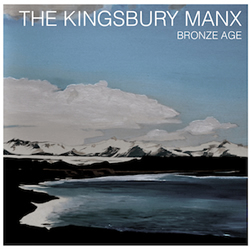
KingsburyToday the Kingsbury Manx, a band from Chapel Hill, NC that have been around now for over a dozen years, release Bronze Age, their sixth album.  Listening to Bronze Age for me is a little like going back in time, and like coming home, for a couple of reasons.  I bought their first album (first on CD, then on vinyl) when it was released, and saw them live, in 2000.  It was just so impressive, from tunes to words to cover art, a baroque folk rock effort with a vibe that can only come from a certain protectiveness of sound — this was a local band with a ton of creativity and a unique, wholly-formed voice who knew how to use it.  For me they were a sort of an end, and among the greatest, of a continuum of North Carolina bands I had familiarized myself over the previous seven years, and a distillation of some of the best of 90s chamber pop.  Every part was developed, and there were no weak links.  Sean McCrossin, then owner of Chapel Hill’s best record shop, CD Alley, made me buy their first record because he knew my tastes (and, okay, because Ryan, Kingsbury Manx’s drummer worked at the shop, which he bought from Sean some years back and now sustains with the same completeness that Sean created).

I lost track of what was happening in the local scene after the Kingsbury Manx released their second album, which didn’t quite capture me in the same way as their debut.  I got caught up, like one does at that age, in a blur of personal and professional development, had kids, moved away.  Good things, but there’s a losing of touch.  And some things that I may not have realized were as essential as they turned out to be — vinyl LPs for instance, with beautiful cover art — return to focus with reminders like unpacking the LPs upon moving back, and listening to new records like Bronze Age.

For maintaining the imprint of its own style throughout, this album, like the Manx’s debut, covers a remarkably broad territory of sound and feeling, ranging from a kind of Grateful Dead loose-ness on “Handsprings” to the majestic, motorik psych pulse of “Custer’s Last”, which calls to mind the Dusseldorf bands of the 1970s.  There is a slight nod to early Pink Floyd here and there, but not an over-reliance and more as an acknowledgement from the American South.  Guitarist Bill Taylor’s relaxed voice and words, and Paul Finn’s keyboard work (with heavy doses of Farfisa, but not used as you might expect) are dominant, with guitar and bass coloring and filling the songs more than guiding them.  I mentioned Ryan Richardson, the drummer.  His work is astounding, restrained — not merely timekeeping and not fussy or busy either, but riding the tune and at times turning its direction.

The lyrics are oblique vignettes, working like a stack of a disarranged photographs rather than as narrative — and this is not to cheapen them or do them an injustice, because while songs resist forced poetry, the writing here molds itself to the song, and achieves a necessary structure complementing words and sound.

I’ve listened to this record through three times now, and, believe me, it’s a gift.

Band website: http://kingsburymanx.com/

Order via the usual outlets or here: http://www.odessarecords.com/artists/manx/

This Was Blodwyn Pig

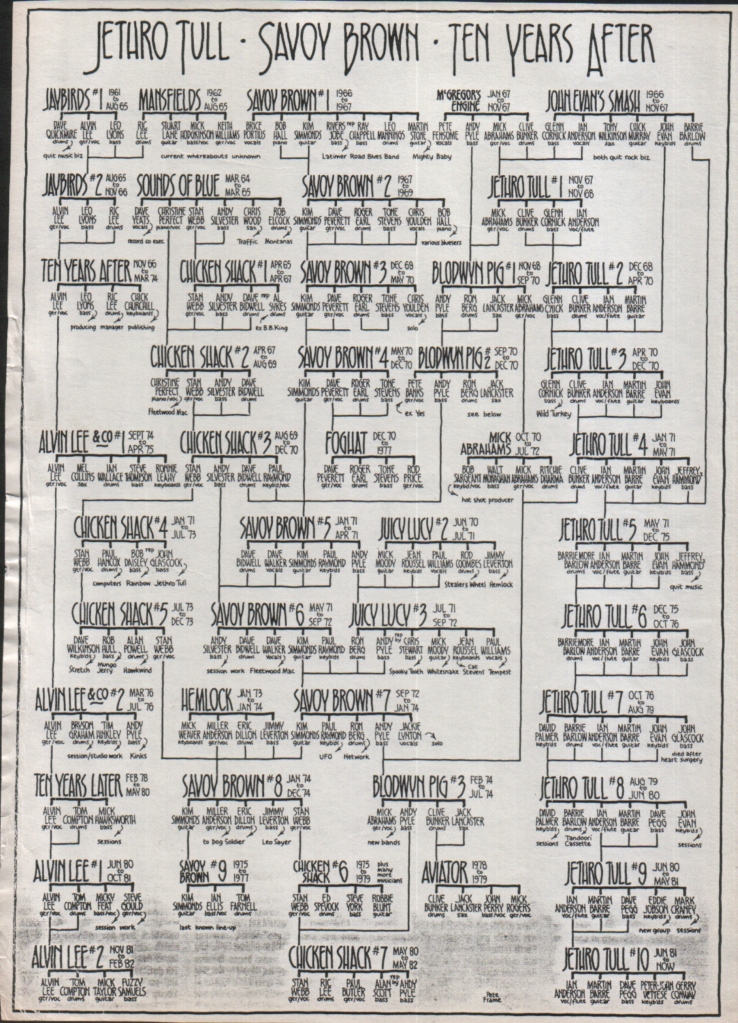
There are gateway albums, records that lead to others, elaborations that must be followed until time or economics interrupts.  I could name dozens of them that functioned like this for me over the years.  Aided and abetted in the Web-less years by the Rolling Stone Record Guides (mainstream rock/punk/singer-songwriter), the Trouser Press Record Guides (alternative and indie), and Pete Frame’s monumental Rock Family Trees,

Image
Rock Family Tree for Tull, Blodwyn Pig,  et al.

I would often spare no effort in tracking down an LP or CD I was interested in, IF the gateway record that connected me to it spoke to me in tongues, the way such records should.  So Syd Barrett’s Madcap Laughs would eventually lead me to the Television Personalities’ Chocolat Art and the Soft Boys’ Underwater Moonlight, Julian Cope’s Peggy Suicide and his contribution to a Roky Erickson tribute would lead me to the Thirteen Floor Elevators and on to Thin White Rope, and Rainbow led me back to Deep Purple and forward to Dio.  If I were to name one album, though, that really blew the doors off, it would be a greatest hits compilation, and not a great one at that:  M.U., The Best of Jethro Tull.  While Jethro Tull is often lauded for its prog side, which is substantial, M.U.was my introduction to Tull’s sympathy for folk music, opening for me the British folk revival by making me care to know about the use of traditional folk song forms in modern music.  By leading me to Steeleye Span and Fairport Convention, with whom Tull had some connection, particularly later in the 1970s, Jethro Tull created trails for me to follow that are seemingly endless and that I’m still following thirty years later.  That’s not the end of it.  Jethro Tull also took me on the short, worthwhile journey to Blodwyn Pig.

But first there was “Aqualung.”

Two significant things happened to me in 1982.  My family moved back to Texas, after a 10-year absence.  I was 15 and completely lost, having spent the decade and my impressionable childhood growing increasingly fond of my Rocky Mountain home of Salt Lake City.  As important, I also discovered Jethro Tull, via the now (less so then) classic rock perennial “Aqualung.”  To my young ears it sounded like nothing else on the radio — it still doesn’t, come to think of it — and I spent probably a couple of months trying to figure out who the band was that could conjure such riffs, dynamics, and lyrical weirdness.  At that time the song was a little over a decade old, which is not much more than one rock generation (consider that we’re over two decades removed from Nirvana’s Nevermind, and that lends some perspective).  And it was well-known enough, of course, that FM djs didn’t feel compelled to announce it.  So who was this band, and how could I find out? Pre-internet this was a challenge, you know? Particularly in a new town, with no friends, no car, and a sister whose idea of rock was the Flying Lizards’ remake of “Money.”  I may have finally resorted to going into one of Ft. Worth’s vast record stores — Peaches or Sound Warehouse — and singing the first line to one of the clerks.  I can’t remember how, but I got ahold of M.U. The Best of Jethro Tull, and spun it endlessly (although it still sits on my record shelf and is quite playable — viva La Vinyl!).  In fairly short order I bought Tull’s first four LPs, and to this day I think them the single strongest, consistently interesting run of albums produced by any of the “classic rock” bands (I’m arguing this in my head — maybe Zeppelin matched it — also, while I like their fifth album, Thick as a Brick, it saw Tull make a major departure into its second phase).  The fourth record, Aqualung, is the capstone of the band’s first phase, an unintentional concept album that hangs together because of the wholeness of its sound and approach.  For my taste, this is the perfectly produced rock record, big but not slick.  Its feel is its concept, there is a rustic electricity to it, a Hendrixian Elizabethanism, with the down-and-out character of Aqualung rattling his last locomotive breath.

BLODWYN_earlyTull
Glenn Cornick, Ian Anderson, Clive Bunker, and Mick Abrahams in Jethro Tull’s This Was lineup.

The same could be said, to a lesser degree, of each of the previous three albums, which were bluesier, jazzier, and indebted as much to the initial influence of guitarist and singer Mick Abrahams as to flautist/guitarist and singer Ian Anderson.  While Anderson became Tull’s guiding spirit and remains so to this day, Abrahams only hung around for This Was, an engagingly odd, loose take on the British blues boom defined in large part by Abrahams’ “Move on Alone” and his take on “Cat’s Squirrel.”  That his replacement, the wonderful Martin Barre, took the next two records to shrug off Abrahams’ influence on the band and find his sound, while still producing great music, is a testament to both Abrahams and the strength of Tull as a band during its 1968-1971 period.

Why Abrahams left has always been chalked up to a disagreement with Anderson over the direction of the band, but this direction didn’t change significantly on Tull’s Stand Up or Benefit, at least to my ears (as others point out, folk themes and progressive structures were increasingly adopted, but slowly).  Abrahams, I think, saw his chance to be sole band leader following the success of This Was, and took it.  He formed Blodwyn Pig, and produced 1969’s Ahead Rings Out and 1970’s Getting To This, both minor classics that are the equal of Tull’s first two albums.  In the catalog of sadly overlooked records, they are also prime examples of what happens to albums by musicians who leave their hugely successful bands after one record, thinking they were the prime movers.  Whatever was in Ian Anderson’s tea, he gave Tull the hits that eluded a solo Abrahams, despite Blodwyn Pig’s moderate success in England and America.  But Blodwyn Pig and Abrahams cannot be denied what they achieved apart from Tull.

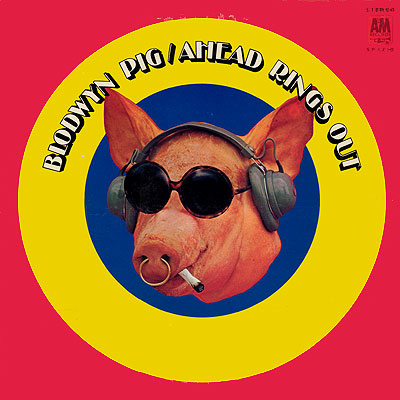
BLODWYN_AheadRingsOutCover
Cover of Ahead Rings Out, in all its, um, glory.

Ahead Rings Out begins with the jump’n’jive of “It’s Only Love,” a horn-inflected piece of dance blues straight out of B.B. King.  Right away it is apparent that, while he stamped Jethro Tull’s first record with his playing and singing, in Blodwyn Pig Abrahams is going for a fuller sound, and up against the other comparable British blues rock guitarists/vocalists/bandleaders of the period — Eric Clapton, Peter Green, et al. — Abrahams holds his own.  Reed man Jack Lancaster, meanwhile, creates his own horn section (he’s pictured on the inside cover playing soprano and tenor simultaneously), which he elaborates on more elegantly in the slow blues “Dear Jill,” again featuring thoughtful, tasteful soloing by Abrahams and a heavy bottom from bassist Andy Pyle.  “Walk on the Water” could be off of Tull’s Stand Up, and continues the rock and brass.  Jack Lancaster’s work gives Ahead Rings Out its signature, and to my ears creates, in some fashion, the template for Gong’s admirable Radio Gnome trilogy, minus the ambient stoner bits (“What’s left after the ambient stoner bits?” you could justifiably ask).  That Abrahams could create Blodwyn Pig and open up space for Lancaster, where Ian Anderson’s flute would have played this role in Tull, is a testament to Abrahams’ care for the sanctity of the song — whatever ego drove him from Tull is not driving this record.  It isn’t just the Mick Abrahams’ show.

“See My Way” is the album’s center, its Bolero break a nod to other blues rock albums of the period, for what self-respecting band didn’t riff on that chestnut at the time? The balance of the record is a sampler of British country blues and jazz of the period, strongly reminiscent of Peter Green’s Fleetwood Mac, with pastoral acoustic slide pieces like “Change Song” paired with riff rockers like “Summer Day.”  Again, though, Lancaster’s layered sax work sets the album apart, driving, charging, soloing.  It’s a voice that was often lost in rock bands evolving out of the British jazz/blues scene, and it’s agile use here is in welcome contrast to strictly guitar-centric albums of the period.

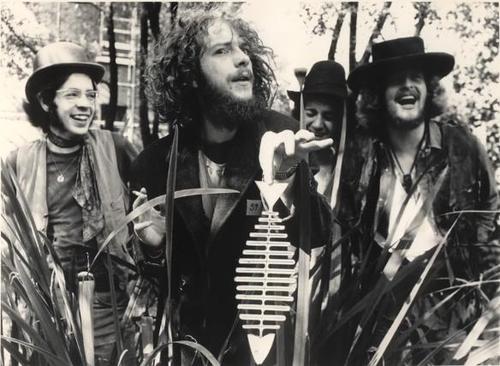
BLODWYN_groupPic
Blodwyn Pig: Jack Lancaster (sax), Mick Abrahams, Ron Berg (drums), and Andy Pyle (bass)

It becomes clear on Getting to This, which is a respectable second effort, that while the sound has gotten heavier, Abrahams has perhaps run out of ideas.  The album opens strong, with “Drive Me,” and throughout offers the same guitar-and-horn driven rock that made Ahead Rings Out so satisfying.  But…the soaring, Tull-ish “Variations on Nainos” is spoiled in its final moments by a joke-ishly gargled vocal — I appreciate a sense of humor, but why bring it to such a gem of a song —   “See My Way” is inexplicably included again, and Abrahams revisits his signature take on “Cat’s Squirrel” with “The Squirreling Must Go On,” which is expertly wrought and totally unnecessary.  Nonetheless, I think Getting to This can be considered of a piece with Ahead Rings Out, and even if Abrahams betrays an over-fondness for the template he hammered out with Tull on This Was, there is no denying the strength of the blueprint.

Abrahams has soldiered on through the years, recording off and on, reviving Blodwyn Pig here and there, and even re-recording the entirety of Tull’s This Was.  Living in the Past indeed.  Yet it’s hard to argue with such spirit, and, having the opportunity to see Abrahams play in a London pub in 1991, I can say that it appeared the man was having a good time.  He also enjoys what seems to be an amiable relationship with his old bandmates in Jethro Tull, a group he defined before moving on alone.

On the band’s website, he is profiled with a warm, respectful humor: “Mick was born in Luton, England, on the 7th April, 1943, which was a very long time ago. There was a war still going on at the time, which may explain why Mick can be a cantankerous old git and a right, proper and loyal gent at one and the same time…. Mick is now very, very old — even older than Martin Barre — and likely to out-live all of them.”

Steamfolk – The Derring Do of Dodson and Fogg

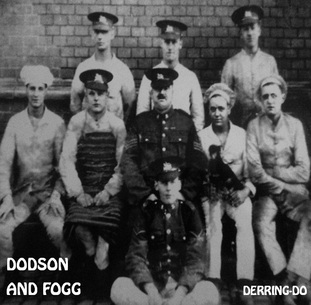
ImageThere was a fairly determinate point in the British folk rock movement of the late 1960s/early 1970s where a second string, following on the heels of Fairport Convention and Steeleye Span, made a bid for eternity.  Trees, Mellow Candle, Mr. Fox, and the chamber folk musicians, like Nick Drake or John Martyn or Roy Harper or Michael Chapman, bent their axes in a more idyllic, often trippily electric, singer-songwriter direction, creating everything from full-out jazz improv to fairly quaint hippy platitudes.  The rarity of some of the LPs these artists produced is legend — it took the internet to demystify them, and reconnect listeners to a wellspring of achieving, often remarkable, sometimes dated, music.

As a touchstone for inspiration these records are nearly without peer, independent and uncompromising.  But having a Vashti Bunyan album in your collection and making music that you make your own is another thing.  Chris Wade, who leads the project Dodson and Fogg — as well as being a rock writer in his own right — has done that with Derring Do, the group’s second album.  Derring Do elaborates on the first, self-titled Dodson and Fogg record, while taking a leap forward lyrically and musically — the limitations of a home studio have become strengths, the writing delivering songs that fit together.  Wade has achieved this by understanding the tools he’s working with, and by having a deep respect for his inspirations while retaining his artist’s eye and ear for what does justice to his songs.  So he’s able to coax graceful backing from two of British folk rock’s great singers — Celia Humphris (Trees), and Alison O’Donnell (Mellow Candle) — while maintaining a focus and direction of his own device.

There are traces on Derring Do that listeners might find familiar, the floating-down-a-river sound of Nick Drake or James Yorkston, the pop folk of Iron and Wine, the simple melodic invention of Syd Barrett, and the more pastoral forays of T. Rex and the Kinks.  The lyrics are simple and unfussy, straightforward, working with the melodies rather than overly concerned with poetics or narrative.  Unexpected touches appear, such as really tasteful, brief guitar solos that work — there’s an ebb and flow that occasionally needs breaking, and Wade has the feel and chops to put some crunch in the right places.  There are trumpets, spare percussion, flutes, and Wade’s voice, dwelling at times in the lower registers, can range from a kind of glam-punk bite to the breathy approach that’s come to be so associated with Nick Drake.  The remarkable thing about this album, though, is that no voice dominates within each composition.  The impulse to go long, as his folk and prog rock predecessors might have done, is also resisted — there are few wasted notes or words.  Less is more sometimes, and service here is done to Song.

“The Leaves They Fall” is a video Wade put together for Derring Do, which gives a good general idea of the album’s direction

http://www.youtube.com/watch?feature=player_embedded&v=diKQgjmnk0I

but I think most representative (and beautiful) is “To the Sea,” with its on-fire electric outro:

http://www.youtube.com/watch?v=fywm2bUM0D0

I caught up with Chris Wade the other day — after hearing the record, I wanted to ask him some questions, which he graciously consented to answer.  I think he tells Dodson and Fogg’s story best, plus he reminded me I need to read more Dickens.

I’ve read you spent a lot of time in your teens with a guitar and a 4-track.  That kind of intimate warmth is present on Derring Do.  It’s loose, not precise, something so tempting in our digital world.  Describe your recording process — are these home studio recordings?
Yeah, these are done in my home studio. I knew that with a simple set up, a microphone miking it all up like in the old days, it would make the record sound like it was perhaps from my favourite era of music, late 60s, early 70s. I basically start with an acoustic track, which I might double up, then do a bass track, then start on the vocals, then anything else comes in after that. On Derring Do I definitely got this down to a proper functioning way of doing it. You do need to have a plan when you’re recording and producing yourself. The great part is when other people send their things for the mix, that’s when it comes to life, especially when Celia [Humphris] sends some of her vocals over.

What’s the inspiration for the name Dodson and Fogg? (I can’t get out my head Lindisfarne’s Fog on the Tyne.)
Dodson and Fogg were two lawyers in Dickens’ Pickwick Papers. I thought it had a cool ring to it and I like the fact the name has caused a bit of confusion. Some people have gone in assuming it was a duo, but it’s me really with guest musicians. I love Lindisfarne as well, funny you should mention them. I just did a piece on them for my magazine Hound Dawg and all surviving members contributed text for it. Great band.

Anyone familiar with the history of the British folk revival will recognize some of Derring Do’s contributors.  How did you come to work with Judy Dyble, Celia Humphris and Alison O’Donnell? How about Nik Turner of Hawkwind? Is that his flute I hear?
Yeah, Nik is great on the flute, he did some amazing stuff on the first album. It was a matter of emailing them to ask if they’d be interested. I’ve always thought ‘you never know until you try’ and I have been a bit of a cheeky git in the past. But Nik and Judy did their bits and emailed them across to me. But Celia is very much more involved in the whole thing. She contributes a lot of vocals and puts in a lot of time to this, so I am really grateful of that. She’s done loads of good stuff on Derring Do, given the album a real nice touch. I still can’t believe they took the time out do it and as a big fan of trees and Celia’s voice, it’s amazing to have her on the songs. her voice is stronger than ever too, she really is very very talented.

I love how you use horns (thinking here of What Goes Around and Too Bright).  Can you talk about your approach to arranging your songs?
I’m glad you like the horns. Arranging a track, I like to record what I think is a decent simple acoustic and vocal track, and then think of an instrument or a sound that may make it a little bit different, unusual, but it has to fit just right. Colin Jones, the trumpet player, did some brilliant things on the Derring Do album. He’s a nice bloke as well. I see mixing a track like doing a painting, without sounding pretentious (which i probably just have sounded) because you lay sounds on, mix them around, put them in one speaker to balance it out, turn them up, turn them down, and sometimes delete them from the mix. I love that process, I could do it all day (sometimes I have been doing that actually).

Nice lead guitar and solos – is that you, or who’s responsible? Can you tell us something about choosing your tones?
Thanks, yeah that’s me on electric guitar. I love playing the guitar, it’s always my favourite part of doing a track, writing and playing the solo. I just play naturally really, whatever I feel should come out. I use a Tanglewood SG on the albums. I mike the amp up, make sure there’s a lot of treble on the guitar and that’s basically it. A reviewer said it was shredding and a sharp sound. I like to use the electric every now and then, and not necessarily on every track, because it has more power when it comes up then. I’ve been playing since I was a kid, but I don’t think i really started understanding that sometimes less is more and that a solo should be a properly structured piece of music in itself rather than a random improvised noodle, although i do like them, just not in my own songs because I’m crap at them.

Can you describe your vocal approach (I notice on the first record you double your vocal a lot, less so on Derring Do — which I like).
I like to sing within a range that is comfortable. One thing I don’t really like is loud, high singing, because I have a low voice and if I try and go higher i sound like my balls are in a vice or being chewed by a rabid hound. So I like to keep it comfortable and also easier to listen to. No one wants to hear someone struggling with high notes, not much of a pleasant experience really. But I like the voice to sound strong and loud in the mix, so you can hopefully hear all the lyrics. The cool thing is having proper singers with you on the songs who really can use their voices, when Celia’s voice comes into the mix I sometimes have to pinch myself. It’s brilliant.

I hear a musical leap between the debut and Derring Do, which seems, musically and lyrically, far more focused.  Am I hearing right, and would you elaborate if I am?
Yeah i think there is a leap. I’m not a seasoned pro with proper writing and recording so I guess i am still learning and developing a style, which is really exciting and I’m really glad you recognised the shift in styles. I started recording Derring Do before the first one was out and knew I felt like expanding the sound a bit. When I recorded the first one I was kind of testing what I could do on this set up and a lot of it is safer in a way. With Derring Do I wanted it to sound fuller, more elaborate at points and also more varied, like an album with lots of moods, styles and shades, which is quite a progressive approach. But a lot of the time anyone recording music is just doing what they feel like doing that day and going where the song is taking them.

There’s a lot going on in these songs, threads of past and present.  Who are some of your influences, and who of your contemporaries do you follow?
I mostly love music from the 60s and 70s, but wasn’t born until 1985. I always love listening to Donovan, Jethro Tull, The Kinks, Cat Stevens, Frank Zappa, King Crimson, Pink Floyd, Trees… I am not sure how they influence the music but some reviewers have heard bits of Trees, Tull, Barrett and Crimson in the music, but you never really know yourself do you? I don’t really follow modern music really, only bits and pieces, although I know I should.

How would you describe (I hate to say it, but “categorize”) your own music?
For the first album I just thought of it as a folk rock album, but found that a lot of folk sites and shows didn’t think it was pure folk enough, and then people started calling it ‘acid folk’ which was a term I didn’t know until then. I thought they were accusing me of being a spaced out acid head or something. The only thing I have in excess is malt loaf (mmm… malt loaf). But people have also called it ‘progressive folk’ which I like. it seems to work under that category i think.

You’re a busy man, a writer, musician, visual artist — what excites you most about what you do?
I’m most excited by the music now, it’s really took hold of me and I love putting the work into it. I love the fact I get to do the mix, sort out the artwork, royalties, promo, everything. If it’s your job then why not make it your proper job and put full time work into it. That’s what excites me, and also the thrill of creating something you’re really enjoying. I’ve done a mix of things, like the audiobook with the comedian Rik Mayall  but it doesn’t come near the enjoyment of making music. I don’t like having to deal with egos and awkward people who are more interested in their images than the work you’re creating. It isn’t the best way of spending your time. I have a working class ethic to it, it’s a job and you fund it and do it yourself, because no one else is going to do it for you.

On the pages of Progarchy we regularly (short-lived as we are) hear from artists who struggle to find reward for what they do.  What’s your perspective on this? Can a musician be just a musician anymore? What’s the easiest way for someone not familiar with Dodson and Fogg access your music?
Luckily for me I have quite a lot of projects that are out there, so the music is just one of my things available, if you like. I think it might be hard to survive on royalties alone these days, but then again I am really new to the “music biz” (business I mean, not poo) so I don’t really know too much about it. I’m still learning. The CDs are available from my website, where all my stuff is available, but you can also download from bandcamp and also Itunes, Amazon and all the digital stores. But the easiest way is to type in Dodson and Fogg to the Google search and the top result is my website. All the info is there.

What’s next for you?
I’ve got some promotion to do and sorting things out for the album, and also doing some articles for the next Hound Dawg magazine. After that i think I’ll start on album number three, which will be really fun!

Thanks to Chris Wade for such generous responses. Check out Dodson and Fogg’s website here:
http://wisdomtwinsbooks.weebly.com/dodson-and-fogg.html

and online back issues of Chris’s Hound Dawg: http://wisdomtwinsbooks.weebly.com/hound-dawg-magazine-online.html

Craig Breaden, February 2013

A Wonder Working Stone by Alasdair Roberts & Friends

ImageI’m not a churchgoing man.  Not to say I don’t very occasionally go; to keep the peace with the wife, yes, but also to partake of the fellowship in those rare moments when spiritual fellowship seems like a good idea to me.  It was on one such occasion recently that the church choir and orchestra, such as it was, made a distinct impression.  The roiling, echoing wave washing over the congregation from one of the chapel’s corners was weirdly ghost-like.  An acoustic guitar, a tambourine (and bodhran maybe?), a violin, the church organ.  There was some drifting off-key as they went through a selection of modern and traditional Christmas tunes.  These were not masters at work — but there was a percussive backbone and a feeling of possession over the music that was touching, spirited, and ultimately impressive.  It took an old rite, the Christmas service, and made it at once accessible, even primitively groovy, and yet kept a grounding in tradition.  Continuity and rebirth.

In listening to Alasdair Roberts’ new album, A Wonder Working Stone, I was reminded of this rare church moment, particularly on the tune “Fusion of Horizons,” penned by Roberts, like all the songs on the album, yet redolent of the hymnal.  Roberts, a Scot who sings in full accent, works a narrow channel of contemporary music.  With an eye to traditional Celtic and British folksong, which he masterfully reimagines across several of his records (witness “The Daemon Lover” from 2010’s Too Long In This Condition: http://www.youtube.com/watch?v=Y2soWDfwxNE), he fashions here lyrics and tunes that sound as if they have sprung full-grown from the head of the 18th and 19th centuries.  In “Fusion of Horizons,” a reflection on the nature of love, Roberts sings:

Love is a trellis of early roses
A shady arbor the soul encloses
Never jealously imposes
Fellowship on one who’d be alone
It’s a holy wand of gnosis
It’s a wonder working stone

While Roberts has few peers his own age, he’s working in a tradition that began a half century ago. The British and Celtic folk revival spawned composers who, like Woody Guthrie, Pete Seeger, Hedy West, and Bob Dylan in America, both interpreted folk songs and used folk templates to create songs reflecting their own time and thoughts.  Bert Jansch, Martin Carthy, Archie Fisher, Bob Pegg, the Watersons, Andy Irvine, Barry Dransfield, and Richard Thompson developed unique approaches to re-thinking traditional music, embellishing existing tunes and lyrics, as well as writing new narratives within the “folk” idiom.  Instrumentation, time shifts, and electricity were used elastically, and often to great and powerful effect, shrugging off the often-heavy yoke of tradition that spawned such legends as Pete Seeger’s pulling the plug on Dylan’s electric set at Newport (for there are few scenes more radically protective than the oldtime/traditional folk scene).  Roberts has absorbed this and his records reflect a strong recognition of those who came before, whether we’re talking 30 or 130 years.  He is a curator, in spirit and in fact.  In 2011, he put together a compilation of Scottish field recordings made by the venerable American collector of song, Alan Lomax.  He has worked with luminaries of the British folk revival and participated in a posthumous tribute to one of the great singers and writers to emerge from that period, Lal Waterson.  But while he is something of a documentarian and has a pedagogic streak, his music is a mix of wildness and restraint, electric and acoustic and brassy, a complex take on difficult times.  Folk-influenced contemporaries he’s often associated with, like James Yorkston and Will Oldham, paint warm canvases that lull and think and often swing, and are perhaps more indebted to indie rock, Nick Drake, and Belle and Sebastian than to the darker musings and ancient settings of Richard Thompson that more closely characterize the territory Roberts travels.  It is RT that Roberts might be most successfully compared to, because of his approach to song, his technical skill, and his ability to entertain rather than bat over the head with his scholar’s knowledge.  And, like Thompson’s, Roberts’ writing is decorated by mortality.

Death is alive, in The Wonder Working Stone, as it is in much of Roberts’ music, bloodied and a shame and inevitable, and not without its share of humor.  In the grand tradition of the darker streams of folk music, whether murder ballad or lament, his wizened voice possessing the sly vulnerability that colored Vic Chesnutt’s work, Roberts sings away the fear the way most reasonable souls, if unwittingly, do.  “The Merry Wake” begins this double album just so, and is a good example of his approach:

In hour of mayhem, in time of misgiving
Some turn to pastor, some turn to priest
Some would consort with the miserable living
But we’d rather sport with the gleeful deceased

Explaining each song in a note following his lyrics — for full effect I suggest pony-ing up for the LP, but the CD version should have these as well — Roberts resurrects a practice common to the folk revival, providing a thumbnail of his sources and inspirations.  These are mostly Scottish and Norse in origin, and Roberts masterfully uses religious, class, and national conflict from centuries past to create a mirror many of us might relate to.  In “Song Composed in December,” against a backdrop including a horn section (evoking Martin Carthy’s and John Kirkpatrick’s Brass Monkey project), he sings:

Woe to those who celebrate the taking up of violence
And woe to those who perpetrate delusions of their sirelands
Who’d fight for no reason with sword or with firebrand
Be they reiver in the border or raider in the highland

And joy to those who’d use their songs
as clues to find their clans
But woe to those who’d use them
to enslave their fellow man

His note on the song:

The title of this song is a nod to Robert Burns’ ‘Song Composed in August’, memorably recorded by Dick Gaughan on his 1981 Topic Records album Handful of Earth, under the title ‘Now Westin Winds’. The melody, like the sentiment, is international — the verse tune is extrapolated from that of the Irish song ‘The Bogs of Shanaheever’ as sung by the late Joe Heaney (1919-1984); the first instrumental break is the English Morris tune ‘Traveller’s Joy’ which was taught to me by the then Exeter-based fiddler and singer Jackie Oates; the second instrumental break is the Scottish tune ‘The Bluebell Polka’ which was made famous by the late accordinist and cellidh band leader Jimmy Shand (1908-2000). Rafe Fitzpatrick wrote the Welsh rap.

You get the idea. Alasdair Roberts is folk polymath.

Musically, the center of the album is Brother Seed, which Roberts describes as “the most recent addition to the canon of Scottish folk songs concerning the incest taboo.”  Anyone familiar with British and Celtic folk songs knows this is not unusual territory; between foxes running off with maidens, lairds skewering their wives’ teenage lovers, women disguising themselves as men to to go sea or seek revenge at court, and fiddle-playing fathers hanging their rapist sons, the field is rich with humanity’s darker impulses.  Roberts has been performing Brother Seed for a while, and when I first saw this video I searched for the song until I realized he hadn’t released it yet:

http://www.youtube.com/watch?v=XcMQ7VyIhIs

Divided into two sections, Roberts begins the song as Martin Carthy or Bert Jansch might, as a quickly fingerpicked, droning 9/8 (I think — I’m open to suggestion) fiddle tune with an unexpected melodic twist, a vocal bend between following the first refrain — “The greenwood waxes early” — that is matched on guitar by taking two half-steps up from the IV, achieving a tension that resolves in the second refrain — “Where the deer go running yearly.”  The whole picture is of a dark future, foretold by the girl’s mother, and in the second half of the song, where there is a down-tempo shift and the appearance of a dour and further darkening keyboard, “Brother Seed” turns fully to lament.  While the song is challenging thematically, it engages the listener in an ancient drama, the establishment of humanity’s rules and who is meant to suffer when those rules are broken.  This is the continuing appeal of “traditional” folk music, whether the text is old or, in Roberts’ case, newly wrought.

While there is no question that The Wonder Working Stone has a traditional feel, folk’s simplicity here is scored on a complex scale.  The variety of the instrumentation — 13 musicians worked on this record — and the arrangements offer a richness rewarding close and casual listeners alike.  Never overwhelming Roberts’ lyrics, which are epic and a joy to read (not something you can say about all songs), the cast here includes flutes, trumpets, trombones, goats feet(!), keyboards, and some very wonderful electric guitar by Ben Reynolds, whose contribution is akin to Jerry Donohue’s or Richard Thompson’s on Sandy Denny’s solo albums.

A Wonder Working Stone is the portrait of a musician at a summit of his musical and lyrical powers, working with finesse, restraint, and boldness a territory that continues to inspire interpretation.

Craig Breaden, February 3, 2013

The Myth of Jennyanykind

Rapture.  Mythic is playing through the headphones on full blast.  Mythic, from 1995.  Arrived today in the mail, $4 off Amazon Marketplace.  It’s been out of print for years, naturally, and my copy was lost long ago. [Note: Mythic was re-released on the band’s BandCamp page one day after this article was originally published.  See link below. — CB]

Living in NYC in 1995, I was visiting North Carolina (a former and future home) when I found Mythic.  I really liked their first record, “Etc.,” a minor local mind blower, but Mythic was all the best part of “Etc.” amped and twisted and cranked.  It dropped into a Chapel Hill scene that was undergoing some serious transformation as Jimbo Mathus’s Squirrel Nut Zippers, which arose out of the ashes of Metal Flake Mother, were getting national attention, and weird rock purveyors Zen Frisbee soldiered on, having been solidly ignored for their brilliant album, I’m as Mad as Faust. Continue reading “The Myth of Jennyanykind”

Sending Art Downstream

Sending Art Downstream

I’m sharing a link here to a wonderful Pitchfork essay by Galaxie 500′s (and Damon and Naomi’s) Damon Krukowski, on streaming and the economics of sonic art.  One high point: Damon’s observation that Galaxie 500’s first record was first released only as an LP, and his next will mostly likely be released only as an LP, because streaming music services like Pandora and Spotify have made the idea of selling one’s art for a profit obsolete.  For all the bands we love on Progarchy, my guess is they face the same economic hurdles, something David Longdon of Big Big Train shared with me at any rate: they make no money, it’s a labor of love they’re lucky they’re not losing their shirts on.  On a somewhat unrelated note, I love the convenience of digital, streamed music, but I also am skeptical of it satisfying the same benefits many of us (I think) got from the LP.  Rewarded patience, a linear experience as imagined by the artist, the tactile and visual experience of the sleeve…. If streamed music also means a watering down of the artist’s reward, my skepticism grows.

Craig Breaden, January 5, 2013

But Is It Good? The Dreaded Year’s End List

Years ago, I had something of an obsession with the movie Jimi Hendrix, which was made shortly after his death, and which along with Bob Dylan’s Don’t Look Back got heavy rotation in the VCR (I had ‘em back to back on a fuzzed out VHS cassette).  Once, after watching it and glowing about it and Hendrix to my girlfriend at the time, she asked me, with a sly smile, “But was he good?”

It was a bizarre and funny question, a great question.  Because of course my first reaction, most people’s first reaction, to that question regarding Hendrix, would be, “Of course he was !#$*&^!! good!  You can’t get more good.  None.  None more good.”

But, she was testing me in a good way.  What she was asking, really, was did all that talent create something worthwhile? Shouldn’t received wisdom about art be less immutable than it often is? And suggesting, too, that even established (and dead) rock gods need new evaluation, continued consideration. This is why I think year’s best lists are something of a conceit and are really part of the pop world.  In reflecting on my favorite records of the year, I realize: there are no “new” artists in my brief list; only two of the albums were released this year; and, one of the albums is actually over 30 years old.  But ah well, nobody ever accused me of being at the cutting edge of pop.  I’m always just catching up.  These are the records that were new to me in 2012, would be of some relevance to the prog listener, and which answered in the affirmative the question, “But is it good?”

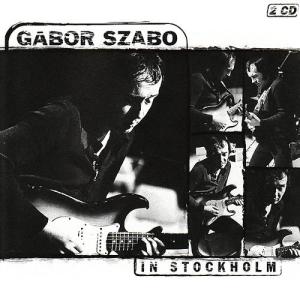
GaborSzaboIn Stockholm by Gabor Szabo (1978) – A jazz guitar master whose work with Chico Hamilton in the early 1960s landed him a solo career on the venerable Impulse! label, Szabo was at once an emblem of swingin’ 60s lounge pop and serious jazz improviser.  His Eastern European gypsy roots are all over his records, which typically capture Szabo working out a handful of originals against a backdrop of covers (these can veer towards the cheesy, but his cover of Donovan’s “Three Kingfishers” is stunning, and his interpretation of Sonny and Cher’s “Bang Bang” (with vocal!) absolutely without peer.  His 60s work is topped by “Gypsy Queen,” which a lot of us already know as the tail end/outro of Santana’s cover of “Black Magic Woman.”  Carlos loved his Gabor.  But instrumental jazz pop had a short shelf life, and the 70s saw the hits wane.  Szabo went back to Europe to record, and the album In Stockholm compiles two sessions, one recorded in 1972 and one in 1978, with Janne Schaffer (best known as Abba’s guitarist!) joining Szabo on guitar.  This is pure jam music, with rock and jazz getting equal voicings.  Bass and drums create droning, searching backgrounds on extended versions of Szabo classics like “Mizrab” and “24 Carat.”  The only distraction on the set is a nod to Szabo’s lounge-pop leanings, with the overripe chestnut “People” probably getting the best treatment it’s ever gotten but, come on, it’s “People who need people” and I personally don’t need it.  The rest of the double album more than makes up for this pale first track though.  This is first-rate stuff — really mindblowing.

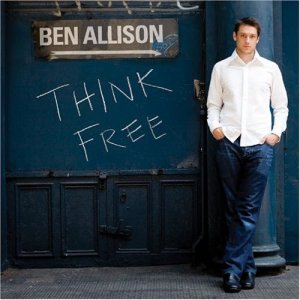
BenAllisonThink Free by Ben Allison (2009) – I love Ben Allison’s work.  He’s one of the few modern jazz composers I keep up with, and his records always have something to say.  Think Free is kind of an amalgam of older and new compositions, with “Green Al” and “Peace Pipe” getting fresh makeovers with the addition of guitar by Steve Cardenas, who’s been working with Allison the last few years.  This is melody-driven jazz that never strays into smooth territory; if anything, it verges on rock (although not as much Allison’s wonderful Cowboy Justice from 2006).  The recording is organic, earthy, with Jenny Scheinman’s violin contributing an almost rustic feel to some of the tracks.  I caught up with Think Free late and since then Allison’s released Action Refraction as well, which is also great, but the nice thing about Think Free is that I think it stands as a great introduction to his work in general.

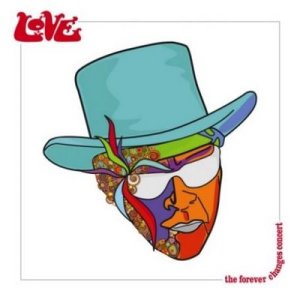
LOVE FC LThe Forever Changes Concert by Arthur Lee & Love (2003) – I may be preaching to the choir, I know, but if there is one rock album from the psychedelic era that has stood the test of time it is Love’s Forever Changes (1967).  A sonically bright, lyrically dark masterpiece, Forever Changes combined rock with smooth jazz, Spanish classical music, and garage punk, forging what is in my opinion the first American progressive rock record.  Arthur Lee, the cracked master behind Love, refused to tour outside of California, and never capitalized on the potential of Forever Changes or its two predecessors (both wonderful in their own way, and classics as well).  Jack Holzman, head of Elektra Records, has called Lee one of the few musical geniuses he ever met and signed (these are big, big words), but Arthur Lee could never translate that genius into success.  Drug problems, jail time, on-again off-again performances through the 70s, 80s, and 90s did nothing to help his legacy.  Then came word that he was gigging regularly with Baby Lemonade, a West Coast psych revival band who took their name from a song by another 60s casualty, Syd Barrett.  And in 2003, this band, with Lee fronting, performed the entirety of Forever Changes in London, a performance not only beautifully executed but also wonderfully recorded.  In fine vocal shape, Lee delivers on the promise of what Forever Changes could have been for him had he pursued it with such ferocity 35 years earlier.  That he got this down before he died is a gift to us all.  I’m embarrassed to say that although I’ve long been a fan of Forever Changes (easily in my top 5 of all time), I hadn’t heard this concert until this year.  So do yourself a favor….

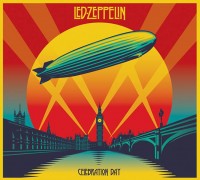
CelebrationDayCelebration Day by Led Zeppelin (2012) – Like the Forever Changes Concert, Celebration Day captures Led Zeppelin performing one show, the Ahmet Ertegun tribute in 2007.  Of course, this Zep isn’t the Zep of yore, as John Bonham’s son Jason is behind the drums, but Jason Bonham has long been the replacement of choice for his legendary father.  The wonderful thing about live Led Zeppelin is that they are like they are on their records but more so.  Make sense? Jimmy Page and Robert Plant always tend, intentionally, towards the unpredictable, even messy — and make no mistake, this is an Art — and sometimes it works, sometimes it doesn’t.  It works here.  Celebration Day finds Plant, Page, and John Paul Jones in fine trim.  Robert Plant, working the lower register, has really never sounded better, and Page is, well, Page.  He is a master of infusing the big hard rock riff with soul, wit, and the hammer of the gods.  John Paul Jones, an absolute anchor, is in a way the real puppet master of this band.  He and Bonham tie down the dirigible that is Page/Plant.  This was one show, one take, with songs that speak to fans who wore out the deep cuts:  “In My Time of Dying” (really??? Yippee!!), “Nobody’s Fault But Mine,” “For Your Life”….  Although the band has been well-documented now regarding its live performances during its heyday, this is the best live Zeppelin I’ve heard.

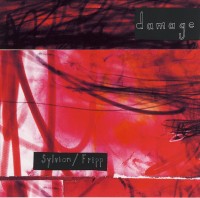
david_sylvian_robert_fripp_damage_reissueDamage by David Sylivian & Robert Fripp (2002) – A fellow Progarchist turned me onto this record and I was immediately blown away.  Somewhat familiar with Sylvian’s work, and holding Fripp in high esteem for his adventurousness, my first reaction to hearing song’s like “God’s Monkey” and “Brightness Falls” was an affirmation that artists like Fripp and Sylvian do better working in pairs than strictly solo.  This live set, recorded during their 1993 tour, draws songs primarily from an LP they made together, The First Day.  Fripps poetics on guitar and “Frippertronics” are matched by Sylvian’s words and voice, and backed by Trey Gunn on stick (a sort of bass with a cazillion strings), drummer Pat Mastelatto, and guitarist Michael Brook, there is a confidence in delivery that comes from two artists well into the second, third, fourth phases of their careers.  The sound is hard, funky, emotive, the sound of Fripp and Sylvian unmistakable.  The set misses “Jean the Birdman,” which they did perform on the tour but is not included here.  Otherwise this is a gem, and I’m probably going to spend 2013 tracking down more on Sylvian.

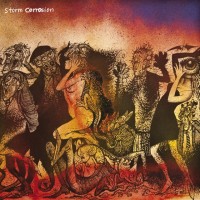
StormCorrosionStorm Corrosion by Storm Corrosion (2012) – I reviewed Storm Corrosion on Progarchy this fall so won’t go into it in great detail, but I find it a marvelous collaboration.  Like Fripp and Sylvian, Mikael Akerfeldt and Steven Wilson seem to do better working in collaboration rather than as heading groups or as strictly solo.  Perhaps it’s the balance.  In any case, this is a rich and wonderful album I look forward to getting even more out of in the next year.

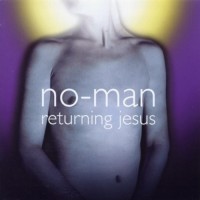
ReturningJesusReturning Jesus by No-Man (2001) – In preparing for my Storm Corrosion review, I came across No-Man, which I had never heard before.  A collaboration of Steven Wilson (instruments) and Tim Bowness (vocal), No-Man has made a lot more records than I’m comfortable thinking about because I’ve had my head in the sand this entire time.  On the other hand, there appears to be much to discover.  Returning Jesus is a great starting point.  This is slow, crooning stuff, and is much more in the vein of David Sylvian/Bryan Ferry British vocal music.  Wilson is restrained, and there is service to the song lyric here that isn’t present in all his music.  Romantic, rainy-day music, this could also be comfortable next to Johnny Hartman’s early 60s recordings.  Really, really prime.

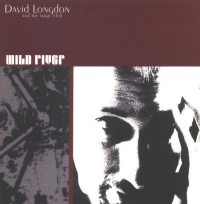
Wild riverWild River by David Longdon (2004) – I reviewed David Longdon’s Wild River on Progarchy and really would like to give it another thumbs up.  Wonderful acoustic instrumentation and production accompany David’s supple vocal, on a recording that goes fairly effortlessly from British soul ala Seal to more rustic excursions reminiscent of Ronnie Lane.  I’ll be listening to this record a lot in 2013.

That about wraps it up.  I could say that in 2013 I’ll make more of an effort to listen to new releases, but that would be a cheap promise I wouldn’t have much interest in keeping.  I’d much rather pick and choose records I haven’t heard yet, and listen because they’re good.

Happy new year!

Craig Breaden, December 29, 2013