

 It’s been forty-ish years since their first record but it’s not difficult to remember how important the Cars were to American music. Punk really broke with the Cars and maybe also with Devo, because until these bands hit the radio, and they did so in a big way in 1978-79, punk music and its influence was just a news story for those of us not living on America’s coasts. The Cars weren’t a punk band really at all but they brought a toughness to their pop music that defined American new wave, even as they were being played, say, between the Doobies and AC/DC on the radio (as they still are today). They represented a slew of less commercially fortunate American underground bands: Big Star, NRBQ, Flamin’ Groovies, the kind of groups who extended 60s garage rock post Beatles. That is, they saw the art in what they did. They opened ears. Ric Ocasek’s and Benjamin Orr’s lyrics were smart, un-fussy, their singing had the odd effect of creating emotional distance even while containing heartbreak, and Elliott Easton’s guitar kept the band on course — they were never not a rock band. Here on “Candy-O,” the title track of their second album, the Cars throw down a power pop gauntlet elevated by this raw live peformance. Bookended by a monster debut album and outsized 1980s success, “Candy-O” is nonetheless the band’s peak as new wave game changer.
soundstreamsunday presents one song or live set by an artist each week, and in theory wants to be an infinite linear mix tape where the songs relate and progress as a whole. For the complete playlist, go here: soundstreamsunday archive and playlist, or check related articles by clicking on”soundstreamsunday” in the tags section above.
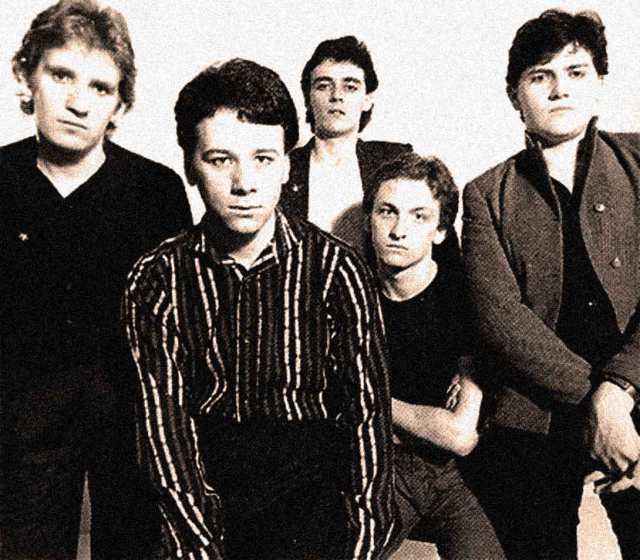 Few bands seem to cause such division as Simple Minds. There are fans of the early stuff, fans of the later stuff, fans of New Gold Dream…. I never had a horse in that race, since I never particularly cared to follow them. I liked what I heard on the radio of theirs well enough, it was certainly expertly crafted and, in retrospect, helped define its time. But recently I felt like mining a bit deeper and came upon their early records. I understand the early fans’ passions more now, since it’s made clear on Real to Real Cacophony and Empires and Dance that the band was chasing an ambition to recast pop music coming out of the 70s. That they caught up with it is apparently a deep disappointment for those who read sellout in the tracks of Once Upon a Time, but of course the one — a deeply enjoyable confection of well-honed hooks and musicianly smarts, no matter its commerciality — would not have been possible without the other, a proving ground that was hit and miss, but when it found its mark was incendiary.
 In completing a year of soundstreamsunday, I turn away from the “infinite” in the project’s subtitle (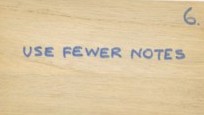

 The principles of exclusion, constraint, and limitation are drivers of art as much as what ends up on the canvas, and more than anything explain how U2’s “The Three Sunrises” did not make the cut of their seminal 1984 album The Unforgettable Fire. That album, their fourth, changed the band’s trajectory by broadening their palette (thus ultimately guaranteeing their longevity). Subduing the band’s onward-Christian-soldier martial airs without dulling its passion, producers Brian Eno and Daniel Lanois — who the previous year had created, along with Roger Eno, one of the great ambient masterworks in Apollo — worked at applying creative filters to make a music that was moody, introspective, less deliberate but also more whole. The Unforgettable Fire feels more like an album with a sonic narrative than any of its predecessors. Still, no one, not even Eno, could contain U2’s spirit or strong self-identity, and the recording sessions yielded some work with one foot still grounded in the energetic brightness characterizing their previous catalog.
 Keith Jarrett
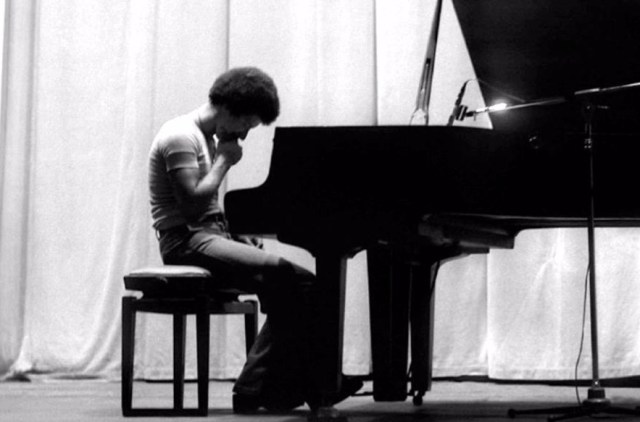 It’s 1975 and I’m nine years old. I’m lying on my back in Reservoir Park, a small city block of grass and oaks next to the University of Utah. In my head is a song that trips and travels as I run and play with friends. It’s a vision of sound, a strong impression of bright sun and moving clouds, a feeling on my skin, a growing chill in the air. Is it October? The song is a constant rhythm of consciousness and motion, a life in itself but also within me, as if I’m one of its many, many tributaries.
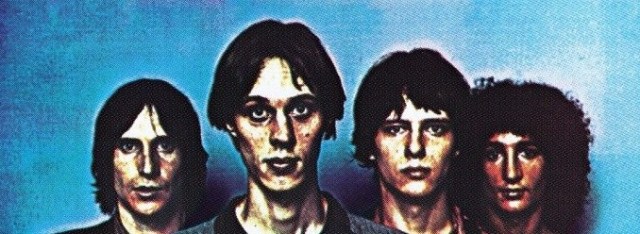 Even with an acknowledgment that the guitar crossroads intersect and break and branch through
 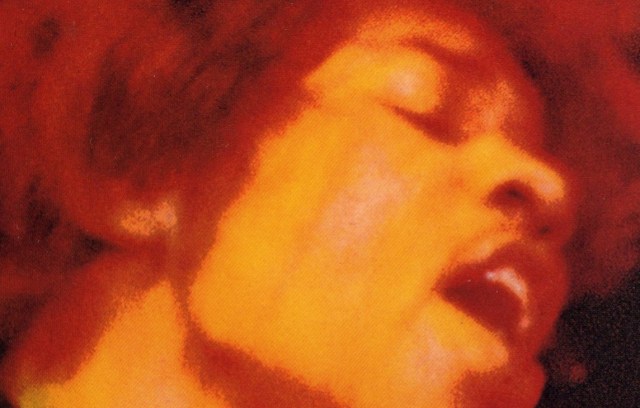 Jimi Hendrix’s mystery is something not quite capture-able as an iconographic or intellectual thing. Even knowing some of the details of his background — from his emergence on the chitlin circuit to his being shepherded to London by Chas Chandler — doesn’t explain the lightning the man conjured. The scant year and a half that Hendrix and his Experience released their three albums (May ’67-October ’68) encompassed a sea change in rock music that saw a full embrace of
  A deep blues, a call to enlightenment, a psychedelic spiritual of epic proportions, Pharaoh Sanders’ “The Creator has a master plan” rings with a disciplined clarity one might expect from a former
 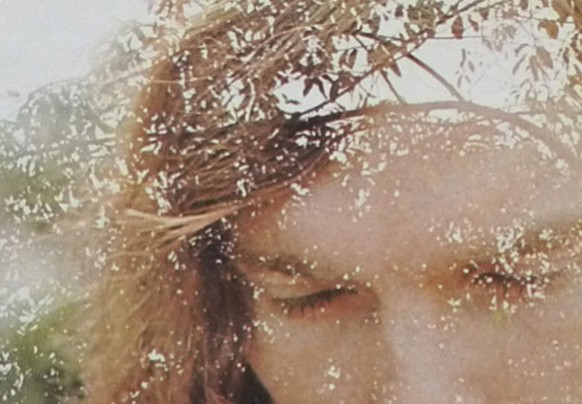 The art gallery of rock and roll is a rich and welcoming place, with room upon room spinning off into many-directioned distances. There is no entrance fee or warnings to stand back, please, from the piece. And, like at all great museums, any pretense to surface comportment is, if meaningful at all, only a nod of respect to the spark of human creativity. A sign that we don’t stand in willful ignorance. Before the work, within the work, we are all children. It is in rock’s nature to empower its listeners to create, and within this space there is no genre, no boogie no punk no progressive no pop no indie no folk, just an honoring of the empty canvas and the unrestrained fire banked down in humanity. It’s what I love about rock, and it’s what made Van Morrison’s Astral Weeks happen.
 Progarchy