Interview: Ryan Mark Elliott of EDEN SHADOW

edenshadow003

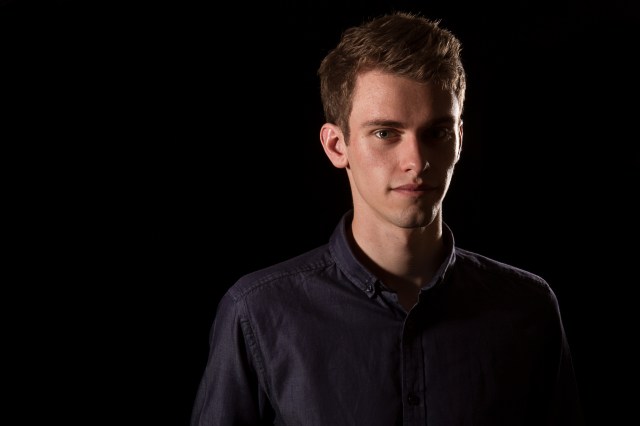
Eden Shadow is an art / progressive rock project by led by young composer and multi-instrumentalist Ryan Mark Elliott, hailing from Cardiff in Wales. The new album, “Melodies for Maladies,” has just been released and it can be said that this record is one of the 2016’s hidden gems.

In an interview for Progarchy, Ryan tells us about the album and his future plans with the project.

Alright, first thing is first. Before we dive into all the music stuff, how’s life?

It is great thank you. Very musical, be it creating, performing or teaching music. That’s the way I like it to be!

Speaking of new music, you have an album. What can people expect from “Melodies for Maladies”?

Big dark riffs! It is a very riff driven album and significantly more metal than my previous records. Despite plenty of riffs, there is a lot of contrast with plenty of symphonic moments and space, which is why I suppose you would define it this record as a ‘progressive’ record. I love to write music with plenty of contrast in feel, dynamics and tempo.

Continue reading “Interview: Ryan Mark Elliott of EDEN SHADOW”

EP Review: Nomadic – Horror

nomadic-horror

With a name like that, metallers from Tampa, Nomadic, do not strike me as a band that creates what they call a horror take on the blackened death metal genre. The band from the death metal city recently released their debut EP titled Horror, and judging by the music, that is a fitting title.

The EP kicks off with “The Horror,” a short instrumental that is a fitting soundtrack for a survival horror video game. From there all hell breaks loose and we are trapped between cracking sound walls of blasphemy and chaos on “The Count.” This number along with the closing and very inspiring piece “The Further” single out as the best representatives of Horror.

In the meantime “The Undead” and “The Monster” come forward with a cannonade of crushing riffs, ambient passages and trippy solos. Most of the guitar riffs on this album are quite melodic in nature. They also don’t really differentiate themselves from one another and are played in very similar ways. We can also hear a possible influence of the classic Gothenburg bands, most notably At The Gates.

Overall, Horror is a good introductory release for the band that is yet to show their full potential on their next release. There is still space for improvement, but once they realise their weak spots and connect the dots, Nomadic may be a step closer to the leading acts of the extreme metal underground.

Grab a copy of “Horror” from Bandcamp here.

Album Review: Given Free Rein – In-Ear Trip

in-ear-trip

Given Free Rein is a trio hailing from Greece and delivering very dynamic sound. They have released their debut album “In-Ear Trip,” after years of working hard on it. This is a very vivacious album with many joyful elements in it. It is one of those “morning coffee” albums. It knows the ways of how to discharge you and bring you real joy with its energetic tunes.

“In-Ear Trip” includes ten songs. All the way from the opening “Magnetic Fields” down to the closing “Vein of Light,” “In-Ear Trip” never stops being heady. Every song on the album is constructed in the same way. Placing this record under a genre is a double-edged sword, but the music is most of time alternative / punk rock with progressive and classic rock influences. And since we are talking about influences, the music of Given Free Rein recalls likes such A Perfect Circle, Soundgarden, Tool. But there is more than that. The band transcends into the territory of the ‘70s vintage rock. So it can be said “In-Ear Trip” is a great harvest of modern and classic.

Overall, Given Free Rein’s “In-Ear Trip” is a very effective, powerful and tasty album comprised of great vocals arrangements, intricate guitar work and strong structure. It goes to the category of “must listen to” albums released in 2016.

Get a copy of the album on Bandcamp here.

Review: Jonas Lindberg & The Other Side – Pathfinder

pathfinder

Pathfinder, the debut album credited to the name of Stockholm, Sweden-based composer Jonas Lindberg and his band The Other Side, has potential to be submitted for one of the best releases to come out in 2016. A labour of love, Pathfinder  (whose title can be interpreted in many different ways) is one of those rare musical efforts that manage to sound like very little else. With derivative acts a dime a dozen on the current music scene, listening to such an album can be an exhilarating experience. Although Lindberg’s name may be the most prominent on the cover, unlike your average ‘solo pilot’ release this is very much a collective effort, in which the input of each member of the band is recognizable, yet at the same time meshes with the others to form an organic whole.

Unabashedly eclectic, Pathfinder can be described as a ‘protest album’, and with very good reason. However, it is first and foremost a collection of inspired, thought-provoking compositions performed by a group of amazingly talented, experienced musicians who manage to come across as an extremely tight unit rather than a combination of over-inflated egos. When such collective talent is gathered together, the results may often be a tad underwhelming – especially when musicians forget that they are at the service of the music, and not the other way round.

Thankfully, this is not the case with Pathfinder. The impressive cohesion between all the artists involved, band members, results in eight tracks that display a remarkably original approach, even when external influences can be detected. While listening to the album for the first time, the closest comparison that came into my mind was with the late ‘70s– early 1990’s Pink Floyd, who are undoubtedly one of the band’s most noticeable sources of inspiration. In contrast with the majority of prog albums released in the past year or so, Pathfinder is based on relatively short compositions — and, indeed, half of the tracks are songs with a more or less ‘conventional’ verse-chorus-verse structure. The album might even be seen as a lesson on how to produce music that does not rely on 30-minute epics or convoluted concept stories in order to be progressive.

A masterful blend of mainstream sensibilities, socially-aware lyrics, intriguing atmospheres and stunning instrumental and vocal performances, this is a unique album that is warmly recommended to progressive music fans.

Get a copy of the album from Bandcamp

Review: Glory of the Supervenient – Glory of the Supervenient

gots

The concept of jazz mixed with metal is no longer a new one thanks to the explosion of the (in)famous sub-genre known as technical death metal. However, Glory of the Supervenient is one such album where the jazz/fusion influences are strong enough to almost overpower the metal segments completely at times. The calm soothing sounds that adorn almost all songs on the record should be enough of an indication of that fact. Furthermore, this is not a heavy album at all. Sure there are riffs, but the main point of the music here is a wondrous display of variety of different ideas, each of them perfectly flowing into one another in a gorgeous display of musical mastery of the band’s founder Andrea Bruzzone. All of you looking for wanky displays of instrumentation will be quite disappointed. Also one never feels the absence of vocals for even a second as the instruments clearly do all the talking here.

The music will hit a few high ended peaks finally settling on a valley of bass and guitar interplay only to fall into a river/waterfall of soothing and laid-back jazzy licks and grooves. The guitars are simply godlike and sublime in every sense of the word, with even the rhythm guitar in the background providing some amazing riffs and echoing chords further enhancing the trance-like vibe and overall atmosphere of the album in general. The lead guitar playing is brought to a minimum by creating an atmospheric vibe threaded through the tracks. Regardless of any particular song, there’s always something exciting and fresh constantly happening in this album, be it with the bass, guitars, keyboards/effects or drums, which is why it’s almost impossible for me to really pick standouts.

At the end of the day, this is hands down one of the best instrumental albums I have heard this year, metal or otherwise. My preference for most other instrumental albums mostly depends on my mood, but this is one album that I can put on at any given time and never be bored of it. Exciting, challenging and varied influences put to superb use making for a cascading wave of musical perfection all the way.

Review: AsZension – Portals

aszension-portals

There are some really great albums that were released this year. We almost came to the end of 2016 but terrific sounds keep coming all around the world. The Canadian instrumental progressive metal band AsZension has just released their third studio album titled “Portals.” And with this release they placed their name in the mentioned category of the best and tastiest records to come out in 2016.

As mentioned, “Portals” is completely instrumental. There are some vocal-ish things here and there in some of the songs, but it doesn’t change the fact. What is clearly noticeable throughout the record is harmony between all of the instruments they are using. There are seven songs in total total on “Portals.”

The opening “Metamorphosis” starts with a flute solo and it keeps on with calming sounds of keyboards. Then guitars come with a distorted tone combined very well with keyboards and effects. This piece reflects to the rest of material in terms of composition.

What I mostly like about this album is the sound of keyboards, courtesy of Kevin Thiessen and Gabriel Palatchi, which complete the other instruments. In other words it could be said that keyboards on this album are just like vocals on any standard recording. The moment you expect to hear some vocals, keyboards are coming to the stage and they take this craving of your ears to hear a sound completely maintain by a voice.

The self-titled, sixth song brings in some ethnic roots, especially at the beginning. A great choice for a song that also gives the album its name. Calm, great acoustic style, percussions that give oriental figures to the piece; all that nicely combined with the sound of piano. The song has its personality and it has its mystery. And of course, keyboards are again at the frontline, just like on the other tracks which makes this album special.

All in all, “Portals” is a must-hear record put out this year. Give it a chance!

Review: Make Way For Man – Evolve & Repair

make-way-for-man-evolve-repair

Australia’s Make Way For Man have crafted a well executed progressive metalcore release with Evolve & Repair that is almost inhumanly spot on for genre style points. Like notes in a wine, the band cycle through atmospheric or djent-guitars, high vocal melodies that strive to fit into the progressive metalcore club rather than stray too close to clean mall emo vocals, etc. At their best they are a blend between some of Veil Of Maya’s edgier passages with potential (evident in the amount of hard work that clearly went into this) future Periphery-sized ambitions. Much better than most metalcore by numbers and capable than many new wave of prog metal bands.

Over six varied tracks the band prove good work can be done in this sub genre of the family rock and metal tree, if without perhaps as much staying power as death metal or other forms. The future has yet to get out a verdict on that, but I’d be surprised if I am wrong.

The key track on this baby is the title, opening song in that the title summarizes that the band perhaps have too many at their disposal while also cramming in a ton of cool music within (almost) six-minutes skeleton that you’ll be amazed is as short as it was for all the places visited. “We Will Surely Drown”, the following track, is more of what I hope the band evolves into.

Looking forward to the music yet to come from this band, though this is a very capable early effort.

Grab a copy of Evolve & Repair from Bandcamp

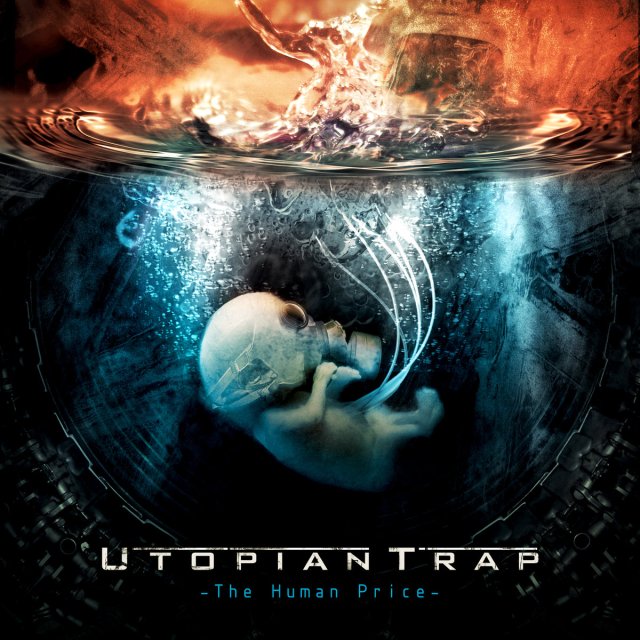
Review: Utopian Trap – The Human Price

The Human Price

Developing a progressive metal sound that is modern and experimental, Utopian Trap attain rarified stylistic differentiation on their sophomore album The Human Price. This quintet from San Jose started in 2005, slowly improving through over years to work their way up to a proper full-length — 2010’s Fiction Fades into Reality. The time passed by, and the band introduced a new vocalist Eric Boles, with whom they recorded and released their second studio full-length in July. There’s a hypnotic sense to a lot of the tempo shifts and riff segments – often switching moods up at the drop of a hat from tranquility to jackhammer cyber-fused heaviness, which along with the vocal employment gives Utopian Trap many colors and shades of arrangement exploration.

Two guitarists, Chandra Garud and Vinod Bhat, allow the band to tackle counterpoint elements while still giving an abundance of harmonic and melodic moments, occasionally shredding even in the keyboard department for the opening, almost 10-minute monster “The Human Price.” Fates Warning and Threshold come into the picture as prog metal riffs and melody are a focal point in many tracks, yet there’s also a bit of natural musicianship and dynamic contrast to the more streamlined “Atephobic.” You’ll find yourself humming along to many riffs or melody lines, and that’s a good thing in a genre that can sometimes be too technically sharp while forgetting to create a retainable, memorable song.

Boles handles the microphone duties in an excellent way; he is comfortable both in lower Russell Allen-registers and then anything piercing Tate high. Guitar solos punctuate instrumental sections, offering dramatic tension throughout The Human Price. The album features a boatload of drop on a dime tempo changes to highlight bassist Farhan Mohamed and drummer Roil Taggarsi as a fierce, schooled rhythm section.

Overall, The Human Price contains seven songs of stimulating song craft. Utopian Trap will gain converts, feeding social media buzz and aligning community attraction by the day.

Buy the album from Bandcamp.

Interview with THE SHADOW PRINCIPLE

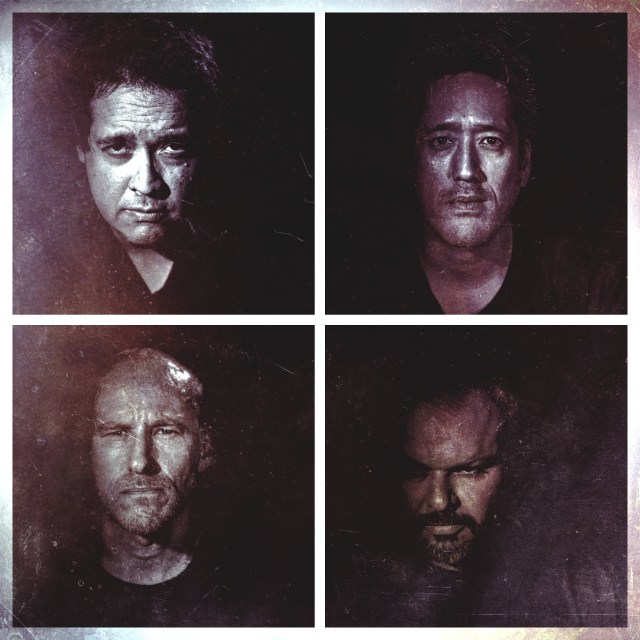
Band_Photo

Los Angeles-based rockers The Shadow Principle bring a successful mix of alternative, progressive and punk rock on their second full-length outing “Oblivion.” Over the course of ten songs the band delivers a stunning performance filled with both melodic and energetic Rock sound, just as it should be.

Singer Nohl Takahashi and bassist Dave Tomkins were recently interviewed by Progarchy, and they told us about their beginnings, new album, playing live, and some more.

What made you go for the name The Shadow Principle?

DAVE: We lifted the phrase from Joseph Campbell, who in Hero with a Thousand Faces describes the shadow principle as the “magical costume,” representing the shape of the soul, worn by Siberian shaman seeking out the “lost or abducted souls of the sick.” I suppose for us the shadow principle represents ideas and impulses that first emerge internally—in the imagination—that take shape externally in the form of sound.

As for what made us go with it, honestly, we were hard pressed for a name at the time, and finding something we could all agree on was—and remains—a tall order. But when this particular name came along, we all sort of looked at each other and thought, yeah, that works for us.

When did you start making music? Were you involved with any other projects or bands before forming The Shadow Principle?

DAVE: Reza Moosavi and I knew one another and had jammed together on a number of occasions over the years. In 2009, we found a drummer and decided to put a band together. That band, a sort-of progressive metal act called Murder at the Well, released one album in 2010. Shortly after the album’s release, we parted ways with the drummer. When Kurt Berens came into the fold, and the band’s writing began moving away from the whole metal thing and toward more of a post-punk meets hard rock vibe, we just thought it best to start over with a new identity. So, in 2011, the Shadow Principle was born, and in 2012 we released our first record, “Golden State.”

NOHL: I’ve been in the band Daijobu since high school, and was in One Hour Left for a one-time recording with Josh Freese.
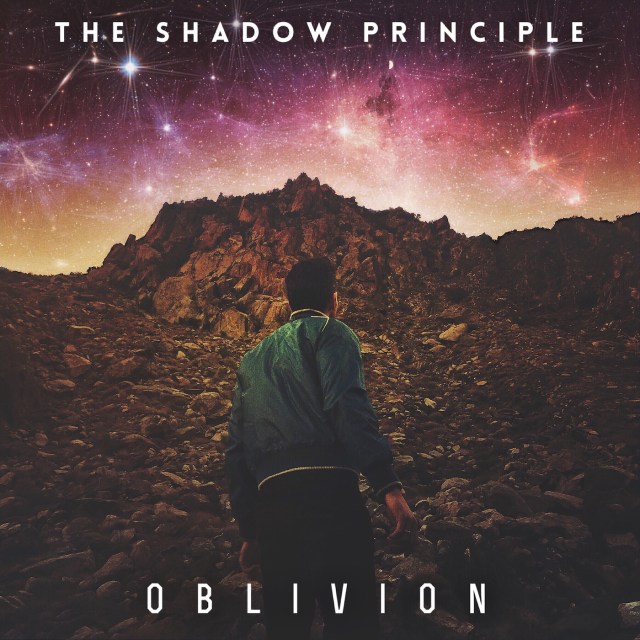
Oblivion_Cover Art

You have just released your new album “Oblivion.” What can you tell us about its sound?

DAVE: Well, we have a new singer, Nohl Takahashi, who brings a bigger set of pipes to the table, that’s for sure. After singing on Golden State (as well as the Murder at the Well record), I really felt that our live shows would improve dramatically if someone else—a proper front person—handled the vocals. I enjoyed singing on those records, and frankly I still think that the Bowie-vibe my voice brought to the music set us apart a little. But I’m a bassist first and foremost, and not only did I want to concentrate more on what I do best, I wanted the sonic scope—not to mention the appeal of the band—to broaden. For all of these reasons, Reza and Kurt were keen on the idea of adding a front person as well, so we looked and looked, and then we found Nohl. And I’m so glad that happened. The guy is a great singer, with a huge voice. To my ears, all the instruments featured in our music are now equally powerful. There’s no weak link. And live, there’s no doubt we’re playing better. Reza, Kurt, and I were a tight band before, but now it’s just ridiculous.

Another thing people familiar with our last album might notice is the additional time we took to sculpt the guitar and bass sounds. Whereas on the last record, Reza was playing a 7-string Ibanez, now he’s all about the Les Paul, which I love. And though I’m still playing a 5-string Fender Jazz, I took a bit of the twang out of my sound, and added more low-mid, as well as a bit of chorus and wah here and there. The result, I think, is that this record has more of a classic sound, a 70s sound, with a lot more balls than we had last time around.

Finally, I think that the songs on this record are more tightly constructed. Every transition, every new section, every part you hear has been carefully considered and labored over. We really aimed to make the whole thing as tight and cohesive as possible.

NOHL: It is absolutely pure and genuine analog rock with heart and soul, and offers pure driving commitment to the ears.

What is your favorite piece on the “Oblivion”?

DAVE: My personal favorites are “Phantom Satellite,” “Starless Skies,” “When the Sun Appears,” and “Headstrong.” But, as with most things, were you to ask every member of that band that question, you would likely receive four very different answers!

NOHL: Passenger, Dead Walking, and Headstrong.

Are you satisfied with where “Oblivion” landed?

DAVE: Musically? Yes, for the most part. We achieved much of what we set out to achieve. It’s a more cohesive record than “Golden State,” I think, with stronger songs and better performances. Of course, one always hears things one would now do differently. But the four of us feel strongly that we made a very good rock record that blends some unique styles (from prog to punk) and could appeal to a great many people – given that people have an opportunity to hear it! That’s really the challenge at this point. We don’t know yet where this album has landed in terms of building our fan base. Fingers are crossed we’ve reached a turning point. We’ll see.

NOHL: “Oblivion” is still spreading its wings in garnering a foundation and it has yet to find a global home, but we feel it’s indeed coming.

Are members of The Shadow Principle as energetic as “Oblivion”?

DAVE: I’m not sure about that. Everyone’s pretty relaxed, really. Especially Kurt, ironically, given that he’s Mr. Energy behind the drum kit. Nohl is probably the most kinetic. I suppose Reza and I are somewhere in the middle.

It seems The Shadow Principle enjoys performing live. What are the plans of the band when it comes to concerts in the coming period?

DAVE: We’re keen to perform wherever and whenever we can. Follow us on Facebook and Twitter for updates to our show schedule!

NOHL: We love the unpredictable conditions and the pureness of performing rock music. We go with the flow.

What does a Shadow Principle show look like? What can audience expect from your gigs?

DAVE: It’s a pretty raw affair, really, given that we haven’t much budget for a stage show. I suppose audiences are likely to see Nohl and I moving around a lot! On the whole, though, I think that people who watch us perform see a lot of passion, dedication, and focus. We’re a very tight unit, and we set very high standards for ourselves in terms of proficiency. Plus, we play very high-energy sets to keep people engaged.

NOHL: Real people playing real rock music. No gimmicks, no props, no distractions, just pure and honest rock delivery performances.

Where do you see The Shadow Principle in 10 years from now?

DAVE: Who knows? We’re much more focused on the present, I think. We want people to hear this new record now (and hopefully buy it). We want to play fantastic shows now. We want to turn people on to our band now.  We have a lot to offer anyone who’s willing to listen, and really, it’s the participation and support of those people that will determine where we are as a band in 10 years. We’re all about right now—and right now, the goal is to grow the band as much as possible.

People reading this can help by following us on Facebook, Twitter, and Instagram, and by checking out the new record! You’ll find it on iTunes, Amazon, and Bandcamp. Also, if you dig us, tell your friends. Share a link to our stuff on social media. I can’t overstate the importance of those little gestures in this day and age. We’d love to keep making music for you—help us do so by spreading the word!

NOHL: On Mars performing in an underground base with Martian groupies waiting at the exits.

Grab a copy of “Oblivion” by The Shadow Principle from Bandcamp, and stay tuned for more news from the band via their official Facebook page.

https://bandcamp.com/EmbeddedPlayer/album=645924393/size=large/bgcol=ffffff/linkcol=0687f5/tracklist=false/transparent=true/

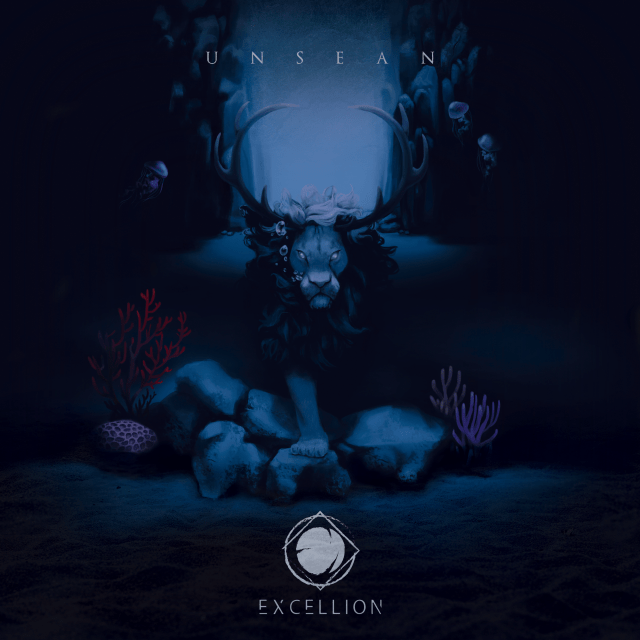
EP Review: Excellion – Unsean

Unsean

If there’s one thing that is always welcome in any album, regardless of genre or style, it is variation. A varied sound in a record is proof that the band has an imagination, and is willing to take risks in their recording process. Showing some creativity will earn you points. It is for this reason that Excellion from good ol’ Mexico have earned points. A lot of points.

“Unsean” is an EP (the band’s fourth) that is difficult to predict, and constantly whips the carpet from beneath your feet. As soon as you think you know the structure for a song and are expecting the chorus to begin, the track takes a sudden turn in a bizarre direction and you’re left feeling impressed and lost at the same time, like suddenly finding yourself sat surrounded by crates of beer; you might not know why they’re there, you just go with it because it’s a good thing.

It’s not just the individual format of each song either; the release as a whole incorporates lots of different styles and isn’t content with maintaining one sound. “Unseen Pt. I – In Search of Infinity” seems to kick things off in a standard fashion, opening the album with some flashy guitar riffs in a djenty manner and theatrical vocals of singer Frozen Chava. But very quickly it becomes apparent that this is something special, as the song frequently bounces between this ordinary Metal sound and a chirpy, Rock-like style. The track is something of a strange medley; two songs colliding and becoming one fantastic entity, resulting in perhaps the most memorable track on the record.

The album continues in a similar fashion, with the lead single “Unlucky Charms” beginning with tech-y riffs.

When it comes to drums, there is something to be said for the beautifully strange timing of the percussion across the record, as well as the way it gels so perfectly with the guitars. Hearing one of these two instruments alone would sound bizarre and unnatural, but the two combined genuinely become the sum of their parts.

The EP’s production is also worthy of praise, with every powerful note of the guitars as well as each and every drumbeat being crystal clear. The vocals, while coarse and full of rage for the most part (with a number of creative exceptions), are distinguished nicely from the instruments, having their own room to breathe and take centre stage in the cleaner sections when the lyrics are actually audible.

“The Courier” takes a number of twists and turns during its five minutes, becoming just another notch on the band’s bow of experimentation. The frequent clean vocal sections make for some wonderful choruses, and only add to the sheer amount of variety on offer here.

“Diablo Jr.” shows the band’s technical proficiency; it’s a track that proves that if the band were inclined towards more complex styles of music, they could just as easily kick arse at that, too. “Unsean Pt. II – The Heart of the Sapphire” closes the album nicely with some ambient elements and more chilled atmosphere, and the track’s length (clocking in at just above six minutes) means that it has more time to transition gently between tempos, making for a well-rounded song.

This is an EP that comes highly recommended to anyone with an open mind, or simply to those who love hearing something slightly different. This is the type of band that deserve their shot at fame, and I for one hope that they make it, if only just to make people aware that creativity is still alive and kicking in the music industry.

Visit Excellion online:

https://www.facebook.com/excellionband/

https://twitter.com/excellionband

https://instagram.com/excellionband

http://soundcloud.com/excellion

https://www.youtube.com/user/ExcellionBand