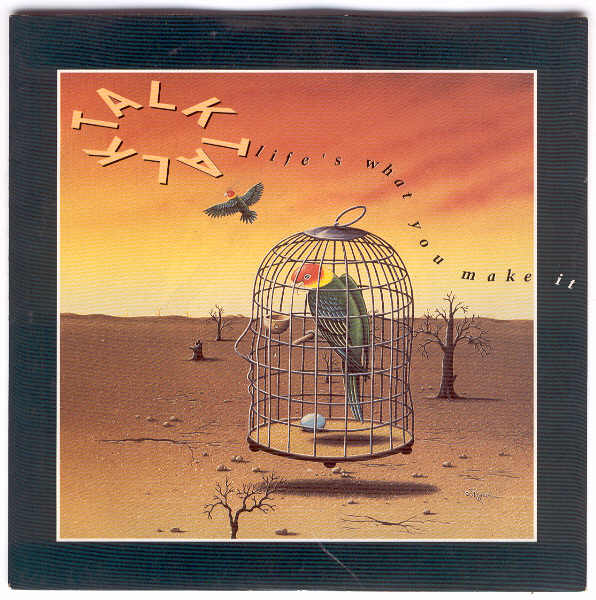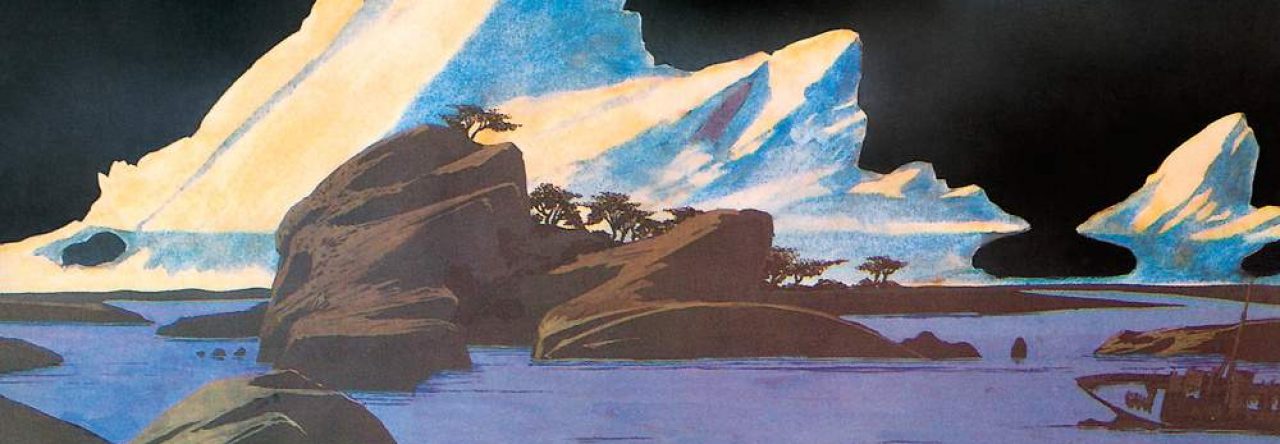
Brown M&Ms, Writing Grooves, Natural Historians, and Big Big Train: The 2013 Interview, Part I

I would love to give an elaborate introduction, but, really, I’ll be very honest with myself–you’re here to read the words of Andy, Dave, Danny, and Greg.  They very graciously gave us a significant amount of their time.  All Progarchists eagerly await the release of Big Big Train’s much anticipated conclusion to the highly successful English Electric Part One.  The first half released only last year represents, for me at least, the finest album in the rock world since Talk Talk’s 1988, “Spirit of Eden.”  No pressure, guys.

Ok, Brad, remember you promised to bloviate only very, very little. . . .

Progarchy proudly presents an exclusive interview with Big Big Train (though, feel free to make this less exclusive and repost anywhere and everywhere).

Spawton bass
Photo by Willem Klopper.

N.B. AP is Andy Poole, DG is Dave Gregory, DM is Danny Manners, GS is Greg Spawton.  Progarchy interview conducted by Brad.

***

Progarchy: Greg, EE1 did extremely well in terms of critical response. Did its success surprise you at all? If so, what part of it surprised you?

GS: We believed we had made a strong album but by the time the mix is finished, all objectivity goes out of the window so you never really know what will happen when others get to hear it. I think we were a little anxious about the number of other albums being released last year, and English Electric started shipping at around the same time as Sounds That Can’t Be Made, so we worried about whether it would get lost amongst all of the attention that CD was going to receive. A couple of weeks ago, Prog magazine published its readers’ polls for 2012. It only really hit home to us when we saw the results of those polls as to quite how much reach English Electric has achieved. It was surprising and very pleasing to be up there with Rush, Marillion, Porcupine Tree and Anathema.

Progarchy: Does its success change at all what you think about BBT?

GS: BBT is six chaps making music. However well we do, that’s all I think of it as.

DM: We haven’t reached the stage yet where our rider has a “no brown M&Ms” clause.

brown_mm_10703016
Photo not by Willem Klopper.

GS: I suspect it has changed how others view us. I read a couple of reviews recently where the album was described as being ‘hyped’ and I felt a little indignant as that misrepresents us. We’ve promoted it sure, but not in an excessive way. If other people write or talk about something, that isn’t hype.

Progarchy: How much of EE2 was written before EE1? That is, how much of this album is a response to the last? Or, are they really two parts of a whole?

GS: All of the songs were written and recorded as part of the same sessions. Any of the songs on Part Two could have been on Part One instead and we had mixes of all 15 tracks before EE1 was released. However, once we knew the track-listing for EE1, those eight songs on the first part got our maximum attention to make sure they were ready for release. As soon as EE1 was out we then went back to the EE2 tracks and continued to work on them.

AP: We wanted to take full advantage of the 6 month gap between the two albums to make sure all of the songs were at their best. That sometimes meant a bit of a rethink about the arrangements. East Coast Racer, in particular, benefitted from us being able to spend more time on it. We always thought it was a good track but now I think it’s one of our best.

Progarchy: Was the writing process much the same as the last album and previous albums? David clearly offered much in terms of lyrics and song ideas. It it the same with EE2?
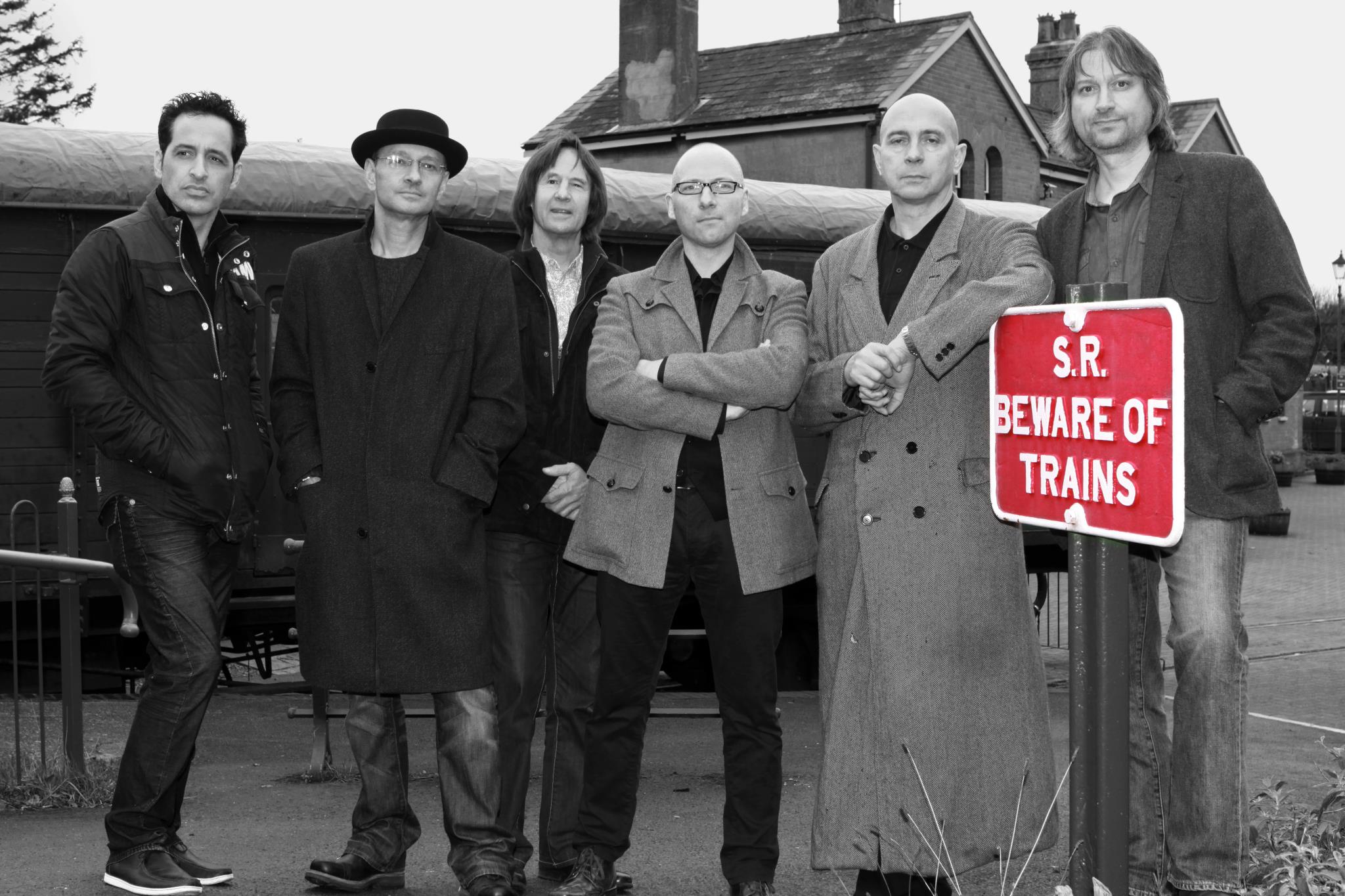
Nick, Andy, Dave, David, Danny, Greg.  Photo by Willem Klopper.
Nick, Andy, Dave, David, Danny, Greg. Photo by Willem Klopper.

GS: We’re really in a groove with the writing now and have very established way of working within the band. I’ve written more of EE2 than EE1, but that’s just to do with how the track-listing fell. In fact, David has already written a lot of material for our next studio album and we’ve recorded Nick’s drums for some of the songs. The other guys are heavily involved in arrangement and, in truth, there can be a blurry line between writing and arranging. The accepted practise is that the songwriter is the person that composes the chord sequence, the main melody and the words. However, sometimes the parts written by the musicians for those chord sequences and melodies can be as important as the underlying music. So, the songs evolve at the hands of all of us.

Progarchy: Can you tell us about some of the themes–musically and lyrically–of EE2. The titles are poetically enticing, and there’s, of course, a huge anticipation on the web as to what the titles mean. Curator of Butterflies? Worked Out? The Permanent Way? Keeper of Abbeys (my favourite title)? For better or worse, I have lots of James Marsh images floating around in my head as I visualize the possible meanings of the titles.

GS: English Electric isn’t a concept album but it is an album with a number of themes linking many of the songs. On EE2 some of the songs pick up on the subject matter of songs from EE1 whilst others head off in different directions. Swan Hunter and Worked Out are both about lost working communities (from the shipyards and the mines) so those follow on from songs like Summoned By Bells. East Coast Racer is set in the 1930’s when a group of people designed and built a steam train called Mallard which ran very fast indeed. It’s a great adventure story. Leopards is a love song and provides an important contrast with some of the more epic material. Keeper of Abbeys is about a chap I met at a ruined abbey in the north of England. This man worked from dawn until dusk every day, tending to the stones. I got to know him a little bit but used my imagination to join up the missing parts of his story. Curator of Butterflies is inspired by a woman called Blanca Huertas who is the Curator Lepidoptera at the Natural History Museum. I read an article about her where she said the study of butterflies can allow so many tales to be told. The song is about how narrow the line is between life and death. I was very anxious about it sounding trite and so I wove a character into it to make it a story and tempt me away from spouting platitudes. Finally, The Permanent Way is the pivotal track where we try to bring everything together.

Progarchy: There’s lots of excitement about you joining, Danny. Can you tell us a little bit about yourself and how you came to join BBT?

DM: Well, I started off learning classical piano from a young age, and later became very interested in twentieth century classical music – at one point I was fairly obsessed with Stravinsky and had serious ambitions to be a composer. In my teens I also took up double bass (and later bass guitar) and got heavily into modern jazz and jazz-rock. You could say I was always into “progressive” music in the broadest sense of the word. But also, I was at school in the mid-seventies when some of the classic prog rock albums were being released, or had recently been released, and handed round on vinyl. I remember really liking early Yes, and Gentle Giant – still a favourite band. After that, I was more interested in the Canterbury end of prog, probably because of the jazzier connections. At university, as the eighties started, I became fascinated with some of the new wave bands that were combining the more advanced musical ideas I was already into with the stripped-down aesthetic of punk, which I’d initially been completely affronted by! XTC became a particular favourite, and a big influence on a university band I played bass guitar in and wrote for. (It got nowhere, although the members all had interesting careers in music afterwards.)

After that I played a lot of jazz, and some free improvised music, on the London scene – on double bass.  I joined a big band, The Happy End, which mixed up Kurt Weill, Sun Ra, swing, and protest songs from around the globe into a joyful, ramshackle stew, and got heavily involved for a few years gigging and writing arrangements for them – a highlight was working with Robert Wyatt, who made a guest appearance on a Happy End album. Gradually, I also became involved with various alt, leftfield or indie rock/pop singer-songwriters. The notable ones were: Sandy Dillon – that’s a female Sandy – originally from the US, whose band mixed blues and roots with the avant-garde, with Tom Waits and Captain Beefheart as major influences; Cathal Coughlan, one of the best lyric writers I know, whose voice and songs can range from beautiful ballads to corruscating anger; and, most importantly, Louis Philippe, a Frenchman resident in London, whose music mixes influences from the great pop writers like Brian Wilson or Burt Bacharach, classical music, jazz, French chanson…. I’ve worked with Louis for 25 years now, initially as a bassist, but later also as keyboard player and arranger, and as a participant in some of his production work for other artists.

In 1995, I think, Louis showed me a letter he’d been sent by a fan, who turned out to be David Longdon. David had included some of his own music, and was obviously hugely talented as a singer, songwriter, instrumentalist and arranger. So Louis had no hesitation in asking him to do a gig with us, and then to participate in Louis’s next few albums. (Also featured on those was Dave Gregory, who Louis had met when arranging and producing an album for labelmate Martin Newell.) I stayed friends with David, and he kept us informed about the Genesis near-miss, but we didn’t see each other for a while after that as we were both busy with young families. I do remember him telling me he’d joined a prog band, although the name Big Big Train meant absolutely nothing to me at that point. (I hadn’t kept up with contemporary prog at all.) Then a couple of years ago, he asked if I’d put down some double bass for a song called British Racing Green…ee2
Happily, the band liked it. I think David had possibly recommended me for the keyboard chair earlier than this, but Greg and Andy may have been wary because I didn’t have any track record specifically in the prog field. However, when they started work in earnest on EE1 they asked me to see if I could do anything with the piano on a couple of songs. Again, it turned out to our mutual satisfaction, and in the end I contributed to almost every track, did a bit of arranging on Summoned By Bells, and stuck my nose in at the mixing stage as well.  By the time attention turned to finishing off EE2, I was pretty much fully involved, so it made sense to them to ask me to join the band officially. I really liked the fusion they’d arrived at on EE, blending folk  and acoustic instruments into the prog and other elements already there, and it was a great opportunity to work with fabulous players like Dave G and Nick, so I didn’t have any hesitation in accepting.

On EE2 I’m playing keyboards a bit more – including an honest-to-goodness, “I’m prog and I’m proud” synth solo – and it’s going to be quite exciting exploring further on future releases.

Part II tomorrow.–Ed.  To order English Electric Part II, please go here–BBT’s official shop.
Dolby’s Flat Earth. Half Perfect.

A few days ago, I had the honor of remembering–in some admittedly rather nostalgic ways–the spring of 1982 and my first encounters with Thomas Dolby. Two years later, Dolby released his second album, The Flat Earth. I have no doubt that I was the first person in my hometown of Hutchinson, Kansas, to buy the album. Certainly, I bought it the day it came out; one of the anticipated magical Tuesdays when the new albums appeared on the shelves. Well, I suppose that maybe there was a secret Thomas Dolby fan club in my Kansas town, meeting randomly in the wheat fields under waning moons, but I suspect not.

I’m fairly certain I was the most die hard Thomas Dolby fan west of Kansas City and east of Denver.

I remember devouring The Flat Earth, wanting to understand and deconstruct every element of it, and cherishing the entire encounter. “Only a fool would blame the death of rock n roll. . . .”

I was fifteen, possessed a good vinyl collection, a solid stereo system, and some top-notch Sennheiser headphones. At that time–the kind of time and leisure that only a modern teenager of western civilization enjoys, before video games kidnapped our young–I would finish my school work, turn out all of the lights, start an album, and listen intently with the headphones.

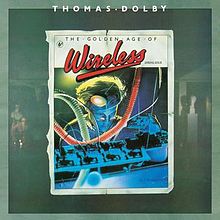
This Thomas Dolby sounded nothing–and I mean nothing–like the Thomas Dolby of The Golden Age of Wireless. At least to my young ears. Where Golden Age was electronic, Flat Earth was organic. Where Golden Age was clever, Flat Earth was wise. Where Golden Age was curt, Flat Earth meandered. Where Golden Age told one Bradbury-esque story after another, Flat Earth offered images, doubts, and questions. Indeed, if Golden Age was more Ray Bradbury, Flat Earth was more Philip K. Dick.

Side one especially grabbed me. The images floated through my head, caught between the poles of the left and right phones. Stereo and yet more so. Anti-communists smuggling out information from within the Soviet Union as typewriters become sampled and drummed and sampled some more; a man limited by his own securities, his imaginative longings wanting to find liberation; a wistful love for some film noir Hollywood starlet.

Side two never held up quite as well as side one in my mind. The strings and wind chimes beg the listener to wonder and enter into a dark Southern California urbanscape for about 24 glorious seconds, but the bass and drums come in way too forced, shattering the mythic aura Dolby so expertly created on side one. It’s never fully absent on the first song, but “White City” goes quickly from being a thing of beauty to a pounding repetition. “Mulu the Rain Forest” manages to recapture some of the magic, as does the brilliant remake of “I Scare Myself.”

“Hyperactive,” while certainly clever, comes across as a song that should’ve have been made a b-side, breaking any coherent possibilities for The Flat Earth. The mad scientist of “She Blinded Me with Science” returns, and novelty, rather than beauty, defines the album as a whole.

Side one, though, even nearly 30 years later, holds up perfectly. It is sheer musical genius.

Through it all, Dolby’s utterly earnest (if not always beautiful) voice and Matt Seligman’s bass hold everything together.

While I’m probably being more harsh than I should about side two, I would highly recommend picking up a copy of the album. Side two only seems less than perfectly interesting precisely because side one is so perfect.

I would also forego buying the 2009 expanded edition, as the additional songs really do nothing except further demonstrate Dolby’s novelty side. There’s too much “Purple People Eater” in this music.

Cosmograf–only 3 days before release

Make sure you head over to http://www.cosmograf.com to order Robin’s latest album.  It will be released in three days.  So, make sure to order now.  Lots of our progarchy favorites–including Greg Spawton, Nick D’Virgilio, and Matt Stevens–contribute to the album.  Also, the web is buzzing about what a great album it is–Robin’s best.  So, order away!

The Madness of Glass Hammer

The horror!  The horror!

Ok, it’s not yet the Feast of St. Valentine, so I won’t go into complete terror.

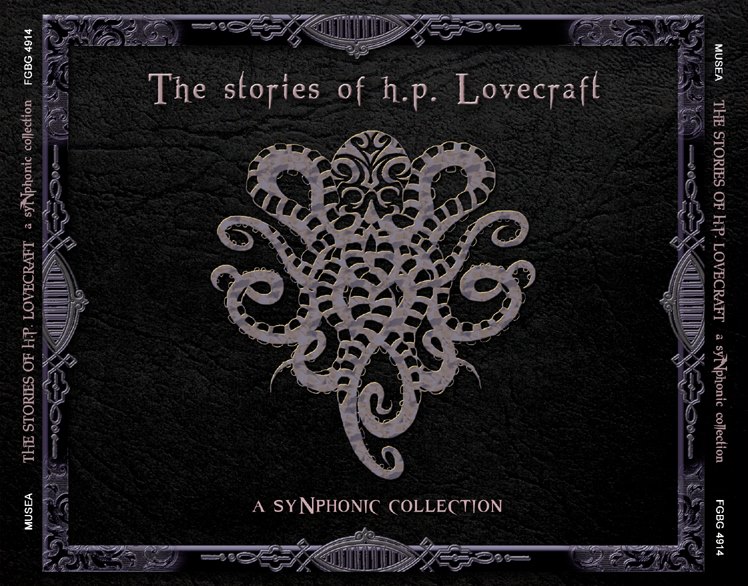
If you have a moment and if you (in the U.S. at least) possess $.99, there’s little better you can do with that money than purchase Glass Hammer’s latest single, “Cool Air.”stories synphonic

It’s their only contribution to a project exploring–through prog–the stories of H.P. Lovecraft.  It’s cleverly subtitled “A Synphonic Collection.”  Here’s the link at amazon.com:

http://www.amazon.com/Cool-Air/dp/B00ASHC30A/ref=sr_1_1?ie=UTF8&qid=1359585412&sr=8-1&keywords=glass+hammer+cool+air

Considering the typical Glass Hammer themes of nobility, whimsy (Steve and Fred can be hilarious), and struggle, the lyrics to “Cool Air” are a bit shocking.  I can’t quite piece the whole story together, but I think it’s about a man who tries to use science (and some kind of gnostic magic) to preserve and extend his life.  He, of course, fails, and the story of the song seems to take place 18 years after his death.

The horror, indeed.

The song has everything: brilliant Glass Hammer music; narration; and creepy lyrics.

I doubt if I’ll listen to the song over and over again, as I do with other Glass Hammer songs and albums, but only because I don’t think I want all of the lyrics running around my head or soul.  Still, it is pretty great, if unusual.

New Thieves’ Kitchen out today

thieves-kitchen-one-for-sorrow-two-for-joy-jan-2013The latest album from Thieves’ Kitchen is now available from a variety of sources.  Long live Anglo-Saxon-Celtic-Scandinavian prog!

http://thieveskitchen.wordpress.com/2013/01/29/14s24j-now-available/

The Amazing Wilf’s Great Big Wonderful Day

david elliott amazing wilfOne of our favorite English proggers, David Elliott, aka The Amazing Wilf, is enjoying a birthday today.  He has not attained that really all-important half century mark, but he’s getting really, really close.

If you’re interested in checking out David’s views on prog (and you should!), please go to his renowned radio  show/podcast, The European Perspective.

http://www.thedividingline.com/podcasts/european-perspective/

Happy Birthday, David–from all of us at Progarchy.

Thomas Dolby’s Golden Age

In the late spring of 1982, as I completed 8th grade, I met one of those kids who is always at the height of cool.  But, it was a calm, somewhat cynical, real cool, not the show-off cool of the wealthy socialite kids.  It was the Bohemian cool of the Beatnik not contrived cool of the Hippie or the Yuppie.

Ritchie.

ThomasDolbyTheGoldenAgeOfWirelessOnly a few of us belonged to his circle.

Except for moments of ecstatic outbursts about an idea here or there, he radiated coolness.  He read the Great Books and knew lots of poetry, he worked out in his room (he had the whole upstairs of a late 19th century house to himself) and studied Japanese martial arts, he knew everything about men such as Bill Buckley and Jack Kerouac, he owned the best stereo system of anyone our age, and he possessed an amazing record collection.  He was the youngest of a large family, and his parents were much older, pretty much leaving Ritchie to raise himself.

It was Ritchie who introduced so many of us–in a medium-sized town in the wheat belt of the Great Plains–to English New Wave.  Growing up a progger–addicted from an early age to Yes, Genesis, and Kansas–New Wave was a bit eye opening for me.  It seemed to hold much of the complexity of prog, but it did so with computers and keyboards, often one or two musicians, where prog might have included eight or nine.  Ritchie introduced me to ABC, Kate Bush, The Smiths, Oingo Boingo, Tears For Fears, and, most importantly for me, Thomas Dolby.

Not only was I a prog guy, but I was also very much a sci-fi and computer guy.  All of this appealed to me. Continue reading “Thomas Dolby’s Golden Age”

Riverside, ADHD (2009)

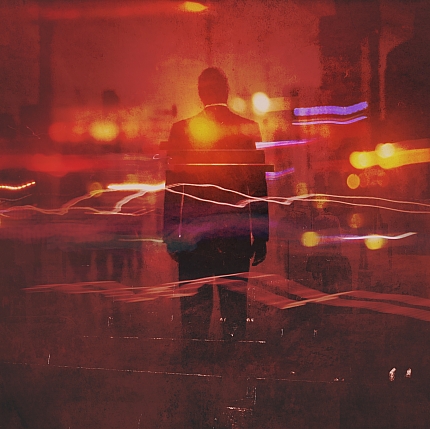
As I prepare to give the new Riverside a spin (it is arriving much later in the U.S. than in other parts of the world), I thought it would be worth offering my thoughts on the previous work of Riverside, in particular the last full album, ADHD.Image

Five songs at 44 minutes and 42 seconds.  The intrepid Carl Olson (of Ignatius Insight fame and now fellow Progarchist) first introduced me to this post-Communist Polish band, and I’ve been more than a little fond of them since our first encounter.

Brilliantly, their first three studio albums–collectively known as “Reality Dream”–form one story.  Though I’ve listened to the albums too many times to count, I’m still not exactly sure what that story is about.  It follows a man who is either a saint and having endless mystical visions, or else he’s insane and trapped in an asylum.

Either way, I like the story.

ADHD appeared at an important moment for me, musically speaking.  Compared to some of the other “big” releases of 2009, ADHD towered.

Dream Theater’s album that year, “Black Clouds and Silver Linings,” served as an incoherent exercise in notes chasing notes and embarrassingly written lyrics.

Even more disappointing, Pure Reason Revolution’s “Amor Vincit Omnia” offered nothing but miserable sexual decadence and ridiculous Euro dance-type music.  The title should’ve been Lust Conquers All, not Love Conquers All.  How this could have been the same band that released the captivating “The Dark Third,” I have no idea.

Riverside’s ADHD redeems them all.  Labeled “harder” and “heavier” by several reviewers, ADHD is nothing if not insanely intense.  Is it hard?  Yes.  Do notes chase notes?  Yes.  Is there sexual deviance in the lyrics?  Yes.  But, unlike the music of Dream Theater’s most recent cd, or the lyrics of Pure Reason Revolution’s new album, Riverside’s heaviness, notes chasing notes, and lyrics all have a purpose; they each serve the entirety of the album.  Indeed, nothing in this short 44plus minutes is in vein; every aspect of the album has its purpose and knows its place.

Indeed, Riverside expresses intense anger and frustration about the state of the world—the “liquid modernity” identified in the first track, “Hyperactive.”

Modernity destroys real community. “In the mass of different runners/Different lies/We can’t make time to realize/How the same we are.”  And, modernity results in isolated, insecure (“hatred for my inner chaos”), and self-centered individuality.

We’ve lost the flow of generations, and we wallow in our subjective realities.  “I used to be one of you/With the same spark in my eyes/And now I don’t belong to this place/It’s a matter of merciless time/I wholly vanish.”  So far gone are we as a people, that we obsess about our own created gadgets, the products of our will and ingenuity, and our immediate fame, here and now.  “Come to me now/I will cure your soul/I’m the savior of our times/I know exactly what it needs/You’ve let yourself go/You’ve felt so down/So my hi-tech salvation is just for you.”

Properly, progressive rock reviewers love their tradition and the heritage of the music.  Reviewers always compare releases of Riverside to Porcupine Tree, Pink Floyd, and Tool.  These are fine comparisons, but Riverside–from the opening note on their first album to the ending note on this most recent release–are very much their own band.  Frankly, while building on what Pink Floyd offered, Riverside has topped Pink Floyd in terms of musical ability and atmosphere.  More than anything else, Riverside has confidence its in its own abilities and direction, it understands the parts each member of the band plays in the band as a whole, and it recognizes the importance of voice (human and instrumental) in its music.

While each member plays exceedingly well here, the keyboardist, Michal Lapaz, stands out the most.  From the opening note to the end of the album, his work defines ADHD.  No keyboardist has played this well since Steve Winwood on “Blind Faith,” Greg Allman on “Fillmore East,” Rick Wakeman on “Close to the Edge,” or Mark Hollis on “Spirit of Eden.”  I can’t even put my admiration in words.  Every time I listen to him play on ADHD, I can only provide a rather sincere but inarticulate “phew.”

I give Riverside’s ADHD one of the highest rankings I can.  This album is simply exemplary.  Thank you, Riverside.  Thank you, Poland.

RUSH: A Farewell to Hemispheres, Part I

by Kevin McCormick

Rush appears to be a band without a retirement plan.  This past year saw the release of the highly acclaimed studio album Clockwork Angels, the subsequent world tour promoting the album and the fourth remastered re-release of the 35-year old classic album 2112.   With the re-release of that epic work and the renewed attention it has garnered, it is worth noting that the recording and the subsequent live shows were really, as the liner notes say, “The end of the beginning, a milestone to mark the close of chapter one in the annals of Rush.”

From Rushvault.
From Rushvault.

Neil Peart hardly could have known how accurate that statement would be.  Today the band is approaching its 40th year since its first full-length album.  Most artists of their age lucky enough to be still performing spend most of their time coasting on the tails of decades-old hits and playing as shadows of their former glory.  Rush seems to continually push itself into new territory creating an ever-changing sound yet with ever constant sensibility.  Something about Rush feels contemporary but remains rooted in the sound of three guys from Toronto four decades past.

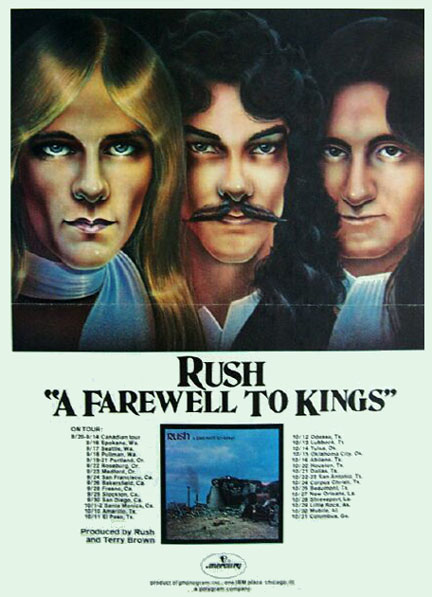
Rock artists worked more quickly back then. By 1976, a banner year for Rush, the band had produced four studio albums.  Having resurrected themselves from the brink of extinction (or at least from being dropped by their label) with the inexplicable popularity of their futuristic totalitarian opera “2112,” the band toured extensively throughout the US and Canada.  Their “brief” stretch promoting the new album ran from February to August and included opening for Blue Oyster Cult and Aerosmith.  Somehow the band found time to put together a double-live album of those recent shows and, with but a week in-between, again headed out on the road from August and into the new year promoting that record, All the World’s a Stage. By the time they wrapped up in England in June of 1977, Rush had been touring for nearly two years without a lengthy break and receiving accolades not only for their recorded work but for the power, skill and intensity they brought to the stage.

Continue reading “RUSH: A Farewell to Hemispheres, Part I”

10-minute James Marsh Video Tribute to Talk Talk

If you have 10 extra minutes today or tomorrow or any day from here until the end of times, make sure you check out this stunning video tribute to the music of Talk Talk.  James Marsh, master artist of all things Talk Talk, made the video.  I’m finding the entire thing quite inspiring.

Here’s the link (sorry, I still don’t know how to embed videos):

http://www.youtube.com/watch?feature=player_embedded&v=kSwgHxMLX_c#!

Art by James Marsh.
Art by James Marsh.

The information below the video at Youtube reads:

Published on 19 Jan 2013

Animation promo for the album ‘Spirit of Talk Talk’, available from Fierce panda Records.
All net profits going to the ‘Rare Bird Club’ of ‘BirdLife International’ for Conservation, UK Reg. Charity.
Sample tracks include music by – Nils Frahm, Jack Northover, Zero 7, Sean Carey, Lone Wolf, King Creosote, The Lovetones, Turin Brakes and more…

As some readers of Progarchy might know, I consider Talk Talk one of the greatest musical acts of all time with The Spirit of Eden ranking as one of the best–if not THE best–post-classical albums of all time.