As I write this, the Grammys are airing. And so I, like every lover of fantastic and worthy music, am doing the obvious: I’m not watching. I haven’t watched the Grammys in well over twenty years, which means I’ve not only saved 60 hours or so of precious time, I’ve probably saved a few television sets in the process. In short, I cannot stand the Grammys. To be clear, it’s not so much that the actual choices for nominees or even the winners are so misguided or puzzling—although how Kanye West has managed to win 21 Grammys is a bit perplexing—but the banal, narcissistic, and politically-correct posturing of The TV Spectacle Called “The Grammys” is simply too much. I cannot take it. And so I don’t.
(Astute readers will note that several of my selections were nominated for Grammys. Again, I don’t think the Grammy choices are necessarily poor, as they are actually often on the mark. But the television event itself is a travesty. Update: Yep, a complete travesty.)
Back in 2006, I wrote my first (and only) “Carl the Snarl Music Awards” as a response of sorts to the Grammys. “Most Top 40 pop/rock music,” I serenely opined at the time, “is heavily-produced, hyper-marketed aural trash … Which is why I offer you the “Carl the Snarl Music Awards,” a heavily biased, very subjective, but entirely correct collection of music deserving time on your CD player, iTunes, iPod, or whatever other musical device you employ.” So, in truth, I must thank the Grammy’s for saving my “Favorite Albums of 2013,” which I started compiling two months ago but have never finished—until now. If it weren’t for The Grammy’s, the following would have become a mythical and bedazzling sort of rumor, along the lines of Seal’s “Togetherland” album.
I’ve listed my twelve favorite albums of the past year, followed by a few other albums (36 of ’em, actually, for a total of 48 favorites) that I think deserve some attention. “And…” [glancing blankly at the huge audience] “…the winners…” [grins slyly and a bit creepily] “…are….”: Continue reading “Forget the Grammys—it’s time for Carl the Snarl’s Music Awards”→
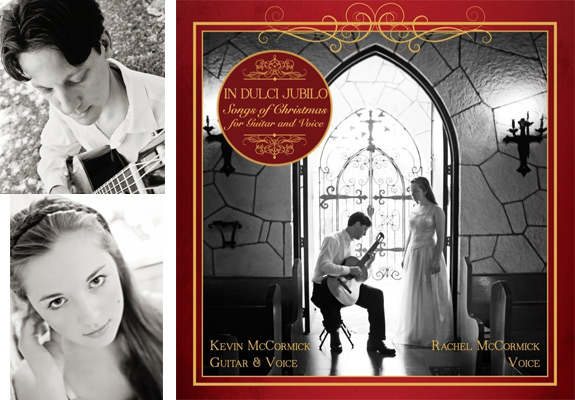
The following interview with guitarist and composer Kevin McCormick was originally posted on Catholic World Report last week, but I am posting here as Kevin is a fellow Progarchist, he is a fabulous musician, and his new album, with his daughter Rachel, is a gorgeous album of traditional and sacred Christmas music. Here goes!
Kevin McCormick (www.kevin-mccormick.com) is a classical guitarist, composer, and teacher based in Texas who has released several albums over the past twenty years. His new album, In Dulci Jubilo: Songs of Christmas for Guitar and Voice, featuring the vocals of his teenage daughter, Rachel, released today, on the Feast of St. Cecilia. It is a collection of fourteen songs for Advent and Christmas, including “In Dulci Jubilo”, “Ave Maria”, and “Panis Angelicus”. He recently responded to some questions I send to him about his new album.
CWR: For those who aren’t familiar with your work, what is your musical background: where did you study, what have you recorded, and what do you do as a full-time musician? What about your daughter, Rachel?
McCormick: My mother was a music teacher and choral director and so music was a large piece of the fabric of our family. My older brother played piano and my younger brother played drums. I’ve played guitar for nearly as far back as I can remember. I started when I was seven and studied privately for many years. And yes, I’m not ashamed to say we were a band. We spent most of our time writing our own music. By high school though we were playing cover tunes at clubs and other gigs and generally enjoying it all. I continued with a band at Notre Dame, but while there I also rediscovered classical guitar and classical music in general. During a year abroad in Rome I studied at a guitar conservatory with a student of Andres Segovia. I realized how much I loved the sound and repertoire of the instrument and so I pursued it on and off for the next decade.
A stint in Japan allowed more of the rock thing and club playing but also the study of Japanese music. Along the way I began to take composition more seriously. When my wife and I returned to the States I studied guitar and composition at Indiana University’s School of Music. Eventually we wound up in central Texas where I was trading time between writing serious post-rock song cycles, writing for my own ensemble in Austin (which once again included my brother on drums), and composing classically. The song cycles became my first two recordings [With The Coming of Evening and Squall]. In fact, they are part of a tryptic that awaits completion. Stylistically they spring from many styles including jazz, east asian, film music. I was heavily influenced by the work of Mark Hollis during that time with my own foundation as a classical player was woven in as well.
But you never know what God has in store. I ended up establishing a teaching studio in our small Texas town and playing classical gigs in the area. That lead to my three solo guitar recordings: Solo Guitar (an introduction to classical guitar), Americas (music of Latin America and some original compositions), and Songs of the Martin (collection of songs performed on a 1846 Martin Guitar). My daughter Rachel definitely inherited a love for music. She has been singing ever since she could make sound. She has cantored at church since she was ten and has sung in stage musicals at our local theater. She has sung with our church choir and her school choir for nearly ten years. She has done some private study, but really she just seems to have been blessed with the voice and the spirit for singing. Some of my fondest memories of her singing have nothing to do with a stage. She sings all the time.
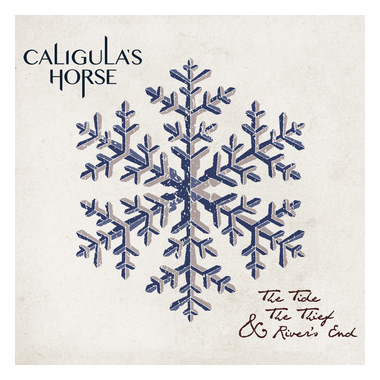
I have, to the best of my knowledge, all of the less than two hours of music produced by the Australian group, Caligula’s Horse (website)—an hour and 44 minutes, to be exact, the sum total of their studio output so far. But whatever is lacking in quantity is more than made up for in outstanding quality. The group’s first, full-length album, Moments From Ephemeral City (2011), was attention-grabbing and quite memorable, featuring the virtuosity of guitarist (and band founder, producer, songwriter, etc.) Sam Vallen, and the powerful, soulful Jeff Buckley-ish vocals of Jim Grey, who apparently hails from the U.S. The two combine to create alternative prog that brilliantly marries technical prowess with emotional potency, compelling melodies, and lyrical mystery—always a winning combination in my book.
While Moments was, again, exceptional—check out the song, “Alone in the World”, for example—the band’s new offering, The Tide, The Thief & River’s End, goes beyond exceptional. It is, as the reviewer at Murder the Dance rightly concludes, an “11/10” album: “Caligula’s Horse’s sophomore record is an exhilarating listen; the band in its entirely channel the emotions of their instruments throughout, and the structural dynamics here are constructed intelligently. However, it’s Grey and Vallen that truly shine on ‘The Tide, the Thief and the River’s End’. Their collective arsenal alone is enough to earn the band a perfect score.” I cannot improve on what another reviewer, over on the ProgArchives.com site, says about TTTTRE:
I put it to you that it does indeed compete and then some with this album and is sure to make my top albums of 2013 with Steven Wilson’s ‘The Raven that Refused to Sing (And Other Stories)’, Tesseract’s ‘Altered State’, and Haken’s ‘The Mountain’. But to those who haven’t heard the band before, what can you expect to hear? Caligula’s Horse possess the juggernaut riffing of Periphery, the delicate emotional sensibility of Pain of Salvation, the perfectly tasteful and never over or understated rhythm section of Porcupine Tree, all cast to the harmonic ingenuity of Steely Dan. Some of you may be reading this and getting a little excited, it is exciting – it’s downright awesome and executed flawlessly by a cohort of young yet seasoned masters.
The album is a concept album, but is not obvious or direct lyrically; an apparent theme is the oppression of women by religions, yet specifics are difficult to apprehend. All the better, in my opinion, as I prefer ambiguous, expressionist lyrics when it comes to rock music in general. That said, there is undoubtedly a deep sense of tension, urgency, and conflict within the lyrics, intermixed at times with glimpses of hope and a deepening resolve, as evidenced in the final lines of the concluding song, “All Is Quiet By the Wall”:
Hand in hand with our own
This is our home. This is our home
Let our sign say: “Let them come and meet their end”
Now the world is quiet, this is where we make our stand
My favorite cut is probably the second song, “Water’s Edge,” which has a bit of everything:
The band’s site states that Caligula’s Horse are influenced by “such artists as Devin Townsend, Opeth, Steely Dan, Jeff Buckley, Frost, Muse, Karnivool, Meshuggah, Rage Against the Machine, Pain of Salvation, Steeleye Span, the Beatles, Foo Fighters, Frank Zappa, the Dear Hunter, Steve Vai, Fair to Midland, Tori Amos, Lunatic Soul, Katatonia, Tracey Chapman, A Perfect Circle and many others…” I’m familiar, to one degree or another, with all of those groups/artists, and I can hear bits of most of them in the music. (Beatles’ fans can check out Vallen and Grey performing “Across the Universe”.)
Certainly Opeth, Karnivool, Pain of Salvation, Dear Hunter, Katatonia, and A Perfect Circle are readily evident, and any fan of those artists should check out Caligula’s Horse. Vocally, Buckley’s ghost is right in the ear, as this acoustic version of “Silence” (from Moments…) aptly demonstrates: “I want to be ignorant to the frailty of my life/Days are grains of sand in a disciple’s hand/Looking out my window/Through the grey and lifeless sky/I know what I am…”:
No “Black Hole Sun”? No “Billie Jean”? No electric guitars or drums? No ten-minute versions of “Slaves and Bulldozers”?
No problem.
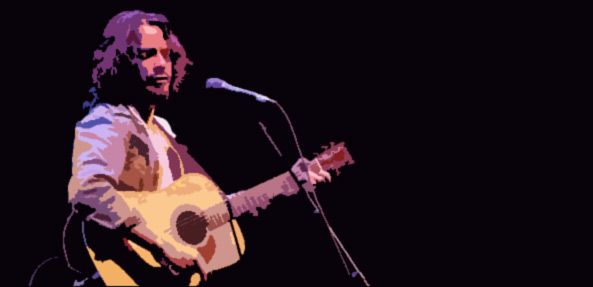
Chris Cornell, the once-again front man of Seattle’s legendary Soundgarden (see my review of King Animal) and one-time front man of super group Audioslave, walked onto the stage without any introduction at 9:00 pm promptly, setting off an eruption of applause and whistles from the sold-out crowd. The Shedd is an intimate (and somewhat cramped) venue that seats around 700 or so, and my wife and I had excellent seats: dead center, front of the balcony. The lanky Cornell is fit and relaxed; he acknowledged the crowd with a warm grin, placed the needle on the record player set up in front of seven guitars, and launched into “Scar On the Sky,” from his second solo album, Carry On (2007), which happens to be the first full Cornell album I ever heard.
Although Soundgarden achieved fame while I was in college, I didn’t pay attention to Cornell until years later, having mostly ignored the entire grunge movement during the 1990s, mostly because of a dislike for the music of Nirvana—a dislike I maintain to this day, without apology. Nirvana may have sold more albums, and Kurt Cobain may have attained a semi-mythical status because of his suicide at the age of 27, but Cornell, who is now nearly 50 years old, has earned respect the old-fashioned way: by staying alive, writing songs about suicide rather than committing suicide, producing a steady stream of good to great albums and songs, and by touring often in recent years in support of the same.
Some rock stars burst onto the scene as bright stars and then become fading, falling stars—or drug-addled recluses, muttering nut-cases, or sad shells of their former selves. But others, such as Cornell, start slowly, build steadily, hesitate for a while (oddly enough, I think of Sinatra going silent in his late 30s before embarking on his stunning albums for Capitol in the ’50s), and then find their footing at a decisive point in mid-career, and demonstrate that they are, in fact, real musicians and not just brands and products.
Cornell’s two-hour-plus long set this past Saturday was a case in point, for it highlighted both the legendary voice—which was in exceptional form—and the stellar and varied songwriting. The former is the immediate draw, for there is nothing quite like Cornell’s multi-octave, raw, amazingly textured voice, which can move from face-melting howl to falsetto sweetness to blurred darkness to startling, clear heights—often all in the course of a single song. But the acoustic show brought out facets of Cornell’s songs not always obvious in full studio dress: the unusual chords and progressions, the subtle shifts in tempo and tone, and the masterful balance of melody and rhythm. “Sunshower”, for example, is a ballad-like number that slowly builds and morphs into a series of gospel-ish chords full of longing and a sense of rhapsody.
Conversely, the rocker, “You Know My Name” (from the 007 film, “Casino Royale”) is one of Cornell’s most straight forward (and popular) tunes, albeit with some sly humor: “I’ve seen angels fall from blinding heights/But you yourself are nothing so divine/Just next in line…” While he is not a finger-picking virtuoso, Cornell is a more than capable guitarist, energetically wringing out walls of sound at one moment and then playing delicate, swirling lines the next.
Between songs, Cornell’s banter was often quite funny and self-deprecating, as when he recalled that he had only played in Eugene once before, with Soundgarden in the late 1980s, “in somebody’s basement, with two people in the crowd: the guy who booked the show and the janitor. No one even bothered showing up just to get drunk!” He noted that his first solo acoustic show, so to speak, was a small event in Sweden while touring with Audioslave; although it was “nerve wracking,” it was also surprisingly enjoyable, like walking a tightrope without a net: “If you screw up, everyone knows!” While the younger Cornell sometimes seemed intent on playing rock god—and unleashing his aggressive, freakish wail on audiences—the middle-aged Cornell seems to truly enjoy digging into the songs and revealing their more subtle riches.
Crowd favorites included the beautiful “Seasons,” the Temple of the Dog classic, “Hunger Strike” (with opening act, Bhi Bhiman, performing the vocal part originally performed by a certain Eddie Vetter), and Soundgarden’s “Fell on Black Days,” which featured the full range of Cornell’s vocal powers.
Somewhat surprisingly, the huge hit, “Black Hole Sun” did not make the evening’s set list, despite plenty of screamed requests. Nor did Cornell’s cover of Michael Jackson’s “Billie Jean,” although he did joke of how one reviewer thought it was an “ill-advised” song to record. But it was a delight to hear under-appreciated gems such as “The Day I Tried to Live” (one of my favorite Soundgarden songs, from the classic album, Superunknown), the Audioslave tune, “Like a Stone”, and the piano-driven, gospel-ly “When I’m Down” (from Euphoria Morning, Cornell’s first solo album). An unusual twist came when Cornell played U2’s “One”—but using the lyrics from Metallica’s “One,” a mash-up that proved the value of combining musical talent and a wry sense of humor.
For an encore, Cornell played a new song, the blue-inflected “Misery Chain,” written for the upcoming film, “12 Years of Slavery,” and concluded the show with an extended version of “Blow Up the Outside World,” the dreamy-to-screamy, controversial hit from the 1996 Soundgarden album, Down On the Upside.
Here is video of Cornell singing “Fell On Black Days” at The Shedd:
After reading my e-mails this morning, I was left with some burning questions: How did I miss that Anna Calvi had a new album out? When would I get to hear it? Should I write about it?
Answers: I have no idea. Today. Yes.
If you’ve not heard of Calvi (website), here’s my short description: she is like the mysterious, nearly other-worldly, torch-singer-rocker-love child of Jeff Buckley and Kate Bush, or Freddie Mercury and Édith Piaf, with enough mystery, angst, and yearning for an entire band, which may explain why she usually performs as a spare trio (with a drummer and keyboardist/percussionist). A recent review in The Guardian of a live show captures it quite well, at least as well as can be managed with words:
Anna Calvi is a creature of contrasts. She says almost nothing between songs, breathing her thanks in a shy murmur – but when she sings, it’s as if molten lava were pouring from her mouth, a torrent of red-hot emotion. The sounds she conjures up from her guitar are crisp and precise – yet she plays with fluid motions, fingers rippling across frets, hand moving in circles across the strings. She is a vision of decorum, elegantly prim in tailored trousers and a long-sleeved blouse – but her songs drip with lust, voicing the cries of a body rejected, consumed, gripped by obsession.
Or, in other “words”, this (if you’re pressed for time, start watching at about 3:30):
Now, that is a lady with something going on deep, deep, deep inside! The Guardian reviewer further states, “It’s ridiculous that, after 60 years of rock’n’roll, a well-dressed woman wielding a guitar should still be such a rare sight as to be exciting in a primal, nerve-tingling way, but it is. She’s all the more commanding because her playing is so controlled…” Much of the uniqueness of Calvi is that the sum is far more than the parts, as good and unusual as many of the parts are. She is, in my estimation, one of those performers who completely transforms on the stage; in interviews she seems truly shy and almost apologetic (in this, she reminds of that Prince fellow). She has a voice that alternates between husky beckoning, whispered perplexity, and wailing anguish; when she fully unleashes a note, it’s a force of nature. Her guitar playing is both precise and wild, or perhaps it is precise but rendered with wild (but perfectly rehearsed) flourishes. Her appearance is somewhat androgynous and yet, ultimately, deeply feminine, as if she wishes to hide in dress what she prefers to reveal in song. Perhaps she is confused; perhaps she wishes to confuse (again, Prince comes to mind).
Regardless, the music ranges from very good to great, and her second album, “One Breath,” builds impressively on her eponymous debut. The music is again quite atmospheric, lush, and yet focused; the arrangements are intelligent and often complex, but they are accessible and attractive, even when discord and chaos are occasionally introduced. Calvi makes great use of silence; she is one of the few artists I know who will let silence be an obvious part of a song (in a way, this reminds me of jazz pianist Ahmad Jamal and his great admirer, a trumpet player named Miles Davis). Certain songs immediately stand out (“Suddenly,” “Eliza,” and “Tristan”) but this album is best heard as an operatic-like whole. The twist, if that’s the right word, is that Calvi bares her soul with unblinking ferocity and yet makes it warm and attractive and even magical, much like Kate Bush has done on some of her best albums (“The Hounds of Love” and “The Sensual World”). David Von Bader puts it well in his Consequence of Sound review:
The thing that sets Calvi apart from most virtuosic musicians is an ability to spin art out of technique without alienating the listener. Whether it be the percussive hammering of her guitar strings on “Tristan”, the emotional immediacy of her athletic vocals throughout the album, or the lush and occasionally noisy atmospheres, the album offers heaps of aural fiber without pretense or unnecessary complexity. One Breath is a dynamic statement from a young woman who could very well be the next David Bowie or Nick Cave. Much like the gilded aforementioned names, Calvi is an accomplished musician and composer, possesses an exceedingly well-developed artistic vision, and rounds the package out with a striking aesthetic. All that sets her in a class of her own as a young, exciting artist who should have strong material for years to come.
Agreed! As a bonus, here is Calvi performing Bruce Springsteen’s “Fire” live, with just an acoustic guitar to accompany:
No, no, no: this is not a post about choosing my favorite concert of 2013 out of fifty concerts attended —for the simple reason that I’ve not attended a single rock concert this year. Not one. (However, I did attend an organ concert a couple of months ago, and it was stunning. But that’s another post.) The fact is, I am one of those pathetic souls (I’m only being half-self-deprecating) who owns some 60,000 songs and has been to very few concerts over the years. In fact, I’ve attended so few relative to my love for music that the one concert that really stands out to me is one I missed: Jeff Buckley in Portland, Oregon, on May 8, 1995. I thought of going, but it was on a Monday night, I had to work early the next morning, I was newly married (and my wife wasn’t a Buckley fan)—and then Buckley drowned two years later. Rock concerts that stand out for the right reason—that is, I actually attended them—include Seal (1994), Martin Sexton (three times), Brandi Carlile (three times), and Def Leppard (1988). I’ve never attended a true prog concert, which probably should get me kicked off of Progarchy.com.
However, I’ve had better luck with jazz—my favorite musical form, when push comes to shove—having seen Herbie Hancock, Dave Holland, Brad Mehldau (twice), Michael Brecker, Roy Hargrove, and Wayne Shorter in concert, all here in Eugene, Oregon, of all places. Eugene, the home of the University of Oregon (or Nike, if you will), does have some big names drop in on occasion—Elton John was here a couple of years ago, as was the Dali Lama, who did not sing—but not many. Portland is two hours away, but rarely has prog groups perform, as far as I know.
All of which to say that my concert of the year is going to be a solo Chris Cornell show in a couple of weeks at The Shedd, a wonderful and intimate venue (see here and here) all of five minutes from my house. And, yes, my wife is going with me, because she’s game for hearing Cornell with just an acoustic guitar; I doubt she’d go for a Soundgarden gig. This is Cornell’s second “Songbook” tour, and his performances on the first tour earned rave reviews, leading to the release of the “Songbook” album, which featured plenty of great Cornell tunes and some covers (“Imagine”, “Thank You”, and “Billie Jean” being favorites). Cornell is a triple threat: a great rock singer, a fabulous (if often under appreciated) songwriter, and a fine interpreter who likes to go into surprising territory at times, as his cover of Michael Jackson’s “Billie Jean” demonstrates (he first played it about ten years ago in Sweden). Those who have read my, ahem, detailed review of Soundgarden’s “King Animal” know that I find Cornell’s lyrics to be particular fascinating. A good example of the lyrical prowess is evident in a little known but intriguing Cornell song, “Scar on the Sky” from his second solo album, “Carry On”. Meanwhile, I plan to write about the concert, which will likely be free of prog but still long on great music.
As I fall I leave this scar upon the sky
A simple note for you, I’ll wait for your reply
And in your answer I’ll regain my will to try
So hover in the diving light
We will rip the night
Out of the arms of the sun one more time
Close your eyes and we will fly
Above the clouded sky
And over the dumbstruck world we will run
In these hills they wash the golden grains away
To the valley under all of this I lay
And may you dig me out unearthed and saved
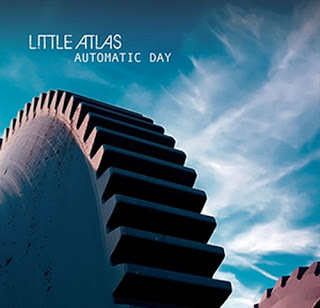
The Miami-based proggers Little Atlas (home page) have—according to keyboardist, vocalist, and founder Steve Katsikas—been around for nearly twenty years and have just released their fifth studio album, Automatic Day(10t Records). I have all of the band’s albums save their debut, Neverworldly, which are all very solid to exceptional, and yet have never spoken with anyone else about the group. A few months ago, I was going to write a post about that odd silence, and now that the group’s new album is out, I’m finally writing it.
My .02 is that Little Atlas is well worth checking out, and that each of the band’s album has progressively (yes, pun intended) built upon and improved on the previous. Comparisons to early Genesis, Marillion, and Spock’s Beard are apt points of reference. The music is highly intelligent and tasteful, with a wide array of tones, moods, tempos, and lyrical perspectives. While the players are all top-notch, the focus is definitely on songs and grand themes rather than virtuoso showcasing. Katsikas has a background in psychology, which is evident in many of the songs, notably in the 2007 album, Hollow, which presents ten different perspectives in a sort of psychological-prog suite (the title song, “Hollow”, is one of my favorite cuts by the group). As for the new album, Roger Trenwith of the “Astounded by Sound” blog does a fine job of explaining its many merits:
Covering subjects linking the mythical, the stellar, the metaphysical and the politick, both personal and impersonal, Steve Katsikas has crafted a set of intelligent lyrics that to highlight one particular trio of songs make a stately progress from Greek mythology (Twin of Ares) to man’s helplessness at the mercy of the passage of time (At the End Of The Day), via a depiction of Nature as the true deity (Emily True), without seeming in the slightest part contrived, or indeed jarringly disconnected, as could have been the case with a blunter intellect holding the pen. OK – so the lyrics to Emily True are actually by poet Emily Dickenson, but these three songs manage to flow seamlessly nonetheless!
Musically, Emily True manages to mix Rush and Blue Oyster Cult with an epic vision to come up with a new art rock template for the 21st century, and a fine beast it is too.
Illusion Of Control continues an undercurrent of darkness that runs through the album, and would not have sounded out of place had it been penned by Amplifier around the time of The Octopus. Although not quite as heavy (but heavy enough!) as the Manchester sci-fi prog metallers, it is yet more evidence of a new post-prog zeitgeist currently weaving its smoky tendrils through the subconsciousness of a fair number of bands around the globe….
Never forgetting the value of a structured song, there are no aimless instrumental passages, and no displays of musical ego on Automatic Day. Everything is kept tight and to the point. Probably the best song on the record is We All Remember Truth, which within its economic four minutes manages to display all the virtues of the first two sentences in this paragraph.
Read the entire review. And watch a video for “Oort”, the opening cut from Automatic Day:
Los Angeles, CA – Founding member of pioneering space-rock band Hawkwind returns to his intergalactic roots with his soon-to-be-released mind-blowing new CD titled ‘Space Gypsy’! Featuring all new material, ‘Space Gypsy’ boasts guest appearances by fellow Hawkwind alumnus violinist Simon House, and Gong guitar legend Steve Hillage, along with Nicky Garratt of the UK Subs, Jurgen Engler of German industrial band Die Krupps, and Jeff Piccinini of ’70s punk icons Chelsea. Making the CD release even more exciting, Nik Turner has released a dark, hypnotic new video called “Time Crypt featuring Simon House”. This is the second video Nik has released in support of ‘Space Gypsy’, the first being “Fallen Angel STS-51-L”; from the album’s first single about the Space Shuttle Challenger disaster. Nik Turner’s Space Ritual Tour runs in the US from October 9th through November 17th in support of the new CD.
Nik Turner was a founding member of Hawkwind during what has been considered their most commercially successful and critically acclaimed period for the band from 1970 to 1976. He wrote/co-wrote some of the group’s most popular songs such as “Brainstorm” and “Master Of The Universe”. Hawkwind’s 4th and possibly most popular album ‘The Space Ritual Alive in Liverpool and London’ was recorded in 1972 (released in May 1973). Reaching #9 in the UK album charts and #179 in the Billboard Top 200, the double-record was recorded during the tour to promote the band’s ‘Doremi Fasol Latido’ (third) release. The Space Ritual show attempted to create a full audio-visual experience. The performances featured dancers, lightshow by Liquid Len and poetry recitations by Robert Calvert. Nik Turner recently brought his version of the historic show to the US shores, recreating the magic once again!
Says Nik Turner, “This single ‘Fallen Angel STS-51-L’ is the epitome of epiphanic, orgasmic, cathartic embodiment of my space dreams, become one man’s reality, exploding into space. Expect lots more on this awesome album”.
Nik Turner’s ‘Space Gypsy’ will be released in three different formats: A regular CD release packaged in an attractive digipak with original artwork; a limited edition gatefold vinyl with bonus etched 7-inch single; and for the ultimate collector – the complete experience! A special limited edition deluxe box version of ‘Space Gypsy’, which includes a bonus CD of rough mixes and instrumental versions that feature additional flute and saxophone improvisations from Nik not included on the album. Also included are 4 postcards, a gorgeous full color patch and collectible pin.
Press inquiries: Glass Onyon PR, PH: 828-350-8158, glassonyonpr@gmail.com
CLEOPATRA RECORDS, Inc.
11041 Santa Monica Blvd #703
Los Angeles CA 90025 http://www.CleopatraRecords.com
Geoffrey Keezer (website) is a young (six months younger than myself, so very young) but accomplished jazz pianist, having recorded a number of excellent albums as a leader, while also playing in support of Art Farmer, Wynton Marsalis, Diane Krall, Wayne Shorter, Art Blakey, Chris Botti, and many others. Keezer, like other young jazz pianists such as Brad Mehldau, Jason Moran, Aaron Choulai, Ethan Iverson (The Bad Plus), Marcin Wasilewski, Hiromi, and Robert Glasper (to name a few), draws freely and easily from the world of rock music. And folks in that world take notice, if this quote from Sting (from Keezer’s site) is any indication: “In the universe of piano players that I have been exposed to over the years, Geoffrey has proved himself to be not only a superb technician and improviser, but also above and beyond this, a composer and conceptualist who can maintain the overall line and the DNA of the song in everything he plays. A musician’s musician.”
Keezer’s most recent album, Heart of the Piano, released this month, is a solo album featuring a mixture of original tunes and covers of songs by Peter Gabriel (“Come Talk To Me”), K.T. Tunstall (“Suddenly I See”), and Alanis Morissette (“Still”). But of most interest, I think, is the excellent and lively opening song/cover, “Limelight”, by a band that needs no introduction to Progarchy.com readers:
Dream Theater (website) has a new album, simply titled Dream Theater, coming out September 24th; the band and Roadrunner Records have been releasing some short videos about the making of the album, including this one, “Dream Theater In The Studio (Episode 3)”:
All of the videos can be viewed on the band’s site, www.DreamTheater.net. The track listing for Dream Theater is as follows:
1. FALSE AWAKENING SUITE
i. Sleep Paralysis
ii. Night Terrors
iii. Lucid Dream
2. THE ENEMY INSIDE
3. THE LOOKING GLASS
4. ENIGMA MACHINE
5. THE BIGGER PICTURE
6. BEHIND THE VEIL
7. SURRENDER TO REASON
8. ALONG FOR THE RIDE
9. ILLUMINATION THEORY
i. Paradoxe de la Lumière Noire
ii. Live, Die, Kill
iii. The Embracing Circle
iv. The Pursuit of Truth
v. Surrender, Trust & Passion

 Progarchy

