Curved Air legend and virtuoso violinist Darryl Way releases first solo album In 20 years

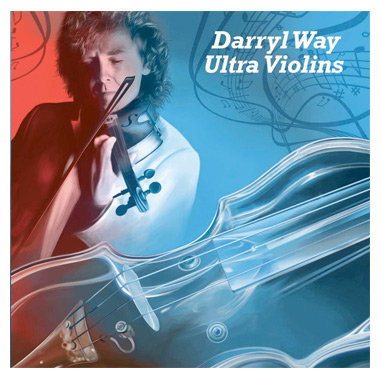
London, UK – Much to the anticipation of music fans and critics worldwide, Curved Air founding member and virtuoso violinist Darryl Way is releasing his first solo album in 20 years! Now available on Explore Multimedia, via Cherry Red Records, ‘Ultra Violins’ features Darryl’s own interpretations of several well-known classical pieces, as well as a re-recording of Curved Air’s classic hit “Vivaldi”. Says Darryl, “The motivating force behind creating ‘Ultra Violins’ was to introduce some new material for solo violin that came from the vocal repertoire and the darrylway_ultraviolinsworld of orchestral music, rather than music specifically for solo violin.”
Originally formed in 1969, Curved Air was a groundbreaking progressive art-rock band renowned for their showmanship. Each member pushed the boundaries of possibilities for rock music performance. Darryl Way with his flamboyant virtuoso exploration of electric violin, Francis Monkman with his brilliant innovative sound manipulation using the VCS3 synthesiser, keyboards and fiery intricate guitar playing. and Florian’s expressive approach to rock drumming. Vocalist Sonja Kristina won the hearts of a generation of music lovers and was voted top British Female Vocalist of the 70’s whilst the three top twenty albums that this lineup released are regarded as classics. Darryl wrote the music for the Top 10 hit (reached #4) “Back Street Luv” and was a major contributor to the 3 albums that made the Top 20. With Curved Air he toured extensively, performing in practically every major city in both America and Europe. Before becoming headliners themselves, Curved Air toured with Black Sabbath in the UK and in the USA they toured with Deep Purple, Jethro Tull and Emerson, Lake & Palmer. They also appeared on the same bill as The Doors, Steppenwolf, B.B. King, Johnny Winter and Dr. John.

After Curved Air Darryl went on to release several critically acclaimed solo albums in both ‘rock’ and ‘classical’ genres. Among these, was his ‘Concerto For Electric Violin’, which was premiered on the South Bank Show with the Royal Philharmonic Orchestra and himself as soloist. Darryl’s collaborations include working with Sir Tim Rice, Sting and Gary Brooker (Procol Harum). In classical genres he has orchestrated Stewart Copeland’s ballet “King Lear” for the San Francisco Ballet, and Stewart’s opera “The Holy Blood and Crescent Moon”, premiered by the Cleveland Opera in the US. In 1996, Darryl’s own opera “The Master and Margarita” was premiered at The Place Theatre in London. Alongside these projects, Darryl has also worked as a film and television composer.

As a violinist, Darryl has lead the London-based Electric Symphony Orchestra for concerts at the Royal Festival Hall, and lead and recorded with The Elektra Ensemble, performing classical and contemporary music. As a session musician, he has recorded with Jethro Tull, Sky and Marrianne Faithful, as well as several film scores with the National Philharmonic Orchestra. Recent work includes being musical director for the soprano Emma Shapplin, for a series of televised UNHCR concerts at the Parthenon in Athens. Recent compositions include a Symphonic Choral work entitled “Siren’s Rock”, premiered at the Plymouth Guildhall with the South West Sinfonietta, Opera South West, Naomi Harvey (WNO) soprano and Stephen Crook, tenor. Recent projects include writing and producing two albums and DVDs (in 5.1 Surround Sound) for a classical crossover project entitled Verisma. For this project he directed and produced four videos, which have been broadcast on Classic FM TV.

During his illustrious career, Darryl has created and been a major part of over 20 commercially released albums. And now, after 20 years, his highly anticipated new solo album ‘Ultra Violins’ is now available! Along with his stunning adaptations of orchestral pieces such as “Scheherezade” and “Farandole”, is a new composition by Darryl titled “Tarrantelle”; a piece inspired by a performance by Maxim Vengerov, the Russian violinist. Also included on this album is Darryl’s video for “Farondole”. He explains, “Ever since 2002 I’ve been making videos for various projects, including my classical crossover band Verisma, which features the magnificent tenor voice of my co-collaborator, Stephen Crook. We were lucky enough to get our first video broadcast on Classic FM TV, and from then on we had a further four videos broadcast on this TV channel. So to promote the digital release of ‘Ultra Violins’ I decided to make a video of it.”

Of the the new version of ‘Vivaldi’ included on the album, says Darryl, “It is a piece in two halves, as was the original Curved Air show stopper. The first half has been arranged in typically baroque style, or in the style of Vivaldi himself if you like. After a short transition passage the piece arrives in the 20th century, as the introductory melody is now played on electric violin, emulating an electric guitar, with bends and slides. This leads into the main section of the piece which is now played on electric violin put through a distortion unit, with heavy guitar chords as an accompaniment, along with counter melodies also played on electric violin. This section sets out to capture the excitement of the original, which always left the audience wanting for more at the end of a Curved Air set.”

To purchase Darryl Way ‘Ultra Violins’ CD:
http://www.explore-multimedia.co.uk/ExM004.htm

For more information: http://www.darrylway.com/

Press inquiries: Glass Onyon PR, PH: 828-350-8158 (USA), glassonyonpr@gmail.com

Sounds of Summer: Bruce Soord-Wisdom of Crowds, Shineback, and Sounds of Contact

by Frank Urbaniak

In an outstanding year of prog, with the heat of summer comes even more interesting soundtracks for 2013. These three releases are similar in their focus on audio excellence, none of the three are 100% prog, yet all three provide a good listening experience, but they do vary in terms of their ability to generate the desire for ‘go to’ repeat listens.threealbums_july172013

I originally didn’t want to review Wisdom of Crowds because while it is sonically rich, the music left me flat. After Carl Olson of Progarchy suggested differently I gave it a few more spins and have a more favorable opinion of the music, but still am a bit surprised by the glowing online reviews. As with more recent Pineapple Thief music, I find the song construction a bit predictable, with 2 verses, chorus, bridge/instrumental section and final verse/chorus. The music just doesn’t engage me enough to want to play it again/often. For instance the title track, “Wisdom of Crowds,” repeats the chorus for far too long, so that by the time I hear the song again I am ready to skip the track. The next track, “Radio Star”, has a weak melody so I am ready to move quickly to the best song on the CD, “Frozen North”, with lovely guitars and a haunting melody, which starts softly and then builds to an infectious finale. This track and the following track, “The Light,” reveal the great qualities of Jonas Renkse’s voice but overall, I find the songs just a bit long and I wish Soord had stretched a bit more compositionally as well as sonically. An enjoyable CD but I don’t see it in the top releases of the year.

(For an interesting transition, play Wisdom of Crowd’s “Flows Through You,” followed by Shinebacks’s “Here Come the Envoys.”)

Shineback’s Rise Up Forgotten, Return Destroyed is the top audio experience of the three releases and is worth repeat listens on headphones. Rise Up Forgotten is quite an eclectic mix of prog, dance, hip hop and pop (think ABC) which all comes together nicely, but is significantly enhanced by the quality of the recording. The dynamics are breathtaking. While there are similarities to Tinyfish’s Big Red Spark, this is much less ‘prog’ and this ‘story’ offers an opportunity for Simon to expand his musical palette. The proggier moments remind me of Frost* (go figure). There are only 6 songs three minutes or longer, connected by musical ‘blogs’. If you have the time to listen to the entire CD it works well, but the blogs are so short they sometimes seem to interrupt the flow of the songs, which is already challenging due to the diversity of the songs. I wish there were a few longer compositions as these short blogs aren’t easy to get into if you have a 20 minute drive or a short listening window. I also wish that they had used the female voice for more than the opening and closing songs, as Simon’s voice sometimes sounds thin on the choruses. Unfortunately I think that in a few months I will only return to this CD to revisit just the longer tracks. But hey, these are minor points, this is good stuff and worth an investment of your listening time and money. Hats off to Bad Ear Music and to Simon for taking such a gamble at such a precarious time in the industry.

Sounds of Contact’s Dimensionaut is the hardest release to review objectively as with this band you have to deal with Simon Collin’s legacy situation. Father Phil generates awe and respect as a drummer and singer in some camps, and quite caustic and disdainful online comments from others as a solo artist and singer/composer for his more commercial solo work and contributions to one of the genre’s most beloved bands in their later years. So lets get this out of the way: sometimes Simon sounds like his father around the time of Face Value but there are also hints of Sean Filkins, Jon Anderson and others in his singing. The only time I find this objectionable is on a track like “Dimensionaut” where his vocals are mixed with an echo that generates the ‘clip’ at the beginning of each phrase that was so oppressive in later Genesis recordings like “Throwing It All Away” and “Domino.” It isn’t needed, his voice is fine without it. And did I mention that the drumming genetics have been passed down nicely?

The other challenge in reviewing this is that while it is mostly progressive, there are some ‘modern rock’ songs bordering on AOR such as “Not Coming Down,” “Only Breathing Out” or “Closer to You,” clearly geared for more commercial appeal. On each of those songs the lyrics are nice but a bit ‘poppy’. In fact the lyrics on the entire CD alternate between ‘cosmic’ and pop but they work with the music. So you can either let the more commercial tracks put you off or you can just let the CD play end to end to appreciate a fine release, and just give these guys the respect I think they deserve out of the gate (as most seem to be doing). The recording is excellent and the band is solid (although the drums may be mixed slightly up front for some tastes).

Sound of Contact’s overall dedication to ‘bring the prog back’ is admirable, touring after only one album all across the US and Europe, joined by some other excellent bands in different cities on the tour. Talk about taking a risk! I give Sounds of Contact an A for effort and commitment to progressive music. If bands like this aren’t given a fair listen and support on their tours, then the genre’s future is at risk. (As I write this I see they are announced as the first signed band for Rosfest 2014!)

In fact all three of these releases deserve support and attention as these artists spread their wings musically and sonically, providing more reasons to celebrate 2013 as a great year for music.

[Frank Urbaniak is the co-owner of a successful retail technology consulting practice, living in the hinterlands of NJ.  He has played drums since the age of 8 and followed progressive music since the age of 18 when he first heard The Yes Album in college.  He is the father of two daughters who think his music is weird,  and his wife agrees with them.]

Some “favorite music lists”…from 2004

I’m in the process of creating a new personal website and in the course of sifting through old files from my previous site, dating back to the middle of 2004, I came across some “favorite music lists.” It’s interesting to recall what was in rotation for me back then and to see how my tastes have changed in several cases. For instance, I rarely listen to Pink Floyd anymore, and I haven’t listened to Transatlantic for quite some time, even though it an excellent band. While this will not be nearly as interesting to you as it is to me, I thought I’d share some of the lists.

Favorite Hard Rock and Progressive Rock CDs

faith hope love, King’s X
The Bends
, Radiohead
Fallen
, Evanescence
Images and Words
, Dream Theater
JJ72
, JJ72
V
, Spock’s Beard
Three Sides to Every Story
, Extreme
The Edges of Twilight
, The Tea Party
Bridge Across Forever
, Transatlantic
My Favorite Headache
, Geddy Lee
Momentary Lapse of Reason
, Pink Floyd
Empire
, Queensrÿche

Continue reading “Some “favorite music lists”…from 2004″

30 years after taking “Drastic Measures”, John Elefante revisits Kansas

Any rock group that has been around for a few decades has seen its share of line-up changes. The same is true several times over for certain prog groups, some having a near legendary reputation for players coming and going, returning and re-leaving, rinsing and repeating. Yes comes to mind, along with King Crimson, Asia, and Kansas. The latter has essentially (if not precisely) had three different incarnations in the forty years since it formed in 1973: the original/current one (1973-1981; 1985-present), the one with John Elefante replacing Steve Walsh as lead singer/keyboardist (1982-84), and the line-up with Steve Morse taking the place of Kerry Livgren as lead guitarist (1985-89). Violinist Robbie Steinhardt has come and gone several times over the years; the two stalwarts have been drummer Phil Ehart and guitarist Rich Williams, who have appeared on every Kansas album. (A complete breakdown is available here)

The 1980s brought challenges stylistic, cultural, and technological in nature for most prog groups (Yes, Genesis, etc.) that tasted or enjoyed significant success in the 1970s . Much is made of the influence of punk in the demise of ambitious, complex prog albums, but other factors were in play. Those included the advance of electronic instrumentation and production values that were intertwined with the arrival of New Wave Music, something of a sophisticated, artsy cousin of punk. Also notable was the rise of Album Oriented Rock (AOR) in the mid-70s, which johnelefante_neweventually narrowed the focus and homogenized the content of music-oriented radio. It is rather fascinating, in considering the groups Yes, Genesis, and Kansas, how each went through big line-up changes in the late 1970s and early 1980s, and then experienced massive successes in the first part of the Eighties with songs and albums that were less complex, more commercial, and often very much in keeping with the AOR sounds of the time. Journey, the band that (arguably) best embodied the AOR “sound”—or at least approach—was originally formed in the mid-1970s as a rather “meandering jazz-rock” , prog-ish band, finally arriving on the winning formula when singer/songwriter Steve Perry joined the group in 1977. And there is no doubt that Asia was formed by four prog giants in order to produce radio-friendly music that could—and did, of course—move truckloads of units. 

Kansas, meanwhile, had its biggest hit with “Dust In the Wind” (what, you’ve heard of it?), which reached #6 on the Billboard Top 100 in 1978. Yet the song was not the typical Kansas song up to that point: it was quite short—just over three minutes long)—quite simple, and quite sparse, with just vocals, acoustic guitar, violin, and a great melody line (not to mention some overtly existential lyrics shot through with palpable angst). But, having achieved remarkable success, the band began to show the wear of constant touring and being pushed to have further commercial success. In addition, band founder and primary songwriter Livgren announced during the Monolith tour in 1980 that he had converted to Christianity after years of obvious spiritual seeking (many of the lyrics on the Monolith album were influenced by The Urantia Book). Later in 1980, Livgren released his first solo album, Seeds of Change, which featured overtly Christian lyrics. With discord growing, Walsh finally left Kansas in October 1981. The year before, Walsh had released his first solo album, Schemer-Dreamer, which featured Kansas band mates Livgren, Williams and Ehart, as well as the great Steve Morse, who would eventually become the lead guitarist of Kansas when Walsh rejoined the group in 1985 (yes, keeping track of this stuff can be challenging!).

Which brings me, finally, to John Elefante.

Continue reading “30 years after taking “Drastic Measures”, John Elefante revisits Kansas”

Jazz phenom Eldar Djangirov performs Radiohead’s “Morning Bell”

The young pianist Eldar Djangirov (website) has already released several exceptional albums, featuring a wealth of stunning virtuosity and musicality. Dave Brubeck, who knew a thing or two about jazz piano, called him a “genius”, which gives you a sense of his talents. His early albums were sometimes criticized (and fairly so) for being heavy on flash and flair and light on interpretive depth and emotional resonance. But his work has matured with each release and I think his new album, “Breakthrough”, is his finest work yet. And I was pleasantly surprised to see that he took a page from the great Brad Mehldau and performs a Radiohead tune, the lovely “Morning Bell”. Here it is:

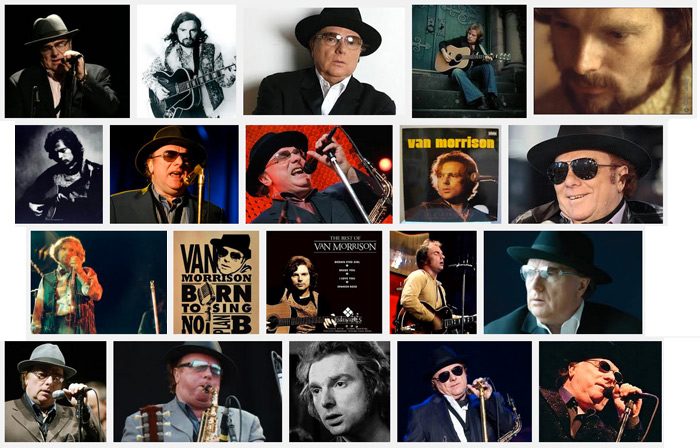
The Incarnational Art of Van Morrison

VanMorrison_collage

Note: No one will mistake Van Morrison as a “prog” rocker, but everyone acknowledges he is one of the most important popular musicians of the past fifty years. He has long been one of my five or six favorite musicians, ever since I first heard his music back in the summer of 1991. I wrote the following article in 2002 for Saint Austin Review, and since it has never been available online, I’ve decided to foist it onto Progarchy readers. I’ve made a couple of minor corrections, but otherwise it is unchanged and so it is, of course, somewhat dated. — Carl E. Olson

Ask most people (at least here in America) if they’ve heard of Van Morrison, and they will likely mention “Brown Eyed Girl,” the late 60s hit with a catchy chorus of sha-la-la-la-la-la-la’s. Although it’s a fine pop song, there is, fortunately, far more to Van Morrison than “Brown Eye Girl.” Since 1968 and the release of his classic album Astral Weeks, Morrison has created an impressive body of popular music that defies categorization. Using elements of folk, rock, jazz, soul, R&B, traditional Irish music, and even country music, the Belfast Cowboy molds songs that are earthly, emotional, spiritual, and, at times, transcendent.

Legendary for his difficult personality and his dislike for the press, Morrison has often sent confusing signals about his religious affections. Yet his finest work can rightly be called incarnational. This is not to say it is strictly “Christian,” but that it is rooted in reality (uncommon in much pop and rock music) and seeks to incarnate spiritual truth and meaning in concrete forms, themes, images, and narratives. Morrison is not interested in proselytizing, creating propaganda, or lecturing, flaws common in “contemporary Christian music” (mostly evangelical Protestant) and in the music of rock artists attempting serious statements about ecology, politics, and social ills. Such ends irritate Morrison, who seems to appreciate the power and limits of popular music.  Once asked about fans looking to musicians for political guidance, he responded with irritation, “Why do people expect us to solve the world’s problems? It’s absurd. I mean, if politicians can’t do it, how . . . . can musicians?”

Although he has produced some mediocre albums and has occasionally alienated his fans and the press, Morrison has maintained a remarkably consistent artistic vision. His music is worth considering, I believe, for several reasons. As music, apart from message and lyrical themes, most of it is very good. Morrison’s mastery of styles and his ability to mesh seemingly divergent musical forms is impressive. The best of these stylistic marriages have a timeless quality, conveying a spiritual longing that is honest, vulnerable, and often moving. This mixture of earthy, cerebral, and spiritual is uniquely its own, providing Catholic musicians who work in popular music much to consider and appreciate.

The Childlike Vision

Born in Belfast in 1945, Morrison had an ordinary boyhood, with the notable exception of his father’s passion for American jazz, R&B, and early rock and roll. He spent hours listening to the records of legendary artists such as Jelly Roll Morton, Little Richard, and various blues singers. By the age of fifteen he was playing full-time in a skiffle band, eventually putting together the group Them in the early 60s. After releasing the hits “Here Comes the Night” and “Gloria,” Morrison went solo and eventually landed in New York City. Although “Brown Eyed Girl” was soon a hit, Morrison was miserable. Feeling trapped in his recording contract and misunderstood by everyone around him, he still managed to record Astral Weeks in two days – this despite not knowing the session musicians and (according to those musicians) not communicating with them.

Although it produced no hits and didn’t sell well, Astral Weeks soon became legendary within musical circles. The twenty-two year old Morrison had created a song cycle that was timeless, poignant, and spiritual, combining folk, rock, and jazz in open-ended compositions. Multi-layered and elusive, the lyrics describe people and places in Belfast, impressionistic sketches imbued with a mystical longing free of nostalgia and sentimentality. The songs are loosely structured around Morrison’s emotive vocals, the singer wrapping his voice around keenly detailed lyrics. In “Beside You”, he describes the approaching evening with minimalist precision, “Just before the Sunday six-bells chime, six-bells chime/And all the dogs are barkin’.” He then follows a mysterious woman as she moves down the roads and “way across the country”:

Past the brazen footsteps of the silence easy
You breathe in you breathe out you breathe in you breathe out . .  .
And you’re high on your high-flyin’ cloud
Wrapped up in your magic shroud as ecstasy surrounds you

“Sweet Thing,” a more obvious love song, is also filled with images of walking the countryside, seeking and experiencing a timeless wonder: Continue reading “The Incarnational Art of Van Morrison”

Steve Howe leaves Asia (again), talks guitar

Someone with time on their hands and prog trivia on their brains should do some careful historical research in search of the answer to this question: “Which prog group has the most line-up changes all-time?” Three groups come to mind immediately: Yes, Asia, and King Crimson. And the three are, of course, bound together by all sorts of personnel connections and such, as SteveHowe1970swell as having been around for decades, which surely is part of the ongoing drama of departing, returning, reuniting, breaking up, reforming, guesting, and so forth. Anyhow, legendary guitarist Steve Howe has announced that he is leaving Asia so he can concentrate on solo work and (it appears) his commitments to Yes. Just as (or more) interesting are his remarks on playing guitar. From the ProgRockMag.com site:

The pressures of attending to the requirements of two large-scale acts was also getting to him, he admits. “Over the last year I started to think, ‘Boy, when Yes extend a tour then Asia start a day early, I’m the guy getting squeezed.’ I couldn’t do it much longer without feeling that I was running on autopilot. I want to be in control of my musical direction and follow my calling.”

That calling will include the Cross Styles Music Retreat, during which Howe hopes to share his passion and experience of guitar with attendees. But he’s wary of the “unique” label: “It sounds like I’ve set myself up for a fall there,” he laughs. “All I’m saying is: I’m not educated, I don’t read music, I didn’t go to music school, I don’t have the theory. All I have is my experience, and presumably people want that, otherwise I wouldn’t be selling any tickets.

“I’ve done these things before. I walk in and say, ‘Don’t talk to me about demi-semiquavers. Don’t talk to me about time signatures.’ I play. Everything I do and everything I’ve learned is by ear.

“You don’t have to drive yourself mad reading dots. If you want to play classical music you should; but where I’m coming from, improvisation, composition. I’m bringing in an unschooled – I wouldn’t say rebellious, but individual – approach to guitar.

“I’m not going to pose that it’s going to be anything else. You get me, I play tunes and I talk about guitar. I’ve managed to make that interesting for myself for over 50 years, so there must be something!”

Howe states that he’s never believed in straight-out practising. “Playing scales would have driven me stark raving bonkers,” he says. “That’s not what I call music. It might be an essential part of keeping your muscles and fingers in good order and I don’t say it’s terrible. But my central thing is improvisation. Play stuff – make stuff up. That’s how I keep interested: by interacting with it, not just being a mechanical, physical observer.”

He didn’t enjoy his school days, finding London’s Holloway School “oppressive, violent, mixed with racial and religious prejudices.” But he’s never found that a lack of a “proper” musical education held him back – except when he tried to learn to play flute and discovered it was too distant from guitar to make the transfer comfortable.

As a result of being self-taught he does encounter people who are better technicians than he is. “But I don’t feel particularly threatened,” he explains. “What I feel is: ‘They’re very advanced in their technique – how advanced are they in their general view of music?’

“Guitarists can get fanatical about guitarists; but in the end we’re musicians. We make sound. It’s the sound that’s got to be pleasing – not how you made the sound. Who cares how you play it? What’s important is what comes out the other end.”

And one of the key lessons he hopes to impart at Cross Styles is: “Musicians are lucky; we can break the rules. There’s no such thing as the ‘music police’ – they’re not going to come round and say ‘You shouldn’t have played a D-flat, it should have been a D. You can do what you want – live and die by the musical sword!”

In addition to the retreat he’s planning a solo tour and a new Steve Howe Trio album and tour. “We’re just about to launch some dates. I’ve got two or three weeks of solo dates in June, which I haven’t done in a very long time due to my demanding schedule of keeping two bands happy. In September we’re doing the trio again. We should have a new recording before that.”

His desire to move away from the band environment is much more than just a whim, Howe notes. “My solo guitar work is pretty central to my musical existence. I’m not a blues, rock or jazz guitarist – I’m a guitarist, and the central thing is solo playing.

Read the entire piece. Glancing over his bio on Wikipedia (yes, I know, forgive me), I was a bit surprised to learn that Howe was the first player to be inducted into the Guitar Player Hall of Fame, and one of the few in the GP’s “Gallery of Greats”, which comes with being selected best overall guitarist at least five times (although it appears the criteria has now been modified). Howe’s playing has long intrigued me because of the obvious jazz influences; he was influenced by Wes Montgomery, as well as Chet Atkins, whose mark on Howe can be seen in Yes songs that have a country-type feel to them, quite unique within the prog realm.

Short reviews of new music from Asia, Proto-kaw, Mystery, and Godstick

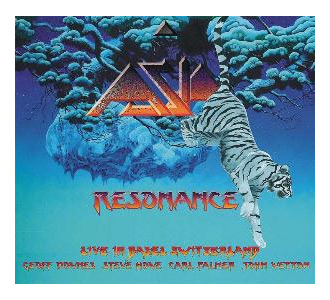
I’ll skip my usual apologia attempting to explain my long absence from this fine blog and instead spend my limited, if not valuable time, remarking on four recent prog and proggy albums that have been found a home on my regular iTunes rotation. I may write longer reviews of a couple of these albums, but some short remarks are better than none.asia_resonance

Asia — Resonance (The Omega Tour, 2010; released 2012): After Kansas, Asia was the group that first introduced me into the world of prog, back in the early to mid-1980s, when I was an innocent small town Montana boy making my way through high school. I recall seeking out books and magazines that explained the musical pedigree of Downes, Howe, Palmer, and Wetton, and thus being introduced to early King Crimson, ELP, Yes, and more. I know that Asia has been a source of debate among prog fans, some of whom dismiss and even deride the group; I’ll just say that I really liked and still do like the first two albums, Asia and Alpha, and make no excuses for the warm and gratifying nostalgia they bring to the surface whenever I play them. And, truth be told, I’m partial to the third album, Astra, which marked the first of two billion line-up changes (Mandy Meyer took over guitar from Howe, who had departed), as it is actually a good, hook-heavy example of what might be call “arena prog” or “pop prog” or something similar. Anyhow, the original line-up has been back for a while—and getting solid to excellent reviews—and this live album documents the group’s 2010 tour. I’ve heard cuts from earlier live albums by Asia, and have found most of them disappointing, especially in the vocal department. But this album, dare I say it, is rather stunning, both in terms of the outstanding sound quality and the amazing power and clarity of Wetton’s voice. Wetton, to my ear, sounds just as good as he did on the studio cuts from the early and mid ’80s, which is saying something. The playing is excellent, of course; my only small beef is that the drums seem a bit back in the mix, although there is an extended and fine drum solo on “The Heat Goes On”. Otherwise, a great mix of cuts, with some nice acoustic-oriented variations of old hits such as “Don’t Cry” and “The Smile Has Left Your Eyes”.

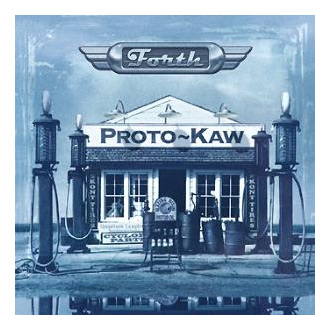
• Proto-kaw: Forth (2011): Speaking of Kansas, the group Proto-kaw was the second of three early incarnations of what eventually became simply “Kansas” in 1973. The key constant in protokaw_forththose groups was songwriter, lyricist, guitarist, and keyboardist Kerry Livgren, who conquered the world with Kansas in the 1970s (“Dust in the Wind”, anyone?), had a run of contemporary Christian rock albums in the 1980s (both solo and with the group AD), and then reformed Kansas and Proto-kaw in the 1990s. (Fun fact: metal legend Ronny James Dio sang lead on two songs on Livgren’s first solo album, “Seeds of Change”, in 1980.) All three of the newer Proto-kaw albums are worth checking out, and that is especially true of Forth, the most cohesive and fully realized album yet by the group. What strikes me, as a longtime fan of Kansas, is how much classical influence there is in Livgren’s writing, as his songs often have a suite-like quality that builds on either strings or keyboards/guitars that act as a strings section. Proto-kaw, like all Livgren-led bands, has dual lead singers (yes, Steve Walsh was a the primary singer in Kansas, but Robby Steinhardt sang lead or co-lead on numerous songs), and features excellent and often complex harmonies, masterfully constructed arrangements, and strong songwriting. One distinctive element is the presence of saxophone and flute (John Bolton), used to great affect in song such as “Pilgrim’s Wake”, one of my favorite cuts on Forth. A must listen for anyone with a soft spot for 1970s Kansas. And, speaking of Kansas (again!), this year marks the 40th anniversary of the group’s founding; I plan a couple of posts about the group and some of my favorite Kansas albums and songs.

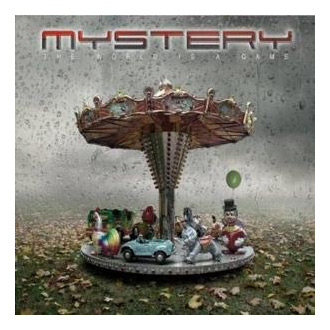
• Mystery: The World Is a Game (2012): How embarrassing it is to admit that prior to the Yes album, Fly From Here (2011), I had no idea who Benoît David was. Having replaced Jon Anderson and toured with Yes—and then having himself been replaced due to his own respiratory issues—the talented vocalist worked on his third album with veteran Canadian proggers mystery_worldMystery, a group he had joined in 1999. Having not heard any of his work with Mystery (which my iTunes annoyingly tagged as “The Mystery”), I was surprised—in a good way—that David did not sound like Anderson and that the group does not sound much like Yes, although the influence is present. In fact, at times David sounds more like another great Canadian singer, Geddy Lee. The two words that keep coming to mind after repeated listens of this exceptional album are “melodic” and “soaring”. The vocals soar, the guitars (by band founder, guitarist, lyricist, and producer Michel St-Père) soar, and the songs soar with a wonderful sense of discovery, melancholy, joy, and introspection, a not-so-easy mixture to navigate. And then there is the drumming of Nick D’Virgilio, who is rightly revered as one of the finest drummers in the prog/rock world. His drumming is, in a word, orchestral, and it is reason alone for buying this fine release. But, for me (a vocalist junkie), it is David who is the revelation here, especially after hearing his solid but rather emotionless performance on Fly From Here. In the words of a reviewer on ProgArchives.com, “Finally vocalist Benoit David proves what a versatile and commanding singer he is, a million miles away from the Yes/Jon Anderson clone dismissals. It’s also great to hear his voice so full of human feeling and compassion again after being so over-produced and rendered mostly lifeless on the Yes album `Fly From Here’!” Exactly right.

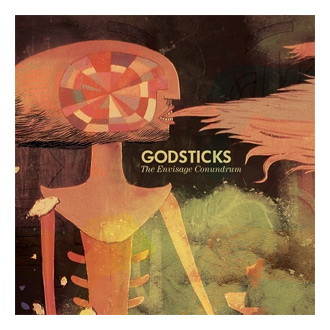
Godsticks: The Envisage Conundrum (2013): Here is a group (from South Wales) I knew nothing about a week ago, but has captured my attention in a way that only a few groups have on first listen. Explaining why is a bit difficult; the difficulty arises, in part, from the most enjoyable fact this is a group that is very hard to describe or label or situate in the universe of godsticks_conundrumprog/rock music. Nearly every review I’ve read says the same, and rightly so. One of those reviews, by Adrian Bloxham, puts it well: ” The world of Godsticks is not straightforward; they seem to have baffled other reviewers trying to pigeon hole them. They make their own brand of what they describe as ‘progressive rock/pop, but it is very much their own take on the sound. You get the idea that this is exactly the music they have inside their heads trying to get out and if you like it they will be pleased but that’s not why they do what they do.” The one influence I hear is later King Crimson, but even that is hard to pinpoint, although the angular, often astonishing guitar work by guitarist/singer Darran Charles brings it to mind in several places. None of the songs are longer than seven minutes in length, but some of them pack in more twists, turns, veers, swerves, and surprises in five or six minutes than many bands can pack into songs three times as long. The title cut is a perfect example. It begins with a chugging, almost “boogie” riff out of which emerges a spider-like flurry of notes, leading into a wall of harmonized vocals over a heavy, grunge-like riff backed by the tight, slightly funky, never quite straight forward rhythm section of Steve Roberts (drums, keys) and Dan Nelson (bass). Charles’ voice is part of the mystery here, a strong, clear instrument that manages to be intense, detached, soulful, and slyly humorous (and occasionally darkly smirking) all at once. There is an abundance of odd chords, meters, notes, and harmonies, sometimes, to my ear, sounding like a Robert Fripp-inspired space alien sibling of Soundgarden. And did I mention the album features a 3:49 piano solo by Roberts that could easily have made it onto one of Keith Jarrett’s solo albums? Followed by a three-part suite—”Borderstomp”, parts 1-3—that sometimes calls to mind Steve Vai? Not straightforward, indeed!

Give Lobate Scarp some time and space—and volume!

January was incredibly busy. And February was incredibly surreal. When you edit a magazine titled Catholic World Report and the pope resigns while you are fighting the nastiest flu known to mankind, it is really surreal. And a new pope will soon be elected. Whew!lobatescarp_cover

But I’m putting all of that on hold for a few moments so I can write what is apparently my monthly—or is it bi-monthly?—post. I have grand plans to post much more often, but for now it is a monthly splurge. I intended (and promised, I’m ashamed to admit) to review the recently released Lobate Scarp album, “Time and Space”, several weeks ago. Russell Clarke has already penned a Progarchy.com review, but I wanted to also share a few thoughts about the album, in part because Russell and I have different takes on a few things about the album and because I have, at the moment, nothing to add to the many reviews of the excellent new Big Big Train album.

Upon first listening to “Time and Space”, my initial impression was quite positive. I’m happy to say that having now listened to it another 10 or 12 times, that impression remains and deepens.

Three things stand out. First, the production is exceptional. This album sounds fabulous: the sound is clear, warm, rich, and with a lot of depth and “room”, if that’s the right term. This album is worth getting just to listen to with headphones, volume up, in order to enjoy the variety of tones, the tasteful cello passages, the top-notch rhythm section, the robust harmonies, and lots of nifty details.

Now, beginning a review with praise for production values is usually the kiss of death, with a big, fat, “But…” to follow. But, no—there is no “but” to follow as, secondly, the music is also exceptional. Russell mentioned Spock’s Beard as a point of comparison, and I would add Neal Morse and Transatlantic. Considering that Adam Sears, the band’s leader, is the main lyricist, singer, and keyboardist, it seems apt that the group might draw some comparisons to Morse. The band’s site states, “From progressive rock influences like Genesis, Yes, and Phish, to the rock sensibilities of bands like Kansas, Muse, Faith No More and Styx, and a pop infusion of catchy vocals like Simple Minds, The Killers, The Police, Queen, and Foreigner; Lobate Scarp’s unique Progressive Space-Opera Rock music will surely take you on a musical journey you won’t forget.” That’s an interesting mix of musical influences and comparisons, and I can best hear Kansas, Styx, and Queen in the mix, as well as some Pink Floyd, especially in some of the guitar work by Hoyt Binder. The “space-opera” connection is, however, mostly lost on me; in fact, it is a bit confusing, because to my ears there isn’t much in the album—at least musically (more on they lyrics later)—that warrants such a description. Then again, I’m not exactly sure what a space opera is in a musical context, although the album that comes to mind for whatever reason is ELO’s “Time”, a personal favorite. While we at Progarchy.com rightly disdain most labels, or at least treat them as necessary evils, I would hazard that “Time and Space” is much more of a cross-over prog, or neo-prog, album, if only because the songs—while fairly complex and played with obvious skill—have an immediate accessibility. In fact, one of the real joys of this album is the presence of very good melodies, all of which stick with you and don’t become tired or stale after a few spins.

Third, and closely related to the first two, is the playing. The band’s promo material highlights the abundant contributions made to the album:

Over 50 musicians were involved in this progressive space-opera rock extravaganza. Guitars, Drums, Synths, Organs, Trumpets, Saxophone, Viola, Violin, Cello, Theremin, Glockenspiel, and a Latin singing choir were all recorded on this one. Peru Percussionist Alex Acuña (Weather Report) appears as a special guest percussionist and Rich Mouser (Spock’s Beard, Transatlantic, Tears For Fears) mixed and mastered the album.

One might understandably think the resulting album would be overly busy, with endless layers of keyboards, guitars, strings, and whatever else. Surprisingly—and happily—this is not the case, at least not until the climax of the final cut, “The Mirror”, which features a full-blown choir (and to good effect, I think). As mentioned, this album has a lot of room; it breathes well, and part of that is the restraint shown by Sears and Company, who are clearly aware that there is a time and place for a wall of sound approach (at the Big, Choral-Driven End!) and a time for a less-is-more approach. The majority of the album features a very tight four-piece rock group that uses proggy time changes and proggy solos, but without being overtly, relentlessly proggy. This approach, I suspect, might annoy the more purist prog fans, but I think the band demonstrates they know what they want to do, and they do it very well. Besides, the mastery of various styles—notably jazz, classic rock, and some Latin based motifs—is obvious and adds a lot of flavor to the proceedings.

For instance, “Save My Soul” begins with a prog-icized classic rock riff that eventually works into a muscular bass line before Sears enters with a steadily gaining vocal line that finally releases into a big, power-chorded chorus. Then, at about the 3:20 mark, the song breaks down into a funky, fusion-ish segue with vintage keyboards that brings to mind late ‘60s albums (“Bitches Brew”, etc.) by Miles Davis, before eventually works back into a ripping rock song with horns and organ joining the chaotic fray at the end.

And while all of the playing, again, is exceptional, I must single out Sears for his fine vocals (clean and pure in many places; rocking and more raw in others), Binder for his tasteful guitar playing (the sequence in the middle of “Beginning of Us” stands out), and Andy Catt for some dynamic, propulsive bass playing.

Finally, the lyrics. Contra Russell, I heard (and read) the lyrics as working on a couple of different levels: one inter-relational and the other spiritual, or metaphysical. This was confirmed by Sears, who shared the following in an e-mail regarding the song, “The Contradiction”:

I’m sure one may look at it and think that it is about a struggle in a relationship. While this can be true, the deeper meaning of “Contradiction” is about the connection of the spiritual world and the physical world. It is spoken from the point of view of the soul which exists in the spiritual/metaphysical world and this soul is talking to its physical world inhabiter, who is struggling with the contradictions of existing in both worlds. For instance, if there is indeed a spiritual or meta-physical world, this computer I’m typing only exists in the physical world and doesn’t exist at all in the meta-physical world. So it exists, yet doesn’t exist at the same time. If you respect and accept the contradiction your physical self and your soul will be brought together in a strong bond, but if you think too much about the contradiction or try picking it apart, it can drive you mad. “The Contradiction will bring us together or tear us apart.”

I’m not sure I’m on board with the metaphysics outlined here (they sound neo-gnostic, but that’s for another discussion), but the seriousness of the searching is hard to overlook (also readily evident in “Save My Soul”); this is not an ordinary love song. And I suppose the lyrics are what are most obviously “space opera” about the album. Regardless of the descriptive used, I think “Time and Space” is a very good album by a young and talented band that rewards repeated listens—especially loud and with headphones!

My Favorite Music of 2012: 60 albums (give or take a few)

A couple of years ago I was talking music with two good friends. One of them, apparently moved in some way by my relentless (and surely annoying) blathering about my music library, my favorite artists, ad nauseum, said, “Carl, you have such discriminating taste!” The other, a devotee of Bach, chant, and other great tried-and-true music, dryly responded, “On the contrary, Carl, you seem to have no discrimination at all!” Touché! How true. And yet I keep on foisting my picks upon anyone who dares to listen or read.

My choices here are emphatically “favorite”, not “best”, as I am all too aware of the rather subjective nature of such an enterprise. I’ve tried to have some fun with it, but I’ve also worked over my lists more than a few times. I’ve made my choices from roughly 4,000 songs, give or take a couple, all of them (with a few noted exceptions) released in the past year. With that, here best2012cdsgoes, beginning with my “12 Favorite Albums of 2012”, regardless of genre:

12.  I Like To Keep Myself In Pain by Kelly Hogan. A toe-tapping, head-shaking, “yeah”-inducing combination of soul, R&B, Southern, country, jazz, and a few more flavors for good measure, with legendary Booker T. Jones on organ. Hogan’s voice can do it all, without a needless or self-indulgent note.

11. Blue Moon by Ahmad Jamal. One of the true legends of jazz piano, whose dynamic use of space had a huge influence on Miles Dave—in the 1950s! Jamal is now in his eighties, but his playing is not only lively and crisp, it continues to develop. Check out his fabulous cover of “Blue Moon”.

10. 3 Pears by Dwight Yoakam. Here’s what I wrote on this site a few months ago: His music has always been lean and his lyrics dry, but the new twist is subtle: a warmth in both content and sound. An example of the first is “Waterfall”, which is playful, with a wry and wistful sense of joy. The second comes through in Yoakam’s superb vocals, set in arrangements that are fat-free and feature just the right amount of twang and reverb, with tasty touches of organ and piano. The man is a superior songwriter and this set is further proof that country music can be twangy and contemporary without being shallow and trendy.

9. Bear Creek by Brandi Carlile. I saw her live this past August (our third Carlile show) and she and her band were stunning. That such power and presence comes from such a petite woman is amazing; think of her as Johnny Cash channeled through Janis Joplin. She is also a very good songwriter. And she is from the Northwest (Seattle), just up the I-5. If you’ve never heard her live, watch her singing, “Raise Hell”.

8. Corner of the World by SOLUS3. This is the first of my more proggy picks; it was released in late 2011, but I didn’t discover it until early last year. SOLUS3 is a sextet that has been described as “prog dubtronica”, which is an apt description for music that is ethereal, intense, beautiful, jazzy, and very, very distinct, capped by the often searing vocals of Krupa. A keeper.

7. Where Do You Start? by Brad Mehldau. Mehldau makes my list nearly every year, which speaks to his production and quality, which never waver. He is one of the finest jazz pianists in the world, and this past year he released two albums: Where Do You Start?, consisting of covers, and Ode, with all original tunes. Both are outstanding, but I went with this one because no one covers a tune like Mehldau and Company (his 2006 “Live” album has a version of Soundgarden’s “Black Hole Sun” that is almost 24 minutes long!).

6. The 2nd Law by Muse. This one took a while to get into, in part because I think it is a bit disjointed. In fact, I don’t even listen to the final two (mostly instrumental) cuts that often. The irony, it seems, is that while this is supposed to be a concept album, its strength is in the individual songs, especially “Madness”, “Panic Station”, and “Follow Me”. But the pinnacle here is the snarling anti-Wall Street tune, “Animal”, which starts out with a Radiohead-ish bass line and electric piano and then builds into what singer/guitarist Matthew Bellamy has described as “face melting metal flamenco cowboy psychedelia”, featuring some mighty tasty fretwork. Whatever you call it, I think it is one of the best rock songs of 2012.

5. Albatross by Big Wreck. From my earlier review: I was oblivious to this fine group (a “neo-prog hard-rock outfit” according to AllMusic.com) until I stumbled upon this new release on emusic.com. Singer Ian Thornley brings Chris Cornell to mind with his powerful, expressive vocals, but is hardly a clone, nor does he try to be. Three successive songs—”Wolves”, “Albatross”, and “Glass Room”—are worth the price of admission. “Wolves” (see YouTube video), especially, is a dynamite track, a perfect four-minute modern rock song, with top-notch playing and subtle melody.

4. I Am Anonymous by Headspace. My top pick of what can rightly be called prog. This captured me immediately and repeated listens have only deepened my appreciation for it. The combination of Damian Wilson’s emotive, powerful vocals and Pete Rinaldi’s guitar work is winning, and even more so because the compositions and production are top of the line, with much credit going to Rick Wakeman’s son, Adam, who formed the band and handled keyboard and production duties.

3. The Calling by Romain Collin. My favorite jazz album of the year is a gorgeous, mature, and evocative set by a talented French pianist that combines traditional jazz piano and a variety of classical influences (Collin is classically trained) with tasteful, dynamic electronic flourishes. This is what I imagine Radiohead might sound like if they were a keyboard-based jazz band.

2. Flying Colors by Flying Colors. Okay, this is certainly proggy in places, but I see it as more of a rock album featuring fabulous musicians with rich prog backgrounds. I’m been in awe of Steve Morse for years, and the combination of he and Neal Morse, Mike Portnoy, and Dave LaRue not only works, it works spendidly. And vocalist Casey McPherson was an inspired choice. This one will not soon gather dust.

1. Was there really any doubt?
And now, the best of the rest, by categories both usual and custom-made.

Continue reading “My Favorite Music of 2012: 60 albums (give or take a few)”