The Best Prog Bands You’ve Never Heard Of (Part Twenty-Two): Island

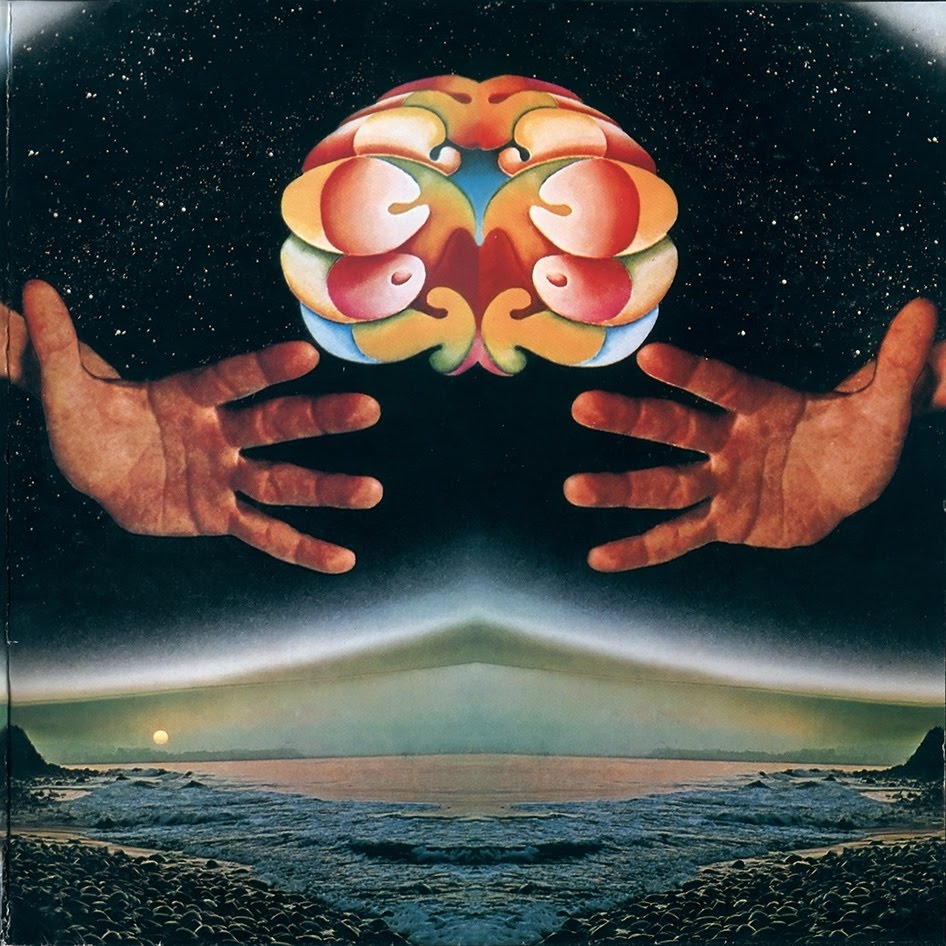
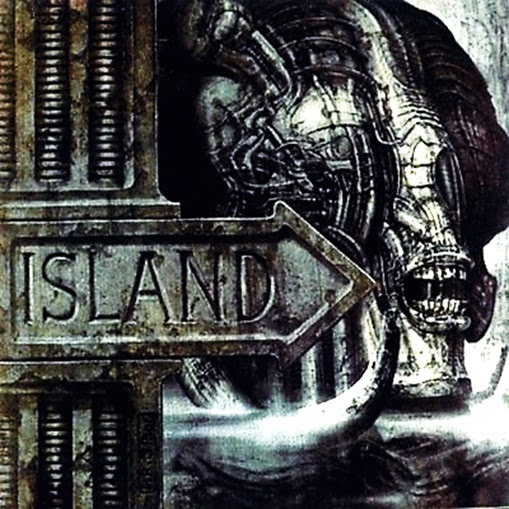
If the album cover looks familiar to you, that’s because it was designed by the same man responsible for Emerson, Lake, and Palmer’s Brain Salad Surgery and Ridley Scott’s Alien: H. R. Giger. Island may be the strangest thing to come out of Switzerland since that eccentric creator of biomechanical horrors. That small, idyllic mountain country may not come to mind when one thinks of avant-garde, but, like Giger, Island certainly does not fit the Swiss mold – or any mold, for that matter. Pictures is easily one of the bolder, more original releases that I have ever heard. Like Van der Graaf Generator, Island relied not on bass or guitar (in fact, they feature not a single guitar on the entire album), but rather on percussion, keys, and woodwinds. Like Gentle Giant, Island’s free jazz-style approach offered the band opportunities for some incredibly complex improvisation. And like King Crimson and Peter Gabriel, Island wasn’t afraid to add a dash of black humor to their lyrics, providing the album with a (somewhat) lighter tone than is suggested by that horrifying album cover. Now to the music itself:

The album opens with the appropriately titled “Introduction,” which sounds like Ligeti’s Requiem or something out of Kubrick’s 2001: A Space Odyssey. This brief piece ends with some eerie words whispered over a cacophony of sound before it transitions rapidly to…

The dynamic “Zero,” which opens with a flourish of keyboards. The interplay between keyboardist Peter Scherer, drummer Guge Jurg Meier, and woodwind wunderkind Rene Fisch is impressive and will probably remind most listeners of King Crimson or Gentle Giant. But we do not hear the vocals of Benjamin Jager until…

The title track. Jager, who sounds a bit like Peter Gabriel, has some fun on this song (it takes a quirky fellow to sing about “gastric juices”), but the focus remains on the instruments, and Jager himself is no slouch on percussion. In the middle of this complex piece we are entertained to both a gentle clarinet solo and smooth sax work courtesy of Fisch. These mad scientists of music continue to experiment on…

“Herold and King / Dloreh,” a fitting title for such an odd piece. After some three minutes of beautiful but somewhat dark piano melodies, we get a good half minute of silence before Jager’s vocals fade in…singing the lyrics in reverse, of course (look again at the title of the song). Once again, we are treated to some fascinating interplay between keys, sax, and percussion, and at one point the ominous sound of a drone provides an additional layer of eeriness. To up the weirdness factor, the track includes some whispered vocals (reminiscent of Goblin or VDGG) and scat (or something like it) throughout. The strange brew continues to satisfy on…

“Here and Now,” the closing track. This piece features (briefly, alas) a gorgeous and textured organ sound, and the percussion and sax shine as they have throughout. The drone effect is again put to good use, adding a haunting layer to what is otherwise the most “upbeat” track on the album.

This is a challenging album that may not initially appeal to your tastes. In fact, it may take three or four spins before you can appreciate it, and it is certainly worth more than one listen: this is top-notch musicianship with a healthy dose of dark humor. Anyone who appreciates Gentle Giant, Van der Graaf Generator, or King Crimson will be impressed by this little-known avant-garde masterpiece. Just don’t let Giger’s monster scare you off.

Stay tuned for number twenty-three!
The Best Prog Bands You’ve Never Heard Of (Part Twenty-One): Gnidrolog

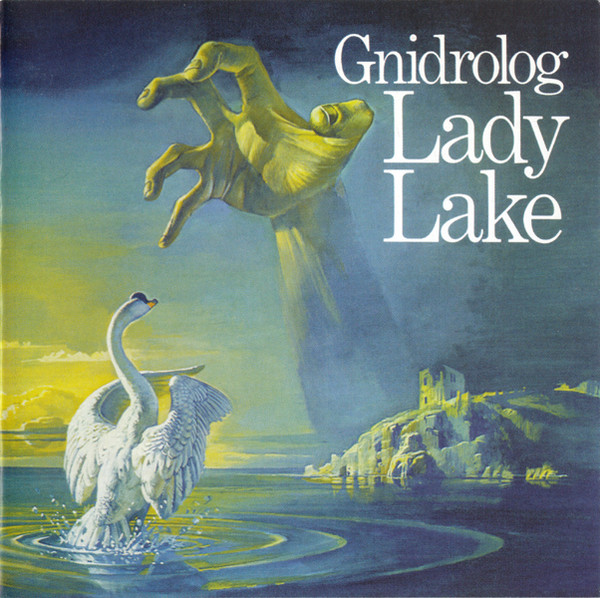
An enormous and menacing hand looms over a graceful yet defiant swan: here is an album cover fit for a symphony orchestra. Yet Gnidrolog’s Lady Lake, despite it’s romantic artwork and title, features neither orchestra (a la Camel’s The Snow Goose) nor keyboards imitating the sound of an orchestra (a la nearly every symphonic prog band) nor even the prominent sound of a stringed instrument (guitars notwithstanding, and they are not the driving force behind this work). Instead, Gnidrolog relies on a blend of saxes, flutes, and recorders to create a full, rich sound that provides the foundation for one of the stronger obscure prog albums of the 1970s.

Lady Lake is the second of three albums produced by Gnidrolog, an English quintet consisting of identical twin brothers Colin and Stewart Goldring (lead vocals and guitar, respectively), John Earle (flute and saxophones), Peter Cowling (bass), and Nigel Pegrum (drums, flute, and oboe). Although each member is clearly talented (all of them, like the members of Gentle Giant, play several instruments), Earle is the star on this album, and he puts his woodwinds – a refreshing substitute for keys or mellotron – to good use. Here are some of the highlights from this under-appreciated gem:

Released during the Vietnam War (1972), Lady Lake opens with the idealistic epic “I Could Never Be a Soldier.” The longest piece on the album, it opens with some superb flute courtesy of Earle and the multitalented Pegrum, giving the song a Jethro Tull-like feel. Colin’s vocals, however, sound nothing like Mr. Ian Anderson’s: think Peter Hamill without the “apocalyptic” quality and grittiness. (The vocals are not bad, but neither are they the strongest element here.) Colin’s twin Stewart enjoys some time in the limelight with a brief guitar solo about ten minutes into the song, followed by some funky bass work by Cowling, before the epic finishes just shy of twelve minutes with a flourish of sax courtesy of Earle.

The title song is perhaps the best on the album. After Cowling and Pegrum lay a solid foundation with bass and percussion, respectively, Earle’s layered saxophones add a welcome richness and texture. Toward the middle of the piece the layered saxes are blended with the smooth sounds of recorder and oboe. Cowling’s ominous pounding bass reminds us, however, that the looming hand continues to threaten our (false) sense of tranquility. The frenetic ending hits with the force of Van der Graaf Generator thanks to Earle’s talent on the sax, which would impress any admirer of David Jackson.

“Social Embarrassment” may be one of the stranger finales on any album, progressive or not. Earle sings lead vocals on this one (his voice sounding a bit like Jon Anderson’s). Cowling again demonstrates his chops on bass guitar, and Stewart Goldring unleashes a furious electric guitar solo toward the end of the song before he is overwhelmed by the screams (yes, screams) of the Colney Heath Male Choir: perhaps the hand has conquered! Now that’s a memorable way to close an album.

Despite my reservations concerning the vocals, Lady Lake is nevertheless an excellent example of early progressive rock. The songwriting is above average and the musicianship top-notch. It would be a worthy addition to any serious progger’s catalogue.

Stay tuned for number twenty-two!

The Best Prog Bands You’ve Never Heard Of (Part Twenty): Gracious

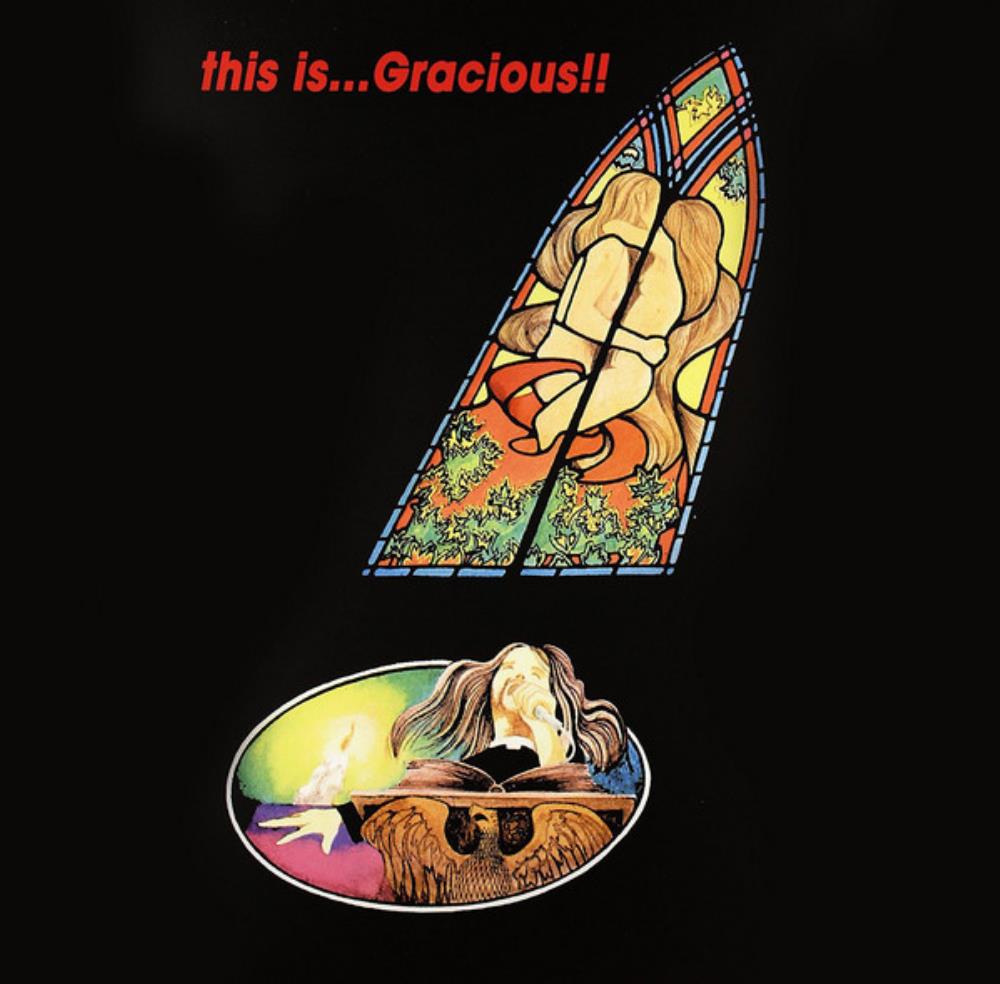
An album cover designed by Roger Dean. A mellotron sound inspired by In the Court of the Crimson King. An opening suite reminiscent of Syd Barrett-era Pink Floyd. this is…Gracious!! had many of the key ingredients needed for a superior prog album, but it didn’t sell, and the band broke up not long after their sophomore effort. Perhaps Gracious tried to be too much at once: prog, psych, hard rock, blues, space rock, etc. Sometimes this eclectic blend works; sometimes it does not. this is…Gracious!! lands somewhere in the middle. Here are some of my thoughts:

Unlike most of the albums I have reviewed, this is…Gracious!! includes a true prog epic, the four-part suite “Supernova,” which takes up the entire first side of the album. Clocking in at just under twenty-five minutes, “Supernova” had the potential to be a classic prog epic, but it suffers from some shortcomings. The first two parts of the song – the Floydian instrumental “Arrival of the Traveler” and the Crimsonian “Blood Red Sky” – are fine examples of prog’s “classic” era (although Paul Davis’s vocals may be an acquired taste for some). Anchored by drums and mellotron, the latter would have fit nicely on King Crimson’s debut album. Unfortunately, “Blood Red Sky” transitions rather awkwardly into “Say Goodbye to Love,” a romantic guitar ballad with saccharine lyrics that just feels out of place on this epic piece. The fourth and final part, “Prepare to Meet Thy Maker,” thankfully returns to the Floydian/Crimsonian sound.

“C. B. S.” opens with a catchy guitar riff courtesy of Alan Cowderoy, and stays anchored by Martin Kitcat’s clavinet and piano.

“Blue Skies and Alibis” also opens with a catchy riff and is by far the strongest and most upbeat track. Kitcat and Cowderoy share centerstage on mellotron and guitar, respectively. The rhythm section also holds its own: drummer Robert Lipson anchors the song with his pacing, and Tim Wheatley’s nimble fingers produce a hopping bass line.

It’s too bad Gracious never had a chance to develop their sound, as they may have ended up among the prog elite of the early 1970s. Alas, they are now instead part of the long but colorful list of obscure prog artists. this is…Gracious!! may be a diamond in the rough, but it’s certainly worth a listen: you may find it more polished than I did.

Stay tuned for number twenty-one!

The Best Prog Bands You’ve Never Heard Of (Part Nineteen): Touch

Featuring vocals reminiscent of Ian Gillan and keys that may call to mind (dare I say it?) Rick Wakeman and Keith Emerson, Touch produced one of America’s early progressive rock albums – and one of its finest. Yet despite having fans and supporters such as Kerry Livgren, Jimi Hendrix, and Mick Jagger, Touch remained relatively obscure, as bandleader and keyboardist Don Gallucci refused to tour the album. Unfortunately, that spelled the end for the band, and they never released a second album. Thankfully, we have an impressive selection of songs from their lone effort. Here are some of the highlights:

“We Feel Fine,” a rollicking opener of a song, makes for a fine introduction. Jeff Hawks immediately puts on display his impressive vocal range, but Gallucci shines on the organ, and Joey Newman gets to show off a little bit on guitar.

The Beatles come to mind upon hearing “The Spiritual Death of Howard Greer,” an acid-rock epic that tells the tale of a sad stick in the mud. It may remind listeners of “A Day in the Life” or a darker version of “The Diary of Horace Wimp.”

Odysseus and his crew may disagree, but “Down at Circe’s Place” is a wonderful tune and the most psychedelic piece on the album. An instrumental (although there are some spacey wordless vocals courtesy of Hawks), the tune opens with a catchy piano riff and features a wonderful cacophony of sound at the climax – sans guitar: Gallucci’s keys and John Bordonaro’s percussion drive the madness.

The second and final epic on the album, “Seventy-Five,” is the strongest and most progressive track. Hawks can shriek like Gillan or croon like Greg Lake depending on what is called for; it is an impressive vocal performance to say the least. Newman finally earns a spot front and center to display his talents on guitar, and he does not disappoint.

This is not an album to ignore: the musicianship is top-notch and the overall quality something you will not typically find in some of these older, more obscure releases. It’s time to give Touch a go.

Stay tuned for number twenty!

The Best Prog Bands You’ve Never Heard Of (Part Eighteen): Principal Edwards Magic Theatre

One of the hallmarks of the classic era of progressive rock was the theatrics: Peter Gabriel’s eclectic costumes, Keith Emerson’s knives and flying piano, and Rick Wakeman’s flowing capes are just a few that come to mind. But few prog bands ever included an entire troupe on tour. Enter Principal Edwards Magic Theatre (PEMT), a fourteen member ensemble that included singers, musicians, poets, dancers, and sound and light technicians. This cast of characters, who at the time were students at the University of Essex, initially sought to express their artistic abilities through the medium of print, but it did not take them long to realize that it was more enjoyable to display their talents on stage.

Although they managed to release only two albums (in 1969 and 1971) before splitting up, they rubbed shoulders with some of the luminaries of prog and classic rock, including Pink Floyd (Nick Mason even produced their second album), Elton John, Yes, Fleetwood Mac, and King Crimson. Combining whimsical lyrics with flute, violin, acoustic guitar, a healthy dose of electric guitar, and spoken word vocals, PEMT sounds something like a blend of Fairport Convention and Pink Floyd. Here are a few standouts from their debut album, Soundtrack:

“Enigmatic Insomniac Machine,” besides earning the award for best-titled song on the album, is as bizarre as the title suggests. And if you can’t follow the story the song tells, you can at least enjoy Vivienne McAuliffe’s soothingly beautiful vocals. Fans of Judy Dyble, Sandy Denny, or Sonja Kristina will be impressed.

Root Cartwright’s electric guitar explodes onto the scene in “Sacrifice,” a song concerning, well, a human sacrifice. Cartwright’s guitar calms down for a few minutes before taking centerstage again after the murder of the poor lady about halfway through the song.

The peculiar man of La Mancha who fought windmills is dispatched in a somewhat unorthodox fashion in “The Death of Don Quixote,” a patchwork epic that jumps from one mood to the next without much warning.

The album closes with “Pinky: A Mystery Cycle,” which features some eerie violin courtesy of the multi-instrumentalist Belinda Bourquin and ominous spoken word vocals courtesy of McAuliffe. Cartwright again shines on electric guitar.

Soundtrack is an eclectic patchwork of psychedelia, folk, grunge, and prog. The album is neither particularly coherent nor consistent, but for some this will be part of its charm. For those who enjoy Curved Air, Fairport Convention, or Strawbs, this will be worth a listen. And judging by the live performance below, they must have been quite a group to see, too.

Stay tuned for number nineteen!

The Best Prog Bands You’ve Never Heard Of (Part Seventeen): Goodthunder

Hailing from the concrete jungle of Los Angeles, Goodthunder made music that was meant to be played loud. Clearly inspired by some of the blues-based and psychedelic hard rock groups of the day – Deep Purple and Uriah Heep, especially – the band featured some solid talent (guitarist David Hanson and keyboardist Wayne Cook stand out), but remained obscure during their brief existence. Of course they were not the only group at the time writing heavy, guitar-oriented songs, but Goodthunder displays a proficiency that makes one wonder what else they could have done had they enjoyed even a modicum of success. Here are some of the highlights from this obscure gem:

The album opens with the rollicking “I Can’t Get Thru to You,” a “radio-friendly” song as far as prog goes. Hanson’s guitar drives this brief but powerful piece.

“For a Breath” again showcases Hanson’s talents on the guitar, but Cook shines on the organ and Bill Rhodes impresses with a brief but solid bass solo.

David Hanson’s guitar continues to shine on “Home Again” and “P. O. W.” Both songs also feature impressive work from Cook on the keyboards.

The final song, “Barking at the Ants,” is by far the strongest and most progressive on the album. Although it opens with a catchy guitar riff courtesy of Hanson, it is Cook’s organ – reminiscent of the sound of the late Jon Lord – that takes center stage here.

Although Goodthunder did not make it very far in the music world, their sole album showcases quite a bit of potential. If you are in the mood for some obscure prog with a heavier edge to it, give them a shot.

Stay tuned for number eighteen!

The Best Prog Bands You’ve Never Heard Of (Part Sixteen): Elizabeth

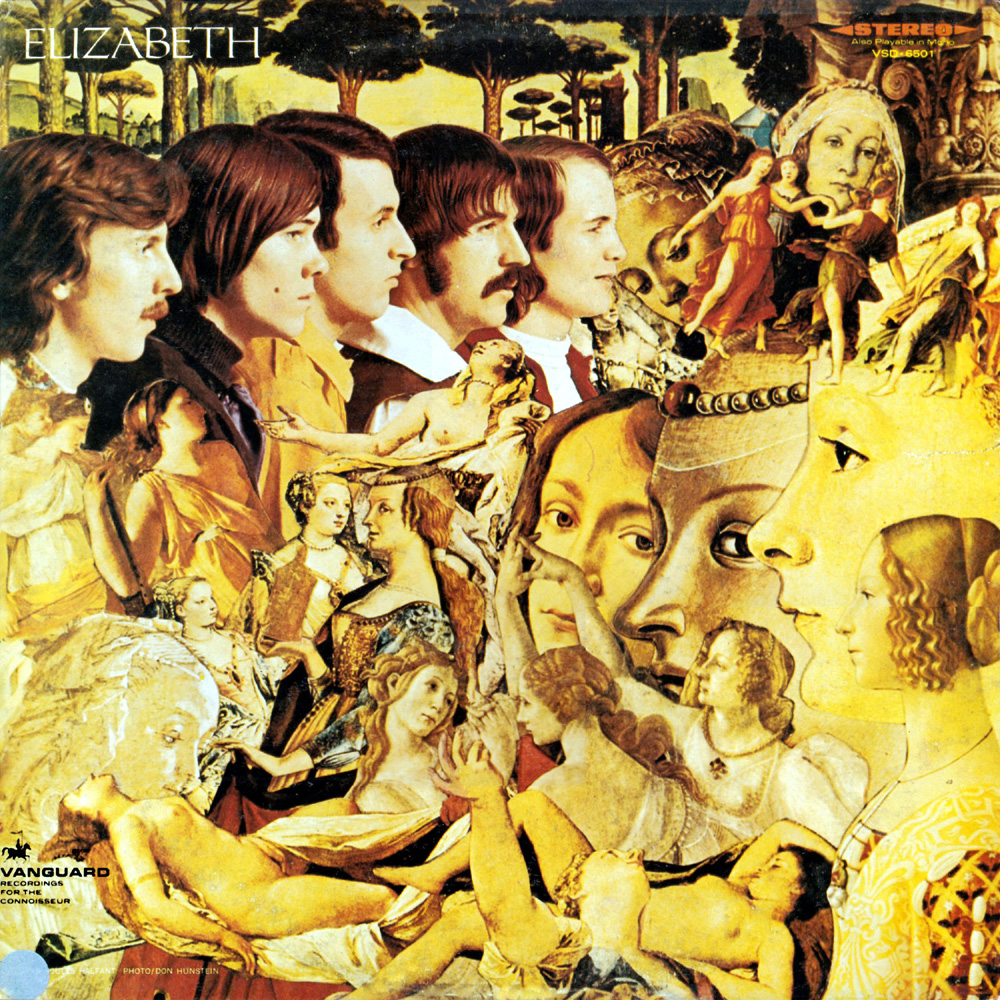
Although this Philadelphia-based band debuted during the reign of a certain Queen with the same name, Elizabeth never enjoyed the success or the tenure of that estimable lady. Formed by Steve Weingarten (lead guitar and vocals), Bob Patterson (guitar and vocals), Jim Dahme (guitar, flute, and vocals), Steve Bruno (organ and bass), and Hank Ransome (drums), Elizabeth released one eponymous album in 1968 before calling it a day shortly thereafter.

The album itself is filled with accessible, “radio-friendly” songs. Here are a few of the standouts:

“Not That Kind of Guy,” the opening number, is a catchy song with an early Beatle-esque sound (similar to “Taxman”).

“Mary Anne” is a lovely jazz song with some elements of folk sprinkled in. Think of it as a less tragic version of “Eleanor Rigby.”

The fifth song, “You Should Be More Careful,” is the true highlight on this album. A cautionary tale about picking up strange girls at bars, this song is a force of nature that never lets up. Weingarten, employing a “fuzzy” guitar sound, breaks out into a twisted guitar solo that is worth listening to several times over.

“Alarm Rings Five” is a gentler tune that features some solid organ work courtesy of Bruno and beautiful flute courtesy of Dahme.

With elements of jazz, folk, and psychedelia, Elizabeth‘s sole album fits nicely into the proto-prog/acid rock music of the late ’60s. The music and lyrics will not necessarily captivate all listeners, but this album is worth a listen for psychedelic or jazz rock aficionados.

Stay tuned for number seventeen!

The Best Prog Bands You’ve Never Heard Of (Part Fifteen): Rob Thomsett

What do you get when you combine an Australian Aboriginal creation myth, jazz guitar, several flutes, mellotron, and a healthy dose of psychedelic and ambient soundscapes? Yaraandoo. The brainchild of Rob Thomsett, an Australian guitarist, Yaraandoo is considered quite the collector’s item in the world of obscure prog: only 100 LP copies were originally released in 1975.

Yaraandoo tells the tale (through the instruments listed above, in this case) of the world’s creation and the fall of man. According to Thomsett, the story includes several elements that make it distinctively Australian, including gum trees, kangaroo rats, and the red earth of the Outback.

The album opens with the soft sound of mellotron and percussion, and this ambient, dreamy, and spacy sound, driven by the mellotron, several flutes, and Thomsett’s luscious guitar, never lets up. (The best comparison I can think of is some of Robert Fripp’s ambient work.) Although jazz is clearly an influence here, it is not the kind of jazz-inspired music you would hear on Relayer or In the Court of the Crimson King; this is much more ethereal in tone. About twenty minutes in, however, we get to enjoy some faster-paced interplay between the saxophone and electric guitar. And too soon, alas, Yaraandoo closes as it opens: softly, with chimes and acoustic guitar gently returning us to earth after this serene cosmic journey.

Caveat emptor: for those looking for an epic, this may not be the album for you – most of the songs are very short (under three minutes). But that does not mean you should overlook this obscure gem. And if ever you find yourself pondering the permanent things in the Outback, consider Yaraandoo as a source of inspiration.

Stay tuned for number sixteen!

The Best Prog Bands You’ve Never Heard Of (Part Fourteen): Circus

This Circus closed after a brief tour in 1969 – our loss, in my humble opinion. Formed by Mel Collins (of King Crimson fame) in the late ’60s, Circus produced only one eponymous album in their brief existence, but it’s a gem. Collins takes centerstage here on sax and flute, but fellow bandmates Ian Jelfs (vocals and guitar), Kirk Riddle (bass), and Chris Burrows (drums) more than hold their own.

The majority of the songs (five out of eight, to be exact) are covers – but dull and uninspired they are not. And the three original songs (all penned by Collins) would be worthy additions to an early Soft Machine or Giles, Giles, and Fripp album. Here are (more than) a few highlights:

Circus opens up with a cover of the Beatles’ classic “Norwegian Wood,” and it is one of the better interpretations of any Beatles song I have ever heard. Rather than relying on melodic vocals (although Jelfs does sound somewhat Beatle-esque in his singing), the band members allow their instruments to do most of the work for them. Collins is absolutely superb on the sax, and the middle of this lengthy cover includes some fun interplay between the drums and guitar.

“Pleasures of a Lifetime” – Collins’s first contribution to the album – opens with a gentle acoustic melody, but picks up the pace about halfway through thanks to Burrows’s deft handling of the sticks.

The cover of Henry Rollins’s “St. Thomas” is a great upbeat tune, featuring top notch work from Jelfs on guitar and Collins on flute.

“Goodnight John Morgan” is another original tune and, alas, an all too brief one. I suggest listening to this one as you sit at a smoky bar late at night with a scotch in your hand while the rain pelts the roof above you. Collins’s sax will put you into that kind of mood.

“II B. S.” (a cover of a Charlie Mingus classic) opens with a funky bass riff that doesn’t let up. Percussion anchors this tune, but Collins once again shines through on the saxophone.

The last two songs – a cover of The Mamas & the Papas’ “Monday Monday” and a cover of Tim Hardin’s “Don’t Make Promises” – feature masterful work on the flute courtesy of Collins.

Sadly, Circus couldn’t deliver the same quality of material for a second album, and they split up, Collins going on to replace Ian McDonald in King Crimson. But at least we can enjoy this hidden gem, which sounds as fresh and as lively as it did when it was released over fifty years ago. For those who enjoy jazz fusion mixed with a healthy dose of psychedelic rock, you will not want to miss this under-appreciated effort.

Stay tuned for number fifteen!

The Best Prog Bands You’ve Never Heard Of (Part Thirteen): Samurai

Originally known as Web, Samurai were another one of those unfortunate What if? bands that were lost in the shuffle of the early days of progressive rock.

Web released three albums in the late 1960s and early 1970s, including the well-received but commercially unsuccessful I Spider (which is on my list of future reviews). By 1971, however, band leader and keyboardist Dave Lawson (later of Greenslade fame) changed the name to Samurai, hoping, perhaps, that the change of name might result in a change of fortune. Alas, that was not to be. Yet we do have their sole eponymous album as a result of that name change, and it’s a true hidden gem. Samurai features the talents of Lawson on vocals and keyboards, Don Fay and Tony Roberts on winds, Lennie Wright and Kenny Beveridge on percussion, Tony Edwards on guitars, and John Eaton on bass. Part of the Canterbury/jazz-fusion movement of the early ’70s, Samurai relied on drums and woodwinds to drive their unique sound, although the keys and guitars are given their chances to shine. Here are a few of the highlights from the album:

“Saving It Up For So Long,” the first track, could have made a good single. It opens with a jazzy guitar riff and drum beat, making it as close to radio-friendly as a progressive band was likely to get. The saxes, courtesy of Fay and Roberts, are also a nice touch.

Edwards is given another chance to showcase his talents on the fifth track, “Give a Little Love.” His riff is both catchy and distorted, giving the song an early King Crimson feel (think Lizard-era).

Lawson, whose nimble fingers on the keys anchor the sound of every song on the album, really shines forth on the last and longest track, “As I Dried the Tears Away.” His Hammond organ solo in the middle is especially satisfying to the ear.

If you are the type of fellow who enjoys a daily or weekly pilgrimage to the Canterbury sound, in particular to Soft Machine (Robert Wyatt era in particular), early King Crimson, or Caravan, this album will be a pleasant surprise for your wandering ears. Even those less inclined to walk that path will nevertheless appreciate the top-notch musicianship of this solid but under-appreciated album.

Stay tuned for number fourteen!