Twelve Reviews of Christmas…mind how you go!

Dedicated to all my superlative friends….

On the first day of Christmas a Prog Fan gave to me:

A review full of Hyper-bo-le

On the second day of Christmas a Prog Fan gave to me:

Two Masterpieces and

A review full of Hyper-bo-le

On the third day of Christmas a Prog Fan gave to me:

Three must haves, Two Masterpieces and

A review full of Hyper-bo-le

On the fourth day of Christmas a Prog Fan gave to me:

Four re-re-re-re-mastered classics, Three must haves, Two Masterpieces and

A review full of Hyper-bo-le.

On the fifth day of Christmas a Prog Fan gave to me:

FIVE OUT OF TEN!! (Basil)

Four re-mastered classics, Three must haves, Two Masterpieces and

A review full of Hyper-bo-le.

On the sixth day of Christmas a Prog Fan gave to me:

Six Youtube links, FIVE OUT OF TEN!! (Basil)
Four re-mastered classics, Three must haves, Two Masterpieces and

A review full of Hyper-bo-le.

On the seventh day of Christmas a Prog Fan gave to me:

Seven repeating posts, Six Youtube links, FIVE OUT OF TEN!! (Basil)
Four re-mastered classics, Three must haves, Two Masterpieces and

A review full of Hyper-bo-le.

On the eight day of Christmas a Prog Fan gave to me:

Eight game changing albums, seven repeated posts, Six Youtube links, FIVE OUT OF TEN!! (Basil)
Four re-mastered classics, Three must haves, Two Masterpieces and

A review full of Hyper-bo-le.

On the ninth day of Christmas a Prog Fan gave to me:

Nine works of genius, Eight game changing albums, seven repeated posts, Six Youtube links, FIVE OUT OF TEN!! (Basil)
Four re-mastered classics, Three must haves, Two Masterpieces and

A review full of Hyper-bo-le.

On the tenth day of Christmas a Prog Fan gave to me:

Ten best albums ever, Nine works of genius, Eight game changing albums, seven repeated posts, six video links, FIVE OUT OF TEN!! (Basil)
Four re-mastered classics, Three must haves, Two Masterpieces and

A review full of Hyper-bo-le.

On the eleventh day of Christmas a Prog Fan gave to me:

Eleven album polls, Ten best albums ever, Nine works of genius, Eight game changing albums, seven repeated posts, six video links, FIVE OUT OF TEN!! (Basil)
Four re-mastered classics, Three must haves, Two Masterpieces and

A review full of Hyper-bo-le.

On the twelfth day of Christmas a Prog Fan gave to me,

 Twelve ‘bands of the future’, Eleven album polls, Ten best albums ever, Nine works of genius, Eight game changing albums, seven repeated posts, six video links, FIVE OUT OF TEN!! (Basil)
Four re-mastered classics, Three must haves, Two Masterpieces and

A review full of Hyper-ber-leee!!


A merry Christmas and a happy new year to all to all the writers and reviewers and promoters of Prog at https://progarchy.com/,  http://www.dprp.net/ as well as CRS, Stephen Lambe, Geoff Banks (Prog Dog), Cliff ‘Progzilla’ Pearson, Brad Birzer, Prognosis, Celebr8, Live Prog (Marcel Haster),  Sally Collyer, Steve Petch, Alison Henderson, Prog Magazine and so many others who put in the effort to make Prog the best music scene there is! (Hyperbole, but who cares?)

Keep on spreading the word!

 

Phideaux – Live in the UK 2013

logo p

16-1-2013
Phideaux/Manning/landmarq CRS event. Maltby, UK

On a grey, chilly November night in Yorkshire,
England, in a small hall known as the Wesley centre in Maltby, a band whose members are scattered far and wide across the corners of America and rarely come together to play live anywhere, performed and delighted a small, but enthusiastic crowd of Northern Prog rock fans. The likelihood of such an event seemed  hard to imagine, and yet, there they were…Phideaux, on stage.
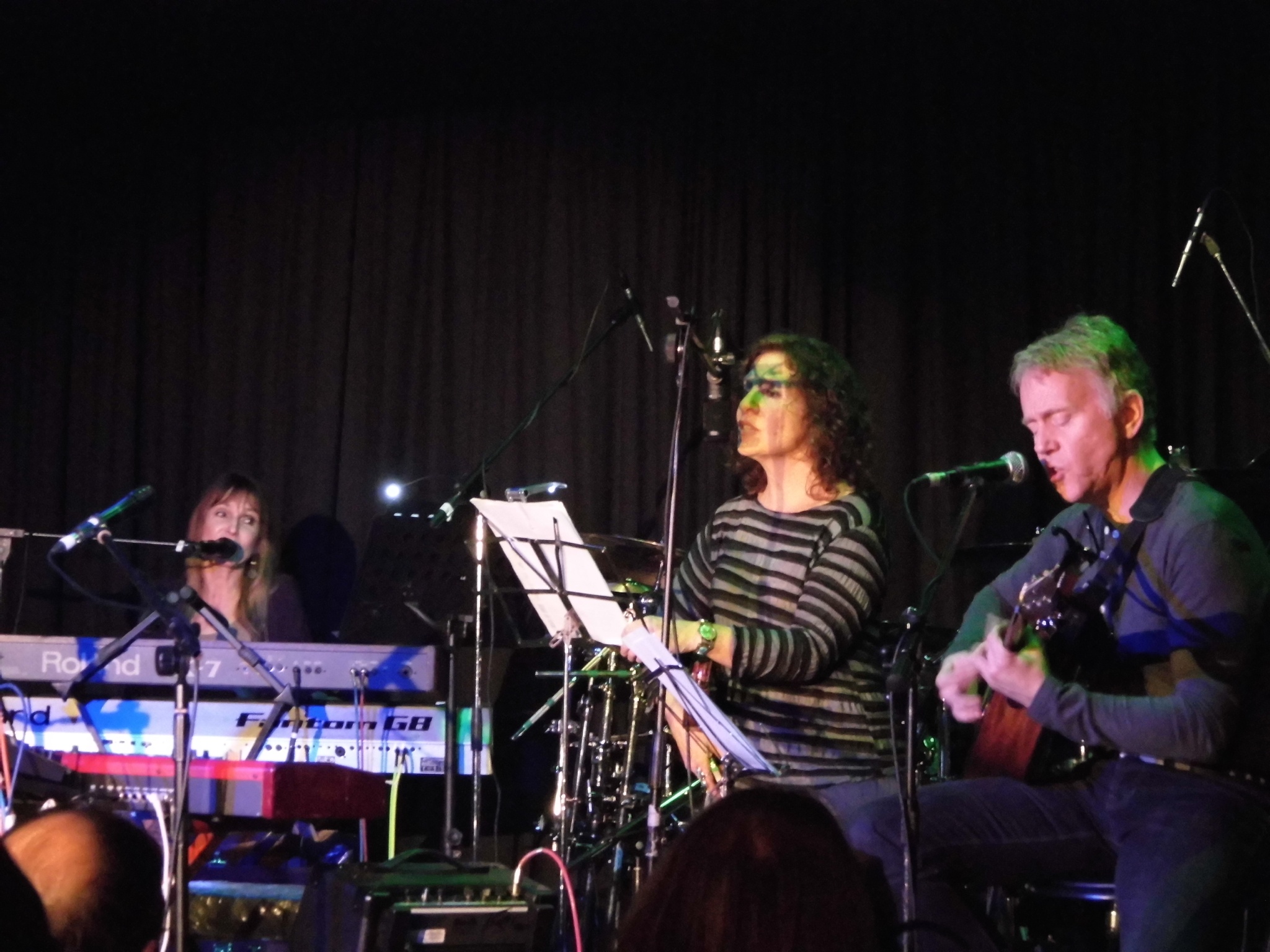
This of course was the three band event hosted by CRS, the Classic rock society, and Phideaux had arrived in the UK as a trio of Phideaux Xavier, Valerie Gracious and Ariel Farber.
Reduced from the usual ten piece, to an acoustic threesome , the line-up was the only logistical and achievable format possible but as it proved to those there on the night, this was no less an option.


The combination of skill and warmth in the delivery was clearly only something that could come from a lifetime of friendship and shared ability. It’s a rare event to see only three musicians perform with such breadth of sound.
Opening with the mighty ‘Micro Softdeathstar’ from ‘Doomsday Afternoon’ it was one of three songs from the album which represented a sizeable chunk of the set list. In retrospect, it may be that the delicate qualities of Doomsday are easier to convert to the slimline Phideaux; the gentle piano and Valerie Gracious’s vocals on Crumble was further evidence of this.

Gracious provided both elements with spellbinding results and demonstrated why she is one of the most underrated female vocalists in the Progressive Rock genre. Her performance of ‘Helix’ from ‘Snowtorch’ provided another vehicle for her amazing voice which soars with its angelic qualities, both fallen and ascending. Many times it was underpinned by the superb Ariel Farber and her talents, enriching the mixture effortlessly.
Phideaux’s own vocal strengths were perhaps best served via ‘Infinite Supply’ from Number Seven, which was emotionally moving. His vocals shifted from gentle high baritones to a darker, deeper bass and reflects a closeness to the studio sound.
One the set was something of an unknown in the form of ‘Immortal’. Written in the days before Phideaux, the band. It was a short surprise that fitted in very well.
The tail end of the set was boosted to a four piece with the inclusion of Guy Manning on keyboard and guitar which enhanced the sound of ‘Formaldehyde’ and the sea shanty ‘Tempest of Mutiny’. Known for his love of the odd sea based song, Guy slotted into the band with ease and together the band produced an exciting rhythmic rendition which left the audience looking for more.
More than just a taste of the full group, Phideaux came out as three and showed the crowd that there is an effective alternative to the full line up which, with hope, we could see out and about a little more often.

 Eric Perry

‘And I’ll Scratch Yours’ – (2013) – Peter Gabriel – Tough Love required!

In the history of Peter Gabriel’s solo career there are glittering moments of genius and other times where the ideas fell short of success or backfired.
The Womad festival of ’82, the ‘Realworld’ theme park and the development of world music through Real World have either struggled or remained unfinished.

This is probably the truth for any artist who pushes the boundaries and tries to innovate. So with a couple of albums of cover versions, first by Gabriel himself and then by celebrated international artists, singing essentially the greatest hits on both sides, this should be a moment of playing safe. The last three years from 2010’s ‘Scratch My Back’ and the release of ‘And I’ll Scratch Yours’’ (2013) have been far from straight forward and the latest release has proved that Gabriel has once again bitten off more than he could chew.

2010 release was hard to digest.

It was likely the latest release was always going to be a tough call. Gabriel’s first solo release for eight years (‘Scratch’) was a series of reinvented versions of songs by Bowie, Neil Young and Radiohead. However innovation appeared to give way to deconstruction and the results seemed to alienate a number of the participating artists. Radiohead’s reaction in particular to the minimalist, almost spoken word version of ‘Street Spirit’ was predictable. Overall it was deemed by many of Radiohead’s fans to be one of the worst pieces of music anywhere, with Shatner like comparisons. The band declined to follow up with ‘Wallflower’ on the return to new album and this was the view of Bowie, Young, and Ray Davies in regard to return participation.

The impact to the project was worsened by the slow response from bands such as Arcane Fire who remained on-board for the follow up. To lessen the delay, some of the tracks have been released via iTunes during the three year gap between albums and so this new release actually represents only half an album of new material.

With Gabriel now reliant on the artists to interpret the songs rather than his own bleak, stripped back formula there was hope that ‘And I’ll scratch yours’ would be more accessible and enjoyable. However there are areas where the production has been managed to the point where expression and looseness are lost to an inflexible rigidity. In effect Gabriel is not allowing his own back to be scratched.

David Byrne’s opening track, ‘I don’t remember’ is a difficult proposition to begin with. His overtly high vocal sounds Scissor sister like, with no real heart or commitment in the tone, even when it settles to a lower key for the chorus.

The lack of spark from the artists concerned seems to continue throughout the rest of the album, with some input feeling almost unwilling, rather like it it’s going through the motions. Bon Iver’s cover of ‘Come talk to me’ has a similar lack of drive to it and loses the focus of the song in the progress.

Laboured and clunky
Laboured and clunky

‘Shock the monkey’ comes at you like a slow distorted dirge, barely half the speed of the original. The effect of the slow pace is the loss of the quirky spirit of the original.

The pattern continues throughout, Arcade Fire seem to miss the potency of ‘Games without frontiers’ with a faithful but ultimately fainthearted showing.

It’s probably the Feist cover of ‘Don’t give up’ that shows us how empty the covers appear on this album. Drafted in as a ‘replacement’ band for the sequel, they deliver a bland version of the original that strips away all the emotional charge that made the 1986 version so powerful. An attempt at an interesting take on the Gabriel/Bush duet sees Feist, feat Timber Timbre using a reversal of roles. However the delicate vocal of Bush that offers tenderness and hope is eradicated in a performance which is a low, almost monophonic response in tone by Timber Timbre. It’s not a convincing reply to the desperation felt by Gabriel in the original, and hard to see how this would inspire anyone to keep going.

In fairness there are moments that shine briefly on the album, Randy Newman’s, ‘Big Time’ has a great delivery to it as does the cover of ‘Solsbury Hill’ by Lou Reed. The Reed version is a paradox in it alienates in a positive way. Destroying the sweetness of the original, the typical Reed trademark voice sits on top of a slow, distorted guitar that results in a grimy, low grade alternative that works. The track is bound to polarise opinion with many people unable to accept the style.

Overall it’s hard to believe that Gabriel’s ambitions for this record have been met. Describing the process of pulling the bands together for the project as similar to “Herding cats” this has been a tough process that feels laboured and clunky. His own covers on the first outing did not do him any favours when it came to completion and the lack of mutual interpretation on the albums has led to dissolved partnerships which were not filled adequately. The ideology behind the projects was sound and could have resulted in some excellent covers had things been managed better.

It does needs to be approached with open eyes as you might expect and if you felt alarm at the extent of variation in the recent Steve Hackett release -‘Genesis Revisited 2’ then you will no doubt feel a resentment to the handling of classic material on this outing. What many fans would hope for after this album is for Gabriel to return to the studio and produce a solo effort that matches the heights of the late 70’s and early 80’s, rather than a 90’s style experiment.

Track Listing:

1. “I Don’t Remember” David Byrne 3:38
2. “Come Talk to Me” Bon Iver 6:20
3. “Blood of Eden” Regina Spektor 4:39
4. “Not One of Us” Stephin Merritt 3:49
5. “Shock the Monkey” Joseph Arthur 5:49
6. “Big Time” Randy Newman 3:29
7. “Games Without Frontiers” Arcade Fire 3:22
8. “Mercy Street” Peter Gabriel feat. Elbow 5:28
9. “Mother of Violence” Brian Eno 3:00
10. “Don’t Give Up” Feist feat. Timber Timbre 5:28
11. “Solsbury Hill” Lou Reed 5:24
12. “Biko” Paul Simon 4:19

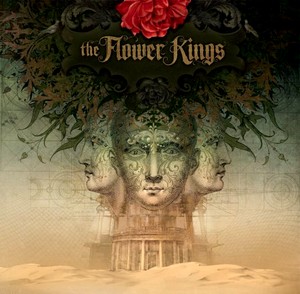
New Release – ‘Desolation Rose’ – The Flower Kings (2013)

It’s probably accepted by many people who have followed the career of The Flower Kings that the prime years for them were the albums that ranged from the official band debut, ‘Back in the world of Adventures’ (1995) through to the peak of the era ‘Space Revolver’ (2000).

The work that followed on from this time was by no means less prolific and has examples of some of their best moments however there was a sense that some of the spark and sheer wonderment of the earlier work was lacking. Indeed by 2007 the experience seemed exhausted for some, with the feeling that the music was going through the motions and as a result the band was put on a break for the next five years.

Last year the return of the regular line-up produced ‘The Banks of Eden’ (2012) which signaled a new charge driven in part by the lively and talented drummer Felix Lehrmann. The heavier, gutsy sound was a continuation of the harder edge that had shaped the group over the past decade, with all the elements that made up The Flower Kings still present.

Fast forward to now and the new release, ‘Desolation Rose’ and we see that the band have embarked on a new methodology which ironically provides the listener with 60 minutes of familiar music which firmly places it high up among the bands aforementioned peak period. Rather than arriving at the studio with the new material prepared, the approach was much more of an organic, cohesive effort of ideas and creativity. The results are exciting and varied and yet the sound is pure Flower Kings, pure Prog and kingly epic.

An initial first glance at the track listings and the die-hard fan might begin to wonder where the regular 25 minute song is this time around. But fear not, Desolation Rose is essentially a continual piece where the melodies and passages that open the first half are revisited in the closing sections. A powerful ascending refrain, very typically Flower Kings, crops up from time to time, effectively bringing it together and ensuring a neatly stitched continuity. The tracks bleed into each other like chapters in a novel adding to the overall joined up assembly. After several listens it begins to feel similar to ‘Garden of Dreams’ from ‘Flower Power’ (1999) in its journey-like experience. The connection to this album is likely emphasised in the input from Thomas Bodin who like ‘Flower Power’ has had a bigger contribution this time in the making of ‘Desolation Rose’.
Bodin’s contributions are spectacular, providing a dazzling symphonic base for the frequently soaring guitar from Stolt. The stand out moments from him are everywhere, but ‘Desolation Road’ (not rose) is perhaps one of the greatest of them, from the gentle piano opening to the glorious choral symphonies – “While the road to desolation….lingers on….” and finishing with a growling angry wild animal of an organ over a pounding Lehrmann beat .

"Pure Flower Kings, pure prog and Kingly epic."
“Pure Flower Kings, pure prog and Kingly epic.”

However the darker themes around the realities of war and suffering contrast the dream like qualities of Garden and are more evenly presented than their earlier opus too. That said, after many listens to the ambiguous lyrics and there is still uncertainty about the imagery and meanings. Yet this is a good thing, rather like sitting at an abstract painting in a gallery and seeing something new each time.
It is clear enough to see though that ‘Desolation Rose’ is TFK’s outcry and dismay at the world and its problems. Particularly conflict, and the senselessness of it. The latter is dealt with in ‘White Tuxedos’, a bleak picture of the inevitable conclusions of war, the title referring to the shroud of white over the dead. It’s a tale where there are no winners, neither from civilians or the soldiers who are sent to the four corners of the earth to fight under a flag of peace. The looping mantra of Nixon telling us of his desire for peace over and over again is a particularly chilling bookend to the track.

Following the intensity of White Tuxedos there is the almost certain contender for some of the finest Flower Kings magic anywhere. ‘Resurrected Judas’ ( him again) features some sublime guitar from Stolt over with a driving middle section instrumental, underpinned by some incredible bass and drums which is classic TFK, with shades of Genesis from a time when they made your skin tingle.

The darkest moments of this album are still matched with some regular TFK celebration at the beauty of the universe and the view from space at the earth. In ‘Blood of Eden’, our home is presented, still green and beautiful, -“We are Stardust and we are sun kissed”)- and we hear a pleading call to the heavens to a higher power to provide an answer to the problems we make.

Somewhat coldly though we are returned to the reality of the world in the closing gospel-like lament of ‘Silent Graveyards’-“in silent graveyards we look for saviours” – a reprise of the title track. The lonely desperation builds towards the finale where there is a hopeful prayer for a promised land and for an end to suffering, closing with a desperate agonising scream, from the impressive vocal abilities of Hasse Fröberg. There probably isn’t a Flower Kings album that closes as powerful as this, with the exception of the majestic end of ‘Stardust We Are’ (1997)

Without doubt the band have produced something spectacular again with this album,  If there is such a thing as a flawless release this would be nudging to be a member of that club. Quite how they have pulled it off again is a mystery as it was written and produced in a time frame that is almost beyond belief. Much more than a stop gap between now and the next Transatlantic, this is an album that should be regular favourite for many fans and still talked about as one of the very best.

‘The Music that died alone’ – 10 years on…

A long time ago in a galaxy far, far away, long before the reflection of the ritual of work and tales of forgotten war heroes searching the radio waves there was a time when the music died alone.

Back in October 2003, ten years ago this week, a Prog super group came together  over international borders between the UK and Sweden and produced a monumental debut album ‘The Music That Died Alone’

Lead by Andy Tillison of Parallel or 90 degrees and joined by fellow members of the group, Guy Manning and Sam Baine, The Tangent was formed from Tillison’s original prog solo idea and was bolstered by other prog heavyweights Roine Stolt, Jonas Reingold and  Zoltan Csörsz from The Flower Kings as well as David Jackson from Van Der Graaf Generator.

Of course this is history and well known by many of the prog rock community, and the Tangent door has revolved again and again since then , even now with the releases of ‘Le Sacre du Travail’ and ‘L’Etagère du Travail’ (2013) some of the first people to work on the debut album have returned.

Ten years has passed since and a lot has changed, and yet some things have remained the same, but it is worth remembering this marvelous release and why it is so special.

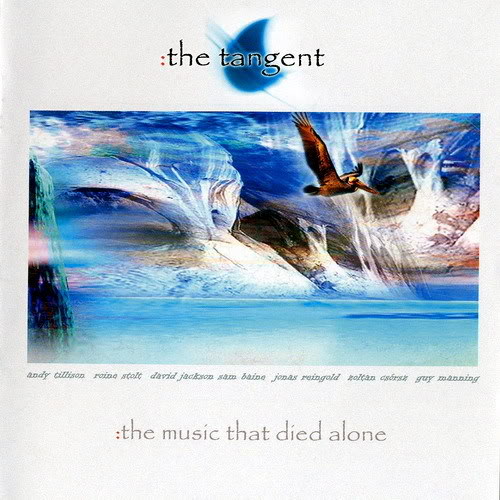
Ed Unitsky's wonderful cover art.
Ed Unitsky’s wonderful cover art.

It should be considered in the context of this look-back that Prog in 2003, was still emerging on the back of a new wave lead mainly by the charge from Swedish groups as well as Neil Morse and a few American metal based groups such as Dream Theater, Tool and Symphony X, (a top ten of the time would have revealed a large predominance of Prog metal entries.)

Rising up in the UK was the development of Steven Wilson and Porcupine Tree and defying this heavier progression was a group that drew on Jazz influences and the Canterbury scene.  More Hatfield and the North, Caravan and National health than metal,  it was blended with a healthy love of Symphonic influences from the 70’s, Tillison and Co developed a sound that felt familiar and yet it wasn’t too retro to be seen as old.
The standout feature of the album was its truthfulness, an aspect that resonates through every subsequent Tangent album. Tillison’s lyrics lamented the loss of the music he loved in the title track, (which ironically was making a return on the back of albums like this one) and spoke openly of the issues of night terrors, a sleep disorder which affects many through their early years. These were honest feelings which felt grounded and real, a million miles from Shastric scriptures and the moans of a screwed up super rich rock star.

The album has aged well, and stands out above many of its contemporaries mainly because people could identify with it. Within the band’s own releases there have been few greater moments that the songs on this release.

Many of the bands fans rate this as one of the best from the group, indeed it was a wake up call for some who were looking for a musical belonging and found it when they listened to it for the first time. Ultimately this reflected in the end of year results when it was catapulted to the top spot on many music website polls.
2013 has been a spectacular year with a pocket busting choice of new music and yet if this album lies in amongst your growing collection of releases from the past, give it a spin, gaze into the lush artwork of Ed Unitsky and be reminded of something special.

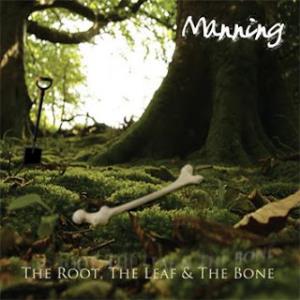
New Release – ‘The Root, the leaf and the bone’ – Manning (Oct 2013)

Manning, is the self-titled band name of the ridiculously talented and very modest Guy Manning, the singer, composer and multi-instrumentalist and former member of The Tangent, very ably backed by a large assembled cast of musicians.

It’s the eve of Manning’s latest album release, the mysteriously book sounding “The Root, the leaf and the Bone” a collection of stories and ideas which predominately centre round the concept of ‘Change’.
For those unfamiliar with his work, this is the fourteenth (!) release in a very impressive and diverse catalogue of albums, that started with the 1999 debut of “Tall stories for small children”.
Over a very prolific decade and a half where he shared his creative time and energy with The Tangent, Manning has crafted his art and production skills and worked as many modern musicians do, on a minuscule budget and with limited time and resources. It’s one of the many things that are to be admired about him and his work.
Key to Manning’s charm and appeal are the ingredients that have not changed much since his first solo outing. Guy is a storyteller and a damn good one at that. From tragic tales of doomed ships to World War one nurses shot for treason, we have a rich library of characters and tales to enthrall the listener.

“Root” is no exception. Several of the tracks on this release are from an original conceived idea of a English village and the stories that centre around that. During the writing phase of the album it was clear that the concept was too limiting for Guy and the village theme was side-lined for a larger overarching theme instead. That said the village stories are there such as the Huntsman and the Poacher, a tale of the hunter becoming the hunted and the Old School which deals with the oppressive systems in the old English boarding school and the desire to overthrow them.
It’s the title song, the album’s 12 minute epic opener that detracts from the village theme and sets the stall for the wider theme. ‘The root, the leaf and the bone’ is key to the whole and deals with the ideas of what is lost in the midst of time, and more importantly, the perceived progress of mankind in the pursuit of improvement. Guy questions, as we all do, perhaps more so as we age, if things are actually better now with our gleaming clean lines of glass and concrete instead of what was before.  The charms and the individuality of what came before us has been buried over time, and yet he points us to the truth that eventually the circle comes round and we again look for what was lost and dig it up. Philosophically it looks at our need to keep revisiting our timeline. Where are we going and where have we been? A potent idea that reoccurs again and again throughout the album, finishing spectacularly with the monumental ‘Amongst the Sleepers’. A slow building song which ends in true elevated and grand fashion, similar to the ‘The Southern waves’ from the 2011 release, ‘ Margaret’s Children’.

Capturing the beauty of change as well as the loss.

Musically this album is true to the sound of Manning, in so far as it is anything but clear cut and unafraid to entertain the listener with a vast breadth of influence and style. From Prog to pop to folk, Guy draws on his expansive musical taste and ability and crafts it effortlessly together. A great example of this can be found in the track ‘Decon(struction) Blues’; Guy’s –“Paved paradise and put up a parking lot” – “moment. “Don’t tear it down.” pleads Guy. Ranging from a Tull-esq opening riff to a feeling of Northern soul with pop single sensibilities to a storming rock out moment and a brilliant brass section which evokes lost classic TV theme tunes from a sixties detective series. Guy throws so many elements into the air and seamlessly stitches them together. From the off, this track appeals and has you tapping your foot enthusiastically.

The following track ‘Autumn song’ is a brilliant piece that continues with the theme of change. Less story and more poetry, the lyrics explore the beauty of the change of season which draws the writer into a moment of self-reflection, a feeling we all get from time to time as we ask “So…Is this all there is?” And yet Guy doesn’t want to wallow in melancholy, instead he points us back to the appreciation of the beauty that is all around. Rich in brassy sounds and in particular a lovely bassoon which provides a woody, dark tone this track stands out for its richness. It’s the whiskey liqueur in a box of dark chocolates, a delightful melting quality which feels like something that should be enjoyed in front of an open log fire. Credit goes to the superb Chlöe Herrington for providing this new addition to the Manning palate. The song in some way defines the differences in this release in that Guy has used the wind instruments to a greater extent this time around.

The oak like flavour of Autumn song gives way to the industrial clanging of ‘The Forge’ which revisits an industrious time of craft and manufacture in the heat of the furnace and the chime of an anvil. A view of the lost art of making in the modern times of automation and mass production.
The forge is constructed in a way that other songs on the album follow, it embraces the listener in the golden glow of nostalgia.

Palace of Delights is a prime example of this as Guy takes us into his past through the treats found in a packed village shop, a cornucopia of toys and collector’s items from our youth, all packed into the tight space of an independent local shop. It serves to remind us that our past is easily traced through a series of objects we owned or desired through the years. A truism of the late 20th century, that our lives are mapped out through commercialism.
Old School is part nostalgia and part lesson. (pardon the pun). Whilst it seems interesting to revisit the corridors and classrooms of the past we learn the ugly side of old school, of the overbearing authoritarian practice which bordered on abuse “Make a stand today against draconian violence.”
It’s another Manning bit of story telling, this time we see the pupils rise up in a Grange Hill style siege on the establishment.

‘Mists of Morning calling to the day’ is another outstanding song with its ghostly goings on, it’s a story within a story. Guy’s tale of haunting tales from the village’s past. Its opening folkier riff is pure Manning and something the long-time fans will saviour. This track grows on the listener and opens its beauty with repeated listens.

The Huntsman and the Poacher completes the set of songs that were part of the original village concept along with ‘Mists’ which has found its way into this release. It’s a good track but seems to cling to the edge of the theme rather than fit within it. However it is clear that Guy never intended the listener to see this album as a concept piece and so its place provides an important reminder of this fact.

A final part of this album that needs to be mentioned is the important contribution from the large cast of gifted musicians that have contributed. Not least the regular members, Kris Hudson-Lee on Bass, Julie King’s lovely vocals and Rick Henry on Percussion and David Albone on drums. Completing the main line-up is a return for David Million who is a returning member to the Manning fold. Steve Dundon’s distinctive Flute playing, a feature of so many of Manning’s albums and Marek Arnold on Sax are essential to the band as are so many others involved. The full cast is available on the Manning page under the new release section.

Sometimes overlooked, Manning have produced another gem of an album that is enjoyable from the first listen. After 14 releases it could be easy to assume that this is just another release but that isn’t the case and there is much here for the fans as well as the newcomers. Grab a copy from the Manning website and see what you’re missing. Maybe it’s time for a change?

'The Root, the Leaf and the Bone'
‘The Root, the Leaf and the Bone’

Visit http://www.guymanning.com/2009site/albums/14/index.html for further details
 ‘The Root, The Leaf and the Bone’ is available from 07-10-2013 and can be pre-ordered now.

Viva la revolution!

We’re not getting any younger, none of us are… (Brad Birzer-Happy Birthday!)

I’m now rather depressingly at the stage where I find myself saying out loud,
“In my day things were better than they are now…” or “When I was a young lad we played outside every day, walked two miles to school in shorts in six feet of snow and tortured frogs for fun.
When it comes to Prog though it’s not the case, things are better now than they were, even with its relative obscurity and damn near financial bankruptcy.
What are you mad Eric? The Prog scene is better now than it was forty years ago?
Sure, some of the best loved and most successful albums of the Progressive rock genre belong to the seventies, sales were in the millions and concerts were gigantic spectacles and the artists were larger than life characters. But that was short lived and the years that followed were lean and as one clever Yorkshire man summed it up it was a time that the ‘Music died alone.’ It was tough, I remember it well and yet the one thing that saved me was the beginnings of the revolution we now use twenty four hours a day, seven days a week.

The Lamb dies down…
I was a late entry to University in ’89 and consequently I didn’t quite fit in. I was too old for the fresh-out-of-school-club, and too young for the mature student category. Combine that with the most unpopular and uncool taste in music and my first year a Uni was a lonely time.
It peaked one evening when I got lucky and walked a girl back to my room in the halls after a few drinks in the student bar. She told me with a shout over the noise of a rather poor student rock band, that she was a fan of Genesis. My spirits soared and I couldn’t believe my luck. She was gorgeous, truly sensational and so far out of my league that I didn’t stand a chance, but none of that mattered, she liked my favourite group. I was going to get married and planned out the rest of my life with her before I got back to my room.
Sadly it was rather short lived. Moments after she settled back into a beanbag on the floor I nervously slid out my vinyl copy of ‘The Lamb Lies Down on Broadway’ and turned round to face her as the tinkling piano of Tony Banks began to build in intensity.
“What’s this you’re playing?” she inquired.
I will never forget the baffled look on her face when I told her that she was listening to Genesis. It turns out she though Genesis was Phil Collins and Phil Collins was Genesis and wondered what it was I was playing, it wasn’t  ‘Another day in Paradise’ (for her or for me…) and when Peter sang “The lamb seems right out of place,” it seemed that there was never a truer word spoken.
She didn’t stay and made an determined effort to avoid me whenever she saw me around and about.
I got rather down about Prog, I mean, how could someone instantly lose their attraction for a person because of their musical taste? After that and for a short while I didn’t play much and dabbled with the Stone Roses and some of the early punk- grunge from Seattle.

Not the Lamb lies down on Broadway...apparently.
Not the Lamb lies down on Broadway…apparently.

Dialing back to my roots…

Going back to my point, it was the revolution in technology that brought me back from the wilderness and helped me to rediscover my love of Prog and it’s the same technology now that makes it a strong, independent force today, underpinning  a passionate fan-base, and it’s the technology that’s the future for the music, not any one band.

Before HTTP and web browsers there was Usenet, the newsgroups and bulletins through the College network. These were a lifeline to me at University in 1990. Basic text discussions with people in America about YES and Pink Floyd was suddenly a reality. And email too! I used to print off the discussions to read in my room in my own time. Stacks and stacks of stripy paper from the dot matrix filled with a love of Progressive Rock.
Naturally the first browsers followed and dial up with 14440 BPS which was stupidly expensive but it gave me home access to the newsgroups.
It’s no coincidence that Prog’s third wave began soon after in the mid-nineties and has gathered pace ever since. Andy Tillison with his first MP3 upload, Marillion and their cottage industry rebirth after EMI and of course digital mail order (1998 and an early web purchase of ‘Stardust we are’) with the rest of the world all ensured its survival and its future.

I might have recently said that Hyperbole on the social networks was the work of the horned beast and that it was the fault of the internet in general. It’s still true and I stand by that but I need to clarify that despite all that, I think we need it for Prog to avoid being lost in the wilderness again. Ironically I realise it makes me look like I’m caught between the devil and the deep blue sea.

Actually no I’m not, anything but.

Viva la revolution, long live Prog, and long live the internet!

The greatest blog you will ever read….ever!

You know there’s one thing that really gets my goat…
Before I carry on I should point out that there are many things actually, including false opening statements like the one above. I’m now in my mid-forties and true to form my dormant grumpy gene has kicked in, and having an online social network presence is not the ideal place for someone with a growing affiliation to Victor Meldrew. (Sorry people of the US, pick another great pompous moaner from TV, Fraiser Crane perhaps?) Reading people’s comments and sweeping generalisations on a daily basis pushes all the buttons to get me to DEFCON 1, it’s not good.

And it’s not your fault or mine; we are all a product of the social revolution with all its benefits and woes.

Okay back to my point, the one thing that annoys me on a daily basis, oh bollocks, here I go again. It’s not one thing. Actually…this is my point. Exaggeration used to create a strong impression. The dreaded HYPERBOLE.

Actually Hyperbole isn’t all bad, I should say this now. In literary terms it has great uses and allows us to understand the character or story in a short, effective passage. “He’s got tons of money.” or “I have a million things to do.” These types of hyperbole work. However it’s when we look online, visiting blogs and forums and reading people’s updates and reviews that Hyperbole becomes the engorged tool of the devil. It all turns a little triumphalist. I know. I have seen it a million times….

“Mila Kunis is the sexiest woman alive,” apparently.
Well she is pretty and probably a contender. But come on! How would anyone know that? Has the person who made this crap piece of lazy journalism walked the length of the earth like some obsessed Forrest Gump type checking on all the women alive before deciding it is in fact Kunis? Yes indeed he might have, it’s highly likely he’s done some research late at night on the computer when his wife is asleep in bed, but that still doesn’t qualify the statement. Yes it’s a judgement call based on a tiny sample of the voting public, but for crying out loud, it’s just not true.

Sexier than progressive rock...
Sexier than progressive rock…

Progressive Rock fans are no exception, especially those that write about it online.
In fact in music genre terms they are perhaps the World’s worst for hyperbole. (see what I did there…)
Maybe it’s something connected to the epic quality of the music that brings out the overblown statement, or just the fact that as fan’s we know that the world isn’t really listening and they should be, so we bolster the music with exaggeration and unrealistic amplification? As  fans go, they stand out for committing this particular writing sin more so than many other music categories.
With Pop music  the opposite of hyperbole seems to happen (What is the opposite? Hypobole?)
Rather than resort to overstatement, we are bombarded with sky high superlatives instead, against the backdrop of choral theme music and a man with a ridiculously deep shouty voice. See the X-Factor/American Idol for evidence of this.
“Have you heard the new single by Jessie J? It’s a masterpiece!” 
Somewhere, someone online may be saying this yet if this is so, it’s not close to the grand scale of trumpet blowing that follows each new Prog release.  Does this mean that Progressive rock is better than everything else and the only true source of music perfection, or are we occasionally in danger of disappearing up our own epic-length arseholes?

So far this year we have seen a dozen of entries in the “album of the year contenders” category and, probably the same again in ‘masterpieces’ and classics. I can’t walk through some of the popular discussion groups without tripping over these pedestals.

Is it really true that the new ‘Haken’ album is a masterpiece or the latest ‘Magenta’ release? Both are certain to be excellent and well worth a look, for sure. But masterpieces they are not, nowhere near. By ranking them as this we do a disservice to the very music we love because we elevate it far too much and look subjective and a little obsessive, like musical equivalents of anoraks to the uninterested music world.
“Who cares, we’re fans and we can review our albums just how we want, why should we be worried?” Well we should, because the next band to break through and make Progressive rock massive again is probably out there but they are weighed down by huge amounts of hyperbolic bling from their core fans.

Putting that aside, let’s take a look at example of the new Haken again as a potential masterpiece and see if the cap fits. If the term masterpiece can be applied to any music of the last fifty years then lets classify ‘Close to the Edge’ by Yes and ‘Dark side of the moon’ from Pink Floyd as such and add Haken’s “The Mountain” into that club. Suddenly I see everything that winds me up about the internet. Short sightedness and a need to make everything better than everything else, ever. How can we take a review seriously that boasts about a new album, barely two weeks warm, summing it up as a true masterpiece? Ten out of ten. The danger is once we use the term we then have to find new ways of describing something even greater. Like the race for the next size of storage capacity or super-fast processor, we need a ‘mega-masterpiece’ or a ‘giga-piece’.

Ultimately it’s fair to say that none of the above are masterpieces, not even Yes or Pink Floyd. It’s hard to see any of these albums influencing and inspiring people a hundred years from now in the same way that Bach, Mozart, Debussy or Stravinsky have done for centuries and still do. Hell, even my spell check knows who these people are. These are the truest representations of the word and need no hyperbole to remind us how magnificent they were. If you ever doubt the validity of this, have a chat with those musicians whose work we elevate to such lofty heights, in fact I did and this is the result.

As for the over statements on the internet, I couldn’t change it in a million years. No word of a lie.